In My Hands Today…

Filterworld: How Algorithms Flattened Culture – Kyle Chayka

A history and investigation of a world ruled by algorithms, which determine the shape of culture itself.

From trendy restaurants to city grids, to TikTok and Netflix feeds the world round, algorithmic recommendations dictate our experiences and choices. The algorithm is present in the familiar neon signs and exposed brick of Internet cafes, be it in Nairobi or Portland, and the skeletal, modern furniture of Airbnbs in cities big and small. Over the last decade, this network of mathematically determined decisions has taken over, almost unnoticed—informing the songs we listen to, the friends with whom we stay in touch—as we’ve grown increasingly accustomed to our insipid new normal.

This ever-tightening web woven by algorithms is called “Filterworld.” Kyle Chayka shows us how online and offline spaces alike have been engineered for seamless consumption, becoming a source of pervasive anxiety in the process. Users of technology have been forced to contend with data-driven equations that try to anticipate their desires—and often get them wrong. What results is a state of docility that allows tech companies to curtail human experiences—human lives—for profit. But to have our tastes, behaviors, and emotions governed by computers, while convenient, does nothing short of call the very notion of free will into question.

In Filterworld, Chayka traces this creeping, machine-guided curation as it infiltrates the furthest reaches of our digital, physical, and psychological spaces. With algorithms increasingly influencing not just what culture we consume, but what culture is produced, urgent questions What happens when shareability supersedes messiness, innovation, and creativity—the qualities that make us human? What does it mean to make a choice when the options have been so carefully arranged for us? Is personal freedom possible on the Internet?

To the last question, Filterworld argues yes—but to escape Filterworld, and even transcend it, we must first understand it.
In My Hands Today…

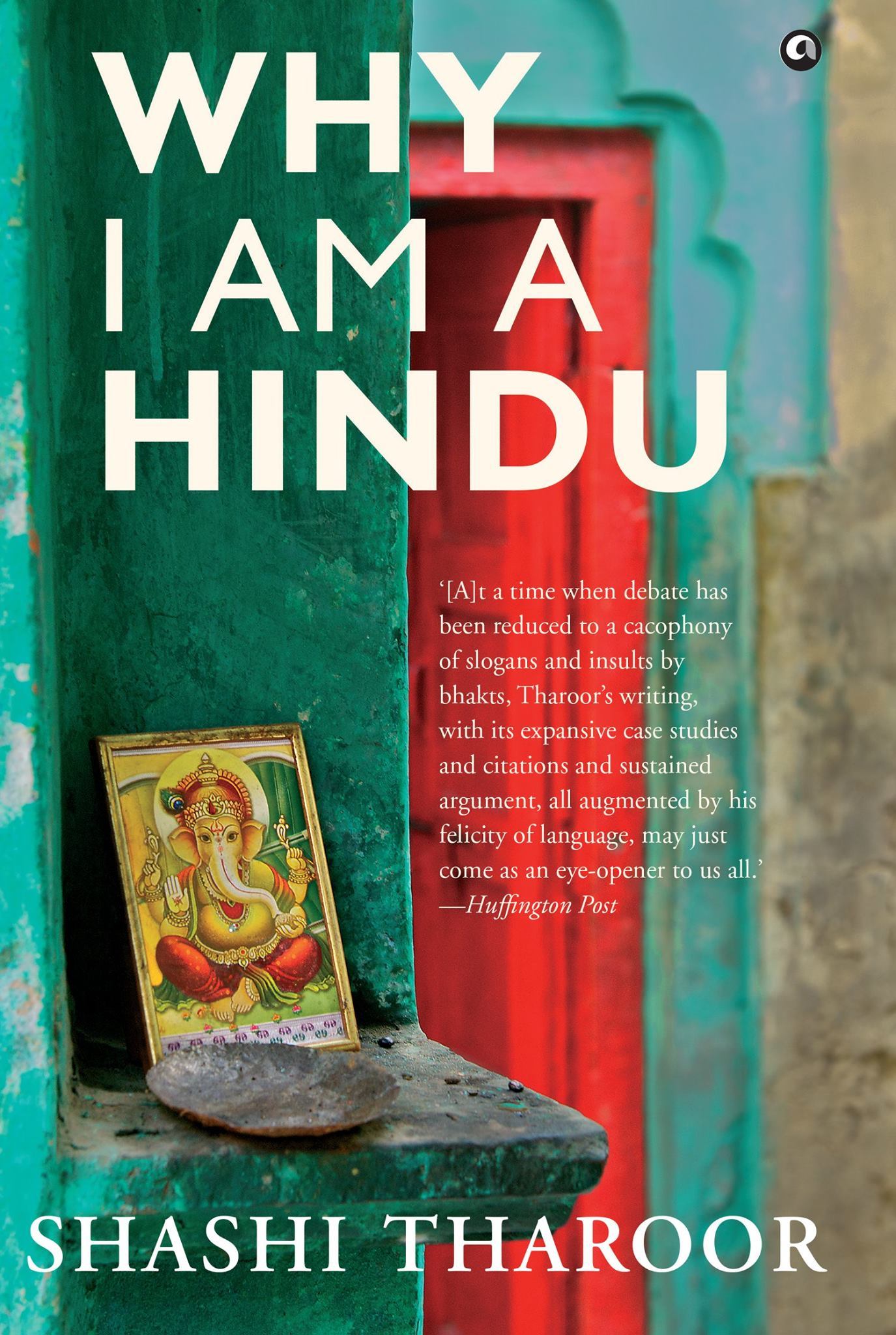
Why I am a Hindu – Shashi Tharoor

In Why I Am a Hindu, one of India’s finest public intellectuals gives us a profound book about one of the world’s oldest and greatest religions.

Starting with a close examination of his own belief in Hinduism, he ranges far and wide in his study of the faith. He talks about the Great Souls of Hinduism, Adi Shankara, Patanjali, Ramanuja, Swami Vivekananda, Ramakrishna Paramahamsa, and many others who made major contributions to the essence of Hinduism. He delves deep into Hinduism’s most important schools of thought (such as the Advaita Vedanta).

He explains, in easily accessible language, important aspects and concepts of Hindu philosophy like the Purusharthas and Bhakti, masterfully summarizes the lessons of the Gita and Vivekananda’s ecumenism, and explores with sympathy the ‘Hinduism of habit’ practised by ordinary believers.

He looks at the myriad manifestations of political Hinduism in the modern era, including violence committed in the name of the faith by right-wing organizations and their adherents. He analyzes Hindutva, explains its rise and dwells at length on the philosophy of Deen Dayal Upadhyaya, its most significant ideologue. He is unsparing in his criticism of extremist ‘bhakts’, and unequivocal in his belief that everything that makes India a great and distinctive culture and country will be imperiled if religious ‘fundamentalists’ are allowed to take the upper hand. However, he also makes the point that it is precisely because Hindus form the majority that India has survived as a plural, secular democracy.

A book that will be read and debated now and in the future, Why I Am a Hindu is a revelatory and original masterwork.

In My Hands Today…

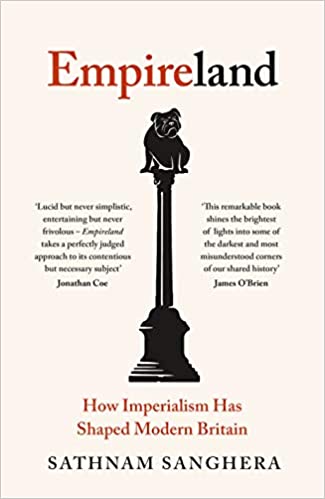
Empireland: How Imperialism has Shaped Modern Britain – Sathnam Sanghera

In his brilliantly illuminating new book, Sathnam Sanghera demonstrates how so much of what we consider to be modern Britain is actually rooted in our imperial past.

In prose that is, at once, both clear-eyed and full of acerbic wit, Sanghera shows how our past is everywhere: from how we live to how we think, from the foundation of the NHS to the nature of our racism, from our distrust of intellectuals in public life to the exceptionalism that imbued the campaign for Brexit and the government’s early response to the COVID crisis. And yet empire is a subject, weirdly hidden from view.

The British Empire ran for centuries and covered vast swathes of the world. It is, as Sanghera reveals, fundamental to understanding Britain. However, even among those who celebrate the empire, there seems to be a desire not to look at it too closely – not to include the subject in our school history books, not to emphasize it too much in our favourite museums.

At a time of great division, when we are arguing about what it means to be British, Sanghera’s book urges us to address this bewildering contradiction. It is only by stepping back and seeing where we really come from, that we can begin to understand who we are, and what unites us.

In My Hands Today…

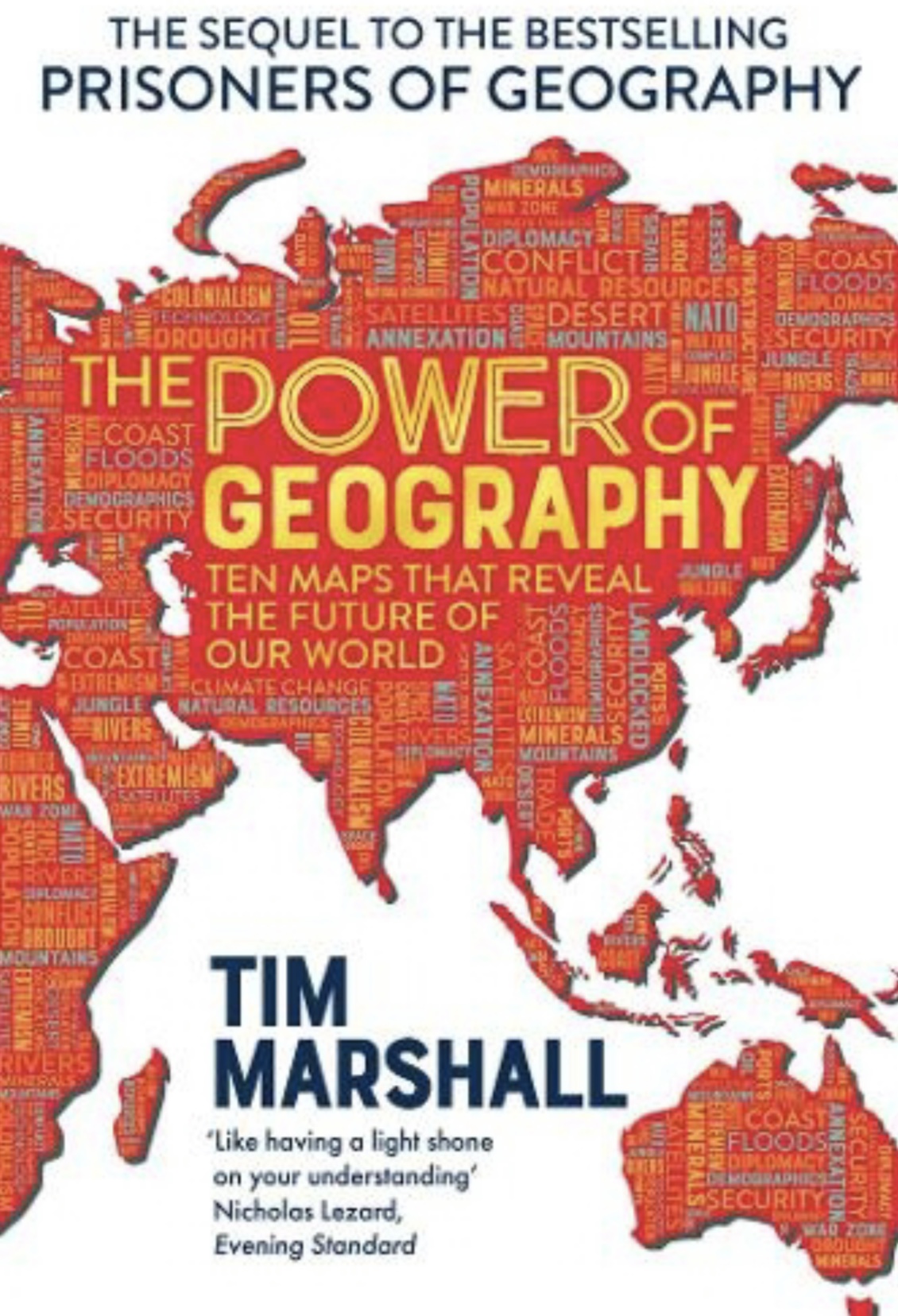
The Power of Geography: Ten Maps That Reveal the Future of Our World – Tim Marshall

In this revelatory new book, Marshall explores ten regions that are set to shape global politics in a new age of great-power rivalry: Australia, Iran, Saudi Arabia, the UK, Greece, Turkey, the Sahel, Ethiopia, Spain and Space.

Find out why Europe’s next refugee crisis is closer than it thinks as trouble brews in the Sahel; why the Middle East must look beyond oil and sand to secure its future; why the eastern Mediterranean is one of the most volatile flashpoints of the twenty-first century; and why the Earth’s atmosphere is set to become the world’s next battleground.

In My Hands Today…

The Killer Across the Table: Unlocking the Secrets of Serial Killers and Predators with the FBI’s Original Mindhunter – John E. Douglas and Mark Olshaker

The FBI’s pioneer of criminal profiling, former special agent John Douglas, has studied and interviewed many of America’s most notorious killers—including Charles Manson, ”Son of Sam Killer” David Berkowitz and ”BTK Strangler” Dennis Rader—trained FBI agents and investigators around and the world, and helped educate the country about these deadly predators and how they operate, and has become a legend in popular culture, fictionalized in The Silence of the Lambs and the hit television shows Criminal Minds and Mindhunter.

Twenty years after his famous memoir, the man who literally wrote the book on FBI criminal profiling opens his case files once again. In this riveting work of true crime, he spotlights four of the most diabolical criminals he’s confronted, interviewed and learned from. Going deep into each man’s life and crimes, he outlines the factors that led them to murder and how he used his interrogation skills to expose their means, motives, and true evil. Like the hit Netflix show, The Killer Across the Table is centered around Douglas’ unique interrogation and profiling process. With his longtime collaborator Mark Olshaker, Douglas recounts the chilling encounters with these four killers as he experienced them—revealing for the first time his profile methods in detail.

Going step by step through his interviews, Douglas explains how he connects each killer’s crimes to the specific conversation, and contrasts these encounters with those of other deadly criminals to show what he learns from each one. In the process, he returns to other famous cases, killers and interviews that have shaped his career, describing how the knowledge he gained from those exchanges helped prepare him for these.