In My Hands Today…

The New Silk Roads: The Present and Future of the World – Peter Frankopan

‘All roads used to lead to Rome. Today, they lead to Beijing.’

When The Silk Roads was published in 2015, it became an instant classic. A major reassessment of world history, it compelled us to look at the past from a different perspective. The New Silk Roads brings this story up to date, addressing the present and future of a world that is changing dramatically.

Following the Silk Roads eastwards, from Europe through to China, by way of Russia and the Middle East, The New Silk Roads provides a timely reminder that we live in a world that is profoundly interconnected. In an age of Brexit and Trump, the themes of isolation and fragmentation permeating the Western world stand in sharp contrast to events along the Silk Roads since 2015, where ties have been strengthened and mutual cooperation established.

With brilliant insight, Peter Frankopan takes a fresh look at the network of relationships being formed along the length and breadth of the Silk Roads today, assessing the global reverberations of these continual shifts in the centre of power – all too often absent from headlines in the West. This important – and ultimately hopeful – book asks us to reassess who we are and where we are in the world, illuminating the themes on which all our lives and livelihood depend.
In My Hands Today…

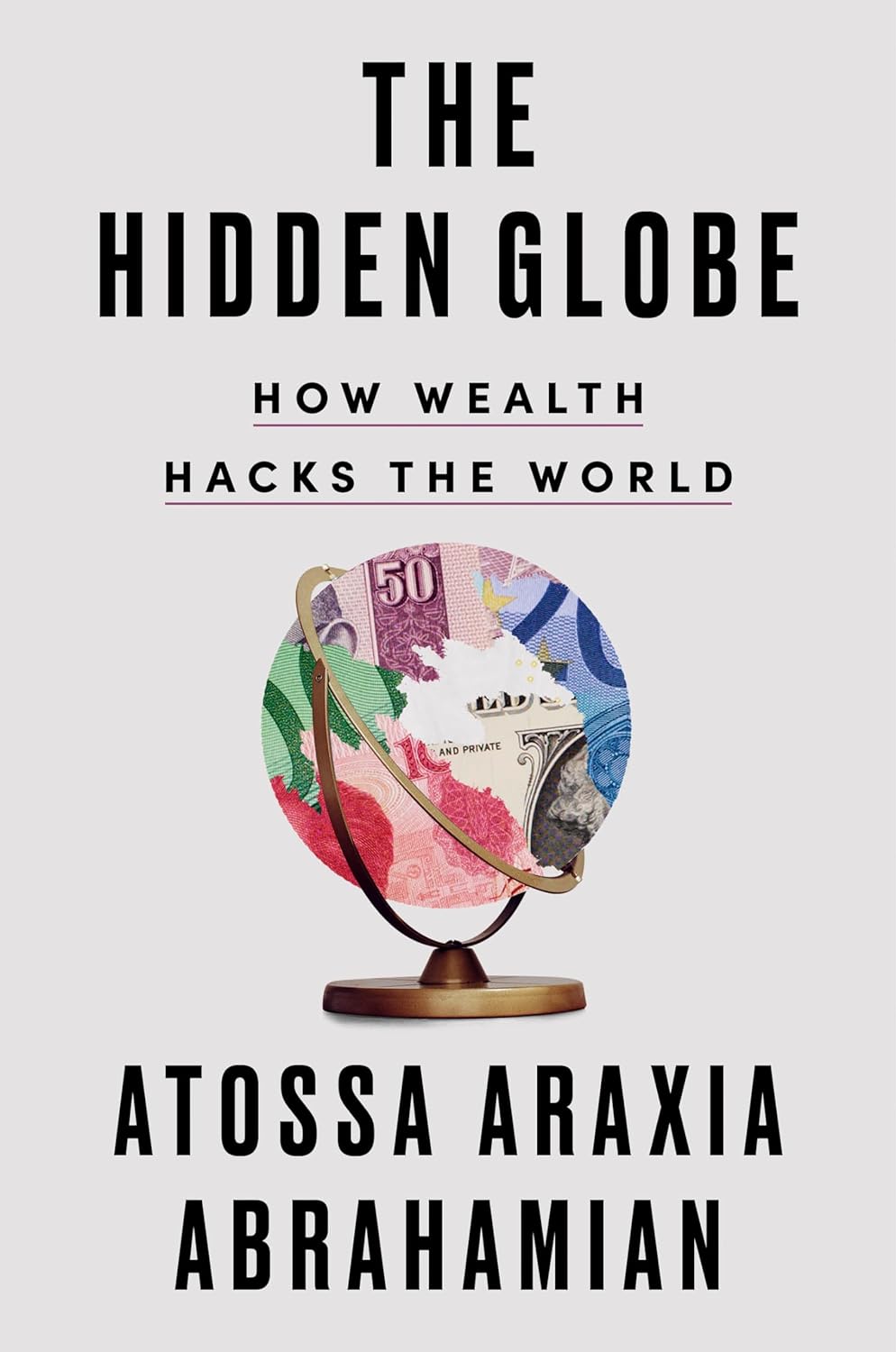
The Hidden Globe: How Wealth Hacks the World – Atossa Araxia Abrahamian

A globe shows the world we think we neatly delineated sovereign nations that grant or restrict their citizens’ rights. Beneath, above, and tucked inside their borders, however, another universe has been engineered into existence. It consists of thousands of extraterritorial zones that operate largely autonomously, and increasingly for the benefit of the wealthiest individuals and corporations.

Atossa Abrahamian traces the rise of this hidden globe to thirteenth-century Switzerland, where poor cantons marketed their only bodies, in the form of mercenary fighters. Over time, economists, theorists, statesmen, and consultants evolved ever more sophisticated ways of exporting and exploiting statelessness, in the form of free trade zones, flags of convenience, offshore detention centers, charter cities controlled by foreign corporations, and even into outer space. By mapping this countergeography, which decides who wins and who loses in the new global order—and helping us to see how it might be otherwise—The Hidden Globe fascinates, enrages, and inspires.

In My Hands Today…

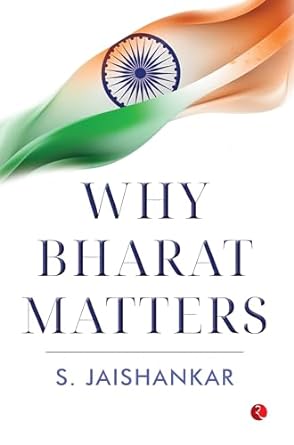
Why Bharat Matters – S. Jaishankar

Whether drawing strength from its heritage and culture or approaching challenges with the optimism of democracy and technology, this is certainly a New India—an India that is more Bharat.

This is not just a tough world but also a turbulent and unpredictable one. It is marked by the impact of Covid, conflicts in Ukraine and West Asia, climate events, radicalization and terrorism. There is complex geopolitics at work, such as the rise of China, the changed posture of the United States, the strategy of Russia, the impact of globalization and the power of new technologies.

India seeks to navigate these stormy seas without diluting its focus on becoming a leading power. As a vishwa mitra, it seeks the well-being of the Global South and to contribute to global good. India is more salient in global calculations and stands ready to embrace coming responsibilities and opportunities. Entering the Amrit Kaal, it visualizes an era of growth and development while staying true to its traditions and heritage.

In Why Bharat Matters, S. Jaishankar argues that while rising powers seek stability most of all, India must plan to rise amidst serious unpredictability. This process is also exceptional as it represents the rejuvenation of a civilizational state. Simultaneously, he also explains why foreign policy in a globalized world matters increasingly to all citizens in their daily lives. This book is a must-read for every Indian to understand and seriously reflect on the reality of our times that is becoming clearer with each passing day—that India matters because it is Bharat.

In My Hands Today…

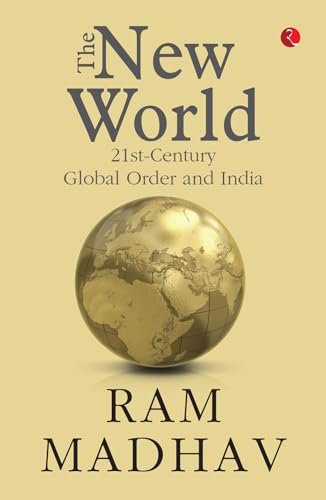
The New World: 21st-Century Global Order and India – Ram Madhav

Are there enduring patterns in history that can shed light on today’s shifting power dynamics and the struggle for a new international order? What lessons does the past offer for the present—and the future?

As the old world order fades and a new one slowly emerges, humanity stands at a pivotal crossroads. This period of transition presents a rare opportunity for rising nations like India to play a decisive role in shaping what comes next.

In The New 21st-Century Global Order and India, Ram Madhav offers a sweeping and influential exploration of the rise and fall of great powers and the international orders they create. Tracing the story of the liberal world order established by the West about seventy years ago, he examines the possible form of the emerging new order. He adopts an interdisciplinary approach as he delves into the most urgent concerns facing our global the rise of China and its challenge to the United States, the decline of global multilateralism and the emergence of multipolarity, the transformative impact of artificial intelligence and other frontier technologies, and the challenges posed by demographics and climate change, among others. He also envisions India’s emerging role in the evolving balance of power within the global system.

As always, Madhav presents his ideas with vivid clarity and accessibility, guided by unwavering principle and sharp insight. Free of heavy-handed jargon, he offers a clear perspective on modern civilization and where we are headed.

The New 21st-Century Global Order and India is a comprehensive resource for anyone seeking to understand the more representative global order that is less asymmetric and more diverse.

In My Hands Today…

The India Way: Strategies for an Uncertain World – S. Jaishankar

The decade from the 2008 global financial crisis to the 2020 coronavirus pandemic has seen a real transformation of the world order. The very nature of international relations and its rules are changing before our eyes.

For India, this means optimal relationships with all the major powers to best advance its goals. It also requires a bolder and non-reciprocal approach to its neighbourhood. A global footprint is now in the making that leverages India’s greater capability and relevance, as well as its unique diaspora. This era of global upheaval entails greater expectations from India, putting it on the path to becoming a leading power.

In The India Way, S. Jaishankar, India’s Minister of External Affairs, analyses these challenges and spells out possible policy responses. He places this thinking in the context of history and tradition, appropriate for a civilizational power that seeks to reclaim its place on the world stage.