Festivals of India: Parsi New Year

Yesterday was Navroze which marked the beginning of the Persian calendar, and which in India, the Parsis celebrated as their new year! Navroz which comes from the combination of two words – ‘nav’, meaning new and ‘roz’, which means day means a new day. Cries of Navroz Mubarak and Saal Mubarak must have echoed across agriaries or fire temples across the country. This tradition began more than 3000 years ago, and is also known as Jamshed-i-Nouroz after the Persian King, Jamshed, who introduced the Parsi calendar. Legend has it that Jamshed saved the world from an apocalypse, a winter that was destined to kill everyone; by using a throne studded with gems and rising to the heavens on the shoulders of demons he shone brighter than the sun and gave birth to a new day, Navroz.

Navroze marks a new beginning and is celebrated with much fervour. The eve before Navroz is also known as Pateti, when Parsis rigorously go into cleaning mode externally too and get rid of all their unwanted belongings and possessions, in the hopes of cleansing themselves. People clean and decorate their homes, dress up in traditional attires, and visit fire temples to pray for prosperity and seek forgiveness for their sins.

I have written about the Parsis and Navroz also previously, so hop there to read more on some legends about this wonderful community!

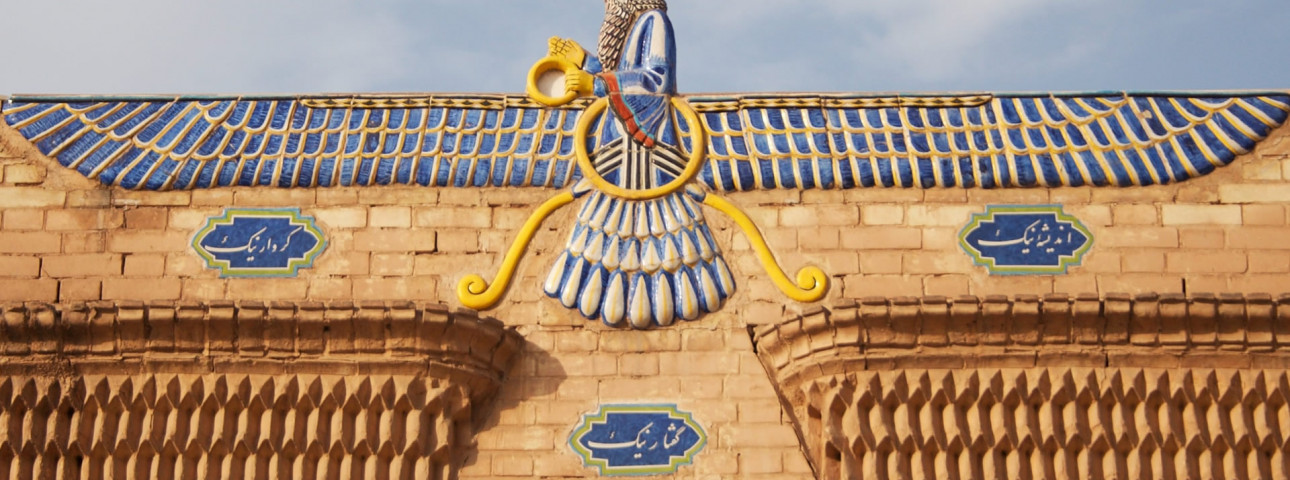
The Parsis follow the religion of Zoroastrianism, one of the oldest known monotheistic religions. It was founded by the Prophet Zarathustra in ancient Iran approximately 3,500 years ago. One of the ancient world’s most important religions for over 1000 years, it was the official religion of ancient Persia from 650 BCE until the rise of Islam in the 7th century. When the Islamic armies invaded Persia, many Zoroastrians migrated, and a many of them landed in Gujarat in India. Today, there are an estimated 2.6 million Zoroastrians worldwide, with the Parsis in India being the largest single group.

In Iran and other parts of the Middle East, Zoroastrians celebrated the Persian New Year using the Fasli/Bastnai calendar, which fixed the first day of the year on the Spring Equinox, usually March 21st. To this day, this remains a popular festival, known as Nowruz, celebrated by many peoples and cultures in the region, despite not being Zoroastrians. The Parsis however, observe the new year using the Shahenshahi calendar which does not account for leap years, meaning this holiday has now moved by 200 days from its original day of the vernal equinox.
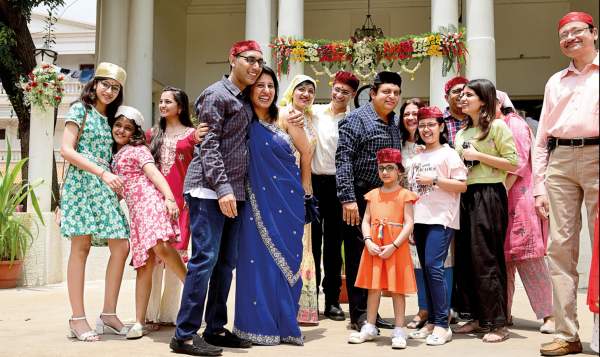
Growing up and studying in a Parsi school means that we had friends and classmates who celebrated this festival. Another unique feature of Parsi schools is that we used to get something called Gatha holidays. This used to a weeklong holiday just before the Parsi New Year. In our larger area, it was usually just our school and an another Parsi school nearby which had this holiday and I remember other friends who didn’t have this holiday being very jealous of us. Of course, this didn’t mean we got more holidays than others. We used to pay back the five days we got as holidays by having our Christmas holidays much later than the mission schools and also a few days before the Diwali holidays and the summer holidays. Other schools had a week-long break for other festivals which we didn’t have, so school holidays generally adjusted themselves.

The Gatha days are the five intercalary or timekeeping days which span the last month of the year and the first month of the new year. The Frawardigan, also known as Hamaspathmaidyem Gahambar, mukhtad or panji is a 10-day period during which the souls of the dead or the fravashi are commemorated. The ten days of Frawardigan span the last five days of the last month of the year, plus the five intercalary or Gatha days between the last month of the year and first month of the next year. Among Indian Zoroastrians, an extended mukhtad of eighteen days is also observed and this is the holiday we used to get. I also remember calling the Parsi New Year as Pateti, which I understand means a day of penitence which comes from the patet meaning confession. This is actually a day of introspection, and originally occurred on the last day, or on the last 5 days of the calendar year. For reasons related to single day occasions being observed over six days, Pateti came to fall on the first day of the New Year’s Day celebrations, and in India which folloed the Shahenshahi calendar, Pateti came to be celebrated on New Year’s Day itself. Although the name has been retained, Pateti is no longer a day of introspection.

To all those who celebrate the Parsi New Year, here’s wishing you Saal Mubarak and Navroze Mubarak!
Festivals of India: Janmashtami

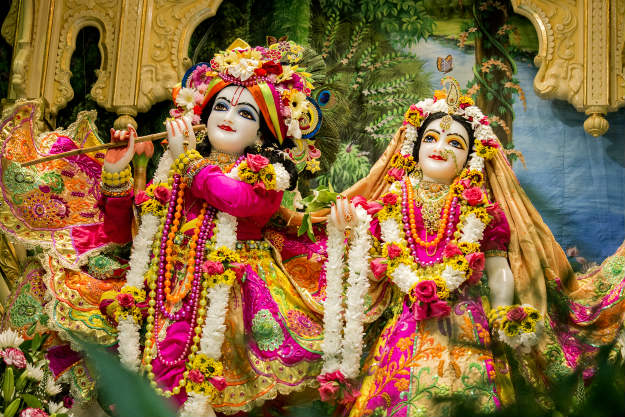
Yesterday was the Hindu festival of Krishna Janmashtami, also known as Janmashtami or Gokulashtami, an annual Hindu festival that celebrates the birth of Krishna, the eighth avatar of Vishnu. It is observed according to the Hindu luni-solar calendar, on the eighth day or Ashtami of the Krishna Paksha or the dark fortnight in Shraavana or Bhadrapad, depending on whether the calendar chooses the new moon or full moon day as the last day of the month, which overlaps with August/September of the Gregorian calendar.

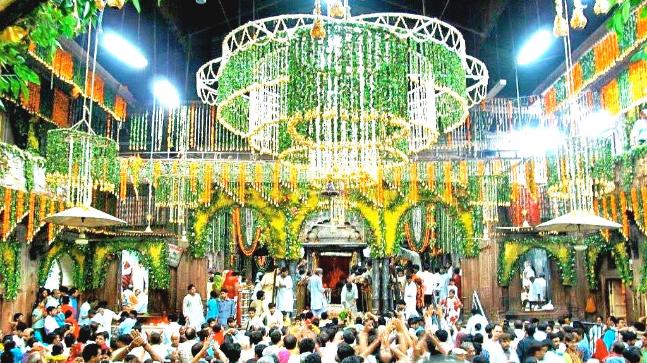
It is an important festival particularly to the Vaishnavism tradition of Hinduism. Dance-drama enactments of the life of Krishna according to the Bhagavata Purana, such as the Rasa lila or Krishna Lila, devotional singing through the midnight when Krishna was born, fasting, a night vigil, and a festival  on the following day are a part of the Janmashtami celebrations. It is celebrated particularly in Mathura and Vrindavan, along with major Vaishnava and non-sectarian communities pretty across India, each with their own unique spin in the festivities. This is followed by the festival of Nandotsav, which celebrates the occasion when Nanda Baba distributed gifts to the community in honour of Lord Krishna’s birth. This is a festival celebrated in the Braj region where on hearing about Krishna’s birth, all the villagers visited Nand Baba’s house to see little Krishna and congratulate Mata Yashoda. Nand Baba distributed ornaments, clothes, cattle and various other valuables among saints and sages, who bestowed blessings on Lord Krishna in return. In Vrindavan this festival is celebrated in the Radha Vallabh Temple. Panchamrit abhisheka and Maha aarti are performed in honour of the Lord’s birth. On this day people also celebrate ‘Govinda’ across many parts of India where devotees form small groups and break pots of butter called Maakhan Haandis tied to ropes on high rise buildings.

Krishna is Devaki and Vasudeva Anakadundubhi’s son and his birthday is celebrated by Hindus as Janmashtami, particularly those of the Gaudiya Vaishnavism tradition as he is considered the Supreme Personality of Godhead. Janmashtami is celebrated when Krishna is believed to have been born according to Hindu tradition, which is in Mathura, at midnight on the eighth day of Bhadrapada month which happens sometime in August or September of each year according to the Gregorian calendar. Born in an era of chaos and rampant persecution, Krishna’s birth was seen as a threat to life by his maternal uncle King Kansa and so to foil this threat, his parents Devaki and Vasudev were imprisioned by Kansa. Immediately following the birth at Mathura, his father Vasudeva Anakadundubhi takes Krishna across Yamuna, to foster parents in Gokul, named Nanda and Yashoda. This legend is celebrated on Janmashtami by people keeping fast, singing devotional songs of love for Krishna, and keeping a vigil into the night. After Krishna’s midnight hour birth, statues of baby Krishna are washed and clothed, then placed in a cradle. The devotees then break their fast, by sharing food and sweets. Women draw tiny foot prints outside their house doors and kitchen, walking towards their house, a symbolism for Krishna’s journey into their homes.

Hindus celebrate Janmashtami by fasting, singing, praying together, preparing and sharing special food, night vigils and visiting Krishna or Vishnu temples. Major Krishna temples organize recitation of ‘’Bhagavata Purana and Bhagavad Gita and many communities organise dance-drama events called Rasa Lila or Krishna Lila. The tradition of Rasa Lila is particularly popular in Mathura region, in northeastern states of India such as Manipur and Assam, and in parts of Rajasthan and Gujarat and these begin a few days before each Janmashtami.

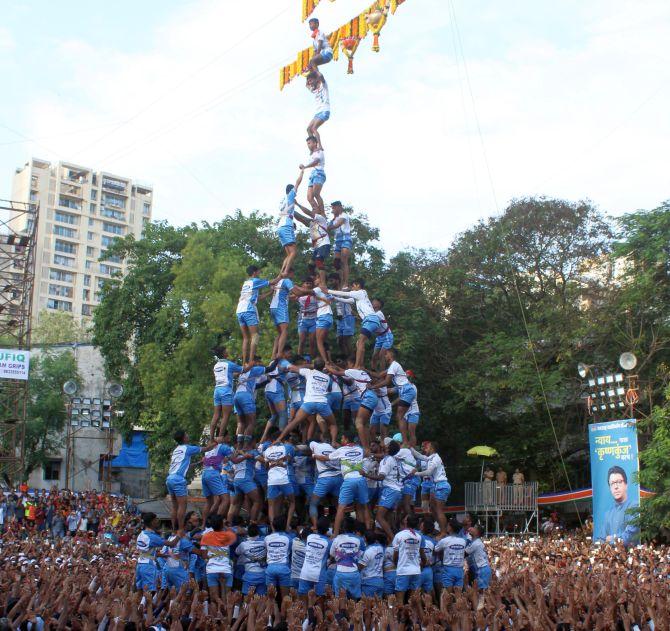
Popularly called Gokulashtami in Maharashtra, the festival is celebrated with the breaking of the Dahi Handi the day after Janmashtami. Literally meaning “earthen pot of yoghurt”. The festival gets this popular regional name from legend of baby Krishna who would seek and steal milk products such as yoghurt and butter and people would hide their supplies high up out of the baby’s reach. Krishna would try all sorts of creative ideas in his pursuit, such as making human pyramids with his friends to break these high hanging pots. In Maharashtra, this Krishna legend is played out as a community tradition, where pots of yoghurt are hung high up, sometimes with tall poles or from ropes hanging from second or third floors of a building. Teams of youth and boys called “Govindas” go around to these hanging pots, climb one over another form a human pyramid, then break the pot. Its quite fun to watch, though can be very dangerous at times, especially when the pots are hung very high.

Source

People in Dwarka in Gujarat – where Krishna is believed to have established his kingdom – celebrate the festival with a tradition similar to Dahi Handi, called Makhan Handi or a pot with freshly churned butter. Others perform folk dances at temples, sing bhajans, visit the Krishna temples such as at the Dwarkadhish Temple or Nathdwara. In the Kutch district, farmers decorate their bullock carts and take out Krishna processions, with group singing and dancing. The carnival-style and playful poetry and works of Dayaram, a scholar of the Pushtimarg of Vaishnavism, is particularly popular during Janmashtami in Gujarat and Rajasthan.

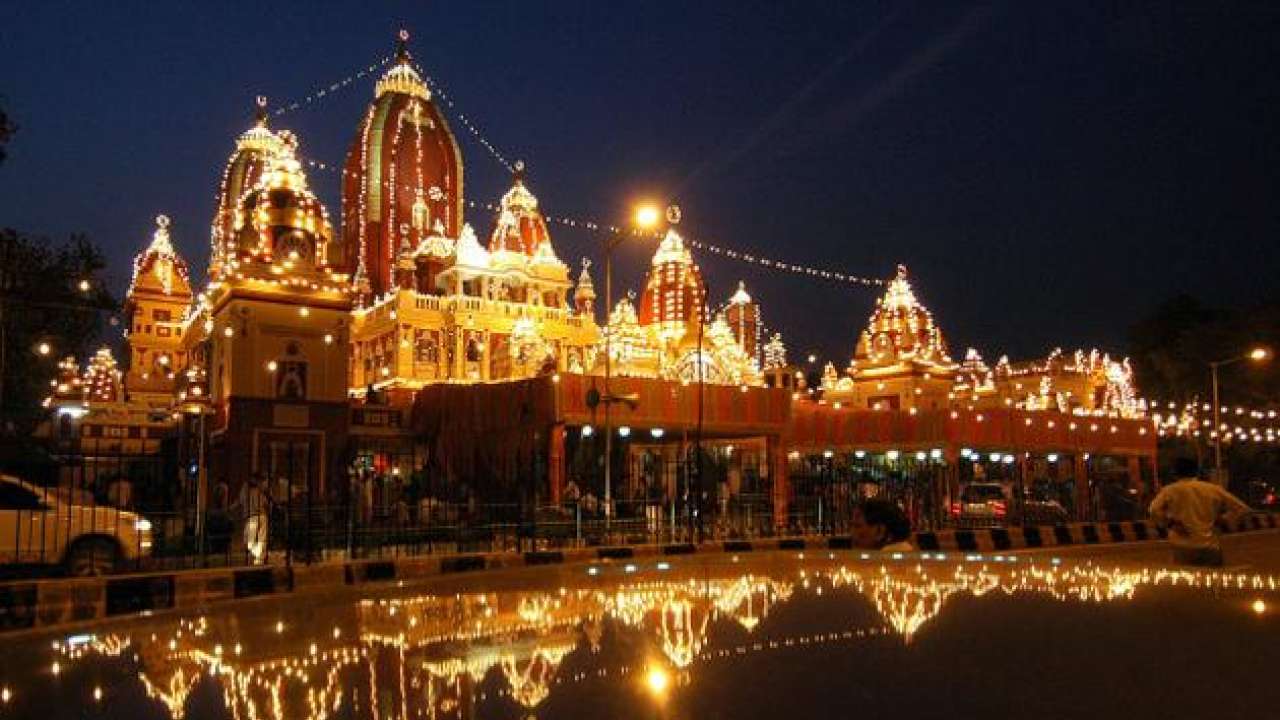
Janmashtami is the largest festival in the Braj region of north India, in Mathura where Krishna was born, and in Vrindavan where he grew up. Vaishnava communities here celebrate Janmashtami where Krishna temples are decorated and lighted up, attracting numerous visitors on the day, while Krishna devotees hold bhakti events and keep a night vigil.

Janmashtami is widely celebrated by Hindu Vaishnava communities of eastern and northeastern India. The widespread tradition of celebrating Krishna in these regions is credited to the efforts and teachings of 15th and 16th century Sankardeva and Chaitanya Mahaprabhu. They developed philosophical ideas, as well as new forms of performance arts to celebrate the Hindu god Krishna such as Borgeet, Ankia Naat, Sattriya and Bhakti yoga now popular in West Bengal and Assam. Further east, Manipur people developed Manipuri dance form, a classical dance form known for its Hindu Vaishnavism themes, and which like Sattriya includes love-inspired dance drama arts of Radha-Krishna called Raslila. The Shree Govindajee Temple and the ISKCON temples particularly mark the Janmashtami festival.  Janmashtami is celebrated in Assam at homes, in community centers called Namghars and temples. According to the tradition, the devotees sing the Nam, perform pujas and share food and prasada.

Gokula Ashtami as the festival is called in South India is celebrated in Tamil Nadu with kolams or decorative pattern drawn with rice batter. Then footprints of baby Krishna are drawn from the threshold of the house till the pooja room, depicting the arrival of Lord Krishna into the house. A recitation of Bhagwadgita is also a popular practise. The festival is celebrated in the evening as Krishna was born at midnight. In Andhra Pradesh, recitation of shlokas and devotional songs are the characteristics of this festival. Another unique feature of this festival in Andhra Pradesh and Telangana is that young boys are dress up as Lord Krishna and visit neighbors and friends. Eatables along with milk and curd are prepared to make offerings to Krishna. Legend says that the Sree Krishna Idol installed in Guruvayur is from Dwarka which is believed to be submerged in the sea.

This festival is also celebrated with much joy and gusto outside of India where the diaspora lives. It is a public holiday in countries like Bangladesh and Fiji.

I used to enjoy celebrating it, especially when BB & GG were younger. We used to use them to make tiny footprints from our home’s entrance to our home altar. Since it is not a holiday here in Singapore, I didn’t make the traditional offerings, but would instead rustle up something after work and pray to baby Krishna. This year, I did make some of the traditional offering which was not too badam planning to make some of the traditional offerings, so wish me luck!

Festivals of India: Avani Avittam and Raksha Bandhan

Source

Today is the festival of Avani Avittam and Raksha Bandhan. Both are festivals which are male centric festivals and which come on the same day each year. I have written about both festivals previously so will not go into the details here. I have always wondered why two diverse festivals – one celebrated in North India and the other mostly in South India, which are possibly the only festivals in the respective cultures which are a celebration of the male gender fall on the same day. Recently I had a ephipany. In both these festivals, the star of the show, if we can call it that, are threads that bind us to our loved ones, to our traditions and to our roots.

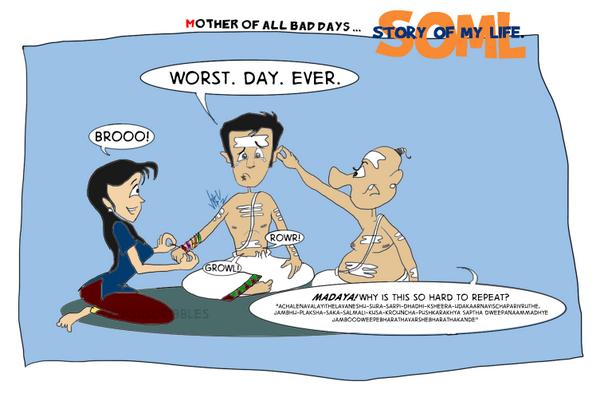
During Avani Avittam, which typically falls on the full moon day of the Shravan month, male Brahmin men and boys who have had their thread ceremony done, reaffirm their faith as a twice born and by changing their sacred thread, they symbolically throw away their sins of the previous year and start the year on a clean slate.

The festival is one of the most auspicious festivals for Brahmins and the day is an important one for those who follow the Yajurveda as on this day they start reading Yajur Veda, which they continue to read for the next six months. It is believed that on Avani Avittam, Lord Vishnu has reincarnation himself as Lord Hayagriya, who is seen as the symbol of wealth and knowledge. On this day, God Vishnu who is worshiped as the high deity power actually restored the Vedas to Brahma.

There is a story behind these sacred threads. Lord Brahma, the creator was filled with pride for knowing the entire Veda. Lord Vishnu to crush his pride created two demons Madhu and Kaitabha to steal Vedas from him. Brahma then not being able to save Vedas, he asked Vishnu to help him restore it. Lord Vishnu took the form of Hayagriva and restored the Vedas and supressed the pride of Brahma. Hence, Hayagriva incarnation is associated with knowledge and wisdom.This day is celebrated as Upakarma(Beginning)  also called as Hayagriva utpatti. Restoration of Vedas is known as a mark of new beginning and hence Upakarama is celebrated.This day is also referred as Hayagriva Jayanti.

The sacred thread comprises of three strands, joined by a knot known as Brahmagranthi or the knot of Brahma. The three strands symbolise the Hindu trinity – Shiva, Vishnu and Brahma. There are other interpretations which represent many of the other triads like Mahasaraswati, Mahalakshmi and Mahakali; or the three tendencies known as sattva or harmony, rajas or passion and tamas or chaos. You could also interpret the three strands as the link between the past, present and the future or the three states of wakefulness, dream and deep sleep. Some even say that it represents the three dimensions known as heaven or swarga, earth or martyaloka and the nether regions or patala. The sacred thread is also a kind of an indication to the marital status of the wearer. An unmarried man will wear one thread of three stands, a married man will wear two and a married man who has had his first child will wear three. In the old days, when most men did not wear a upper garment, this was the indicator people had about their marital status and if they had any children.

This year, the ceremony of changing the sacred thread was done online at our home. S and BB woke up early and after completing their morning prayers, sat down in front of the laptop where they joined others across the island on a video platform where the resident priest chanted the mantras and went through the ceremony with them. We also received the new sacred thread by post last week after signing up and paying for the ceremony online.

BB had to rush for school, so GG quickly tied her thread of love on his wrist before he headed out of the house.

These are the threads that tie us to our roots and our traditions. I call these ceremonies and functions our anchors because without them, we are left floundering and rootless. Especially in today’s world which is so uncertain and vague, it is good to hold on to traditions that are special to you. Your lineage, irrespective of where you come from, goes back at least a few hundred years, if not millennia, so be proud of who you are and where you come from, so you can show your children and your grandchildren where they can go to.

Happy Raksha Bandhan and Avani Avittam to everyone celebrating these festivals.

Festivals of India: Akshaya Tritiya

Also known as Akti or Akha Teej, Akshaya Tritiya is an annual spring time festival celebrated by Hindus and Jains. It falls on the third Tithi or lunar day of bright half or Shukla Paksha of the Vaisakha month which falls every year between April and May according to the lunisolar Hindu calendar. It is observed as an auspicious time regionally by Hindus and Jains in India and Nepal, as signifying the “third day of unending prosperity”. The word Akshaya means “never diminishing” as the festival is associated with wealth, prosperity and happiness and Tritiya means third day. This year’s Akshaya Tritiya fell yesterday, April 26. This day is said to be very auspicious if you are planning on starting a new venture as anything started on this day will be successful.

Akshaya Tritiya has lot of religious significance for both Hindus and Jains. This day is the birthday of Lord Parashurama, one of the ten Dashavataras of Lord Vishnu and is also the starting day of Treta Yuga after Satya Yuga. It was on Akshaya Tritiya that the poor Brahmin Sudama offered flattened rice or aval to Lord Krishna, who in turn blessed him with bountiful wealth and happiness. On this day, it is said Lord Krishna gave the Akshaya Patra to Draupadi when the Pandavas started for the Vanavasa, so that they always have food in abundance. The sage Veda Vyasa started writing the epic Mahabharata on this day and it was the day when the holy river Ganges descended upon the Earth. The annual Puri Jagannath Rath Yatra also begins on this day.

Source

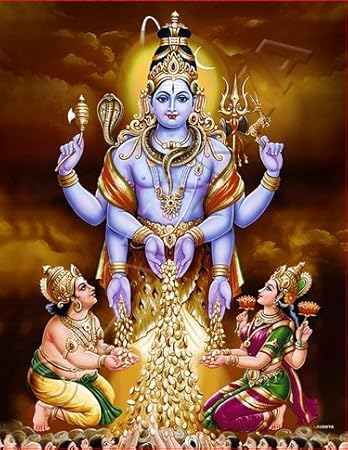
It is also belived that the God of Wealth and the treasurer of all deities ‘Kubera’ received his riches and position by praying to Lord Shiva at Shivapuram on Akshaya Tritiya. For the Jains, this day commemorates the day the first Tirthankara, Rishabhdev ended his year-long asceticism by consuming sugarcane juice poured into his cupped hands. Some Jains refer to the festival as Varshi Tapa and on this day, fasting and ascetic austerities are marked by Jains, particularly at pilgrimage sites such as Palitana in Gujarat.

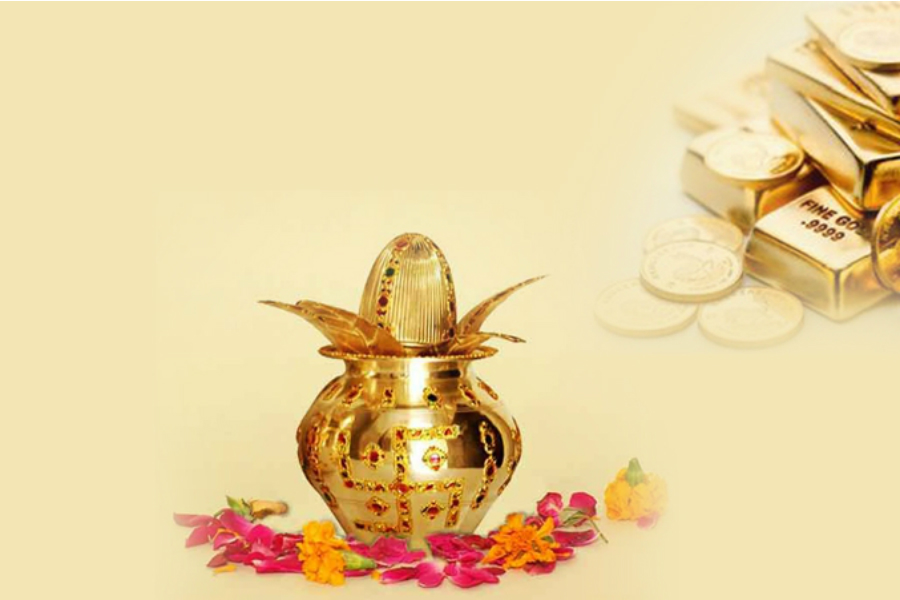
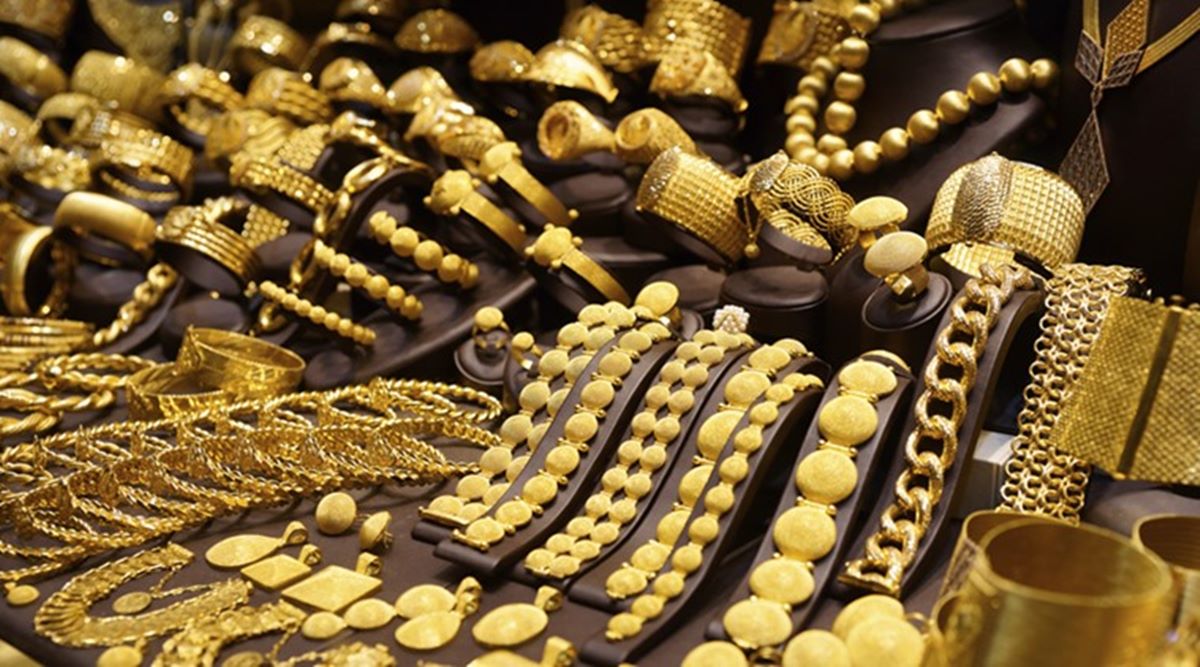
Akshaya Tritiya is considered a very auspicious day because it is a day of manifold blessings. People believe that any good work done on this day will give exponential returns. This is why this day is considered very auspicious to buy gold, silver and precious stones. Goddess Lakshmi signifies wealth and it is said that if one invests in gold, silver or precious stones silver on this day, she will bless you with prosperity and wealth.

This year’s festivities are bound to be very muted because of the COVID-19 panademic worldwide, but if there is just one thing I would pray for on this way would be that we find a cure to this virus soon and things get back to normal!

Leaving you with this Kanakadhara Stotram which Adi Shankaracharya recited for a poor couple on this day at whose house he stopped for Bhiksha or alms and was offered their only available gooseberry. This version of the stotram is sung by the unparalleled M.S Subbalakshmi and is my favourite version.

Festivals of India: Tamil New Year

Tomorrow is the first day of year on the Tamil calendar and is set in sync with the solar cycle of the lunisolar Hindu calendar, as the first day of the Tamil month Chithirai. It therefore falls on or about 14 April every year on the Gregorian calendar. The same day is observed by Hindus elsewhere as the traditional new year, but is known by other names such as Vishu in Kerala, and Vaisakhi or Baisakhi in central and northern India. The Tamil calendar follows a 60-year cycle which is also very ancient and is observed by most traditional calendars of India and China. According to popular belief it is related to 5 revolutions of Jupiter around the Sun, and also to 60-year orbit of Nakshatras or stars as mentioned in Surya Siddhanta. The 2020 Tamil New Year is called Saarvari.

The day is observed as a family time and before this day, households clean up the house, prepare a tray with fruits, flowers and auspicious items, light up the family Puja altar and visit their local temples. People wear new clothes and children go to elders to pay their respects and seek their blessings, then the family sits down to a vegetarian feast.

The Tamil New Year follows the spring equinox and generally falls on 14 April of the Gregorian year. The day celebrates the first day of the traditional Tamil calendar and is a public holiday in both Tamil Nadu and Sri Lanka. The same date is observed as the traditional new year by many Hindus in Assam, West Bengal, Kerala, Manipur, Tripura, Bihar, Odisha, Punjab, Uttar Pradesh, Uttarakhand, Himachal Pradesh, Haryana, Rajasthan as well as by Hindus in Nepal and Bangladesh. Several Buddhist communities in Myanmar, Cambodia, Laos, Thailand, and Sinhalese in Sri Lanka also celebrate the same day as their new year, likely an influence of the shared culture between South and Southeast Asia in the 1st millennium. The day is celebrated as Vishu in Kerala, Vaisakhi or Baisakhi in central and north India, Pohela Sankranti in Odisha, Pohela Boishakh in West Bengal, and Bangladesh, Rongali Bihu in Assam, Bikram Samwat or Vaishak Ek in Nepal, Aluth Avuruthu in Sri Lanka as the Sinhalese New Year, Songkran in Thailand, Pi Mai in Laos, Choul Chhnam Khmer in Cambodia and Thingyan in Myanmar

There are several references in early Tamil literature to the April new year. Nakkirar, the Sangam period author of the Neṭunalvāṭai, wrote that the sun travels from Mesha/Chitterai through 11 successive signs of the zodiac. Kūdalūr Kizhaar refers to Mesha Raasi/Chitterai as the commencement of the year in the Puṟanāṉūṟu. The Tolkaapiyam is the oldest surviving Tamil grammar that divides the year into six seasons where Chitterai marks the start of the Ilavenil season or summer. The Silappadikaaram mentions the 12 Raasis or zodiac signs starting with Mesha/Chitterai or roughly Aries as per the western zodiac. The Manimekalai alludes to the Hindu solar calendar as we know it today. Adiyarkunalaar, an early medieval commentator or Urai-asiriyar mentions the twelve months of the Tamil calendar with particular reference to Chitterai. There were subsequent inscriptional references in Pagan, Burma dated to the 11th century and in Sukhothai, Thailand dated to the 14th century to South Indian, often Vaishnavite, courtiers who were tasked with defining the traditional calendar that began in mid-April

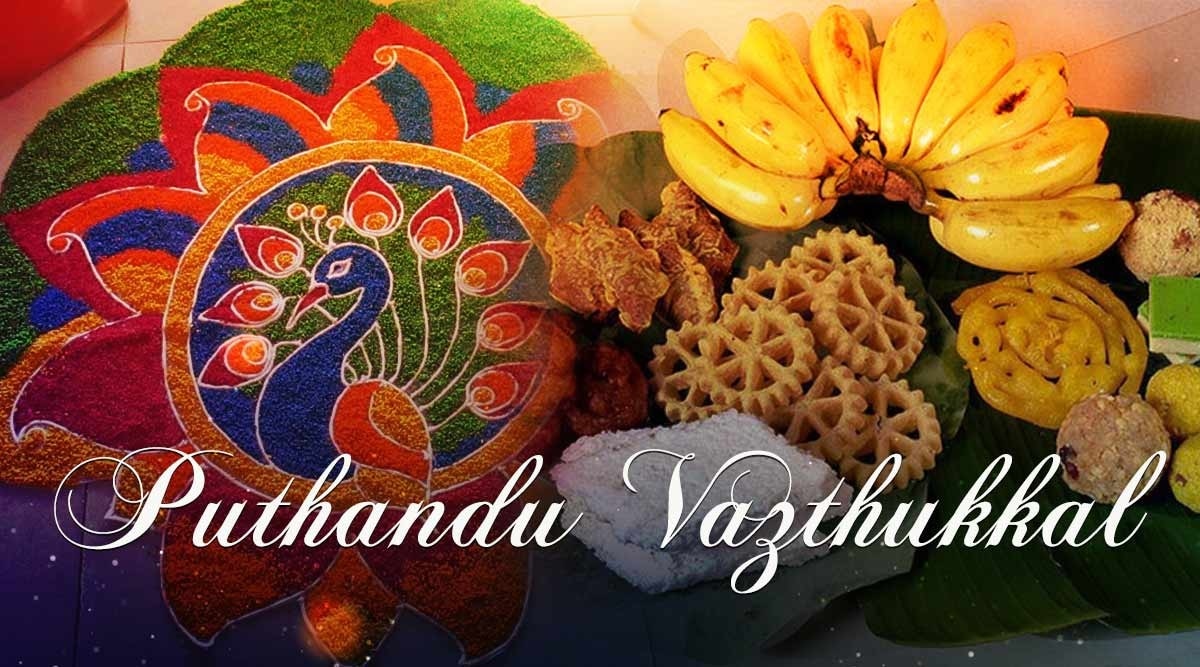
On the eve of the New Year or Puthandu, a tray arranged with three fruits (mango, banana and jack fruit), betel leaves and arecanut, gold/silver jewellery, coins/money, flowers and a mirror. This is similar to the Vishu new year festival ceremonial tray in Kerala. According to the Tamil tradition, this festive tray is auspicious as the first sight upon waking on the new year day. Home entrances are decorated elaborately with colored rice powder designs called kolams.

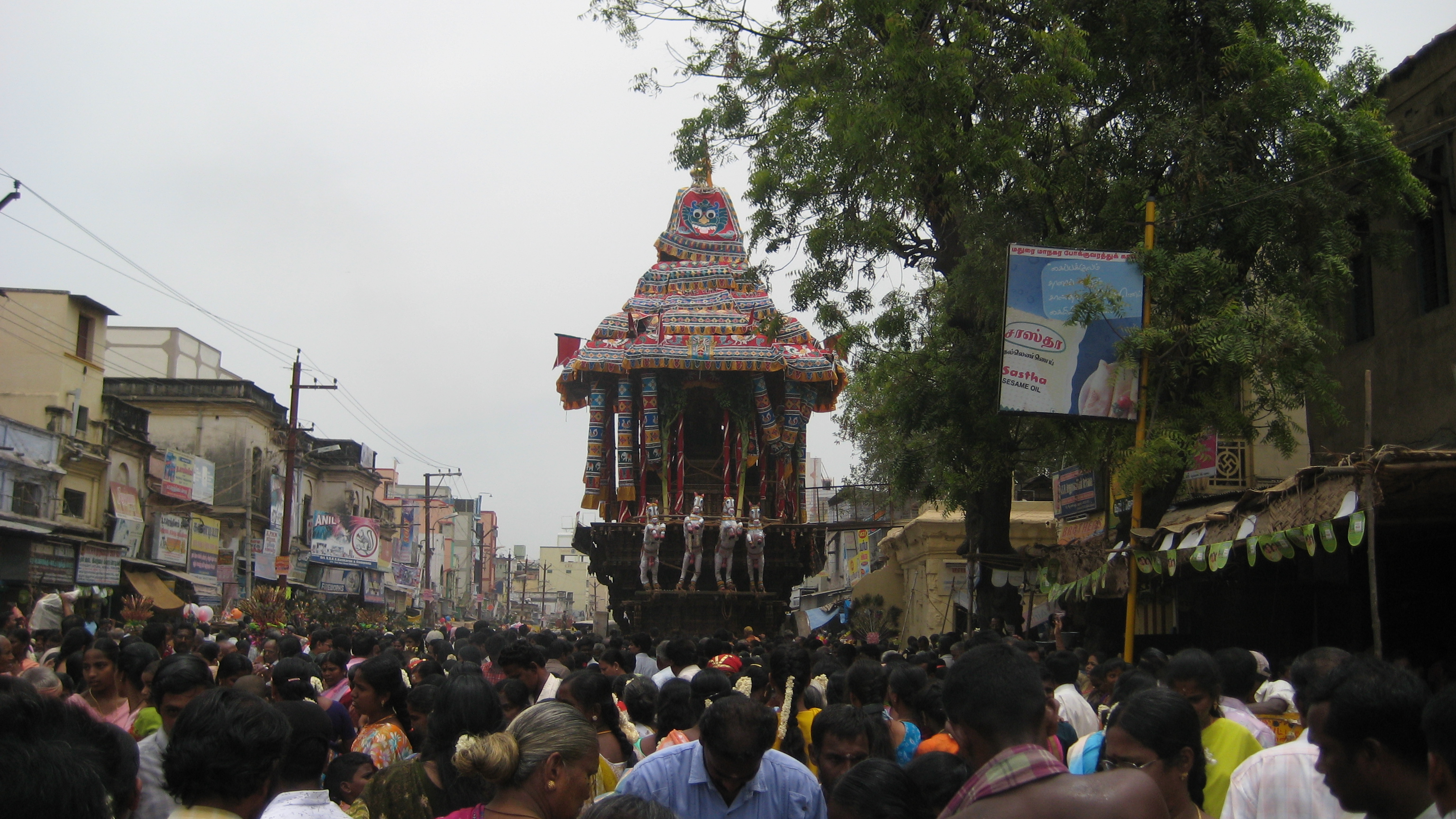
In the temple city of Madurai, the Chitterai Thiruvizha is celebrated in the Meenakshi Temple. A huge exhibition is held, called Chitterai Porutkaatchi. On the day of the Tamil New Year, a big Car Festival is held at Tiruvidaimarudur near Kumbakonam. Festivals are also held at Tiruchirapalli, Kanchipuram and other places.

In Sri Lanka, the Tamils observe the traditional new year in April with the first financial transaction known as the Kai-vishesham. In this transaction children go to elders to pay their respect, and elders give their blessings and gift pocket money to the children in return. The event is also observed with the ‘arpudu’ or the first ploughing of the ground to prepare for the new agricultural cycle. The game of ‘por-thenkai’ or coconut wars between youth is played in villages through the Tamil north and east of the island while cart races are also held. The festive Puthandu season in April is a time for family visits and the renewal of filial bonds. It also coincides with the Sinhalese new year season and so is a time of joy and celebration throughout the island.

During the festive lunch that day, families eat dishes which are a combination of all flavours – sweet, sour, bitter and pungent. This is usually in the form of a mango pachadi or salad since mangoes would have started to come into season by this time. These traditional recipes combining different flavours are a symbolic reminder that one must expect all flavors of experiences in the coming new year, that no event or episode is wholly sweet or bitter, experiences are transitory and ephemeral, and to make the most from them.

In our temple in Matunga, we also have the head priests of the temple reach the annual Panchangam or calendar or alamanc for the coming year. The priest will also interpret any interesting configurations of the stars and planets and let know know which nakshatras or stars and rashis or zodiac signs would likely to be affected or blessed in the coming year. This is only a very general and cursory reading, but is something my parents look forward to each year. This year, with the country under lockdown, they will not be partaking in this activity.

To everyone celebrating their new year these days, here’s wishing you a very Happy New Year and may the coming year put to rest all the calamities of the old year and bring you and your families happiness and prosperity!