Diwali Recipes: Coconut Barfi

IMG_5052

Another typical recipe, this one also needs a good bit of stirring so a good arms workout with this one!

IMG_5053
Ingredients:

  • 2 cups grated coconut
  • 1.5 cups Sugar
  • ½ tsp Cardamom Powder
  • 1 cup Water

Method:

  • Take a big plate or cake tin and grease it slightly. Or, you could lightly spray it with oil and then put baking paper over to completely cover it, this reduces the amount of ghee used in the recipe slightly.
  • For this recipe, you need only the white part of the grated coconut. If you plan to grate your own, stop at the point when the brown part starts getting grated. Or you could do what I did, which was to buy freshly grated coconut from your local Indian store.
  • In a pan, saute the grated coconut till you get a nice aroma from it. Do not let it brown. Remove it from the pan and add the sugar and water and let it come to a rolling boil. You can also add a couple of teaspoons of milk to the mixture so that any dirt in the sugar comes up and you can remove it. This trick also makes the barfi more white which is aesthetically more pleasing. At this point, reduce the flame and let it boil till it thickens to a single string consistency.
  • This means that when you take a drop of the mixture from the flame and touch it with your thumb and index finger, it will stick to both fingers and form a kind of string.
  • When the sugar mixture reaches this point, add the grated coconut and stir for a couple of minutes. Add the cardamom powder and continue to stir at a low to medium flame. When the coconut completely absorbs the sugar water mixture and starts to leave the sides, it’s time to take it off the flame. You can also test it by putting a couple of drops in the greased tray. If it stays in shape, it’s time to remove it from the flame, otherwise continue stirring and repeating this step till you get to this point.
  • Switch off the gas and pour it into your prepared greased plate. Using a clean spatula, level the mixture and make it smooth. Let it cool for a while and when still slightly warm, lightly score lines in the mixture with a knife or pizza cutter. You could cut squares or diamonds in any size. Let it cool completely before transferring to an airtight container. This should be good for a week or so outside and slightly more inside the fridge.

IMG_5056

Diwali Recipes: Diwali Legiyam

Diwali is the one time, when everybody, irrespective on their take on fitness and healthy eating, throws all of it out of the window and eats like there’s no tomorrow! You start the day early and start stuffing your mouth (and stomach) and stop probably four days later, when either you can’t have another morsel or you’ve run out of goodies to eat!

IMG_5065

The legiyam is traditionally eaten as soon as you take your bath and pray and much before you start stuffing your mouth with all the delicacies. This legiyam is an herbal medicine, made with things found in your pantry to strengthen your digestive system. This medicine also helps the body adjust to the changes in the temperature when autumn moves to winter. This medicine re-ignites the digestive fire, digests toxic build-up in the body and helps us fight the ill-effects of the heavy foods that we may indulge in at this time.

Each family has its own traditional recipe and the recipe below is the one my mom makes. Most people I know do not cook according to a recipe, they just have approximate amounts and then cook as they go along, adjusting the recipe to suit palates. I made the recipe slightly sweeter than what she suggested as I know S & BB can’t take spicy food, so if you can eat the spicy ginger, then go ahead and reduce the amount of jaggery in the recipe.

IMG_5067

Ingredients:

  • 150 gms of ginger, peeled and chopped into smaller pieces
  • 3 tsps of coriander seeds
  • 1.5 tsps of cumin seeds
  • 1.5 tsps of whole black peppers
  • 10 pieces of cardamom, only use the pods, discard the outer covering
  • 10 pieces of cloves
  • 10 pieces of thippili
  • ¾ tsp of cinnamon powder (you can use a 1 inch piece instead)
  • 2 tsps of dry ginger powder (saunth/sukku)
  • 1 cup (less or more) jaggery (according to taste)
  • 3-5 tbsps of ghee (according to taste)

Method:

  • In a largish bowl, put the coriander seeds, cumin seeds, black peppers, cardamom pods, cloves, thippili, cinnamon powder and dry ginger powder and soak them for around 10-15 minutes.
  • While the above are soaking, peel and chop the ginger into smallish pieces (this depends on the size of the mixer you will be using).
  • Grind the ginger and when it becomes a paste, add in the soaked ingredients and continue grinding till it becomes a smooth paste
  • Then in a non-stick pan, add the paste and start boiling it. The paste will be quite watery at first due to the water content, but as you cook it, it will gradually get harder. At this point, add the jaggery and 1-2 tbsps of ghee. You may want to add the jaggery a bit by bit, tasting as you go along so that you add only the right amount and it does not taste too spicy. The ghee will help it cook and when it reaches the consistency where the mixture starts leaving the sides of the bowl, it is ready. Remove from the flame and cook.

Have this first thing in the morning when you are going to indulge in heavy food and this will definitely help your stomach! This keeps for a few weeks in the fridge.

Recipe: Raw Banana Stew aka Vazhakkai Kootu

IMG_5061

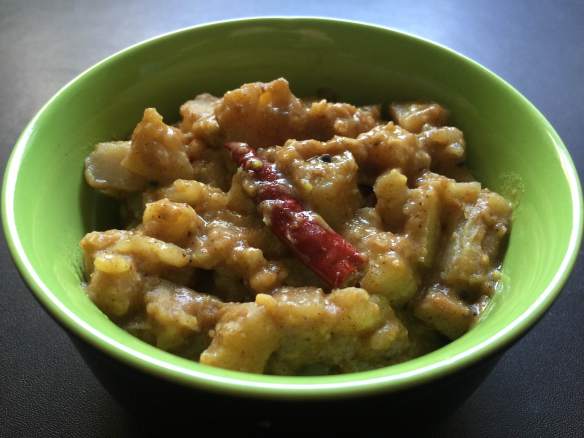
This is one of my favourite kootus, the tanginess combined with the slight sweetness that jaggery imparts along with the crispy coconut flavouring is just yum! I love to eat it as it is, no rice or anything else needed to dress it up for me!

It’s quite versatile also, if you make it a bit runny (like a sambar), it can be eaten with rice. Add some papads or chips to go with it and becomes a delicious meal. When made thicker, it becomes the perfect addition to your meal. Eat with with a rasam or a mor kozambu and lick your fingers!

Vazhakkai Kootu

IMG_5064

Ingredients:
3-4 raw bananas (vazhakai)
3-4 tbsp Toor Dal
1 small lime sized tamarind
2-3 tsps Sambar powder
1.5 tsps oil
1 tsp mustard seeds
1 tsp chana dal
1 tsp broken urad dal
2-3 tbsps coconut
3-4 dried red chillies
1 pinch asafoetida
2 tsps jaggery
Salt to taste

Method:

  • Wash the toor dal and soak it in a some hot water for 10-15 mins. After that pressure cook it and keep aside. Once you can open the cooker, mash the dal well so that it is even.
  • Soak the tamarind in hot to warm water for a while (depending on the size, it should take 20-30 mins). Once it’s soft and cool, mash it with your fingers and extract the juice. You can run it through a seive to make sure you don’t have any fruit in the juice extracted. Alternatively, just buy tamarind paste which is easily available in most Indian stores.
  • In a pan, add the oil and once it is hot, add the mustard seeds. When the seeds begin to crackle, add the chana dal and fry till it starts to change colour. Do not let it get black, as it will then become bitter. Then add the dried red chillies and a pinch of asafoetida and lastly the grated coconut. Keep frying the cocounut until it starts to lose moisture and becomes brown. When the coconut is brown and crisp, remove from the flame and keep aside. We will use this in the end.
  • Peel and chop the raw bananas into small pieces. The pieces should be slightly larger than bite-size. Peel and chop one by one as otherwise the bananas will blacken. While peeling, you can keep a container with water next to you and drop the bananas into it while cutting the next one. This slows the blackening process.
  • When you have chopped all the bananas, cook them in a pan with just enough water to cover them. When the bananas are half cooked, add the tamarind juice to the pan along with sambar powder and salt to taste.
  • Let the tamarind water in the pan come to a rolling boil and let it boil for 5-10 minutes untill the banana is fully cooked. Bananas usually cook very fast so make sure you do not over cook them.
  • Once the bananas are cooked, add in the mashed dal and check for salt. If you want, you can also add the jaggery at the point.
  • When the dal has mixed well with the mixture add the coconut, give it a good stir and switch off the flame.
  • Garnish with a bit of coriander leaves and your delicious vazakkai kootu aka raw banana stew is ready!
  • Serve with rice or rotis for a delicious meal…

Festivals of India: Navratri

With the Ghatasthapana, yesterday marked the start of the nine days of revelry that is the Navratri festival. This festival, which pays homage to the female energy or shakti is dedicated to the nine major Goddesses of the Hindu Pantheon.

Navratri translates to Nav or nine and ratri or nights in Sanskrit. During the nine nights of Navratri, nine forms of Devi or the female energy are worshipped. The tenth day is celebrated as Dusshera or Vijayadashami or The Day of Victory. This comes about as this was the day Lord Ram (of the celebrated Hindu epic, Ramayana) defeated the Demon Lord king Ravana in what is present day Sri Lanka and freed his wife Goddess Sita who was imprisoned by Ravana. The two, along with Lord Rama’s brother Lord Lakshmana who had accompanied his brother and sister-in-law in their exile, then left for home as this day had also ended their fourteen years of exile. The enter the city of Ayodhya in north India around twenty days later, which is celebrated as the festival of Diwali in north India.

Navaratri represents a celebration of the Goddess Amba, (the Power). Navaratri or Navadurga Parva happens to be the most auspicious and unique period of devotional sadhanas and worship of Shakti (the sublime, ultimate, absolute creative energy) of the Divine conceptualized as the Mother Goddess-Durga, whose worship dates back to prehistoric times before the dawn of the Vedic age.

A whole chapter in the tenth mandal of the Rigveda addresses the devotional sadhanas of Shakti. The “Devi Sukta” and “Isha Sukta” of the Rigveda and “Ratri Sukta” of the Samveda similarly sing paeans of praise of sadhanas of Shakti. In fact, before the beginning of the legendary war between the Pandavas and Kauravas in the Mahabharata – a foundational Sanskrit epic in the Hindu tradition – Lord Krishna worshipped Durga, the Goddess of Shakti, for the victory of the Pandvas.

The Navaratri commences on the first day (pratipada) of the bright fortnight of the lunar month of Ashwin. The festival is celebrated for nine nights once every year during the beginning of October, although as the dates of the festival are determined according to the lunar calendar, the festival may be held for a day more or a day less.
This is how Navratri is celebrated in most parts of India, specifically in the north. The first day of Navratri is the Pratipada or Ghatastapana pooja, the second day called Dwitya is the Chandra Darshan Brahmacharini Pujan. The third day is the Tritiya day and the pooja that day is the Sindoor Tritiya Chandraghanta Pujan while the fourth or Chaturti day is the Varad Vinayaka Chauth. The fifth or Panchami day is the Upang Lalita Vrat Skandamata Pujan, while the sixth or Shashti and seventh or Saptami is devoted to the Godess of Learning or Saraswati with the Saraswati Awahan Katyayani Pujan on the sixth day and the Saraswati Puja Kalaratri Pujan on the seventh day. The eighth day is called Ashtami and is the day the Goddess Durga is worshipped with the Durga Ashtami Mahagauri Pujan Sandhi Puja or Maha Ashtami. The last day of the Navratri is called Navami and this day is when you worship your implements of your profession and is called Ayudha Puja or Durga Visarjan or Maha Navami. So on this day, students and professionals will put their books in front of a portrait of Goddess Saraswati, IT guys will worship their computers, farmers will worship their plough, tractors, other professionals will worship what they use the most….you get the point….
Everyday of the nine days has a colour associated with it. Sunday is red/maroon, Monday is white or cream, Tuesday is orange, Wednesday is green, Thursday is yellow, Friday is silver and Saturday is blue or peacock. Most people will try to wear the above colours during the nine days. I remember when I was working in India, almost everyone in the office would be wearing uniform colours depending on the day! I too try to wear the colours as much as possible, but working means you can’t wear colours like silver, so I try to incorporate it somewhere as much as possible.

In our neighbouring state of Gujarat, the Navratri is a huge festival, with the nights reserved for dance. Every day, everyone, be you young or old, will flock to communal grounds and dance the Garba and the Dandiya Raas! This practice is also very popular in Mumbai and I am also nostalgic about this festival when you get a chance to dress up and go and dance the night away!

In Tamil Nadu, dolls and idols are set up on tiers of steps called Golu. Usually in the evening, women and girls are invited to the house of the host and they are given turmeric and betel leaves, called vathailay paaku and asked to sing for the Goddess. On the ninth day, as mentioned, Saraswati Pooja is done which I have blogged before. Books, computers, musical instruments are placed before the Goddess and worshipped.

On the next day, which is Vijayadashami when good overcomes evil, children are encouraged to read the books. The tenth day is also a day for beginings. Most new ventures will start this day. I remember we did BB & GG’s vidhyarambham or the day children formally start learning when they were around two years old on a trip to India during Dusshera day. That day parents make the children write a holy word on a mound of rice and this kind of starts their formal learning journey. Most parents do it just before their children start school, but we did it earlier than usual as the children were scheduled to start daycare a few months after Dusshera and that India trip.

In the evening of “Vijayadasami”, any one doll from the “Kolu” is symbolically put to sleep and the Kalasa is moved a bit towards North to mark the end of that year’s Navaratri Kolu. Prayers are offered to thank God for the successful completion of that year’s Kolu and with a hope of a successful one the next year. Then the Kolu is dismantled and packed up for the next year.

Mysore, in the state of Karnataka is very well-known for it’s Navratri festivities, which is the state festival, with the royal family taking part whole heartedly. On the ninth day of Dasara, called Mahanavami, the royal sword is worshipped and is taken on a procession of decorated elephants, camels and horses. On the tenth day, called Vijayadashami, the traditional Dasara procession (locally known as Jumboo Savari) is held on the streets of Mysore. An image of the Goddess Chamundeshwari is placed on a golden howdah on the back of a decorated elephant and taken on a procession, accompanied by tableaux, dance groups, music bands, decorated elephants, horses and camels. The procession starts from the Mysore Palace and culminates at a place called Bannimantapa, where the banni tree is worshipped. The Dasara festivities culminate on the night of Vijayadashami with a torchlight parade, known locally as Panjina Kavayatthu.

In the eastern state of West Begal, the last four days of Navaratri are particularly celebrated as Durga Puja. This is the biggest festival of the year in this state and exquisitely crafted and decorated life-size clay idols of the Goddess Durga depicting her slaying the demon Mahishasura are set up in temples and other places. These idols are then worshiped for five days and immersed in the river on the fifth day. People in the state go puja mandal hopping and try to make it home irrespective of where they are in the world for the pooja!

Recipes: Mor Keerai aka Greens in Youghurt

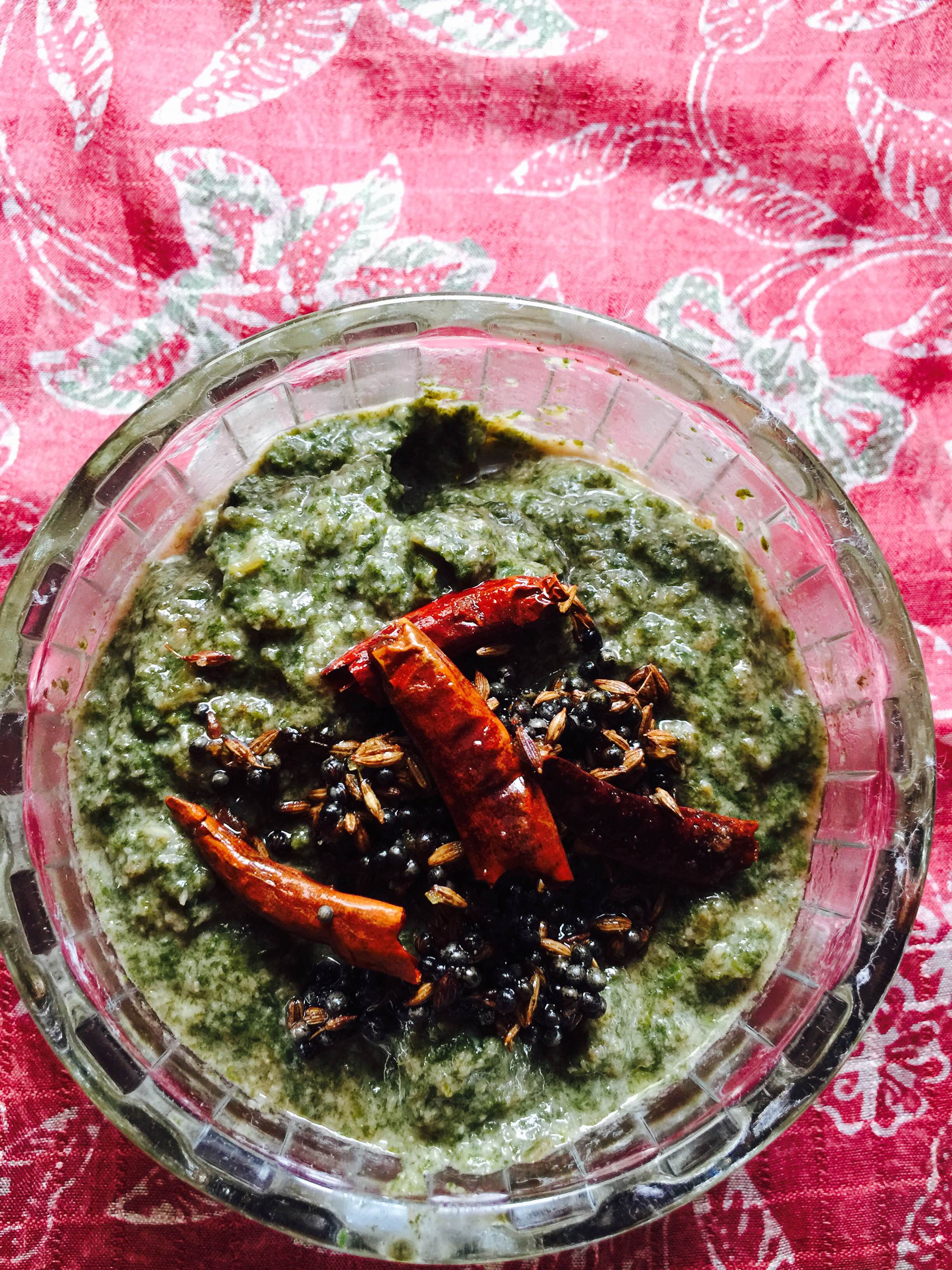
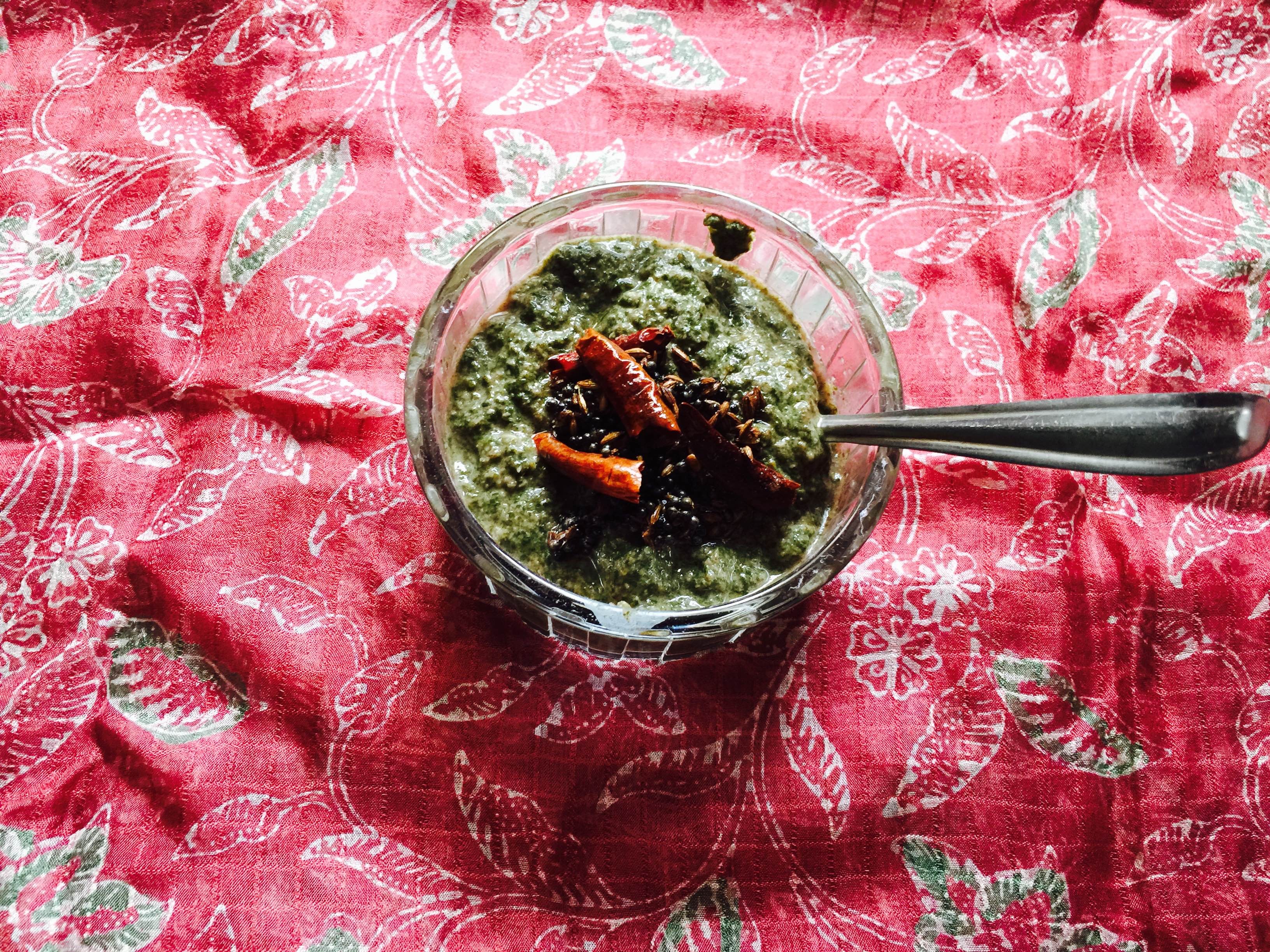
Another very typical tambram recipe is this spinach recipe. You can make this using any greens, and though the look of the dish is not that special (at least mine didn’t look very photogenic), the end result is a very tasty dish, which goes equally well with rice or with any Indian bread.

Mor Keerai

IMG_4683Ingredients:

  • 3-4 heaped cups of chopped and washed greens
  • 1 cup yoghurt which is whisked and smooth
  • 1/3 to ½ cup grated coconut
  • 3-4 red chillies
  • 1-2 tsps cumin seeds
  • 1 tbsp Oil or ghee for seasoning
  • 1 tsp Mustard seeds
  • 3-4 red chillies
  • 1 tsp urad dal
  • A pinch of asafetida

Method:

  • Wash the greens well, making sure that all dirt is washed away.
  • In a pan, put the washed greens with a little water and let it cook.
  • In the meantime, using a bit of the yoghurt, grind the coconut, cumin seeds, green chillies into a smooth paste.
  • Once the greens have cooked, using a potato smasher or stick blender, mash it or blend it coarsely. Then add the coconut paste, yoghurt and salt to taste.
    Let it boil for 5-10 mins and switch off the gas
  • In a smaller pan, heat the ghee or oil and when warm, put the mustard seeds. When the splutter, add the urad dal, red chillies and asafetida powder. Once the urad dal starts to brown, remove from the gas and pour over the cooked spinach.

IMG_4680Delicious Mor Keerai is ready to eat. Serve with rice and rasam as a kootu (make it thicker then) or over rice (make it thinner)