
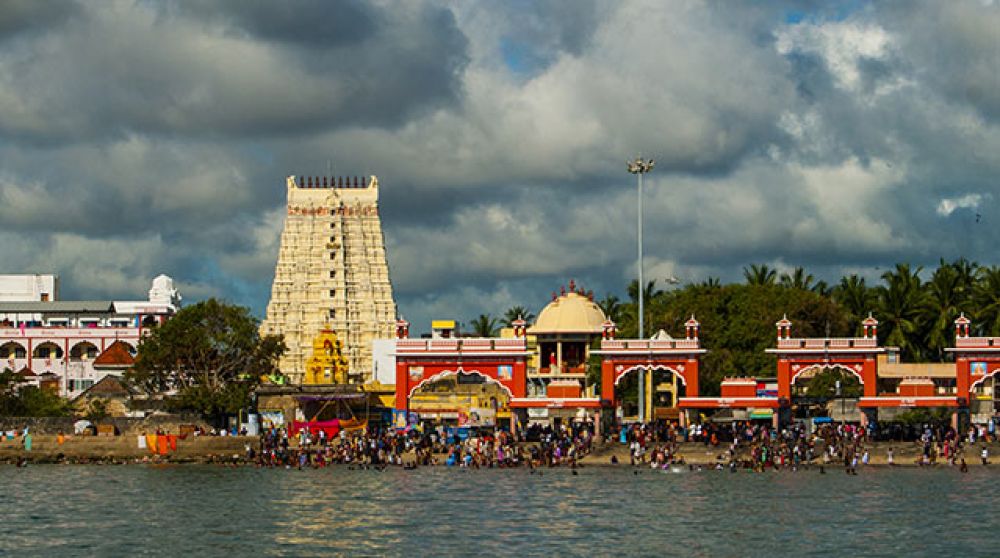
Situated on Pamban Island near the southern tip of Tamil Nadu, the Rameshwaram Temple, also known as Ramanathaswamy Temple, is one of the twelve sacred Jyotirlingas dedicated to Lord Shiva. Surrounded by the blue waters of the Indian Ocean and linked to the mainland by the historic Pamban Bridge, this temple is not only a magnificent example of Dravidian architecture but also a pivotal spiritual landmark. As the site where Lord Rama installed the Shiva lingam to seek absolution before his battle against Ravana, Rameshwaram holds profound significance in the Hindu worldview for purification, liberation, and divine grace. Pilgrims believe that worshipping at this temple grants moksha, or spiritual salvation, making it an essential stop on sacred journeys like the Char Dham circuit.
Rameshwaram’s spiritual essence is steeped in poignant legends, connecting Ramayana’s epic narrative to cosmic faith. According to the Ramayana and Shiva Purana, on his way to Lanka to rescue Sita and defeat Ravana, Lord Rama realised that he must first seek Lord Shiva’s blessings to offset the sin of killing a Brahmin (Ravana being a Brahmin by birth). He instructed his devoted servant Hanuman to bring a Shiva lingam from Kailash (Shiva’s abode in the Himalayas). As Hanuman took longer to return, Sita, Rama’s wife, crafted a lingam out of sand from the seashore, which Rama worshipped with deep devotion. This sand lingam, believed to be the first Shiva lingam at the site, remains enshrined within the temple’s sanctum. Eventually, Hanuman returned with the Vishwalingam, which was installed as a secondary and equally sacred lingam. Devotees honour both, acknowledging the depth of faith and urgency in Rama’s worship. The legend narrates that Shiva appeared before Rama, granted victory over Ravana, and agreed to reside eternally at Rameshwaram to offer salvation and forgiveness to all who came seeking refuge. This divine promise makes Rameshwaram a spiritual gateway, connecting earthly endeavours to cosmic liberation.

Another vital legend is the construction of the Ramsetu, the floating bridge built by Rama’s army of vanaras (monkeys) to cross the sea to Lanka. The site of Rameshwaram marks one end of this mythic bridge; geological and archaeological explorations have sought to locate remnants, further enriching the temple’s connection to divine intervention and epic history.
Rameshwaram’s history blends legendary origins with centuries of recorded devotion. The earliest textual references appear in the Tevaram hymns by Tamil Shaiva saints Appar, Sambandar, and Sundarar during the 7th–8th centuries, testifying to the temple’s antiquity and sacred standing. The present temple’s grandeur largely stems from the Chola dynasty, particularly during the 12th and 13th centuries, when the temple was expanded with monumental corridors, vast halls, and shrines. Subsequent rulers, from the Pandyas to the Vijayanagara Empire, further patronised the site, enriching its architecture and rituals.
Despite threats from natural calamities and political challenges, including the devastating 1964 cyclone that destroyed parts of the nearby town of Dhanushkodi, the temple has remained a vibrant centre of worship and culture, undergoing restorations and expansions into the modern era.
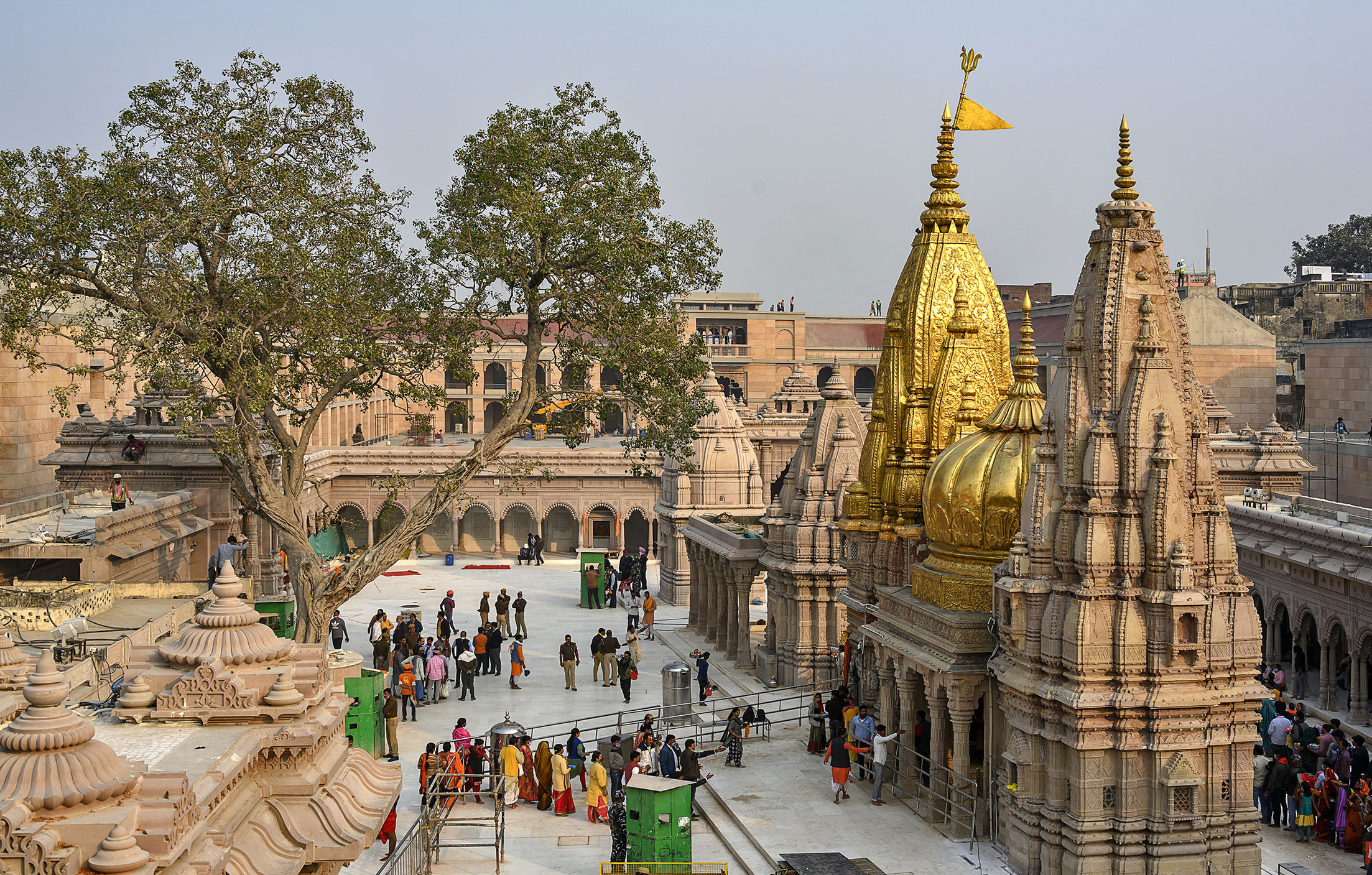
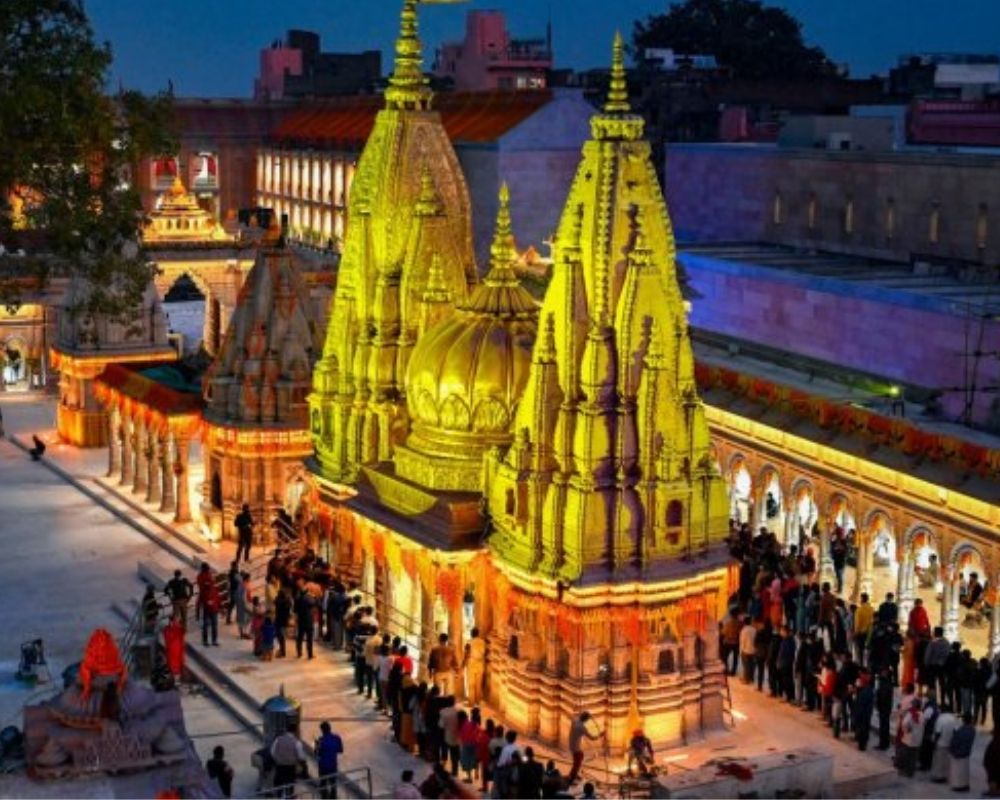
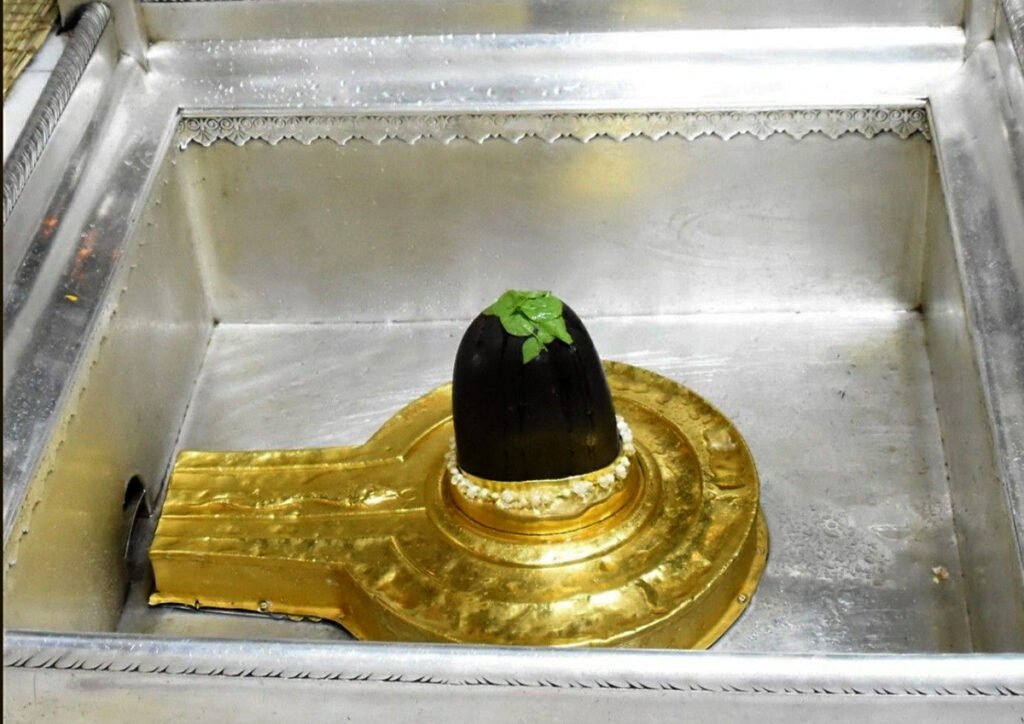
Rameshwaram Temple is famed for its architectural magnificence, particularly its long corridors and ornate detailing. The temple occupies over 15 acres, featuring the longest temple corridors in India, approximately 1,212 meters in length, supported by over 1,200 intricately carved pillars. The main sanctum houses the Shiva lingam with ornate silver and gold adornments. Massive gopurams, or tower gateways, rise prominently, decorated with carvings of deities, mythic scenes, and floral patterns. The use of granite with precise masonry reflects advanced engineering and devotion to durability. The temple complex encompasses 22 sacred water bodies, or theerthams, believed to possess purifying properties, allowing devotees to cleanse their sins before worshipping. Sculpted reliefs narrate stories from the Ramayana and the Shiva legends. The temple houses separate shrines for Vishnu, Parvati, and other deities, contributing to a rich theological tapestry.

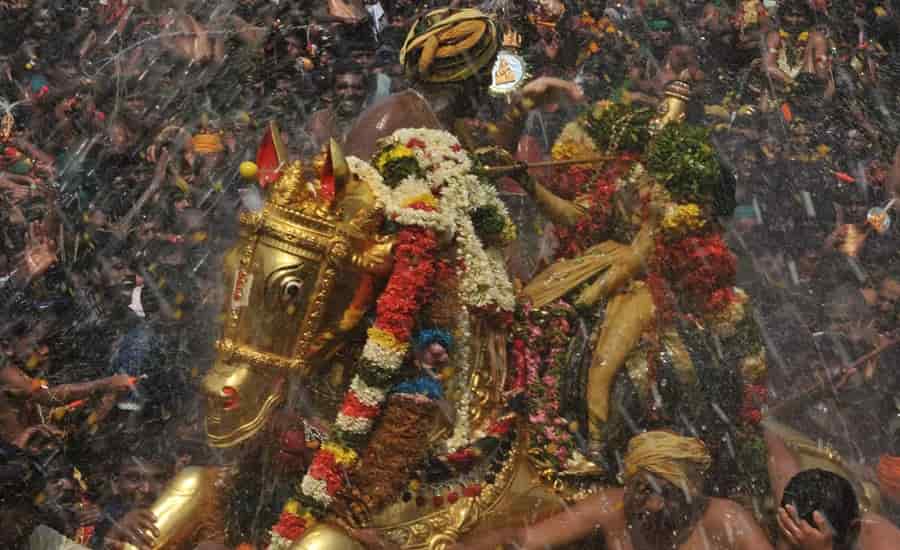
Rameshwaram’s ritual calendar combines intense daily worship with grand festival celebrations. These include multiple abhishekams, or ritual baths, for the lingam with groundwater and holy water; devotional music; chants; lamp rituals throughout the day; and the offering of bilva leaves, coconuts, and camphor during prayers. Devotees often partake in ritual bathing in temple theerthams for purification. During Mahashivaratri, the temple hosts grand night-long prayers, vigils, cultural performances, and fasting, drawing thousands. Navaratri and Deepavali are celebrated with temple illuminations and special worship, and various local festivals incorporate folk music, dance, and community feasts. Local priests, artisans, and community groups actively participate in festival preparations and daily worship, preserving the temple’s sacred traditions.
Visiting Rameshwaram involves spiritual preparation, vibrant local culture, and natural beauty. The temple is well connected by road, rail, and nearby air links via Madurai Airport. Pilgrims often combine visits to Rameshwaram with nearby coastal attractions and Sri Lankan pilgrimage circuits. Numerous dharmshalas, hotels, and eateries provide services for pilgrims while local cuisine offers traditional South Indian vegetarian fare. The temple’s location on a small island surrounded by the ocean and river creates an atmosphere of transcendence and purification, while spiritual chants and ritual sounds echo through the corridors.
The temple has been a vital cultural force in Tamil Nadu and across India. It has been immortalised in Tamil Shaiva literature and folklore glorifying Rama and Shiva. Devotional compositions, classical music, and dance performances celebrate the temple and associated legends. Sculptural motifs from Rameshwaram influence temple art across South India and local crafts and religious iconography draw inspiration from the temple’s mythic themes. Rameshwaram is an iconic pilgrimage and cultural landmark, representing Tamil Nadu’s ancient spiritual heritage and India’s pan-Hindu ethos.
The temple is managed by state religious trusts, maintaining rituals, pilgrim facilities, and temple infrastructure. Tourism is vibrant, especially during festivals, with a wide range of comprehensive amenities for visitors. Ongoing conservation efforts maintain the structural and artistic integrity of the centuries-old temple, while environmentally sensitive initiatives protect the surrounding island ecosystem.
Rameshwaram Temple is more than a monument; it is a living tradition where myth, architecture, devotion, and culture fuse. From the sands of a humble lingam to the grandeur of a sprawling complex, it marks a transcendental journey toward divine grace and liberation. Within the sacred corridors, whispered prayers and ancient chants carry the hope of generations, underscoring the temple’s eternal role in India’s spiritual and cultural landscape.






 Memories and Such