Festivals of India: Lai Haraoba

The Lai Haraoba Festival is one of the oldest and most important events in Manipur, India. Rooted in the beliefs of the Meitei people, this festival is deeply connected to their earliest stories about the world’s creation. Every part of the festival, from its dances and music to its careful rituals, is a living link to ancient times. But it’s also a festival that keeps changing with each generation.

Lai Haraoba means “Merry-making of the Gods” or “Pleasing the Deities.” The festival started long before Hindu traditions arrived in Manipur. It goes back to a time when the Meiteis followed their own religion, Sanamahism, and honored a vast group of native deities called Umang Lai, meaning “forest gods.”

Lai Haraoba isn’t just a celebration for the gods. It’s a reenactment of the Meitei creation story. Performers act out how the world was formed: land, water, plants, animals, and humanity all came to life according to Meitei myth. And it’s not just one single deity who’s honoured. There are about 364 Umang Lai, each with their own legends and special rituals in villages and neighborhoods across Manipur.

Central to Lai Haraoba is the creation myth. In these stories, godly figures such as Sanamahi, Nongpok Ningthou, and Panthoibi are credited with creating the universe and everything within it. According to legend, the gods once performed Lai Haraoba themselves on Kubru Hill so that their descendants, humans, would know how to honour and imitate them. The rite shows how close the relationship is between the people and their deities, as well as between the residents of Manipur’s hills and plains.

Much of the festival plays out the love story of Nongpok Ningthou and Panthoibi. This divine couple symbolises cosmic forces and the cycle of creation. Their courtship, love, and union are performed in ritual dance and song, showing how the world’s forces come together to create and sustain life.

There are four main types of Lai Haraoba, each with its own local traditions:

  • Kanglei Haraoba: Common in many parts of Manipur’s valley region.
  • Moirang Haraoba: Centred in Moirang.
  • Kakching Haraoba: Celebrated in Kakching.
  • Chakpa Haraoba: Held in villages like Andro, Phayeng, Sekmai, and others.

The main structure of the festival is similar everywhere, but the details, specific hymns, dances, and local customs can differ. This variety keeps the festival both rooted and flexible from one community to another.

The celebration of Lai Haraoba is carefully structured into three major parts: the beginning (Lai Eekouba), the middle (Haraoba), and the end (Lairoi). The order and number of days can vary, from just a few to more than three weeks.

Opening the Shrine or Lai Eekouba: The festival starts by opening the usually locked doors of the community shrine, an action considered highly sacred. The inside is cleaned and prepared, with special songs and ritual washing of sacred objects and clothes. Sometimes, preparations start days beforehand, such as fermenting rice for rice beer, a key ritual item.

A procession led by the maibi (priestess) and sometimes maiba (male priest) heads to a river or pond. They bring sacred objects, make offerings, and invite the deity’s presence through water and chanting. The maibi might enter a trance and deliver oracles from the gods. The night ends with the pena, a traditional fiddle, playing music intended to “rest” the deities.

The Ritual Dance of Creation or Laibou: Dances and rituals performed during Lai Haraoba are called laibou, meaning “work done for the gods.” These are the heart of the festival, staged before the assembled village, often near the shrine or a sacred tree. Every aspect of human life and creation is re-enacted through dance, forming the human body, birth, farming, spinning, weaving, house-building, and other necessities. Each process, even the act of drawing the baby’s eyes or forming a fist, is acted out slowly and symbolically by the maibi.

Following the creation story, the ritual dances proceed through making a house, growing and weaving cotton, and preparing clothing. At one point, fishing is performed as a symbol of adulthood and desires. All the movements are slow, careful, and filled with ancient meaning.

Music is a constant feature. The pena, a simple fiddle, is played every day, marking morning and evening rituals. There are collective songs such as the “hoi laoba” and “wakol laoba,” with all participants shouting or singing together. The maibi delivers oracles: messages said to come straight from the deities. These can include advice for the year, warnings, or encouragement.

Several ritual dances have become icons of Lai Haraoba. The most significant are

  • Laiching Jagoi: Performed by maibis to “invite” the gods.
  • Khamba-Thoibi Jagoi: Tells the story of legendary lovers Khamba and Thoibi, replacing the older Panthoibi Jagoi in some places.
  • Tang Jagoi: A dance with fire and holy knives to drive out evil spirits.
  • Panthoibi Jagoi: The original romantic duet dance that honors the divine love story.

Modern celebrations can also include other folk, martial, and sometimes even Bollywood-inspired dances, adapting to today’s audiences.

The spiritual work of the festival is led by the maibi (woman priest) and maiba (man priest). Maibis, in particular, occupy a unique place as living channels between world and spirit. They lead most of the key rituals, dances, and oracles, sometimes entering trance to “speak” for the gods.

Rice beer, fruits, flowers, and hand-woven cloths are common offerings. The presentation of these gifts is an important act, meant to please the deities and ensure blessings for the coming year. Each offering has its own order and significance and is usually placed on banana leaves or in traditional baskets.

The festival is not just a religious event but a key part of social life. Each family or clan takes responsibility for certain rituals or offerings, and the festival provides a place for all generations to participate, from children to elders. It’s a practical lesson in Meitei life: how to build, weave, farm, worship, and come together as a community.

The story of Nongpok Ningthou and Panthoibi is a favorite, often dramatised as a flirtatious, complex drama. Sometimes, this story is merged with other folk legends, like Khamba and Thoibi of Moirang. In some versions, Panthoibi is portrayed as a Tangkhul (hill tribe) girl, illustrating the ancient bond between the people of the hills and plains. This is just one example of how the festival weaves together history, myth, and lived experience.

Though deeply traditional, Lai Haraoba is not frozen in time. As society evolves, so do the celebrations. Some villages add new performances or blend in more accessible forms of music and dance. The use of modern lighting and sound is more common now. But the old forms still remain at the heart, especially in more remote or tradition-focused communities.

During the festival, certain taboos and customs are observed, like periods of fasting or avoiding “unclean” acts. Community feasts are common, where all take part regardless of social status. Men, women, and children all join in some aspect of the ritual or celebration. And while the festival is religious, it’s also a time for courtship, gossip, settling disputes, and reinforcing social norms.

Lai Haraoba usually happens in the spring and summer, following the local lunar calendar. It can be held at any one of the many neighborhood shrines dedicated to an Umang Lai, so multiple celebrations may happen across Manipur at once, or even, nowadays, in other parts of India and among the Manipuri diaspora.

Lai Haraoba is more than ritual; it’s Manipur’s living cultural memory. It teaches the origins of life, the skills for survival, and the values to live by. Some see it as a form of community education, where children learn through watching, imitating, and participating.

And yet, the festival doesn’t ignore reality. There is room for fun, for complaints, and even for critical jokes about the village’s leaders. It holds both the grave and the playful. For as long as the festival is kept, the past remains present, and Manipur’s stories continue to unfold.

Sacred Stones, Spaces, and Stories: Divya Desams Part 4

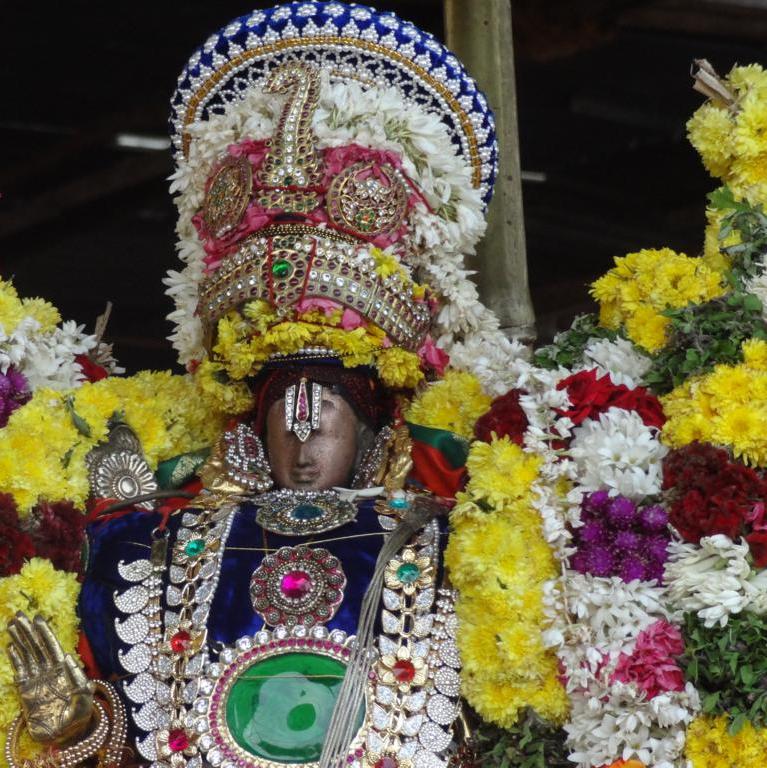
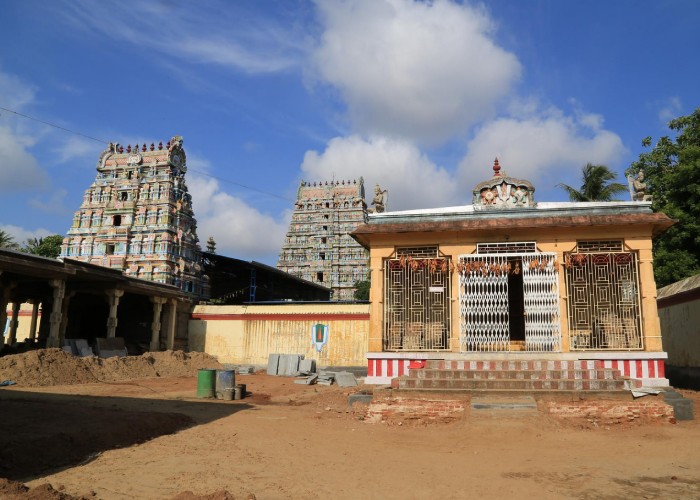
Pundarikakshan Perumal Koil, Thiruvellarai, Tamil Nadu
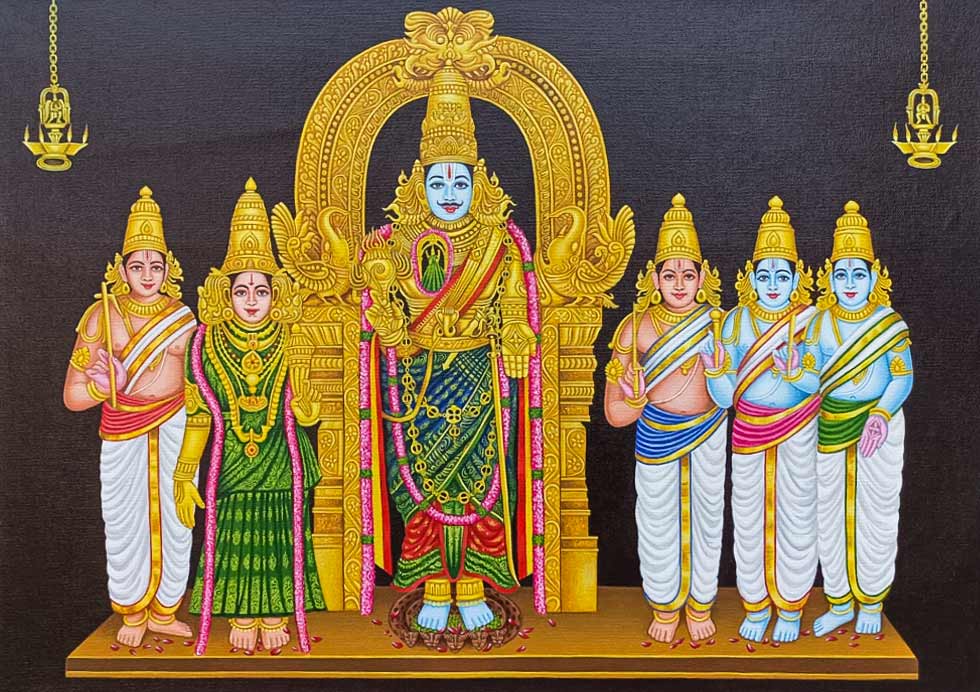
Located in Thiruvellarai, a village 15 km northwest of Tiruchirappalli in Tamil Nadu, the Pundarikakshan Perumal Temple is one of the 108 Divya Desams, sacred Vishnu sites praised by the Alvars. The name means “white rock,” from the pale granite hills around it. Here, the goddess gets first honours in worship, flipping the usual order. Some say it’s older than Srirangam, but archaeology points to 8th-century caves, not millions of years.​​

Legends start with King Sibi Chakravarthy of Ayodhya. Hunting demons, he camped here. A white boar dashed past and hid in an anthill. Sage Markandeya, doing penance nearby, told Sibi to pour milk into the hole. Vishnu emerged as Pundarikakshan, the lotus-eyed lord. The sage said build a temple, but bring 3700 Vaishnavites from the north to do it right. Sibi did. But one worker died en route. Short 3700, the king worried. Vishnu slipped in disguised as Pundarikakshan, the 3700th. That’s why the deity faces west, watching the road the migrants came from. Another tale has Lakshmi doing penance here. Vishnu appeared as Sengamala Kannan. She became Pankajavalli, the lotus lady. Shiva, as Neelivaneswarar, worshipped here to shed Brahma’s severed head sin.​​

Pallavas carved the rock-cut caves in the late 8th century, under Nandivarman II and Dantivarman. Inscriptions prove it. Cholas added later, like Parakesarivarman endowing Krishna’s shrine around 950 CE. The Pandyas, Hoysalas, Vijayanagara kings layered on halls and walls. A 1262 flood wrecked it; a merchant rebuilt it. Ramanuja spent time here, teaching. Uyyakondar, his disciple, was born nearby. Thirukurukai Piran Pillai too. That ties it to Sri Vaishnava roots. Unique spot: 100-pillar hall, rare in smaller Divya Desams. White rocks gave the name, but also shaped early digging, nature forced the builders’ hand.

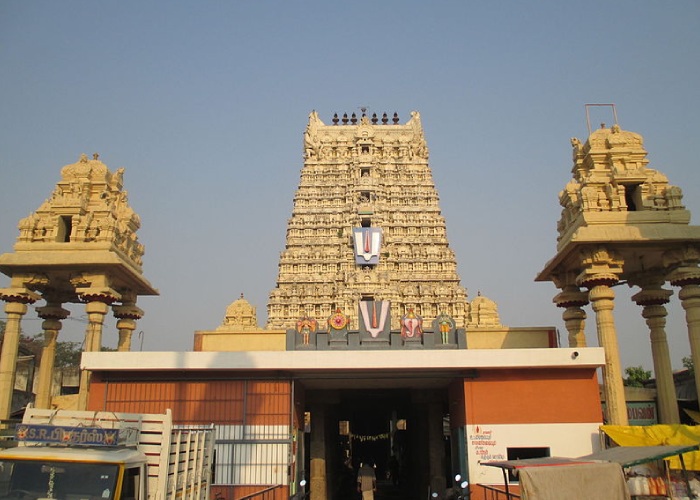
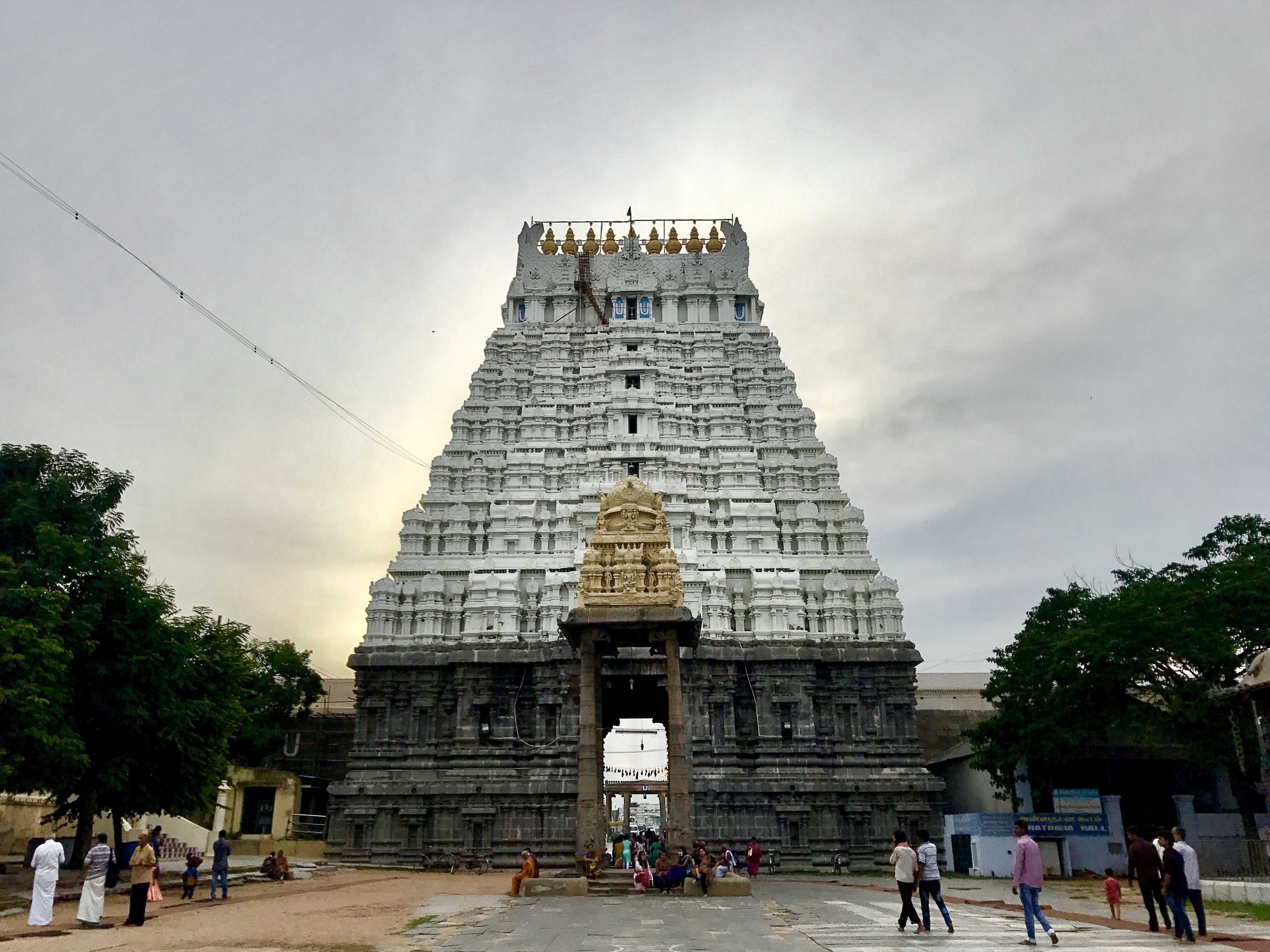
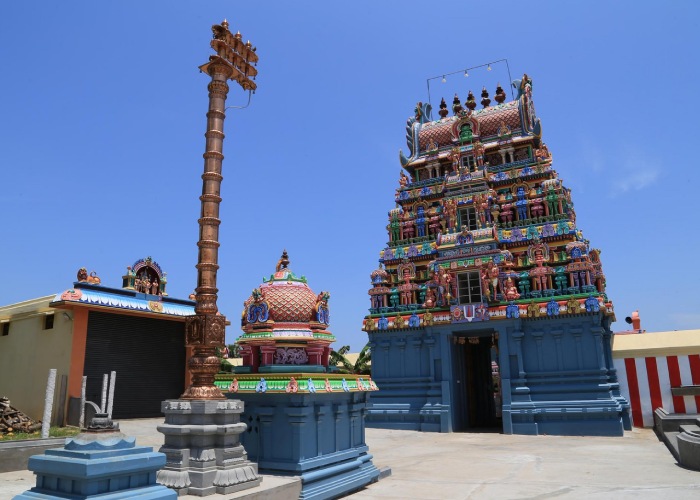
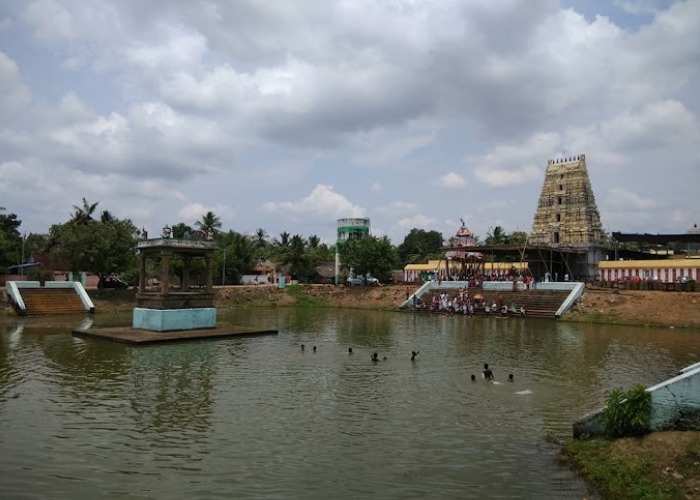
Dravidian style rules: granite walls, three-tier rajagopuram at the gate. Complex spreads over a low hill, with Pundarikaksha Theertham tank for rituals. Main sanctum holds west-facing Pundarikakshan, seated. Pankajavalli shrine separate but central. 100-pillar mandapam stands out with carvings of avatars, dancers, and lotuses. Rock-cut caves from Pallavas hold old inscriptions. Later gopurams mix Chola bulk with Nayak flair. No wild innovations, but tight layout on rocky ground shows smart adaptation. Pillars tell epics; walls mix gods and beasts.

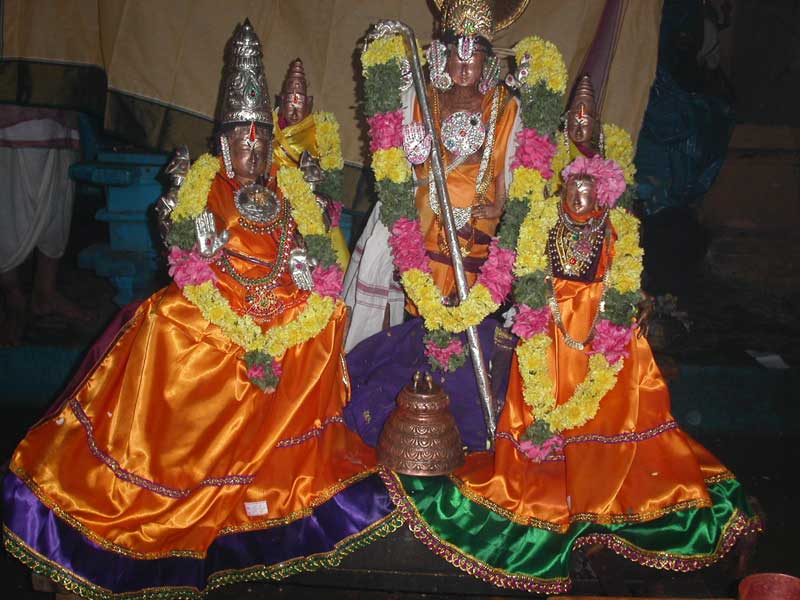
The temple features six daily pujas: alangaram, naivedyam, and deepa aradanai. Nagaswaram and tavil play, with the priests chanting the Vedas. The goddess goes first: Pankajavalli gets decorated, fed, lit before her lord, a rare switch.

The Brahmotsavam in Panguni (Mar-Apr) takes place over 10 days, with Garuda Sevai and processions. Vaikunta Ekadasi opens the gates of paradise while Panguni Uthiram allows worshippers to witness the divine wedding. Chariot festival key, a community feast, is unique and centuries old. It is believed that a dip in the tank during the month of Karthigai in November enhances fertility.

From Trichy, buses or autos cover 15 km on flat roads past fields and the Kollidam river. The Alvars sang 11 paasurams here, baked into Nalayira Divya Prabandham. Ramanuja’s stay shaped commentaries while hymns fuelled songs, and dances at festivals.

The temple is managed by the Hindu Religious and Endowments Board and is affiliated with the Srirangam administration. The temple gopuram was recently restored using ancient methods with the help of IIT Madras, which they also documented. The festivals mostly draw a local crowd, with not many tourists here. Online bookings help, though demographics show more than 80% visitors are devotees and the rest are history fans.

Thiruvellarai anchors the Divya Desam net as a quiet elder. Myths test kings and gods; history stacks layers from cave to tower. The goddess-first worship questions male-led norms. The temple is small, but packed; it shows heritage thrives in villages, not just cities.

Vadivaḻagiya Nambi Perumal Koil, Anbil, Tamil Nadu
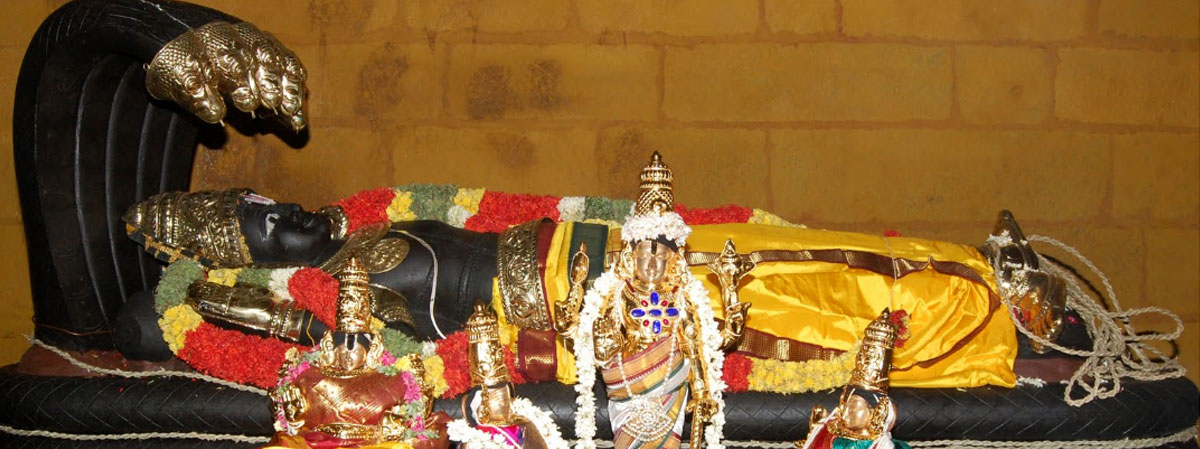
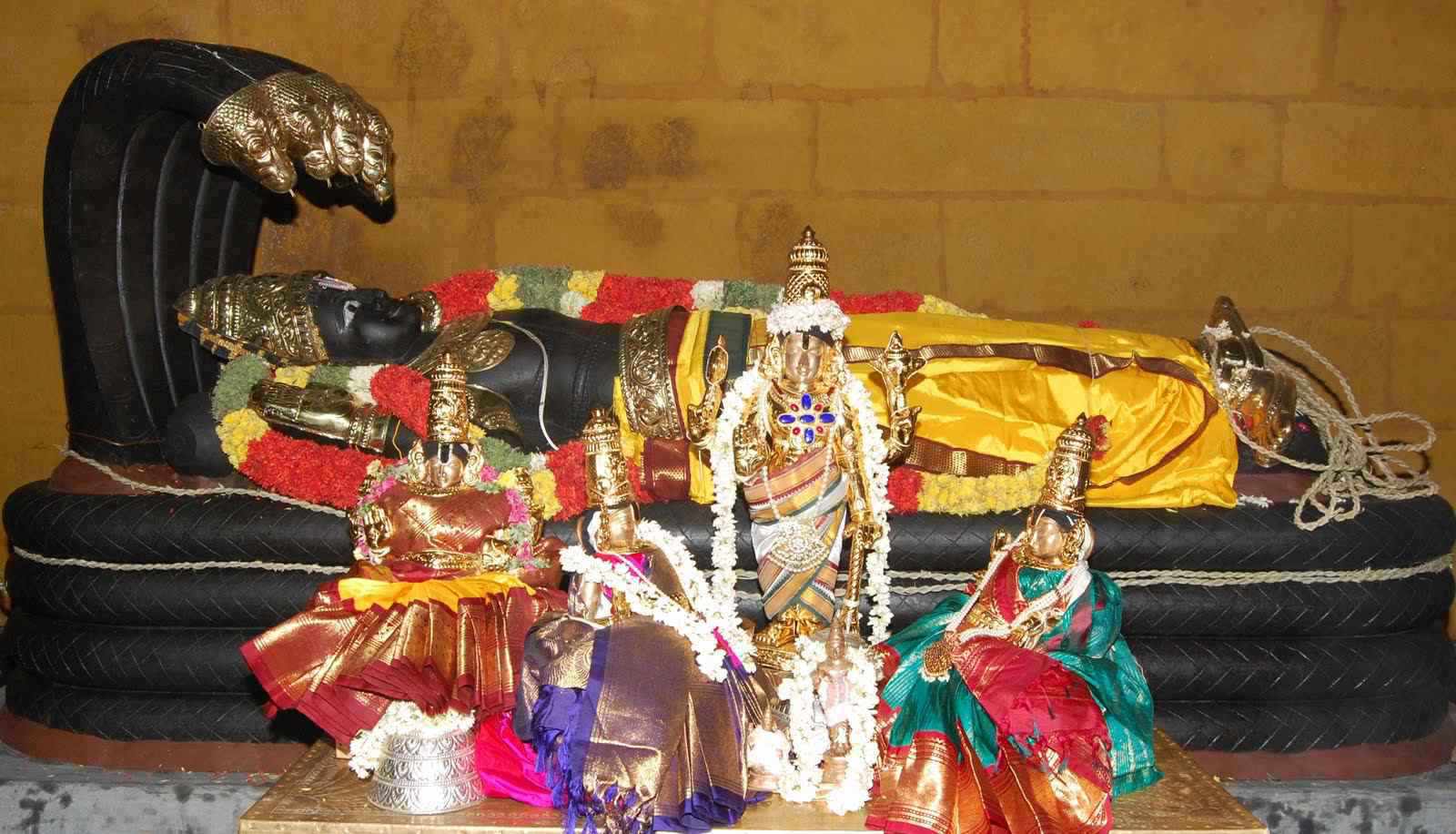
The Vadivazhaga Nambi Perumal Temple stands in Anbil village on the north bank of the Kollidam River, just 12 km from Tiruchirappalli in Tamil Nadu. Known also as Sundararaja Perumal Temple, it ranks among the 108 Divya Desams, sacred Vishnu abodes praised by the Alvars. Vishnu reclines here as the strikingly handsome Sundararajan, flanked by Sundaravalli Thayar. Thirumangai Alvar dedicated one hymn to it. Some claim idols date to Pandava times, but Chola inscriptions from the 8th century provide the firmest evidence.

Legends centre on Brahma’s pride in his creation. Arrogant about his beauty, he earned Vishnu’s curse to live as a mortal. Brahma performed penance at Anbil. Vishnu appeared in irresistible splendour, lifting the curse. Hence the name Sundararajan, the lord of beauty. The site earned “Anbil,” meaning “not agreed,” from a debate where even sage Valmiki disputed Vishnu’s finest form until the deity resolved it here.

Another tale features sage Manduka meditating underwater. Sage Durvasa cursed him into frog form for neglect. The frog worshipped Vishnu and regained human shape. The demon Kalanerai harassed rishis Bhrigu and Markandeya. Vishnu slew it as an arasa maram tree, then reclined on Adisesha. Shiva arrived seeking relief from his curse, the Brahma head stuck to his hand dropped after Vishnu offered rice.

These accounts overlap and contradict. Was Brahma cursed once or twice? Demons shift names. Myths prioritise themes over timelines: beauty humbles the creator, devotion redeems the cursed, and grace crosses sects as Shiva bows to Vishnu. If beauty dissolves pride, it challenges hierarchies in Vaishnava lore. Frog-to-sage underscores form yields to faith.

Medieval Cholas constructed the core structure in the late 8th century. Copper plates record their land grants and endowments. Vijayanagara kings and Madurai Nayaks expanded it later with halls and inscriptions detailing donations and festivals. Floods ravaged it in the 1260s, prompting local rebuilds. Unlike Srirangam’s raids, Anbil faced mainly river threats, yet survived through community effort. Thirumangai Alvar’s paasuram secured its Divya Desam status around the 8th century. Ties to Ramanuja’s Tenkalai tradition strengthened its Vaishnava role. Its unique location near the Grand Anicut, the Cholas’ irrigation feat, links temple life to agriculture. Rulers funded it as a power symbol; floods remind us that nature, not just kings, shapes survival.

Standard Dravidian granite buildings span 1.5 acres. A three-tier east-facing rajagopuram marks the entrance. In the sanctum, Sundararajan reclines on Adisesha with Sridevi, Bhoodevi, and Brahma at his feet. The Tharaka Vimanam roof echoes the gopuram shape, a subtle innovation. Subsidiary shrines honour the 12 Alvars, Narasimha, Venugopalar, Lakshmi Narasimha, and Hanuman. Carvings depict epics and lotuses on pillars and walls. The Pushkarini tank supports ritual baths.

Six daily pujas follow the Tenkalai style: alangaram for decoration, neivethanam for food offerings, and deepa aradanai for lamps. Nagaswaram pipes and tavil drums accompany Vedic chants. The temple Brahmotsavam spans 10 days in Chittirai (April-May) with processions. The Maasi Tirthavari (February-March) features river baths for the deity, while Vaikunta Ekadashi draws crowds.

One can reach Anbil by bus or auto from Trichy, tracing the Kollidam through fields. Village lanes lined with flower vendors lead to the temple gate. Remove shoes for darshan, often under 30 minutes during off-peak times.

Today, the TNHR&CE Board oversees operations with annadhanam feeding devotees daily. Flood defences continue, including raised walls and drainage fixes. The temple festivals pull locals mainly, with not many tourists drifting off the tourist circuit.

The Vadivazhaga Nambi Perumal Temple at Anbil holds its place in the Divya Desam circuit as a quiet riverside survivor. Its myths show gods humbled by beauty and devotion, while history reveals layers from Chola foundations to Nayak expansions, tested by relentless floods. The compact Dravidian design and village-scale rituals keep it grounded in daily life, far from grand temple-cities. This temple proves the circuit’s strength lies in such modest spots, weaving farm rhythms and river threats into India’s spiritual fabric. Visit to walk the Kollidam banks, ponder pride’s fall, and feel grace etched in reclining stone. In the end, Anbil reminds us that enduring faith thrives not in spectacle, but in steady flow.

Appakkudathaan Perumal Koil, Koviladi, Tamil Nadu
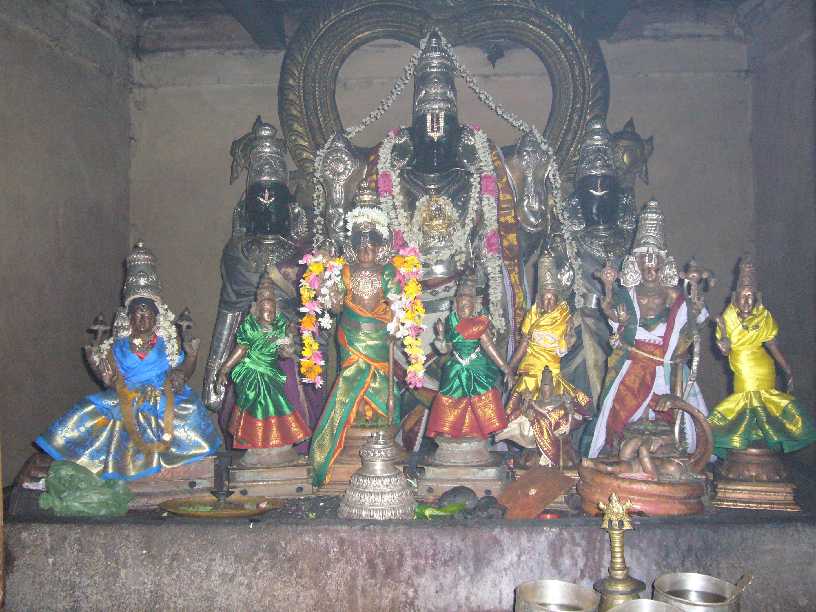
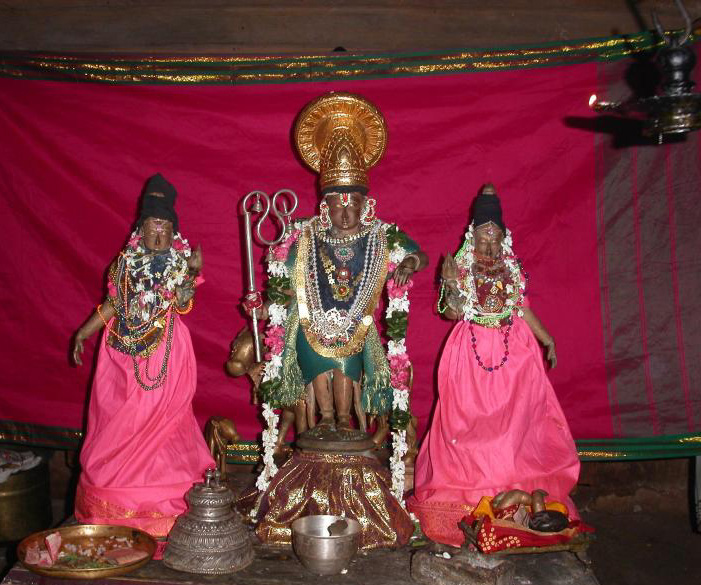
Located on the south bank of the Cauvery River, in Koviladi village, about 16 km from Tiruchirapalli in Tamil Nadu, the Appakkudathaan Perumal Temple is one of the 108 Divya Desams. Lord Vishnu is enshrined here as Appakkudathaan, forever holding a pot of sweet appam in his right hand. This site ranks among the five Pancharanga Kshetrams along the river, with legends claiming it predates even Srirangam upstream. But Chola inscriptions from the 9th century provide the earliest solid evidence, while floods have repeatedly challenged its survival.​

The main legend tells of King Uparisravasu, who accidentally killed a brahmin while hunting. The sin of brahmahatti dosha gripped him, worsened by Sage Durvasa’s curse that sapped his strength. To atone, the king fed thousands daily; accounts vary between 10,000 and 100,000. One day, Vishnu arrived disguised as a starving old man, devoured all the food, and requested a pot of appam. The king obliged. Vishnu revealed his form, lifted the curses, and stayed reclined with the pot as a reminder of grace through simple service.​

Sage Markandeya faced death at 16 from Yama. He prayed here, and Vishnu intervened, also humbling Indra’s arrogance. Another story positions Appala Ranganatha as pacing the steps toward Srirangam, earning the name Koviladi, the “first temple.” Periazhwar sang his final mangalasasanam here before ascending to Vaikunta. These tales overlap in details, like feast numbers or curse sources.

Cholas laid the foundations in the 9th-10th centuries. Aditya Chola’s inscriptions: numbers 283, 300, 301, 303 from 1901, detail donations for halls and Vedic scholars. Later Cholas, Pandyas, Vijayanagara rulers, and Nayaks expanded with prakarams and shrines. Unlike raided giants, Koviladi endured the Anglo-French wars nearby without noted damage, though the Cauvery floods demanded repeated rebuilds.​

Alvars, including Nammalvar, Periazhwar, and Thirumangai, immortalised it in paasurams. It served as a Vedic learning centre, drawing scholars. Periazhwar’s final praise marks it for moksha seekers. Downstream from Srirangam, it forms a river-linked chain, not an isolated outpost. History shows adaptation: rulers endowed, floods rebuilt, saints embedded it in faith networks.​

Granite Dravidian style hugs the riverbank. A three-tier Rajagopuram looms after 21 steps up. Inside, east-facing Appakkudathaan reclines on Adisesha in the sanctum, appam pot gripped tight, accompanied by Sridevi and Bhoodevi. Sowmya Nayaki claims a separate shrine. Prakarams encircle with sub-shrines for Alvars, Venugopala, and others. The vimana stays modest, echoing early Chola restraint.​ Pillars bear epic carvings, lotuses, and dancers. The Cauvery pushkarini enables ritual baths. No radical breaks from style, but systematic subsidies mirror Srirangam, 9th-10th century hallmarks. Compact form suits flood-prone ground, prioritising endurance over scale.​

Daily rhythm follows six pujas: alangaram dresses the deities, neivedyam offers food topped by appam, the only Divya Desam to do so daily, and deepa aradanai waves lamps amid nagaswaram, tavil, and Vedic chants. Brahmotsavam lights up Panguni with processions. Vaikunta Ekadashi opens paradise gates. Periazhwar Utsavam honours his departure. Locals stir appam pots, fund annadhanam, and line streets; threads of community weave the rites.​

Buses from Trichy cross the Cauvery through paddy fields, dropping at village paths lined with flower stalls. Climb to the gate, shed shoes, and find darshan swift on weekdays. Festival river dips cleanse body and spirit. Locals pour tea, recount Periazhwar’s ascent: “Pray here for a straight path to Vaikunta.” Flood scars linger in tales: “The Lord stemmed the waters once.” Quiet banks invite chants, reflection amid flowing river life.​

Nine Alvar paasurams echo in the Nalayira Divya Prabandham, recited in every puja. Periazhwar’s closing praise fuels songs and dances at festivals. Appam lore peppers village stories, Vedic past shapes farm rituals. Weddings and fairs orbit the temple, anchoring identity. Less spotlight than upstream kin, but it pulses through Koviladi’s daily beat, faith as staple, like its namesake sweet.​

Appakkudathaan claims its Divya Desam spot as Cauvery’s quiet link. Myths feed grace through appam pots; history stacks Chola stones atop flood-tested bases to Nayak crowns. Village intimacy endures where giants might falter. Pre-Srirangam boasts falter against inscriptions. Yet it binds the circuit, farms flooded, prayers offered, river flowing. Visit to savor appam prasadam, trace banks, balance legend with granite truth. Heritage endures not in towering claims, but pots of plain devotion.

Sacred Stones, Spaces, and Stories: Divya Desams Part 3

Thirukoḻi Temple, Uraiyur, Tamil Nadu
Thirukoḻi Temple, now often referred to as Nachiar Koil, stands in Uraiyur, a suburb of Tiruchirappalli in Tamil Nadu. It’s one of the 108 Divya Desams, the sacred temples dedicated to Vishnu. But this place flips the usual script. Here, the goddess takes centre stage. Kamalavalli Nachiyar leads every procession, while the god follows. That alone makes the temple worth a closer look.

The story behind Thirukoḻi begins with a curse and a childless king. Rishi Brighu cursed Lakshmi to be born as a mortal. Meanwhile, Nanda Chola, a Chola king desperate for an heir, prayed to Mahalakshmi. His prayers worked. While hunting near a lotus pond, he found a baby girl nestled among the petals. He named her Kamalavalli, the child of the lotus. When Kamalavalli grew up, she visited Srirangam and fell in love with Ranganatha, the reclining Vishnu. She vowed to marry him. Ranganatha appeared in the king’s dream, revealing that the girl was Lakshmi herself. The king dressed her in bridal clothes and took her to Srirangam. As she approached the deity, she vanished. Ranganatha had accepted her. To honour the marriage, Nanda Chola built a temple at Uraiyur. Vishnu appears here as Azhagiya Manavala Perumal, the beautiful groom, standing in a wedding pose, facing north. Kamalavalli sits beside him, lotus in hand, as his bride. Another legend adds local flavour. A fowl and an elephant fought at this spot. The fowl won. So the place became known as Kozhiyur, kozhi meaning fowl in Tamil.

The temple likely existed before the seventh century, though exact dates blur into the past. The Medieval Cholas built the core structure around the eighth century CE. Later dynasties: Pandyas, Vijayanagar kings, Madurai Nayaks, added layers, renovations, and inscriptions.

Uraiyur itself holds weight in Tamil history. It was the early capital of the Chola dynasty, one of the great powers of South India. Karikala Chola, a legendary ruler known for building the Grand Anicut on the Kaveri River, made Uraiyur his base before the capital moved to other cities. The town thrived as a centre of trade and cotton production during the Sangam period, from 300 BCE to 300 CE. The temple also marks the birthplace of Thiruppaan Alvar, one of the 12 poet-saints who sang hymns to Vishnu. Thiruppaan’s verses appear in the Nalayira Divya Prabandham, the sacred canon of the Alvars. His presence here connects the temple to a broader spiritual and literary movement that shaped South Indian Vaishnavism.

The temple follows classic Dravidian design. A granite wall surrounds the complex, enclosing shrines, courtyards, and water tanks. The five-tiered Rajagopuram, the gateway tower, rises above, marking the entrance with carvings of gods, mythic creatures, and scenes from epics. Inside, the main shrine houses Azhagiya Manavala Perumal, standing in wedding attire and facing north. North-facing shrines are rare in Divya Desams, making this layout unusual. Kamalavalli Nachiyar sits beside him, no separate sanctum, lotus in hand. The vimana above the shrine is called Kamala Vimanam.

The temple has separate shrines for Ramanuja and Nammalvar, two towering figures in Vaishnavite tradition. Inside the Nammalvar shrine, paintings line the walls, images of Vishnu’s avatars, Vaishnava teachers, and scenes of dharma and justice. These murals date to the early 1800s, bright hues fading but still vivid. The layout isn’t grand by the standards of Srirangam or other large temple-cities. But it’s intimate, with detail packed into every corner. Carvings, inscriptions, and architecture all speak to centuries of devotion and craft.

Worship at Thirukoḻi follows a strict daily rhythm. Priests perform rituals six times a day, from 7 am to 8 pm. Each ritual has three steps: alangaram (decoration), neivethanam (food offering), and deepa aradanai (waving of lamps). During the final step, nagaswaram pipes and tavil drums fill the air, priests chant from the Vedas, and devotees prostrate before the temple mast.

The temple honours the goddess first in every ritual and procession. Kamalavalli Nachiyar moves ahead; Azhagiya Manavala Perumal follows. This reversal of typical temple hierarchy gives Thirukoḻi its nickname: Nachiar Koil, the goddess’s temple.

Festivals bring drama. Serthi Sevai, the homecoming festival, is the biggest. During the Tamil month of Panguni (March–April), the processional idol from Srirangam, Namperumal, arrives at Thirukoḻi. The images of Namperumal and Kamalavalli are adorned together in the Serthi hall, celebrating their eternal union. Special rituals, processions, and thousands of pilgrims fill the temple grounds.

Another festival honours Thiruppaan Alvar’s birthday. His processional idol is brought from Thirukoḻi to Srirangam, where he receives grand honors: a silk turban, garlands, sandal paste, and a shawl. These gestures are meant to bring a smile to the saint’s face. After, the idol visits the shrines of Nammalvar and the goddess, accompanied by chanting from the Nalayira Divya Prabandham. Other festivals: Dolostava, Vasanthothsava, and Navaratri keep the temple active year-round. Community involvement runs deep. Locals prepare offerings, organise annadhanam (free meals), and maintain traditions passed down through generations.

Reaching Thirukoḻi is straightforward. The temple sits about three km from Tiruchirappalli Junction, connected by frequent town buses and auto-rickshaws. The surrounding streets are busy with vendors selling flowers, garlands, and incense. The atmosphere is lived-in, not curated for tourists. Pilgrims remove their shoes at the entrance and step into a different rhythm. The temple is open from 5 am to 12:30 pm. and again from 4:30 pm. to 8:30 pm. Devotees line up for darshan, waiting patiently, sometimes in the heat, sometimes in the rain. After darshan, many sit near the water tanks or under the shade of temple trees. Some walk to the shrine of Thiruppaan Alvar or Nammalvar, pausing to reflect or chant. The temple feeds a hundred devotees daily through its annadhanam scheme, funded by donations. Sharing a meal in the temple hall becomes part of the experience: food as blessing, community as ritual. Local hospitality shows in small gestures: directions offered, prayers shared, stories told. Uraiyur feels quieter than Trichy proper, less rushed. The pilgrimage isn’t about ticking off a site, it’s about slowing down, noticing details, and absorbing the place.

Thirukoḻi shaped Vaishnavite culture in subtle but lasting ways. The temple appears in 24 hymns in the Nalayira Divya Prabandham, composed by Kulasekara Alvar and Thirumangai Alvar. These verses are still chanted during rituals and festivals, keeping the Alvars’ voices alive. The temple’s emphasis on the goddess influenced how communities thought about divine hierarchy. In most Vishnu temples, the god dominates. Here, Kamalavalli’s prominence flipped that script, creating space for female-centred worship within a predominantly male-focused tradition.

Today, the temple is managed by the Hindu Religious and Endowment Board of the Government of Tamil Nadu. Management balances tradition with practical needs: maintaining structures, funding festivals, and supporting daily worship. Restoration efforts are ongoing. Old murals need care, gopurams need repair, and water tanks require cleaning. Government and private donations fund these projects. Technology plays a role, online booking for accommodations, digital archives of inscriptions, and social media updates about festivals. Tourism is modest compared to Srirangam, but steady. Devotees make up most visitors, though historians, architecture enthusiasts, and curious travellers also come. The temple’s annadhanam scheme continues, feeding devotees daily and keeping the tradition of communal meals alive.

Thirukoḻi Temple stands apart in the Divya Desam circuit. Its goddess-centred worship challenges assumptions. Its connection to Uraiyur ties it to Tamil history and kingship. Its architecture, though modest, carries centuries of craft and care. For pilgrims, it offers something rare: a temple where the goddess leads, and the god follows, where legends of love and devotion play out in stone and ritual. For anyone interested in Indian spirituality, it’s a reminder that tradition isn’t static; it shifts, adapts, and sometimes flips the script. Visit if you can. Walk the streets of Uraiyur. Sit by the lotus tank. Watch the rituals. Listen to the stories locals tell. And maybe you’ll leave with a different sense of what sacred space can mean.

Thirukkarambanoor Temple, Uthamarkoil, Tamil Nadu
Thirukkarambanoor, better known today as Uthamarkoil or Sri Purushothaman Perumal Temple, sits on the outskirts of Tiruchirappalli in Tamil Nadu, near the Kollidam (Coleroon) river. It is a Divya Desam, but a very unusual one. Here, Vishnu, Shiva, and Brahma all have shrines inside the same complex, making it the only Divya Desam where the Trimurti share one sacred space.

The core legend begins with Vishnu testing Brahma. Vishnu takes the form of a kadamba tree at this spot, without announcing himself. Brahma recognises the presence of the lord and starts worshipping the tree with thirumanjanam, the ritual bath. The water from this worship collects and becomes Kadamba Theertham, the temple tank. When Vishnu is satisfied with Brahma’s devotion, he grants him a boon: Brahma will have a shrine here and receive worship alongside him. That alone flips the standard storyline where Brahma is usually sidelined.

Another track brings in Shiva. After Shiva cuts off one of Brahma’s five heads in anger, the severed head sticks to his hand as a karmic stain. To get rid of this burden, Shiva wanders as Bhikshatana, the begging ascetic, asking for alms. When he reaches Thirukkarambanoor, Vishnu asks Lakshmi to give alms to Shiva. She fills Shiva’s begging bowl completely, which is why she is called Poornavalli, “the one who filled the bowl.” Shiva’s sin starts to ease here and is finally erased later at Thirukandiyur.

So in this one story, you have Vishnu testing Brahma, Brahma worshipping Vishnu, Shiva depending on Lakshmi’s grace, and all three ending up with shrines in the same compound. The core message is not subtle: no single form of God is enough. They all lean on one another, and the devotee is asked to look beyond faction lines.

Historically, the temple seems to have taken shape in the late eighth century CE under the Medieval Cholas. Later, Vijayanagara rulers and the Madurai Nayaks added to the structures, gopurams, and mandapams, as they did across the Kaveri belt. Inscriptions trace donations, land grants, and festival endowments, tying the place into the political economy of temple Tamil Nadu. The site also appears in the Nalayira Divya Prabandham, the Tamil Vaishnava canon. Thirumangai Alvar sings of the lord here as Uthamar, “the perfect one.” A local tradition says Thirumangai Alvar stayed at Uthamarkoil while working on the fortification walls of Srirangam, using this temple as his base. That connects the place to the much larger project of building up Srirangam as a Vaishnava centre.

In 1751, during the Carnatic conflicts between the British and French, the temple reportedly served as an infantry base for both sides. Unusual detail: the complex came through with minimal structural damage. It’s a small example of how these temples were not just spiritual spaces, but also strategic assets in a war zone. When we romanticise “timeless” temples, we forget they sat right in the path of empires and gunpowder.

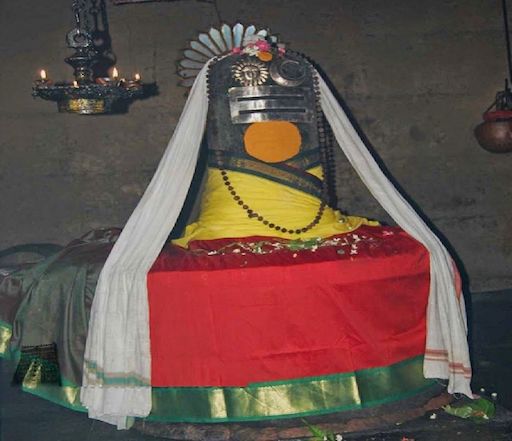
Uthamarkoil follows the Dravidian model but with its own logic. A granite wall encloses the complex, with the main tank just outside the gateway. Inside, shrines for Vishnu, Shiva, and Brahma are housed within the same campus, each with its own sanctum and tower, yet visually and ritually linked. Vishnu is worshipped here as Purushothaman Perumal, with Lakshmi as Poornavalli Thayar. Shiva appears as Bhikshadanar, the begging ascetic, and Brahma sits in a separate sanctum, a rare working Brahma shrine in South India. The very act of walking between these shrines makes you physically experience the unity the myths talk about.

Architecturally, you get the standard features: gopurams, pillared halls, subsidiary shrines. But the mood is different from the massive temple-cities. It feels compact and layered rather than overwhelming. Add in the Kadamba Theertham tank, the river nearby, and the relatively low-rise surroundings, and there’s a strong sense of human scale. Not every sacred space has to shout. Some accounts mention that the temple’s strategic role during the eighteenth-century conflicts led to minor defensive modifications without sacrificing the core iconography. That mix of sacred and practical is part of the aesthetic story too.

Ritual life here runs on a tight routine. There are six daily pujas for each of the Trimurti deities, from early morning to night. Each cycle includes alangaram (decoration), naivedyam (offering of food), and deepa aradanai (lamp worship). Priests chant Vedic mantras and Tamil hymns, and the deities receive separate but coordinated attention.

The major festival is the Brahmotsavam in the Tamil month of Karthigai (roughly November–December). Processional images of Purushothamar and Bhikshadanar are taken through the streets around the temple, side by side. Again, the temple refuses to choose one god over another; it stages them together. Another key event is the Kadamba Tiruvizha, when the festival image of Ranganatha from Srirangam is brought to Kadamba Theertham here for the ceremonial bath. That links Uthamarkoil into a larger ritual circuit with Srirangam. Tradition also says King Dasharatha performed a yajna here to ask for sons, long before Rama’s birth. Childless couples still come with that story in mind, seeking fertility blessings.

In practical terms, Uthamarkoil is easily accessible. It lies just off the Trichy–Salem highway, about 10 km northwest of Tiruchirappalli, near the banks of the Kollidam. Buses and shared autos run regularly; the last stretch is walkable through a typical temple-side settlement with tea stalls, small shops, and houses. The first thing that may strike you is that the place is not overrun. Compared to Srirangam, there is breathing room. You can stand in front of each sanctum without being pushed, let your eyes adjust to the dim light, and actually look at the deities. The space invites a quiet pause rather than a rush. Many take time by the Kadamba Theertham tank nearby, believed to have healing powers. The sound of temple bells, birds, and the river nearby creates a blend both calming and alive.

Thirukkarambanoor’s unique tri-deity setup has inspired Tamil literature and art for centuries. The temple entrances and pillars bear carvings not only of the Trimurti but also festive scenes and sacred dances, connecting the place to vibrant local traditions. Poets like Thirumangai Alvar included this temple in their hymns, bringing it spiritual prominence. The temple challenges rigid classification of sects. Here, Shaivism and Vaishnavism coexist visibly, influencing regional identity. Festivals often blend music, dance, and recitation traditions from different streams, making Thirukkarambanoor a cultural meeting point.

Today, Uthamarkoil is managed by the Tamil Nadu Hindu Religious and Endowment Board. The temple hosts six daily rituals for each of the three deities, plus major festivals like Brahmotsavam in the Tamil month Karthigai (November-December). Despite modern pressures, traditions of daily worship continue uninterrupted. Restoration projects focus on preserving the temple’s distinctive stone carvings and murals. Crowds are moderate, mostly pilgrims and devotees from nearby towns, though interest from history and architecture buffs is growing.

Thirukkarambanoor Temple stands as a rare see-through lens into Hinduism’s fluid unity. By housing Brahma, Vishnu, and Shiva side by side, it asks us to rethink boundaries: sectarian, architectural, ritual, and cultural. The temple isn’t just a sacred space for worship but a symbol of harmony and complexity within Indian spirituality. Its layered stories, intimate scale, and lived traditions challenge assumptions about what a Divya Desam can be. This temple offers not just a place to pray, but a place to reflect on how diverse beliefs weave together to form a living, breathing spirituality. If you visit Uthamarkoil, slow down. Notice the quiet dialogues between the gods. Listen to hymns sung for both Shiva and Vishnu. Walk the stone paths shaped by centuries of devotion and conflict. You might leave recognising how faith is less about dividing lines, and more about shared sacred space.

Festivals of India: Koovagam Festival

Every spring, as the searing Tamil sun mellows into the gold of April, something extraordinary happens in a quiet little village called Koovagam. For most of the year, this village in Tamil Nadu’s Kallakurichi district (formerly Villupuram) is unremarkable: dusty lanes, small fields, temple bells. But for eighteen days each year, it transforms into one of the most unusual and moving festivals in India: the Koovagam Festival.

This is no ordinary temple celebration. Here, thousands of transgender women and members of the third gender gather to take part in a centuries-old ritual, one that celebrates love, sacrifice, and identity. It is a festival rooted in the myth of Aravan from the Mahabharata, a story that intertwines devotion with a profound act of self-recognition.

Koovagam lies about 25 km from Villupuram, reachable by road from Chennai, Puducherry or Ulundurpettai. At its heart stands the Koothandavar Temple, dedicated to Aravan, known locally as Koothandavar, the heroic son of Arjuna and the Naga princess Ulupi.

Source

For most of the year, the temple sees a trickle of local devotees. But during the Tamil month of Chithirai (mid-April to mid-May), the quiet lanes overflow with colour and sound. Transgender devotees, called aravanis, arrive from every corner of India, from Chennai to Mumbai, from Hyderabad to Kolkata. Some even travel from Singapore and Malaysia. They come not merely as visitors but as brides, ready to marry the god who once sought love before his death.

At the heart of Koovagam lies a myth that dates back thousands of years. In the Mahabharata, Aravan (or Iravan in Sanskrit) is the son of Arjuna and Ulupi, born of a union between the human and the divine serpent race. When the Pandavas were preparing for war against the Kauravas, the goddess Kali demanded a human sacrifice to ensure victory. Aravan volunteered.

But before his death, he asked for three boons: The first that he should die a heroic death on the battlefield. The second was that he should witness the war even after his death, and the third and most poignantly, that he should be married before he died, so that he could taste the joys of love and companionship, however briefly.

    There was one problem: no woman wished to marry a man who would die the next day and make her a widow. Moved by compassion, Lord Krishna transformed into his female avatar, Mohini, and married Aravan. The following day, Aravan was sacrificed. His severed head was placed on a hilltop to watch the battle, fulfilling his second boon. Mohini mourned his death, breaking her bangles and removing her wedding ornaments, embodying eternal widowhood.

    This story, which in the grand epic may have been a passing mention, took on profound local significance in Tamil Nadu. Over centuries, it evolved into the Koovagam Festival, where transgender women, who identify with Krishna’s transformation, symbolically become the brides of Aravan. For the aravanis, the festival is a spiritual homecoming. Over eighteen days, the village becomes a living stage for rituals, performances, and processions that reenact the myth in vivid detail.

    In the early days, Koovagam begins to hum with activity. Stalls are set up selling flowers, turmeric, bangles, vermilion, and food. Cultural programmes fill the air — beauty pageants like “Miss Koovagam,” dance performances, plays, and music shows—all organised by and for the transgender community. Health camps, especially those raising awareness about HIV and women’s health, are run by NGOs. For many attendees, this is also a time of reunion, old friends meet again, newcomers are welcomed, and stories of hardship and triumph are shared over tea and laughter.

    As the festival reaches its climax, the most important ritual takes place, the divine wedding. On the full moon night, the temple courtyard glows with lamps and energy. The aravanis bathe, dress in bridal finery, bright silk saris, jasmine garlands, glass bangles that jingle with excitement. Priests perform the rituals of a traditional Hindu marriage. One by one, each aravani stands before the idol of Aravan. The thali, the sacred wedding pendant, is tied around her neck by the temple priest. Vermilion is applied to her forehead. For that night, she becomes a bride of the god, adorned, cherished, radiant. For many, this ceremony is deeply personal. It is not a mere symbol but an act of recognition, a sacred moment when their identity is acknowledged not just by society, but by divinity itself.

    That evening, Koovagam turns into a festival of life. Music fills the streets; dancing breaks out under the stars. Some call it a night of joy, others a night of freedom. For those who live much of their year in the shadows of social prejudice, this is their night to shine; to laugh, to love, to be seen.

    But just as the myth goes, joy gives way to sorrow. The next morning, Aravan is symbolically sacrificed. His image, often represented by a wooden effigy or painted head, is paraded through the streets before being taken to the temple. The brides gather once more, this time in grief. They remove their thalis, wipe off the vermilion, break their glass bangles, and change into white sarees, the colour of widowhood. Some cry openly; others remain quiet, eyes glistening.

    The mood shifts from celebration to mourning, from noise to silence. It is one of the most hauntingly beautiful moments of the festival, when thousands of women collectively grieve for a god, and in doing so, perhaps for themselves.

    The Koovagam Festival is far more than an act of devotion. Each ritual carries layers of meaning: spiritual, social, and emotional. The marriage represents acceptance. In a society that often refuses to acknowledge transgender relationships, this ritual grants legitimacy. Each bride is seen, blessed, and celebrated. The widowhood reflects loss, not only Aravan’s death but the community’s experience of rejection and mourning in everyday life. Yet, it is also catharsis, a release that allows renewal. The gathering itself is resistance. It is a statement that the community exists, that its members are not invisible, and that their identities are interwoven with the cultural and religious fabric of India. For many aravanis, the journey to Koovagam is not just about tradition; it is about belonging.

    The Koovagam Festival has grown to become a social, cultural, and political event. NGOs, health workers, and rights organisations set up stalls and workshops to discuss issues such as transgender rights, legal protection, mental health, and employment. Beauty contests and pageants celebrate individuality. Participants are judged not just for looks but for confidence, talent, and advocacy. “Miss Koovagam,” for instance, is crowned after multiple rounds that include questions about gender justice and community welfare. In recent years, these programmes have also attracted media attention, bringing greater visibility to the transgender community. What was once a local ritual is now a space for global dialogue, about identity, love, and equality.

    Over the eighteen days, the festival follows a rhythm, part spiritual journey, part carnival. In the first week, the village slowly fills up with visitors. Street vendors line the roads, and the temple begins daily rituals to purify and prepare the deity. There are music nights, community feasts, and theatre performances retelling the story of Aravan and Mohini. By the second week, the numbers swell. Processions take over the streets, and the excitement becomes palpable. The day before the full moon is spent in fasting, prayers, and decorating the temple. The fourteenth day marks the great wedding: hundreds of aravanis lining up for their turn to marry Aravan. It is followed by a night of joy, dance, and freedom. Then comes the sixteenth day, when mourning begins. The temple bells toll softly. The brides shed their symbols of marriage and take on the plain white of widowhood. The image of Aravan is carried in a procession, his death and the grief of his widows marking the end of the cycle. The last two days are for quiet rituals, temple purification, and prayers for the next year’s return. This progression, from celebration to grief to closure, reflects the eternal cycles of life, love, and loss.

    At first glance, the Koovagam Festival might seem paradoxical: why celebrate a marriage that ends in tragedy? But therein lies its beauty. The festival acknowledges that love and loss coexist; that joy and pain are two halves of the same truth. For transgender participants, the marriage to Aravan is an act of claiming their place within sacred tradition. In a world where they are often excluded, the gods themselves make space for them. And in Krishna’s transformation into Mohini, they find divine validation of gender fluidity, proof that the divine, too, transcends boundaries. The widowhood that follows may appear sorrowful, but it also mirrors resilience, the ability to grieve and still continue. It becomes a metaphor for endurance, for the unending cycle of exclusion and self-renewal that the community faces.

    While deeply rooted in religion, Koovagam is also a mirror to the social reality of transgender life in India. The festival embodies both visibility and vulnerability. For those three weeks, transgender women are celebrated. They walk openly, dance, speak, love, and society, for once, looks at them with awe rather than prejudice. But as many participants have reflected, once the festival ends, the world often turns away again. Koovagam thus becomes a powerful metaphor: a brief window of acceptance in a long struggle for dignity.

    That’s why NGOs and rights groups have increasingly used the festival as a platform. Health awareness booths line the streets. Legal aid tents help with identity documentation. Activists conduct talks on the Transgender Persons Act, job opportunities, and mental-health support. Koovagam is, in many ways, India’s most visible intersection of faith and activism.

    Visiting Koovagam during the festival is to step into another world. Imagine the scent of jasmine in the air, the sparkle of glass bangles catching the sun, and the rhythmic thud of drums echoing through narrow lanes. In one corner, a group of aravanis practise a dance for the evening’s competition. In another, a stall sells white sarees for the widowhood ritual. Children run about with sweets; priests chant from ancient verses; NGOs distribute pamphlets about health and rights. And through it all, there is laughter; unrestrained, infectious. When the night of the wedding comes, the entire village glows. Lamps flicker along doorsteps, and the temple courtyard becomes a sea of colour. The brides wait in line, their faces lit with excitement, their eyes glistening as the thali is tied. When the bells ring, a collective cheer rises, a sound both joyous and sacred. Then, two days later, the air grows heavy. The brides return in white, bare-necked and solemn. The sound of breaking bangles echoes through the streets, a ritual that reverberates like a heartbeat. The transition from noise to silence is profound. Few festivals in the world capture such a range of human feeling, love, loss, joy, grief, woven together in ritual and myth.

    The story of Aravan is told in several ways across Tamil Nadu. In some versions, his head continues to live after the sacrifice, watching the war unfold. In others, it is said that he fought and killed a demon named Kuttacuran, which earned him the title Koothandavar. The very name “Koovagam” is said to come from the sound of his dying cry, “Kuva… kuva…” that echoed through the land.

    Whatever the version, one truth remains: Aravan’s story is one of self-sacrifice for a greater cause. The transgender community’s devotion to him is a continuation of that ideal, the willingness to live authentically, even in the face of loss.

    Like all living traditions, Koovagam has its challenges. The festival’s growing popularity has attracted tourists and media crews. While this visibility can be empowering, some participants feel that the deeper spiritual meaning risks being overshadowed by spectacle. There are also practical issues: sanitation, accommodation, and safety in a small village suddenly hosting tens of thousands of visitors. Environmental concerns, too, have become part of recent discussions. Beyond logistics, the larger challenge is social. For many transgender people, the acceptance they receive in Koovagam is fleeting. Legal recognition and societal inclusion remain ongoing struggles. And yet, there is hope. Each year brings more solidarity, more awareness, more conversations. Younger generations of transgender individuals are using Koovagam not only to connect with tradition but to advocate for change.

    Koovagam is not just a festival, it is a mirror reflecting India’s complex tapestry of faith, gender, and humanity. It tells us that tradition is not static; it evolves. What began as a regional ritual has grown into a powerful movement of inclusion. In the figure of Aravan, we see courage and sacrifice. In the brides of Aravan, we see the courage to live truthfully, even in a world that often refuses to understand. The festival blurs boundaries: between male and female, sacred and profane, devotion and desire. It is a reminder that divinity is not limited by form or gender.

    For those who visit, Koovagam is a lesson in humility and empathy. Observers are encouraged to watch respectfully, to understand that what unfolds here is deeply sacred. The rituals are not performances but prayers. Travellers who come to witness the festival often speak of being profoundly moved. Some come expecting spectacle and leave with silence, having witnessed something that defies easy categorisation. To visit Koovagam is to see the power of myth living in the modern world—not as nostalgia, but as identity in motion.

    When the festival ends, the crowds disperse. The brides return to their cities and towns, the temple returns to its quiet rhythm, and the dust settles on the roads. But something lingers in the air, a feeling, a whisper, a promise. In the myth, Aravan’s head remained alive to witness the war. In Koovagam, his spirit remains alive through those who gather in his name. The aravanis carry with them not just memories of the wedding and mourning, but the reassurance that they belong to each other, to their god, and to the world. The Koovagam Festival is, in essence, a song of identity; one that rises each year from a small Tamil village to remind the world that love, in all its forms, is sacred. And when the last lamp fades, and the roads fall silent, you can still almost hear the echo of that truth in the wind—the echo of a thousand hearts that dared to love, even for a day.

    Sacred Stones, Spaces, and Stories: Jyotirlingas Part 13 – Grishneshwar Temple

    Located in the historic town of Verul near Aurangabad, Maharashtra, the Grishneshwar Temple is one of the twelve revered Jyotirlingas dedicated to Lord Shiva. Despite being the smallest among the Jyotirlingas, it holds immense spiritual significance as the last shrine in the ancient Jyotirlinga circuit, near the stunning Ellora Caves. The temple is famed for its compassionate deity and timeless legends of faith, reinforcing Shiva’s boundless mercy and the intimate relationships between devotees and the divine. Its rich history, intricate artistry, and vital place in pilgrimage traditions make it a must-visit for seekers of divine light and cultural heritage. 

    The legends of the Grishneshwar Temple reflect divine compassion intertwined with human devotion and forgiveness. One prominent legend, recounted in the Shiva Purana and Padma Purana, tells of Kusuma, a devoted Brahmin woman living near a sacred lake in Shivalaya village. Each day, Kusuma carved 101 small Shivalingas and immersed them in the lake while singing prayers to Lord Shiva, hoping to be blessed with a child. Eventually, Kusuma gave birth to a healthy son, which incited jealousy in her sister, leading to the tragic death of Kusuma’s son at her sister’s hand. Despite unbearable grief, Kusuma’s faith remained unshaken. Moved by her unwavering devotion, Shiva resurrected her son and manifested here as Grishneshwar, the Jyotirlinga born from the friction (Grishna meaning friction) of Parvati’s hands. 

    Another tale speaks of Parvati mixing vermillion, or kumkum, in water at the sacred lake. The friction caused by her hands led to the emergence of a bright light, which turned into a Shiva lingam. The name Grishneshwar derives from this friction-born linga, symbolising the dynamic energy between creation and devotion. The temple also highlights themes of compassion and forgiveness, where divine grace overcomes human failings, inspiring devotees to persevere in faith despite adversity.

    Grishneshwar Temple has endured cycles of destruction and rebirth, mirroring Maharashtra’s rich and turbulent past. Mentioned in ancient texts such as the Skanda Purana and Ramayana, Grishneshwar’s spiritual significance has been acknowledged for over a millennium. The original temple was destroyed multiple times during invasions by the Delhi Sultanate and later Mughal incursions in the 13th and 14th centuries. The temple was first restored by Maloji Bhosale, grandfather of the famed Maratha king Shivaji, in the 16th century. Later, in the 18th century, Queen Ahilyabai Holkar of Indore, renowned for her devotion and patronage of Hindu temples, rebuilt the temple in its present form, ensuring its architectural and cultural heritage endured. 

    Grishneshwar Temple is a marvellous example of medieval Indian temple architecture, blending aesthetics with spirituality. Constructed predominantly from red sandstone, the temple exudes warmth and invites spiritual contemplation. The temple boasts a five-tiered shikhara that rises above the sanctum sanctorum. The mandapa or assembly hall is supported by 24 intricately carved pillars, each depicting mythological scenes and floral motifs. Exterior and interior walls display reliefs of Shiva’s life, the Dashavatars of Vishnu, and various Hindu mythological stories. The richly carved pillars and walls display exquisite motifs from Hindu scriptures, including yoga postures and cosmic depictions that connect worshipers with divine symbolism. The temple complex also houses smaller shrines dedicated to Vishnu, Ganesha, and Durga, showcasing the inclusive nature of the site.

    Worship at Grishneshwar Temple is animated by deep ritual and community participation. Daily worship practices include devotional abhisheka of the Jyotirlinga with milk, ghee, honey, and water, regular aarti ceremonies involving music, lamps, and chanting, and the offerings of bilva leaves, flowers, and fruits by devotees seeking Lord Shiva’s blessings. Mahashivaratri is celebrated with grand rituals, midnight vigils, and community feasts. Local temple events draw pilgrims from Maharashtra and neighbouring states, especially during the winter months. The temple’s festivals emphasise forgiveness, compassion, and renewal, echoing its founding legends. The local Brahmin priests and devotee groups maintain the temple’s traditions and hospitality, extending warmth and guidance to visitors.

    Pilgrims find both spiritual renewal and cultural richness at Grishneshwar. The temple is located about 30 km from Aurangabad and is accessible by road and public transport. Several dharmashalas, guesthouses, and eateries support pilgrims’ needs in nearby Aurangabad and Verul village. The site is often combined with visits to the famous Ellora Caves, making for a rich cultural and spiritual itinerary. Pilgrims often describe a sense of serene compassion here, a place where devotion bridges pain and hope. Stories of answered prayers and visions reinforce the temple’s spiritual aura.

    The Grishneshwar Temple influences regional culture, literature, and aesthetics. Temple legends feature in Marathi folklore and religious texts, while devotional poetry and songs celebrating Shiva’s compassion proliferate during festivals and pilgrim gatherings. Local artisans produce sculptures, icons, and paintings derived from temple iconography. The architectural and artistic styles influence nearby sacred sites and community rituals. Grishneshwar is an emblem of religious perseverance and cultural pride in Aurangabad, anchoring both spiritual and artistic traditions.

    Grishneshwar Temple continues as a vibrant locus of faith and heritage. The temple trust oversees day-to-day operations, festivals, and pilgrim services. Conservation efforts preserve the temple’s structure and art against weathering. Pilgrim numbers rise annually, especially during festivals like Mahashivaratri. Tourism linked to the Ellora Caves supports the temple’s upkeep and regional economy. Challenges include maintaining ancient structures amid modern visitor pressures, requiring ongoing care and funding, while efforts focus on blending preservation with accessibility for future generations.

    Grishneshwar Temple stands as a testament to divine compassion and timeless devotion, the last Jyotirlinga in the sacred circuit, yet among the most intimate and profound. Its legends show that faith transcends cruelty and loss, offering a sanctuary of hope and renewal. For pilgrims and tourists alike, Grishneshwar offers a unique spiritual retreat at the crossroads of history, mythology, and art, reaffirming Lord Shiva’s boundless grace and the enduring power of divine light.

    The 12 Jyotirlinga temples represent the radiant and infinite manifestations of Lord Shiva across India, each with its unique mythology, history, and spiritual significance. They stand not only as architectural wonders but also as profound centres of devotion, reflection, and transformation, symbolising Shiva’s omnipresence and boundless energy. Pilgrimages to these sacred shrines offer seekers a journey beyond the physical—to touch the eternal light within themselves and connect deeply with the cosmic source. The Jyotirlingas continue to inspire faith, resilience, and spiritual awakening, illuminating the hearts of millions across generations and geographies, holding an enduring place at the core of Hindu spirituality and cultural heritage.

    Keep watching this space for the next series on Divya Desams.