Sacred Stones, Spaces, and Stories: Ashtavinayaka Part 2

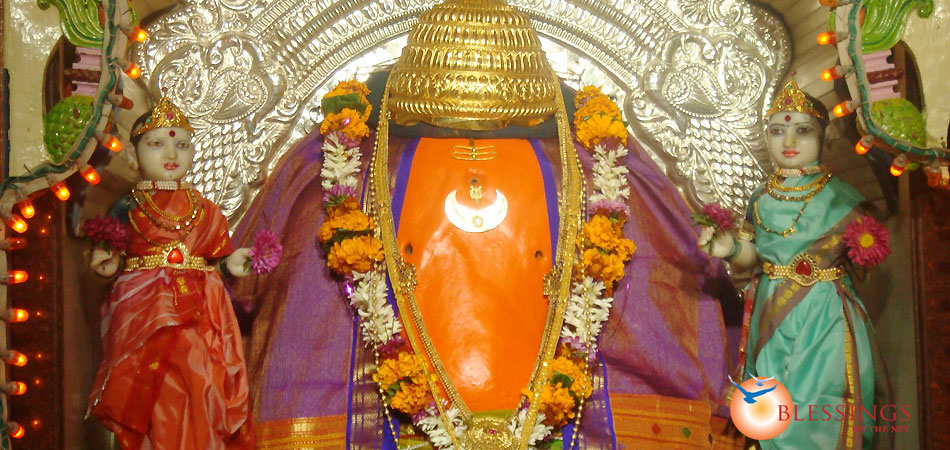
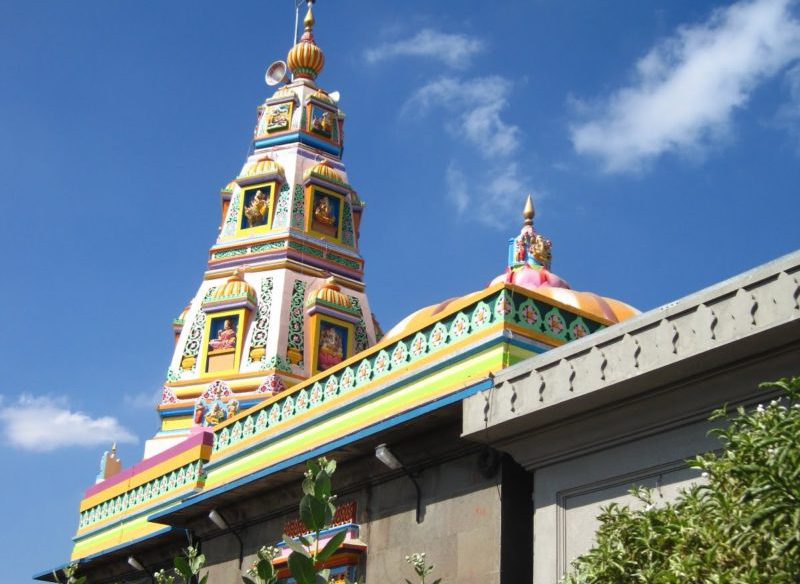
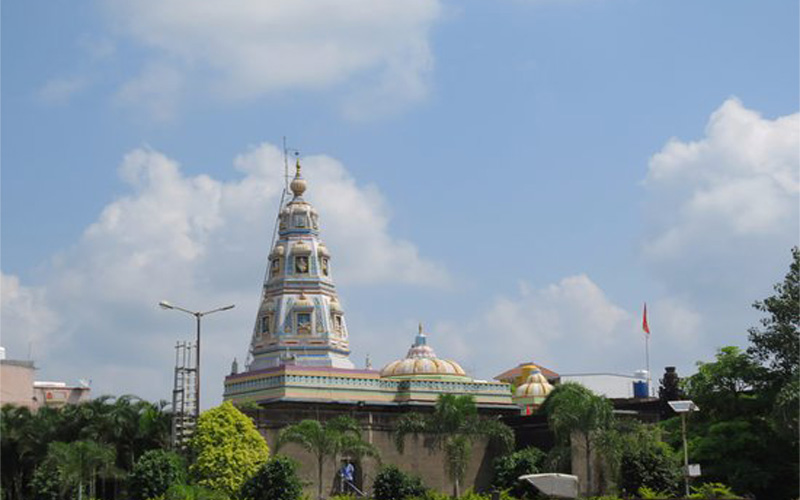
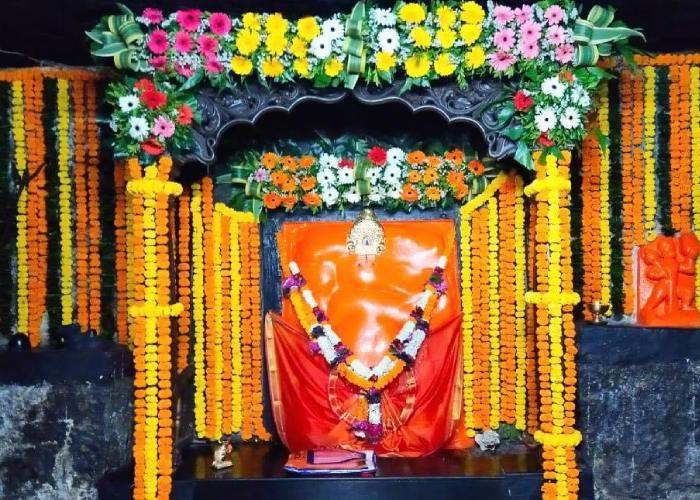
Also known as the Shri Moreshwar Temple, the Shri Mayureshwar Mandir, situated in the tranquil village of Morgaon, approximately 65 km from the Pune district, marks the starting and ending point of the Ashtavinayak circuit.

Morgaon is the foremost centre of worship of the Ganapatya sect, which considers Ganesha as the Supreme Being. A Hindu legend relates the temple to the killing of the demon Sindhura by Ganesha. The exact date of the temple’s construction is unknown, although the Ganapatya saint Moraya Gosavi is known to have been associated with it. The temple flourished due to the patronage of the Peshwa rulers and descendants of Moraya Gosavi.

The village of Morgaon derives its name from the Marathi word for peacock, ‘mor,’ a nod to the region’s once-abundant population of these majestic birds. The temple itself is situated on the banks of the sacred Karha River, and the village is said to be laid out in the shape of a peacock, deepening the connection between the land and its presiding deity, Lord Ganesha in his Mayureshwar, or peacock-riding, form.

The origins of Shri Mayureshwar Mandir trace back to the Bahmani period, with construction believed to have occurred between the 14th and 17th centuries. The temple’s architecture is distinctive, featuring a high stone boundary wall and four minarets at each corner, giving it the appearance of a mosque from a distance, a strategic design choice to protect it during times of political upheaval. The temple flourished under the patronage of the Peshwa rulers, who considered Ganesha their family deity, and the spiritual influence of the Ganapatya saint Moraya Gosavi, who is closely associated with the temple’s history and legacy.

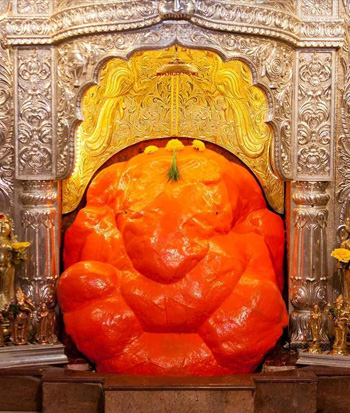
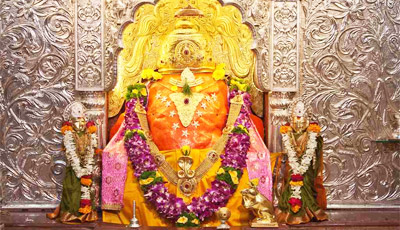
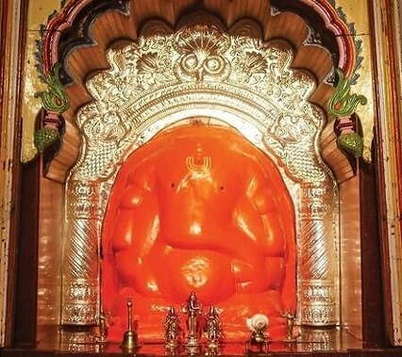
The Shri Moreshwar Temple is a striking blend of Hindu and Islamic architectural influences. There are our entrance gates, with each gate facing a cardinal direction and adorned with an image of Ganesha, representing his manifestations in the four Yugas or ages. The four minarets and 50-foot-tall stone walls were built to safeguard the temple from invaders. Unusually, a large statue of Nandi, Shiva’s sacred bull, stands before the temple entrance, a rare sight in Ganesha temples, explained by a local legend that the Nandi statue was left there after the vehicle transporting it broke down. The sabha-mandapa or assembly hall houses 23 different idols of Ganesha, each depicting a unique form, including the eight avatars described in the Mudgala Purana. The courtyard contains two sacred trees, Shami and Bilva, associated with penance and spiritual significance. Two lamp towers or Deepmalas and a six-foot-tall mouse, Ganesha’s vahana or mount, are prominent features in the courtyard. The sanctum sanctorum, the garbhagriha, enshrines the swayambhu or self-manifested idol Lord of Ganesha as Mayureshwar, depicted with four arms, three eyes, and a trunk turned to the left, seated on a peacock and flanked by his consorts, Siddhi and Buddhi.

The most celebrated legend associated with the temple is the tale of Ganesha’s incarnation as Mayureshwar to vanquish the demon Sindhu. According to the Ganesha Purana, Sindhu was born to Chakrapani and Ugra, and by the grace of the Sun-god, was granted a bowl of amrita, the elixir of immortality. To safeguard it, Sindhu swallowed the bowl, becoming invincible and unleashing terror across the three worlds. The gods, unable to withstand his tyranny, prayed to Ganesha, who incarnated as Mayureshwar, a six-armed, white-complexioned deity riding a peacock. In a fierce battle, Ganesha defeated Sindhu’s army, slew his general Kamalasura, and ultimately cut open Sindhu’s body to empty the amrita bowl, thus killing the demon and restoring cosmic order. After this victory, Ganesha gifted his peacock mount to his brother Kartikeya, cementing his epithet as Mayureshwar or Moreshwar, aka the “Lord of the Peacock.”

Another legend recounts how the creator-god Brahma, preserver-god Vishnu, dissolver-god Shiva, the Divine Mother Devi, and the Sun-god Surya meditated at Morgaon to understand their creator and purpose. Ganesha manifested before them as an Omkara flame, revealing his supremacy and blessing them with divine knowledge.

A further myth tells of Brahma’s penance to cleanse himself of the sin of desiring his daughter, Sarasvati. The sacred Turiya Tirtha river appeared, and Brahma carried its water in his pot to worship Ganesha at Morgaon. When he stumbled and spilt the water, it became the Karha River, which continues to flow by the temple today.

The Ganapatya saint Moraya Gosavi is deeply connected to the temple’s lore. He was a devout worshipper who travelled monthly from Chinchwad to Morgaon on foot to offer prayers. On one occasion, arriving after the temple had closed, the locks miraculously fell away, allowing him to worship Ganesha. His devotion inspired the construction of the Mangalmurti temple at Chinchwad and elevated the status of the Moreshwar temple as a premier centre of Ganapatya worship.

The temple’s daily worship schedule is meticulously observed, offering devotees multiple opportunities to participate in sacred rituals. The ritual bathing and purification of the deity, the Prakshal Puja, is conducted between 5 and 6 am, while the Shodashopachar Puja, the traditional sixteen-step ceremonial worship, happens between 7 am and 12 noon. The five-step worship, the Panchopachar Puja, takes place at 8 pm, while the Samudaik Evening Aarti, which is a communal ritual of lighting the lamp,p happens at 7:30 p,m and the nighttime aarti, the Shej Aarti, is done at 10 pm before the temple’s doors are shut for the day.

Devotees traditionally first worship Nagna Bhairava, then Mayureshwar, and finally Sakshi Vinayaka, who is believed to be the witness to prayers offered at the temple. The people of Morgaon collectively offer food or a thali lunch to visitors during Magh Shuddh Panchami, reflecting the temple’s role as a hub of community and hospitality.

The temple becomes the focal point of grand celebrations during Ganesh Chaturthi, the Bhadrapada Shukla Chaturthi, and Ganesh Jayanti or Magha Shukla Chaturthi. Devotees flock to Morgaon, and a procession arrives from the Mangalmurti temple in Chinchwad, carrying the palkhi or palanquin of Ganesha. Festivities continue for more than a month, culminating on Ashvin Shukla Dashami, with fairs, processions, and communal feasting. The temple also hosts celebrations on Vijayadashami, Shukla Chaturthi, Krishna Chaturthi, and Somavati Amavasya, the new moon coinciding with a Monday.

The main idol is believed to be swayambhu or self-manifested and is said to have been consecrated twice by Brahma, once before and once after being destroyed by the demon Sindhu. Each of the four gates represents a cardinal direction and a life goal: Dharma or righteousness, Artha or wealth, Kama or desire, and Moksha or liberation. The idol is covered with layers of saffron-colored vermillion, which naturally peels off every century, revealing the original image, a phenomenon regarded as miraculous by devotees. The sabha-mandapa houses 23 different forms of Ganesha, including the eight avatars from the Mudgala Purana, making it a living gallery of Ganesha iconography. The presence of the Shami and Bilva trees in the courtyard is tied to legends of penance and spiritual awakening. The juxtaposition of Nandi and the mouse at the temple entrance is unique, blending Shaiva and Ganapatya symbolism.

The Ashtavinayak Yatra, a pilgrimage to eight Ganesha temples around Pune, is considered incomplete unless the devotee both begins and ends the journey at Shri Mayureshwar Mandir. This cyclical pilgrimage reflects the Hindu understanding of spiritual journeys as both linear and circular, with every ending marking a new beginning.

Shri Mayureshwar Mandir in Morgaon is more than a temple; it is a living testament to the enduring power of faith, myth, and community. Its legends, rituals, and architecture encapsulate the essence of Maharashtra’s spiritual heritage, inviting devotees and seekers to embark on a journey that is as much about inner transformation as it is about external pilgrimage.

Sacred Stones, Spaces, and Stories: Ashtavinayaka Part 1

Regular readers of this blog will know that Lord Ganesha is my ishtadev, the one whom I connect to and the first I think of in joy and sadness. He is the first whom I think of when I wake up and the last I call upon before I sleep. It’s only fitting, then, that my next instalment in this series on Hindu temples is the Ashtavinayaka temples. So let’s learn more about this form of the elephant god and this temple circuit.

Among the many sacred circuits that devotees undertake, the Ashtavinayaka pilgrimage in Maharashtra holds a unique place. The term Ashtavinayaka translates to “eight Ganeshas,” referring to the eight temples dedicated to Lord Ganesha, the remover of obstacles and the harbinger of wisdom. The Ashtavinayaka Yatra is centred around the city of Pune. The eight temples house eight distinct idols of Ganesha, the Hindu deity of unity, prosperity, learning, and the removal of obstacles. Each of these temples has its legend and history, as distinct from each other as the idols in each temple. The form of each murti of Ganesha and his trunk are distinct from one another. To complete the Ashtavinayaka Yatra, one must revisit the first temple after visiting all eight temples.

Unlike other temple circuits, the Ashtavinayaka pilgrimage is distinctive because each of these eight temples enshrines a self-manifested or Swayambhu idol of Lord Ganesha, believed to have emerged naturally rather than being sculpted by human hands. The Ashtavinayaka temples are located in different parts of Maharashtra, primarily in and around Pune, in the Pune and Raigad districts, and visiting them in a specific sequence is considered highly auspicious.

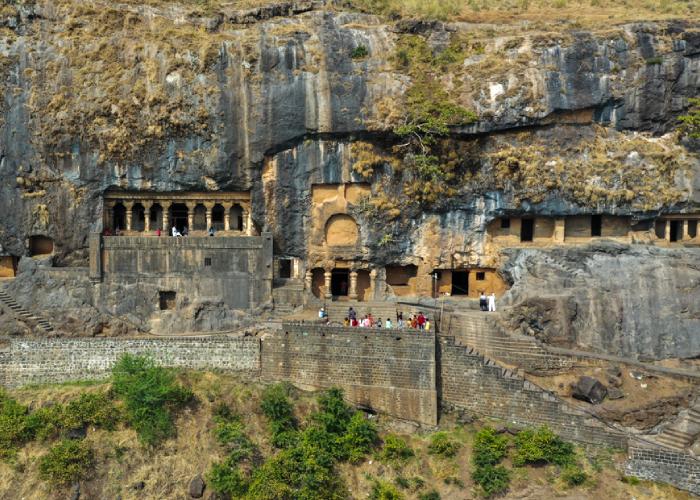
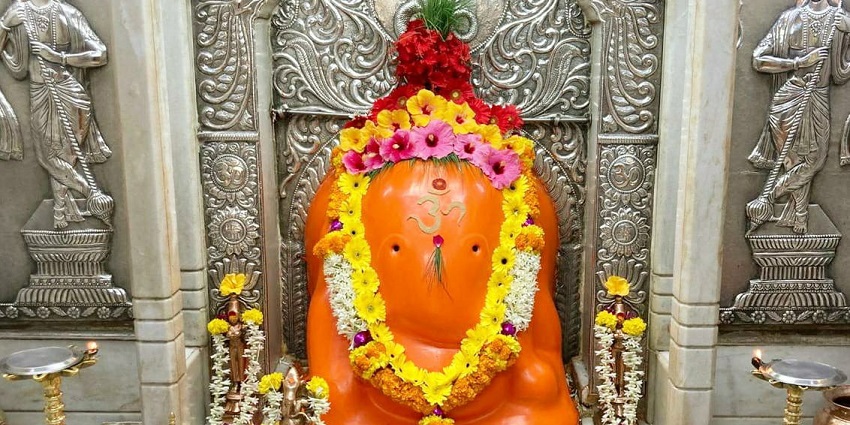
Out of these eight temples, five are in Pune, two are in Raigad, and one is in Ahmednagar or Ahilyanagar District. The pilgrimage takes 3 days to complete and as per scriptures, must be in this specific prescribed order: Mayureshwar Temple, Morgaon, where Lord Ganesha is astride on a peacock and the starting and ending point of the pilgrimage, Siddhivinayak Temple, Siddhatek, a tranquil temple where Lord Vishnu is said to have meditated, Ballaleshwar Temple, Pali, the only Ganesha temple named after a devotee, Ballal, Varadvinayak Temple, Mahad, known for granting boons or varada, Chintamani Temple, Theur, associated with the return of the mythical Chintamani gem, Girijatmaj Temple, Lenyadri, carved into a mountain, and linked to Goddess Parvati, Vighnahar Temple, Ozar, dedicated to the vanquisher of obstacles, and worshipped by Lord Indra, and the Mahaganapati Temple, Ranjangaon, also known as the Great Ganesha, and connected to Shiva’s victory over the demon Tripurasura. The pilgrimage concludes by returning to Morgaon, completing the sacred loop.

It is believed that to complete the pilgrimage, a devotee must visit all eight temples in the prescribed order and then return to the first temple to complete the spiritual circuit. This act symbolises the cycle of life and the divine presence of Lord Ganesha in all stages of human existence.

Each of these temples is associated with a unique form of Ganesha and carries its legend that adds to the richness of the pilgrimage. However, what ties them together is their collective significance as sites of divine energy and devotion.

Several fascinating legends connect the Ashtavinayaka temples, making this pilgrimage more than just a visit to eight separate shrines. Some of the overarching myths associated with the circuit include

The Legend of Sage Gritsamada and Mayureshwar: According to Hindu mythology, Sage Gritsamada was blessed with a divine son, Ganapati, due to his intense devotion. However, a misunderstanding led to the formation of the Ganapatya sect, which exclusively worshipped Lord Ganesha. This sect played a vital role in the establishment of the Ashtavinayaka temples.

Lord Ganesha’s Battle with the Demon Sindhu: A prevalent myth speaks of the demon Sindhu, who had received a boon that he could only be defeated by an incarnation of Shiva and Parvati’s son. To destroy this menace, Ganesha took the form of Mayureshwar and, riding a peacock, vanquished the demon. This legend explains why the Mayureshwar Temple in Morgaon is considered the most important of the eight temples.

The Story of Ballal and the Self-Manifested Idol: At Ballaleshwar Temple in Pali, the legend of a young devotee named Ballal is widely told. A dedicated worshiper of Ganesha, Ballal was punished by his father for excessive devotion. However, moved by his faith, Ganesha himself appeared before Ballal, blessed him, and took residence in Pali, leading to the establishment of the temple.

Ganesha as the Conqueror of Obstacles: The story behind Vighnahar Temple in Ozar speaks of how Ganesha defeated the demon Vighnasura, who caused disruptions in religious practices. Ganesha subdued him but, on the demon’s plea, allowed him to stay, thus earning the title “Vighnahar” (Remover of Obstacles).

The Connection to the Pandavas: The Girijatmaj Temple at Lenyadri, located in a cave, is believed to be where Goddess Parvati meditated to be blessed with a son. It is also said that the Pandavas from the Mahabharata worshipped at this temple during their exile.

The Ashtavinayaka Yatra is not just a spiritual journey but a process of self-discovery and renewal. The circuit follows a clockwise route, believed to harness cosmic energy. Devotees often complete it within 1–2 days, symbolising detachment from worldly distractions. Devotees follow specific rituals and guidelines while undertaking this pilgrimage. Modak, Lord Ganesha’s favourite sweet, is offered at all temples, along with dhurva grass, red hibiscus flowers, and coconut. Devotees continuously chant prayers and the Ganapati Mantra to invoke his blessings. Pilgrims walk around each temple’s inner sanctum, often 3.5 times, echoing the cyclical nature of time. Tying a red thread at Morgaon and removing it at the final temple symbolises the shedding of sins. Many devotees observe fasts or perform special pujas during the pilgrimage and also listen to stories about Ganesha and his leelas, or divine acts, as part of the experience. Pilgrims observe fasting, avoid non-vegetarian food, and practice celibacy during the yatra to purify the mind and body.

The Ashtavinayaka circuit transcends mere temple-hopping; it is a metaphysical journey through Maharashtra’s heartland, blending devotion, mythology, and nature. Each temple’s unique narrative and the collective ritualistic voyage underscore the Hindu ethos of unity in diversity. For centuries, this pilgrimage has drawn kings, saints, and commoners alike, offering solace and strength. As you embark on this article series, each of the eight temples will reveal its distinct history, myths, and grandeur. Together, they form a mosaic of divine grace, making the Ashtavinayaka pilgrimage a truly transformative experience.

Sacred Stones, Spaces and Stories: Shakthipeeta Part 25

Nainativu Temple, Manipallavam, Northern Province, Sri Lanka
The Nainativu Nagapooshani Amman Temple, located on Nainativu Island, also known as Manipallavam in the Northern Province of Sri Lanka, is one of the most sacred Hindu shrines in the region. Revered as one of the 51 Shakti Peethas, this ancient temple is believed to be the site where the silambu or anklet of Goddess Sati fell. The temple is dedicated to Goddess Nagapooshani Amman, a form of Goddess Parvati, and Lord Nayinaar Swami, a manifestation of Lord Shiva. Nestled amidst the serene waters of the Palk Strait, this temple holds immense historical, mythological, and spiritual significance.

The temple has been mentioned in several ancient texts, including the Tamil epic Manimekalai and the Sri Lankan chronicle Mahavamsa. These texts describe Nainativu as Manipallavam or Nagadeepa, an island inhabited by the Naga people who were serpent worshippers. The temple is believed to have been originally established by Lord Indra to atone for his sins after being cursed by Sage Gautama for seducing his wife Ahalya. Indra consecrated and worshipped an idol of Goddess Bhuvaneswari or Nagapooshani Amman at this site to seek forgiveness. Over time, Nainativu became a prominent centre for serpent worship and Shaktism. The temple flourished under Tamil rulers but faced destruction during Portuguese colonial invasions in 1620. The present structure was rebuilt in 1788 and later renovated after sustaining damage during periods of political unrest in Sri Lanka.

The temple features traditional Dravidian architecture with intricately carved gopurams or towering gateways adorned with vibrant sculptures depicting Hindu deities and mythological scenes. The four-tiered South Gopuram stands out as a masterpiece of craftsmanship. The temple honours its historical connection to serpent worship with shrines dedicated to serpent deities like Sri Nayinaar Swami and idols of five-headed cobras within the sanctum sanctorum. Devotees offer milk and flowers to these serpent idols as part of their prayers.

Two rocks near the island — Paambu Sutriya Kal or the rock around which the snake wound itself and Garudan Kal or the rock of the eagle — are linked to a legend involving a cobra carrying a lotus flower for Goddess Bhuvaneswari’s worship while being pursued by Garuda. A Tamil inscription from the 12th century issued by King Parakramabahu I mentions trade regulations for merchants visiting Nainativu and highlights its significance as a port city. Located nearby is the Nagadeepa Buddhist Vihara, emphasising Nainativu’s historical role as a shared sacred space for Hindus and Buddhists.

The temple hosts an annual festival known as Thiruvizha during June-July that lasts for 16 days. It includes processions featuring decorated chariots carrying idols of Maa Nagapooshani Amman and Nayinaar Swami. Devotees participate in cultural performances, music recitals, and community feasts during this grand celebration. Special offerings are made to serpent deities within the temple complex on auspicious days like Naga Panchami. Devotees believe that these rituals bring protection from snake bites and other dangers. Couples seeking marital harmony or fertility visit the temple to seek Nagapooshani Amman’s blessings through special pujas conducted by priests.

According to legend, Lord Indra created this temple to atone for his sins after being cursed by Sage Gautama for seducing his wife Ahalya. Pleased with Indra’s devotion, Maa Bhuvaneswari transformed his curse marks into eyes, earning her the name Indrakshi or Indra-eyed. Another legend tells of a cobra swimming across the sea toward Nainativu with a lotus flower for Maa Bhuvaneswari’s worship while being pursued by Garuda, the eagle mount of Lord Vishnu. A merchant named Maanikan intervened to save the cobra by promising Garuda that he would build a beautiful temple for Bhuvaneswari on Nainativu Island.

The Nainativu Nagapooshani Amman Temple with unique rituals like serpent worship emphasises ancient traditions while preserving spiritual heritage. One can explore Sri Lanka’s rich cultural heritage intertwined with Hindu mythology while visiting this ancient shrine.

Shankari Maha Shaktipeeth, Tricomalee, Sri Lanka
The Shankari Maha Shaktipeeth, located in Trincomalee or Thirukkonamalai on the eastern coast of Sri Lanka is believed to be where the groin or yoni of Goddess Sati fell. The temple is dedicated to Goddess Shankari Devi, a form of Goddess Parvati, and Lord Trikoneshwara Bhairava, a manifestation of Lord Shiva. Perched on a hill overlooking the Indian Ocean, the Shankari Maha Shaktipeeth is not only a spiritual haven but also a site of immense historical and mythological significance.

The temple has been mentioned in several ancient texts, including Adi Shankaracharya’s Ashta Dasha Shakti Peetha Stotram, which lists it as one of the 18 Maha Shakti Peethas. The name Shankari derives from Shankar, another name for Lord Shiva, symbolising the inseparable bond between Shiva and Shakti. Historically, the temple was established over 2,500 years ago and was one of the wealthiest temples in South Asia during its peak.

The temple flourished under Tamil rulers and received patronage from various dynasties, including the Cholas and Pandyas. However, it faced destruction during Portuguese invasions in the 17th century. Despite being rebuilt multiple times, much of its original grandeur has been lost. Today, the temple remains an important spiritual centre for Hindus in Sri Lanka.

The temple is situated on Thirukkonamalai Hill meaning the three-cornered hill, offering panoramic views of the Indian Ocean. This unique location enhances its spiritual ambience. Adjacent to the Shankari shrine is the Trikoneshwara Temple dedicated to Lord Shiva. It is one of four major Shiva temples in Sri Lanka, the others being the Ketheeswaram Temple, the Munneswaram Temple, and the Galle Temple. The temple features traditional Dravidian architecture with intricately carved gopurams or towering gateways adorned with vibrant sculptures depicting Hindu deities and mythological scenes.

According to legend, the Asura King, Ravana, a huge devotee of Lord Shiva, installed three lingas on Thirukkonamalai Hill to honour Lord Shiva after receiving blessings from him. These lingas are believed to protect the island from calamities. The temple has strong ties to Ravana, who was a devout worshipper of Lord Shiva. It is said that Ravana performed penance here to gain boons from Shiva.

Navratri is celebrated with great festivities and the temple becomes crowded during these nine days as pilgrims seek blessings for prosperity and protection. Maha Shivratri is another major festival celebrated here with night-long prayers dedicated to Lord Shiva as Trikoneshwara Bhairava. Devotees offer milk and honey during abhishekam rituals. Couples seeking marital harmony or fertility visit the temple to seek Goddess Shankari Devi’s blessings through special pujas conducted by priests.

According to legend, Ravana performed rigorous penance at Thirukkonamalai Hill to gain boons from Lord Shiva. Impressed by his devotion, Shiva granted him several boons but warned him against arrogance. Ravana later installed three lingas on this hill as a mark of gratitude. Another legend states that Lord Shiva built a magnificent palace for Parvati on this hill after she requested a home away from Mount Kailash. However, Parvati left Lanka after Ravana refused her advice to return Sita to Lord Rama. A mythological tale recounts how Adisesha, the serpent king wrapped himself around Mount Kailash during a battle with Vayu, the wind god. When Vayu broke off three peaks from Kailash, one landed at Thirukkonamalai Hill—making it a sacred ground for both Shiva and Parvati worshippers.

The Shankari Maha Shaktipeeth offers visitors a unique spiritual experience rooted in mythology and devotion.

And this brings us to the end of this series on Shakti Peethas. I hope you enjoyed reading about it as much as I enjoyed reading, researching, and writing about the different temples. The journey through the Shakti Peethas has unveiled a tapestry of divine energy, mythology, and devotion that stretches across the Indian subcontinent and beyond. Each site, from the snow-capped heights of Lake Manasarovar and Muktinath in Nepal to the coastal serenity of Nainativu in Sri Lanka, embodies the eternal bond between Shakti and Shiva — a union that transcends geography, culture, and time. These temples are not merely places of worship but living testaments to the enduring power of the Divine Feminine, where the physical remnants of Goddess Sati’s form sanctify the earth and invite devotees to connect with the cosmic force of creation, preservation, and transformation.

The diversity of rituals, legends, and architectural marvels across these shrines reflects the adaptability of spiritual traditions while preserving their core essence. Whether through the Tantric practices of Tarapith, the serpent worship of Nainativu, or the open-air sanctity of Mansarovar, each Shakti Peetha offers a unique pathway to the divine. Yet, they all share a common thread: the belief that these sites are portals to liberation or moksha and spiritual awakening. The Shakti Peethas remind us that divinity is both immanent and transcendent, woven into the fabric of mountains, rivers, and ancient stones, yet alive within the hearts of those who seek it. May this journey inspire reverence for the sacred, curiosity for the mystical, and a deeper connection to the universal energy that binds all beings.

Sacred Stones, Spaces and Stories: Shakthipeeta Part 24

Hinglaj Mata Temple, Balochistan, Pakistan
The ancient shrine of the Hinglaj Mata Temple is located in the remote Makran coast of Pakistan’s Balochistan province and is dedicated to Goddess Hinglaj, also known as Hingula Devi or Nani Mandir.

Located inside the Hingol National Park, the cave temple is in a narrow gorge in the remote, hilly area, at the end of a range of Kirthar Mountains, in the Makran desert stretch, on the west bank of the Hingol River. The origins of the Hinglaj Mata Temple stretch back into antiquity, with its spiritual significance predating its current structure. Archaeological evidence and ancient texts suggest that this location has been a place of worship for over two millennia. The temple’s importance is mentioned in several ancient Hindu texts, including the Kularnava Tantra and the Kubjika Tantra, which list Hingula among the most significant Shakti Peethas. The natural cave that houses the shrine is believed to be millions of years old, with some sources claiming it to be 3.2 million years old.

The Hinglaj Mata Temple holds a unique position among the 51 Shakti Peethas scattered across the Indian subcontinent. It is considered one of the most important, if not the most important, of all Shakti Peethas. This elevated status stems from the belief that it is the site where the head of Goddess Sati fell. In some traditions, it is associated with the goddess’s brain or Brahmadreya, her vital essence. It is one of the two Shaktipeeths located in Pakistan, the other being the Sharada Peeth.

Several features distinguish the Hinglaj Mata Temple from other shrines. Unlike many elaborate Hindu temples, the Hinglaj shrine is housed in a simple natural cave. This simplicity is its defining feature, with the sacred stone inside the cave being worshipped as the manifestation of the goddess. There is no man-made image of the goddess in the temple. Instead, devotees worship the divine form of Hinglaj Mata in its natural state. The temple’s remote location in the mountainous terrain of Balochistan makes the journey to it an integral part of the pilgrimage experience. Despite being in a predominantly Muslim country, the temple has been protected and maintained by the local Baloch Muslim community for centuries, making it a symbol of interfaith harmony. Hinglaj Mata is worshipped as the Kuldevi or the family deity by many Hindu communities, including certain Kshatriya, Bhavsar, Barot, and Rao families in India.

The annual Hinglaj Yatra, also known as Theerth Yatra, is the largest Hindu pilgrimage in Pakistan. This four-day festival typically takes place in April, coinciding with the Chaitra Navaratri festival. Devotees undertake an arduous journey through the desert to reach the temple, symbolising their devotion and commitment. They climb the Chandragup and Khandewari mud volcanoes as part of their spiritual journey and throw coconuts into the craters to make wishes and thank the gods. Before approaching the shrine, pilgrims take a ritual bath in the sacred Hingol River. The primary offering to the deity consists of three coconuts, though other items like rose petals are also used. On the third day of the festival, priests recite mantras to invoke the gods and bless the pilgrims.

The temple follows a schedule of daily worship rituals performed by dedicated priests. Given its historical association with Tantric traditions, the temple continues to be an important centre for certain Tantric rituals. Disciples use broken pieces of earth and stones to build small symbolic houses as part of their devotional practices. Traditionally, devotees are expected to complete the pilgrimage barefoot as a form of penance, though many now use vehicles for the journey.

Over the last three decades, the temple has become a unifying point of reference for Pakistan’s diverse Hindu communities with the temple and its associated pilgrimage playing a crucial role in preserving Hindu cultural practices in Pakistan. The protection and maintenance of the temple by local Muslims serve as a powerful symbol of religious tolerance and coexistence.

The remote location and difficult terrain pose challenges for pilgrims, especially the elderly or differently-abled. The temple’s location within a national park necessitates careful management to balance religious practices with environmental conservation.

In recent years, there have been positive developments regarding the temple’s accessibility and recognition. The construction of the Makran Coastal Highway has made the temple more accessible to pilgrims.

Sharada Peetha, Neelum Valley, Pakistan
Located in Neelum Valley in Pakistan-administered Azad Kashmir, the Sharada Peeth is one of the most sacred and historically significant Hindu shrines in the Indian subcontinent. This ancient temple is believed to be the site where the right hand of Goddess Sati fell. The temple is dedicated to Goddess Sharada, a form of Goddess Saraswati, and Lord Kapali Bhairava, a manifestation of Lord Shiva. Nestled at an altitude of 6,499 feet above sea level along the Neelum River, Sharada Peeth was not only a place of worship but also a renowned centre of learning that attracted scholars from across the world.

The temple’s name derives from Goddess Sharada, who is regarded as an incarnation of Goddess Saraswati — the goddess of wisdom, learning, and knowledge. The term Sharada also means stream or flow, symbolising the confluence of rivers near the temple. Historically, Sharada Peeth served as a prestigious university and library between the 6th and 12th centuries. It was renowned for its contributions to philosophy, theology, mathematics, linguistics, and Kashmir Shaivism. Scholars from regions as far as Greece, Mesopotamia, Tibet, and China travelled here to study its vast collection of manuscripts.

The temple’s history is intertwined with various rulers. It flourished under the Hindu Shahi dynasty and later received patronage during Dogra rule when Maharaja Gulab Singh repaired it in the 19th century. However, following political turmoil during Partition in 1947–48 and subsequent wars between India and Pakistan, the temple fell into disuse.

During its peak between the 6th and 12th centuries, Sharada Peeth was one of the most prominent centres for education in South Asia. It housed thousands of manuscripts on diverse subjects like theology, mathematics, linguistics, and philosophy. The Sharada script used extensively in Kashmir derived its name from this institution. The temple is situated near the confluence of three streams: Madhumati, now Neelum River, Kishenganga River, and the mythical Saraswati River. Bathing at this confluence was considered purifying for pilgrims.

The temple complex includes a roofless structure surrounded by stone walls. While much of it lies in ruins today due to natural disasters and neglect over centuries, remnants indicate its once-majestic design. Stone slabs lead to a vast courtyard that once hosted scholars who meditated or studied under open skies. For Kashmiri Pandits, Sharada Peeth is one of their holiest sites alongside the Amarnath Temple and Martand Sun Temple. Many Kashmiri Pandit theologians would place their manuscripts before Maa Sharada’s idol to seek her blessings. Mount Harmukh nearby is considered an abode of Lord Shiva by Kashmiri Pandits.

While active worship ceased after Partition in 1947–48 due to migration and political tensions, historical accounts provide insights into rituals once conducted at Sharada Peeth. Kashmiri Pandit theologians would place their manuscripts on covered platters before Maa Sharada’s idol to seek her approval. If pages remained undisturbed overnight, it was seen as divine acceptance; if ruffled or displaced, it indicated disapproval. An annual fair was held at Shardi village near the temple during springtime when pilgrims traveled from across Kashmir to worship Maa Sharada. Devotees bathed at the confluence of rivers before offering prayers.

As part of Kashmir Shaivism traditions, Tantric rituals were performed at Sharada Peeth to invoke Goddess Sharada’s blessings for wisdom and spiritual enlightenment. Devotees offered flowers, especially lotus, fruits, incense sticks, rice, and ghee during pujas dedicated to the goddess.

According to legend, Goddess Saraswati or Sharada chose this site as her earthly abode because it offered serenity conducive to learning. She blessed scholars who traveled here with wisdom and insight. Kashmiri Pandits believe that their pilgrimage to Sharada parallels Sage Shandilya’s journey to attain divine knowledge from Maa Saraswati herself. Local lore suggests that attempts by invaders or rulers to move Maa Sharada’s idol failed due to divine intervention. It is believed that any disturbance caused natural calamities like earthquakes or floods in the region.

An alternative account holds that Shandilya prayed to the goddess Sharada with great devotion, and was rewarded when she appeared to him and promised to show him her real, divine form. She advised him to look for the Sharada forest, and his journey was filled with miraculous experiences. On his way, he had a vision of the god Ganesha on the eastern side of a hill. When he reached the Neelum river, he bathed in it and saw half his body turn golden. Eventually, the goddess revealed herself to him in her triple form of Sharada, Saraswati and Vagdevi, and invited him to her abode. As he was preparing for a ritual, he drew water from the Mahāsindhu. Half of this water transformed into honey, and became a stream, now known as the Madhumati stream.

Today, Sharada Peeth continues to figure in South Indian Brahmin traditions. At the beginning of formal education, some sects of Brahmins ritually prostrate in the direction of Sharada Peeth. Saraswat Brahmin communities in Karnataka are also said to perform a ritual of moving seven steps towards Kashmir before retracing their steps during the Yagnopavit ceremony and include the Sharada stotram in their morning prayers.

Sacred Stones, Spaces and Stories: Shakthipeeta Part 23

Muktinath Temple, Thorong La Pass, Nepal
The Muktinath Temple, located in the Mustang District near the base of the Thorong La Pass, is one of the most sacred pilgrimage sites for Hindus and Buddhists alike. Known as a Mukti Kshetra or a place of liberation, this temple is revered as one of the 51 Shakti Peethas, where parts of Goddess Sati’s body are believed to have fallen.

At Muktinath, it is said that the forehead or Mukha of Sati fell. The temple is dedicated to Maa Gandaki Chandi, a form of Goddess Shakti, and Chakrapani Bhairava, a manifestation of Lord Shiva. Nestled at an altitude of 3,710 metres or 12,172 feet in the Himalayas, this sacred site blends natural beauty with profound spiritual significance.

The origins of Muktinath Temple are steeped in Hindu and Buddhist traditions. While its exact history is uncertain, records trace its existence back to the 1st century AD, making it one of the oldest religious sites in Nepal. The temple has been mentioned in various ancient scriptures and epics, including the Devi Bhagavata Purana and Skanda Purana. The great Indian philosopher Adi Shankaracharya is believed to have visited Muktinath in the 8th century and established it as an important pilgrimage site for Hindus. Over centuries, local rulers and devotees contributed to its preservation and prominence.

For Hindus, Muktinath is one of the eight Svayam Vyakta Kshetras or self-manifested shrines dedicated to Lord Vishnu and one of the 108 Divya Desams revered by Vaishnavites. For Buddhists, it is known as Chumig Gyatsa or a Hundred Waters and is considered a tantric site associated with Avalokitesvara or the Buddha. This dual religious significance makes Muktinath a unique symbol of harmony between two major faiths.

The central shrine houses a golden idol of Lord Vishnu in his self-manifested form, Svayam Vyakta. The idol exudes an aura of serenity and divinity. A separate shrine within the complex is dedicated to Maa Gandaki Chandi. Her presence symbolises the feminine cosmic energy that sanctifies this Shakti Peetha. Surrounding the temple are 108 bull-faced water spouts known as Mukti Dhara. Pilgrims believe that bathing under these icy streams washes away sins and grants liberation or moksha. A natural flame burns continuously near the temple over a water spring. Known as Jwala Mai, this flame symbolises Brahma, the creator and represents the eternal nature of life.

For Hindus, Muktinath represents salvation through Vishnu’s grace. For Buddhists, it is associated with Avalokitesvara or the Buddha and revered as one of their 24 tantric sites. Tibetan Buddhists believe that Muktinath houses 21 Taras or female deities and Dakinis or sky dancers, making it a sacred tantric site. Located along the Annapurna Circuit trekking route, the temple offers breathtaking views of snow-capped peaks, lush valleys, and serene landscapes.

Pilgrims take a ritualistic bath under the 108 water spouts surrounding the temple. This act symbolises purification from sins and spiritual renewal. Despite freezing temperatures, devotees believe that enduring this hardship brings them closer to liberation. Pilgrims perform circumambulation or parikrama around both the temple complex and nearby Lake Gandaki as an act of devotion. Special fire rituals or hawan are conducted near Jwala Mai during auspicious occasions. Devotees offer ghee, rice, and herbs into the sacred fire while chanting Vedic mantras.

Daily pujas are performed by priests who offer flowers, especially lotus, fruits, incense sticks, and Tulsi leaves. Morning Aarti begins at sunrise with hymns like Vishnu Sahasranama, while evening Aarti concludes with lighting oil lamps around the shrine. Maha Shivratri is celebrated with devotees observing fasts and performing night-long prayers dedicated to Chakrapani Bhairava aka Lord Shiva.

According to legend, Lord Vishnu sought refuge at Muktinath after being cursed by Sage Vrinda for deceiving her husband Jalandhar during battle. To atone for his actions, Vishnu turned into a Shaligram stone at this site until he attained liberation or moksha. The black ammonite fossils found in the Kali Gandaki River are considered sacred manifestations of Vishnu. Another legend states that Tulasi Devi’s body transformed into the Gandaki River after she cursed Vishnu for his deception. Her divine presence sanctifies both the river and Muktinath Temple. Local lore suggests that Jwala Mai represents Brahma’s creative energy that sustains life on Earth. Pilgrims believe that meditating near this flame grants wisdom and enlightenment.

Muktinath Temple offers visitors a unique spiritual experience rooted in mythology and devotion. Whether one seeks salvation or wishes to explore Nepal’s rich cultural heritage intertwined with natural beauty, visiting this ancient shrine will leave one feeling connected to the divine.

Mithila Temple, Mithila, Nepal
Believed to be where Sati’s left shoulder is said to have fallen, the Mithila Shaktipeeth is located in Janakpur in Nepal’s Mithila region. The temple is dedicated to Uma Devi, a form of Goddess Durga, and Lord Shiva is worshipped here as Lord Mahodar Bhairava.

The temple is located in Janakpur, the ancient capital of Mithila and the birthplace of Goddess Sita, the consort of Lord Rama. This connection to the Ramayana adds another layer of sanctity to the site. The temple has existed for centuries and has been mentioned in various scriptures such as the Devi Bhagavata Purana and Skanda Purana. Over time, it became an important centre for Shaktism and a significant pilgrimage destination for devotees from India and Nepal. The name Mithila is derived from King Mithi, who established this region as a kingdom during ancient times.

The main sanctum houses an idol of Maa Uma Devi made from black stone. She is depicted standing gracefully with multiple arms holding weapons, symbolising her power to protect devotees. Mahodar Bhairava’s idol is also present within the complex, signifying his role as the guardian deity. The temple features traditional Indian architecture with intricate carvings depicting scenes from Hindu mythology. Its walls are adorned with vibrant frescoes showcasing various aspects of Goddess Durga and other deities. The temple structure resembles a fort with four minaret-like towers and a grand entrance gate. Within the temple complex lies an ancient shrine known as Sona Mai Mandir, dedicated to an older form of Devi worshipped in Mithilachal, the larger Mithila region.

A sacred pond near the temple is believed to have purifying powers. Devotees often take ritualistic baths here before entering the temple premises. Janakpur’s association with Sita Devi adds another dimension to its sanctity. Many pilgrims visit both Mithila Shaktipeeth and Janaki Mandir, dedicated to Goddess Sita during their pilgrimage.

Daily pujas are performed by priests. Morning Aarti begins at sunrise with chanting of hymns like Durga Saptashati, while evening Aarti concludes with lighting oil lamps around the shrine. Navratri is celebrated twice a year with grand rituals and devotees observe fasting during these nine days to seek blessings for prosperity and protection. Durga Puja is also celebrated at Mithila Shaktipeeth with elaborate rituals conducted over nine days. The temple is adorned with flowers and lights during this festival.

An elaborate Abhishekam ritual involves bathing the idol with milk, honey, ghee, curd, and holy water while chanting Vedic mantras. Janaki Navami, celebrated in May, marks Sita Devi’s birth anniversary and attracts thousands of devotees who visit both Mithila Shaktipeeth and Janaki Mandir.

According to legend, King Janaka discovered an idol of Maa Uma Devi while plowing a field as part of a yajna ritual. This discovery marked the beginning of Devi worship in Mithila and established it as a sacred region. It is believed that the great Sanskrit poet Kalidasa received divine blessings at Mithila Shaktipeeth before composing his masterpieces such as Meghadoota and Raghuvamsha. Devotees believe that praying at Mithila Shaktipeeth cures ailments and grants peace of mind. Many pilgrims visit specifically seeking Maa Uma Devi’s intervention in resolving personal or familial issues.

The location of Mithila Shaktipeeth at Janakpur, which is the birthplace of Goddess Sita is a starting point to explore Nepal’s rich cultural heritage intertwined with Hindu mythology.

Guhyeshwari Temple, Kathmandu, Nepal
The Guhyeshwari Temple is located on the southern bank of the Bagmati River in Kathmandu. It is believed that the knees of Goddess Sati fell at this site, sanctifying it as a Shakti Peetha. The temple is dedicated to Guhyekali, a form of Goddess Shakti, and Lord Kapali Bhairava, a manifestation of Lord Shiva. Nestled amidst the vibrant Kathmandu Valley and just a kilometre away from the famous Pashupatinath Temple, Guhyeshwari Temple is both a spiritual sanctuary and an architectural marvel.

The temple’s name is derived from two Sanskrit words: Guhya which means secret or hidden, and Ishwari which means a goddess, symbolising the goddess’s mystical and esoteric nature. The temple has been a centre for Tantric practices since ancient times and is mentioned in sacred texts like the Kali Tantra, Chandi Tantra, and Shiva Tantra Rahasya. These scriptures highlight its importance as a place for attaining spiritual enlightenment through Tantric rituals.

Historically, the temple was constructed during the rule of King Shanker Dev of the Lichhavi period with assistance from Narasingha Thakur, a noted Tantric practitioner. It was later renovated in 1654 by King Pratap Malla under the guidance of Lambakarna Bhatta, another renowned Tantric scholar. The temple has since been preserved as a vital site for Hindu worship.

The central sanctum houses a sacred water jar or kalasha that represents Maa Guhyekali instead of a traditional idol. The kalasha is adorned with silver and gold coatings and rests on a stone foundation that covers an underground natural water spring. Vapours emanating from the edges of this foundation are believed to symbolise divine energy. The temple features traditional Newari architecture with a four-tiered pagoda-style roof adorned with gilded nagas or serpents that protect the finial. Intricate wood carvings and metalwork embellish the structure, reflecting Nepalese craftsmanship.

The temple is considered one of the most powerful centres for Tantric practices. It is believed that practitioners can gain mastery over esoteric knowledge and spiritual powers by performing rituals here. Located just one kilometre from the Pashupatinath Temple, Guhyeshwari is often visited by pilgrims as part of their journey to honour both Lord Shiva and Goddess Shakti. Unlike other temples where deities are depicted in upright forms, Maa Guhyekali’s representation here is flat-headed and parallel to the ground, symbolising humility and hidden power.

Special Tantric rituals are conducted during auspicious nights like Amavasya to invoke Maa Guhyekali’s blessings for spiritual growth or supernatural powers. These rites involve offerings such as red cloth, vermilion, liquor, and meat—symbolic elements in Tantric worship. Navratri is celebrated with great fervour at Guhyeshwari Temple. Devotees observe fasting and participate in special prayers to honor Maa Guhyekali’s nurturing aspect. The temple becomes crowded during these nine days as pilgrims seek blessings for prosperity and protection. An annual fair, the Guhyeshwari Jatra held in November attracts thousands of devotees who gather for rituals, cultural performances, and community feasts. It is believed that couples who marry at Guhyeshwari Temple will remain soulmates for seven lifetimes. Special marriage ceremonies are conducted here upon request.

According to legend, Maa Guhyekali chose to manifest herself in a hidden form beneath the ground at this site to protect her devotees from negative forces. This explains why her representation here is flat-headed rather than upright. Ancient texts describe how sages like Narasingha Thakur attained mastery over Tantra by meditating at Guhyeshwari Temple. It is said that even today, practitioners experience heightened spiritual energy while performing rituals here. Devotees believe that praying at Guhyeshwari Temple cures ailments and grants peace of mind.

The Guhyeshwari Temple with its sacred kalash, tantric rituals and legends in the serene Kathmandu valley is a must-visit place for those who seek spiritual solace.