Short Story: The Memory Basket

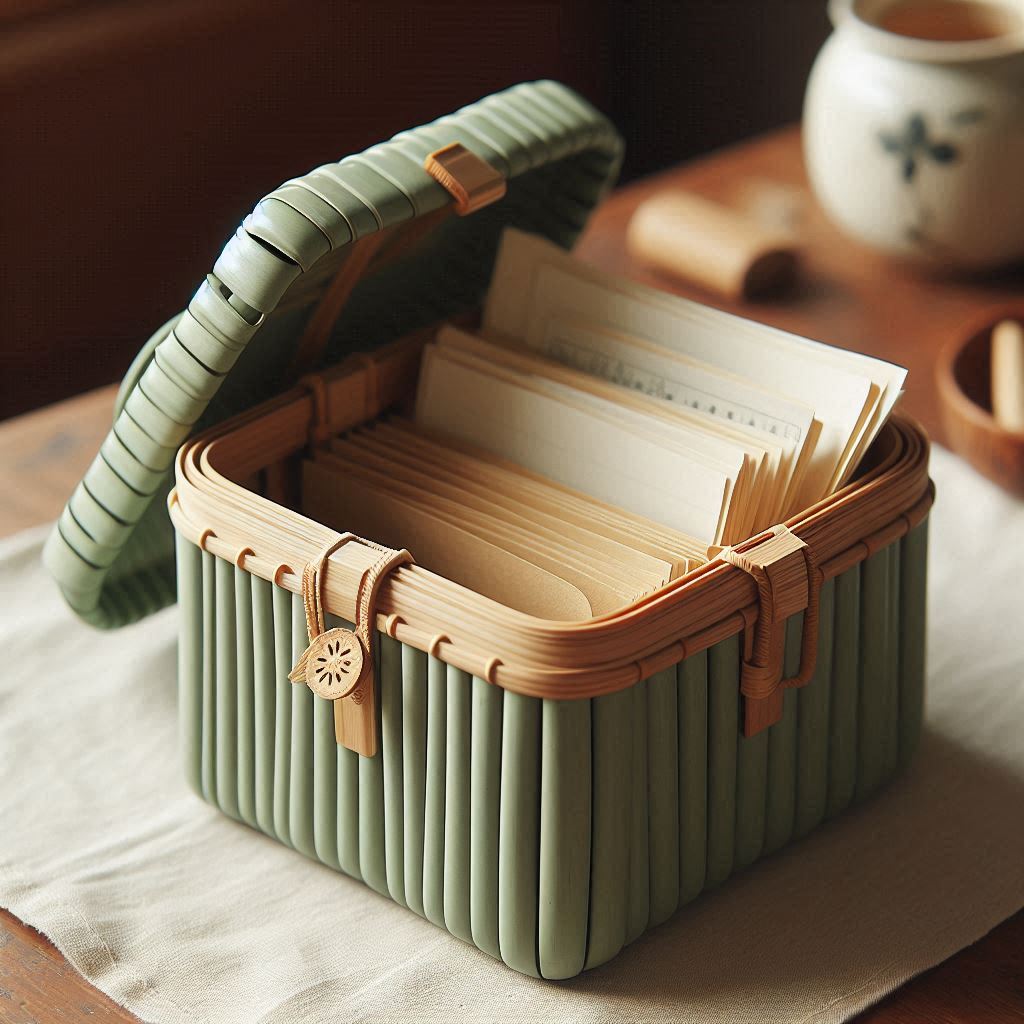
The sun streamed through the kitchen window, casting a warm glow on the sage green woven basket on the table. Aisha Tan stared at it, her heart heavy with memories. Just days ago, she had lost her beloved grandmother, Mei Ling, who had filled their home with laughter and the aroma of delicious food. The basket was all that remained of her culinary legacy.

Aisha gently lifted the lid, revealing a collection of handwritten recipes carefully penned in her grandmother’s elegant script. There were dishes from various cultures—Nasi Lemak, Char Kway Teow, Roti Canai, and even Indian curries like Chicken Rendang and Dhal Curry. Each recipe was a testament to the multicultural tapestry that defined Malaysia.

As she sifted through the recipes, Aisha felt a pang of longing. She had always loved cooking but had never taken the time to learn from her grandmother. Now, with Mei Ling gone, Aisha felt an urgency to reconnect with her roots and honour her grandmother’s memory. “I’ll do it,” she whispered to herself. “I’ll cook every dish in this basket.”

The following weekend, Aisha decided to start with Nasi Lemak, a dish that held special significance in her family. It was often served during family gatherings and celebrations. She gathered the ingredients—coconut milk, pandan leaves, rice, sambal, fried anchovies, peanuts, and boiled eggs. As she cooked, memories flooded—her grandmother teaching her how to prepare the dish while sharing stories of their family’s history. Aisha could almost hear Mei Ling’s voice guiding her through each step.

“Add just the right amount of coconut milk,” she remembered Mei Ling saying with a twinkle in her eye. “It’s what makes the rice fragrant.”

Once the dish was ready, Aisha plated it beautifully and sat down at the dining table. She closed her eyes and took a deep breath, savouring the aroma that filled the air. With each bite, she felt connected to her grandmother and their shared heritage. That evening, as she enjoyed her meal alone, Aisha realised that cooking was more than just preparing food; it was a way to keep memories alive—a bridge between generations.

Inspired by her first culinary adventure, Aisha decided to invite her estranged relatives over for dinner. It had been years since they had gathered as a family; disagreements and misunderstandings had driven them apart. But now, she felt it was time to mend those bonds.

She sent out invitations to her aunties and uncles, promising them an evening filled with nostalgia and delicious food. As the day approached, Aisha prepared an array of dishes from the basket—Char Kway Teow for starters and Chicken Rendang as the main course.

On the night of the gathering, Aisha decorated the dining table with flowers and candles to create a warm atmosphere. When her relatives arrived, there were initial awkward moments filled with hesitant smiles and polite greetings. But as they sat down to eat and shared stories about their childhoods—about Mei Ling’s cooking and family traditions—the atmosphere began to shift. Laughter filled the room as they reminisced about old times and shared their favourite memories of Aisha’s grandmother.

“Remember when Auntie May tried to make Nasi Lemak for the first time?” one uncle chuckled. “She forgot to add salt!” Aisha laughed along with them, feeling the warmth spread through her heart as she watched her family reconnect over food. It was then that she realised how powerful cooking could be—a way to heal wounds and bring people together.

Encouraged by the success of her family dinner, Aisha continued exploring other recipes in the basket. Each dish came with its own story—her grandmother’s experiences in different kitchens around Malaysia and beyond.

One weekend, she decided to try making Roti Canai from scratch. As she kneaded the dough and flipped it on the hot pan, she thought about how this simple bread brought together Indian influences in Malaysian cuisine. While preparing Roti Canai, Aisha remembered visiting Little India with Mei Ling as a child—the vibrant colours of saris in shop windows and the tantalizing scents wafting from street vendors selling delicious snacks. Those memories made her smile as she rolled out each piece of dough.

When she finally served it alongside spicy curry for dipping, Aisha felt accomplished. The flavours transported her back to those joyful moments spent with her grandmother exploring their heritage together.

As months passed by, filled with culinary experiments, Aisha discovered more than just recipes—she uncovered stories embedded within each dish reflecting cultural traditions passed down through generations!

One evening while preparing Laksa—a spicy noodle soup popular among Malaysians—Aisha stumbled upon an old photo album hidden beneath some cookbooks on a shelf! Curiosity piqued; she opened it, revealing faded pictures capturing moments from family gatherings long forgotten…

In one photo stood young Mei Ling, surrounded by relatives, smiling brightly, holding bowls filled with steaming Laksa! Another image showcased festive celebrations during Hari Raya, where everyone gathered around tables laden with various dishes showcasing diversity within Malaysian cuisine! A wave of nostalgia washed over Aisha as she flipped through pages filled with laughter, the joy reminding everyone present of the importance of cherishing bonds forged through shared meals celebrating life itself!

Determined not only to preserve these memories but also to honour the legacy left behind, Aisha decided to host another gathering, inviting everyone once again, ensuring that traditions lived on to inspire future generations to embrace journeys undertaken together, forging connections deeper than ever imagined possible…

On the day of the Hari Raya celebrations, excitement buzzed through Aisha’s home as relatives began arriving adorned in colourful traditional attire, filling the air with laughter and joy celebrating a reunion long overdue! This time, however, instead of simply serving dishes prepared from the basket inherited, Aisha encouraged each member to contribute their favourite recipes, to share stories behind them, reminding everyone present of the importance of preserving cultural heritage intertwined throughout lives lived long ago…

As they gathered around tables laden with food; aromas wafted through the air, creating a symphony of flavours and inviting everyone to partake in discovering that beauty lies within stories shared connecting generations past present future alike, reminding all hope remains alive even in darkest moments faced along the way…

“Let me tell you about my mother’s special recipe for Beef Rendang!” said Auntie May, excitedly recounting tales passed down through families, showcasing the significance behind every ingredient used within the dish, reminding everyone present of the importance of cherishing bonds formed across generations…

As festivities continued late into the night, Emma found herself reflecting upon the journey undertaken since inheriting the sage green woven basket filled with handwritten recipes from her beloved grandmother. Each dish prepared not only served the purpose of nourishing their bodies but also their souls, creating connection and bridging gaps formed over years lost amidst misunderstandings and estrangements experienced throughout life.

Feeling the warmth radiate throughout the room, filled with laughter and joy surrounding loved ones gathered close together and sharing moments cherished forevermore, Emma realized cooking wasn’t merely about food—it was about love, a legacy passed down, intertwining lives forevermore, reminding everyone present of the importance embracing change while honouring past ensuring light would always shine bright, illuminating hearts and souls alike, guiding them homeward bound forevermore…

With newfound purpose igniting spirit within, Emma vowed to continue honouring ancestors, ensuring stories lived on, inspiring future generations to embrace journeys undertaken together, forging connections deeper than ever imagined possible…

And so they stood together, united by purpose celebrating life, love, and resilience, knowing together they’d overcome challenges faced, paving the path forward, ensuring light would always shine bright, illuminating hearts and souls alike, guiding them homeward bound forevermore…

Short Story: From Shadows to Light

Shweta and Ranveer had just returned from their honeymoon in Bali, the tan lines still fresh on their skin and the memories of sunset beaches and endless laughter echoing in their minds. The hustle and bustle of New Delhi seemed a stark contrast to the serene island life they had just experienced. Their return to the rhythm of daily life meant going back to their jobs—Shweta to her dynamic role as a journalist and Ranveer to his high-paced marketing position at an MNC.

Living with Ranveer’s parents, Nidhi and Rajesh, in their spacious family home in South Delhi, came with its own set of challenges. Rajesh, a recently retired Public Works Department engineer, ruled the household with an iron fist, while Nidhi, a once-talented artist, had been relegated to the shadows, her creativity stifled by conservative family expectations.

Shweta, who had grown up in a liberal household where her parents encouraged her dreams and ambitions, was appalled by the dynamics she witnessed between Nidhi and Rajesh. It was a household where respect and equality seemed foreign concepts, especially when compared to her relationship with Ranveer, which was built on mutual respect, support, and love.

One evening, as the family gathered for dinner, Shweta noticed how Rajesh dominated the conversation. He spoke over Nidhi, dismissing her opinions with a wave of his hand, reducing her to a silent presence at the table. The scene was all too familiar, repeated daily, with Nidhi’s voice never heard.

“Nidhi, pass the salt,” Rajesh ordered, not even looking at her. “Yes, Rajesh,” Nidhi replied quietly, her eyes downcast as she complied.

Shweta exchanged a glance with Ranveer, who squeezed her hand under the table, a silent acknowledgement of their shared discomfort. The stark contrast between their relationship and his parents’ was glaringly obvious.

Later that night, Shweta couldn’t contain her frustration. “Ranveer, it’s heartbreaking to see how your father treats your mother. She deserves so much more.” “I know, Shweta,” Ranveer sighed. “But my father’s always been like this. It’s hard to change someone who’s set in their ways.” Shweta’s resolve hardened. “Maybe we can’t change him, but we can empower her. She needs to find her voice again.”

The next morning, Shweta found Nidhi in the kitchen, preparing breakfast. She approached her mother-in-law with a warm smile. “Ma, can I help with anything?” she offered. Nidhi looked up, surprised. “Oh, Shweta, you don’t need to. You must be busy with your work.” “I’d like to spend some time with you,” Shweta insisted. “You know, Ranveer told me you used to be an artist. I’d love to see some of your work.” Nidhi’s face lit up momentarily before the usual shadow of resignation fell over her features. “That was a long time ago, dear. I haven’t painted in years.” “But why?” Shweta pressed gently. “You shouldn’t give up on something that brings you joy.”

Nidhi hesitated, glancing around as if expecting Rajesh to appear and chastise her. “It’s complicated, Shweta. Rajesh and his family didn’t think it was appropriate for me to continue with my art.” Shweta felt a surge of indignation but kept her tone calm. “Ma, it’s never too late to start again. Art is a part of who you are. You should reclaim that.”

Over the next few weeks, Shweta made it her mission to empower Nidhi. She started by talking to Ranveer, enlisting his support. “Ranveer, we need to create an environment where your mom feels safe to express herself,” Shweta explained. “We can set up a small studio space for her in the spare room.” Ranveer nodded, his eyes reflecting Shweta’s determination. “I’ll talk to Dad, try to get him to see reason. But you know how stubborn he can be.” Shweta smiled, appreciating his support. “We’ll take it one step at a time.”

The following weekend, Shweta and Ranveer transformed the spare room into a cosy art studio. They bought canvases, paints, brushes, and easels, creating a space that invited creativity. When they unveiled the studio to Nidhi, she was overwhelmed with emotion. “Shweta, Ranveer, this is… I don’t know what to say,” Nidhi stammered, tears of gratitude in her eyes. “Say you’ll use it,” Shweta encouraged. “This is your space, Ma. A place where you can be yourself.” As expected, Rajesh was not pleased. He walked into the studio one afternoon, his face a mask of disapproval.

“What’s all this?” he demanded. “You’ve turned the spare room into a mess.” Nidhi stood frozen, her newly rediscovered confidence wavering. Shweta, however, stepped forward, her voice steady. “Papa, this isn’t a mess. It’s Ma’s studio. She’s an artist, and she deserves a space to pursue her passion.” Rajesh scoffed. “Nonsense. She has responsibilities here. She doesn’t have time for such frivolities.”

Ranveer, who had been listening quietly, finally spoke up. “Dad, this is important to us. And to her. We want her to be happy. She’s sacrificed enough for this family.” Rajesh glared at his son but was taken aback by his firm stance. He was not used to being challenged, especially not by his own family. Nidhi, emboldened by the support of her children, found her voice. “Rajesh, I’ve given up my dreams for too long. It’s time I did something for myself.” For a moment, it seemed Rajesh would explode with anger, but he saw the determination in their eyes and grudgingly retreated, muttering under his breath.

With the studio established, Nidhi began to paint again. At first, she was hesitant, her strokes tentative and unsure. But with each passing day, she rediscovered her passion, her confidence growing with every brushstroke. Shweta would often sit with her, chatting about art and life, encouraging her mother-in-law to push her boundaries and experiment with different styles.

One day, Shweta had an idea. “Ma, how would you feel about showcasing your work? There’s a local art exhibit coming up. It could be a great opportunity.” Nidhi looked unsure. “But Shweta, it’s been so long. I’m not sure if my work is good enough.” “Your work is beautiful,” Shweta insisted. “You have a gift, and it deserves to be seen. Think about it, okay?”

After much persuasion and reassurance, Nidhi agreed to participate in the exhibit. The weeks leading up to the event were filled with a flurry of activity, as Nidhi poured her heart and soul into her paintings. The transformation in her was palpable, her once-muted spirit now shining brightly.

The day of the exhibition arrived, and the gallery buzzed with excitement. Shweta, Ranveer, and Nidhi arrived early to set up, their anticipation building. Nidhi’s paintings, a vibrant mix of colours and emotions, were displayed prominently, each one telling a story of resilience and rediscovery.

As the evening progressed, visitors flocked to Nidhi’s section, captivated by her work. They marvelled at the depth of her talent, the beauty of her expression. Nidhi, though nervous at first, found herself engaging with the audience, her confidence growing with each compliment and word of encouragement.

Shweta watched with pride as Nidhi blossomed, her talent recognised and celebrated. Ranveer stood beside her, his arm around her shoulders. “You did this,” he whispered. “You helped her find her voice.” “No,” Shweta replied, her eyes shining. “She had it all along. She just needed a little push.”

As the evening drew to a close, a man approached Nidhi, his eyes filled with admiration. “Mrs. Sharma, your work is incredible. I’m the curator of an art gallery in Mumbai, and I would love to feature your paintings in an upcoming exhibition.” Nidhi’s eyes widened in surprise. “Really? I don’t know what to say.” “Say yes,” Shweta urged, her heart swelling with joy. With a mixture of disbelief and excitement, Nidhi agreed, her dreams once again within reach.

The weeks following the exhibition were a whirlwind of activity. Nidhi prepared for her upcoming showcase in Mumbai, her days filled with creativity and purpose. The change in her was evident to everyone, even Rajesh.

One evening, as Nidhi worked in her studio, Rajesh stood in the doorway, watching her. For the first time, he saw the joy in her eyes, the passion in her movements. It was a side of her he had long ignored, buried under the weight of his expectations.

“Nidhi,” he began, his voice uncharacteristically soft. “I’ve been thinking… I may not have been supportive in the past. But I see now how much this means to you. And I… I want you to be happy.” Nidhi looked up, surprise and hope mingling in her gaze. “Thank you, Rajesh. That means a lot to me.” Shweta and Ranveer, who had been listening from the hallway, exchanged a look of astonishment. It was a small step, but it was progress.

The day of Nidhi’s exhibition in Mumbai arrived, a culmination of months of hard work and dedication. The gallery was packed with art enthusiasts, critics, and supporters, all eager to see the work of the talented artist.

Shweta, Ranveer, and even Rajesh travelled to Mumbai to support Nidhi, their pride was evident in their eyes. As they walked through the gallery, admiring Nidhi’s paintings, Shweta felt a deep sense of fulfilment. They had not only helped Nidhi reclaim her passion but had also begun to change the dynamics of their family, fostering an environment of respect and support.

As the evening progressed, Nidhi was approached by several art collectors and gallery owners, all interested in her work. Her paintings resonated with people, their vibrant colours and emotional depth striking a chord.

One collector, an elderly woman with kind eyes, took Nidhi’s hand. “Your work is extraordinary. It comes from a place of deep emotion and experience. I would be honoured to display your paintings in my gallery.” Nidhi’s eyes filled with tears of gratitude. “Thank you so much. This means the world to me.”

As the evening drew to a close, the family gathered around Nidhi, their hearts brimming with pride. Shweta hugged her mother-in-law, tears of joy streaming down her cheeks. “I’m so proud of you, Ma. You did it.” Nidhi smiled, her eyes shining with happiness. “I couldn’t have done it without you, Shweta. You helped me find my voice again.”

Back in New Delhi, the changes in the Sharma household were evident. Rajesh, though still set in his ways, had softened, making an effort to be more supportive of Nidhi’s passion. Nidhi continued to paint, her studio a sanctuary of creativity and expression. Shweta and Ranveer’s relationship, built on mutual respect and love, served as a model for the entire family. Their partnership and support for each other highlighted the importance of equality and understanding in marriage.

One evening, as the family gathered for dinner, Rajesh raised his glass in a rare moment of vulnerability. “To Nidhi,” he said, his voice filled with emotion. “For reminding us all of the importance of following our passions and staying true to ourselves.” Nidhi’s eyes filled with tears as she clinked glasses with her family, feeling a sense of belonging and acceptance she had long yearned for. As the evening wore on, Shweta and Ranveer sat together, their hands intertwined. “We’ve come a long way,” Shweta said softly. “We have,” Ranveer agreed. “And we’ll continue to support each other, just like we did with Mom.” Shweta smiled, her heart swelling with love. “Together, we can achieve anything.”

In the months and years that followed, Nidhi’s art flourished, gaining recognition and admiration. She held exhibitions across the country, and her work was celebrated for its emotional depth and vibrant expression. She had reclaimed her identity, her voice, and her passion, all thanks to the unwavering support of her family.

In the end, it was not just about finding one’s voice, but about celebrating it, nurturing it, and allowing it to sing. In the harmonious symphony of their lives, Shweta, Ranveer, and Nidhi had found their true selves, their dreams, and the boundless joy that came with living authentically and freely.

Short Story: The Pink Spectacles

Shivani was a curious and imaginative 6-year-old girl who lived in a small village near Ratnagiri, nestled in the lush green hills of the Konkan region. She loved to explore the winding paths and swaying coconut trees near her family’s modest home, often getting lost in her little world.

But lately, Shivani has been having trouble seeing things. When she tried to read the blackboard at school, the letters would become a blurry mess. And during playtime, she sometimes missed the ball when her friends tossed it to her, much to their amusement.

“Arre, Shivani, kai jhala? What happened to you? Can’t you see?” Her older brother Akshay would tease. Shivani would huff in frustration, wishing she could see as well as her brother. She didn’t understand why her eyesight had suddenly become so bad.

“Aai, I think there’s something wrong with my eyes,” Shivani would tell her mother, Meena, after school each day. “I can’t see things like I used to.” Meena would frown with concern, gently examining Shivani’s eyes. “Hmm, they do seem a bit strained. Maybe you need to rest them more, bala. No more reading in the dark, okay?”

But even after taking breaks, Shivani’s vision didn’t improve but seemed worse. She started bumping into furniture and tripping over rocks on the ground that she couldn’t quite make out. “Arre, look at our little Shivani, she’s turning into a chamgadar! Shivani the bat,” Akshay would laugh, flapping his arms around. “Flapping around, crashing into everything!”. Shivani would feel her face flush with embarrassment. She didn’t want to be a clumsy bat – she wanted to be able to see clearly and run and play like the other children.

One day, Shivani’s teacher at the village school announced that a team of eye doctors would be coming to the school for a special eye camp. Any student having trouble with their vision could get checked and receive free spectacles if needed. Shivani’s parents, Meena and Rajesh, decided to take her to the eye camp. They were relieved that Shivani’s eyes could be properly examined at the camp in their village.

When the day of the eye camp arrived, Shivani was both excited and nervous. She had never seen a real doctor, let alone an eye doctor with all their strange-looking equipment. The ophthalmologist, a kind older man with a warm smile, greeted Shivani and her parents. “Kaishi ahes,” he said, crouching down to Shivani’s level. “How are you? Let’s look into your eyes, shall we?”. Shivani sat patiently as the doctor shone a bright light into each of her eyes and had her read letters off a chart on the wall. After a thorough examination, the doctor turned to Meena and Rajesh.

“Well, it’s clear that your daughter has a case of myopia or nearsightedness,” the doctor explained. “Her eyes are having trouble focusing on distant objects. But the good news is that spectacles can easily correct this.” Shivani’s eyes widened with excitement. “Chashma? Really?” she exclaimed. The doctor chuckled and nodded, then led them to a table filled with different frames.

“Now, let’s find the perfect pair for you,” he said, gesturing to the selection. Shivani’s gaze immediately landed on a pair of frames with a sparkly pink design. “I want those!” she declared, pointing eagerly. The doctor carefully placed the spectacles on Shivani’s face, and when she looked around, everything came into sharp focus.

“Wow, I can see everything so clearly!” Shivani marvelled, her face lighting up with a huge smile. “The trees, the people, the blackboard – everything is so clear.”. Meena and Rajesh exchanged relieved glances, thrilled to see their daughter so excited and happy. “You look beautiful, beta,” Meena said, giving Shivani a warm hug. Shivani couldn’t stop grinning as she admired her new pink spectacles. She could hardly wait to show them off to her friends and family.

When Shivani returned to school the next day, wearing her new pink glasses, her classmates were instantly fascinated. “Wow, Shivani, your chashma is so chamak, so shiny!” exclaimed her best friend Priya. “Can I try them on?”

Shivani carefully handed the spectacles to Priya, who immediately started giggling. “Everything looks so big and close up! It’s like I’m a giant!” Soon, all of Shivani’s friends were lining up to take turns trying on the pink glasses, running around the schoolyard and marvelling at how the world looked through Shivani’s eyes. “Be careful, you’ll break them!” Shivani fretted, but she couldn’t help laughing at her friends’ antics. She had never felt so popular and special before.

Even Akshay, who usually teases Shivani, seemed impressed by her new look. “Hey choti, you look like a movie star with those glasses!” he said with a grin. “Now you can see all the mischief I get into!” Shivani rolled her eyes at her brother, but she secretly felt proud. She loved her new spectacles and how they made her stand out from the crowd. No more bumping into things for her!

With her pink, shiny chashma on, Shivani began to see the world in a whole new way. She noticed so many details she had never paid attention to before – the intricate patterns on the saris of the women in the village, the tiny insects crawling on the leaves, the wispy clouds drifting across the sky. “Aai, look at that bird up there!” Shivani would exclaim, pointing to the sky. “I can see its feathers so clearly!” Meena would smile and nod, happy to see her daughter so fascinated by the world around her. She was glad they had taken Shivani to the eye camp and that she was adjusting well to her new spectacles.

Shivani’s favourite thing to do was to sit on the roof of her house and gaze out at the lush green hills and swaying coconut trees in the distance. She could see for miles, watching the farmers tending to their crops and the cows grazing in the meadows. It was like a whole new world had opened up to her. At night, Shivani would lie in bed and stare up at the twinkling stars with wonder. She could not get over how she could see them so clearly now. She felt like she was floating in a sea of glittering lights, just like the ones on her frames. “I’m so lucky to have these glasses,” Shivani would whisper to herself. “They make everything so beautiful.”

One evening, as Shivani was sitting on the roof gazing out at the pristine beaches and crashing waves of the Konkan coast, her grandmother came up to join her. “Ajji, tell me a story,” Shivani pleaded, snuggling up to the elderly woman. Her grandmother, Radha, chuckled and nodded. “Alright, my dear. Have you heard the legend of the boksi witch that haunts these hills?”

Shivani shook her head, her eyes widening with curiosity. “Well, they say that long ago, there was a beautiful young woman who lived in these very hills,” Dadi began. “She was known for her kindness and healing powers, and the villagers would come to her for help with all sorts of ailments.” Shivani listened intently, captivated by the story.

“But one day, a jealous woman in the village accused the young healer of being a boksi – a witch who practices black magic. The villagers, filled with fear and superstition, turned on her and burned her at the stake.” Shivani gasped, her hand flying to her mouth.

“They say that the young woman’s spirit never found peace, and now her boksi form roams these hills at night, seeking revenge on those who wronged her,” Ajji continued, her voice lowering to a whisper. Shivani shivered, glancing nervously at the shadowy trees surrounding their home. “But don’t worry, my dear,” Radha said, patting Shivani’s hand reassuringly. “As long as you have your chashma, you’ll be able to see the boksi coming from miles away!” Shivani giggled, feeling a bit more at ease. She knew her ajji was just teasing her, but the legend of the boksi witch had certainly piqued her imagination.

As Shivani lay in bed that night, she couldn’t help but wonder if the boksi was real. She stared up at the twinkling stars, wishing she could see through the darkness with her chashma. But alas, they were no match for the inky blackness of the Konkan night.

The next day, Shivani was so busy daydreaming about the boksi witch that she wasn’t paying attention to where she was going. As she was walking home from school, she became entranced by the swaying coconut trees and the crashing waves in the distance.

Suddenly, Shivani felt herself collide with something solid. She looked up to see an elderly woman glaring down at her, her wrinkled face twisted in anger. “Arre, you foolish girl! Can’t you see where you’re going?” the woman scolded, her voice raspy and harsh. Shivani felt her face flush with embarrassment. “I’m so sorry, kaki,” she stammered. “I didn’t mean to.” “Bah, you children these days, always with your heads in the clouds!” the woman interrupted, shaking her head in disgust. “You should be more careful, or you’ll end up like the poor boksi witch, doomed to wander these hills forever!” Shivani’s eyes widened in fear at the mention of the boksi. She quickly apologized again and hurried home, her heart pounding.

When Shivani told her parents what had happened, Meena and Rajesh were concerned. “Bala, you need to be more mindful when you’re wearing your spectacles,” Meena said gently. “They are a gift, but you have to use them responsibly.” Rajesh nodded in agreement. “Your ajji’s stories may be just legends, but there are real dangers out there. We don’t want you to get hurt, Shivani.” Shivani felt ashamed of her carelessness. She knew her parents were right—she had to be more careful, both for her safety and out of respect for the gift of her glasses.

From that day on, Shivani made a conscious effort to be more aware of her surroundings. She would take the time to carefully navigate the winding paths and crowded markets, always keeping her spectacles firmly in place. Shivani also started using her improved vision to help others. She would read signs and labels out loud to her illiterate grandmother, and assist her younger cousins with their homework by writing out the answers in big, clear letters. “You’re such a good girl, Shivani,” her grandmother would say, patting her on the head. “Your spectacles are a blessing, not just for you but for all of us.”

Shivani beamed with pride at her grandmother’s words. She felt like she had learned an important lesson – that her spectacles were not just about seeing the world more clearly, but about using her gift to make a difference in the lives of those around her. As Shivani sat on the roof, gazing out at the lush green hills and the shimmering Konkan coastline, she couldn’t help but feel grateful for the spectacles that had opened up a whole new world to her. She knew that with her newfound vision, she could accomplish anything she set her mind to – even if it meant facing the legendary boksi witch that haunted these very hills.

Short Story: Lavender Love

The delicate purple buds swayed gently in the breeze, their calming scent wafting through the air. Amelia bent down and carefully plucked a few sprigs of lavender from the garden, running her fingers along the soft, fuzzy leaves. She inhaled deeply, letting the familiar fragrance fill her senses and soothe her frazzled nerves.

At 22, Amelia was navigating the uncharted waters of adulthood, and it wasn’t always easy. The pressure to have it all figured out, and make the “right” choices, weighed heavily on her mind. She often found herself lying awake at night, consumed by anxiety about the future.

But whenever the worries became too much to bear, Amelia would turn to her trusty companion – the violet lavender. She kept a bundle of the dried flowers on her nightstand, ready to be crushed and inhaled whenever she needed a moment of peace. The scent had a magical way of calming her racing thoughts, grounding her in the present moment.

As Amelia grew older, the lavender became a symbol of resilience and self-care. Whenever she felt overwhelmed, she would take a few deep breaths, reminding herself that she had weathered storms before and would continue to do so. The lavender was a tangible reminder that even in the darkest moments, there was always a glimmer of hope.

Amelia’s love affair with lavender began at a young age. Her grandmother, Violet, had a sprawling garden filled with fragrant purple flowers. As a child, Amelia would spend hours exploring the garden, mesmerised by the gentle sway of the lavender in the breeze.

Violet was a kind and nurturing woman, always ready with a warm hug and a soothing word. She would often pluck a few sprigs of lavender and tuck them into Amelia’s hair, telling her that the flowers would bring her peace and happiness. Amelia would giggle and twirl around the garden, feeling like a fairy princess in a magical lavender kingdom.

As Amelia grew older, she would visit her grandmother’s garden whenever she needed comfort. The familiar scent of lavender would instantly transport her back to those carefree childhood days, reminding her of the unconditional love and support that Violet provided.

When Violet passed away, Amelia was devastated. She felt like she had lost her anchor, her guiding light in a world that was becoming increasingly complex and overwhelming. The transition into adulthood was not an easy one, and Amelia often found herself struggling to find her footing.

One day, while sorting through her grandmother’s belongings, Amelia stumbled upon a small bundle of dried lavender. She brought it to her nose and inhaled deeply, and suddenly, she was back in the garden, Violet’s warm embrace enveloping her. At that moment, Amelia realised that the lavender was more than just a flower—it was a connection to her grandmother, a tangible reminder of the love and strength that she had instilled in her.

From that day on, Amelia made it a point to keep a bundle of dried lavender with her at all times. Whenever she felt overwhelmed or uncertain, she would take a few deep breaths, letting the calming scent wash over her. It was as if Violet was there with her, whispering words of encouragement and reminding her that she had the strength to face whatever challenges came her way.

As Amelia navigated the ups and downs of adulthood, she found herself drawn back to her grandmother’s garden. There was something about the peaceful, serene atmosphere that instantly calmed her nerves and lifted her spirits. She would spend hours tending to the lavender plants, pruning and watering them with a gentle touch.

One particularly challenging day, Amelia found herself in her favourite spot in the garden, surrounded by calming purple hues. She sat cross-legged on the grass, crushing a few sprigs of lavender between her fingers. As she inhaled the soothing scent, she felt a sense of clarity wash over her.

In that moment, Amelia realized that the challenges she faced were not obstacles, but growth opportunities. She may not have all the answers, but she had the strength and resilience to navigate whatever life threw her way. With a renewed sense of purpose, she stood up, brushed off her jeans, and headed back inside, ready to face the world with a little help from her violet companion.

As Amelia continued to navigate the challenges of adulthood, she found that her love for lavender was not just a personal passion, but also a professional one. She decided to pursue a degree in horticulture, determined to learn everything she could about the plant that had brought her so much comfort over the years.

During her studies, Amelia discovered the many benefits of lavender, from its calming properties to its use in natural skincare products. She became fascinated by the science behind the plant’s therapeutic effects, and she knew that she wanted to share her knowledge with the world.

After graduating, Amelia opened her lavender farm and apothecary. She spent her days tending to the fragrant purple plants, harvesting the flowers and creating a range of products that she hoped would bring joy and comfort to others. From lavender-infused bath salts to soothing essential oils, Amelia poured her heart and soul into every creation.

As her business began to thrive, Amelia found herself surrounded by a community of like-minded individuals who shared her passion for lavender and natural wellness. She made new friends and forged strong connections with her customers, many of whom had their own stories of how lavender had helped them through difficult times.

One day, while attending a local farmers’ market, Amelia met a charming young man named Ethan. He was immediately drawn to her infectious enthusiasm and warm smile, and he couldn’t resist buying a bundle of her lavender-scented soap. As they chatted, Amelia felt a spark of connection that she hadn’t felt in a long time.

Over the next few weeks, Ethan became a regular customer at Amelia’s stall, and their casual conversations soon blossomed into a budding romance. Amelia found herself falling for Ethan’s kind heart, quick wit, and genuine interest in her work. He, in turn, was captivated by her strength, resilience, and unwavering dedication to her passion.

As Amelia’s relationship with Ethan deepened, she found herself dreaming of a future filled with lavender and love. She imagined a cosy cottage surrounded by a lush garden, where she and Ethan would grow old together, tending to the plants that had brought them so much joy and comfort over the years.

One evening, as they sat together on a bench in Amelia’s garden, watching the sunset paint the sky in shades of violet and gold, Ethan turned to her and said, “Amelia, you are the most amazing woman I’ve ever met. You’ve overcome so much, and you’ve done it with grace, strength, and a whole lot of lavender.”

Amelia laughed, her eyes sparkling with tears of joy. “It’s true,” she said, “lavender has been my constant companion through it all. But you, Ethan, you’ve become a part of that story. You’ve brought so much light and love into my life, and I can’t imagine my future without you.”

Ethan smiled and pulled a small box from his pocket. “Then let’s make that future official,” he said, opening the box to reveal a delicate silver ring with a single amethyst stone. “Amelia, will you marry me?”

Amelia’s heart swelled with love and happiness as she nodded, unable to speak through her tears of joy. As Ethan slipped the ring onto her finger, she knew that this was just the beginning of a new chapter in her life, one that would be filled with the comforting scent of lavender and the unwavering love of her soulmate.

From that day on, whenever Amelia caught a whiff of lavender, she would be reminded of the strength, resilience, and love that had carried her through the challenges of adulthood. As she and Ethan built their lives together, surrounded by the calming purple hues of the lavender garden, Amelia knew that she had found her true happily ever after.

Short Story: Celebrating Women – The Circle of Life

In a quaint village nestled between rolling hills and whispering forests, the rhythm of life flowed gently, like the melody of a timeless lullaby. Here, amid the cobblestone streets and rustic cottages, lived women whose stories wove together to create a tapestry of resilience, strength, and sisterhood.

In the heart of the village, beneath the sprawling branches of an ancient banyan tree, sat young Lila, her eyes alight with wonder as she listened to her grandmother’s tales. Sitamma, with her silver hair and twinkling eyes, spoke of a time long past, when women were the keepers of tradition and wisdom.

Lila hung on her grandmother’s every word, her imagination ignited by stories of brave heroines and fierce warriors who had defied the odds and changed the course of history. As the sun dipped below the horizon, casting a golden glow upon the village, Sitamma whispered words of encouragement to her granddaughter.

“Remember, my dear,” she said, her voice a gentle breeze that stirred the air, “you carry within you the strength of generations past. Let your heart be your guide, and never forget the power of your voice.”

With those words echoing in her heart, Lila embarked on her journey, her spirit ablaze with the fire of possibility. She knew that she was but a bud, waiting to bloom into the fullness of her potential. And so, with each passing day, she embraced the challenges and triumphs that awaited her, knowing that her story was just beginning.

In a cottage nestled on the edge of the village, lived Kaveri, a mother whose love knew no bounds. With her gentle touch and nurturing spirit, she tended to the needs of her children, weaving a tapestry of love and warmth that enveloped their home like a cosy blanket.

Kaveri’s days were filled with laughter and chaos, the music of her children’s laughter a melody that danced through the halls. From dawn until dusk, she juggled the demands of motherhood with grace and poise, her heart overflowing with the joy of watching her children grow. But amidst the laughter, Sarah carried with her the weight of responsibility, the knowledge that she was the guiding light in her children’s lives. Through sleepless nights and tear-stained cheeks, she held their hands and whispered words of comfort, knowing that her love would carry them through even the darkest of days.

As she watched her children grow, Kaveri marvelled at the beauty of motherhood – the highs and lows, the triumphs and challenges, all woven together in a tapestry of love. She knew that her role was sacred, a privilege bestowed upon her by the universe, and she embraced it with open arms, knowing that she was fulfilling her purpose with every beat of her heart.

In the heart of the village square, beneath the shade of a blossoming cherry tree, sat Gowri Patti, an elderly woman whose wisdom was as deep as the ocean and as vast as the sky. With her weathered hands and kind eyes, she watched over the village like a guardian angel, her presence a source of comfort and guidance to all who sought her counsel.

Gowri Patti had lived a life rich with experience, her journey marked by triumphs and tribulations, victories and defeats. But through it all, she had remained steadfast in her belief in the power of sisterhood, the unbreakable bond that connected women of all ages and walks of life.

As the village gathered around her, eager to hear her tales of wisdom, Gowri Patti spoke of the importance of embracing one’s true self, of standing tall in the face of adversity, and of cherishing the bonds of friendship and sisterhood that bound them together. Her words were like poetry, weaving a tapestry of hope and inspiration that enveloped the village like a warm embrace. For in the wisdom of age, she found the courage to speak her truth, knowing that her voice held the power to ignite the flames of change and transformation.

And so, as the sun set on another day in the village, the women gathered beneath the banyan tree, their hearts intertwined like the branches above. They knew that their stories were but threads in the tapestry of sisterhood, each one unique and precious, yet connected by the unbreakable bonds of love and solidarity.

As the seasons turned and time marched onward, the women of the village continued to weave the threads of their lives together, creating a tapestry of strength, resilience, and sisterhood. From the blossoming innocence of youth to the quiet wisdom of age, each stage of life brought with it its joys and challenges, its triumphs and tribulations.

But through it all, the women remained united in their shared journey, their stories intertwined like the branches of the banyan tree, rooted deep in the soil of tradition and love. For in the heart of the village, amid the laughter and tears, the triumphs and defeats, there beat the timeless rhythm of sisterhood, a melody that echoed through the ages, celebrating the resilience and beauty of women everywhere.