Sacred Stones, Spaces and Stories: Shakthipeeta Part 10

Shriparvat Temple, Ladakh
Situated in the breathtaking landscapes of Ladakh, the Shriparvat Shakti Peeth, also known as Shrisundari Shakti Peeth is dedicated to Goddess Mahamaya. While the exact date of the establishment of the temple remains uncertain, the temple is believed to be one of the most ancient Siddhpeeths in the region. Situated amidst the towering peaks of the Himalayas, the temple offers a unique spiritual experience, blending the raw power of nature with divine energy.

According to tradition, it is believed that the right anklet or right foot of Goddess Sati fell here. At the Shriparvat Shakti Peeth, the goddess is worshipped as Shri Sundari, which means the beautiful one. This name reflects the divine beauty and grace associated with the goddess at this particular site. The Bhairava, the fierce manifestation of Lord Shiva who accompanies the goddess at each Shakti Peetha, is known here as Sundarananda. The name Sundarananda, meaning the handsome one who brings joy, creates an interesting parallel with the goddess’s name, emphasising the divine couple’s beauty and bliss.

The temple’s setting in the Ladakh region, known for its stunning landscapes and challenging terrain, makes it a unique pilgrimage destination. It is considered one of the ancient Siddhpeeths, adding to its spiritual significance. The temple offers breathtaking views of the surrounding Himalayan landscape, creating a serene and awe-inspiring atmosphere for worship. Many devotees report feeling a powerful spiritual energy at the site, attributed to its status as a Shakti Peetha.

The temple is open from 6 am to 10 pm daily. Festivals celebrating the feminine energy like Navaratri and Durga Puja are celebrated at the temple as is Shivaratri. The best time to visit the temple is from June to October when the weather in Ladakh is most favourable for travel. The summer months offer clear skies and relatively warmer temperatures, making it easier to access the temple and enjoy the surrounding natural beauty.

The temple is steeped in the rich mythology of the Shakti Peethas. One interesting aspect is the difference in beliefs about its exact location. While most sources place it in Ladakh, some believe it might be in Kurnool, Andhra Pradesh. This geographical ambiguity adds an element of mystery to the temple’s lore.

When one stands at the Shriparvat Temple, surrounded by the majestic Himalayan peaks, you can’t help but feel a connection to the spiritual heritage that has shaped this land for millennia. The journey to the temple itself is part of the pilgrimage experience. The challenging terrain of Ladakh, with its high-altitude passes and breathtaking vistas, serves as a physical metaphor for the spiritual journey of the devotees. Each step towards the temple is seen as a step closer to the divine, making the pilgrimage as much about the journey as the destination.

Avanti/Harsiddhi Temple, Ujjain, Madhya Pradesh
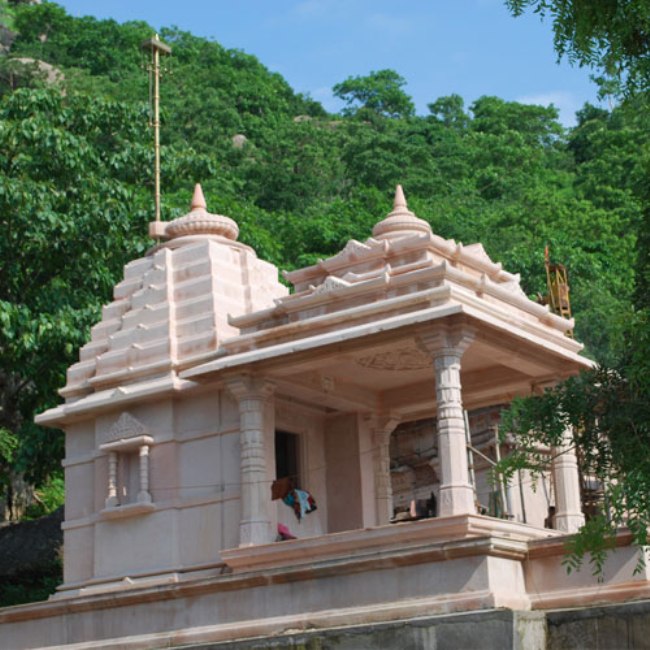
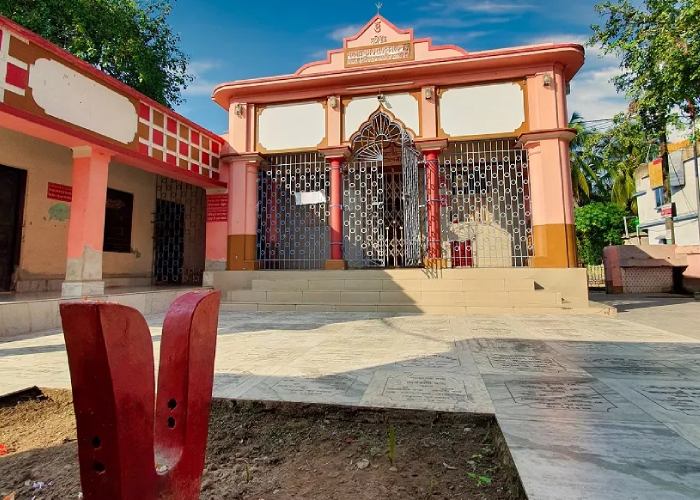
Located in the ancient city of Ujjain, the Avanti Shakti Peeth, also known as the Harsiddhi Temple is believed to be around 5000 years old. This ancient shrine’s spiritual significance predates recorded history with the exact date of its establishment uncertain. Some accounts attribute the temple’s original construction to King Bhadrasen, though its history has been shaped by various rulers and dynasties over the centuries. The temple’s location in Ujjain, once the capital of the ancient Avanti Kingdom, adds to its historical importance. Ujjain was one of the 16 Mahajanapadas of Ancient India and remained a significant cultural and trading centre until the early 19th century.

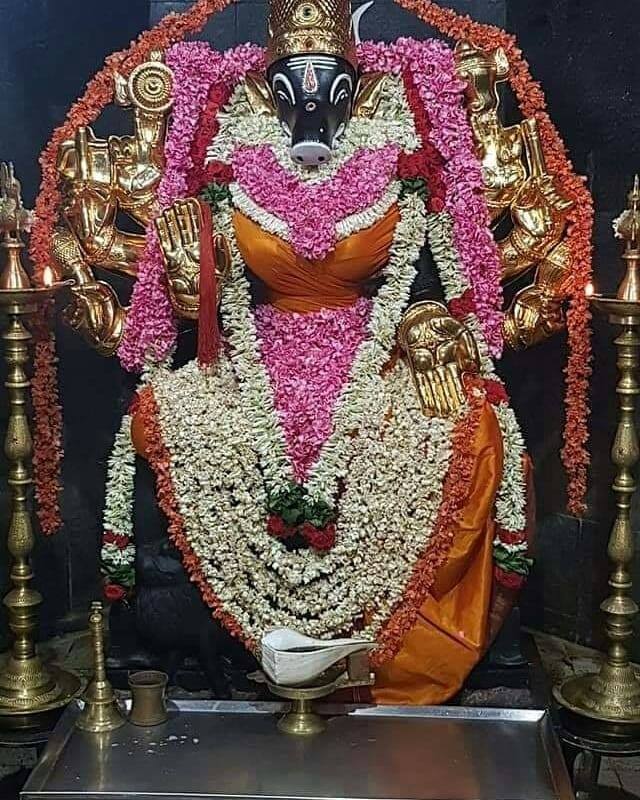
According to tradition, it is believed that the upper lip of Goddess Sati fell at this spot. Interestingly, there is some debate about the exact location of the Shakti Peetha in Ujjain. Some sources suggest that both the Harsiddhi Temple and the nearby Avantika Mata Temple on Bhairav Parvat are considered Shakti Peethas, with their idols facing each other. At the Avanti Shakti Peeth, the goddess is worshipped as Avanti or Mahakali. The Bhairava, the fierce manifestation of Lord Shiva who accompanies the goddess at each Shakti Peetha, is known here as Lambkarna.

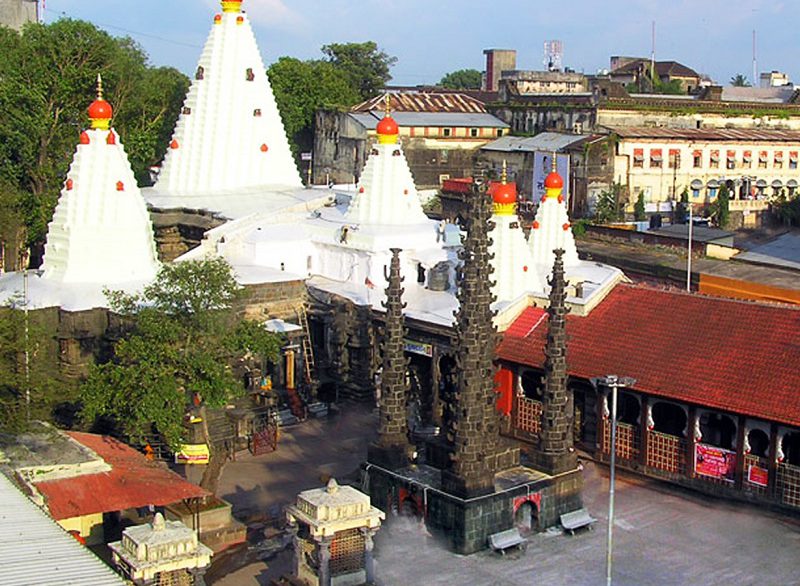
The temple structure evolved using unusual, vibrant stones. The walls and roof are constructed from high-quality stones, providing visitors with a picturesque vistas. The present structure of the temple shows Maratha influences, particularly in its lamp pillars. The temple houses a Sri Yantra, a powerful symbol in Tantric worship. A unique feature of the temple is the presence of two pillars adorned with lamps. These pillars, each holding 1111 lamps, are lit during festivals, creating a spectacular sight. The temple premises include an ancient well with an artistic pillar adorning its top. Besides the main goddess, the temple complex also houses idols of Goddess Annapurna, Mahalakshmi, and Mahasaraswati.

Navaratri is celebrated at the temple. The lamp pillars are lit during this time, creating a mesmerizing spectacle. As one of the holiest cities in India, Ujjain hosts the Kumbh Mela, during which the Avanti Shakti Peeth sees a surge in devotees. Given the temple’s connection to Lord Shiva, Shivaratri is an important celebration here.

According to local lore, there was once a demon named Andhakaleshwar who terrorised the earth. Adi Parashakti took the form of Kali to protect all the worlds. The demon had received a boon from Lord Brahma that wherever his blood was shed, demons like him would appear. During the battle, the goddess spread her tongue, absorbed all the blood released by the demon, and eventually killed him. After that, this place was named Avanti Peeth. King Vikramaditya, the legendary ruler of Ujjain, was a devoted worshipper of Goddess Harsiddhi. It is said that he dedicated his head to the goddess eleven times, and each time she brought him back to life.

Once when Shiva and Parvati were alone on Kailash, two demons Chand and Prachand tried to force their way in. Shiva called upon Chandi to destroy them, which she did. He then gave her the name Harsiddhi, meaning one who vanquishes all. In a small shrine just outside the main temple, dedicated to Mahamaya, there is a lamp that is said to have been burning continuously for ages. Only the pujari is allowed to enter this sanctum to offer prayers and maintain the lamp.

The Avanti Shakti Peeth, with its blend of myth, history, and living faith, continues to be a powerful force in India’s religious landscape. The temple’s significance extends beyond its religious importance. It is believed to be one of the seven locations on earth that lead to Moksha.

Maa Sharda Mandir, Maihar, Madhya Pradesh
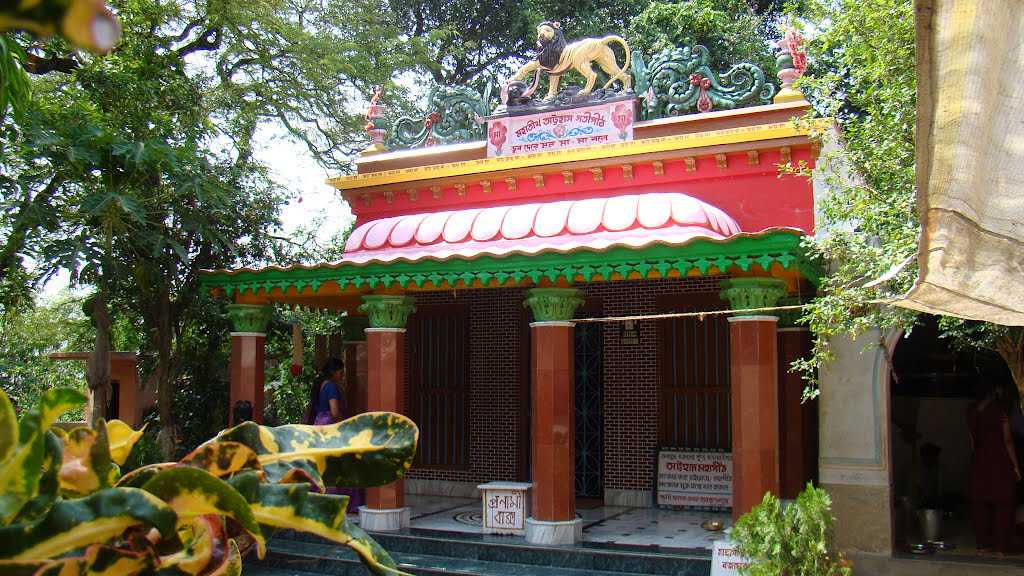
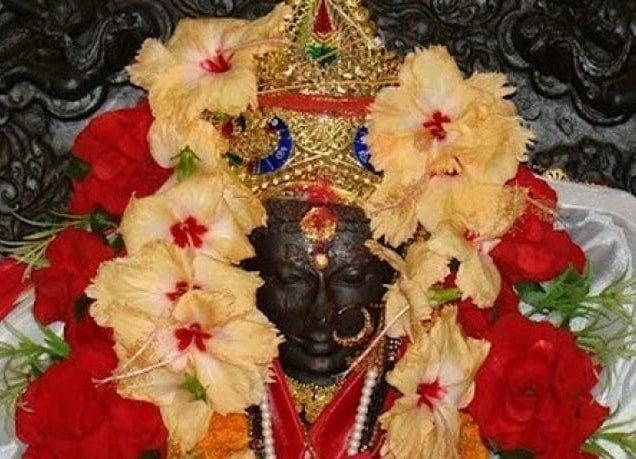
Nestled atop the majestic Trikuta Hill in Maihar, the Maa Sharda Mandir is an ancient shrine, dedicated to Goddess Sharda, a manifestation of Goddess Saraswati. According to Hindu mythology, the hill on which the temple is situated was once the abode of Lord Shiva and Goddess Parvati. The site’s sanctity was further established when Goddess Sharda appeared before the great sage Markandeya, granting him the boon of knowledge. While the exact date of the temple’s establishment remains uncertain, its present structure dates back to the 19th century. The ruling family of Maihar, the Bundelas, constructed the temple, blending Rajput and Mughal architectural styles to create a stunning edifice adorned with intricate carvings and designs.

The name Maihar itself is steeped in legend, derived from the words Mai or mother and Har or necklace. It is said that when Lord Shiva was carrying the body of Goddess Sati, her necklace fell at this place, giving rise to the name Maihar. The bhairava associated with this temple is known as Chandreshwar.

The temple is situated atop Trikuta Hill, requiring devotees to climb 1,057 steps to reach the shrine. This ascent is considered a symbolic journey towards attaining knowledge and wisdom. The temple’s architecture is a harmonious blend of Rajput and Mughal styles, featuring intricate carvings and designs that adorn its walls and ceilings. The hilltop location offers breathtaking views of the surrounding landscape, including the Holy Anandpur Sahib Gurudwara and the Gobind Sagar Lake. Besides the main goddess, the temple complex houses shrines dedicated to Kaal Bhairava, Lord Hanuman, Goddess Kali, Durga, Gauri Shankar, Shesh Nag, Phoolmati Mata, Brahma Dev, and Jalapa Devi. Behind the temple and downhill is Alha Pond, associated with the legendary warriors Alha and Udal.

Navratri is celebrated in a grand manner in the temple, The shrine is adorned with lights, and devotees from different parts of the country gather to seek the blessings of Maa Sharda. Since 1918-19, a statue immersion ceremony has been celebrated here, similar to practices in Maharashtra and West Bengal.

According to local lore, the warriors Alha and Udal who were brothers, who fought with Prithvi Raj Chauhan during the rule of King Parmardidev Chandel, were the first to discover the goddess in this remote forest. They called her Sharda Mai, and since then, she became known as Mata Sharda Mai. Alha performed penance for 12 years to please the Goddess. The Goddess blessed him with immortality. It is believed that even today, Alha visits the temple every day during Brahma Muhurta at 4 am and worships the Goddess.

A popular legend tells of demon king Ravana carrying a Shivalinga to Lanka. When he needed to answer nature’s call, he asked a passing shepherd to hold the linga. The shepherd put it down, and it became rooted to the spot. In his frustration, Ravana cut a part of the hill with his sword, which is believed to be the Trikuta Hill where the temple now stands. Another tale speaks of a Gujjar boy named Naina who observed a white cow showering milk on a particular stone while grazing his cattle. This phenomenon repeated for several days. One night, the boy had a dream where the Goddess claimed that the stone was her Pindi or symbolic representation. Upon hearing this story, Raja Bir Chand decided to construct the temple atop the hill.

The Maa Sharda Mandir, with its blend of myth, history, and living faith invites all who visit to partake in its timeless spiritual journey. The temple is believed to be a place of spiritual healing, with many devotees reporting miraculous recoveries from illnesses and diseases. The climb to the temple, while challenging, is seen as a purifying act that brings divine blessings.

Shondesh Temple, Amarkantak, Madhya Pradesh
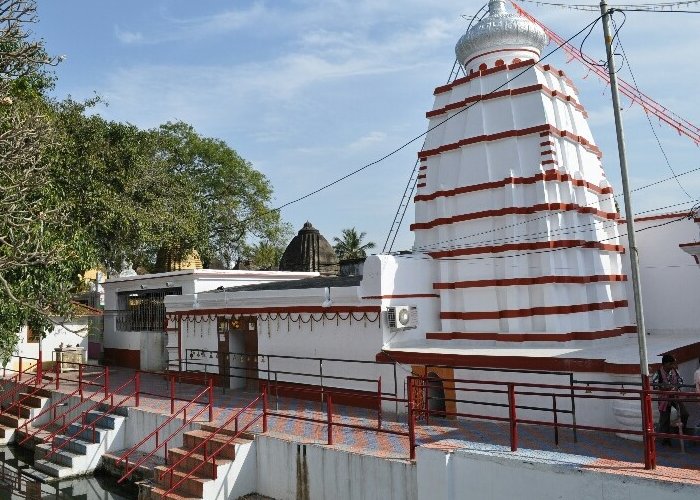
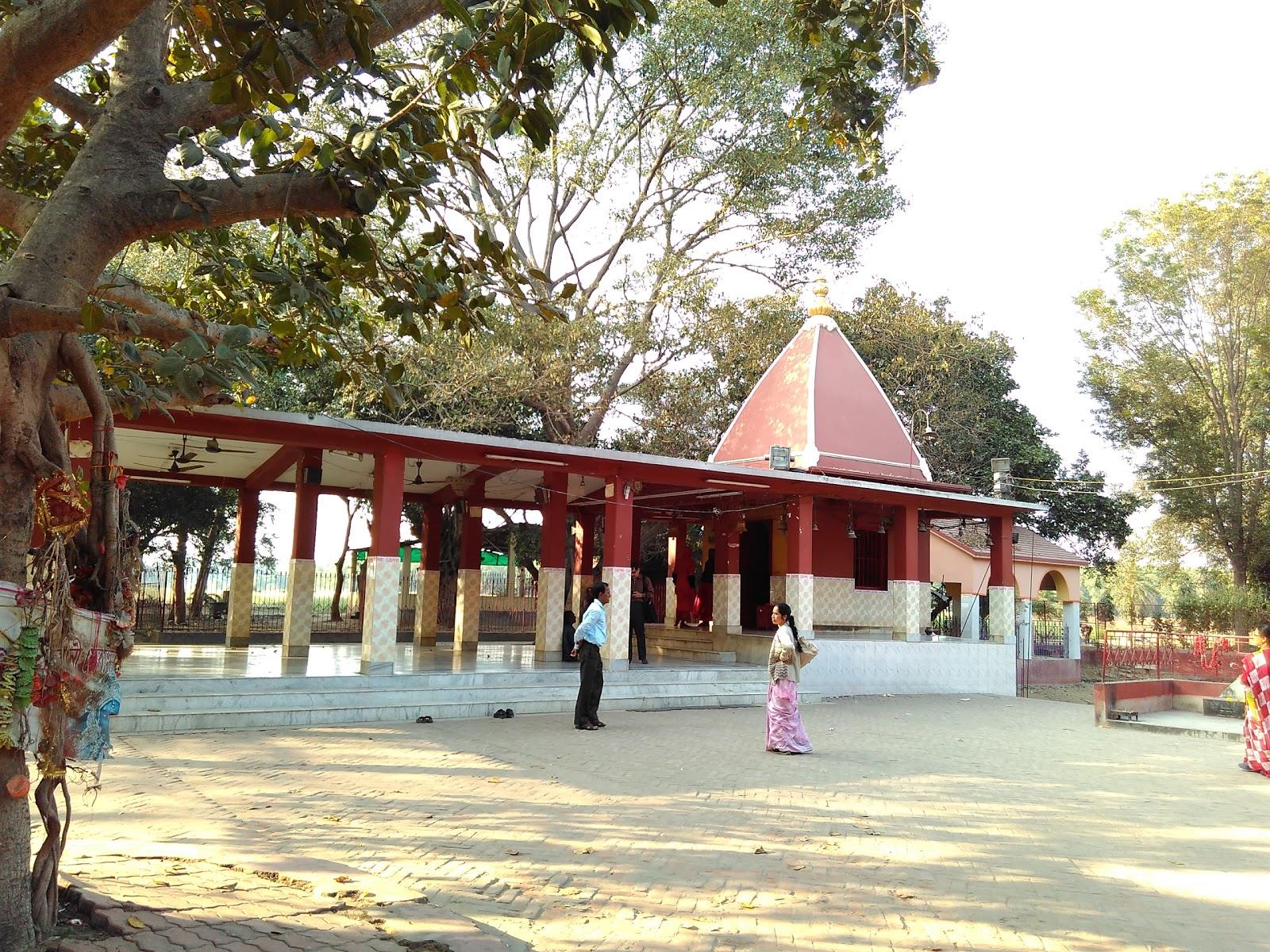
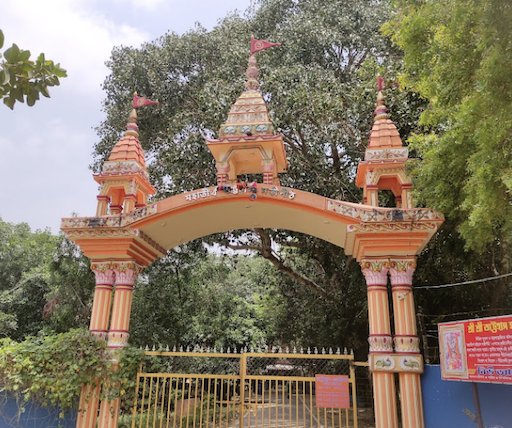
The Shondesh Temple, located in the picturesque town of Amarkantak at the source of the Narmada River is dedicated to Goddess Narmada. The temple is believed to be around 6000 years old, making it one of India’s most ancient shrines. The present structure of the temple is believed to have been constructed in the 16th century. However, the site’s sanctity predates the current building by several millennia. The temple has undergone renovations and expansions over the centuries, with notable contributions from various rulers and dynasties.

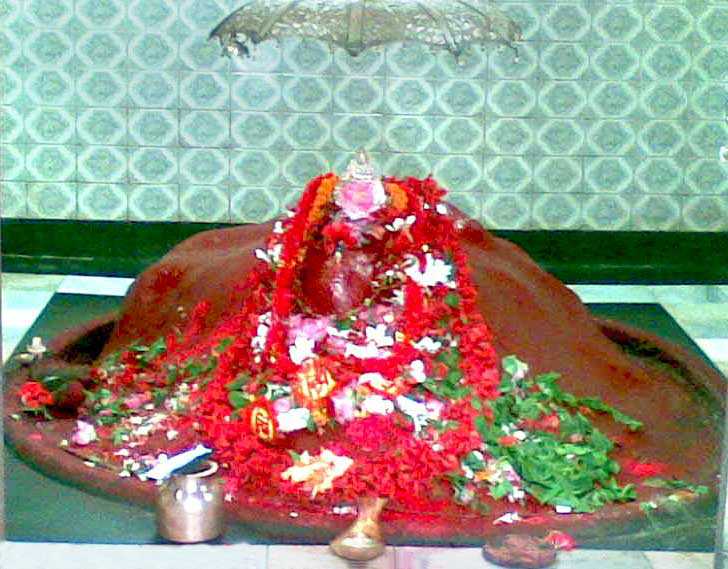
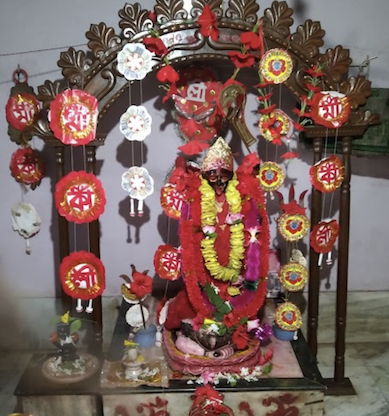
According to tradition, it is believed that the right buttock or hip of Goddess Sati fell here. The temple is also known as the Narmada Devi Shondesh Shakti Peetha, highlighting its connection to both the river goddess and the Shakti Peetha tradition. At the Shondesh Temple, the goddess is worshipped as Narmada Devi or Sonakshi or Shonakshi. This form of the goddess is closely associated with the Narmada River, which originates near the temple. The Bhairava, the fierce manifestation of Lord Shiva who accompanies the goddess at each Shakti Peetha, is known here as Bhadrasen.

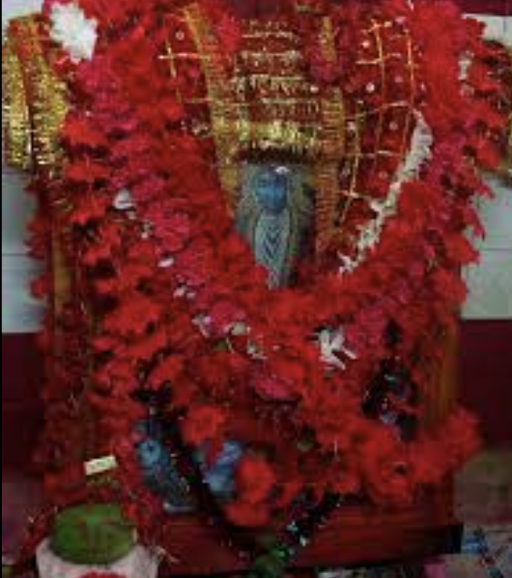
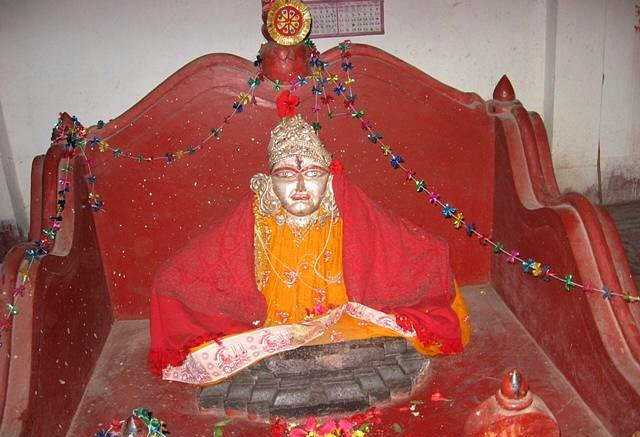
The temple is located at the origin point of the Narmada River, one of India’s most sacred waterways. The temple is constructed with white stone, showcasing the architectural styles of its time. The temple is situated at the confluence of the Vindhya and Satpura mountain ranges, with the Maikal Hills serving as a fulcrum. This unique geographical setting adds to the temple’s mystical aura. Besides the Narmada, the Son and Johila rivers also originate near the temple, making it a rare confluence of three river sources. The temple complex includes the Narmada Udgam Kund, believed to be the exact birthplace of the Narmada River. The idol of Goddess Narmada is adorned with a golden mukut or crown. The platform on which the goddess’s idol is placed is made of silver, further emphasising her importance.

The temple opens its doors to devotees from 6 am to 12 noon and again between 4 and 8 pm. Mahashivratri is the major festival celebrated at the temple with great pomp and glory. The nine-night Navaratri festival dedicated to the goddess is also celebrated with great fervour. The harvest festival of Makar Sankranti sees significant celebrations at the temple. Other festivals like Sharad Purnima, Deepavali, Somvati Amavasya and Ram Navami ate also celebrated with special rituals and ceremonies.

According to local lore, when Lord Shiva destroyed the three cities, Tripura, with fire, some of the ashes fell at Amarkantak. These ashes are believed to have transformed into countless Shiva Lingas, though only one remains visible today at Jwaleshwar. It is believed that any devotee who enters the Sona or Narmada Temple will have their soul cleansed due to the presence of these holy ashes. Amarkantak, where the temple is located, is considered an abode of gods. It is said that whoever dies in this sacred place is assured a place in heaven.

The name Amarkantak is derived from two Sanskrit words – Amar which means immortal and Kantak which means an obstruction Legend has it that this name signifies the place where gods resided but were upset by the obstruction of Rudraganas.

The Shondesh Temple, at the source of the holy Narmada River blends natural beauty, mythological significance, and living faith. Devotees often combine their visit to the temple with a pilgrimage to the river’s origin, believing that the waters here possess special purifying properties. The convergence of spiritual and natural elements creates a unique atmosphere of reverence and wonder.

Short Story: Postcards to a Stranger

The library had always been her quiet rebellion.

While the world outside pressed with schedules, subway noise, and small talk she didn’t have energy for, the library stood untouched, shelved in silence, dust, and possibility.

Meera came every Sunday. Always at ten. Always with a thermos of masala chai tucked into her oversized tote, alongside whatever book she’d half-finished the week before.

It started as a whim.

She found the old postcard wedged between the pages of a poetry collection, ‘Love and Other Small Wars’. The card was blank, except for a faded red border and a tiny, hand-painted sunflower in one corner. The space where a stamp should’ve been was empty. The address lines had never been used.

She stared at it for a long moment. Then pulled out a pen.

Hello, stranger.

I don’t know why I’m writing this. Maybe because we’ve both reached for the same book, perhaps that makes us kindred in some tiny, bookish way.

If you’re reading this, I hope you’re okay. The world can feel a bit too much sometimes, can’t it? But right now, this moment, here in the library, this quiet, ink-scented bubble, it feels like enough.

Be gentle with yourself.

—M

She slid the postcard back into the book, tucked between pages 48 and 49, and returned it to the shelf.

It was silly. It was nothing. But it stayed with her the rest of the day like the warmth of the sun on skin.

Two weeks passed. Meera almost forgot about the card.

Then, on a damp April morning, she returned to her Sunday haunt and pulled out another poetry book, this time from the bottom shelf.

A postcard fell into her lap.

It was the same one. But there was new handwriting below hers.

Dear M,

I never expected to find a note like yours in a library book. It stopped me in my tracks, in a good way. Thank you.

I read that book after a very long day. I wasn’t sure what I needed. Turned out, it was your words. So… thank you for the kindness you didn’t know you gave.

I guess this makes me S.

P.S. I also love this part of the library. It always smells like rain and paperbacks.

Meera stared at the postcard, her fingers trembling.

“Someone replied,” she whispered, half in disbelief.

She didn’t know who S was. But suddenly, the silence of the library felt fuller.

She replied quickly:

S,
You caught me off guard. In the best possible way.
Can we make this a thing? A secret mailbox through books?

She placed the card into The Book Thief, tucked neatly between chapters. And waited.

Over the next two months, their postcard exchange became a ritual.

They never met. They didn’t ask for names or details. Only initials. Only thoughts.

They spoke about books, rainy days, favourite quotes, and small fears. One card from S read:

Sometimes, I think the loneliest part of my day is when I leave the library. Like I’ve borrowed someone else’s silence and now I have to give it back.

Another from Meera:

I saw an old couple holding hands near the bus stop today. It made my heart ache, in a beautiful sort of way. Is it strange to long for something you’ve never had?

They began to confide more.

One day, Meera wrote:

What would happen if we met? Would we break the spell? Would we recognise each other?

S replied:

I think I’d recognise you. Maybe not by face, but by pause. You write with quiet spaces. I think you live with them, too.

They didn’t need faces. Just words.

In late May, Meera left a card that read:

S,
There’s something deliciously heartbreaking about caring for someone you’ve never seen. Is that what this is? Are we writing versions of each other that don’t exist? And yet, it feels real. Like a tide, I can’t hold back.

Sometimes I find myself watching the door, wondering if you’ll walk in. Would I even know it was you? Would you?

The reply came the next week:

M,
I read your card five times. I don’t have a clever response. Only this: I’ve started showing up early, hoping to see who reaches for the books I’ve just left behind.

I think I want to meet you. But I’m scared that the magic might break if we do.

Still, maybe some magic is worth risking.

Would you ever want to meet me, too?

Meera’s breath caught in her throat. Her fingers trembled.

Yes.
Let’s meet next Sunday. Same place. 10 a.m. I’ll be in the poetry aisle. Yellow scarf. Nervous heart.

Sunday arrived, wrapped in golden light.

Meera stood in the poetry aisle, yellow scarf around her neck, pretending to read.

Her heart thudded.

At 10:11 a.m., he appeared.

He was tall, in a dark blue sweater, with soft brown eyes and ink-stained fingers. He looked nervous.

He was holding a postcard.

Their eyes met.

He smiled.

“Hi,” he said softly. “I’m S. Samir.”

“Hi,” Meera breathed. “I’m M. Meera.”

They laughed, a gentle, awkward laugh.

“I was afraid you wouldn’t come,” he said.

“I almost didn’t,” she replied. “But then I thought… if you were anything like your words, I had to meet you.”

He touched the postcard in his hand.

“You changed my Sundays,” he said.

They sat together on the carpet, backs against the bookshelf.

“What now?” she asked.

He smiled.

“Now we write a new chapter. Together.”

A year passed.

They still left postcards for each other. Sometimes in books. Sometimes in coat pockets.

You smiled in your sleep last night. I hope you were dreaming of something silly and soft. Like marshmallows. Or me. —S

I wasn’t dreaming. I was remembering our first postcard. And hoping we’d never stop writing our story. —M

They didn’t.

Two years later, the city library hosted *”Voices Between the Pages.”

Among the displays: a series of postcards, gently ageing, gently loved.

The first read:

Hello, stranger…

No names were given. But two visitors returned every Sunday, wandering shelves, sometimes laughing softly, slipping a new card into a random book…

For the next stranger to find.

Because stories, like love, are meant to be passed on.

Poem: Footprints at Sunset

At the meeting point of sky and sea, the sun bids farewell with a blaze of vibrant colours; a poignant reminder of life’s inevitable end. As its light fades, the footprints left in the sand tell stories of journeys taken, of moments cherished and forgotten, slowly erased by the relentless tide. This poem reflects on the delicate balance between our enduring imprints and the ephemeral nature of existence.

Footprints at Sunset

At sunset’s edge, the sky ignites,
A final burst of flame and light,
Each hue a whisper of the day’s goodbye,
As the golden orb sinks in the twilight sky.

Along the shore, our footsteps lie,
Etched in the sand where memories sigh;
They mark the paths of hearts once bold,
Now softly fading, silently told.

The sunset glows like life’s last page,
An ending penned by time and age;
A brilliant farewell, a fleeting gleam,
A reminder that endings often dream.

Our footprints speak of journeys made,
Of laughter, tears, and choices weighed;
Yet as the tide comes rolling in,
It washes away where we have been.

In this gentle wash, both loss and grace,
Lie the imprints of our transient trace;
For every step, we leave behind
It is swept away, yet etched in my mind.

So, in the light of the dying sun,
Let every footprint count as one,
A story written in the sand,
A cherished mark from a fleeting hand.

Sacred Stones, Spaces and Stories: Shakthipeeta Part 9

Mata Vaishno Devi Temple, Katra, Jammu & Kashmir
Also known as the Shri Mata Vaishno Devi Temple and Vaishno Devi Bhavan, the Vaishno Devi Temple is located in Katra, in Jammu and Kashmir. The temple is dedicated to Vaishno Devi, a manifestation of Mahakali, Mahalakshmi, and Mahasarasvati on the Trikuta mountain at 5,000 feet above sea level.

Mata Vaishno Devi Temple’s origins predate recorded history. While the exact date of its establishment remains uncertain, legends trace its roots to ancient times. A geological study of the Holy Cave has indicated its age to be nearly a million years. There is also a mention of the Trikuta hill in Rigveda. Some accounts suggest that the Pandavas were among the first to visit the Holy Cave and pay homage to Mata Vaishno Devi during their exile, linking the shrine to the epic Mahabharata. The discovery of the shrine in its current form is attributed to Pandit Shridhar, about 700 years ago. According to legend, Mata Vaishnavi appeared in Shridhar’s vision, guiding him to the Holy Cave amidst the Trikuta Mountains. Upon entering the cave, he found a rock formation with three heads atop it, which Mata Vaishno Devi revealed as her manifestation.

While there are differing beliefs about its exact status as a Shakti Peetha, some traditions consider it one of the holiest Shaktipeeths. One belief suggests that the goddess’s skull fell at this location, while another states that her right arm fell in this region. The bhairava associated with the Mata Vaishno Devi Temple is Bhairo Baba.

The temple is created in a cave believed to have been the abode of Mata Rani, adding to its mystical allure. In the garbha griha, the sanctum sanctorum of the temple, the image of Mata Vaishno Devi is installed in the form of three significant stone structures called Pindies. These symbolise the goddess in her three divine forms – Maha Kali, Maha Lakshmi, and Maha Saraswati. The three pindis are naturally formed from a single rock, yet they have different colors and textures, adding to the shrine’s mystique. The feet of the icons are washed by the water brought from the perennial flowing river Banganga. Remains of a stone hand called Varad Hast can be seen inside the holy cave, believed to be connected to the Shakti Peetha status. A shrine dedicated to Bhairavnath, who was defeated by Vaishno Devi and turned into a devotee, is also part of the complex. Located about halfway between Katra town and the main shrine, the Ardha Kunwari Cave is where Vaishno Devi is said to have meditated for nine months. Festivals celebrated at the temple include the nine-night Navaratri festival, Makar Sankranti and Chaitra Navratras that are observed during the spring season.

According to Hindu mythology, a goddess was born in southern India as a young girl named Vaishnavi. She was a sincere devotee of Lord Vishnu from a young age. During the events of the Ramayana, she vowed to marry Lord Rama, who, being Ekpatnivrata or devoted to one wife, could not marry her. Impressed by her devotion, he promised to marry her in his last incarnation as Kalki and asked her to meditate in the cave of the Trikuta Mountains. When Bhairon Nath, a powerful demon, ran after Vaishno Devi to catch her, she reached the cave in the hill. She called upon Hanuman and instructed him to guard the cave entrance while she meditated inside for nine months.

Mata had helped organise a Bhandara, a community feast, at Pandit Shridhar’s place. When she left amidst the Bhandara to escape Bhairon Nath, Shridhar felt immense grief. His fervent prayers led to the goddess appearing in his vision and guiding him to the holy cave. After being defeated by Vaishno Devi, Bhairon Nath turned into a devotee. It is believed that his spirit still lingers around the temple. According to some stories, Mata Rani observed the Navratra to pray for Lord Rama’s victory against Ravana. In return, Rama blessed her with immortality and ensured that the world would sing her praises.

Surrounded by the majestic Trikuta Mountain, as one stands in the temple complex,one can’t help but feel a connection to the spiritual heritage that has shaped this land for millennia. The Mata Vaishno Devi Temple, with its blend of myth, history, and living faith, continues to be a powerful force in the religious landscape of India, inviting all who visit to partake in its timeless spiritual journey.

Baidyanath Dham, Deoghar, Jharkhand
Dedicated to Lord Shiva, Baidyanath Dham in Deoghar is an ancient site of devotion and spiritual significance. According to historical records, the temple was originally built by Puran Mal, an ancestor of the Nagavanshi dynasty, in the 8th century. However, the temple has undergone several renovations and expansions over the centuries, with the present structure believed to have been built by Raja Man Singh in the 16th century.

The temple complex is spread over a vast area and is characterised by its towering spire, intricate carvings, and a sacred tank known as Shrawani Mela Kund. The temple’s architecture reflects a blend of various styles, including Nagara and Dravidian, showcasing the diverse cultural influences that have shaped its design.

Baidyanath Dham holds a unique position as it is both one of the 12 Jyotirlingas and one of the 51 Shakti Peethas. As a Shakti Peetha, it is believed that Sati’s heart fell at this location, making it the Hriday Peeth, or the Heart Shrine. The Shakti Peetha here is dedicated to Jaya Durga, a manifestation of Goddess Parvati, while the bhairava associated with the temple is Baidyanath.

The sanctum houses the sacred Jyotirlinga, believed to be Swayambhu or self-manifested. The Jyotirlinga is said to have healing powers, earning Lord Shiva the epithet Baidyanath, meaning the Lord of Physicians. The temple stands 72 feet tall and resembles a blooming lotus, symbolising purity and enlightenment. Three ascending gold vessels, donated by the Maharaja of Gidhaur, crown the temple. A trident-shaped emblem representing Shiva’s power adorns the temple while the Chandrakanta Mani, an eight-petaled lotus jewel adds to the temple’s mystical beauty.

The Shravani Mela is the the most significant festival at Baidyanath Dham, held during the Hindu month of Shravan. Hundreds and thousands of pilgrims converge at the temple, creating a vibrant and spiritual atmosphere. Devotees embark on a sacred journey known as the Kanwar Yatra, walking barefoot from the nearby town of Jasidih, carrying a kanwar, a decorated pot filled with holy water from the Ganges. Maha Shivaratri, the festival dedicated to Lord Shiva is celebrated at the temple with enthusiasm.

One of the most prominent myths associated with the temple is linked to the demon king Ravana from the epic Ramayana. According to the legend, Ravana, an ardent devotee of Lord Shiva, sought to bring the powerful Jyotirlinga from Mount Kailash to Lanka. As Ravana was carrying the Linga, Lord Vishnu intervened, and during the struggle, a piece of the Linga broke off and fell in Deoghar, where the Baba Baidyanath Temple now stands. The name Baidyanath, meaning the Lord of Physicians or The King of Remedies, originates from a legend where Lord Shiva assumed the role of a healer to cure Ravana, who was injured during his devotion. Impressed by Shiva’s healing powers, Ravana requested him to reside in the form of the Linga at Deoghar. Another popular legend speaks of Chandrakant Mani, the jewel on Lord Shiva’s forehead, which is said to have fallen in Deoghar. Devotees believe that this jewel is still present in the sanctum, radiating divine energy.

Baidyanath Dham, with its blend of myth, history, and living faith, converges the worship of Shiva and Shakti and thus is a unique Shakti Peetha. The temple’s significance extends beyond its religious importance and celebrations at the temple reflects the deep spiritual connection that people share with Baba Baidyanath.

Jnanakshi Rajarajeshwari Temple, Bengaluru, Karnataka
Located in India’s Silicon Valley, the Jnanakshi Rajarajeshwari Temple is dedicated to Goddess Rajarajeshwari. The origins of the temple are rooted in a divine vision experienced by Sri Sivaratnapuri Swamiji, popularly known as Sri Tiruchi Swamigal. On January 14, 1960, while traveling to Mysore, Sri Tiruchi Swamiji witnessed a remarkable sight – three sacred eagles circling in the sky. These eagles reminded him of the divine forms of Durga, Lakshmi, and Saraswathi that had appeared to him during a profound meditation on Mount Kailas.

Guided by this celestial sign, Swamiji followed a footpath leading to a small village called Kenchenahalli. There, amidst a grove of guava trees, he discovered a tiny cottage – the spot where the eagles continued to circle. Recognising the spiritual significance of this location, Swamiji decided to establish his Ashrama there. The foundation stone for the temple was laid on April 3, 1960, by Sri Tiruchi Mahaswamigal himself. Over the years, the once remote village of Kenchenahalli transformed into what is now known as Sri Rajarajeshwarinagar, a testament to the temple’s influence on the surrounding area.

According to the Tantra Chudamani, this site forms the karnabhaga or ear of the numerous Shaktipeethas in Bharat. It was once known as Kanchanagiri situated between the Cauvery and Vrishabhavati rivers. The ruling Bhairava, Abiru Bhairava, is known as Jaya Peetha. The temple is believed to have been the home of the pious wife Anusuya and the sage Atri, who attained siddhi by appeasing the holy mother Sri Rajarajeshwari. The temple grounds are believed to be a sacred place for various devas, rishis, munis, and siddhas.

The temple is a magnificent edifice built in pure granite, showcasing the Dravidian style of architecture. It stands as an excellent specimen of religious architecture, strictly adhering to agama prescriptions. The temple boasts five impressive Rajagopuras and the main attraction is the six-feet tall, inspiring stone image of Divine Mother Sri Raja Rajeshwari, also worshipped as Mother Sri Jnanakshi. The garbha griha houses the splendid stone image of the Divine Mother Sri Jnanakshi Rajarajeshwari, seated on a throne with a unique posture – her right leg folded and placed across the seat, while her left leg is bent at the knee and stretched below to rest on a lotus in full bloom.

The complex includes an elevated sanctum, or a garbha griha, a porch or a antarala, an open pillared hall or a Mukha Mantapa, a wide circumambulatory path or a Pradikshina patha, and an inner courtyard. The temple complex houses shrines for various deities including Vinayaka, Subramanya, Srichakra, and Navagrahas.

The temple is renowned for its grand Navarathri festivities. The temple Brahmotsavam is another significant celebration at the temple, featuring daily Chandi Homa performances as priests recite the Vedas and Saptashati. A unique phenomenon occurs on March 27 each year when the sun directly illuminates the Devi’s forehead and travels down to her feet, attracting numerous devotees.

The story of Sri Tiruchi Swamiji’s vision of the three sacred eagles, which led to the temple’s establishment, is a cornerstone of the temple’s lore. It is said that in the remote past, many devas, rishis, munis, and siddhas, including deva rishi Narada, have propitiated the divine mother Sri Rajarajeshwari at this very place and obtained siddhi. Sage Athreya and his devout wife Anusuya are believed to have lived at this site, adding to its spiritual significance.

The Jnanakshi Rajarajeshwari Temple, with its blend of divine vision, meticulous architecture, and living faith, continues to be a powerful force in Bengaluru, inviting all who visit to partake in its timeless spiritual journey. Under the guidance of the current Peethadhipathi, H.H. Sri Jayendra Puri Mahaswamiji, the temple continues to thrive, maintaining its spiritual essence while adapting to the needs of modern devotees.

Sri Chamundeshwari Temple, Mysuru, Karnataka
Perched atop the Chamundi Hills, overlooking the regal city of Mysuru, the Sri Chamundeshwari Temple can be reached after climbing 1,000 steps. The temple’s origins, dedicated to Goddess Chamundeshwari, the fierce avatar of Shakti, are intertwined with the legend of the demon Mahishasura, whose defeat at the hands of the goddess gave the city its name – Mahishooru, later anglicised to Mysore and now known as Mysuru.

As one approaches the temple, the imposing seven-tiered gopuram or tower looms, its intricate carvings telling stories of divine battles and celestial triumphs. This architectural marvel, added in the 17th century by the Vijayanagara rulers, stands atop the original shrine built by the Hoysala dynasty in the 12th century. It is believed that the hair of Goddess Sati fell at this spot.

As one enters the sanctum sanctorum, the air thick with the scent of incense and vibrating with the chants of devotees, the gaze is drawn to the mesmerising idol of Goddess Chamundeshwari. The deity, resplendent in her Ashtabhuja or eight-armed form, embodies the multifaceted nature of divine feminine power. One of the most striking features of the temple complex is the colossal statue of Nandi, Lord Shiva’s bull mount. Situated on the 700th step of the ascent, this 5-meter-high granite monolith, installed in 1664 by Mysore Maharaja Dodda Devaraja Wodeyar, serves as a silent guardian of the sacred hill.

In 1399, when the Wodeyar dynasty rose to power in Mysuru, they embraced Goddess Chamundeshwari as their tutelary deity. This royal patronage elevated the temple’s status and led to significant expansions and embellishments over the centuries.

The Ashada Shukravara, observed on Fridays during the month of Ashada, sees throngs of devotees seeking the goddess’s blessings. However, it is during Navaratri that the temple truly comes alive. This nine-night festival, celebrated as Mysuru Dasara, transforms the entire city into a spectacle of lights, music, and devotion. The goddess is adorned differently each day, representing the nine forms of Shakti. On the seventh day, dedicated to Kalaratri, the idol is bedecked with priceless jewels from the royal treasury, a tradition that continues to this day.

One of the most intriguing aspects of the temple’s history is its association with animal sacrifices. In ancient times, it was not uncommon for devotees to offer animal and even human sacrifices to appease the fierce goddess. However, this practice was discontinued in the 18th century, reflecting the evolving nature of worship and societal values.

As one stands in the temple courtyard, gazing out at the panoramic view of Mysuru spread out below, it’s easy to understand why this site has captivated the hearts and minds of devotees for centuries. The Chamundeshwari Temple is more than just a place of worship; it’s a living, breathing entity that continues to shape the spiritual and cultural landscape of the region. At the foot of Chamundi Hills lies the Jwalamalini Sri Tripura Sundari Temple, dedicated to the sister of Chamundeshwari. According to local lore, this goddess aided Chamundeshwari in her battle against the demon Raktabija, adding another layer to the rich tapestry of myths surrounding this sacred site.

Mumbai Memories: Our Music Journey

In Tamil Brahmin families, it is almost a rite of passage for children to begin learning music, dance, or both from a very young age. This practice, deeply woven into the cultural fabric, is not merely a hobby or extracurricular activity but a tradition that carries historical, spiritual, and social significance.

Carnatic music and Bharatanatyam are two of the most celebrated classical art forms in South India. Both have ancient origins and have been closely associated with temple rituals, devotional practices, and the cultural identity of the Tamil Brahmin community. Historically, Brahmin families became custodians and prominent patrons of these arts, especially as royal patronage declined and the arts transitioned from temples and courts to urban centres.

The Bhakti movement, which swept South India from the 7th century onwards, emphasised personal devotion to deities through poetry, music, and dance. Brahmins, with their access to education and Sanskritic traditions, played a leading role in this movement, using music and dance as vehicles for spiritual expression and community identity.

As Carnatic music and Bharatanatyam gained prestige, mastery of these arts became a symbol of social status among Tamil Brahmins. The ability to sing or play an instrument or to perform classical dance was seen as a marker of refinement, education, and cultural capital. Families took pride in their children’s artistic accomplishments, which were showcased during family gatherings, religious festivals, and community events.

The rise of music “sabhas” (cultural organisations) in urban centres provided platforms for performances and further cemented the association of these arts with Tamil Brahmin identity. Participation in these sabhas, both as performers and as audience members, became a way for families to assert their place in the social hierarchy and maintain connections within the community.

For many Tamil Brahmin families, enrolling children in music or dance classes is a way to honour their heritage and ensure the continuity of tradition. Parents, often themselves trained in these arts, see it as their responsibility to pass on this legacy to the next generation. In Tamil Brahmin culture, music and dance are not just artistic pursuits but acts of devotion. Many compositions in Carnatic music are devotional hymns, and Bharatanatyam originated as a form of temple worship. Learning these arts is seen as a way to connect with the divine, cultivate discipline, and develop a sense of humility and reverence.

Research and anecdotal evidence suggest that children who begin learning music or dance at a young age develop better memory, concentration, and coordination. The structured practice of swaras (notes), talas (rhythms), and choreography enhances cognitive abilities and fosters discipline. Stage performances, which are an integral part of music and dance training, help children overcome stage fright, build confidence, and learn to express themselves creatively. These skills are valued not just in the arts but in academic and professional spheres as well.

Growing up in the Bombay of the seventies and eighties, it was very common for most young girls and boys in our area to learn music or dance, or sometimes, even both. In my family, I leaned toward music while my sister chose to learn dance. I learned music in two stages. The first time I was probably 5-6 years old, and as all young girls were wont to do, my mother put me in a music class next to my home. This was a centre of Carnatic music, but after about 1.5 years, I wanted out. So I quit. But the seeds were sown, and slowly over the years, I started getting interested in music, and at about the age of 12-13, I restarted my music journey. This time, I learned from an independent teacher close to home. This time, I lasted about three years, and when I reached class 10, I dropped out again because of the demands of school.

My sister was interested in dance, and so she was enrolled on a Bharatanatyam class conducted by an independent teacher who taught many girls in our area. She learned this art for about 4-5 years, from the age of about 6-7 until she too dropped out because of the demands of school, extracurricular activities, and tuition.

I have always loved music, and I am someone who is constantly singing, irrespective of the genre. So when GG and BB were young, I also enrolled them in a local Carnatic music class. GG also chose to learn dance, but in her case, she learned classical ballet. GG has been consistent with going to music class since she started around the age of 7. Even during her PSLE and O-level years, she didn’t stop, as, according to her, this was her stress relief. BB, on the other hand, stopped learning music when he hit puberty and his voice broke. But he has a very good voice and is a great singer. In secondary school, when he was about 13-14, they had a music show in school, and he was the lead singer for the band that he and his friends came up with. He was so good that the day after, his school principal stopped him in the corridor to compliment him on his singing.

So that’s our music journey! It was nice walking down memory lane, remembering all the memories.