The Power of Positive Parenting: Nurturing Your Child’s Emotional Intelligence

Nearly 90% of all adults will become parents at some point in their lives. And while most strive to be great parents, they may also find themselves confused and frustrated by the seemingly endless challenges of parenthood. Irrespective of where one is in their parenting journey, the journey is challenging and not with its twists and turns.

Positive parenting is the continual relationship between a parent(s) and a child or children that includes caring, teaching, leading, communicating, and providing for the needs of a child consistently and unconditionally. Parents strive to raise happy, confident, and well-adjusted children who want them to thrive in all aspects of life, including their emotional well-being. Emotional intelligence is a vital skill that enables individuals to understand and manage their own emotions and empathise with others. It plays a significant role in building healthy relationships, making responsible decisions, and navigating life’s challenges.
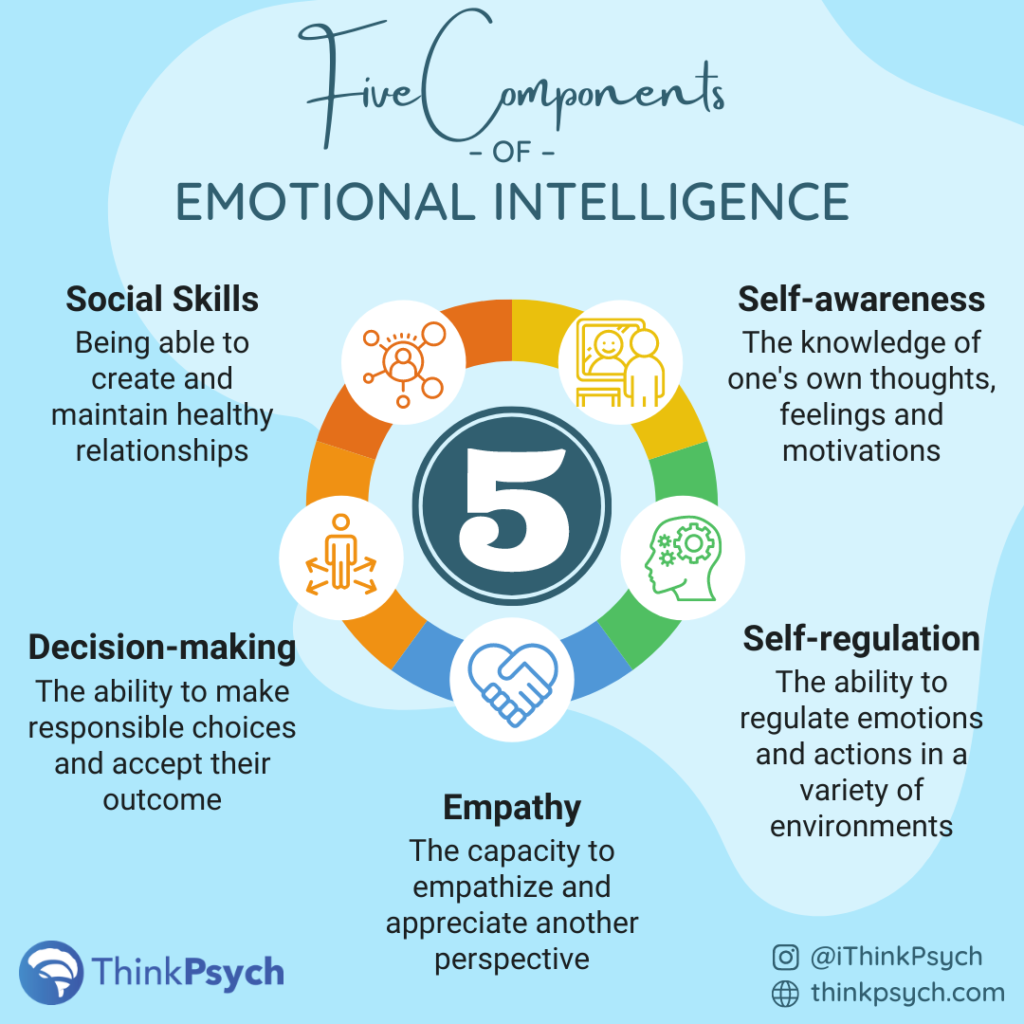
Emotional intelligence encompasses various skills and abilities that contribute to effective emotional management. These skills include self-awareness, self-regulation, empathy, motivation, and social skills. By cultivating emotional intelligence in children, they are equipped with the tools to navigate their emotions and relationships successfully.

Positive parenting is an approach that emphasises respect, empathy, and open communication. It focuses on nurturing a strong parent-child relationship, which serves as the foundation for emotional intelligence development.

Positive parenting creates a loving and supportive environment: Children thrive when they feel loved and supported. Parents should express their affection and appreciation regularly by offering praise for their children’s efforts and achievements and providing comfort and reassurance during difficult times. This sense of security helps children develop a strong foundation for emotional well-being.

Positive parenting advocates active listening: A parent should actively listen to their child’s thoughts, feelings, and concerns. This can be done by maintaining eye contact, nodding, and summarising their words. When children feel heard and understood, they develop trust and learn how to express their emotions effectively.

Positive parenting fosters open communication: Parents should encourage open and honest communication with their children. They should create a safe space where the children are comfortable with sharing their thoughts and feelings without fear of judgment or criticism. Parents should respond with empathy and understanding, validating their emotions and perspectives.

Positive parenting teaches emotional literacy: Help your child develop a vocabulary for their emotions. Label and discuss different emotions, both positive and negative, so they can better understand and communicate their feelings. This awareness lays the groundwork for emotional regulation.
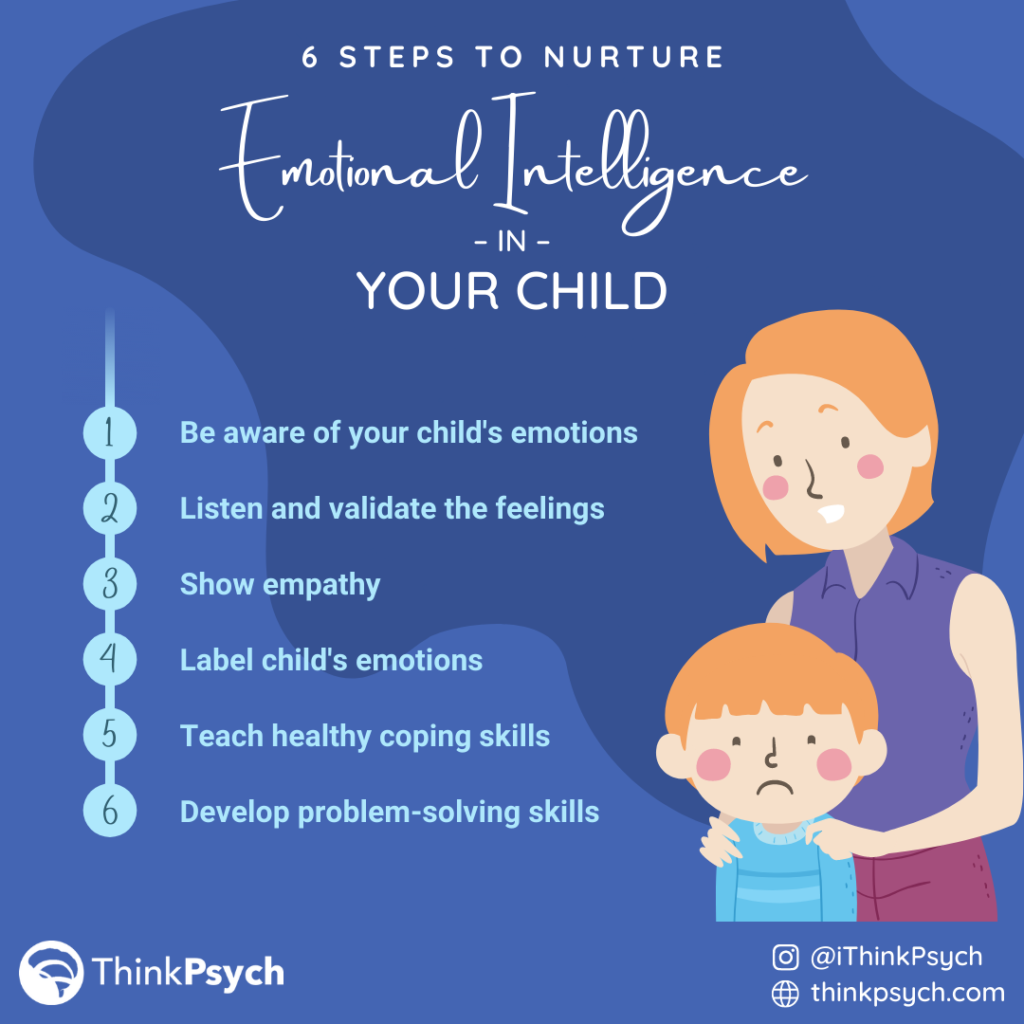
So how can parents use positive parenting to nurture emotional intelligence in their children?

Emotion Coaching: Emotion coaching involves recognising and validating the child’s emotions while guiding them in managing those emotions constructively. When the child experiences a strong emotion, acknowledge and empathise with their feelings. Help them identify the emotion and explore coping strategies to regulate it effectively.

Encourage Problem-Solving: Parents should teach their child problem-solving skills by involving them in decision-making processes. Encourage them to brainstorm solutions and evaluate the pros and cons of each option. This empowers them to think critically, make responsible choices, and develop resilience.

Model Healthy Emotional Expression: Children learn by observing their parents. Parents should model healthy emotional expression by constructively managing their emotions. They should demonstrate effective coping strategies such as deep breathing, taking breaks, or seeking support when they encounter challenging situations and seeing this, their child will learn to emulate these strategies.

Teach Empathy and Perspective-Taking: Parents can help their child to develop empathy by encouraging them to understand and consider the feelings of others. They should engage in discussions about how different actions and words can impact someone’s emotions as well as encourage them to put themselves in others’ shoes and see things from different perspectives.

Foster Emotional Regulation: Emotional regulation is a vital aspect of emotional intelligence. Parents should teach their children various techniques for managing their emotions, such as deep breathing exercises, counting to ten, or engaging in physical activities. They should encourage them to find healthy outlets for their emotions, such as journaling, drawing, or engaging in hobbies.

Encourage Social Skills Development: Social skills play a significant role in emotional intelligence. Parents should encourage their children to engage in activities that foster social interactions, such as team sports, clubs, or community service. They should provide opportunities for them to practice skills like active listening, cooperation, and conflict resolution.

Set Realistic Expectations: Emotional intelligence development is a gradual process. Parents should be patient with their children and set realistic expectations based on their age and individual capabilities. Celebrating small milestones along the way and providing constructive feedback to support their growth will help their children.

Nurturing a child’s emotional intelligence is an investment that will benefit them throughout their lives. By practising positive parenting techniques, one can create a nurturing environment that fosters emotional well-being and resilience. Emotional intelligence is a skill that can be developed and strengthened over time.

Parents, remember to embrace the journey, be present for your child, and watch them flourish as they navigate life with confidence, empathy, and emotional intelligence.

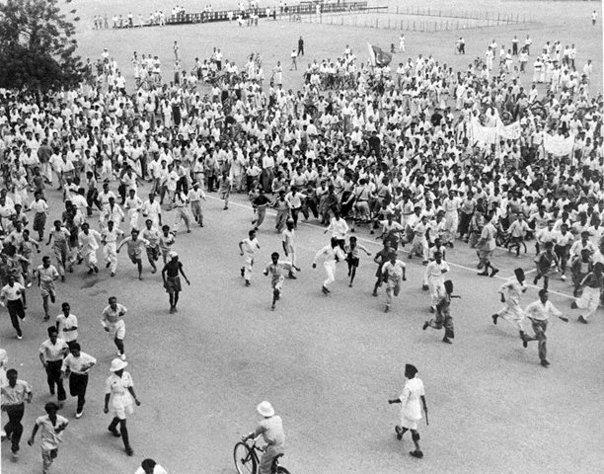
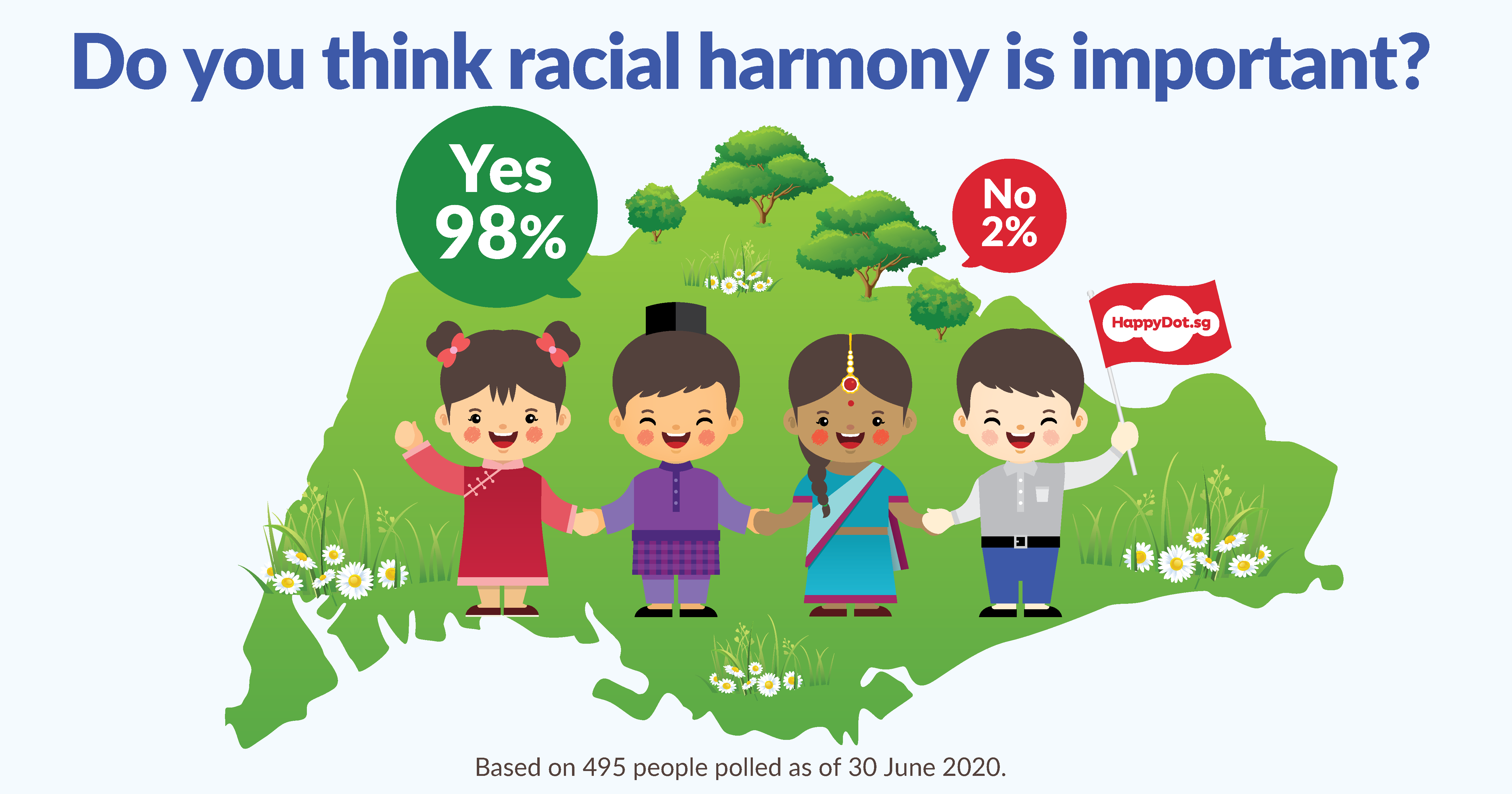
Racial Harmony Day Singapore

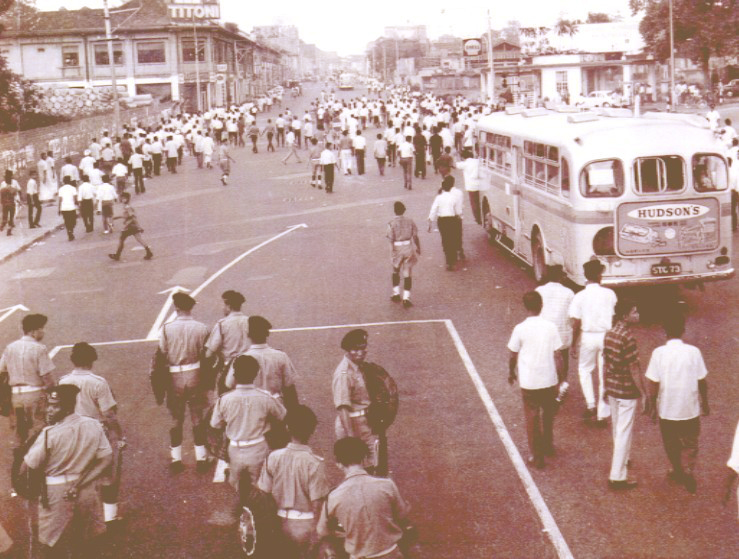
Today in Singapore, we celebrate Racial Harmony Day. The day is celebrated to commemorate the country’s success as a racially harmonious nation and is mostly celebrated in schools and other educational institutions. First launched in 1997 by the Ministry of Education in schools, the event commemorates the 1964 race riots which took place on 21 July 1964 when Singapore was still part of Malaysia, in which 22 people lost their lives and hundreds were severely injured. There were numerous other communal riots and incidents throughout the 50s and 60s leading to and after Singapore’s independence in August 1965.

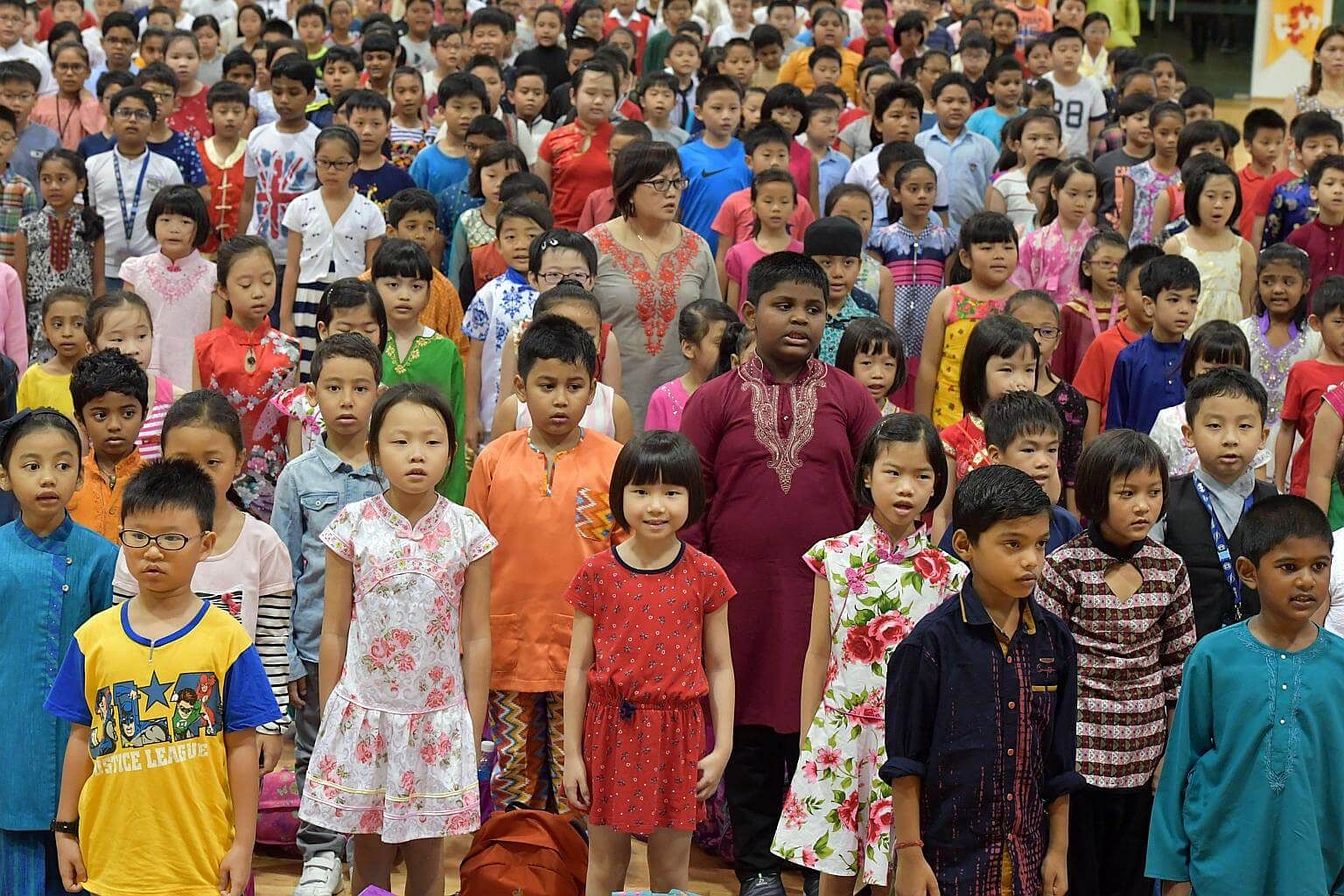
On this day, students in schools across the nation are encouraged to be dressed in other cultures’ traditional costumes such as the Cheongsam, the Baju Kurung and the Saree. Traditional delicacies are a feature of the celebration with traditional games such as five stones, zero points, and hopscotch played and students are encouraged to try out foods from other cultures. Schools are also encouraged to recite a Declaration of Religious Harmony during the celebrations. During this week, representatives from the Inter-Religious Harmony Circle or IRHC comprising various religious groups also get together to pledge their support and to promote the Declaration.

The 1964 race riots in Singapore involved a series of communal race-based civil disturbances between the Malays and Chinese in Singapore following its merger with Malaysia in 1963 and were considered to be the worst and most prolonged in Singapore’s postwar history. The term is also used to refer specifically to two riots on 21 July 1964 and 2 September 1964, particularly the former, during which 23 people died and 454 others suffered severe injuries. The riots are seen as pivotal in leading up to the independence of Singapore in 1965, its policies of multiracialism and multiculturalism, and justifying laws such as the Internal Security Act.

This riot occurred during the procession to celebrate Mawlid, the birthday of the Islamic prophet Muhammad. 25,000 Muslim Malay people had gathered at the Padang. Aside from the recital of some prayers and engagement in some religious activities, a series of fiery speeches were also made by the organisers, instigating racial tensions. During the procession, clashes occurred between the Malays and the Chinese which eventually led to a riot spreading to other areas.  There are multiple accounts and reports on how the riots began. The dominant narration of the July 1964 Racial riot on public forums and history textbooks is simplified and remembered as a riot that involved 20,000 Chinese throwing bottles and rocks at the Malays at the Padang. In reality, some scholars argue that the bottles and rocks being thrown and the clash with a Malay policeman who tried to restrain the Malays were not the reasons for the cause of the riots. But rather, part of the reasons could be also attributed to the distribution of leaflets to the Malay community before the start of the procession by a group named Pertobohan Perjuangan Kebangsaan Melayu Singapore.

The official Malaysian state narrative on the cause of 21 July 1964 characterises the UMNO and Malay-language newspaper Utusan Melayu controlled by UMNO as playing an instigating role. It points to the publishing of anti-PAP headlines and incitement of the Malays against the PAP. To address the grievances of the Malays, PM Lee Kwan Yew held a meeting with various Malay organisations on 19 July. This angered UMNO, as it was not invited to attend this meeting. In that meeting, Lee assured the Malays that they would be given ample opportunities in education, employment and skill training for them to compete effectively with the non-Malays in the country. However, PM Lee refused to promise the granting of special rights to the Malays. This meeting satisfied some Malay community leaders and agitated some, who had the view that the needs and pleas of the Malays were not being heard. To rally the support of the Malays to go against the PAP government, leaflets containing rumours of the Chinese in Singapore trying to kill the Malays were published and distributed throughout the island on 20 July 1964. The spread of such information was also carried out during the procession of Muhammad’s birthday celebration, triggering the riots.

From the Malaysian government’s point of view, Lee Kuan Yew and the PAP were responsible for instigating the series of riots and discontent among the Malay community in Singapore. UMNO and Tun Razak had attributed to the Malay’s anger and hostility towards the Chinese and Lee Kuan Yew’s former speech made on 30 June 1964 for passing inflammatory remarks of the UMNO’s communal politics. Whereas the PAP and Lee Kuan Yew strongly believed that the 1964 July riot was not a spontaneous one, as UNMO had always tried to stir anti-PAP sentiments and communal politics among the Singapore Malays. They often used fiery speeches and Utusan Melayu as a tool to propagate pro-Malay sentiments and to sway their support towards UMNO.

The riots occurred around 5 pm, when a few Malay youths were seen to be hitting a Chinese cyclist along Victoria Street, which was intervened against by a Chinese constable. The riots which occurred around Victoria and Geylang had spread to other parts of Singapore such as Palmer Road and Madras Street. The police force, military and the Gurkha battalion were activated to curb the violence and at 9:30 pm, a curfew was imposed whereby everyone was ordered to stay at home. The riot saw serious damage to private properties, loss of lives, and injuries sustained. According to reports, a total of 220 incidents were recorded with 4 being killed and 178 sustaining some injuries. Close to 20 shophouses owned by the Chinese around Geylang and Jalan Eunos were burnt down. The curfew was lifted at 6 am on 22 July 1964, but clashes and tensions between the Malays and Chinese re-arose, so the curfew was re-imposed at 11:30 am. The racial riots subsided by 24 July 1964, as the number of communal clashes reported was reduced to seven cases. On 2 August, the imposition of the curfew since 21 July was completely lifted and the high police and military supervision was removed.

After the July riots, a period of peace was broken by another riot on 2 September 1964. This riot was triggered by the murder of a Malay trishaw rider along Geylang Serai and this incident sparked attempts of stabbings and heightened violence. 13 people were killed, 106 sustained injuries and 1,439 were arrested.

Following the July riots, the Singapore government requested that the Malaysian federal government appoint a commission of inquiry to investigate the causes of the riots, but this was declined by the Malaysian government. Following the September riots, the Malaysian government finally agreed to form such a commission, with closed-door hearings beginning in April 1965, but the findings of the report have remained confidential.

The racial riots in July 1964, triggered and intensified the political rift between PAP and UMNO, which led to the separation between Malaysia and Singapore in 1965.

The July 1964 racial riots played a significant role in shaping some of Singapore’s fundamental principles such as multiculturalism and multiracialism after independence from Malaysia. The Singapore Constitution emphasised the need to adopt non-discriminatory policies based on race or religion by guaranteeing the grant of minority rights and ensuring that the minorities in Singapore are not mistreated. During Racial Harmony Day, schools recall the racial riots that occurred but the emphasis on the event is focused on the tension between the Malays and the Chinese rather than on the political and ideological differences between UMNO and PAP.

Adhika Masa: A spiritual month to align oneself to the Divine

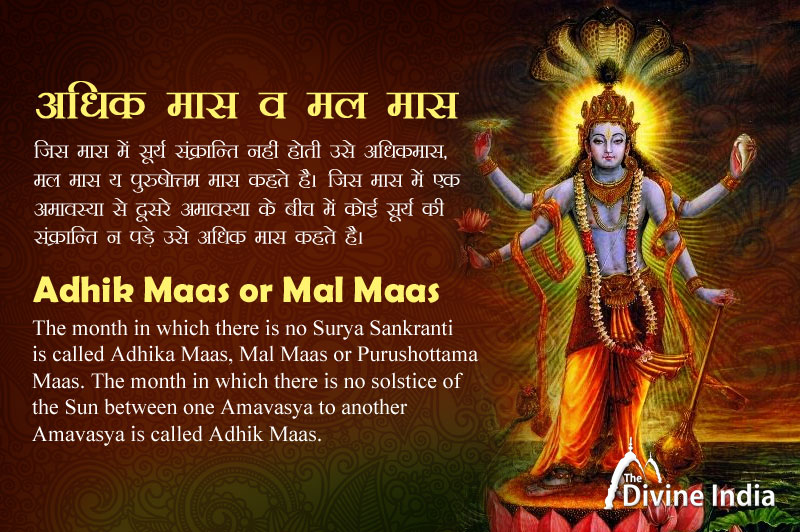
In Hinduism, the lunar calendar plays a significant role in determining auspicious times for various rituals, festivals, and ceremonies. While most lunar calendars consist of 12 months, occasionally, an extra month called the Adhik Masa is added to align the lunar and solar calendars. In 2023, after a gap of 19 years, this extra month returns from 18 July to 16 August.

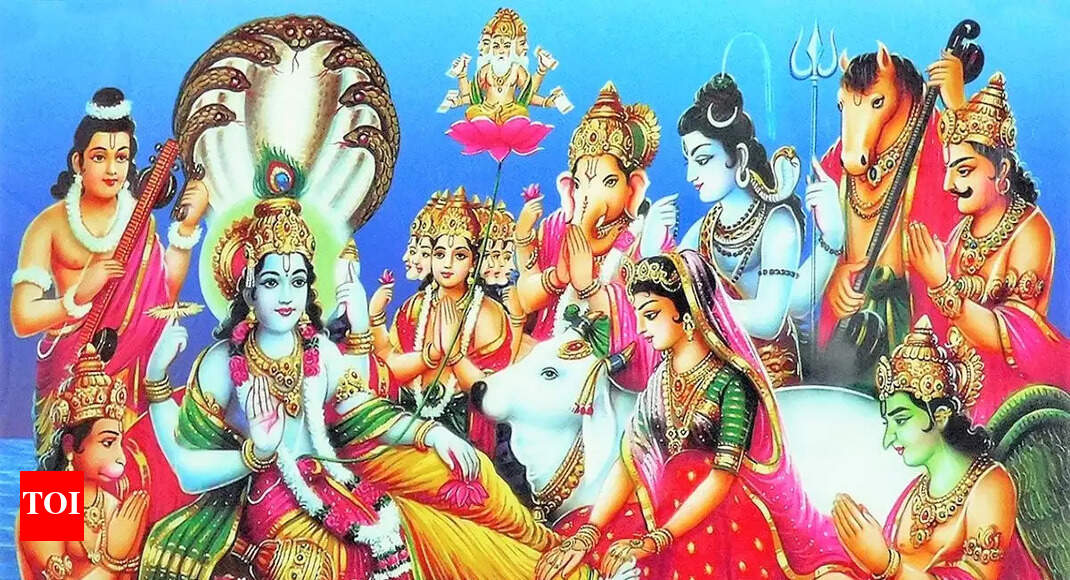
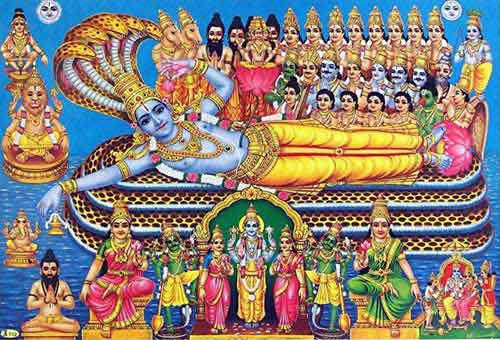
Also known as Purushottam Maas or Mala Masa, the Adhik Maas is a rare additional month that occurs in the Hindu calendar to adjust the discrepancy between the lunar and solar cycles. This intercalary month, approximately 30 days long, is considered highly auspicious and is believed to be under the special blessings of Lord Vishnu, the preserver of the universe. The adhika-masa is an extra lunar month added to the solar calendar every three years so that the lunar and the solar years are synchronised, along with the agricultural cycle and seasons. Adhika refers to the Sanskrit word for additional or extra, while masa means month.

According to the mythology, all the gods refused to become the master of this month due to it supposedly being dirty, then the month prayed to Lord Vishnu, who pleased with the prayer of the month, gave his name to this month, and so the month is known as Purushottam Maas. Lord Vishnu gave the boon to this month that any devotee who worships Lord Shiva during this month does religious work, listens to the Bhagwat Katha, and donates to charity during this month, will get the never-ending virtue.

When the Sun does not at all transit into a new rāshi or zodiac sign which is 30 degrees sidereal zodiac, but simply keeps moving within a rāshi in a lunar month before a new moon, then that lunar month will be named according to the first upcoming transit. It will also take the epithet adhika or extra. The transition of the Sun from one rāshi to the next is called Sankranti. The next month will be labelled according to its transit as usual and will get the epithet nija or original or shuddha or clean. The terms Pratham or first Chaitra and Dvitiya or second Chaitra may also be used.

An extra month, or adhika-masa, falls every 32.5 months on average. The solar year is made up of 365 days and about 6 hours, and the lunar year is made up of 354 days. This causes a gap of 11 days, 1 hour, 31 minutes and 12 seconds between the lunar and the solar years. As this gap accumulates each year, it approximates 2.7 years to one month. No adhika-masa falls during the months of Margashirsha to Magha or November/December to about January/February. An adhika-masa during the month of Kartika or October/November is extremely rare, but in the 250 years between 1901 to 2150, it occurred once, in 1963. The Moon takes about 27.3 days to make one complete orbit around the Earth. The Earth orbits around the Sun once every 365.2422 days. The Earth and the Moon, in 27.3 days, have moved as a system about 1/12 of the way around the Sun. This means that from one full moon to the next full moon, the Moon must travel 2.2 extra days before it appears again as a full moon due to the curve of the Earth’s orbit around the Sun. This creates a variance of 10.87 days a year between a lunar year and a solar year. And so, to compensate for this difference, the additional month is added after every 32.5 months on average.

Adhik Masa is dedicated to Lord Vishnu, and devotees observe this month with great devotion and reverence. Lord Vishnu is believed to be more accessible and responsive during this time, making it an ideal period for intensifying spiritual practices such as meditation, prayer, and reading sacred scriptures. The month is also considered a sacred opportunity to cleanse oneself of accumulated karmic debts. Devotees engage in acts of charity, self-discipline, and selfless service, seeking to purify their souls and seek forgiveness for any past wrongdoings. By engaging in these virtuous acts, individuals aim to elevate their spiritual consciousness and bring about positive transformation in their lives.

During Adhik Masa, specific rituals and observances are followed to appease Lord Vishnu. Devotees often perform pujas which are ritualistic worship, and offer prayers to the deity. Fasting, particularly on Ekadashi, the eleventh day of each fortnight, holds great significance during this month. Observing fasts is believed to enhance spiritual growth and foster self-control and discipline.

Many devotees undertake pilgrimages to holy places associated with Lord Vishnu during Adhik Masa. Places like Badrinath, Jagannath Puri, and Rameswaram are particularly popular destinations during this auspicious month. These pilgrimages allow individuals to immerse themselves in a spiritually charged atmosphere, fostering a deeper connection with the divine. Regarded to be a holy month, many people perform the adhika masa vrata. People engage in practices such as mala japas, pradakshinas, pilgrimages, scriptural reading, and parayanas. During adhika-masa, people perform various types of religious rituals such as keeping fast, recitation of religious scriptures, mantras, and prayers, and performing various types of puja and havan. Vratas or fasts of various durations, including for the full day, half day, weekly, fortnight, and full month are often undertaken. The vratas may be complete fasting with liquids only or without liquids, fasting with fruits only or keeping fast with vegetarian food, as the individual can tolerate. It is said that the persons performing good deeds or satkarma in this month conquer their senses and they come out of the cycle of rebirth. This month is often regarded to be inauspicious, where the performance of rites such as weddings do not take place. It also serves as a compensatory period for adherents who had previously neglected their religious duties.

A month-long mela or fair is celebrated in Machhegaun village in Nepal during adhika-masa. It is believed that one can wash away all his sins by taking a bath in the pond at Machhenarayan temple. Specific festivals such as Dussehra or Deepavali are not marked during this month. In the Beed district of Maharashtra, there is a small village called Purushottampuri, where there is a temple dedicated to Lord Purushottam, a regional form of Krishna. Every adhika-masa, there is a big fair, and thousands of people come from various places to invoke the blessings of the deity.

Adhik Masa offers a unique opportunity to deepen one’s devotion and connection with the divine. By engaging in daily spiritual practices and rituals, individuals can experience a heightened sense of spirituality and devotion. Regular prayer, chanting of mantras, and meditation can help cultivate a deeper connection with Lord Vishnu and nurture a sense of inner peace and tranquillity. The month encourages devotees to engage in self-reflection and introspection and provides an ideal time to assess one’s spiritual progress, identify areas for improvement, and set new goals for personal growth. Through introspection, individuals can gain clarity, overcome obstacles, and strengthen their resolve to lead a more righteous and virtuous life. Adhik Masa is an opportune time to delve into the study of sacred texts and scriptures. Devotees can spend time reading spiritual literature, participating in satsangs which are spiritual discourses, and attending religious lectures to expand their understanding of the teachings and principles of Lord Vishnu. This knowledge serves as a guiding light in one’s spiritual journey. The Adhik Masa is considered a season of giving and selflessness. Devotees actively participate in acts of charity and service, extending kindness and compassion to the less fortunate. By contributing to the welfare of others, individuals can not only alleviate the sufferings of those in need but also cultivate a sense of gratitude and humility.

So do try and spend time deepening your devotion, engaging in self-reflection, and immersing in sacred rituals and practices. The return of Adhik Masa after a gap of 19 years serves as a powerful reminder of the importance of aligning oneself with the divine and seeking spiritual elevation. May this Adhik Masa bring blessings, peace, and spiritual upliftment to everyone.

Short Story: The Green Bangle

Aishah sat alone on the Klebang beach, the sun sinking below the horizon, casting a warm golden glow over the waves. Tears streamed down her face, her heart heavy with sorrow. Just hours ago, she had received the devastating news that her fiance, Nasrul’s family had called off their engagement. The suddenness of it all left her bewildered and hurt.

“Why?” Aishah whispered to the sea, her voice carried away by the gentle breeze. “Why would they do this without any explanation?”

As she aimlessly sifted through the sand, her fingers brushed against something solid. Intrigued, she dug deeper, revealing a small, intricately carved jade bangle. The sunlight reflected off its smooth surface, casting an ethereal green glow. Without thinking, Aishah slipped the bangle onto her wrist.

In that instant, the world around her transformed. Aishah found herself standing in a bustling street, surrounded by buildings that at once seemed familiar, yet unfamiliar. She looked down at herself and realised that she was no longer Aishah but a young Chinese woman. Floundering, Aishah tried to walk down the street when someone called for Su-Yen behind her. She didn’t stop until someone poked her with an umbrella. “Su-Yen, can’t you see I am calling you? Where are you?” Aishah realised that she was a Chinese woman named Su-Yen and this was Malacca, but from what she knew of her history, she had been transported to 17th-century Malacca. Fear and confusion gripped Su-Yen as she tried to make sense of her new reality and glanced at the jade bangle on her wrist, now pulsating with otherworldly energy.

As Su-Yen navigated the crowded streets, fragments of memories flooded her mind. She recalled being the daughter of a wealthy Chinese merchant and a beautiful Eurasian woman. Her parents’ marriage had been a union of two worlds, a testament to the cosmopolitan nature of Malacca. But her blissful existence had come to an abrupt end when her father’s business faltered, and their fortune vanished.

Stripped of their opulence, Su-Yen’s family struggled to make ends meet. In a desperate attempt to secure a better future, her father arranged a marriage between Su-Yen and a powerful but cruel man named Li Wei. Desperate to escape her fate, Su-Yen sought solace in the arms of her secret love, a kind-hearted Malay sailor named Rizal. The same soulmate who had presented her soon with the bangle which adorned her hand right now.

Through the haze of memory, Su-Yen recalled the fateful night that would forever change her life. Li Wei had discovered her illicit romance and confronted them with rage in his eyes. In a fit of jealousy, he had drawn his sword, and before Su-Yen could react, Rizal leapt in front of her, sacrificing his life to protect her.

Tears welled up in Su-Yen’s eyes as she relived the grief and guilt that had consumed her at that moment. She had blamed herself for Rizal’s death and had made a desperate plea to the heavens for a chance to right her wrongs. Su-Yen made up her mind. She started running and did not stop until she reached the beach. She was panting, and collapsed in the fine sand, tears running down her face. She reached for the jade bangle, the symbol of Rizal’s love and flung it before getting up and walking determinedly towards the sea, to be with her love, her soulmate, Rizal.

Back on the Klebang beach, Aishah’s surroundings began to shift. She found herself back in the present day, the jade bangle still snugly adorning her wrist. She knew now that Su-Yen’s story was not just a figment of her imagination but a connection to her struggles.

A newfound determination surged within Aishah. She would not let the pain of heartbreak consume her. Like Su-Yen, she would fight for her happiness. Aishah sought answers, determined to uncover the reason behind Nasrul’s family’s decision.

Days turned into weeks, and Aishah soon learned why Nasrul’s family broke their engagement. One of his relatives had launched a whisper campaign against her, assassinating her character and poisoning their ears against her and her family. The relative wanted Nasrul to marry her daughter and so started this negativity. The revelation filled Aishah with a mix of anger and sadness. She had hoped that love would conquer all, but it seemed that prejudice still held sway.

Armed with newfound resolve, Aishah confronted Nasrul’s family and challenged their decision. She reminded them that her and Nasrul’s love was the forever kind and that their happiness was worth fighting for. Her heartfelt plea touched Nasrul and he stood up against his family and the relative who poisoned their hearts against Aishah and her family. Seeing Nasrul’s steely determination, his family realised the depth of their son’s love for Aishah and relented, understanding that their happiness lay in accepting her as their daughter-in-law.

Aishah and Nasrul’s love triumphed over the prejudices that had once threatened to tear them apart. As they exchanged vows on their wedding day, the jade bangle served as a reminder of the strength and resilience they had found within themselves. And as Aishah glanced at her reflection, she couldn’t help but wonder if Su-Yen was looking back at her, sharing in her joy and celebrating the victory over the trials of the past. The jade bangle, once a catalyst for their connection, now stood as a symbol of the intertwined destinies of two women separated by time but united by love and the indomitable spirit of Malaysia’s rich history.

10 Must-Watch TED Talks: Enlightening Perspectives for a Lifetime

TED Talks are videos that present a great idea in 18 minutes or less. They’re filmed at flagship TED conferences, independent TEDx events, and other special events. The goal of a TED Talk is to inform and educate global audiences in an accessible way. Scientists, researchers, technologists, business leaders, artists, designers and other world experts take the TED stage to present “Ideas Worth Spreading” including valuable new knowledge and innovative research in their fields. Most of the TED talks are filmed at flagship TED conferences, independent TEDx events, partner events and salons.

In June 2006, TED released six talks recorded at its conferences on the Internet. Since then, every talk delivered at a TED event is reviewed by the research, editorial and curatorial teams for publication on TED.com. And because of these videos, TED has attracted an international following that has grown into the millions with the talks now viewed or listened to more than 3 billion times annually.

A lot goes into researching and creating a TED Talk. Most TED Talks are edited, lightly but carefully with the first few sentences of warmup chatter, and excessive ums and uhs removed, but the speakers’ meanings are not distorted. Editing an 18-minute TED Talk, takes almost an entire day. Almost every TED Talk has full subtitles and a snazzy clickable time-coded transcript.

Below are 10 TED Talks that are a must-watch for anyone seeking to broaden their horizons and gain valuable perspectives.

Do Schools Kill Creativity? by Sir Ken Robinson
In this iconic talk, Sir Ken Robinson discusses the importance of nurturing creativity in education. He challenges the traditional school system and advocates for the development of diverse talents and passions. This talk has sparked a global conversation on reimagining education.

The Power of Vulnerability by Brené Brown
Brené Brown explores the concept of vulnerability and its transformative potential. Through her personal stories and research, she reveals the importance of embracing vulnerability as a path to authentic connection, courage, and resilience.
Link: The Power of Vulnerability

How Great Leaders Inspire Action by Simon Sinek
Simon Sinek uncovers the “golden circle” of inspiration, highlighting the significance of starting with “why.” This talk delves into the essence of influential leadership and encourages individuals to find and communicate their purpose.

The Danger of a Single Story by Chimamanda Ngozi Adichie
Chimamanda Ngozi Adichie shares her personal experiences and explores the impact of stereotypes and limited narratives. Through her poignant storytelling, she emphasizes the importance of embracing diverse perspectives and resisting simplistic judgments.

The Puzzle of Motivation by Dan Pink
Dan Pink challenges the traditional notions of motivation and rewards in the workplace. Drawing on psychological research, he introduces the concept of intrinsic motivation and its ability to drive creativity, engagement, and innovation.

Your Body Language Shapes Who You Are by Amy Cuddy
Amy Cuddy explores the influence of body language on our self-perception and interactions with others. She reveals the power of “power posing” and demonstrates how simple changes in body language can impact confidence and success.

The Paradox of Choice by Barry Schwartz
Barry Schwartz delves into the paradoxical nature of choice, arguing that an excess of choices can lead to anxiety, dissatisfaction, and decision paralysis. This talk encourages viewers to reconsider the relationship between choice and happiness.

The Hidden Influence of Social Networks by Nicholas Christakis
Nicholas Christakis explores the profound impact of social networks on our behavior, health, and happiness. This talk sheds light on the interconnectedness of individuals and the ripple effects of our actions within social systems.

The Happy Secret to Better Work by Shawn Achor
Shawn Achor shares insights from positive psychology and presents actionable strategies to cultivate happiness and well-being in the workplace. This talk challenges the conventional notion that success leads to happiness and offers a fresh perspective.

The Art of Misdirection by Apollo Robbins
Apollo Robbins, a renowned pickpocket and entertainer, showcases the art of misdirection. Through his mesmerizing performance, he reveals how our attention can be manipulated, reminding us to stay vigilant and mindful in our daily lives.

TED Talks have the power to transform the way we think, inspire new ideas, and encourage personal growth. The 10 talks shared here, which is not by any means an exhaustive list provides diverse perspectives on creativity, vulnerability, leadership, diversity, motivation, body language, choice, social networks, happiness, and attention. By watching these talks, one can expand their knowledge, challenge their assumptions, and gain valuable insights that can positively impact their lives and the world around them. If you know of other such talks which can add to one’s perspective, please share them in the comments section.