World Savings Day

Savings is something all of us do, or hope to do. Saving money takes discipline and some sacrifices.  Saving is one of the most basic, and most repeated bits of financial advice out there. Saving provides financial security, gives you the freedom to know that when you need money, it is available and lets you take calculated risks. Also, depositors who save money can help in the economic growth of the country.

Today and in some countries, yesterday World Savings Day was celebrated. Every year on October 31st, the World Savings and Retail Banking Institute (WSBI) and its members across the world celebrate World Savings Day. World Savings Day was established on October 31, 1934, during the 1st International Savings Bank Congress or the World Society of Savings Banks in Milan, Italy. The Italian Professor Filippo Ravizza declared this day as International Saving Day on the last day of the congress and in the resolutions of the Thrift Congress, it was decided that World Thrift Day should be a day devoted to the promotion of savings all over the world. As people were not sure about saving after the First World War, the idea was to make people aware of the significance of saving money. In their efforts to promote thrift, the savings banks also worked with the support of the schools, and the clergy, as well as cultural, sports, professional, and women’s associations. As people were not sure about saving after the First World War, the idea was to make people aware of the significance of saving money.

Representatives of 29 countries wanted to bring to mind the thought of saving to the worldwide public and its relevance to the economy and the individual. World Savings Day is usually held on October 30 except in countries where this day is a public holiday since the idea is for the banks to be open so that people can transfer their savings into their accounts.

After World War II, World Thrift Day continued and reached the peak of its popularity in the years between 1955 and 1970. It practically became a veritable tradition in certain countries. In Austria, for instance, the official mascot of saving, the Sparefroh or the Happy Saver, reached a higher degree of brand awareness than the republic’s President and even a street was named after the mascot. In the 1970s, the Sparefroh Journal, an educational magazine for younger people, reached a circulation of 400,000 copies. In Germany World Savings Day is held on the last business day before October 31 since this is a public holiday in some states. In India, October 31 is the day the former Prime Minister Indira Gandhi was assassinated and so the day is celebrated on October 30.

For more than 90 years, this day has aimed to promote saving money and to raise awareness of the important role that savings and retail banking play within the general financial system. World Savings Day also highlights the ethical characteristics that banking institutions need to have to be responsible partners in communities, and serve households, small and medium-sized enterprises (SMEs) and local authorities. Today the focus of the banks that organise World Savings Day is on developing countries, where many people are unbanked. Savings banks play an important role in enhancing savings in these countries with campaigns and initiatives such as working with non-governmental organisations to double the number of savings accounts held by the poor.

To commemorate this day, go and save some money. Either drop by your bank or make an online transfer to your savings account.


Poem: Happy Birthday

Birthdays are always special and when we were younger, we used to wait months for our birthdays. Now as I grow older, birthdays are not as much anticipated as before, but the charm of a birthday will always be there.

This poem was written last month just before GG & BB’s birthday and is inspired by a meditation I did on my birthday.

Happy Birthday

It’s your special day today, it’s the start of a new year
it’s the day you took your first breath, lets the bells ring and cheer

Today is your birthday, you were born on this day
There is a reason for your birth, so write your life’s screenplay

Let us celebrate you today and appreciate your life’s canvas
The things you’ve done, that you still have in store, your life purpose

Each day brings with it a new opportunity
To do something good, to accomplish more and not live aimlessly

There is none else like you, you are unique and special
So surround yourself with your loved ones, and make this day blissful

Do today what you love and what makes you happy and celebrate you
Give yourself credit for your accomplishments and bid disappointments a huge adieu

Today on your birthday, may life bless you with gratitude, optimism and happiness
Count your days with smiles and dream big, every day of life being a bonus

May blessings, love and joy flow into your life forever
May all your dream come true, and your heart sets aflutter

Remember there will never be another you because you are you
Unique and special, loved and joyful, may you live a life that is fruitful

Happy Birthday and remember to live each moment to the fullest
This is your day so enjoy the attention and get fussed

World Statistics Day

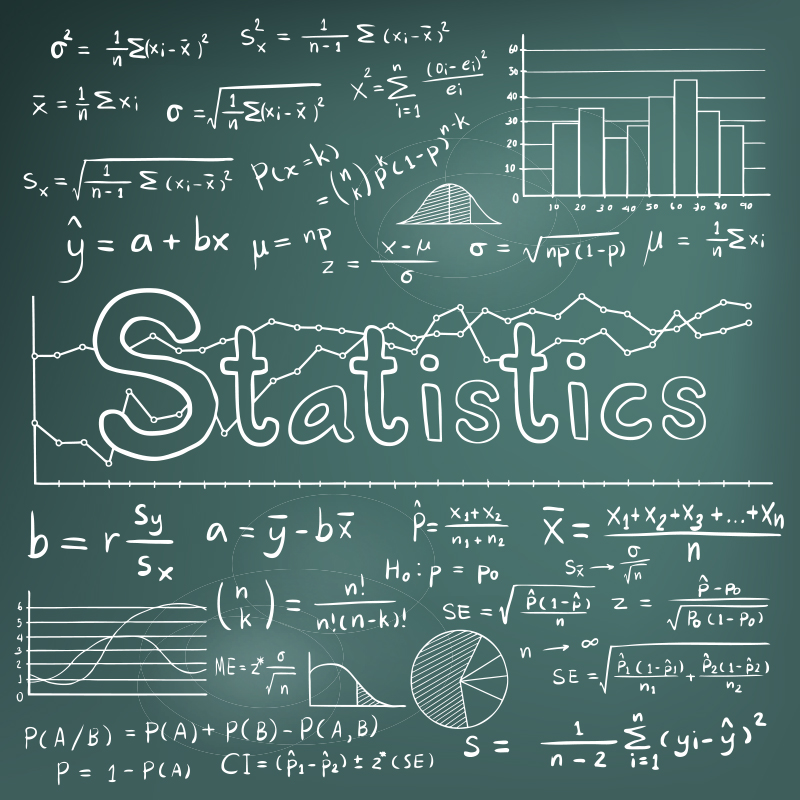
Statistics is the discipline that concerns the collection, organization, analysis, interpretation, and presentation of data. In applying statistics to a scientific, industrial, or social problem, it is conventional, to begin with, a statistical population or a statistical model to be studied. Populations can be diverse groups of people or objects such as “all people living in a country” or “every atom composing a crystal”. Statistics deals with every aspect of data, including the planning of data collection in terms of the design of surveys and experiments. When census data cannot be collected, statisticians collect data by developing specific experiment designs and survey samples. Representative sampling assures that inferences and conclusions can reasonably extend from the sample to the population as a whole. An experimental study involves taking measurements of the system under study, manipulating the system, and then taking additional measurements using the same procedure to determine if the manipulation has modified the values of the measurements. In contrast, an observational study does not involve experimental manipulation.

Two main statistical methods are used in data analysis: descriptive statistics, which summarize data from a sample using indexes such as the mean or standard deviation, and inferential statistics, which conclude data that are subject to random variation like observational errors and sampling variation. Descriptive statistics are most often concerned with two sets of properties of a distribution like a sample or a population. The central tendency or location seeks to characterise the distribution’s central or typical value, while dispersion or variability characterises the extent to which members of the distribution depart from its centre and each other. Inferences in mathematical statistics are made under the framework of probability theory, which deals with the analysis of random phenomena.

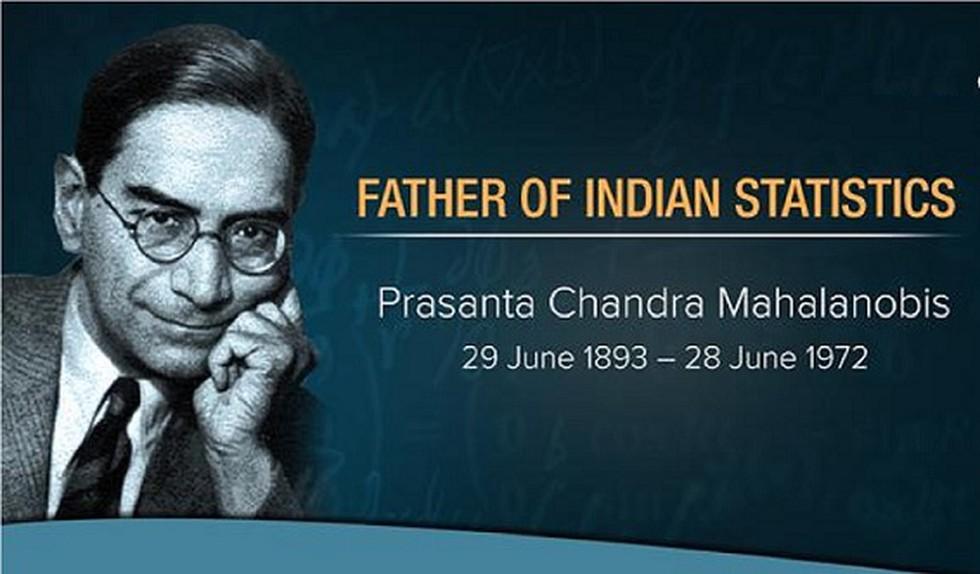
Celebrated every five years, World Statistics Day is an international day to celebrate statistics created by the United Nations Statistical Commission and was first celebrated on 20 October 2010. The day is celebrated in more than 103 countries worldwide, including 51 African countries that jointly celebrate African Statistics Day annually on 18 November. India celebrates its statistics day on 29 June, the birthday of the statistician Prasanta Chandra Mahalanobis.

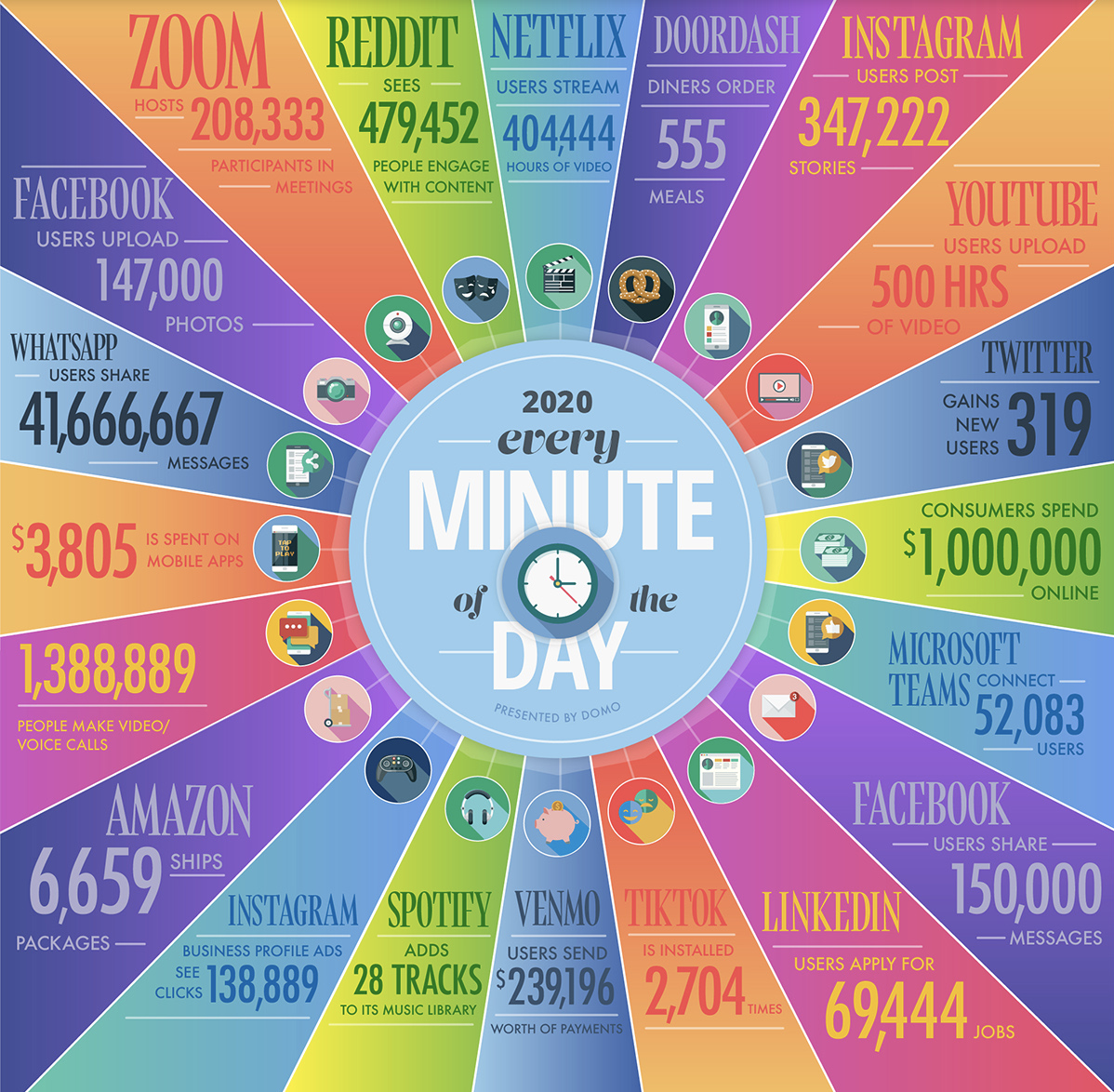
Statistics are fundamental for evidence-based policymaking. Current, reliable, timely and trusted data help us to understand the changing world in which we live and to drive the transformations that are needed, leaving no one behind. The coronavirus pandemic has further elevated the importance of data to save lives and recover better. Applying statistics to larger groups of data gives a general overview of issues, including scientific, industrial, or social problems.

World Statistics Day is an opportunity to recognise statisticians worldwide who work to provide reliable data, adhere to the Fundamental Principles of Official Statistics, and build more resilient and insightful data ecosystems. The day aims to show that good data and statistics are indispensable for informed decision-making by all actors in society.

Statistics are important to make sure everyone is counted, especially the poorest and vulnerable so that each child’s birth gets does not go unregistered and no incidence of disease, no matter how remote the location, shall remain unrecorded. Local statistics ensure that every child has access to education and so global statistics are needed to monitor the overall effects of climate change.

In India, National Statistics Day is celebrated annually on June 29 which is the birth anniversary of the late Professor Prasanta Chandra Mahalanobis to mark his contribution in the fields of statistics and economic planning. A noted Indian scientist and applied statistician, Professor Prasanta Chandra Mahalanobis introduced the Mahalanobis distance, a statistical measure, and random sampling. He was also one of the members of the first Planning Commission of India and played a key role in shaping the first 5-year plan. He was also instrumental in designing the way surveys are conducted today and introduced the concept of pilot surveys and advocated the importance of sampling methods. Professor Mahalanobis also established the National Statistical Institute (ISI) in 1950, which also housed a Statistical Laboratory.

National Statistics Day Day is celebrated to create public awareness, especially in the younger generation who can for drawing inspiration from him about the role and importance of statistics in socio-economic planning and policy formulation. The day is celebrated by holding seminars, discussions, and competitions to highlight the importance of official statistics in national development. National Statistics Day has a theme every year and the theme for Statistics Day 2022 was Data for Sustainable Development.

World Food Day

Yesterday was World Food Day. This is an international day celebrated every year worldwide on 16 October to commemorate the date of the founding of the United Nations Food and Agriculture Organization or the UN FAO in 1945. The day is celebrated widely by many other organisations concerned with hunger and food security, including the World Food Programme, the World Health Organization and the International Fund for Agricultural Development. WFP received the Nobel Prize in Peace for 2020 for their efforts to combat hunger, contribute to peace in conflict areas, and for playing a leading role in stopping the use of hunger in the form of a weapon for war and conflict.  

World Food Day (WFD) was established by FAO’s Member Countries at the Organization’s 20th General Conference in November 1979. The Hungarian Delegation, led by the former Hungarian Minister of Agriculture and Food Dr Pál Romány, played an active role at the 20th Session of the FAO Conference and suggested the idea of celebrating the WFD worldwide. It has since been observed every year in more than 150 countries, raising awareness of the issues behind poverty and hunger.

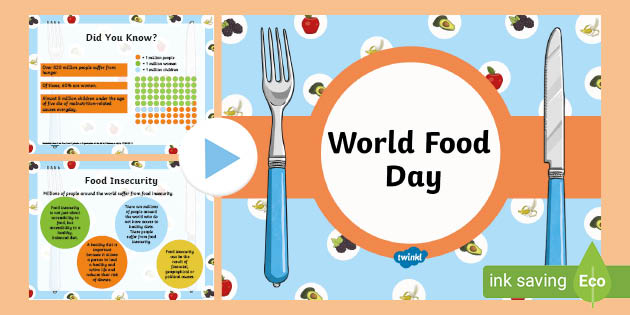
Millions of people around the world cannot afford a healthy diet, putting them at high risk of food insecurity and malnutrition. But ending hunger isn’t only about supply. Enough food is produced today to feed everyone on the planet. The problem is access and availability of nutritious food, which is increasingly impeded by multiple challenges including the COVID-19 pandemic, conflict, climate change, inequality, rising prices and international tensions. People around the world are suffering the domino effects of challenges that know no borders.

Worldwide, 75% of poor and food-insecure people rely on agriculture and natural resources for their living. They are usually the hardest hit by natural and man-made disasters and are often marginalised due to their gender, ethnic origin, or status. It is a struggle for them to gain access to training, finance, innovation and technologies. Our globalised world is one where our economies, cultures, and populations are becoming increasingly interconnected. Some of us are vulnerable because of who we are or where we live, but the reality is that we are all fragile. When someone is left behind, a chain is broken. This impacts not only the life of that person but also ours.

In the face of global crises, global solutions are needed more than ever. By aiming for better production, better nutrition, a better environment, and a better life, we can transform agrifood systems and build forward better by implementing sustainable and holistic solutions that consider development in the long term, inclusive economic growth, and greater resilience.

The theme for 2022 is “Safer food, better health” which stresses that the production and consumption of safe food have immediate and long-term benefits for people, the planet, and the economy. Safe food is essential to human health and well-being and is one of the most critical guarantors of good health. The benefits of safe food include improved nutrition and reduced absenteeism in schools and the workplace. Foodborne diseases affect 1 in 10 people worldwide each year. There are over 200 of these diseases, ranging from diarrhoea to cancers.

On this day, WHO calls for a set of specific actions in multiple sectors to make food safer. Policymakers need to support policy measures to strengthen national food safety systems and ensure they comply with food safety standards, as well as engage in multi-sectoral collaboration at the local, national, regional and global levels. Food businesses must comply with international food standards and engage employees, suppliers and other stakeholders to grow and develop a food safety culture. At the same time, educational institutions and workplaces need to promote safe food handling and support food safety. And consumers need to practice safe food handling at home and keep informed and promote food safety.

Every year, a large number of events – from marathons and hunger marches to exhibitions, cultural performances, contests and concerts – are organised in around 150 countries across the world to celebrate World Food Day. To take part in World Food Day, spread the word, take part in some food tastings or cooking demonstrations or just make something in your kitchen and be creative.

World Mental Health Day

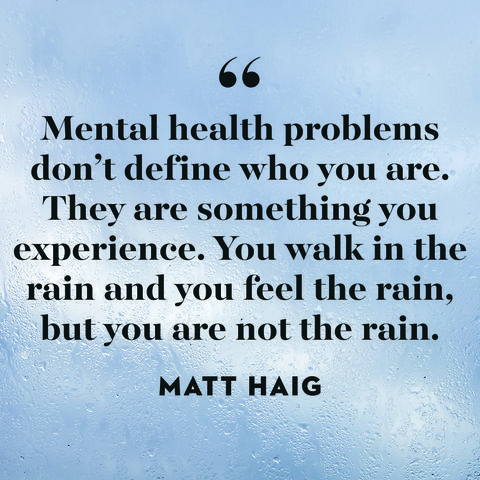
A term that includes our emotional, psychological, and social well-being, mental health affects how we think, feel, and act and also helps determine how we handle stress, relate to others, and make healthy choices. Mental health is important at every stage of life, from childhood and adolescence through adulthood. Although the terms are often used interchangeably, poor mental health and mental illness are not the same. A person can experience poor mental health and not be diagnosed with a mental illness. Likewise, a person diagnosed with a mental illness can experience periods of physical, mental, and social well-being. Mental health is important for overall health because mental and physical health are equally important components of overall health. 

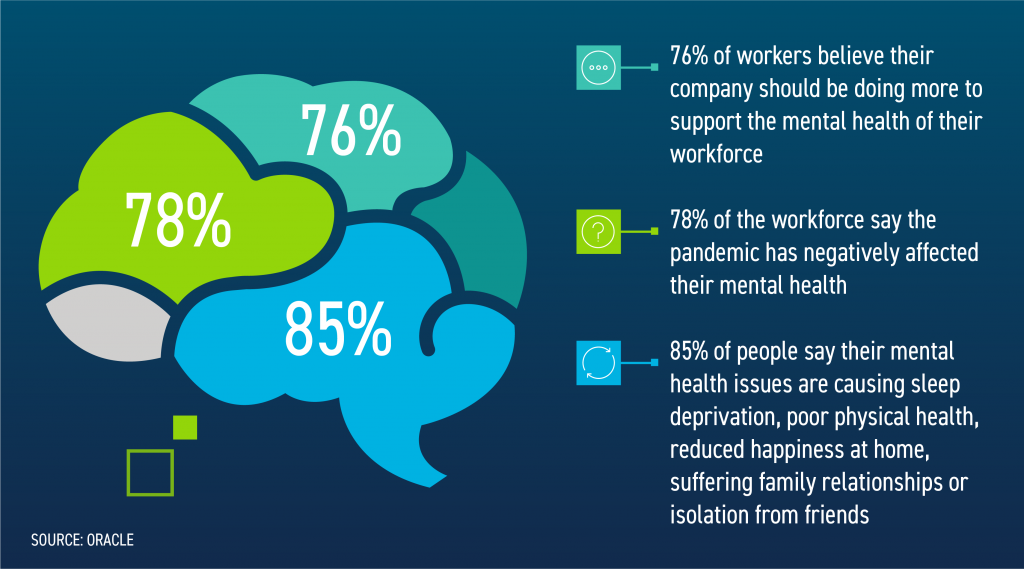
During the COVID-19 pandemic, mental health has come to the fore and I am glad that the millennials and the gen Z know that they have to make their mental health their priority. A 2017 study estimated that 792 million people lived with a mental health disorder. This is slightly more than one in ten people globally or 10.7%. In low- and middle-income countries, more than 75% of people with mental, neurological and substance use disorders receive no treatment for their condition at all.

Today, there has been increasing acknowledgement of the important role mental health plays. People with severe mental health conditions die prematurely – as much as two decades early – due to preventable physical conditions. Despite the progress in some countries, people with mental health conditions often experience severe human rights violations, discrimination, and stigma. Many mental health conditions can be effectively treated at relatively low cost, yet the gap between people needing care and those with access to care remains substantial. Effective treatment coverage remains extremely low.

To commemorate mental health, the World Health Organisation has declared today, 10 October as World Mental Health Day. The overall objective of World Mental Health Day is to raise awareness of mental health issues around the world and to mobilize efforts in support of mental health. The Day provides an opportunity for all stakeholders working on mental health issues to talk about their work, and what more needs to be done to make mental health care a reality for people worldwide. Celebrated since 1992, World Mental Health Day began at the initiative of the World Federation for Mental Health, a global mental health organization with members and contacts in more than 150 countries.

The theme for the 2022 edition is “Make mental health & well-being for all a global priority”.  The pandemic continues to take its toll on our mental health and our ability to reconnect with each other. Many aspects of mental health have been challenged and already before the pandemic in 2019, an estimated one in eight people globally were living with a mental disorder. At the same time, the services, skills and funding available for mental health remain in short supply and fall far below what is needed, especially in low and middle-income countries. The COVID-19 pandemic has created a global crisis for mental health, fueling short- and long-term stresses and undermining the mental health of millions. Estimates put the rise in both anxiety and depressive disorders at more than 25% during the first year of the pandemic. At the same time, mental health services have been severely disrupted and the treatment gap for mental health conditions has widened. Growing social and economic inequalities, protracted conflicts, violence and public health emergencies affect whole populations, threatening progress toward improved well-being with a staggering 84 million people worldwide forcibly displaced in 2021. 

On the occasion of World Mental Health Day, all of us must deepen the value and commitment we give to mental health as individuals, communities and governments and match that value with more commitment, engagement and investment by all stakeholders, across all sectors.  We must strengthen mental health care so that the full spectrum of mental health needs is met through a community-based network of accessible, affordable and quality services and supports. Stigma and discrimination continue to be a barrier to social inclusion and access to the right care; importantly, we can all play our part in increasing awareness about which preventive mental health interventions work. Let’s try and envision a world in which mental health is valued, promoted and protected; where everyone has an equal opportunity to enjoy mental health and to exercise their human rights; and where everyone can access the mental health care they need.