Choice Overload Effect

As with many of my writing inspirations, I came across the term Choice Overload in a book I was reading and it intrigued me enough to find out more. And when I did, I knew I had to write this piece and share it with you all.

Choice overload or overchoice, choice paralysis or the paradox of choice is a cognitive impairment in which people have a difficult time making a decision when faced with many options. While we tend to assume that more choice is a good thing, in many cases, research has shown that we have a harder time choosing from a larger array of options.

The term was first introduced by Alvin Toffler in his 1970 book, Future Shock, but the phenomenon has come under some criticism due to increased scrutiny of scientific research related to the replication crisis and has not been adequately reproduced by subsequent research, thereby calling into question its validity.
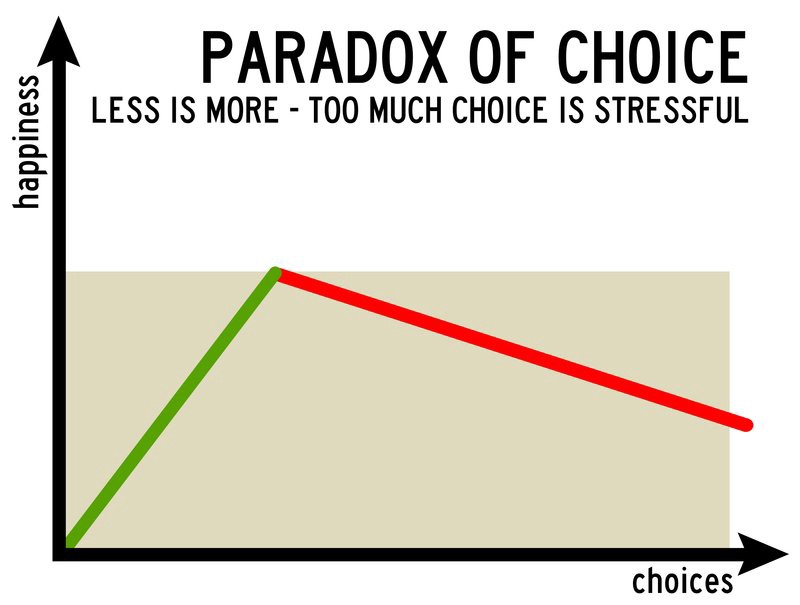
The phenomenon of choice overload or overchoice occurs when many equivalent choices are available and making a decision becomes overwhelming due to the many potential outcomes and risks that may result from making the wrong choice. Having too many approximately equally good options is mentally draining because each option must be weighed against alternatives to select the best one. The satisfaction of choices by many options available can be described by an inverted U model, where having no choice results in very low satisfaction. Initially, more choices lead to more satisfaction, but as the number of choices increases it then peaks and people tend to feel more pressure, confusion, and potentially dissatisfaction with their choice. Although larger choice sets can be initially appealing, smaller choice sets lead to increased satisfaction and reduced regret. Another component of overchoice is the perception of time. Extensive choice sets can seem even more difficult with a limited time constraint. Overchoice has been associated with unhappiness, decision fatigue, going with the default option, as well as choice deferral or avoiding making a decision altogether, such as not buying a product. Choice overload can be counteracted by simplifying choice attributes or the number of available options. However, some studies on consumer products suggest that, paradoxically, the greater choice should be offered in product domains in which people tend to feel ignorant like wine, whereas less choice should be provided in domains in which people tend to feel knowledgeable like soft drinks. Many of the increased options in our lives can be attributed to modern technology as in today’s society we have easy access to more information, products and opportunities.

Choice overload is not a problem in all cases, some preconditions must be met before the effect can take place. First, people making the choice must not have a clear prior preference for an item type or category. When the choice-maker has a preference, the number of options has little impact on the final decision and satisfaction. Second, there must not be a dominant option in the choice set, meaning that all options must be perceived of equivalent quality. One option cannot stand out as being better than the rest. The presence of a superior option and many fewer desirable options will result in a more satisfying decision. Third, there is a negative relationship between choice assortment or quantity and satisfaction only in people less familiar with the choice set. This means that if the person making a choice has expertise in the subject matter, they can more easily sort through the options and not be overwhelmed by the variety.
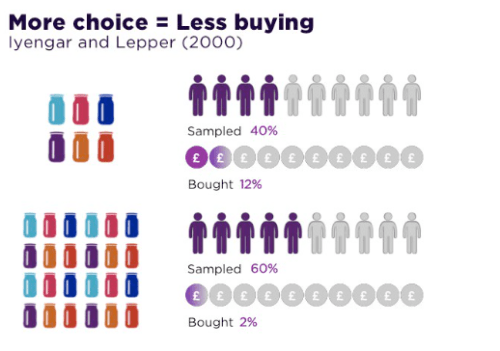
In his book “The Paradox of Choice,” Schwartz outlines the steps of decision making which start from figuring out goals to evaluating the importance of each goal and moves on to arraying the options according to how well they meet each goal and then evaluating how likely each of the options is to meet the goals and finally to picking the winning option. The problem is, the more options one has, the harder it is to make a comparison across products. If one has to compare an item across 50 dimensions instead of 3, there’s a risk they’re missing out on “the one.” That’s the paradox — having a variety of options is good, it drives customer consideration. But once the number of choices gets too high, a person’s happiness goes down.

Choice overload is reversed when people choose for another person. It was found that overload is context-dependent: choosing from many alternatives by itself is not demotivating, it is not always a case of whether choices differ for the self and others at risk, but rather according to a selective focus on positive and negative information. Evidence shows there is a different regulatory focus for others compared to the self in decision-making. Therefore, there may be substantial implications for a variety of psychological processes about self-other decision-making. Among personal decision-makers, a prevention focus is activated and people are more satisfied with their choices after choosing among a few options compared to many options, i.e. choice overload. However, individuals experience a reverse choice overload effect when acting as proxy decision-makers.

The psychological phenomenon of overchoice can most often be seen in economic applications. Having more choices, such as a vast amount of goods and services available, appears to be appealing initially, but too many choices can make decisions more difficult. A consumer can only process seven items at a time, after that the consumer would have to create a coping strategy to make an informed decision. This can lead to consumers being indecisive, unhappy, and even refraining from making the choice or purchase at all. Alvin Toffler noted that as the choice turns to overchoice, “freedom of more choices” becomes the opposite — the “unfreedom”. Often, a customer decides without sufficiently researching his choices, which may often require days. When confronted with too many choices especially under a time constraint, many people prefer to make no choice at all, even if making a choice would lead to a better outcome.

Too much choice is the cause of mental anguish for some people. Economist Herman Simon theorised those decision-making styles fall into two types. The Satisficers are people who would rather make an “ok decision” than the perfect decision. They’ve spent some time considering their options, but haven’t belaboured the process. They tend to be more satisfied with their choice because they don’t consider all the available information. Satisficers settle for an option that’s “good enough” and move on. Satisficers decide once their criteria are met; when they find the hotel or the pasta sauce that has the qualities they want, they’re satisfied. The Maximizers on the other hand are those who want to make the best possible decision. They can’t choose until they’ve deeply examined every possible option. Research from Swarthmore College found that Maximizers reported significantly less life satisfaction, happiness, optimism, and self-esteem. They also experienced much higher levels of and regret and depression than Satisficers. The more options people have, the more likely they are to be disappointed in their choice. You never feel that you made the best decision because there were too many options to consider.

There are two steps involved in choosing to purchase. First, the consumer selects an assortment. Second, the consumer chooses an option within the assortment. Variety and complexity vary in their importance in carrying out these steps successfully, resulting in the consumer deciding to make a purchase. Variety is the positive aspect of assortment. When selecting an assortment during the perception stage, the first stage of deciding, consumers want more variety. Complexity is the negative aspect of assortment. Complexity is important for the second step in making a choice—when a consumer needs to choose an option from an assortment. When choosing an individual item within an assortment, too much variety increases complexity. This can cause a consumer to delay or opt-out of making a decision.

Images are processed as a whole when making a purchasing decision. This means they require less mental effort to be processed which gives the consumer a sense that the information is being processed faster. Consumers prefer this visual shortcut to process, termed “visual heuristic”, no matter how big the choice set size. Images increase our perceived variety of options. Variety is good when making the first step of choosing an assortment. On the other hand, verbal descriptions are processed in a way that the words that make up a sentence are perceived individually. That is, our minds string words along to develop our understanding. In larger choice sets where there is more variety, perceived complexity decreases when verbal descriptions are used.
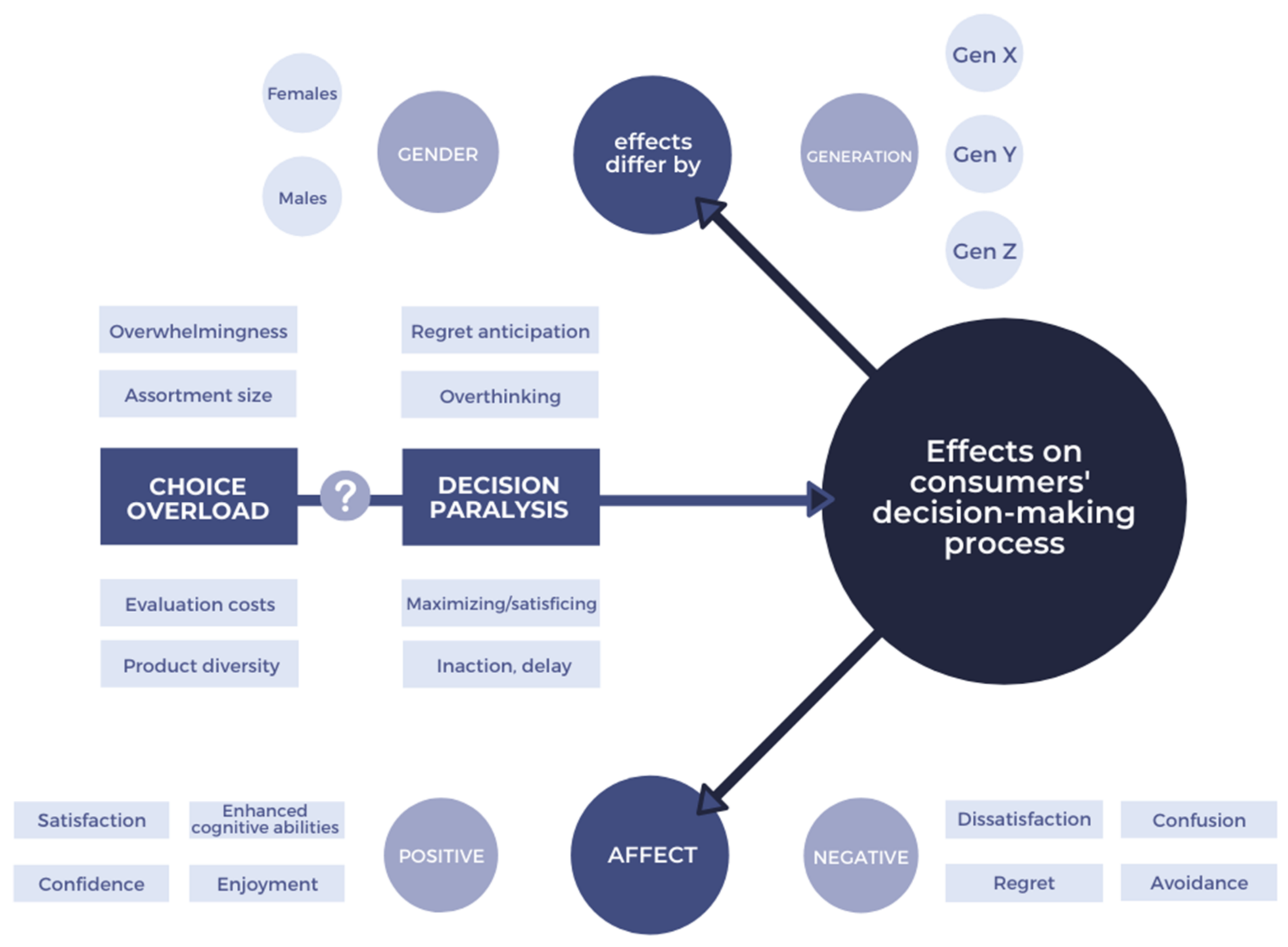
Retailers and manufacturers can combat Choice Overload by offering fewer options which may seem counterintuitive in today’s age of personalization with more options needed to be limited to maximize sales. For example, Procter & Gamble found that a decrease in the number of Head & Shoulders varieties resulted in a 10% increase in revenue. They need to make it easy to compare features across products so it becomes easy for customers to choose between non-equal options and frame the use of each.

The choice is a good thing, but when we are faced with too many of them, we get into a sort of analysis paralysis which makes choosing something extremely difficult and we soon start to second guess our choices. When the number of options available is limited, it does take away that complexity we have in making choices, but with the reduction in choices, as consumers, it makes it easy to make a decision and, in the end, it’s this reduction in complexity that will smooth the way.

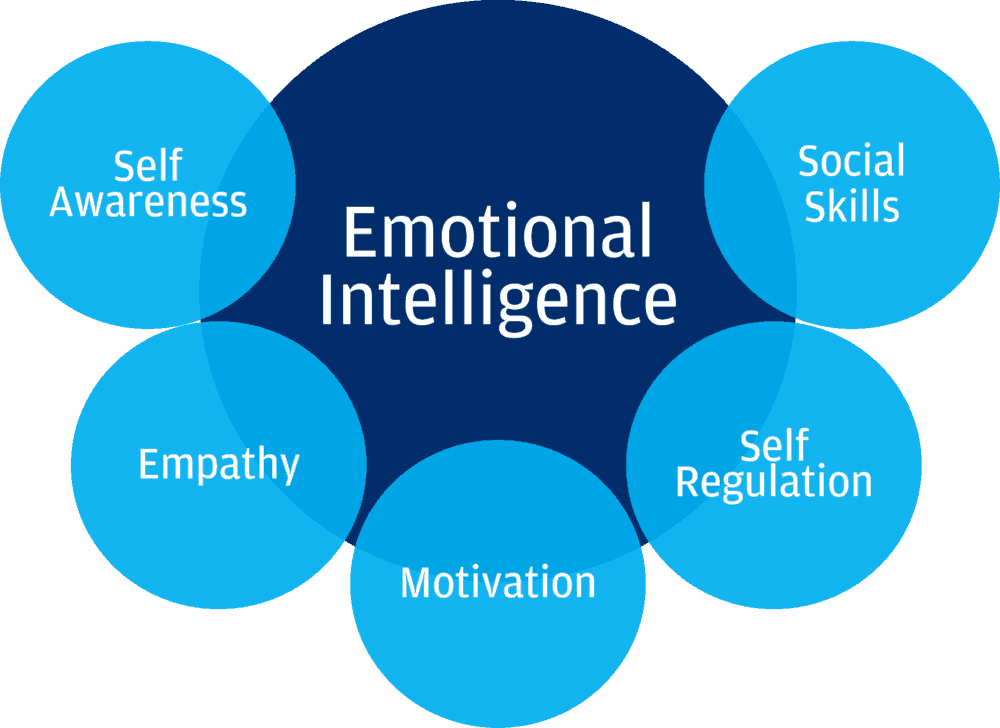
Emotional Intelligence: Respond, not React

The other day, when GG, BB and I were speaking, we went on a tangent about how BB who is smarter than his sister falls short when he has to empathise with someone. She is smarter in social situations whereas he is not. This, in turn, led me to find out more about Emotional Intelligence or Emotional Quotient and how it is different from the intellectual intelligence we all know and use as a gauge to check the smartness of someone.

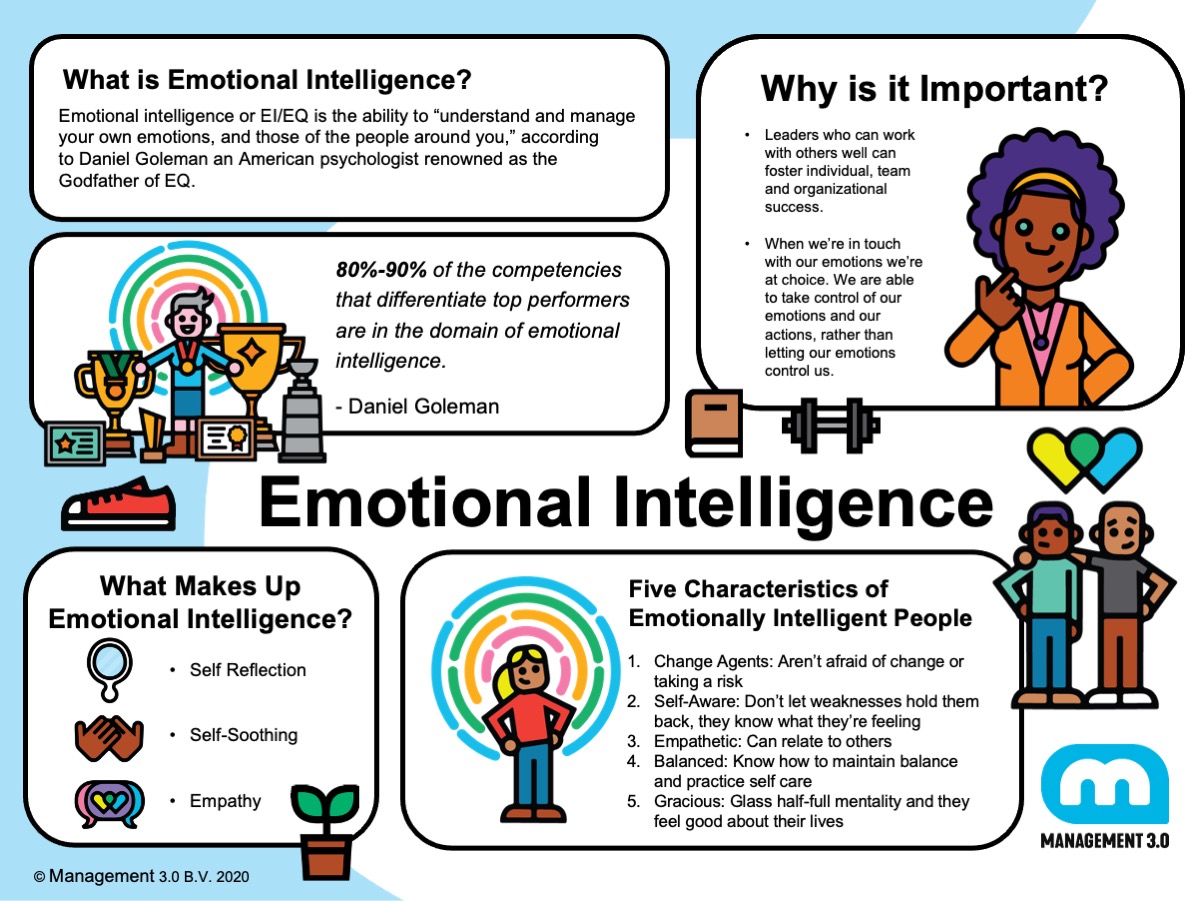
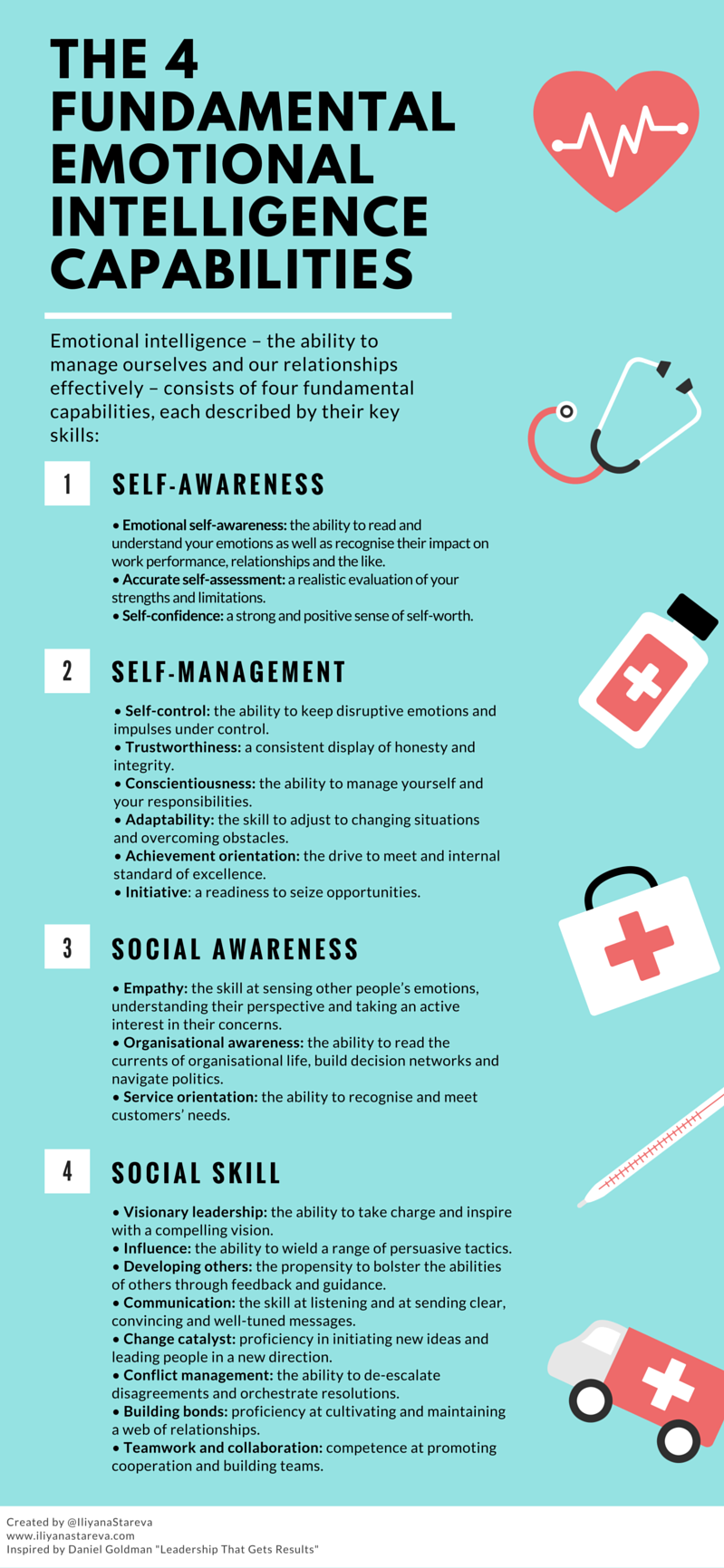
Emotional intelligence or Emotional Quotient is most often defined as the ability to perceive, use, understand, manage, and handle emotions. People with high emotional intelligence can recognise their own emotions and those of others, use emotional information to guide thinking and behaviour, discern between different feelings and label them appropriately, and adjust emotions to adapt to environments. It is also defined as the array of skills and characteristics that drive leadership performance.

Studies have shown that people with a high level of emotional intelligence have greater mental health, job performance, and leadership skills, although no causal relationships have been shown. This kind of intelligence is typically associated with empathy because it involves an individual connecting their personal experiences with those of others.

It is different from the standard intelligence quotient or intellectual intelligence which is a score derived from one of several standardised tests designed to assess an individual’s intelligence. The IQ is used to determine academic abilities and identify individuals with off-the-chart intelligence or mental challenges while the EQ is a better indicator of success in the workplace and is used to identify leaders, good team players, and people who best work by themselves.

Several different assessments have emerged to measure levels of emotional intelligence. Such tests generally fall into one of two types: self-report tests and ability tests. Self-report tests are the most common because they are the easiest to administer and score. On such tests, respondents respond to questions or statements by rating their behaviours. Ability tests, on the other hand, involve having people respond to situations and then assessing their skills. Such tests often require people to demonstrate their abilities, which are then rated by a third party.

Researchers suggest that there are four different levels of emotional intelligence including emotional perception, the ability to reason using emotions, the ability to understand emotions, and the ability to manage emotions. The first step in understanding emotions is to perceive them accurately. In many cases, this might involve understanding nonverbal signals such as body language and facial expressions. The next step involves using emotions to promote thinking and cognitive activity. Emotions help prioritize what we pay attention to and react to; we respond emotionally to things that garner our attention. The emotions that we perceive can carry a wide variety of meanings. If someone is expressing angry emotions, the observer must interpret the cause of the person’s anger and what it could mean. The ability to manage emotions effectively is a crucial part of emotional intelligence and the highest level. Regulating emotions and responding appropriately as well as responding to the emotions of others are all important aspects of emotional management.
The four branches of this model are arranged by complexity with the more basic processes at the lower levels and the more advanced processes at the higher levels. For example, the lowest levels involve perceiving and expressing emotion, while higher levels require greater conscious involvement and involve regulating emotions.

Having lower emotional intelligence skills can lead to many potential pitfalls that can affect multiple areas of life including work and relationships. People who have fewer emotional skills tend to get in more arguments, have lower quality relationships, and have poor emotional coping skills. But on the flip side, having a very high level of emotional skills can also come with challenges. Research suggests that people with high emotional intelligence may be less creative and innovative, may have a hard time delivering negative feedback for fear of hurting other people’s feelings and those with a high EQ can sometimes manipulate and deceive.

So why is emotional intelligence so important today? Interest in knowing more about emotional intelligence has grown in recent years with programmes improving social and emotional learning becoming popular.

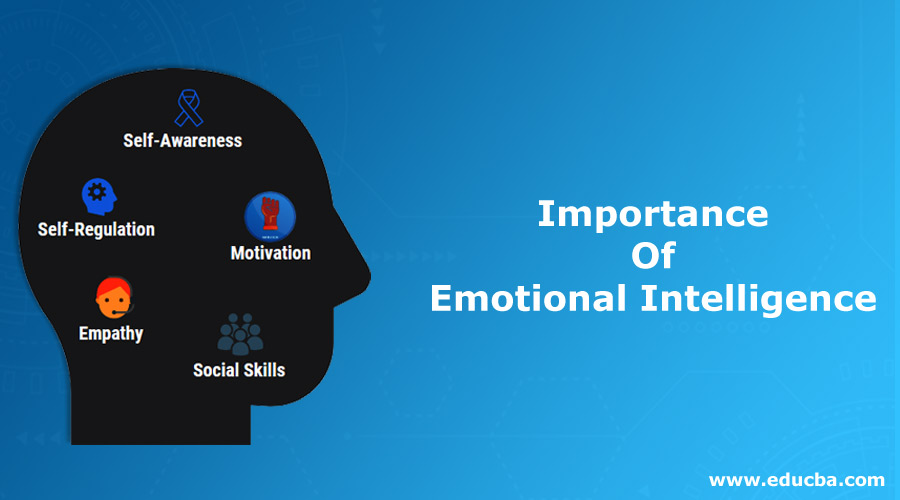
Thinking Before Reacting: Emotionally intelligent people know that emotions can be powerful, but also temporary. When a highly charged emotional event happens, such as becoming angry with a co-worker, the emotionally intelligent response would be to take some time before responding. This allows everyone to calm their emotions and think more rationally about all the factors surrounding the argument.

Greater Self-Awareness: Emotionally intelligent people are not only good at thinking about how other people might feel but they are also adept at understanding their feelings. Self-awareness allows people to consider the many different factors that contribute to their emotions. Self-aware individuals can handle and learn from constructive criticism better than those who aren’t.

Empathy for Others: A large part of emotional intelligence is being able to think about and empathise with how other people are feeling. This often involves considering how you would respond if you were in the same situation and respond genuinely to others’ concerns.

Self-regulation: Individuals with high EQ can control themselves. They can decide when to reveal their emotions and when to restrain themselves. Others can be prone to emotional outbursts and have no control whatsoever.

Motivation: Being self-motivated is a trait of emotionally intelligent individuals. Money or prestigious titles are not motivating factors for them. They are not easily disappointed when they face failure. On the contrary, they are driven by an inner ambition to overcome these failures.

People skills: Emotionally intelligent people can easily build rapport and develop trust in people around them. They stay away from power struggles or backstabbing to get ahead and are more liked as well as respected by others around them.

Being emotionally intelligent is important, but what steps can you take to improve your own social and emotional skills? Here are some tips.

Listen: If you want to understand what other people are feeling, the first step is to pay attention. Take the time to listen to what people are trying to tell you, both verbally and non-verbally. Body language can carry a great deal of meaning. When you sense that someone is feeling a certain way, consider the different factors that might be contributing to that emotion.

Empathise: Picking up on emotions is critical, but you also need to be able to put yourself into someone else’s shoes to truly understand their point of view. Practice empathizing with other people. Imagine how you would feel in their situation. Such activities can help you build an emotional understanding of a specific situation as well as develop stronger emotional skills in the long term. Empathy opens the door for mutual respect and understanding between people with differing opinions and situations.

Reflect: The ability to reason with emotions is an important part of emotional intelligence. Consider how your own emotions influence your decisions and behaviours. When you are thinking about how other people respond, assess the role that their emotions play.

Utilise an assertive style of communicating: Assertive communication goes a long way toward earning respect without coming across as too aggressive or too passive. Emotionally intelligent people know how to communicate their opinions and needs directly while still respecting others.

Respond instead of reacting to conflict: During instances of conflict, emotional outbursts and feelings of anger are common. The emotionally intelligent person knows how to stay calm during stressful situations. They don’t make impulsive decisions that can lead to even bigger problems. They understand that in times of conflict the goal is a resolution, and they make a conscious choice to focus on ensuring that their actions and words are in alignment with that.

Utilise active listening skills: In conversations, emotionally intelligent people listen for clarity instead of just waiting for their turn to speak. They make sure they understand what is being said before responding. They also pay attention to the nonverbal details of a conversation. This prevents misunderstandings, allows the listener to respond properly and shows respect for the person they are speaking to.

Practice ways to maintain a positive attitude: A negative attitude easily infects others if a person allows it to. Emotionally intelligent people have an awareness of the moods of those around them and guard their attitude accordingly. They know what they need to do to have a good day and an optimistic outlook.

Practice self-awareness: Emotionally intelligent people are self-aware and intuitive. They are aware of their own emotions and how they can affect those around them. They also pick up on others’ emotions and body language and use that information to enhance their communication skills.

Take critique well: An important part of increasing your emotional intelligence is to be able to take critique. Instead of getting offended or defensive, high EQ people take a few moments to understand where the critique is coming from, how it is affecting others or their performance and how they can constructively resolve any issues.

Leadership skills: Emotionally intelligent people have excellent leadership skills setting high standards for themselves and setting an example for others to follow. They take initiative and have great decision-making and problem-solving skills. This allows for a higher and more productive level of performance in life and at work.

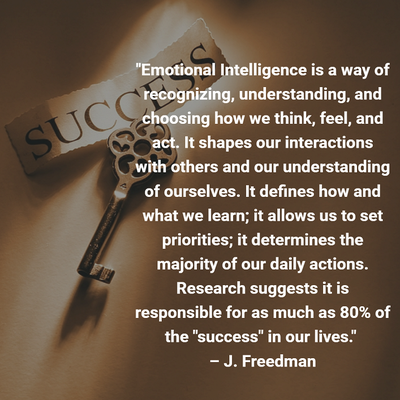
Emotional intelligence is essential for good interpersonal communication. Some experts believe that this ability is more important in determining life success than IQ alone. Fortunately, there are things that you can do to strengthen your own social and emotional intelligence. 

2021 Words of the Year

The various dictionaries have announced their words of 2021 and to no one’s surprise, they are both related to the pandemic.

The Oxford English Dictionary’s Word of the Year is based on usage evidence drawn from Oxford’s continually updated corpus of more than 14.5 billion words, gathered from news sources across the English-speaking world. The selection is meant to reflect the ethos, mood or preoccupations of the preceding year, while also having the potential as a term of lasting cultural significance. It has traditionally been a scholarly yet often a light-hearted effort, highlighting both cultural change and English’s sometimes goofy way of reflecting it. But last year, the company forwent a single choice and instead highlighted the pandemic’s sudden and pervasive influence on the language more broadly.

The Oxford Language’s 2021 Word of the Year is “Vax”. After analysing 14.5 billion words used in daily news coverage in 2021, they found the word Vax was used 72 times as much as it was in 2020. A relatively rare word until this year, by September it was over 72 times more frequent than at the same time last year and has generated numerous derivatives that we are now seeing in a wide range of informal contexts, from vax sites and vax cards to getting vaxxed and being fully vaxxed, no word better captures the atmosphere of the past year than vax. The word Vax highlights the medical breakthroughs and the rise of COVID vaccines across the world.

The word vaccine was first recorded in English in 1799, following the British scientist Edward Jenner’s experiments with inoculation against smallpox. In early reports on his experiments, the word vaccine, derived from the Latin Vacca, or cow, was used to refer to the disease and the material from the cowpox pustules he injected into his human research subjects. It was only decades later, according to Oxford’s report on its research, that vaccine came to be used for inoculation against other diseases. Curiously, while the shortened form vax did not appear until the 1980s, the term anti-vax — spelt anti-vacks — appeared early.

Runners-up on this year’s list were “vaccinate,” which increased in use 34-fold this year, and “vaccination,” up 18-fold.

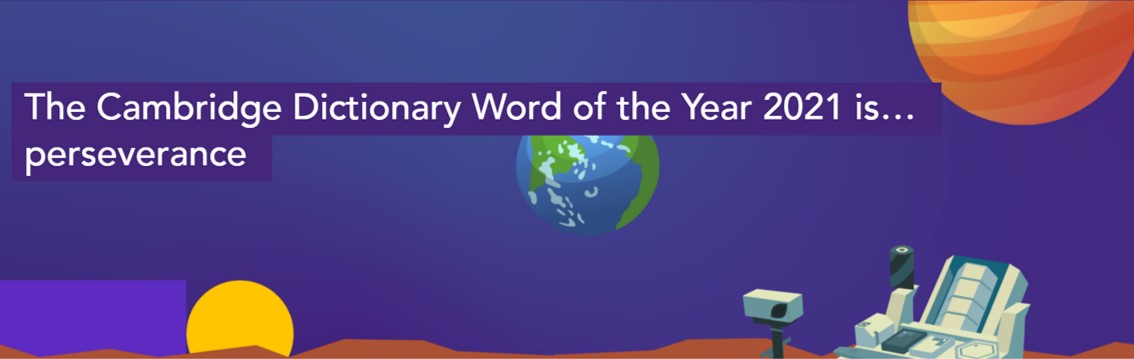
The Cambridge Dictionary has announced “Perseverance” as its Word of the Year 2021. It’s a word that perfectly captures the undaunted will of people across the world to never give up, despite the many challenges of 2021. Perseverance is defined as the continued effort to do or achieve something, even when this is difficult or takes a long time and the word has been looked up globally more than 243,000 times during 2021.

Prior to 2021, perseverance didn’t appear noticeably in lookups on the Cambridge Dictionary website. However, a spike of 30,487 searches for perseverance occurred between 19–25 February 2021, after NASA’s Perseverance Rover made its final descent to Mars on 18th February.

The Collins Dictionary has on the other hand chosen the cutting edge “NFT” or “Non-Fungible Token” as their word of the year. NFT is defined as a unique digital certificate, registered in a blockchain, that is used to record ownership of an asset such as an artwork or a collectible. Other finalists for the word of the year were pandemic-related words like “double vaxxed” and “hybrid working” as well as “Crypto,” short for cryptocurrency like Bitcoin, and “cheugy,” meaning clunky or outdated.

Looking Back at 2021

Today 2021 will end and with this, we all have finished yet another year filled with uncertainties in a world that is so different from just two years back.

2021 was an extension of 2020 and we continued to be masked and take steps to protect ourselves. This year, the adults in the house got both doses of the COVID vaccination as well as the booster shot. The children also got both their vaccine doses, and are scheduled to get their booster shots in January. Masking has become a way of the way here and everyone has their preferred type of mask, whether disposable or reusable.

BB and GG are in the second year of their course and it looks like they will continue to finish their course without really experiencing poly life. GG is doing pretty well in school and I am super impressed with her work ethic and dedication so she can realise her dreams. She will also start her industrial attachment or internship in the first half of 2022 and we are hoping the company she gets placed in will be right for her. She is also working towards graduating with a minor in Japanese, a language and culture she loves, so that’s another thing I am super proud of about her. BB has not had the career successes he used to have and I suspect he has finally realised this. He seems to have taken a hard look and I hope that in 2022, he will finally pull up his pants and work towards realising his dreams. He will go for his industrial attachment in the last few months of 2022, so that is something to look forward to. And then in 2023, he will enlist to spend the next two years serving his country as a National Serviceman.

GG had some serious medical issues this year which came out of nowhere. But I am glad it hit us when it did, otherwise, we would not have known about it and it would have created some serious issues for her as she grew older. She is currently under treatment for hypothyroidism. We went to see a doctor for something else and a blood test was ordered as part of the routine testing. And it was so serious that we got a call from that hospital just a few hours after we were back home to come back to see a doctor. And after we went back to the hospital, we were sent to the Accident & Emergency of a bigger hospital because this hospital did not have the resources to check her further and decide the most appropriate treatment. So off we went and GG was warded overnight so they could do a more comprehensive blood test. And now she will be on medication for probably the rest of her life. So far her numbers have improved, but have not reached normal levels, so we are seeing the endocrinologist frequently who is monitoring her closely. I suppose once the levels reach normal levels, we will see the doctor less frequently. She has been quite good with taking her medication, even waking up super early to take the medicine before going back to bed so she can have breakfast at a normal time.

Speaking of health, my diabetes has been pretty stable this year with no great spikes. I would like the numbers to reduce a bit more and this is something I will be working towards next year. I attribute this to the walking I have been doing all year. I have mentioned every month this year about my plan to walk the distance from my home in Singapore to my home in Mumbai. Well, that plan has changed slightly and the distance has increased. After lockdowns and the reality of living alone hit them, my parents will finally be moving out of Mumbai to a retirement community near Bengaluru early next year. I am hoping that I can make one last trip to bid my dear city goodbye, so watch this space to see if I make it. Given how the various COVID variants are wrecking holiday plans, I don’t want to say anything at this point, so I don’t jinx it, but I am trying my best to go there, say goodbye and help move my parents to their new home. We will be renting at first and once they are settled there, if they find a suitable place, they will most likely purchase it. This move became necessary because they found it hard to live alone, especially during the pandemic. Where they will be moving, my mum’s sister is currently living and another cousin also has a home there and spends at least a week a month there. Her other sister and mum also live in the same city and so they will have family around. And the most important thing, according to my sister and me is that they will have access to medical attention 24/7, so we, who don’t live in the same country can breathe easy.

Now to my steps for this year. So as I mentioned the previous plan was to walk from my home in Singapore to my home in Mumbai, which is a distance of about 6700 km. Now the plan has changed a bit. After reaching Mumbai, I will continue and walk until I reach my parent’s new home near Bengaluru, which adds another 1000 km to this journey, making my journey now about 7800 km. I will do this journey in two years because I can’t walk this distance in one year (though Google Maps tells me that it will take 1500 hours of walking or about 150 days or five months of walking 10 hours daily to achieve it). My first leg in 2021 has brought me in spitting distance of the Indian border. I am less than 200 km from the Indo-Myanmar Friendship Bridge at Moreh, Manipur which is the land border between India and Myanmar. I will spend the next year walking across India and reaching Mumbai first, before moving on to reach Bengaluru by the end of 2022. This year I have walked more than five million steps, having walked more than 3,200 kilometres. This year, I had step goals for each month starting from 10,000 steps a day going to 15,000 steps a day for each month, increasing the goal incrementally each month. And out of 365 days, I didn’t hit my daily targets only 25 days which makes me have walked my target steps 93% of this year. This is something I am super proud of as I didn’t think I had it in me to walk consistently for the full year. My goal for 2022 is to not miss a single daily goal.

I hit my reading goals for this year by October and have exceeded them as of the end of the month. My initial goal was to read 75 books this year, but I managed to read 90 books, exceeding my goal by 20%. My goal for next year will probably remain the same, but I will try to read 100 books in 2022. I also want to read more non-fiction in 2022 because I tend to gravitate towards fiction more and I want to get out of this comfort zone.

Source

So this was what we did and achieved in 2021. I am still meditating and have been consistently meditating since April 2021. Meditation has become such a part of my life, I feel something is off if I am not able to meditate in the morning.

Here’s wishing you and your loved ones a wonderful 2022, one filled with love, laughter and successes. I am also wishing for a COVID-free world in 2022, one where borders are not closed and travel, friendship and gatherings go back to pre-COVID levels. Hopefully, a cure is found sooner than later and the virus becomes endemic so we can all go back to our lives.

Happy New Year and have a fabulous 2022

International Migrants Day

On Saturday, the world will commemorate another International Migrants Day amidst the pandemic. Celebrated since 2000, the International Migrants Day highlights the contributions made by the roughly 272 million migrants, including more than 41 million internally displaced persons, and the challenges they face.

In 1997, Filipino and other Asian migrant organizations began celebrating and promoting 18 December as the International Day of Solidarity with Migrants and the date was chosen because it was on 18 December 1990 that the UN adopted the International Convention on the Protection of the Rights of All Migrant Workers and Members of Their Families.

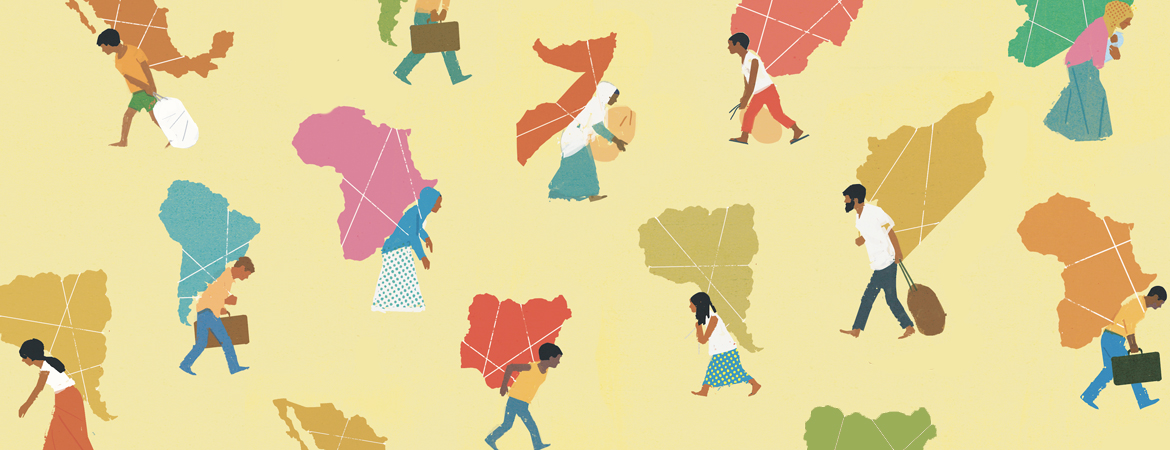
Since the earliest times, humanity has been on the move. Some people move in search of work or economic opportunities, to join family, or to study. Others move to escape conflict, persecution, terrorism, or human rights violations. Still others move in response to the adverse effects of climate change, natural disasters, or other environmental factors. Migration has been a courageous expression of the individual’s will to overcome adversity and to live a better life. Today, globalisation, together with advances in communications and transportation, has greatly increased the number of people, who have the desire and the capacity to move to other places, but has created challenges and opportunities for societies throughout the world. It also has served to underscore the clear linkage between migration and development, as well as the opportunities it provides for co-development, that is, the concerted improvement of economic and social conditions at both origin and destination.

Today, more people than ever live in a country other than the one in which they were born. According to the IOM World Migration Report 2020, as of June 2019 the number of international migrants was estimated to be almost 272 million globally, 51 million more than in 2010. Nearly two thirds were labour migrants. International migrants comprised 3.5% of the global population in 2019. This compared to 2.8% in 2000 and 2.3% in 1980. While many individuals migrate out of choice, many others migrate out of necessity. According to UNHCR, the number of globally forcibly displaced people worldwide was 79.5 million at the end of 2019, of which 26 million were refugees, 45.7 million people were internally displaced, 4.2 million were asylum-seekers, and 3.6 million were Venezuelans displaced abroad.

Migration draws increasing attention in the world nowadays. Migration is a global phenomenon driven by many forces. These start with aspirations for dignity, safety and peace. The decision to leave home is always extreme, and, too often, the beginning of a dangerous, sometimes fatal journey. The lure of a well-paid job in a wealthy country is a powerful driver of international migration. The attraction has intensified as income differentials among countries continue to grow. This holds true not only regarding the large and growing differentials between high and low-income countries, but also with regard to the more dynamic and the less dynamic developing countries.

Many advanced and dynamic economies need migrant workers to fill jobs that cannot be outsourced and that do not find local workers willing to take them at going wages. Population ageing also underlies this growing demand, as it gives rise to deficits of workers relative to dependants. And as younger generations become better educated, fewer in their ranks are content with low-paid and physically demanding jobs. Migration may reduce wages or lead to higher unemployment among low-skilled workers in advanced economies, many of whom are themselves migrants who arrived in earlier waves. However, most migrants complement the skills of domestic workers instead of competing with them. By performing tasks that either would go undone or cost more, migrants allow citizens to perform other, more productive and better-paid jobs. They also maintain viable economic activities that, in their absence, would be outsourced. By enlarging the labour force and the pool of consumers and by contributing their entrepreneurial capacities, migrants boost economic growth in receiving countries.

At the point of origin, deeper poverty does not lead automatically to higher migration. The poorest people generally do not have the resources to bear the costs and risks of international migration. International migrants are usually drawn from middle-income households. However, when migrants establish themselves abroad, they help friends and relatives to follow and, in the process, the costs and risks of migration fall, making it possible for poorer people, though not for the poorest, to join the stream. Low-skilled migration has the largest potential to reduce the depth and severity of poverty in communities of origin. Mounting evidence indicates that international migration is usually positive both for countries of origin and of destination. Its potential benefits are larger than the potential gains from freer international trade, particularly for developing countries.

Contrary to what some may believe, migrants play a vital role in the global economy. Studies show that immigrants bring growth and innovation in both the countries they come from, and in those they move to. Most advanced nations face a demographic time-bomb as their aging populations and low birth rates mean that they will have to rely on immigrants to drive and sustain economic growth. It is, therefore, in the best interests of these developed nations to support a safe and orderly migration.

So if you have any migrants who live or work near you, take some time and actually get to know them, their hopes and aspirations and who they really are. They are far away from their family and friends in an unknown land just to make a living. Among the migrant workers in our midst could be teachers, authors, poets and businessmen who for reasons beyond our knowledge are forced to do hard labour. So the least we can do is smile and ask them about themselves.