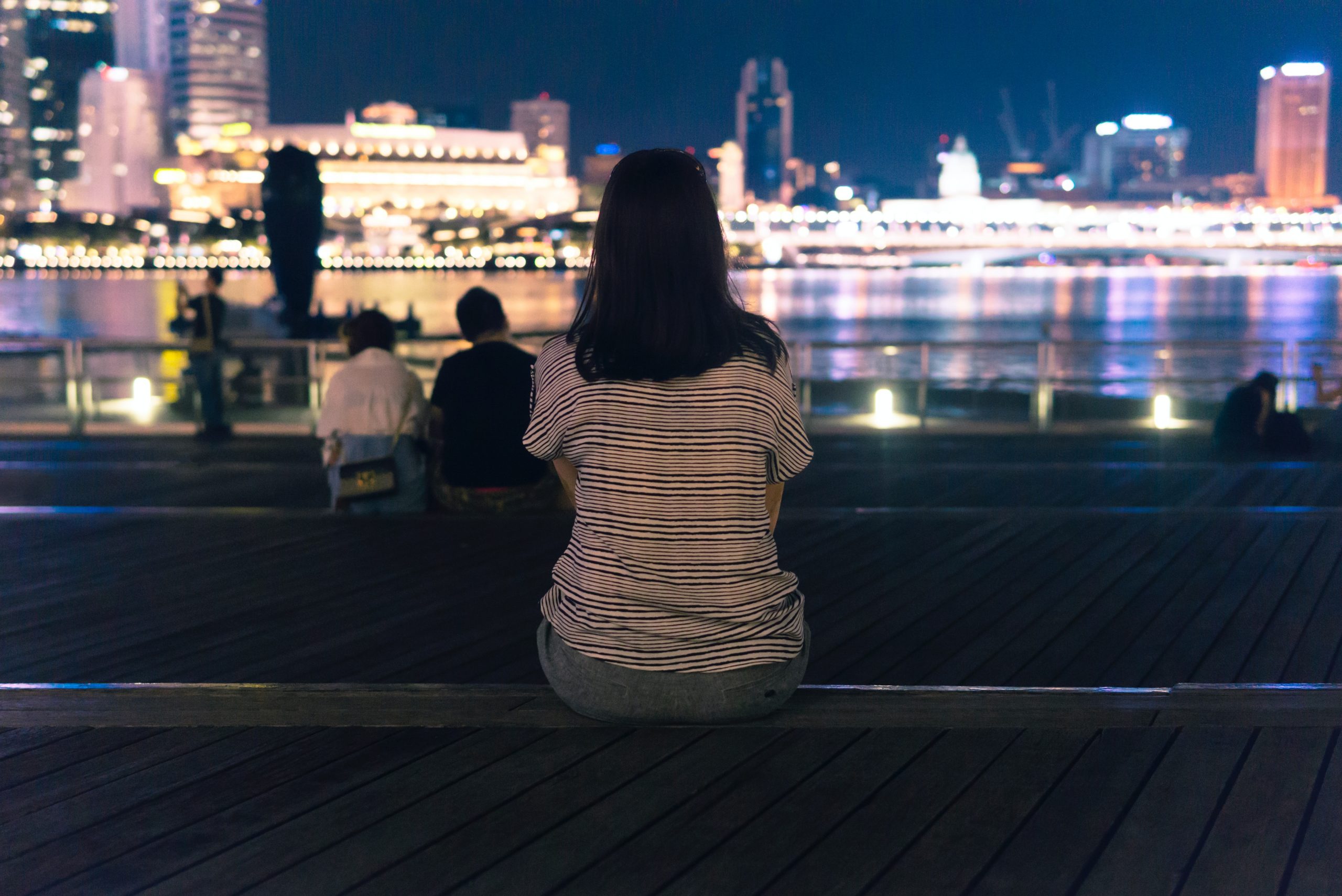
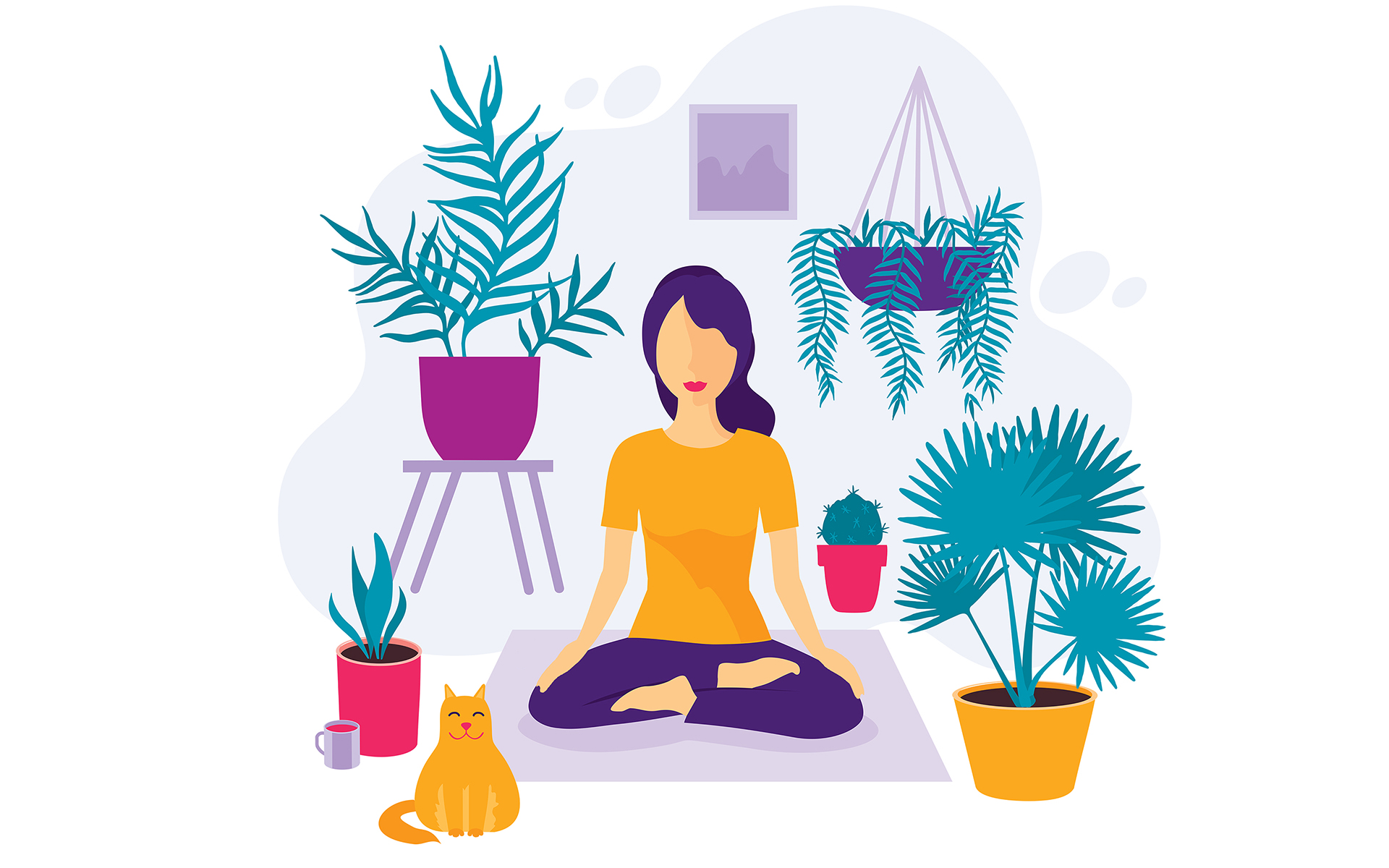
Doing nothing sounds simple until one actually tries to do it.
Sit still. Put the phone away. Do not read. Do not scroll. Do not make a list. Do not mentally draft an email, plan the week, remember the groceries, check the blood sugar reader, open a book, play a game, rearrange a thought, or wonder whether this stillness can be turned into something useful later.
Just sit.
For some people, this may sound peaceful. For me, it sounds luxurious, desirable, and almost impossible. I like the idea of doing nothing. In theory, it is sitting in a quiet room, perhaps lying down, staring into space, letting the mind settle like dust after a cupboard has been opened. But in reality, my brain does not settle. My mind behaves as if twenty browser tabs are open and one of them is playing music, usually at 2 am when I have woken up to use the toilet and should, by all logic, return to sleep.
Doing nothing is hard for me. Even when my body is still, my mind is moving. If I have a few minutes with no obvious task, my hand automatically reaches for my phone. I check social media, open a game, read Reddit, or go into my library app because if a story has hooked me, even a lift ride can become reading time. I fill small silences before they have a chance to become silence.
I do not particularly like this. But it is also part of modern life, and pretending otherwise would be dishonest.
We live in a world that has trained us to treat every gap as an opportunity. Waiting for the kettle? Check the phone. Waiting for the bus? Check the phone. Eating alone? Watch something. Sitting in bed? Scroll. Resting? Optimise the rest. Record the rest. Turn the rest into a morning routine, a Sunday reset, a wellness ritual, a slow-living aesthetic with soft lighting and a ceramic mug placed just so.
Even doing nothing, it seems, now has to work for its keep.
There is an irony in watching videos about slow living and self-care, knowing how much work must have gone into making them. The lighting, the camera angles, the editing, the captions, the music, the deliberate casualness of it all. Rest has become content. Stillness has become performance. The person filming their peaceful morning has probably spent more time arranging the shot than being peaceful.
I say this without judgment because I, too, enjoy watching such content. It is soothing in the way a clean kitchen in someone else’s house is soothing. But it also makes me laugh a little. We have become so uncomfortable with unproductive time that even leisure must be packaged, captioned, and posted.
This is perhaps why the art of doing nothing is disappearing. Not because we no longer desire it, but because we no longer know how to defend it.
As children, we had more empty time, whether we liked it or not. Growing up in Mumbai, I hated being bored. If I complained to my paternal grandmother that I was bored, she had a line in Tamil that sounded far better than any translation could manage. If I said, “Bore adikkaradu,” she would say, “Bore-a adi,” meaning “beat the boredom back”. In other words, boredom was not a crisis requiring adult intervention. It was something to be wrestled with, survived, and transformed.

And we did transform it.
We read anything we could find. We invented games. We produced little plays. We pretended. We made things up. We stood on balconies and watched the world go by. I loved doing that, standing on the balcony and observing the street below. People walking, vehicles passing, neighbours talking, vendors calling out, the ordinary theatre of city life continuing whether or not one had anything to do.
There was a kind of richness in that unstructured look. No one called it mindfulness then. No one had to. It was simply what one did when there was nothing else to do.
I also daydreamed, especially at night when I could not sleep. I still do sometimes, though less often in the day now. Adult life has a way of shrinking the room available for aimless imagination. Daydreaming becomes something we squeeze between responsibilities or something that arrives only when sleep refuses to.
Children today have less of this empty time. BB and GG’s childhood still had some creativity in it. They played with dolls, board games, blocks, and toys. They were not exposed to social media very early. But once school, tuition, enrichment classes, and devices entered the picture, childhood became more scheduled. This is not unique to them. It is the rhythm of many children’s lives now: school, homework, tuition, activities, screens, repeat.
Some structure is good. Children need encouragement, discipline, and exposure. A little pressure can help them grow. But beyond a point, childhood becomes a calendar rather than a landscape. There is no time to wander. No time to invent a game out of nothing. No time to sit with boredom long enough for it to turn into imagination.
And boredom does have a purpose. It is not merely the absence of entertainment. It is where children meet themselves. It is where they learn to create, observe, wait, and think. If every moment is filled for them, they never discover what their own minds can do when left alone.
Of course, adults are not much better.
Singapore, where I live now, is a difficult place in which to do nothing. It is efficient, achievement-driven, scheduled, expensive, and always moving. There is always something to do, and often something that should have been done yesterday. Planning is rewarded. Productivity is admired. The calendar is a survival tool. Even leisure is often organised in advance.

There are still places where I can zone out. At home, when the house is quiet. At the beach or in a park. In the library. On the upper deck of a bus, sitting by the window, watching the city move past. At the airport, oddly enough, especially when I am alone. Airports are perfect places for doing nothing because everyone is between places. No one fully belongs there for long. You can sit, watch people, imagine stories, and feel suspended from ordinary time. A long-haul flight offers something similar. Once the plane takes off, life below has to wait. No errands. No chores. No immediate demands. Just time, air, and a small screen one may or may not use.
India offers a different relationship with doing nothing. The India I grew up in was noisy, crowded, and full of constant cacophony, so doing nothing was never exactly quiet. But there were natural pauses, partly because life was less efficient. Waiting was built into the day. Waiting for buses, trains, relatives, phone calls, water, electricity, and information. Power cuts forced everyone to stop. Train journeys made one look out of the window. Neighbours dropped in. People sat around. Balconies, building compounds, and street corners became informal theatres of nothing in particular.
Now, when I go to Bangalore, I still find pockets of time to zone out. But India too has changed. Everyone has a smartphone. Everyone has internet. The pause has been colonised. Whether in India or Singapore, the hand goes to the phone. The old art of sitting and doing nothing has been replaced by the new habit of sitting and consuming something.
The phone may be the greatest enemy of nothingness. It is useful, addictive, entertaining, and always available. It rescues us from boredom so quickly that we no longer learn what boredom might have given us. It makes waiting painless but also makes thinking rarer. It connects us to everyone and disconnects us from the quiet inside ourselves.
This matters because doing nothing is not always nothing.
For a writer, especially, empty time is not wasted time. Ideas often arrive when I am not chasing them. During my morning walk with my meditation app. In the shower. While cooking. Before sleep. While drinking coffee. Sometimes in the most random places and moments. Writing needs empty space. It needs the mind to loosen its grip on usefulness. It needs time when nothing obvious is being produced, because below the surface, something is forming.
I do not usually mistake thinking time for laziness. I know that thought is part of writing. But knowing this does not always remove the guilt. When life has so many moving parts: job searching, writing, income streams, blog work, Echoes of Calm, family, health, Image Mission work, there is always something that could be done. One more application. One more article. One more Canva template. One more email. One more plan. One more post. One more idea to capture before it disappears.
In such a life, doing nothing can feel irresponsible.

This is where productivity culture becomes dangerous. It teaches us that every moment must justify itself. Rest must improve performance. Hobbies must become income streams. Walking must count as fitness. Reading must contribute to growth. Writing must build a platform. Creativity must be monetised. Even a blog, which may begin as a personal space for reflection, memory, and expression, is quickly assessed through the lens of money.
For years after I started blogging, when I told people about it, I was often asked whether it made money. The question came so frequently that I eventually had to shut it down firmly. Not everything has to earn. Not every joy has to be converted into income. Not every act of expression must be weighed on the scale of productivity.
Yet I understand why people ask. We live in a world where time is money, and therefore time spent without earning, improving, networking, or producing appears suspect. Doing nothing becomes not merely a personal failure but an economic one. What did you get out of it? What did it lead to? How did it help?
Maybe it helped me remain human. That should be enough, though it often is not accepted as an answer.
Women, in particular, are rarely allowed to do nothing without judgment. A man resting is often simply resting. A woman resting is available. If she is sitting down, surely she can fold the laundry. If she has a free hour, surely she can cook something extra, organise a cupboard, call someone, supervise homework, plan a meal, reply to messages, soothe a feeling, remember an appointment, or be useful in some way.
Women are expected to fill empty space. Cooking, cleaning, organising, remembering, caring, planning, messaging, hosting, helping. Even rest can become a waiting room for the next task.
In some families, if a woman has free time, it must be explained. She cannot just sit. She must be tired, sick, upset, or lazy. Simple rest is not enough justification. This is one of the quiet injustices of domestic life. Women’s time is often treated as communal property. Everyone may draw from it. Everyone may assume it is available.

Motherhood deepens this. When BB and GG were young, I barely had time to myself. Later, as they grew older, I reclaimed more of it, but until they finished school, there was always an undercurrent of alertness. Meals, schoolwork, activities, health, logistics, emotional needs, exam schedules, transport, forms, uniforms, tuition, everything. Even when I was not actively doing something, some part of me was on standby.
That standby mode does not switch off easily. Even now, doing nothing can feel slightly suspicious, as though someone somewhere must need something.
This is why chosen stillness feels so different from forced waiting. There is a kind of nothing that is peaceful: morning coffee in a silent house, a walk without hurry, sitting at a window, watching rain. But there is also a kind of nothing that is anxious and unpleasant: waiting when there is too much work, waiting for replies, waiting for results, waiting in uncertainty, waiting while the mind chews through every possible outcome.
Chosen stillness restores. Forced waiting drains.
This distinction matters because not everyone has the privilege to romanticise doing nothing. For someone juggling multiple jobs, caregiving, financial stress, illness, or survival, rest may not be easily available. Telling people to “slow down” can sound tone-deaf when their lives do not allow it. The issue is not simply individual choice. It is also social, economic, and cultural. Some people are not restless because they lack wisdom. They are restless because life demands it.
Still, within whatever space we have, however small, we need moments that are not claimed by productivity.
Health has taught me this in its own way. Managing diabetes means paying attention to the body, even when the mind wants to keep charging ahead. I use a CGM, and scanning it is itself a morning ritual. I know that being more rested helps me manage my blood sugar better. Stress, sleep, food, movement, and rest are all connected. The body keeps its own accounts, whether or not we acknowledge them.
Perhaps doing nothing is not nothing to the body. Perhaps it is repair.
The trouble is, I am not always listening closely enough to hear that. Like many people, I wait for the body to speak loudly before I pay attention. Fatigue must become exhaustion. Stress must become numbers on a screen. The mind must become too noisy to ignore. Only then do I pause, when pausing should have come much earlier.
Midlife adds another layer. As I grow older, I feel both more entitled to rest and more anxious about time. Doing nothing can feel like reclaiming time, but it can also feel like wasting it. The years no longer stretch endlessly ahead in the way they seemed to when I was young. There is a sharper awareness now that time is finite. This can make rest feel precious, but also make it feel dangerous. What am I doing with my life? What am I not doing? What should I have done by now?
Midlife asks uncomfortable questions. One of them is: what am I rushing toward, exactly?
We hurry through days as though there will be a final clearing where everything is done and rest becomes permissible. But that clearing never arrives. There is always another task, another worry, another plan. If rest has to be earned by finishing everything, we will never rest. The list is immortal. We are not.
Perhaps the art of doing nothing disappeared because the world prioritises busyness. Busy people look important. Busy lives look successful. Busy calendars suggest demand and relevance. To say “I am busy” is almost a badge of honour. To say “I did nothing” feels like a confession.
But what are we losing when we lose the ability to do nothing?
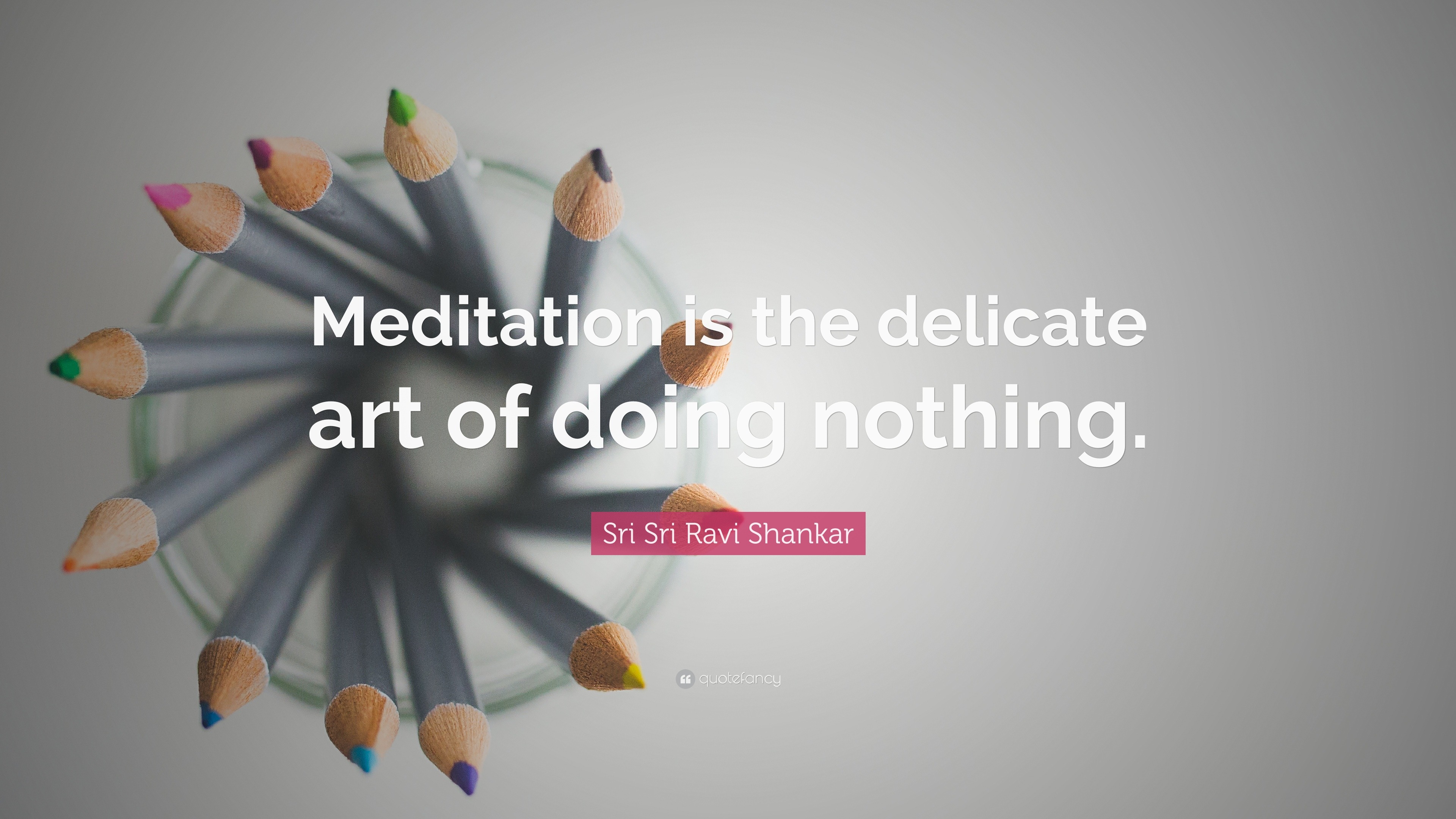
We lose imagination. We lose patience. We lose the ability to observe without needing to capture. We lose the inner life that grows only in quiet. We lose boredom, and with it the strange creativity boredom can unlock. We lose the ability to be alone with ourselves. We lose reflection. We lose the habit of noticing beauty when it is not presented to us through a screen.
We also lose a certain tenderness towards time. Not all time has to be used. Some time can simply be lived.
I admire people who still seem able to do this. Older people sitting at void decks, shooting the breeze with no visible agenda. Temple-goers sitting quietly after darshan, not rushing out immediately after the ritual is done. Children staring into space. People sitting in parks. Someone with a cup of tea and nowhere urgent to be. These scenes stay with me because they feel increasingly rare. They are small acts of resistance against a world that asks, “What next?”
My ideal version of doing nothing is simple. Morning. I am the only one awake in the house. The room is quiet. I have a hot cup of coffee in my hand. My phone is nearby, not for scrolling, but to capture an idea if one arrives. I sit in silence. No one needs me yet. The day has not begun making its claims.
This is not dramatic. It will never trend. It cannot be turned into a productivity hack without ruining it. That is precisely why it matters.
Doing nothing does not mean abandoning responsibility. It does not mean laziness, though a part of me still carries that old conditioning. “Don’t waste time.” “Do something useful.” “Idle mind is the devil’s workshop.” “Why are you just sitting?” These phrases were common enough growing up, and I have used versions of them with BB and GG too. The inheritance continues even when we know better. We pass on not only values but anxieties.
Maybe the work now is to interrupt that inheritance.
To tell ourselves and our children that empty time is not wasted time. That rest need not be earned through exhaustion. That boredom will not destroy us. That creativity requires space. That the mind needs to wander. That the body needs to repair. That a woman sitting down is not automatically available. That a hobby does not have to become a side hustle. That not every moment must be captured, posted, measured, or improved.
The art of doing nothing is disappearing, but perhaps it is not gone. It waits in small places. In morning coffee. In a bus window. In the hush of a library. In a beach breeze. In the airport between flights. In a quiet walk. In the few minutes after lighting a lamp. In the pause after prayer. In the space before an idea becomes words.

Maybe doing nothing is not the opposite of living fully. Maybe it is what allows us to live fully.
So tomorrow morning, if the house is still quiet and the day has not yet rushed in, I hope to sit with my coffee for a few minutes longer. I will probably still reach for my phone. I am not pretending to be a saint of stillness. But perhaps I can wait before touching it. Perhaps I can let the silence arrive first. Perhaps I can allow my mind to wander without immediately making it useful.
A few minutes of nothing. Which, I am beginning to realise, may be something after all.