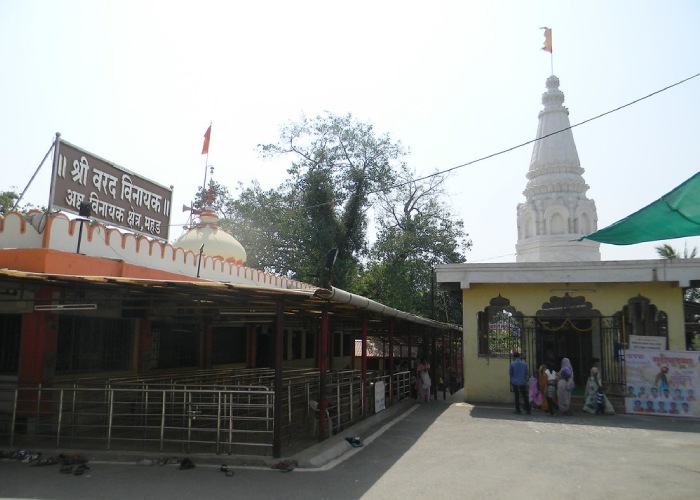
Nestled in Raigad district, in the tranquil town of Mahad, stands the Varadavinayak Temple, one of the eight Ashtavinayak shrines dedicated to Lord Ganesha. Unlike the grandiosity of some other pilgrimage sites, Varadavinayak’s charm lies in its simplicity, serenity, and the promise of fulfilled wishes. The name, Varadavinayak, or “the Bestower of Boons,” draws thousands of devotees each year who seek blessings, prosperity, and the removal of life’s obstacles.
Mahad is a small, peaceful town located close to Khopoli and Karjat, easily accessible from Mumbai and Pune. The temple is surrounded by lush greenery, with a sacred pond to the west and a banyan tree within the complex, adding to the tranquil atmosphere. The setting is intentionally simple, reflecting the ethos of humility and devotion that underpins the Ashtavinayak pilgrimage.
The mythological roots of Varadavinayak are woven with drama, penance, and divine intervention. According to legend, King Bhima of Koudinyapur and his queen, longing for a child, were blessed by Sage Vishwamitra with the Ekashar Gajana Mantra. Their prayers bore fruit in the form of a son, Prince Rukmaganda, who grew into a handsome and virtuous young man.
During a hunting trip, Rukmaganda stopped at the ashram of sage Vachaknavi. The sage’s wife, Mukunda, was enamoured by the prince and propositioned him. Rukmaganda, steadfast in his morals, refused and left. Mukunda, lovesick, was deceived by Indra, the king of gods, who took Rukmaganda’s form and united with her. She bore a son, Gritsamada. When Gritsamada learned the truth of his birth, he was furious. He cursed his mother, Mukunda, to become the thorny bhor, a berry plant. In turn, Mukunda cursed her son, declaring that he would bear a demon child. At that moment, a divine voice revealed that Gritsamada was the son of Indra, but the curses remained irreversible.
Ashamed and seeking redemption, Gritsamada retreated to the Pushpak forest, the present-day site of Mahad, to perform intense penance to Lord Ganesha. He chanted the sacred mantra “GaNanaN Tva” and worshipped with unwavering devotion. Pleased, Ganesha appeared before him, granting several boons: Gritsamada would have a powerful son, Tripurasura, later defeated by Lord Shiva, and the forest itself would be blessed. Anyone who worshipped Ganesha here would have their wishes fulfilled. Gritsamada requested Ganesha to remain in the forest, and thus the deity manifested as Varadavinayak, the giver of boons, enshrined in Mahad.
The current temple structure dates back to 1725 AD, when Subhedar Ramji Mahadev Biwalkar, a Peshwa general, restored and rebuilt the shrine. The original idol of Varadavinayak was discovered in a nearby lake by Dhondu Paudkar in 1690 AD and later installed in the temple.
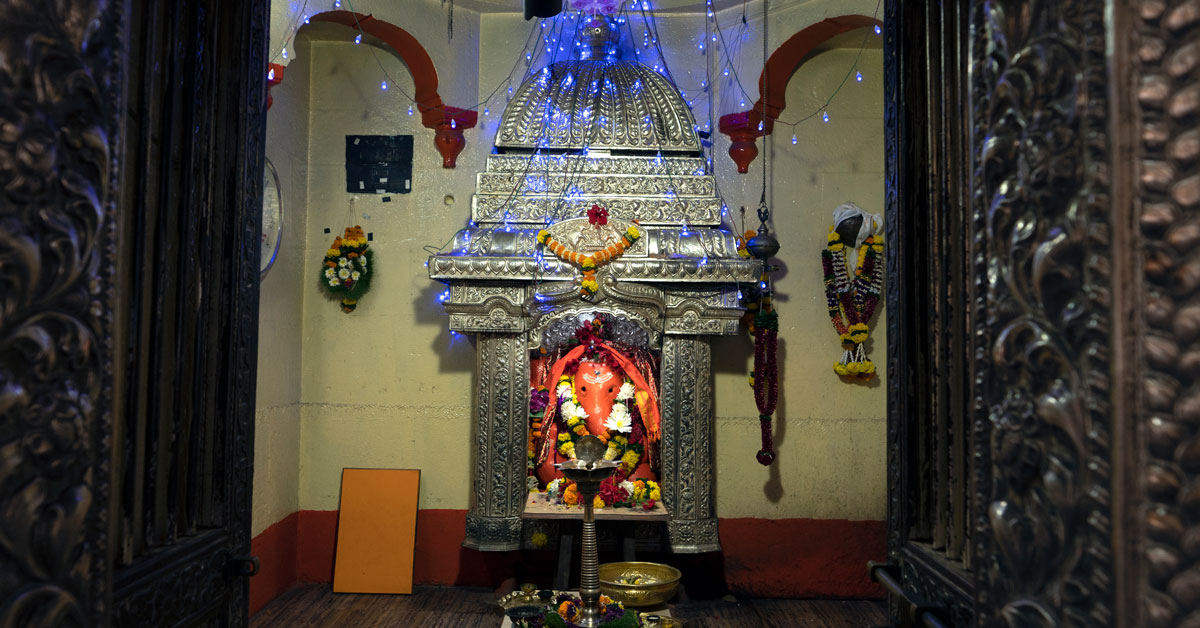
The temple is constructed from black stone, with a modest hall of some 8×8 feet and a 25-foot-high dome crowned with a golden pinnacle. The dome is adorned with cobra motifs, symbolising divine protection and energy. The sanctum houses the swayambhu, or self-manifested idol, of Lord Ganesha, facing east with a left-turned trunk. The idol is flanked by stone images of Riddhi and Siddhi, the goddesses of prosperity and spiritual power. The temple complex includes a Shiva Linga, a Mushika, Ganesha’s mouse vehicle, Navagraha, the nine planetary deities, and a Gomukh, a sacred water spout to the north. Unlike most temples, devotees at Varadavinayak are allowed to enter the sanctum and perform rituals directly on the idol, fostering an intimate connection between worshipper and deity. The temple’s oil lamp, the Nandadeep, has reportedly burned continuously since 1892, symbolising eternal devotion and divine presence. Within the temple grounds, a sacred banyan tree is tied with coconut offerings by devotees seeking the fulfilment of wishes.
Devotees seek blessings by entering the sanctum and offering prayers directly to the idol, a rare privilege among Ashtavinayak temples. The abhishek ritual involves pouring milk, water, and flowers over the deity while chanting prayers. This ritual is believed to remove obstacles and bring prosperity. Special permission from temple authorities is required to perform abhishek. The temple holds daily aartis in the morning and evening. The evening aarti, in particular, is a vibrant and spiritually charged event, drawing crowds of worshippers. Devotees offer modaks, sweet dumplings, Lord Ganesha’s favourite treat, as a symbol of gratitude and devotion.
Devotees tie coconuts around the banyan tree in the temple courtyard, praying for the fulfilment of specific wishes. This ritual is especially popular among those seeking children or success in personal endeavours. On Maghi Chaturthi, it is believed that consuming the coconut prasad can bless a devotee with a child, making this festival particularly significant for childless couples.
The temple’s major festivals are celebrated during the waxing moon period, the Shuddh Paksha, of Bhadrapad in August–September and Magh in January–February, from the first day to Panchami, the fifth day. Festivities include Pranpratistha, the consecration of the idol, marking the spiritual renewal of the temple. Abhisheks and special pujas are elaborate rituals and collective prayers, with thousands of devotees participating in the holy bathing, or abhishek, and worship of the deity. The temple is filled with devotional music, chanting, and the aroma of incense, creating an atmosphere of intense spiritual energy. During these festivals, the temple and its surroundings come alive with processions, communal feasting, and the sharing of prasad, reinforcing the temple’s role as a centre of community and faith.
The Varadavinayak idol is considered swayambhu, or self-manifested, and was discovered in a lake, lending it a weathered and ancient appearance. The presence of two idols, the original outside and a replacement inside, has sparked debate, but both are revered by devotees. Varadavinayak is the only Ashtavinayak temple where devotees can personally touch and perform rituals on the idol. This unique tradition fosters a deep sense of connection and accessibility, making the act of worship more personal and immediate. The Nandadeep, said to have burned continuously for over a century, represents the unbroken chain of devotion and the ever-present blessings of Lord Ganesha.
The ritual of tying coconuts to the banyan tree is a living testament to the temple’s reputation as a wish-fulfilling shrine. The tree is seen as a witness to countless prayers and dreams, many of which devotees claim have been answered.
Varadavinayak is traditionally the fourth or seventh stop in the Ashtavinayak pilgrimage circuit, depending on the route taken. Its proximity to Mumbai makes it one of the most accessible temples, drawing urban devotees seeking a spiritual respite and the fulfillment of desires. The temple is not just a place of worship, but a hub of community life. Festivals and daily rituals bring together people from all walks of life, fostering a spirit of unity and shared purpose. The distribution of prasad, communal meals, and collective prayers are integral to the temple’s vibrant spiritual culture.





 Memories and Such