In My Hands Today…

Alexandria: The City that Changed the World – Islam Issa
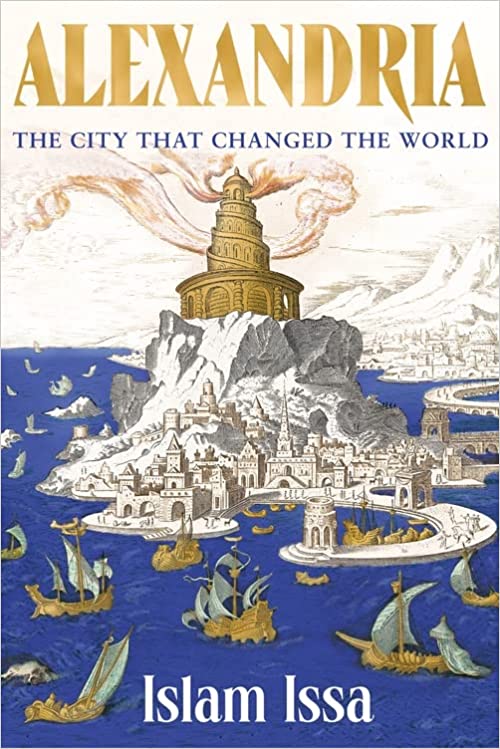
A city drawn in sand.

Inspired by the tales of Homer and his own ambitions of empire, Alexander the Great sketched the idea of a city onto the sparsely populated Egyptian coastline. He did not live to see Alexandria built, but his vision of a sparkling metropolis that celebrated learning and diversity was swiftly realised and still stands today.

Situated on the cusp of Africa, Europe and Asia, great civilisations met in Alexandria. Together, Greeks and Egyptians, Romans and Jews created a global knowledge capital of enormous influence: the inventive collaboration of its citizens shaped modern philosophy, science, religion and more. In pitched battles, later empires, from the Arabs and Ottomans to the French and British, laid claim to the city but its independent spirit endures.

In this sweeping biography of the great city, Islam Issa takes us on a journey across millennia, rich in big ideas, brutal tragedies and distinctive characters, from Cleopatra to Napoleon. From its humble origins to dizzy heights and present-day strife, Alexandria tells the gripping story of a city that has shaped our modern world.
Genres
History
Nonfiction
Egypt
Ancient History
World History
Africa
Cities

In My Hands Today…

Anansi’s Gold: The Man Who Looted the West, Outfoxed Washington, and Swindled the World – Yepoka Yeebo

When Ghana won its independence from Britain in 1957, it instantly became a target for home-grown opportunists and rapacious Western interests determined to snatch any assets that colonialism hadn’t already stripped. A CIA-funded military junta ousted the new nation’s inspiring president, Kwame Nkrumah, then falsely accused him of hiding the country’s gold overseas.

Into this big lie stepped one of history’s most charismatic scammers, a con man to rival the trickster god Anansi. Born into poverty in Ghana and trained in the United States, John Ackah Blay-Miezah declared himself custodian of an alleged Nkrumah trust fund worth billions. You, too, could claim a piece–if only you would “invest” in Blay-Miezah’s fictitious efforts to release the equally fictitious fund. Over the 1970s and ‘80s, he and his accomplices―including Ghanaian state officials and Nixon’s former attorney general–scammed hundreds of millions of dollars out of thousands of believers. Blay-Miezah lived in luxury, deceiving Philadelphia lawyers, London financiers, and Seoul businessmen alike, all while eluding his FBI pursuers. American prosecutors called his scam “one of the most fascinating–and lucrative–in modern history.”

In Anansi’s Gold , Yepoka Yeebo chases Blay-Miezah’s ever-wilder trail and discovers, at long last, what really happened to Ghana’s missing wealth. She unfolds a riveting account of Cold War entanglements, international finance, and postcolonial betrayal, revealing how what we call “history” writes itself into being, one lie at a time.

In My Hands Today…

Cobalt Red: How the Blood of the Congo Powers Our Lives – Siddharth Kara

Cobalt Red is the searing, first-ever exposé of the immense toll taken on the people and environment of the Democratic Republic of the Congo by cobalt mining, as told through the testimonies of the Congolese people themselves. Activist and researcher Siddharth Kara has traveled deep into cobalt territory to document the testimonies of the people living, working, and dying for cobalt. To uncover the truth about brutal mining practices, Kara investigated militia-controlled mining areas, traced the supply chain of child-mined cobalt from toxic pit to consumer-facing tech giants, and gathered shocking testimonies of people who endure immense suffering and even die mining cobalt.

Cobalt is an essential component to every lithium-ion rechargeable battery made today, the batteries that power our smartphones, tablets, laptops, and electric vehicles. Roughly 75 percent of the world’s supply of cobalt is mined in the Congo, often by peasants and children in sub-human conditions. Billions of people in the world cannot conduct their daily lives without participating in a human rights and environmental catastrophe in the Congo. In this stark and crucial book, Kara argues that we must all care about what is happening in the Congo ― because we are all implicated.

In My Hands Today…

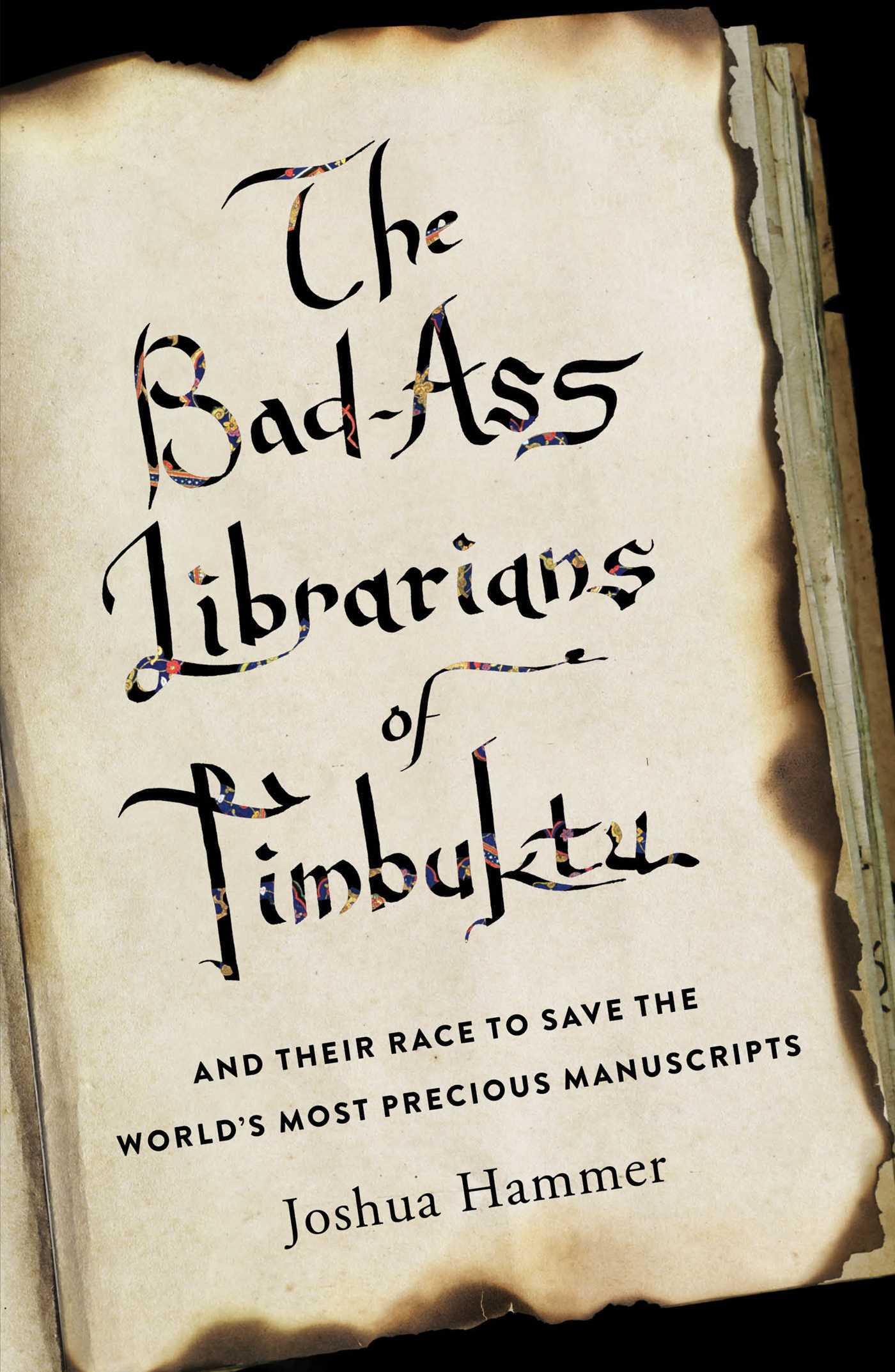
The Bad-Ass Librarians of Timbuktu and Their Race to Save the World’s Most Precious Manuscripts – Joshua Hammer

To save precious centuries-old Arabic texts from Al Qaeda, a band of librarians in Timbuktu pulls off a brazen heist worthy of Ocean’s Eleven.

In the 1980s, a young adventurer and collector for a government library, Abdel Kader Haidara, journeyed across the Sahara Desert and along the Niger River, tracking down and salvaging tens of thousands of ancient Islamic and secular manuscripts that had fallen into obscurity. The Bad-Ass Librarians of Timbuktu tells the incredible story of how Haidara, a mild-mannered archivist and historian from the legendary city of Timbuktu, later became one of the world’s greatest and most brazen smugglers.

In 2012, thousands of Al Qaeda militants from northwest Africa seized control of most of Mali, including Timbuktu. They imposed Sharia law, chopped off the hands of accused thieves, stoned to death unmarried couples, and threatened to destroy the great manuscripts. As the militants tightened their control over Timbuktu, Haidara organized a dangerous operation to sneak all 350,000 volumes out of the city to the safety of southern Mali.

Over the past twenty years, journalist Joshua Hammer visited Timbuktu numerous times and is uniquely qualified to tell the story of Haidara’s heroic and ultimately successful effort to outwit Al Qaeda and preserve Mali’s—and the world’s—literary patrimony. Hammer explores the city’s manuscript heritage and offers never-before-reported details about the militants’ march into northwest Africa. But above all, The Bad-Ass Librarians of Timbuktu is an inspiring account of the victory of art and literature over extremism.
Genres
Nonfiction
History
Africa
Books About Books

In My Hands Today…

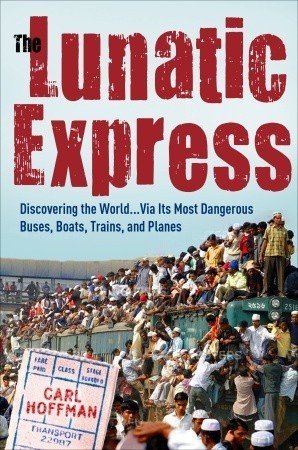
The Lunatic Express: Discovering the World… via Its Most Dangerous Buses, Boats, Trains, and Planes – Carl Hoffman

Indonesian Ferry Sinks. Peruvian Bus Plunges Off Cliff. African Train Attacked by Mobs. Whenever he picked up the newspaper, Carl Hoffman noticed those short news bulletins, which seemed about as far from the idea of tourism, travel as the pursuit of pleasure, as it was possible to get. So off he went, spending six months circumnavigating the globe on the world’s worst conveyances: the statistically most dangerous airlines, the most crowded and dangerous ferries, the slowest buses, and the most rickety trains. The Lunatic Express takes us into the heart of the world, to some its most teeming cities and remotest places: from Havana to Bogotá on the perilous Cuban Airways. Lima to the Amazon on crowded night buses where the road is a washed-out track. Across Indonesia and Bangladesh by overcrowded ferries that kill 1,000 passengers a year. On commuter trains in Mumbai so crowded that dozens perish daily, across Afghanistan as the Taliban closes in, and, scariest of all, Los Angeles to Washington, D.C., by Greyhound.

The Lunatic Express is the story of traveling with seatmates and deckmates who have left home without American Express cards on conveyances that don’t take Visa, and seldom take you anywhere you’d want to go. But it’s also the story of traveling as it used to be — a sometimes harrowing trial, of finding adventure in a modern, rapidly urbanizing world and the generosity of poor strangers, from ear cleaners to urban bus drivers to itinerant roughnecks, who make up most of the world’s population. More than just an adventure story, The Lunatic Express is a funny, harrowing and insightful look at the world as it is, a planet full of hundreds of millions of people, mostly poor, on the move and seeking their fortunes.