
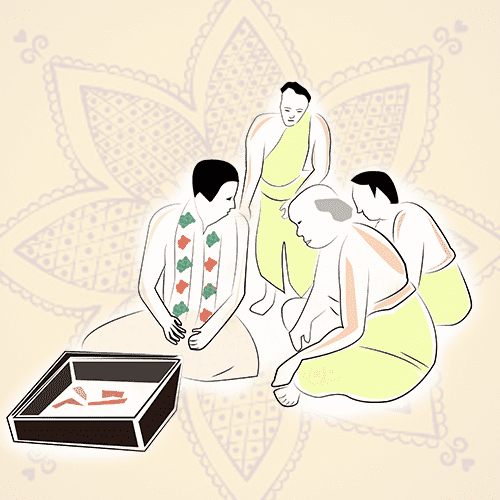
All his life, even today in fact, my father has been called ‘Ambi’ by his family and neighbours. So much so that when I was younger, I used to think this was his name. Why? In Tamil Brahmin culture, the term ‘Ambi’ has traditionally been used to refer to the oldest son in a family, a title that carries with it a sense of affection and respect.
The Tamil Brahmin community is known for its rich cultural heritage and adherence to traditional practices. The term ‘Ambi’ likely derives from the word “Amba,” which means mother or goddess in Sanskrit, signifying a connection to nurturing and familial roles. In many families, the firstborn son would be affectionately called ‘Ambi,’ symbolising his position as the primary heir and caretaker within the family unit.
Historically, Tamil Brahmin families have followed strict naming conventions. The firstborn son is often named after his paternal grandfather, while subsequent children may receive names based on familial traditions or characteristics. This practice not only preserves lineage but also reinforces social structures within the community.
The title ‘Ambi’ has implications beyond mere nomenclature; it embodies a set of expectations and responsibilities. As the eldest son, the Ambi is often seen as a leader within the family. He is expected to uphold family traditions, participate in religious rituals, and act as a mediator during disputes. This role is particularly significant in joint family systems common among Tamil Brahmins, where multiple generations live together under one roof.
In many households, the Ambi is also viewed as a bridge between the older and younger generations. He often helps younger siblings navigate societal expectations while maintaining respect for traditional values. This dynamic fosters a sense of unity within families, as the Ambi becomes a central figure around whom family gatherings revolve.

My father, though born to the middle son, was the oldest son of his generation. There were girls born before him, but none of his uncles or aunts had any sons until he was born. So he was the designated ‘Ambi’ in his family. Not only did his extended family call him Ambi, but he was also known as Ambi to the tambram residents in our building. Unfortunately, this practice is now hardly being used. If it were, both S and BB would also be Ambis as they both are the oldest boys in their generation.
The cultural significance of ‘Ambi’ extends into various facets of Tamil Brahmin life. The title signifies love and respect from both parents and relatives. It is not uncommon for children to refer to their uncles or older male relatives as ‘Ambi,’ emphasising the term’s affectionate connotation. Being an Ambi can enhance one’s status among peers within social gatherings. It often comes with expectations of leadership in community events or family functions. The name carries with it a sense of legacy. Many families have multiple generations with members named Ambi or variations thereof (like Chinnambi for younger siblings), showcasing how this tradition persists through time.

Today, with increasing numbers of nuclear families replacing joint family systems, the role of an Ambi may hold a different weight than it once did. However, many still find comfort in these traditional titles as they navigate their identities in a rapidly changing world.
The phenomenon of calling the eldest boy ‘Ambi’ in Tamil Brahmin families encapsulates much more than just a name; it represents deep-rooted cultural values that emphasise respect, responsibility, and familial unity. While modern influences may alter its usage or significance over time, the essence of what it means to be an Ambi remains an integral part of Tamil Brahmin identity.
For future generations, it will be interesting to see how this tradition adapts while still honouring its historical roots. The enduring affection associated with ‘Ambi’ serves as a reminder of the importance of family ties and cultural heritage in shaping individual identities within this vibrant community.
 Memories and Such