In My Hands Today…

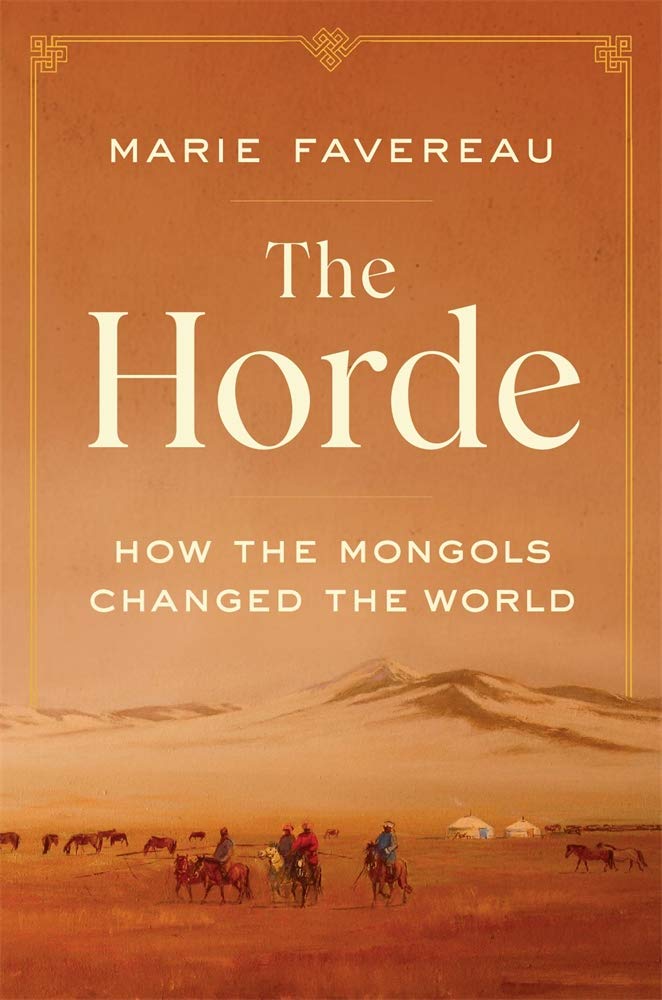
The Horde: How the Mongols Changed the World – Marie Favereau

The Mongols are widely known for one thing: conquest. In the first comprehensive history of the Horde, the western portion of the Mongol empire that arose after the death of Chinggis Khan, Marie Favereau shows that the accomplishments of the Mongols extended far beyond war. For three hundred years, the Horde was no less a force in global development than Rome had been. It left behind a profound legacy in Europe, Russia, Central Asia, and the Middle East, palpable to this day.

Favereau takes us inside one of the most powerful sources of cross-border integration in world history. The Horde was the central node in the Eurasian commercial boom of the thirteenth and fourteenth centuries and was a conduit for exchanges across thousands of miles. Its unique political regime―a complex power-sharing arrangement among the khan and the nobility―rewarded skillful administrators and diplomats and fostered an economic order that was mobile, organized, and innovative. From its capital at Sarai on the lower Volga River, the Horde provided a governance model for Russia, influenced social practice and state structure across Islamic cultures, disseminated sophisticated theories about the natural world, and introduced novel ideas of religious tolerance.

The Horde is the eloquent, ambitious, and definitive portrait of an empire little understood and too readily dismissed. Challenging conceptions of nomads as peripheral to history, Favereau makes clear that we live in a world inherited from the Mongol moment.

In My Hands Today…

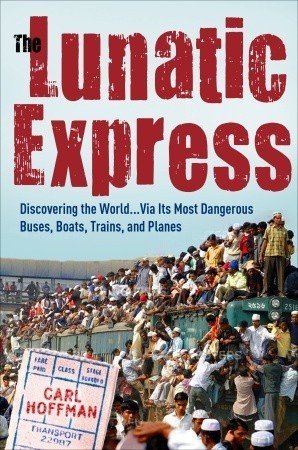
The Lunatic Express: Discovering the World… via Its Most Dangerous Buses, Boats, Trains, and Planes – Carl Hoffman

Indonesian Ferry Sinks. Peruvian Bus Plunges Off Cliff. African Train Attacked by Mobs. Whenever he picked up the newspaper, Carl Hoffman noticed those short news bulletins, which seemed about as far from the idea of tourism, travel as the pursuit of pleasure, as it was possible to get. So off he went, spending six months circumnavigating the globe on the world’s worst conveyances: the statistically most dangerous airlines, the most crowded and dangerous ferries, the slowest buses, and the most rickety trains. The Lunatic Express takes us into the heart of the world, to some its most teeming cities and remotest places: from Havana to Bogotá on the perilous Cuban Airways. Lima to the Amazon on crowded night buses where the road is a washed-out track. Across Indonesia and Bangladesh by overcrowded ferries that kill 1,000 passengers a year. On commuter trains in Mumbai so crowded that dozens perish daily, across Afghanistan as the Taliban closes in, and, scariest of all, Los Angeles to Washington, D.C., by Greyhound.

The Lunatic Express is the story of traveling with seatmates and deckmates who have left home without American Express cards on conveyances that don’t take Visa, and seldom take you anywhere you’d want to go. But it’s also the story of traveling as it used to be — a sometimes harrowing trial, of finding adventure in a modern, rapidly urbanizing world and the generosity of poor strangers, from ear cleaners to urban bus drivers to itinerant roughnecks, who make up most of the world’s population. More than just an adventure story, The Lunatic Express is a funny, harrowing and insightful look at the world as it is, a planet full of hundreds of millions of people, mostly poor, on the move and seeking their fortunes.

In My Hands Today…

Eastern Horizons – Levison Wood

Levison Wood was only 22 when he decided to hitch-hike from England to India through Russia, Iran, Afghanistan and Pakistan, but he wasn’t the conventional follower of the hippy trail. A fascination with the deeds of the early explorers, a history degree in the bag, an army career already planned and a shoestring budget of £750 – including for the flight home – he was determined to find out more about the countries of the Caucasus and beyond – and meet the people who lived and worked there.

Eastern Horizons is a true traveller’s tale in the tradition of the best of the genre, populated by a cast of eccentric characters; from mujahideen fighters to the Russian mafia. Along the way he meets some people who showed great hospitality, while others would rather have murdered him…

In My Hands Today…

The Silk Roads: A New History of the World – Peter Frankopan

For centuries, fame and fortune were to be found in the west – in the New World of the Americas. Today, it is the east which calls out to those in search of riches and adventure. Sweeping right across Central Asia and deep into China and India, a region that once took centre stage is again rising to dominate global politics, commerce and culture.

A major reassessment of world history, The Silk Roads is a dazzling exploration of the forces that have driven the rise and fall of empires, determined the flow of ideas and goods and are now heralding a new dawn in international affairs.

In My Hands Today…

Ghost Train to the Eastern Star – Paul Theroux

This image has an empty alt attribute; its file name is 2071926.jpg

In Ghost Train to the Eastern Star, Theroux recreates an epic journey he took thirty years ago, a giant loop by train (mostly) through Eastern Europe, Turkey, the Caucasus, Central Asia, the Indian Subcontinent, China, Japan, and Siberia.

In short, he traverses all of Asia top to bottom, and end to end. In the three decades since he first travelled this route, Asia has undergone phenomenal change. The Soviet Union has collapsed, China has risen, India booms, Burma slowly smothers, and Vietnam prospers despite the havoc unleashed upon it the last time Theroux passed through. He witnesses all this and so much more in a 25,000 mile journey, travelling as the locals do, by train, car, bus, and foot.

His odyssey takes him from Eastern Europe, still hungover from Communism, through tense but thriving Turkey, into the Caucasus, where Georgia limps back toward feudalism while its neighbour Azerbaijan revels in oil-driven capitalism. As he penetrates deeper into Asia’s heart, his encounters take on an otherworldly cast. The two chapters that follow show us Turkmenistan, a profoundly isolated society at the mercy of an almost comically egotistical dictator, and Uzbekistan, a ruthless authoritarian state. From there, he retraces his steps through India, Mayanmar, China, and Japan, providing his penetrating observations on the changes these countries have undergone.