
Difficult Daughters – Manju Kapur
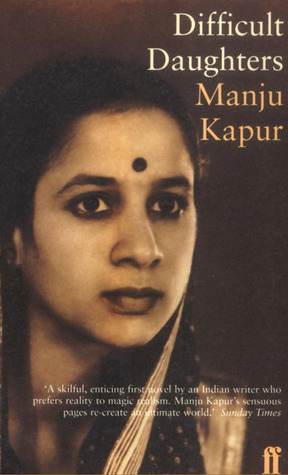 Set around the time of Partition and written with absorbing intelligence and sympathy, Difficult Daughters is the story of a woman torn between family duty, the desire for education, and illicit love. Virmati, a young woman born in Amritsar into an austere and high-minded household, falls in love with a neighbour, the Professor–a man who is already married. That the Professor eventually marries Virmati, installs her in his home (alongside his furious first wife) and helps her towards further studies in Lahore, is small consolation to her scandalised family. Or even to Virmati, who finds that the battle for her own independence has created irrevocable lines of partition and pain around her.

 In this collection of ten beautifully crafted, interconnected short stories, Zafar Anjum engages two commonplaces about Singapore: one, that it is a nation of immigrants; and two, that it is a nation still looking to sketch out the parameters and contours of its own soul.
 Welcome to Kittur, India. It’s on India’s southwestern coast, bounded by the Arabian Sea to the west and the Kaliamma River to the south and east. It’s blessed with rich soil and scenic beauty, and it’s been around for centuries. Of its 193,432 residents, only 89 declare themselves to be without religion or caste. And if the characters in Between the Assassinations are any indication, Kittur is an extraordinary crossroads of the brightest minds and the poorest morals, the up-and-coming and the downtrodden, and the poets and the prophets of an India that modern literature has rarely addressed.
