In My Hands Today…

Beyond the Border: An Indian in Pakistan – Yoginder Sikand
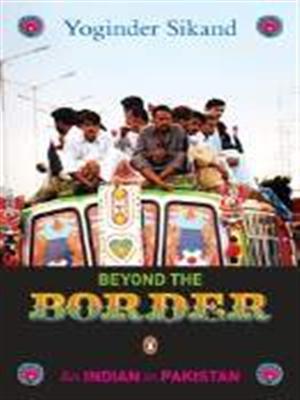
Beyond the border, based on two journeys that yoginder sikand undertook to pakistan, covering lahore, multan, hyderabad (sindh), moenjo daro, bhit shah, and Islamabad, among others, is a strikingly unconventional account of what life is like for ordinary pakistanis the pakistan he discovers only remotely resembles the stereotypical muslim nation of the hindu imagination from shiela, the daughter of a feudal lord, named after her mother’s Indian best friend, to a rundown, local eatery owner who offers the author free food because sikand is the first indian to visit his stall, encounters with pakistanis from all walks of life draw up a very different picture: Pakistan is a country as diverse, paradoxical and rich in narratives as india departing from the fiercely polemical rhetoric common in indian and pakistani accounts of each other, yoginder Sikand not only gives lie to the strategist s view of the India-Pakistan divide but also dispels the myths that have filtered into the indian psyche about pakistan being the terrible other in this brilliantly perceptive and quirky travelogue, he illuminates the pakistani side of the story, while telling his own tale of exploration and self-discovery

In My Hands Today…

Portable Magic: A History of Books and their Readers – Emma Smith

Most of what we say about books is really about the words inside the rosy nostalgic glow for childhood reading, the lifetime companionship of a much-loved novel. But books are things as well as words, objects in our lives as well as worlds in our heads. And just as we crack their spines, loosen their leaves and write in their margins, so they disrupt and disorder us in turn. All books are, as Stephen King put it, ‘a uniquely portable magic’. Here, Emma Smith shows us why.

Portable Magic unfurls an exciting and iconoclastic new story of the book in human hands, exploring when, why and how it acquired its particular hold over us. Gathering together a millennium’s worth of pivotal encounters with volumes big and small, Smith reveals that, as much as their contents, it is books’ physical form – their ‘bookhood’ – that lends them their distinctive and sometimes dangerous magic. From the Diamond Sutra to Jilly Cooper’s Riders , to a book made of wrapped slices of cheese, this composite artisanal object has, for centuries, embodied and extended relationships between readers, nations, ideologies and cultures, in significant and unpredictable ways.

Exploring the unexpected and unseen consequences of our love affair with books, Portable Magic hails the rise of the mass-market paperback, and dismantles the myth that print began with Gutenberg; it reveals how our reading habits have been shaped by American soldiers, and proposes new definitions of a ‘classic’-and even of the book itself. Ultimately, it illuminates the ways in which our relationship with the written word is more reciprocal – and more turbulent – than we tend to imagine.

In My Hands Today…

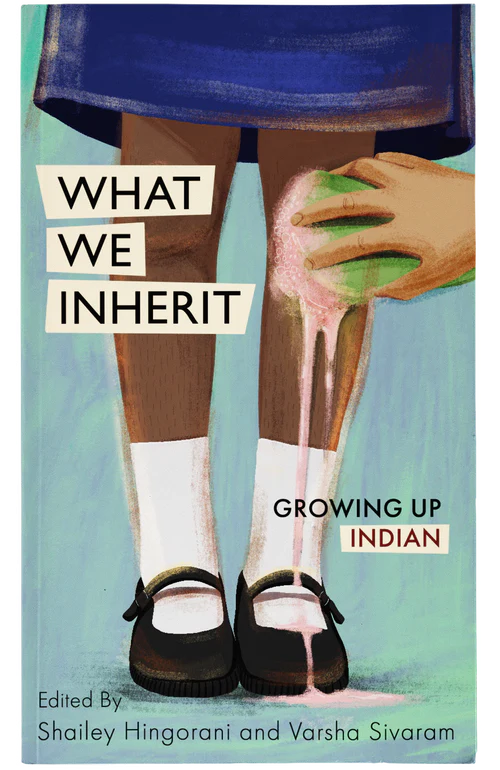
What We Inherit: Growing Up Indian – Shailey Hingorani, Varsha Sivaram

A celebration of the slippages, strife and secret histories that make us—for better or worse—who we are.

A woman faces off against a xenophobic stranger across a supermarket turnstile.

A young girl mistakes her first period for strawberry yoghurt and endures an embarrassing puberty ceremony.

At the funeral of her cruel and prejudiced dadhi, a granddaughter reflects on the confusions of grief and the trauma passed through family lines.

A follow-up to the best-selling anthology Growing Up Perempuan (AWARE, 2018), What We Inherit tells the stories of Indian women (and a few men) in Singapore entirely in their own words. They question the expectations foisted upon them, discover new avenues into old traditions and carve out spaces for joy amid anger and sorrow. At a time when the bonds between us seem at constant risk of breaking, What We Inherit turns our attention towards community in all its complexities. It’s a reminder of how we honour, betray and ultimately bear witness to each other… and ourselves.

In My Hands Today…

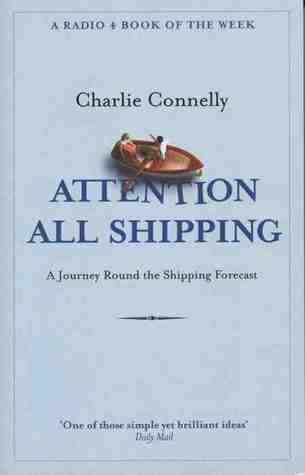
Attention All Shipping: A Journey Round the Shipping Forecast – Charlie Connelly

This solemn, rhythmic intonation of the shipping forecast on BBC radio is as familiar as the sound of Big Ben chiming the hour. Since its first broadcast in the 1920s it has inspired poems, songs and novels in addition to its intended objective of warning generations of seafarers of impending storms and gales.

Sitting at home listening to the shipping forecast can be a cosily reassuring experience. There’s no danger of a westerly gale eight, veering southwesterly increasing nine later (visibility poor) gusting through your average suburban living room, blowing the Sunday papers all over the place and startling the cat.

Yet familiar though the sea areas are by name, few people give much thought to where they are or what they contain. In Attention All Shipping, Charlie Connelly wittily explores the places behind the voice, those mysterious regions whose names seem often to bear no relation to conventional geography. Armchair travel will never be the same again.

In My Hands Today…

All the Knowledge in the World: The Extraordinary History of the Encyclopedia – Simon Garfield

The encyclopaedia once shaped our understanding of the world.

Created by thousands of scholars and the most obsessive of editors, a good set conveyed a sense of absolute wisdom on its reader. Contributions from Albert Einstein, Sigmund Freud, Orville Wright, Alfred Hitchcock, Marie Curie and Indira Gandhi helped millions of children with their homework. Adults cleared their shelves in the belief that everything that was explainable was now effortlessly accessible in their living rooms.

But now these huge books gather dust, and sell for almost nothing on eBay, and we derive our information from our phones and computers, apparently for free. What have we lost in this transition? And how did we tell the progress of our lives in the past?

All the Knowledge in the World is a history and celebration of those who created the most ground-breaking and remarkable publishing phenomenon of any age. It tracks the story from Ancient Greece to Wikipedia, from modest single-volumes to the 11,000-volume Chinese manuscript that was too big to print. It looks at how Encyclopaedia Britannica came to dominate the industry, how it spawned hundreds of competitors, and how an army of ingenious door-to-door salesmen sold their wares to guilt-ridden parents. It explains how encyclopaedias have reflected our changing attitudes towards sexuality, race and technology, and exposes how these ultimate bastions of trust were often riddled with errors and prejudice.

With his characteristic ability to tackle the broadest of subjects in an illuminating and highly entertaining way, Simon Garfield uncovers a fascinating and important part of our shared past, and wonders whether the promise of complete knowledge – that most human of ambitions – will forever be beyond our grasp.