Travel Bucket List: India – Jharkhand Part 4

Dhanbad

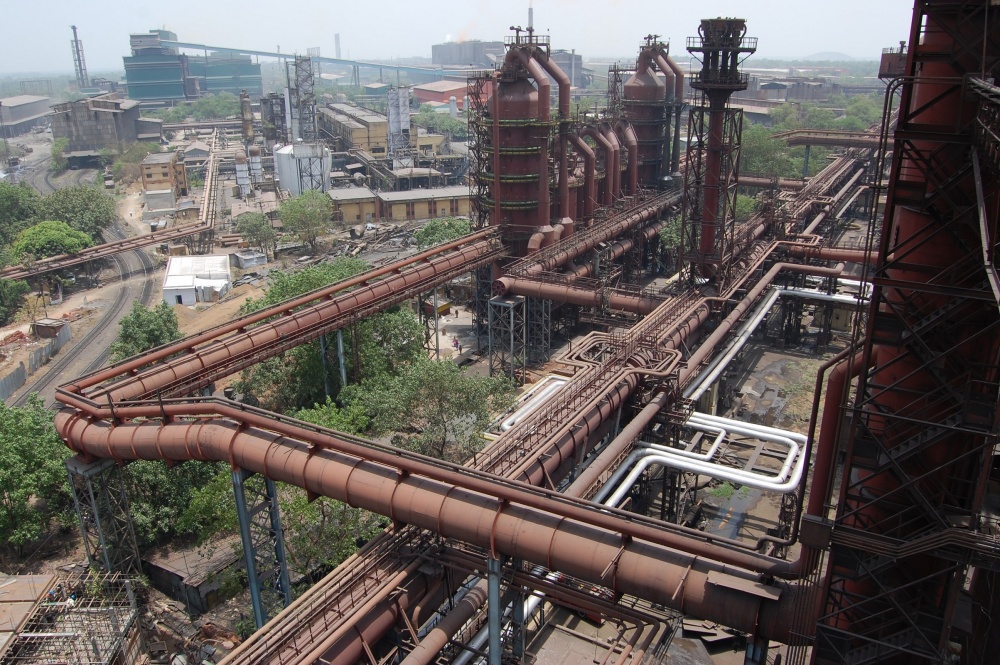
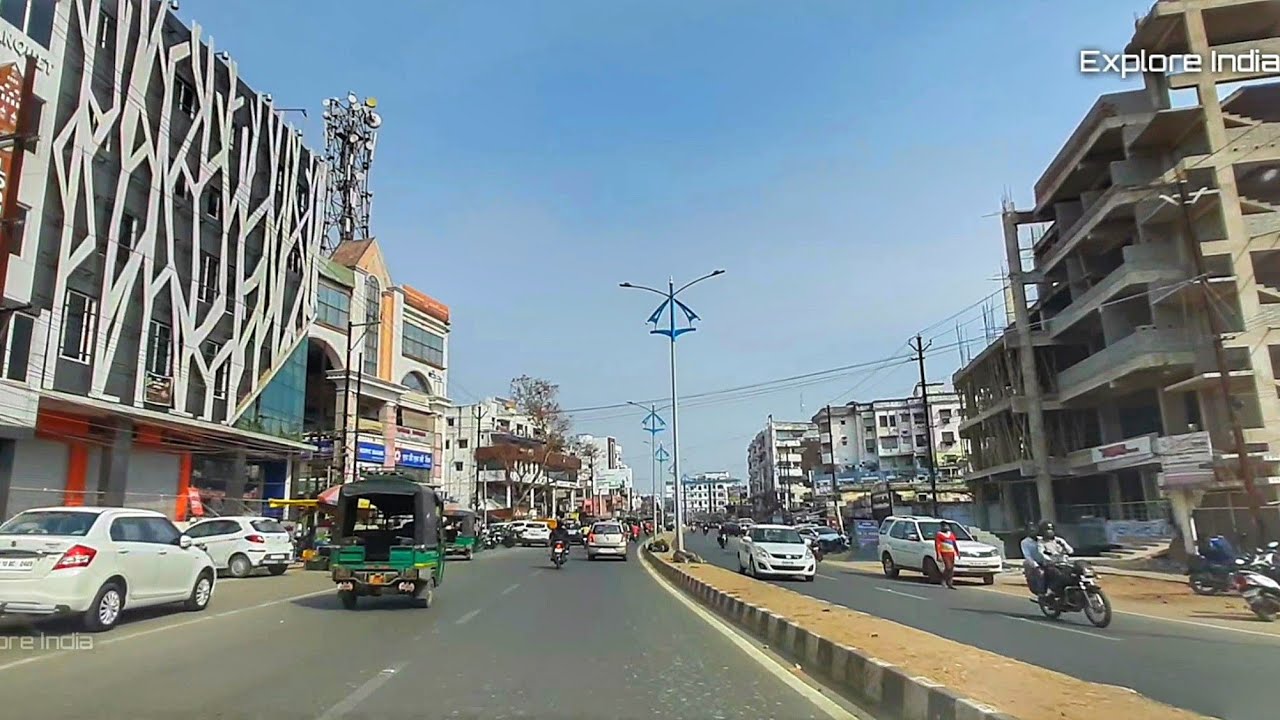
Jharkhand’s second most populous city after Jamshedpur, Dhanbad is located about 161 km northeast of Ranchi and about 300 km northeast of Netarhat. Located very close to the state’s border with West Bengal, Dhanbad is also called the Coal Capital of India for housing one of the largest coal mines in India. The prestigious Indian School of Mines, now IIT Dhanbad is also situated in Dhanbad. 

Dhanbad was originally part of the Manbhum region and occupied by Mundari tribals in the wilderness of south undivided Bihar. The region has thick forests, rich mineral resources, and a mixed demographic profile, including Adivasis, particularly the Santals and the Mundas before the city was established. The discovery of rich deposits of coal in the region caused the city to flourish financially, but also bought the notorious coal mafia and gang wars which continues to date. Dhanbad has one of the oldest and largest markets in the region and is also a centre of large scale industries. The city is surrounded by about 112 coal mines with a total production of 27.5 million tonnes and an annual income of 7,000 million rupees through the coal business.
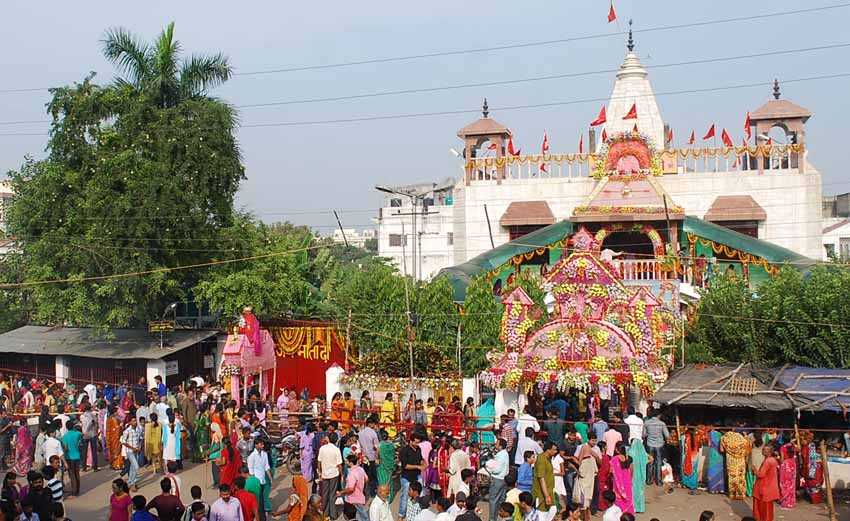
Shakti Mandir is located in the heart of the city and is dedicated to Goddess Durga. The temple hosts the Akhand Jyoti or the eternal flame which is brought down from Vaishno Devi. The temple is crowded on festive occasions and every Tuesday and Friday. The Lillori Sthan Mandir, dedicated to Goddess Kali is an important temple situated on the banks of the River Katri at a distance of 18.5 km from Dhanbad. This region is said to be under the protection of Goddess Kali with many rituals performed and festivals celebrated in Dhanbad located at this temple.

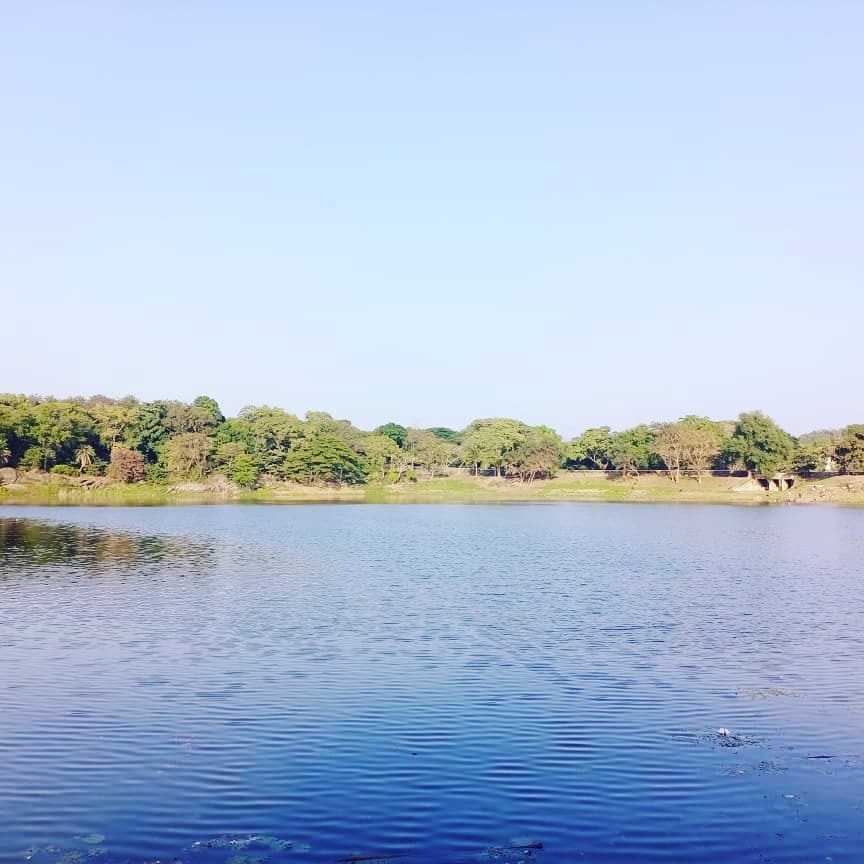
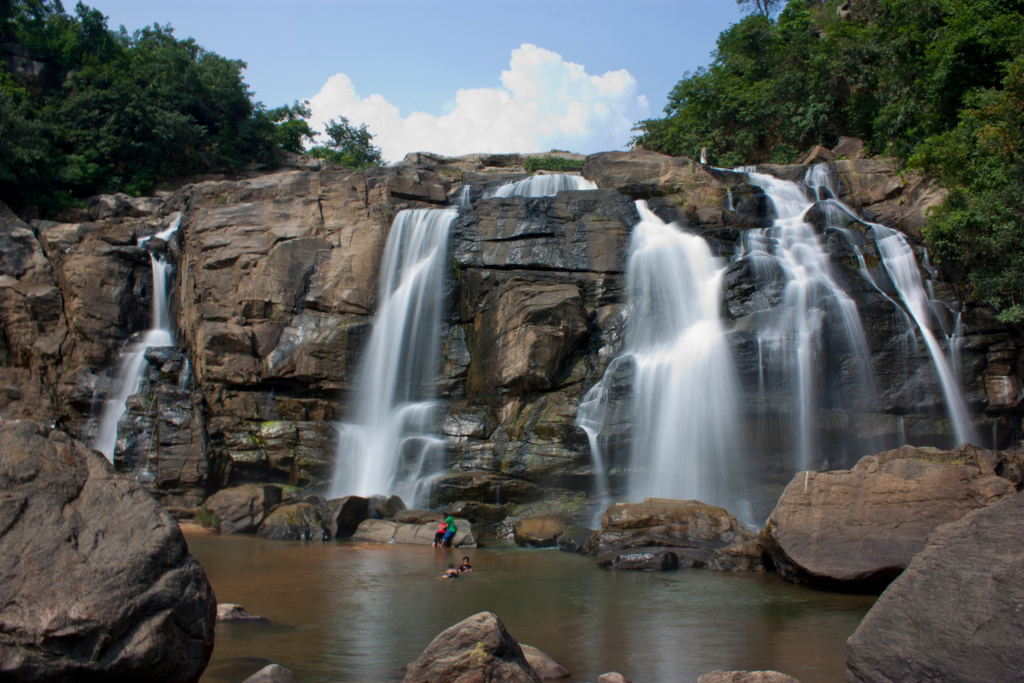
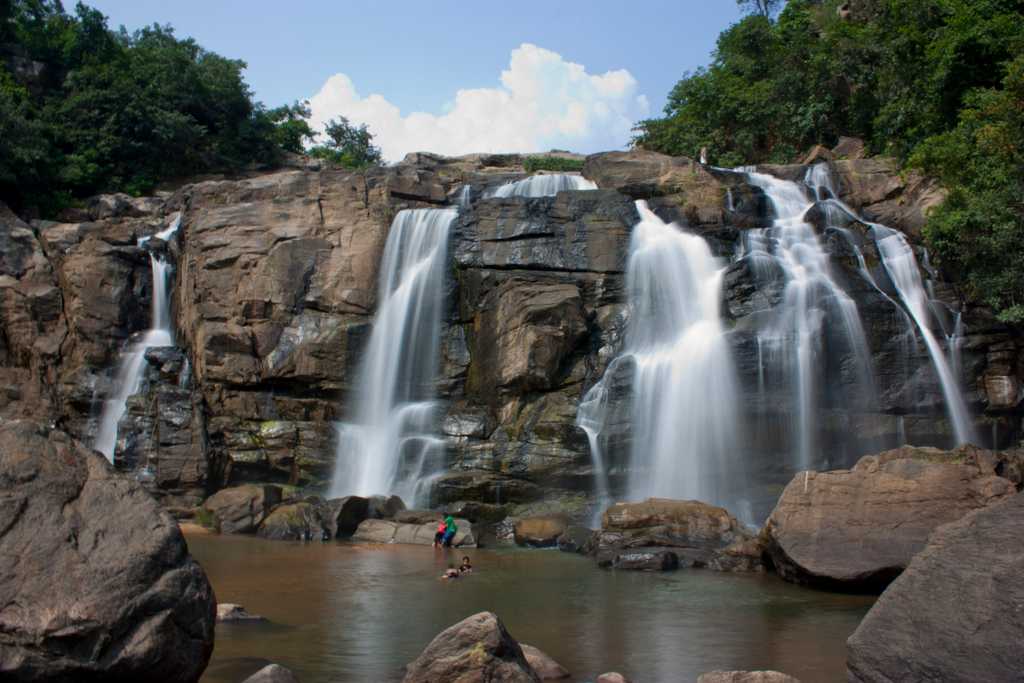
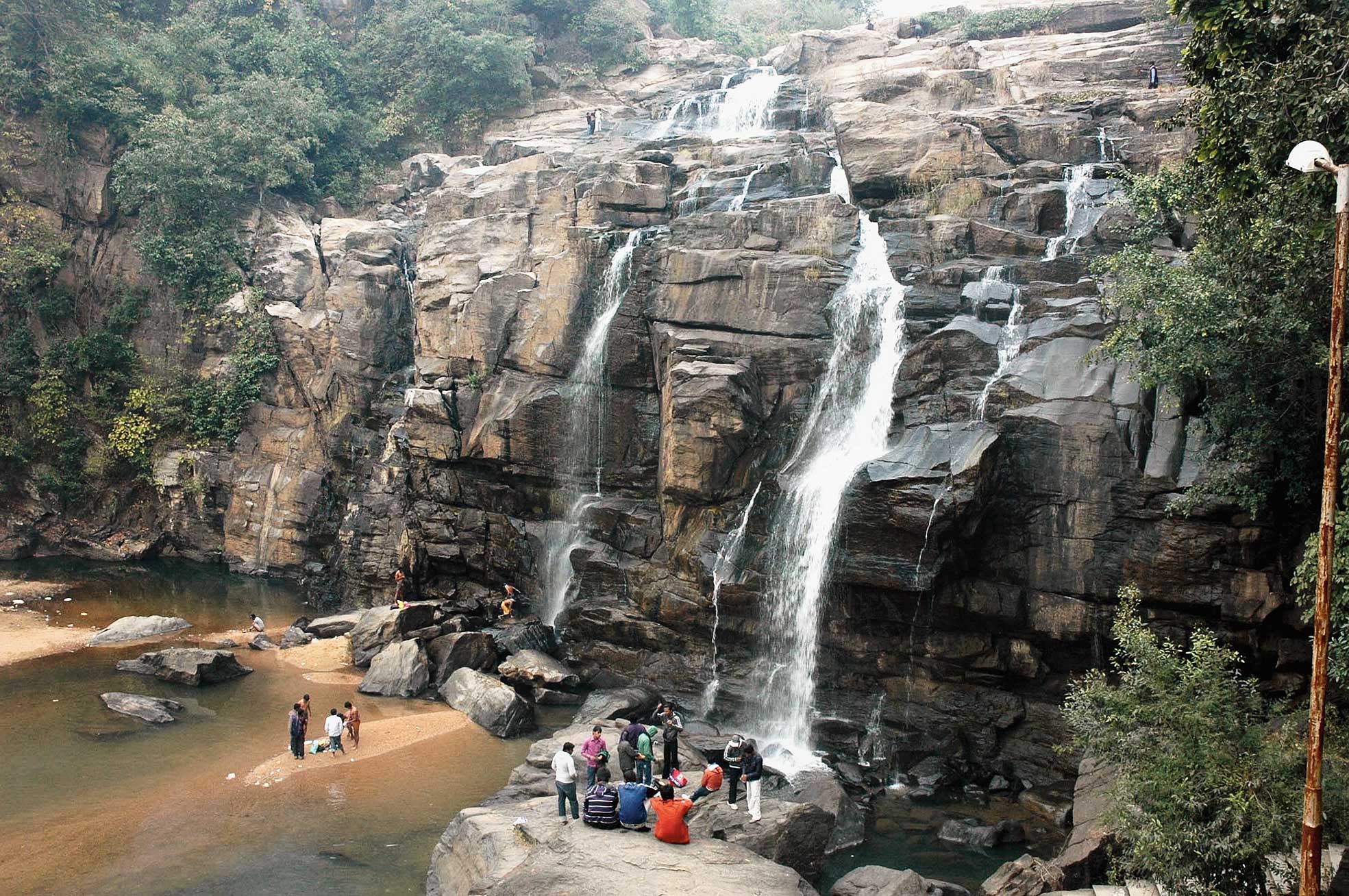
The Topchanchi Lake is an artificial lake upon which a dam was built to supply water to Dhanbad and its suburbs. The lake covers over 214 acres and is located about 37 km from the city amidst rolling green hills and forests. The famous Prasanath Hills are also nearby. A small part of the lake environs is dedicated to a wildlife sanctuary. The Bhatinda Falls is a powerful waterfall that cascades over rock formations. Also known as the waterfall of Moonidih, it is located about 14 km from Dhanbad and makes for an excellent picnic spot. The falls are lined by huge boulders and make for an awe-inspiring sight.
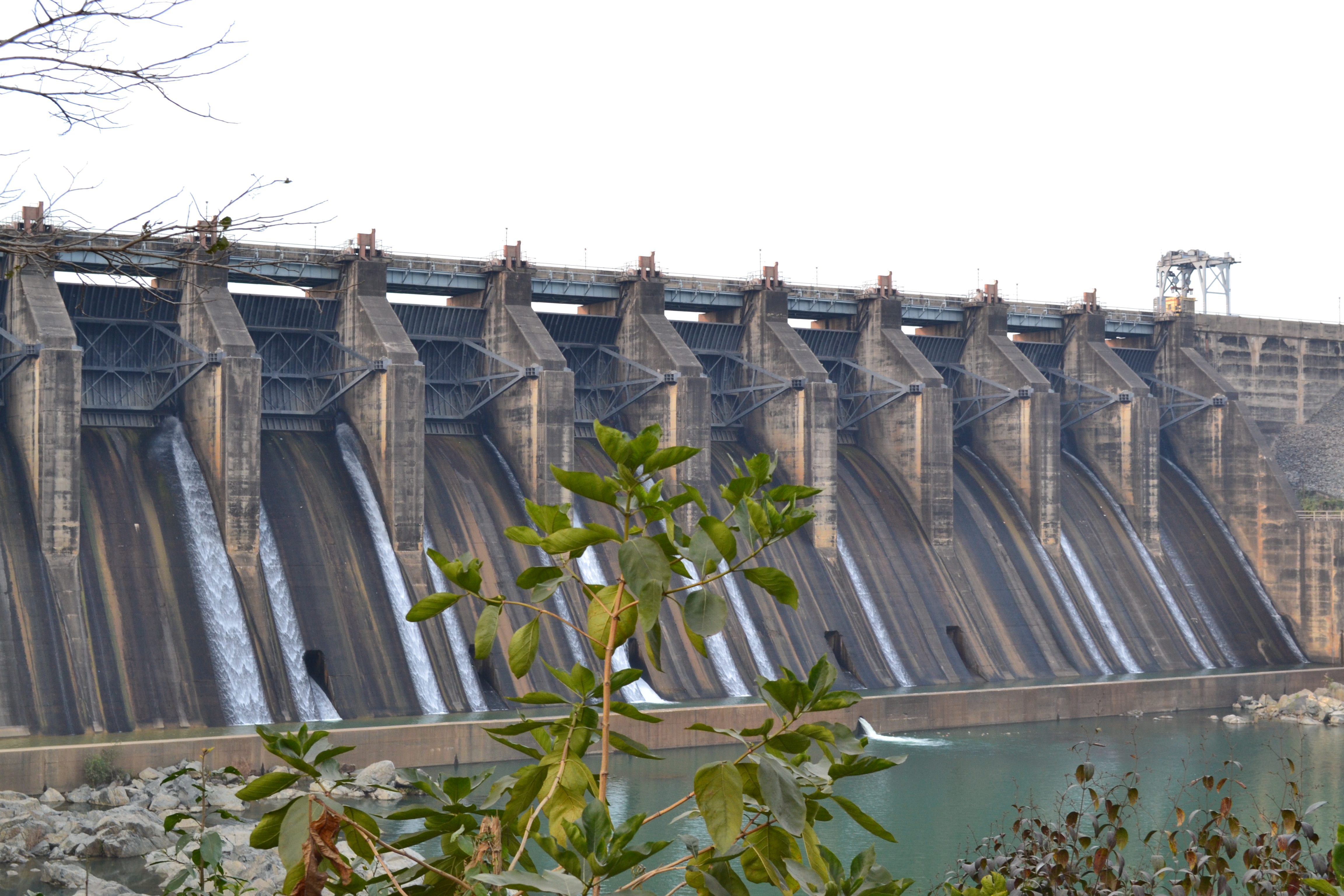
Maithon Dam on the banks of the River Borakar is a beautiful location about 48 kilometres from the main city. The dam is built by the Damodar Valley Corporation upon a river that expands to 65 sq km and is 15,712 feet long and 165 feet high. The dam is unique by being a one of a kind underground power station in Asia and also requires permission to get into and provides guided tours for visitors. Boating can be enjoyed at the dam year-round and has amazing views of the sunset. There is a deer park close by as well as the Maithon Hydel Power Plant, Asia’s first underground hydel power plant. Accessible by boats, Chammach Pahad is a beautiful island with the shape of a giant inverted spoon. Dedicated to the Goddess Kalyaneshwari, the Kalyaneshwari Temple has multitudes of women praying to have a child. The temple is hundreds of years old and is surrounded by natural beauty. Christmas and New Year are the best times to visit the Phoolbagan & Millennium Parks, located below the Maithon Dam, as flower shows are organised during this time.

Panchet Dam is the last to be built out of the four multi-purpose dams that were constructed under the Damodar Valley Corporation and was opened in 1959. The dam gets its name from the nearby Panchet Hill that rises above the dam. Built across the Damodar River which forms a natural border between Jharkhand and West Bengal, Panchet Dam is constructed above the confluence of the Barakar and Damodar Rivers and so the northern bank of the reservoir falls in Jharkhand and the southern bank under West Bengal. The village of Telkupi, dating back to the 1st century and home to various ancient Jain temples as well as the capital of the erstwhile Tilakampa Kingdom was submerged under the dam area. However, some temples and the fort of the Singh Deo dynasty of Panchakot remain which tourists can visit as well as the ruins of the Old Terracotta temple in the Garpanchkot hills. At a drive of half an hour from the dam is the beautiful Garpanchkot at the foothills of the Panchet Hill. Home to the ruins of the temple and the historic fort, a visit to Garpanchkot is recommended while visiting the dam.
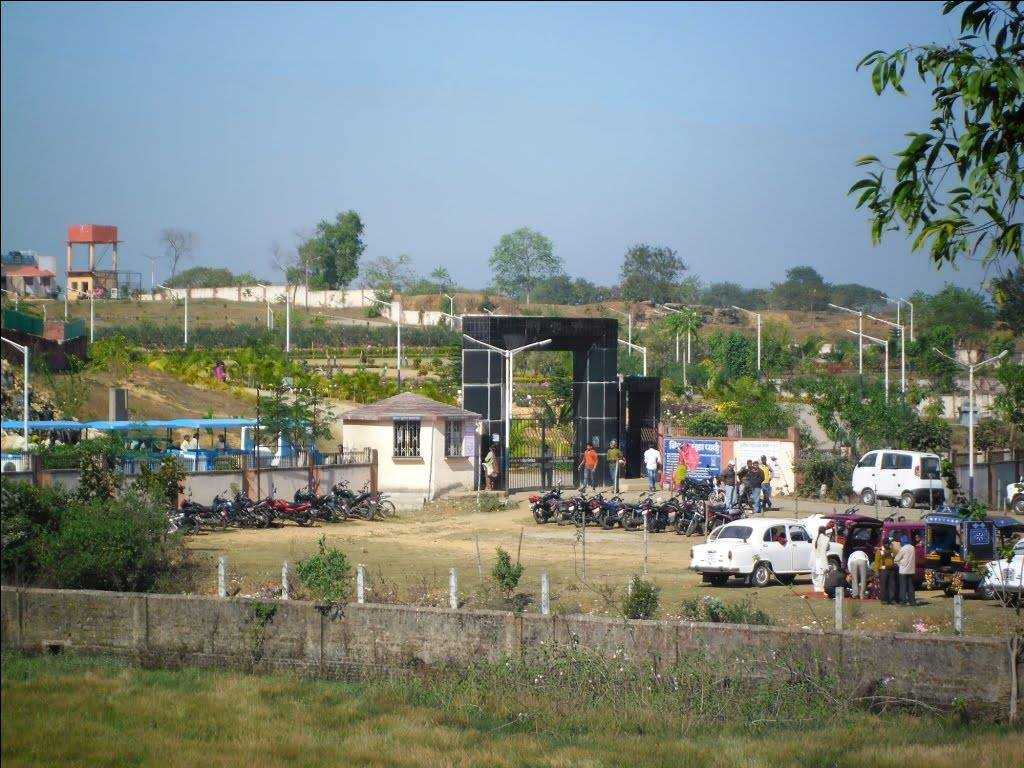
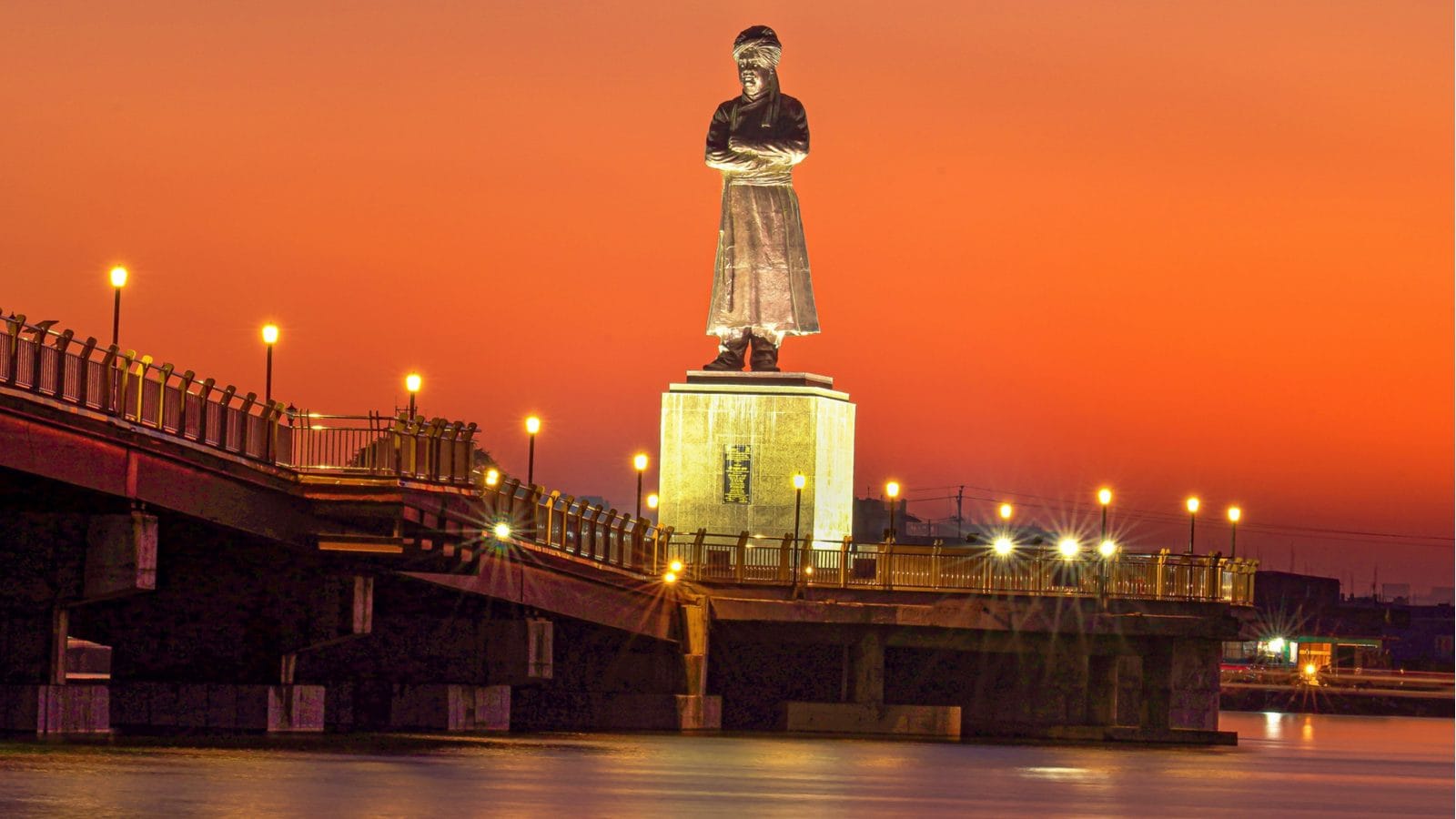
The Birsa Munda Park is Dhanbad’s sole park and a major tourist attraction spread over 21 acres with a walking path, lawns, a canteen, a playground and toy rides for children. Opened in November 2009, the park is often regarded as the stepping stone to various other projects that are coming up in the city. The park is open from 6 to 8 am and then again between 9 am to 7 pm with a free entry during the 6 to 8 am slot. For the later slot, the entry charges vary from INR 5 for children between 5 to 12 years to INR15 for adults during the week and INR 10 for children and INR 20 for adults on the weekends.
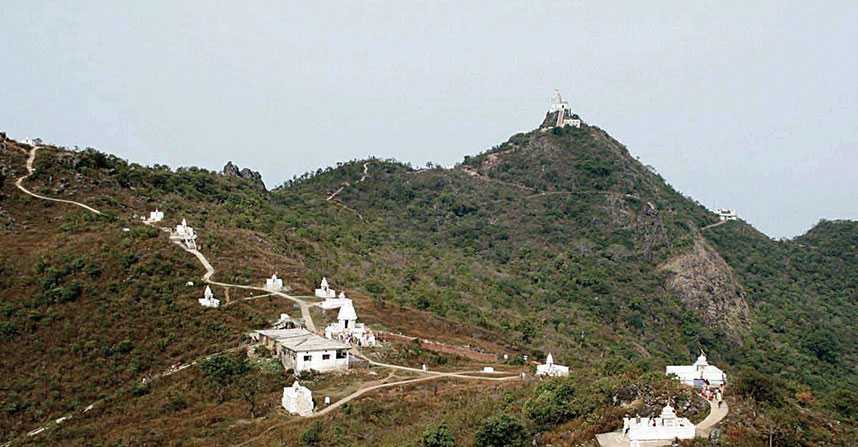
Shikarji

Located on Parasnath Hill, the highest mountain in Jharkhand, Shikharji is one of the holiest pilgrimage sites for Jains. It is believed that here is where twenty of the twenty-four Jain Tirthankaras had attained moksha or freedom from the cycle of rebirth, along with several other monks which makes it one of the most important and holy sites for Jain pilgrims, from both the Digambara and Svetambara sects. Rising to a height of 1,350 m Shikarji is the highest mountain in the state. It lies about 168 km northeast of Ranchi and about 55 km slightly north of Dhanbad.

Shikharji which means the venerable peak is also called Sammed Sikhar or the peak of concentration because this is where twenty of twenty-four Tirthankaras attained Moksha through meditation. The word Parasnath is derived from Parshvanatha, the twenty-third Jain Tirthankara, who was one of those who is believed to have attained Moksha here. Shikharji along with Ashtapada, Girnar, the Dilwara Temples of Mount Abu and Shatrunjaya are known as the Svetambara Pancha Tirth or the five principal pilgrimage shrines.

The earliest reference to Shikharji as a place of pilgrimage is found in the Jnatrdharmakatha, one of the twelve core texts of Jainism. Vastupala, the prime minister during the reign of King Vīradhavala and Vīsaladeva of the Vaghela dynasty, constructed a Jain temple housing 20 idols of Tirthankaras as well as images of his ancestors and Samavasarana. During Mughal rule, Emperor Akbar in 1583 had passed an edict granting the management of Shikharji Hill to the Jain community to prevent the slaughter of animals in the vicinity.

There are many temples at the foot of the Shikharji temple that are also frequented by tourists and pilgrims. The section between the summit of the mountain and the Gandharva Nala stream is a very religious and holy place for Jains. The current structure of temples at Shikharji was re-built by Jagat Seth in 1768, however, the idol itself is very old. The Sanskrit inscription at the foot of the image is dated 1678 with one shrine dating to the 14th century.

At the base of Shikharji is a temple to Bhomiyaji or Taleti. On the walls of the Jain temple at the village of Madhuban, there is a mural painting depicting all the temples on Parasnath Hill. The Svetambara Bhaktamara temple, established by Acharya Ramchandrasuri, is the first temple to house a Bhaktamara Stotra Yantra. A large Digambar Jain temple depicting Nandishwar Dweep is at the base of the hill. The Nichli temple, built by a Calcutta merchant in the 18th century, is noteworthy for its architecture and features arched gateways and carvings of Tirthankaras on the temple walls. There are 31 tonks each which enshrines footprints, in black or white marble, of a Tirthankara with the Parshvanatha tonk at the summit of the hill. The chatra distinguishes the Parshvanatha footprint from the footprints of the other 23 Tirthankaras which do not have chatras and are indistinguishable from each other. Since these temple does not have images these tonks are worshipped by both the Digambara and Svetambara sects. Visitors may also try adventure sport activities like parasailing and paragliding.

Deoghar

A holy city, sacred to Hindus, Deoghar lies about 250 km northeast of Ranchi and about 100 km northeast of Shikharji. Also known as Jharkhand’s cultural capital, Deoghar is famous for the Baidyanath Temple. Deoghar is situated on the banks of the River Ajay and its tributary, the River Dadhawa. It is a part of the Indian peninsular plateau which forms a part of the oldest landmass on earth, Gondwana Land.
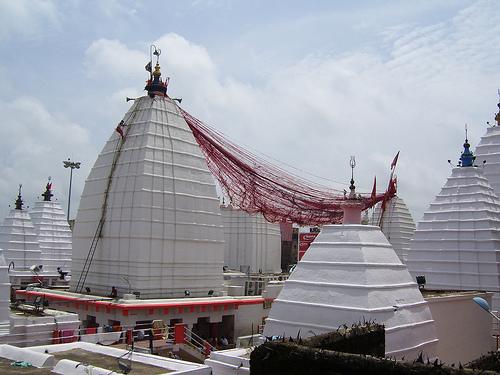
The Baidyanath Temple is one of the 12 Jyotirlingas sites.  Deoghar is a Hindi word and means the abode of Gods and Goddesses. The origins of the Baidyanath Dham are lost in antiquity, but it has been referred to as Haritakivan or Ketakivan in Sanskrit texts. The name Deoghar seems to be of recent origin and probably dates to the construction of the temple of Lord Baidyanath. Although the name of the builder of the temple is not traceable, certain parts of the front portion of the temple are said to have been built by Puran Mal, an ancestor of the Maharaja of Giddhour, in 1596. The temple is dedicated to Lord Shiva and so during the month of Shravan, around July and August,  many devotees take the water of the River Ganga in pitchers called Kanwads, hence known as Kanwariyas, to perform the holy ritual of Rudrabhishek or the holy bath from Sultanganj to Deoghar for worship and it is believed they get what they desire in life. Deoghar, along with Srisailam, is one of the few places in India where the Jyotirlinga and the Shaktipeeth are together, lying side beside each other.

There is an old story that is a part of this temple’s origins. When King Ravana of Lanka, felt his capital would be incomplete and under the constant threat of enemies unless and until Mahadeva or Lord Shiva decides to stay forever; he offered constant prayers to the Lord. Pleased, Lord Shiva permitted Ravana to carry his Atmalinga along with him to Lanka on the condition that there neither should be a break on the journey to Lanka nor should the lingam be transferred to any other person. If this were to happen, the lingam would remain fixed at that place forever where it was deposited. The other Gods were against this plan because they knew that if Lord Shiva went to Lanka with Ravana, his evil deeds would threaten the entire world. So they requested Lord Varuna, the God of Water, to enter Ravana’s belly on his way back. When the Lord did so, Ravana felt a severe urge to release water, and he handed over the lingam to a Brahmin, who was Lord Ganesha in disguise. The Brahmin placed the lingam at this location, which is now known as Baidyanath Dham. Ravana tried hard to remove the lingam from the spot where it had been placed and his frustration at being unable to do so made him retort to violence, and he damaged the lingam in the process. His guilt then made him visit the spot daily, and this continued forever. The place where Lord Shiva descended earth is known as Harilajori, which is close to Baidyanath.
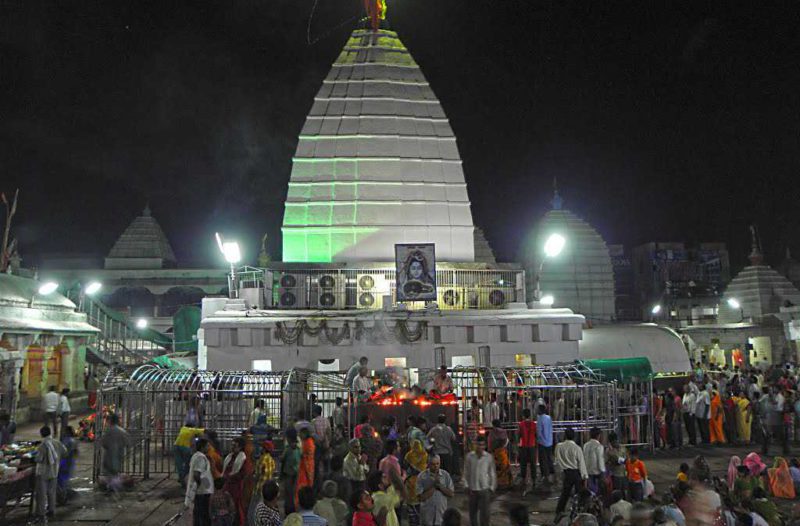
The large and magnificent temple complex comprises the main temple of Baba Baidyanath, where the Jyotirlinga is installed, along with twenty-one other significant and beautiful temples. The temple of Baidyanath or Lord Shiva is the most important of all the temples in the courtyard. The temple is said to have been built by Vishwakarma, the architect of the Gods. The temple is divided into three parts: the main temple, the middle part of this main temple, and the entrance to the temple. This 72 feet high temple is east facing and is shaped like a lotus. The top consists of three ascending shaped gold vessels that were donated by the Maharaja of Gidhaur, Raja Puran Singh. Besides these vessels is a ‘Punchsula’, which is five knives in a Tridenta shape, and an eight-petalled lotus jewel, known as Chandrakanta Mani. The central lingam is about 5 inches in diameter and projects about 4 inches from the centre of a large slab with the top of the lingam broken. The temple of Goddess Parvati is tied to the main temple using red sacred threads and this unique feature symbolises the unity of Shiva and Shakti. Rituals begin at 4 am and continue till 3:30 pm, after which the temple is closed. The temple is then opened again at 6 pm and closes at 9 pm.

The Naulakha Mandir is 1.5 km from the main Baidyanath Temple and is dedicated to Lord Krishna and Goddess Radha. The name Naulakha is from the cost of the temple which was nine lakhs or 900,000 rupees. The temple which is 146 ft high, is very similar to the Ramakrishna Temple in Belur. The temple was built on the donations of Rani Charushila of the Pathuria Ghat King’s family in Kolkata. Greaving the deaths of her husband and son, she went seeking healing and was advised by Sant Balananda Brahmachari to construct this temple.

Located 10 km from Deogarh, the Tapovan Caves and Hills is also known as the Taponath Mahadeva Shia Temple. There are several caves present there with a Shiva lingam installed in it which is said to be prayed by the Sage Valmiki in penance.

Nandan Pahar is an amusement park built on top of a hill and is famous as a picnic spot. One can have fun on one of the joy rides or go boating in the region or offer their prayers at the Nandi Temple. Sunrises and sunsets are worth making the trip for and Nandan Pahar consists of a garden and a pond, and serves as an amusement or recreational park with many joy rides. The Nandi temple, which is situated on the top of Nandan Pahar, is very famous and the whole complex is promoted by the Jharkhand State Tourism Development Corporation. Locals believe that once Ravana wished to enter Lord Shiva’s abode, Shivadham. Lord Nandi was serving as the doorkeeper and got into a fight with Ravana when he tried to forcibly enter the place. Ravana lost his temper and picked Nandi up and threw him as far as he could. Nandi fell on this hill that is now known as Nandan Pahar.

Source

Dumka

Jharkhand’s sub-capital, Dumka lies about 280 km northwest of Ranchi and about 69 km from Deogarh. There are two theories on how Dumka got its name. The first one suggests that Dumka’s name derives from the Santali word sumk for shunted or small, because, during the British colonial rule, it was a small town compared to Rampurhat and Bhagalpur. The other is that Dumka derives its name from the Persian word damin-i-koh, which means skirts of the hills.

Located in an ancient village at the border with West Bengal, the Maluti temple has many terracotta temples dedicated to Lord Shiva, Lord Vishnu and Goddess Durga. Chutonath is located about 20 km from the main town and is dedicated to Lord Chutonath. A festival in his name in April has become a tourist attraction. Dharmasthan is a temple situated in the heart of Dumka town and is dedicated to the Goddess Kali, with a special pooja organised here for seven days during the Durga Puja festival. Kurwa Park or Shrishti Pahar is a small picnic spot about 5 km to the east of Dumka which has a park, facilities for boating and a small hill. A temple is also situated here.
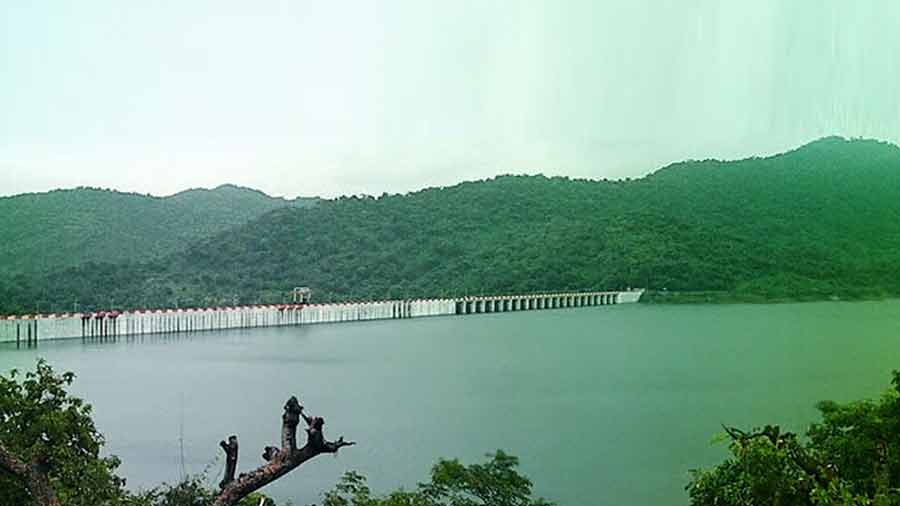
Masanjore is a small village about 30 km south of Dumka with the Masanjore Dam on the Mayurakshi River a tourist draw. The Massanjore Dam was commissioned in 1955 and is bounded by hills and forests. Also sometimes referred to as Canada Dam or Pearson Dam, because it was built with Canadian Aid in 1956, the dam is around 155 feet high and 2170 feet long, with an area of around 16,650 acres and a capacity of 500,000 acres.

And this brings us to the end of this very underrated state. I hope this small endeavour will encourage people to take a trip here to explore some hidden gems.

Travel Bucket List: India – Jharkhand Part 3

Source

Jamshedpur

India’s first planned industrial city and Jharkhand’s largest and most populous city, Jamshedpur or Tatanagar lies about 126 km southeast of the capital of Ranchi and about 133 km south of Bokaro Steel City. Juxtaposed against the beautiful Dalma Hills, Jamshedpur is also known as the Steel City and is the quintessential example of the boon of industrialisation in a developing nation. Ranked India’s cleanest city in 2019, Jamshedpur was founded by one of India’s pioneering industrialists Jamsetji Nusserwanji Tata. In 1919 Lord Chelmsford renamed the city, which was originally named Sakchi, to Jamshedpur in honour of its founder. Every Founders Day on 3 March, the 225-acre Jubilee Park is decorated with brilliant lightwork for about a week.

Over three years, C. M. Weld, Dorabji Tata and Shapurji Saklatvala painstaking searched vast stretches of inhospitable terrain to find a location for a steel plant. One day they came across Sakchi which is today a business district in the city, on the densely forested stretches of the Chota Nagpur plateau, near the confluence of the Subarnarekha and Kharkai Rivers and knew this was where they would build their steel plant. In 1908, construction of the plant as well as the city officially began and the first steel ingot was rolled on 16 February 1912.

Jamsetji’s envisioned far more than a mere row of workers’ hutments and insisted upon building all the comforts and conveniences a city could provide. As a result, many areas in the city are well planned and there are public leisure places such as the Jubilee Park. In 1945, Tata Motors was set up and is now the second-largest industry in Jamshedpur, after Tata Steel which is situated in the centre of the city and occupies approximately 1/5 of the entire city area. It acts as a pivotal centre for the industries of the city of Jamshedpur with a large number of them having direct or indirect linkages with it.

Located close to the Dalma Wildlife Sanctuary about 13 km from the city centre, Dimna Lake is an artificial lake located at the foothills of the Dalma mountain range and is famous as a picnic spot with its clear water and scenic surroundings. The lake is used as a reservoir and provides for Jamshedpur’s water requirements. A gorgeous view of the sunrise coming up from behind the hills, splendid greenery and the melodious chirping of birds is what sets this artificial lake apart. The Dimna Dam is built on the River Kharkai. The Dimna Lake and the Dam are both enterprises of the TATA Steel Company which owns the lake as well as the area around it. This is open to the public and has cement flatbeds and benches conveniently stationed all over. The land near the lake is seasonally populated with forests and foliage and there are several open spaces which people enjoy. Adventure sports on the lake are a central point of attraction for most visitors with the TATA Steel Adventure Foundation, providing packages for treks and water sports activities.

Another artificial lake, the Hudco Lake is located in the TELCO Colony near a park that also houses an artificial waterfall that uses the water of the lake. The lake and park complex are located on a beautiful hillock and it provides a panoramic view of the entire city. Jayanti Sarovar is a gorgeous lake used as a recreation spot that attracts rare and exotic birds during the winter months. The lake also houses an amusement park as well as water fountains and flower beds. The confluence of the rivers Subarnekha and Domohani is surrounded by tall eucalyptus trees and verdant greenery which gives it an imposing serenity and calmness. Sunsets here are gorgeous and should not be missed.

Located on the banks of the Subarnekha River, Bhatia Park is a beautiful park with extremely wide spaces and lush greenery. Close by is the Chandi Baba Temple which can be visited during the evenings. The Sir Dorabji Tata Park was built by Tata Steel and dedicated to Russi Modi and so was previously known as Modi Park. The park boasts well-maintained gardens, brilliant water fountains and gorgeous flower beds.

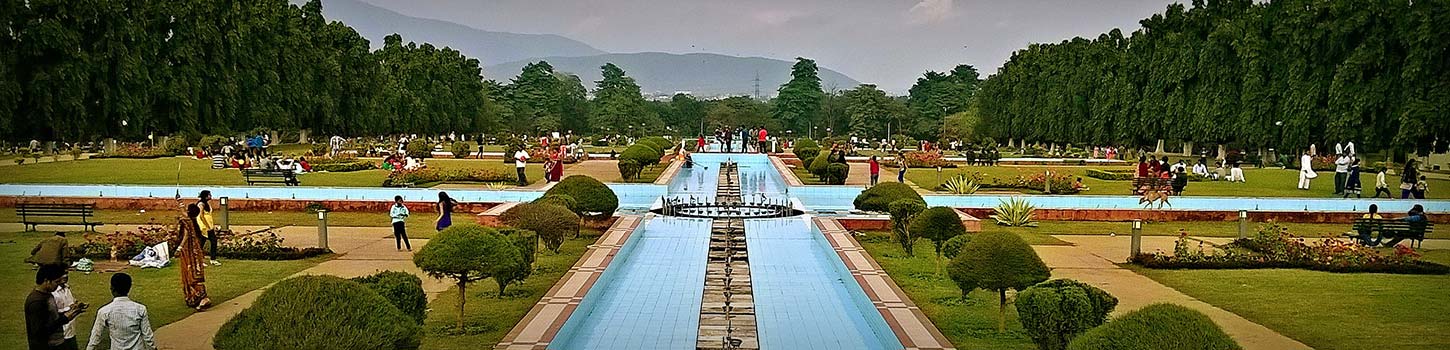
Jubilee Park is a local favourite for picnics and relaxing times with family and friends. Popular amongst joggers and cyclists, it is a gigantic park, spanning about 225 acres of land in the centre of the city. Within, there is a lake, amusement park, recreation centre, fountains and a zoo. Opened to the public in 1958, on the occasion of the city’s golden jubilee, the park was originally a gift to the town from the TATA Steel Company. It was inspired by the Brindavan Gardens of Mysore and the park also has a statue of Mr Tata and is known as the Mughal Gardens of Jamshedpur. Jubilee Lake is a beautiful lake surrounded by a laser light auditorium and a zoo, all of which are managed by Tata Steel. The lake facilitates boating and fishing and is a popular tourist spot. One of the biggest attractions in the park is the Tata Steel Zoological Park which has attractions like a butterfly park, boating, a nature trail, a safari park, a bat island, a nature education centre and a photo gallery. There is also a laser and fountain show with music that takes place every evening with four shows starting from 6:30 pm onwards. The best time to visit the park is early in the morning or after 6 pm to view the fountain show. Jubilee Park is open from 7 am to 7 pm and the zoo is open from 9 am to 5 pm and closed on Mondays. The fountain shows are at 6:30 pm, 7:30 pm, 8:30 pm and 9:30 pm. Entrance to the park is free while the zoo will incur an entry fee of INR 30 for adults and INR 20 for children. For the amusement park, it is INR 90 per person while the fountain and laser show will incur a ticket fee of INR 35.

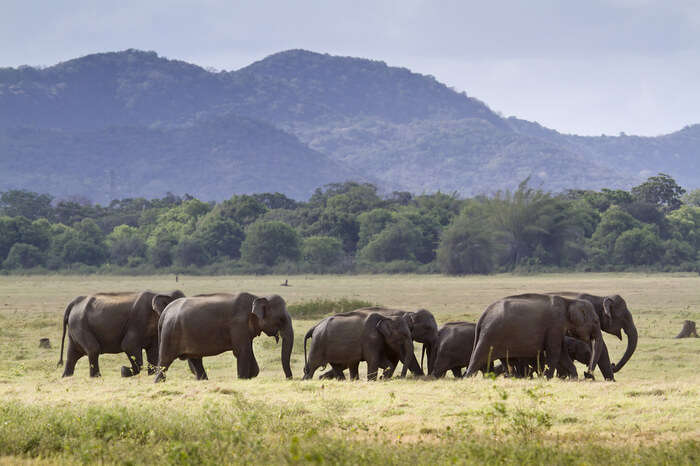
Famous for its forest tourism, the Dalma Wildlife Sanctuary is locally known for its wild resident elephants. Dalma Haathi or the Elephants of Dalma is a known and quite fearful term in the Jamshedpur-Puruliya region. Established in 1975 and inaugurated by Sanjay Gandhi, the Dalma forest is home to a horde of animals, birds and tree species as well. Overlooking the Subarnarekha River, the Dalma hills nestle the dense green forests. Parts of this forest got shunted when the steel plant was established near the Kharkai-Subarnarekha confluence. Visitors can also drive through the forest and spend a night at the rest houses and bamboo huts offered by the forest department. Dalma Wildlife Sanctuary offers an excellent bird watching experience and a spectacular view from atop the Dalma peak which also has a couple of temples one can visit. Occupying an area of 193 sq km, the forest consists of dry mixed deciduous along with dry peninsular sal and is home to a many tall wild species of trees like sal, gamhar, mahua, semgal and some shorter ones like Jamun, Dhaura, Kendu as well. Mostly native to India, these trees make up for a good portion of east India’s oxygen supply. The forest’s fauna is equally diverse. Other than the tuskers for which it is famous, one can also spot barking deer, porcupines, wild boars, giant squirrels, mongooses and sloth bears. Leopards are said to be present but hard to have a glimpse of.

One can pay a small visit to the small open-air shrine of Dalma Mai or the Goddess of the forest. At the top of the Dalma Mountain are the temples of Lord Shiva and Lord Hanuman. An experienced guide can show the colonial remains amidst the forests. Makulakocha is a forest check post with a museum-cum-interpretation centre and a deer enclosure and is the entrance to the sanctuary. It also has a rest house as well as bamboo huts for lodging with elephants belonging to the forest department kept and fed here. The sanctuary is open from 6 am and 4 pm and has an entrance fee of INR 5. Cars and jeeps need to pay INR 150 as an entry fee and photography charges ate INR 80 per camera per day while videography will set one back by INR 500 per camera per day.

Located at a height of 500 m near the Kharangajar Market, the Bhuvaneshwari Temple is popularly known as the TELCO Bhuvaneshwari Temple. Enshrined by Ma Bhuvaneshwari, the temple also has idols of other deities including Lord Shiva and Lord Krishna. Because of its elevation, it offers a panoramic cityscape view. The Golpahari Temple is located on the outskirts of Jamshedpur city on a hilltop and is dedicated to Pahari Ma or the Goddess of the Mountains. The temple can be reached through a flight of 100 steps and offers a mesmerising view of the city below. The Rankini Mandir is located in Jadugoda, about 27 km southeast of Jamshedpur. Enshrined by Kali Mata, the temple is situated on a hillock and is believed to have been established on a rock in the days gone by and witnessed human sacrifices made to Goddess Kali which was ended by the British rule.

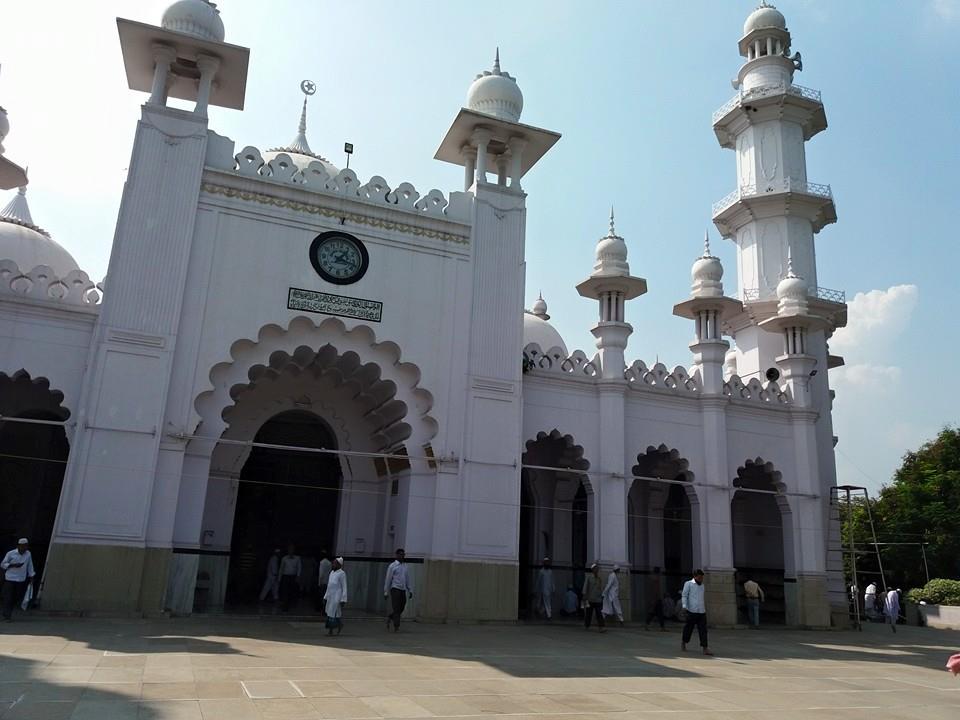
Sakchi Masjid s a brilliant specimen of Mughal architecture built of white marble with many domes and high minarets. Supposedly, it is the largest mosque in Jamshedpur, it is visited by many pilgrims annually. St Mary’s Church is one of the oldest churches in the city and is always crowded with devotees.

Located just outside Jubilee Park, the Russi Modi Centre for Excellence houses various professional organisations. The building was designed by Hafeez Contractor and is considered to be one of the most beautiful buildings in Jamshedpur. The building was formerly designed as part of Jubilee Park and houses the archives of Tata Steel.

The Amadubi Rural Tourism Centre is a rural village and a tourist where visitors are taken around in decked bullock carts to see local tribal culture and artworks. Pyatkar paintings are the highlight of the centre and one can also witness local kirtan songs and visit traditional cottages besides experiencing adventure sports like parasailing and mountain climbing.

The Tribal Culture Centre preserves the rich culture of the Santhal, Ho, Oraon, Munda and other tribes. The centre has huge sculptures of leaders of the freedom movement and the gallery is lined with paintings and the centre has a variety of antiques and relics on display.

Netarhat

A hill station which lies about 152 west of Ranchi and about 279 km northwest of Jamshedpur, Netarhat is also referred to as the Queen of Chotanagpur. The town is famous for the Netarhat Residential School, set up in 1954. Netarhat is located in the Pat region of the Chota Nagpur Plateau. The Netarhat plateau is about 6.4 km long and 4 k broad and is covered with thick forest. Netarhat is known for its sunrises and sunsets during the summer months. Also known as the Queen of the Chotanagpur Plateau, Netarhat is the highest point of the Chotanagpur plateau.

Spread over an area of around 979 sq. km, out of which 232 sq. km is the main,  Betla National Park is spread over hilly terrain and is one of the first of the nine tiger reserves that were established in India, but today tigers are sparse. An acronym for Bison, Elephant, Tiger, Leopard and Axis, Betla has a diversified ecosystem and is home to a huge variety of wildlife. The park was set up where the first tiger census was carried out in 1932 and was set aside as a protected area under the Indian Forests Act in 1947 and declared a wildlife sanctuary in 1973 and was declared a National Park in 1986. Inside the park are two historic forts of the Chero Kings, Purana Quila and Naya Quila. The forts are now deep inside the forest, but the main sentinel of the old fort is visible high on the hill with defences in three directions and three main gates. Private jeep safaris are available at the park gate and one will also have to hire a local guide. Two elephants provide elephant safaris costing INR 400 for up to 4 people for one hour which is an experience in itself. The Core Area Division runs a tourist bus on Saturday and Sunday for local tourists which covers Palamu Quila, the Kechki Confluence, Betla Park and then returns to Daltonganj. The also features waterfalls and hot springs. Open throughout the year, wildlife sightings are highest in the hot season between May to June when the foliage is not as thick. Betla village is the only entry point to the park.

The only sanctuary in India to protect wolves, the Mahudanr Wolf Sanctuary is located in the village of Mahudanr which lies in Chechari Valley about 60 km west of Netarhat. The Chechri Valley is surrounded by the Netarhat hills to the east, the Burha hills to the west, the Aksi hills on the north, and the Champa hills on the south making it one of the uniquely gorgeous valleys of the state. Located at a height of about 1968.5 feet and spread over an area of 63.256 sq km, Mahuadanr consists of 25 protected forests that share a common border with the state of Chattishgarh. It was given the status of a sanctuary on 23rd June 1976 by the Government of Bihar and is under the administration of the Betla National Park. The sanctuary was created to conserve the endangered Indian wolf. Ravines covered by thick bushes which are favoured by the wolves in making their dens.

The Upper Ghaghri Waterfalls are located about 4 km from Netarhat, set amidst a lush green valley. The Lower Ghaghri Waterfalls are located in a dense forest and fall from a height of 32 feet, about 10 km from Netarhat. The Lodh Falls are the highest waterfall in Jharkhand and are located about 70 km from Netarhat in a Sal forest. The Sadni Falls are located 35 km from Netarhat. The Suga Bandh Falls are situated about 70 km from Netarhat and is a local favourite picnic spot. Located about 10 km from Netarhat, Magnolia Point is known for its sunsets and is a popular viewing point. Sunrise Point at Netarhat is known for its sunrises. The Koel River View Point is located about 3 km from Netarhat. The Netarhat Residential School is a boarding school and one of the few modern Gurukuls left in India. Netarhat’s pine forests are ideal walking spots, slightly pleasanter than the town and used to be part of the governor’s permanent summer station.

Travel Bucket List: India – Jharkhand Part 2

Hazaribagh

Located about 104 km north of Ranchi, Hazaribagh is considered a health resort and is also popular for the Hazaribagh Wildlife Sanctuary which lies about 17 km from the city. Located in the Chhota Nagpur plateau about 2,000 m above sea level on the middle plateau, Hazaribagh is a beautiful place with dense forests and natural formations including rock formations and lakes.

Hazaribagh’s name is derived from two Persian words: Hazar meaning one thousand and bagh meaning garden and the town’s name means a city of a thousand gardens. In ancient times the district was covered with inaccessible forests inhabited by tribes that remained independent. The entire territory of Chhotanagpur, now known as Jharkhand was presumably beyond the pale of outside influence in ancient India. Throughout the Turko-Afghan period, up to 1526, the area remained virtually free from external influence and it was only with the accession of Emperor Akbar to the throne of Delhi in 1557 that Muslim influence penetrated Jharkhand, then known to the Mughals as Kokrah. After the death of Emperor Akbar in 1605, the area presumably regained its independence which necessitated an expedition in 1616 by Ibrahim Khan Fateh Jang, the Governor of Bihar and brother of Queen Noorjehan who defeated and captured Durjan Sal, the 46th Raja of Chotanagpur. In 1632, Chotanagpur was given as an endowment to the Governor at Patna for an annual payment of Rs.136,000 which was raised to Rs.161,000 in 1636. After the Kol uprising in 1831 the territories of Ramgarh, Kharagdiha, Kendi and Kunda became parts of the South-West Frontier Agency and were formed into a division with Hazaribagh as the administrative headquarters. In 1855-56 there was the great uprising of the Santhals against the British which was brutally suppressed. In 1912, a new province of Bihar and Orissa was split from Bengal Province and in 1936, the province was split into separate provinces of Bihar and Orissa, with the Chota Nagpur division being a part of Bihar. Bihar’s boundaries remained mostly unchanged after Indian Independence in 1947. In 2000, Jharkhand was separated from Bihar to become India’s 28th state. A small but effective Bengali community settled at Hazaribagh in the 19th century when the area was in Bengal Presidency.

The Hazaribagh National Park is one of the oldest wildlife sanctuaries in India, established in 1954 to conserve wildlife and provide a home for rare and endangered species of flora and fauna. The wildlife sanctuary’s landscape is full of steep hills, spectacular countryside, thick tropical forest and lovely meadows. Located about 19 km from Hazaribagh, the interiors of the park are very well-connected by internal roads of 111 km that allow animals to go about their daily business. Spread over an area of 184 sq km at an altitude of 615 m, the park did not get much tourist attention until 2007 when the deputy CM of the state announced the construction of a state-of-the-art elephant project that aimed at attracting more tourists.

The park is abode to a variety of rare and endangered flora and fauna including animals like the Sambar, Nilgai, Bison, Spotted deer, Cheetah, Wild Boar and Kakkar which can be easily seen at dawn and dusk, enjoying the water holes. If one is lucky, they might even see a sloth or a panther. At one time, Hazaribagh Wildlife sanctuary was famous for its enormous population of tigers, but now one would be lucky to catch a glimpse. The tiger population is fast dwindling and has been a matter of concern. According to the 1991 census, there were only 14 tigers in the park. The natural vegetation consists primarily of grass meadows and thick tropical forests with the entire area covered with Sal and other trees during the spring season. Plenty of water resources in small form rivers and artificial lakes also adorn the sanctuary. Many watchtowers facilitate wildlife watching built near water holes, that provide breathtaking top views. One can also take a jeep safari to explore the sanctuary which has a tribal hamlet inside.  The safari can be done using a private vehicle or by hiring a jeep. For private vehicles, there is a nominal fee of INR 100. The park is open between 6 am and 8 pm and Indians need to pay an entry fee of INR 50 while foreigners will pay INR 100.

Canary Hills is an ideal escape from bustling city life. As one climbs up the hill walking past a dense forest filled with lush greenery and a lake they will reach a spot that has a magnificent view of the eastern Hazaribagh. One can also drive to the hill to a rest house and view the western part of Hazaribagh which is the main town. Hazaribagh Jheel or Lake is a famous local picnic spot divided into four parts with the third lake having the best views of sunrise and sunset. Just 6 km from Hazaribagh in the village of Kahapriama, is a famous temple dedicated to Lord Narsimha, an incarnation of Lord Vishnu and is known as Narsimhasthan. The beautiful temple also has a Shivalingam.

Bokaro Steel City

119 km northeast of Ranchi and about 130 km southeast of Hazaribagh, Bokaro is officially known as Bokaro Steel City is the fourth largest and most populous city in the state. One of India’s planned cities, it is located on the banks of the Garga River and the fringes of the Bokaro River, surrounded by the hill ranges in the Giridih and Ramgarh districts.

Marafari is the oldest settlement in Bokaro which was just a village during the time of the Mughals and various sultanates. India’s first Global Active City or GAC, Bokaro has emerged as a commercial, industrial, healthcare, sports, educational, and startup hub. The city is filled with lakes, greenery, and beautiful parks and has a significant Bengali influence because it is close to the state’s border with West Bengal.

Established in the 1980s, the Jawaharlal Nehru Biological Park became famous for its rare collection of big cats such as the white tigers and the Asiatic lions but due to a lack of adequate infrastructure, some of them had to be moved to zoos in other parts of the world. The zoo houses many species of animals and plants and also has a toy train and a boating facility in its artificial lake. One giant artificial lake and three artificial islands along with some amazing greenery are what constitute the City Park of Bokaro which also has many boating activities. The River Garga is a tributary of the Damodar River that flows on the southern parts of the city of Bokaro. A dam was constructed on it in the 1950s to make it the first such river valley project in the country. Known as the Garga Dam, power is generated from the dam, and the water is used for Bokaro’s use.

Named after the 23rd Tirthankara of the Jains, Parasnath is a popular Jain pilgrimage centre. It is believed that 20 out of 24 Teerthankars have attained their deliverance here on the highest peak in this range, Sammet Sikhar. There are as many as 20 temples here, some of which were built more than 2000 years ago. The Rajrappa temple on the confluence of the Damodar and Bhairavi rivers is influenced by the Tantric style of architecture and is a major pilgrimage site.

India’s largest iron and steel complex, Bokaro Steel Plant is regarded as the country’s first Swadeshi Steel Plant with maximum investment going into materials, equipment and R & D. The plant was conceived as to grant the country freedom from dependency on foreign sources to induce a measure of confidence and self-reliance. The plant was the country’s first indigenous project of its kind that utilised local material, manpower, and intellectual resources in all places possible. Located along the Damodar River, the plant is famous for its tours where one can witness all the processes involved in the manufacture of steel.

Travel Bucket List: India – Jharkhand Part 1

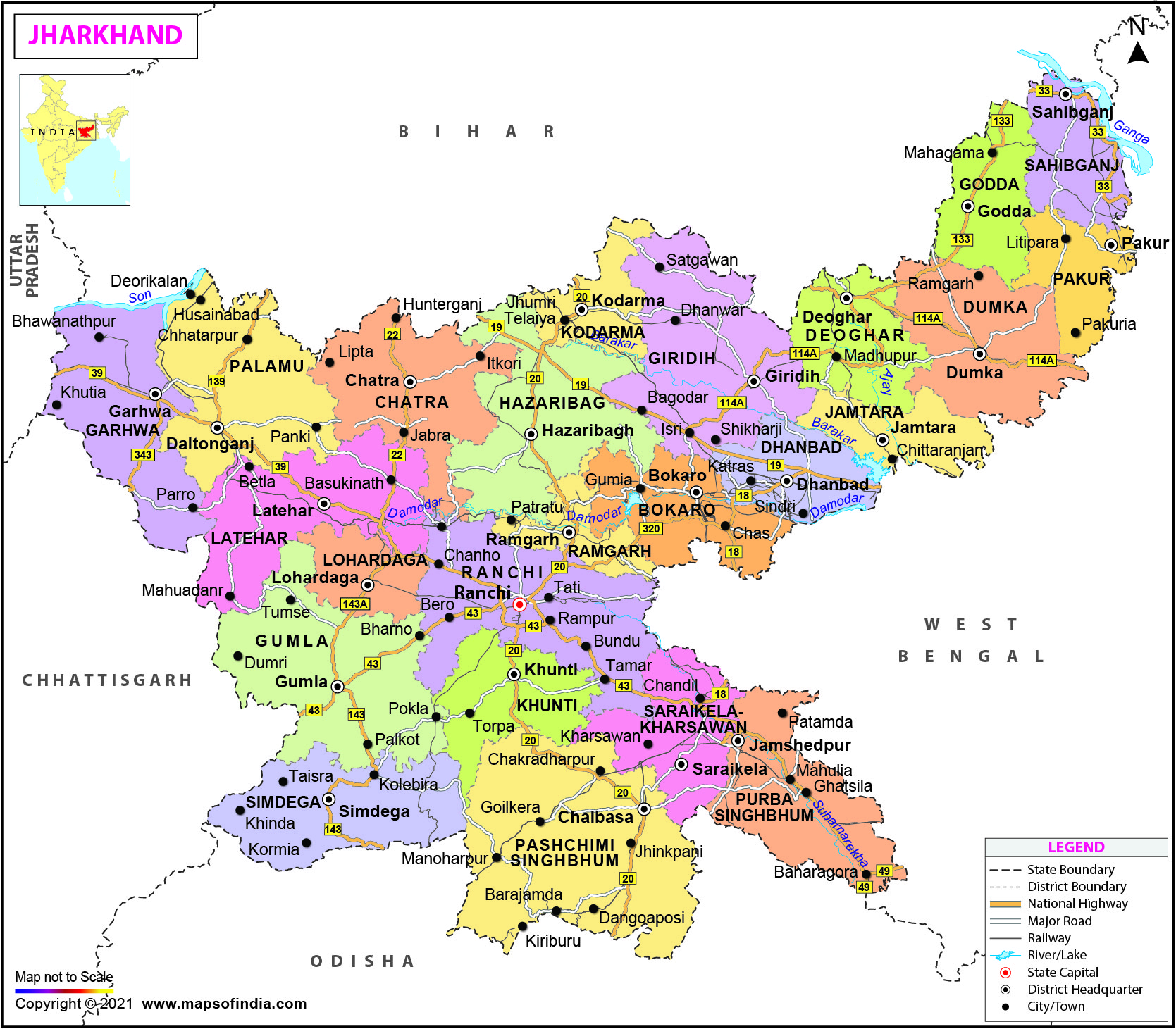
Our next state is not known in the tourism circuit but is one of India’s hidden gems. With a name meaning the land of forests, Jharkhand is bordered by West Bengal to the east, Chhattisgarh to the west, Uttar Pradesh to the northwest, Bihar to the north and Odisha to the south. It was created in 2000 from the territory that had previously been part of the state of Bihar. The 15th largest state by area and the 14th largest by population, Jharkhand’s capital is the city of Ranchi and Dumka the sub-capital. Hindi is the state’s official language and the state is known for its waterfalls, hills and holy places. Much of Jharkhand lies on the Chota Nagpur Plateau with many rivers passing through the plateau.
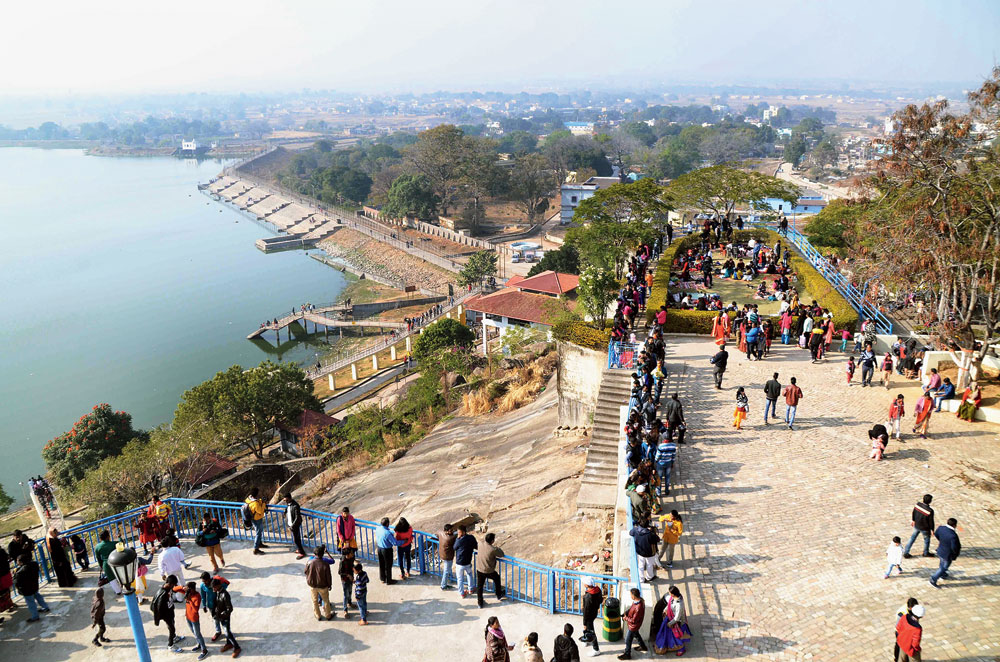
Jharkhand suffers from what is sometimes termed a resource curse: it accounts for more than 40% of the mineral resources of India, but 39.1% of its population is below the poverty line and 19.6% of children under five years of age are malnourished. The state is primarily rural, with about 24% of its population living in cities, but today is amongst the leading states in terms of economic growth with the state’s GDP growth rate in 2017–18 at 10.22%.

The region has been inhabited since the Mesolithic-Chalcolithic period. During the 2nd millennium BC, the use of copper tools spread in the Chota Nagpur Plateau and these are known as the Copper Hoard Culture. In the Kabra-Kala mound at the confluence of the Son and North Koel rivers in the Palamu district, various antiquities and art objects have been found which are from the Neolithic to the medieval period and the pot-sherds of redware, black and redware, blackware, black slipped ware and NBP ware that are from the Chalcolithic to the late medieval period. During the age of the Mahajanpadas around 500 BC, Jharkhand was a part of the Magadha and Anga empires while in the Mauryan period, this region was ruled by several states, which were collectively known as the Atavika or forest states who accepted the suzerainty of the Maurya empire during Emperor Ashoka’s reign. In the 7th century, the Chinese traveller Xuanzang passed through the region and described the kingdom as Karnasuvarna with Shashanka as its ruler. The region was invaded during the reign of Emperor Akbar in 1574.

During the 18th century, the region became part of the East India Company. The Princely states in Chota Nagpur Plateau, came within the sphere of influence of the Maratha Empire, but they became tributary states of the British East India Company as a result of the Anglo-Maratha Wars known as Chota Nagpur Tributary States. After the Indian Rebellion of 1857, the rule of the British East India Company was transferred to the Crown in the person of Queen Victoria, who, in 1876, was proclaimed Empress of India.

After Indian independence in 1947, the rulers of the states chose to accede to the Dominion of India. Changbhakar, Jashpur, Koriya, Surguja and Udaipur later became part of Madhya Pradesh state, but Gangpur and Bonai became part of Orissa state and Kharsawan and Saraikela part of Bihar state. In 1912, the state of Jharkhand was first proposed by a student of St.Columba’s College in Hazaribagh. In 1955, the Jharkhand Party led by Jaipal Singh Munda submitted memorandum to States Reorganization Commission for a separate Jharkhand state, but it was rejected because there were many languages and no link language in the region, the tribals were not in majority and there would be an adverse effect on the economy after separation from Bihar. In 1998, when the separate state movement was falling apart, the Union government decided to send the bill concerning the formation of the Jharkhand state to the Bihar Legislative Assembly to which Bihar’s ex-chief Minister, Lalu Prasad Yadav said that the state would be divided over his dead body. The voting on Jharkhand Act was to be done on 21 September 1998 in Bihar legislation which was finally cleared during the monsoon session of the Parliament that year paving the way for the creation of a separate Jharkhand state comprising the Chota Nagpur Division and the Santhal Pargana Division of South Bihar.

Jharkhand has been at the centre of the Naxalite-Maoist insurgency. Despite having a presence in almost 7.80% of India’s geographical area, Jharkhand is part of the Naxal Belt where the highest concentration of the group’s estimated 20,000 combatants fights. Part of this is because the state harbours an abundance of natural resources, while its people live in abject poverty and destitution with the impoverished state providing ample recruits. The state has immense mineral resources with minerals including iron ore, coal, copper ore, mica, bauxite, manganese, limestone, china clay, fire clay, graphite, kainite, chromite, asbestos, thorium, sillimanite, uranium and gold, silver and several other minerals.

Ranchi

Jharkhand’s capital Ranchi was at the centre of the Jharkhand movement, which called for a separate state for the tribal regions of South Bihar, northern Orissa, western West Bengal and the eastern area of what is present-day Chhattisgarh. The Jharkhand state was formed on 15 November 2000 by carving out the Bihar divisions of Chota Nagpur and Santhal Parganas. During the British colonial rule, Ranchi was the summer capital of Bihar, due to its cold climate during the winter season. One of the oldest cities in Jharkhand, Ranchi is today a developing economy and is also known as the city of waterfalls.

In his book The Mundas and Their Country, anthropologist Sarat Chandra Roy writes that the name of Ranchi is derived from the Mundari word aranchi or a short stick used in driving cattle. According to another local story, the name Ranchi comes from a local bird named Rici or a Black Kite which was found in the Pahari Mandir premise which is also Rici Buru or the hill of the kites, and the city originated on the foothills of Rici Buru with the construction of Bada Talab by Commissioner Thomas Wilkinson at the same site. According to a popular tale, Captain Wilkinson choose Archi an Oraon tribal village as his headquarters. Archi means a bamboo forest in the local Nagpuri dialect and the name eventually became Ranchi.

The early evidence of the use of many iron slags, pot sheds, and iron tools was found in the Chota Nagpur region around 1400. The Magadha Empire exercised indirect control over the territory, which lasted until the reign of the Ashoka. In the 4th century, the Nagvanshi king Raja Pratap Rai chose Chutia as his capital which is today a place in Ranchi. With the expansion of the Mughal Empire, the sovereign status of the Nagvanshi dynasty was technically affected, but they continued to rule and administer independently.

After the Battle of Buxar, Nagvanshi became a vassal of the East India Company which reduced the Nagvanshi rulers to Jamindars in 1817. In 1833, Captain Wilkinson established the headquarters of the South-West Frontier agency in the village of Kishunpur, which he renamed Ranchi after the hamlet located at the foot of the Hill. In 1912, Jyotirindranath Tagore, the oldest brother of the Nobel laureate Rabindranath Tagore, settled in Ranchi and Tagore Hill, where his house was located, has been named after him. After Independence, Ranchi saw a significant increase in its population because of increased industrial and educational institutions being set up, as well as the arrival of the post-partition refugees. Ranchi became an administrative-cum-industrial town in 1958 when Heavy Engineering Corporation was set up and over the years, Ranchi became the headquarters of the Steel Authority of India Ltd and Central Coalfields Ltd. The city remained the summer capital of Bihar till the creation of Jharkhand in 2000 when Ranchi became the capital of the new state.

Ranchi has a hilly topography and the dense tropical forests combine to produce a relatively moderate climate compared to the rest of the state. However, due to the uncontrolled deforestation and development of the city, the average temperature has increased.

Located near the Taimara village, Dasham Falls, also known as Dassam Falls are spectacular waterfalls which is a natural cascade across the Kanchi River, a tributary of the Subarnarekha River. Cascading down a height of 144 ft, the waterfall boasts serenity, peace and calm with the surrounding area infused in greenery, making it a great picnic spot. The word Dasham or Dassam is a derivative of the Mundari language word Da Song which means the process of pouring water where Da means water and song means pouring. Over the years it became known as called Dasham or Dassam. The waterfall, also known as a Knick Point has been developed over the years due to the break in the rocky slopes in a longitudinal manner because of which there are very strong currents and an uneven ground, which makes swimming and even entering the water dangerous. To reach the falls, one has to climb a flight of stairs. The best time to visit the falls is between July and March, especially during the monsoons.

Plunging from a height of about 45 meters, the Johna Falls is surrounded by a canopy of dense trees and thick shrubbery. The waters of the Rivers Ganga and Raru come together to form the roaring falls. Also known as the Gautamdhara Falls because of a Buddhist shrine that lies in proximity to the falls, the falls are situated at the edge of the Ranchi plateau and is an example of a hanging valley falls. The Gunga River hangs over its master stream, the Raru River and forms the falls. One has to descend 722 steps to admire the surroundings with the water in the falls dropping from a height of 43 m. The Johna Falls are also an example of a nick point which is caused by rejuvenation and represents breaks in slopes in the longitudinal profile of a river caused by rejuvenation which allows water to fall vertically giving rise to a waterfall. There is a tourist rest house which encloses a Buddhist shrine with a deity of Lord Gautama Buddha. A temple and an ashram dedicated to Lord Buddha were built atop Gautam Pahar by the sons of Raja Baldevdas Birla and there is a fair organised in Jonha every Tuesday and Saturday.

The Panch Gagh Falls which means five falls as panch means five is a stunning tourist destination that has five waterfalls cascading through tall and steep hills near the village of Khunti. The foot of the waterfalls has a very calm and serene atmosphere and is an ideal location for picnics and weekend getaways. Situated in Latehar, around 195 km from Ranchi, the Lodh Falls is the highest waterfall in the state and the 21st highest in the country. The 143 metres waterfalls drop in several tiers over the River Burha and are nestled in the dense woods of the Chota Nagpur Plateau.

The Murga Mahadev waterfalls are situated 143 km from Ranchi, within the premises of a temple dedicated to Lord Shiva, which is a revered place of worship and is especially crowded with pilgrims in the winter season in addition to regular tourists visiting the place. The Sita Falls is a slightly unknown waterfall situated on the outskirts of Ranchi. Originating from the River Kanchi and dropping from a height of almost 44 m amidst gorgeous landscapes and dense woods, the falls are a popular trekking spot for adventure enthusiasts.

The River Subarnekha while flowing through Ranchi forms a lot of waterfalls, but the most beautiful of them is the Hudru Falls. Falling from a height of 320 feet, the falls create a spectacular landscape and is extremely popular with tourists. Bathing at the foot of the waterfall can be a very refreshing experience and is highly recommended. The different formations of rock due to the erosion by the constantly falling water have added to the beauty of the place. The falls at one of the edges of the Ranchi plateau is one of the several scarp falls in the region which takes on a formidable form during the rainy season, but in the dry season becomes a picnic spot.

Hirni Falls lies about 60 km from Ranchi amidst the thick foliages of a dense forest and from the head of the falls, one can enjoy a panoramic view of the city. Located about 68 km from Ranchi lie the Rajrappa Falls. The Bhairavi or Bhera river falls from a height and joins the Damodar River with the silver cascading water a popular attraction in the region.

Complete with waterfalls, sculptures, art and scenic beauty, the Rock Garden is the perfect place to spend a weekend. The major attraction here is an iron footbridge that stands on only two poles. The garden is situated on a hillock by the Kanke Dam and is surrounded by lush environs, where one can relax while enjoying a stunning view of the city. Decked with greenery and flowers, Nakshatra Van has a beautiful fountain that lies in the centre of the garden and looks especially mesmerising in the evenings. Situated in front of Raj Bhawan the garden is an urban park and is very popular. The park is closed on Mondays and on other days the park is open between 9:30 am and 6:30 pm. The Biodiversity Park is a local picnic favourite and strives to preserve and protect medicinal plants and herbs.

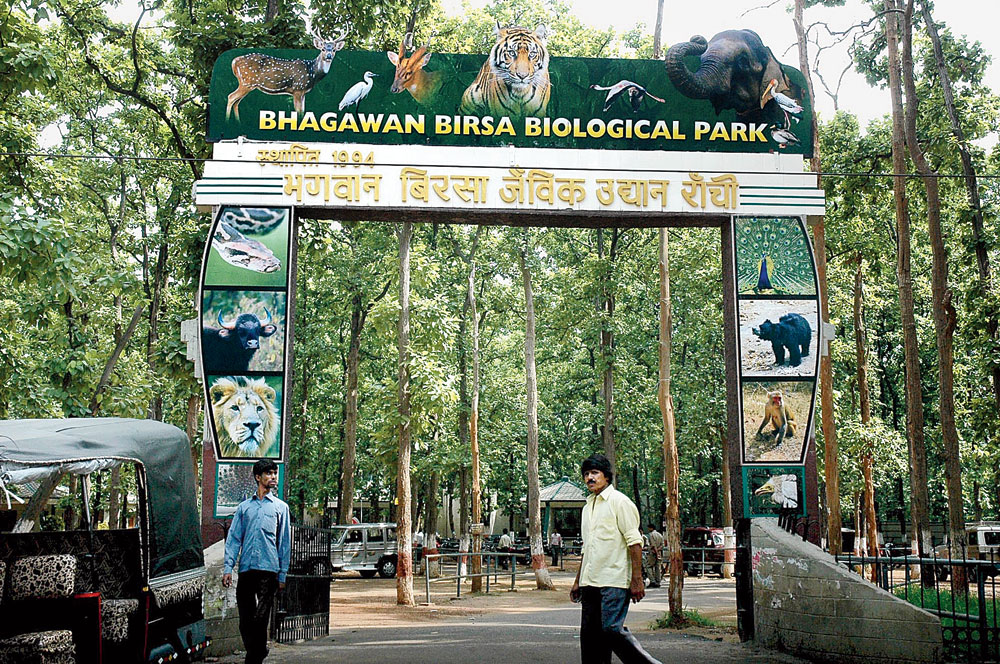
The Birsa Zoological Park is also known as the Birsa Jaivik Udyan and houses a wide variety of wild animals. It is located on the Ranchi-Patna National Highway near Ormanjhi and is a must-visit for all wildlife enthusiasts. As part of the animal adoption program, one can also adopt an animal and contribute to wildlife preservation. Established in 1994 on the banks of the Getalsud Dam, the park has two divisions, the zoological section which is spread over 83 hectares and the botanical section spread over 21 hectares. The zoo also offers battery-operated vehicles and a boating facility in addition to other facilities.

Source

Lying about 33 km north of Ranchi’s city limits. Patratu Valley is a local weekend getaway. With the sparkling waters of the Patratu Dam on one side and lush green trees on the other, driving along the ghats of the valley is truly an experience. However, it is advised not to venture into these roads after dark because of the rampant Naxalite influence in the area. The magnificent Patratu Dam is the highlight of the Patratu Valley which stores the waters of the Nalkari River. The underground tunnel connected two villages near Patratu: Labga and Hariharpur, which could be traversed, but today, due to security reasons, has been shut down. There is also boating in the dam which is a must-do at the valley. The best time to visit is during winters when the climate is at its best.

Situated in Morabadi, Tagore Hill is also known as Morabadi Hill and has been associated with the brother of the poet and Nobel Laureate Rabindranath Tagore, Jyotidranath Tagore. Engulfed in greenery and boasting gorgeous panoramic vistas, the vantage point stands at a height of 300 feet and is an ideal picnic spot. One can reach the top by climbing a flight of 200 – 250 stairs and enjoy stunning views of the town below. At the foot of the hill is also situated the Ramakrishna Ashram and a centre of Divyayan and the Agararian Vocational Institute. It is believed that the younger brother of Rabindranath Tagore, Jyotindranath Tagore was very upset after the untimely death of his young wife who committed suicide. He procured the land here and spent most of his time uphill in seclusion, solitude and quietude. He built two structures at the top – Bramha Sthal and Shanti Dham, the latter of which was also used as his residence.

Located at the base of the Ranchi Hill, the Ranchi Lake was constructed in 1842 by a British Colonel named Onsely. Centrally located, the lake is well maintained and has boating facilities. There is also a temple dedicated to Lord Shiva at the top of the hill from where one can get panoramic views of the city.

Perched on a hilltop, the Jagannath Temple dates back to 1691 and is a smaller replica of the Jagannath Temple in Puri. The temple is decked with intricate carvings and a unique blend of coloured stones and the Rath Yatra festival sees a footfall of thousands of tourists each year. The temple was built by King of Barkagarh Jagannathpur Thakur Ani Nath Shahdeo and is located about 10 km from the main town. To reach the top visitors can climb the stairs or take the vehicle route. The view of the city from the top is breathtaking. In August 1990, the temple collapsed, but with the help of the Bihar government, it has been fully restored today.

The Angrabadi Temple Complex is situated in Khunti, a small village near Ranchi and houses the idols of Lord Ganesh, Lord Shiva, Lord Ram and his consort, Goddess Sita and Lord Hanuman. Dedicated to Lord Shiva, the Pahari Mandir sits at an altitude of 2140 feet and offers a bird’s eye view of the city. One has to climb about 300 steps to reach the temple, but the beauty of the temple and the stunning view is worth it. The story of the hill temple is very interesting. This temple of Lord Shiva situated on the mountain was in the possession of the British before India’s independence and they used to hang freedom fighters here. Since India’s independence, the national flag is also hoisted on the occasion of Independence Day and Republic Day along with religious flags of the temple and this is the first temple in the country where the tricolour is hoisted. There is a stone here on which a message was written on the eve of India’s independence on the midnight of 15 August 1947.

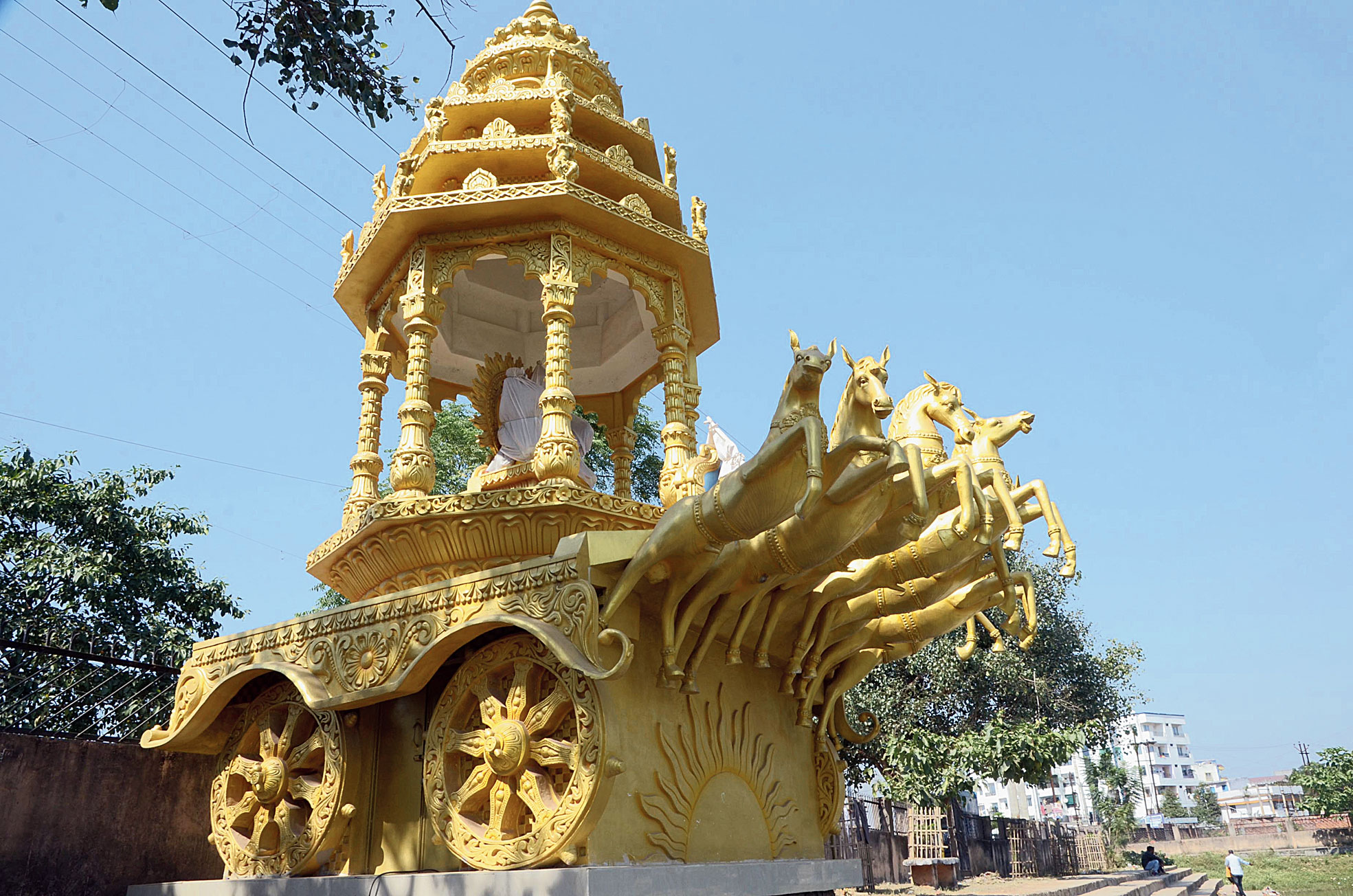
The Sun Temple has captivating architecture in the shape of a giant vehicle with 18 wheels driven by seven horses. The temple complex also has a holy pond which is highly revered. The temple is located amidst lush greenery and is worth a visit.

Set right next to the Rock Garden, the Kanke Dam is the perfect getaway. The dam has a boating facility which is also very popular. Getalsud Dam is an artificial reservoir situated in Ormanjhi, and was constructed across the Subarnarekha River and was opened in 1971. It is a popular picnic spot and supports a small-scale fishing industry. Located on the north-eastern edge of the Chota Nagpur Plateau, the dam meets the drinking water demands of Ranchi as well as the industrial requirements of the area.

The Ranchi Science Centre is the first science centre in the state and comprises a two-storied building that houses three permanent thematic galleries and was inaugurated on 29 November 2010. The State Museum Hotwar is a cultural museum whose original name was Ranchi Museum. It was established on the premises of the Tribal Research Institute in 1974 and moved to the new site in Hotwar in 2009. Built to showcase the cultural heritage of Jharkhand, the museum has ten galleries and contains paintings by artists from across the country as well as a well-equipped library that can house up to 300 people.

Travel Bucket List: India – Sikkim Part 4

Maenam Wildlife Sanctuary
Maenam Wildlife Sanctuary is a wildlife reserve in South Sikkim covering an area of around 35 sq km. The meaning of Maenam-la translates to a treasure-house of medicine, and the sanctuary is rich in several plants of medicinal value. Established in 1987, Maenam wildlife sanctuary lies 65 km south of the state capital of Gangtok and is a popular tourist destination.

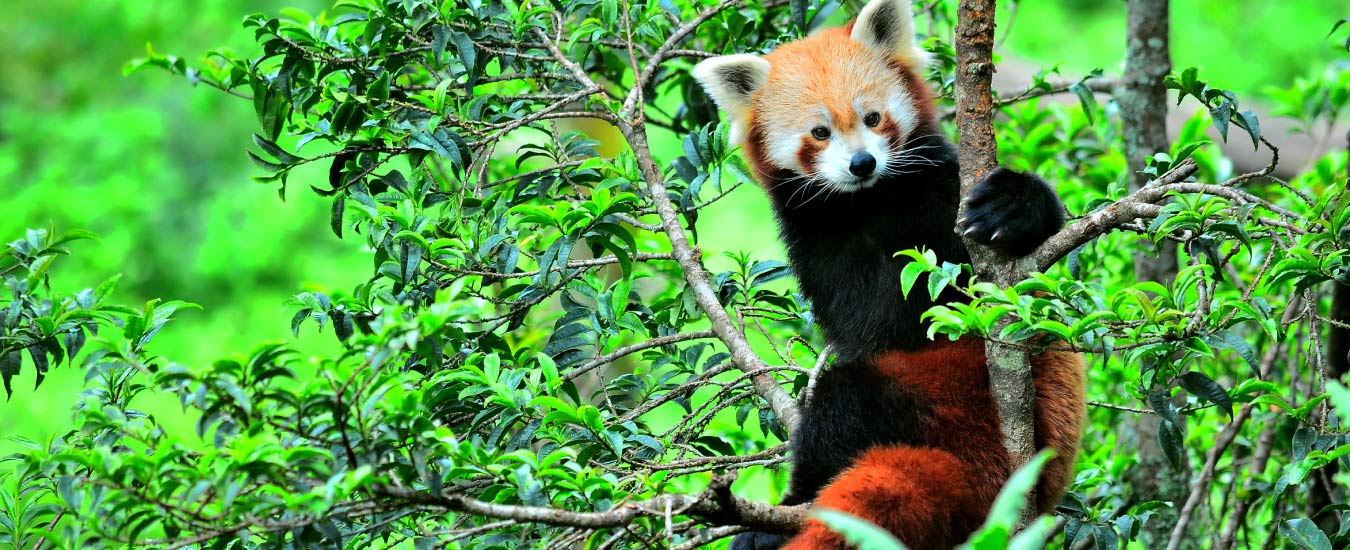
The sanctuary is filled with rhododendron, oak, chestnut and magnolia trees and is one of the richest butterfly spotting zones in Sikkim. One can also spot Red Pandas, Himalayan Black Bears and different varieties of deer at the sanctuary. It is best to visit the sanctuary between 8 am and 4 pm and remember that a permit needs to be acquired from the Home Department of the Government of Sikkim to visit the sanctuary. This can be easily obtained from tour operators. The first wildlife skywalk in India will be constructed at the Maenam Wildlife Sanctuary. The proposed construction of the 22 km rope-way from Maenam Wildlife Sanctuary to a skywalk will be built over the edge of the Bhalleydhunga steep face and there will be a rain shelter and public conveniences at the skywalk.

Geyzing
The capital city of the West Sikkim District, Geyzing, also known as Gyalshing is located at an altitude of 6,500 feet above sea level with mountains of the Himalayan range surrounding the city and the river Rangeet surging in the western part of the city. A few kilometres north is the town of Pelling. The town has a large Nepali population, and the Nepali language is the predominant language of the region. Near Geyzing is the ancient town of Yuksom, the ancient capital of Sikkim built in 1642. Other attractions include the Pemyangtse Monastery built in 1640, reputed to be Sikkim’s oldest and Khecheopalri Lake which as legend has it not a leaf is allowed to float on the surface. The town is the base for trekking in the Himalayas and professional expeditions to Mount Kanchenjunga. Yangtey, a hilltop that is a few km away from here, is located on the top of a cliff and offers a beautiful scenic view. Straight down is the river Rangeet and up ahead you can see the marvelous Kanchenjunga Mountains. Geyzing is also famous for the monasteries which are visited by several Buddhist pilgrims. Locally known as Sho Dzo Sho Lake, Khecheopalri Lake’s name comes from the surrounding Khecheopalri hill. The lake is considered to be holy by Hindu and Buddhist devotees and many legends revolve around the lake as it is believed that one’s wishes are fulfilled here. The Rabdentse Ruins is an archaeological site just a short walk from Pemayangtse Monastery. Established in the 17th century by Lama Lhatsun Chempo, the Sangachoeling Monastery is one of the oldest monasteries in Sikkim. Located at a distance of 7 km from Pemayangtse Monastery, it is perched on a ridge above Pelling. Built in the Tibetan style of architecture, the monastery is also known as the place of secret spells and was destroyed by fire several times since its inception. An unexplored and challenging trail, Dafeybhir Pass trek promises magnificent views of snow-clad mountains. It is the highest point in Singalila Trek and the path descends to the Gomathang valley.
Yangtey
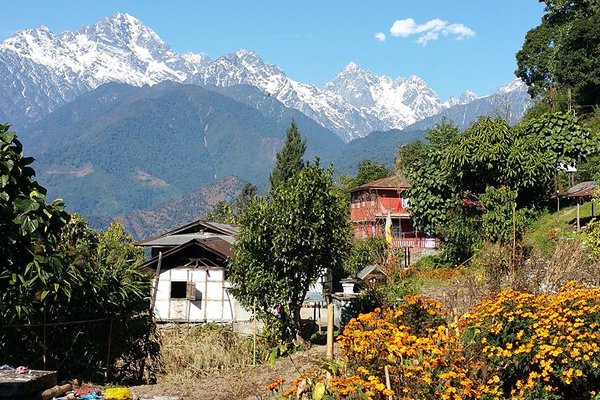
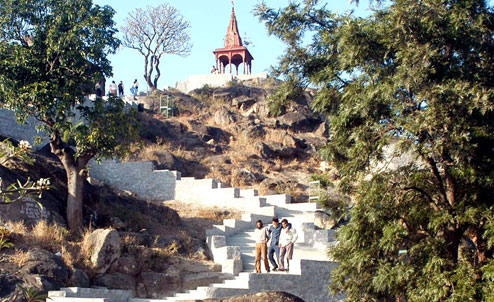
At an altitude of 6000 ft, Yangtey is a small village lying very close to Pelling and famous for the amazing views of Mt. Kanchenjungha that it offers. It lies close to many tourist attractions like the Khangchendzonga waterfalls, Khecheopalri Lake, Rimbi Waterfalls, Rabdentse Ruins, Sewaro Rock Garden, Temi Tea Garden, Geyzing, Legship and the Pemyangtse Monastery. The time to see the snow-covered peaks during the winter season. The tiny hamlet also offers a spectacular sight of several mountain peaks like Rathong, Frey, Kabru Dom, Pandim, Narsing, Tinchikhang Siniolchu and Mt. Kanchenjungha.

Borong
A small beautiful village near Ravangla in South Sikkim, Borong is becoming increasingly popular because of village and eco-tourism activities. Located at an altitude of 5800 feet Borong has amazing views of the Kanchenjunga, Narsingh, Sinolchu, and Pandim peaks. One can also visit nearby places such as Fatak Village, Gerang Monastery, the Silver Falls, and the Barely Bridge. A hot fountain situated at a distance of 3km from Borong, on the bank of the Rangit River is a beautiful place to visit too. A festival takes place on the banks of the Rangeet River in February.

Mangan
Serving as the capital of northern Sikkim, Mangan is a major tourist location and the town is used as a base station from where they commence treks and tours to other parts of the state. Not only is Mangan the entry point to North Sikkim, but it is also developing into a tourist hotspot because of the breathtaking view of the Kanchenjunga range. A three-day music festival is organised here in December every year where bands from the region, as well as from the other Northeast states, perform for a huge crowd. Other attractions of Mangan include an exhibition cum sale of local handicrafts, a presentation of traditional cultural songs and dances and a food festival. The climate in Mangan is temperate as it lies at a lower altitude compared to other places in Sikkim. Winters and especially early winters are a good time to visit this place. Singhik, located 1560 m above sea level and about 4 km from Mangan, is a tiny settlement on a hill that offers a breathtaking view of Mt Kanchenjunga and Siniolchu. With ice-capped mountains watchable from a close range, this settlement is surrounded by lush green hills with river ridges along with the converging point of River Teesta and River Kanaka at the foothills. The Labrang Monastery is a museum that holds within it, statues, murals, language books and music. The walls of the museum are painted white, and the roofs of the museum are gilded in a mix of Tibetan and Indian styles of architecture. Currently, it contains 6 institutes of learning, a gilded stupa, 18 halls, a sutra debate area that houses 60,000 sutras. Built in 1983, Sirijonga Yuma Mangheem is a clone representative of the ancient Sirijunga Yuma Margheem of Maryam in West Bengal. Located amidst nature, the building is situated in such a way that it offers a beautiful view of the mighty mountains that are obstructed by white clouds, lush greenery and rivers flowing in full strength. Located in Nam Prik Dang, Rong Lungten Lee is a replication of a Lepcha Traditional House that has been converted into a museum. Located at the confluence of the Rivers Teesta and Kanaka, Rong Lungten Lee is famous because it is located in a calm environment with varieties of flora and fauna and the annual Sikkim festival, Namsoong. There are three rooms in Rong Lungten Lee, and each room displays various artefacts of different tribes of Sikkim heritage that are a souvenir of the past.

Chopta Valley
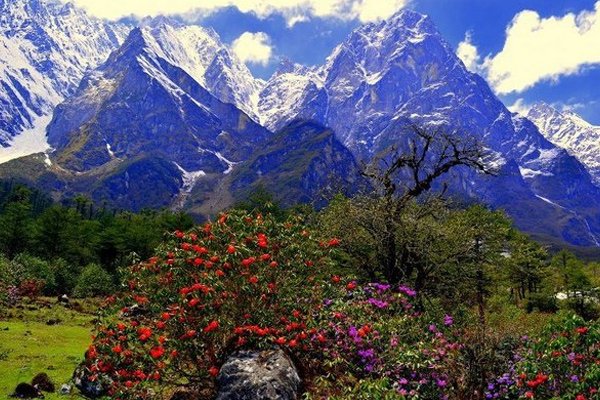
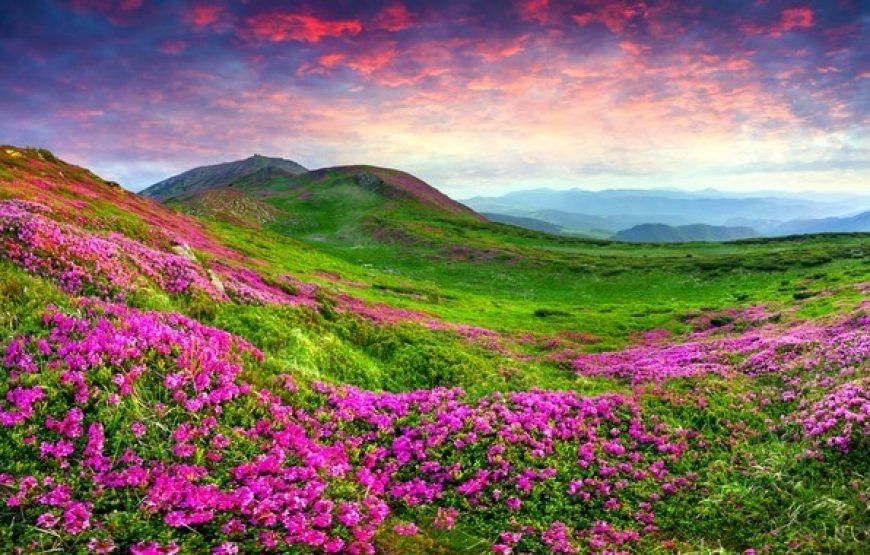
Famous as the Valley of Flowers, the Chopta Valley is popular for its riot of colours during the summer months. Lying at an altitude of 4023 m on the way to the Gurudongmar Lake, the valley maintains itself as a pristine and tranquil destination. The valley has majestic views of the snowy peaks, its slopes are covered in pine forests with grazing fields around the river meandering throughout the valley. All this makes it an ideal place for trekkers and explorers. Visitors often plan a combined visit to Chopta Valley with the Gurudongmar Lake, a sacred lake just a few km away. The Tso Lhamu Lake, about 9 km from Gurudongmar, is famous for being the source of the Teesta River. An hour’s drive from Lachen can reach the scenically blessed Thangu Village, where one can see the nomadic life of native tribes. Thangu Valley is just a short walk away, famous for its Yak race. The summer season which extends from March till May offers best climate to visit Chopta Valley while during winters, the valley is mostly frozen.

Lachung
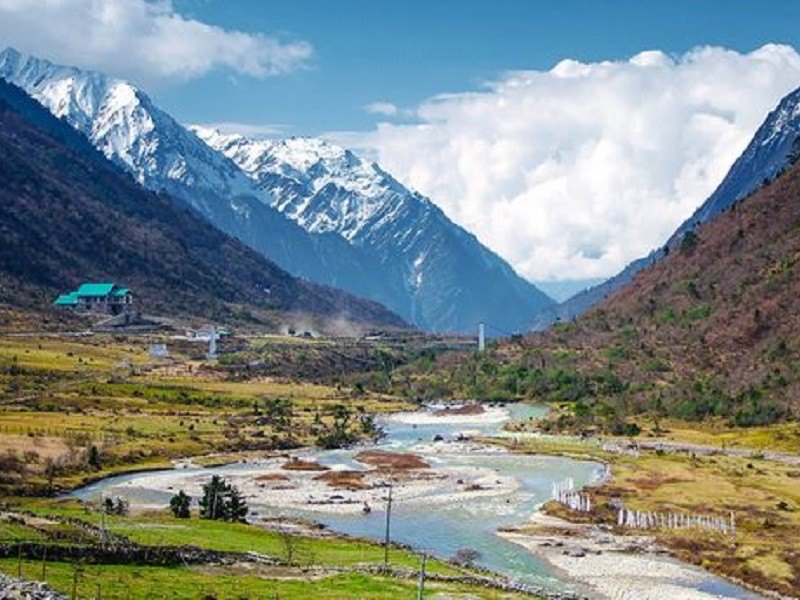
Described as the most picturesque village in Sikkim by British explorer Joseph Dalton Hooker, Lachung is located at the confluence of the Lachen and Lachung Rivers, both tributaries of the River Teesta near the border with Tibet at an elevation of about 9,600 feet. The word Lachung means a small pass and the town is approximately 125 km from the capital Gangtok. The town is also a preferred base to visit the Yumthang Valley. The Indian Army has a forward base in the town. Before the Chinese occupation of Tibet in 1950, Lachung was a trading post between Sikkim and Tibet, after which it was closed down. Most of Lachung’s inhabitants are of Lepcha and Tibetan descent. Languages spoken here are Nepali, Lepcha and Bhutia. During winter the town is usually covered in snow. Lachung is also the base camp for Rhododendron Valley Trek which starts from Yumthang Valley and ends at Lachen Valley.

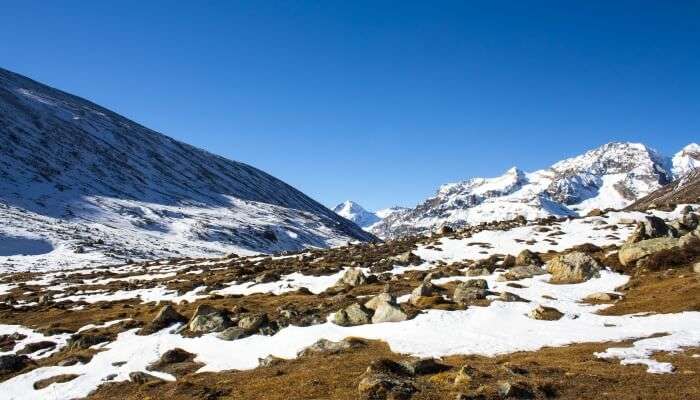
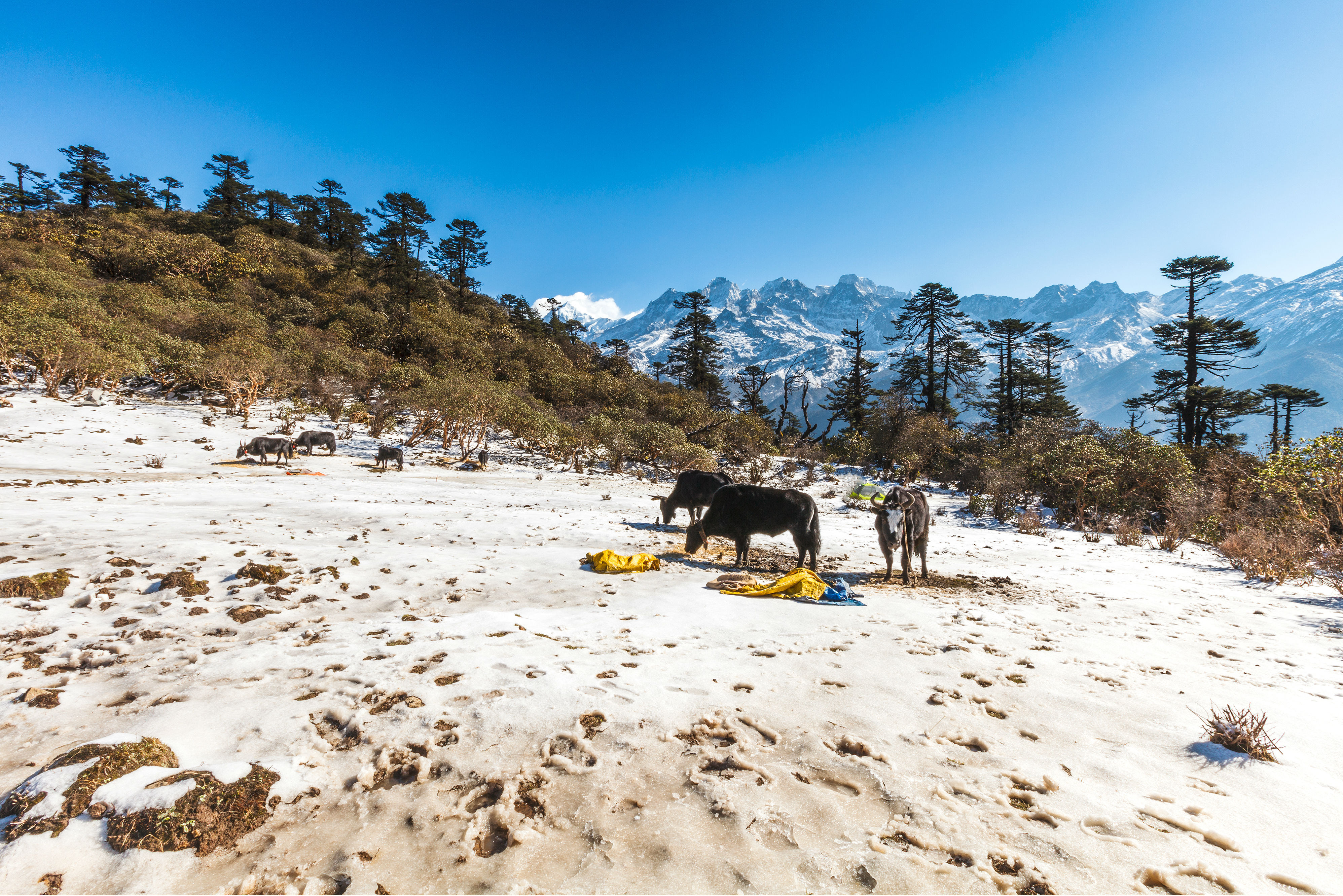
Alternatively known as Yumesamdong, Lachung Zero Point is located at an altitude of 15,300 feet above sea level and is the last outpost of civilization. The journey to Zero Point from Yumthang Valley is through tortuous and rugged roads and the snow-clad mountains, the flowing rivers, and the yaks grazing in search of vegetation make up for thrilling views. Roads end as Zero Point, after which there is only the vast desolate landscape. An Inner Line permit is required because of its proximity to the border, which can be obtained from the Tourist Information Centre or any registered tour operator. The best time to visit Zero Point is between February and June when the roads are clear and easily accessible. The Lachung Monastery was established in 1880 and a visit to the monastery is an interesting experience. Popularly known as the Sikkim Valley of Flowers, the Yumthang valley makes one feel like they have landed in the lap of nature. At an elevation of 3564 m, it has blooming flowers, flowing rivers, hot springs, and yaks grazing on meadows. The best season to visit Yumthang is from February to June when flowers cover the valley in hues of the rainbow. It is an hour’s drive from Lachung. Situated at the confluence of the Lachen and Lachung Rivers, Chungthang is a small picturesque town where one can halt while going to the Yumthang Valley. The river Teesta, also known as the lifeline of Sikkim originates here. The place has been associated with many legends and is considered a holy place blessed by Guru Padmasambhava, the patron saint of Sikkim. There is a stone that to this day bears the footprints of Padmasambhava. At an altitude of 13000 ft, the Thangu valley offers scenic views of countless alpine flowers and snowy landscapes and is ideal for nature lovers and trek enthusiasts as the valley provides a trekking base to the Chopta Valley and Muguthang. Besides the Teesta River, the Chopta, Thangu and Lassur Rivers also flow through this valley. Known as the tallest waterfall in Sikkim, the Bhim Nala Waterfall flows in three tiers and is located about 13 km from Lachung.

Lachen
Located in northern Sikkim at an elevation of 2,750 m, Lachen is well known for its Lachung monastery. Also famous as the gateway to the sacred Gurudongmar and Tso Lhamu lakes, the town’s name means a big pass. Lachen is also famous for the annual yak race, the Thangu which is held here in summer. Unlike other places in India, Lachen has its unique form of local self-governance called the Dzumsa. Every household is a member of this traditional administrative system, this institution is in charge of governing and organizing activities within the village. . The quaint Sikkim town is known for its lush vegetation that contains mainly grasslands and shrubs along with apple orchards. The pine-covered valleys and black cliffs of snowy-white hills of the Eastern Himalayas start from Lachen which makes it the base station for many trekking areas in the North Sikkim region including the famous Green Lake and Kanchenjunga National Park treks. Lachen provides expeditions to Chopta Valley, Green Lake, Cho-Lamu, Gurudongmar Lake, and Shinghba Rhododendron Sanctuary. The Gurdongmar Lake is a freshwater lake and one of the highest water bodies in the world as it is situated at an altitude of 5,210 m. The lake is positioned towards the North East of the Kanchenjunga range which freezes completely during winters. About 5 km ahead of this lake is the Tso Lhamo Lake. One needs prior permission from the army to trek from the Gurdongmar Lake to the Tso Lhamo Lake. The best time to visit Lachen is between May to September, as summers are moderate and quite enjoyable with mild to heavy rainfall during July and September.

Yumthang Valley
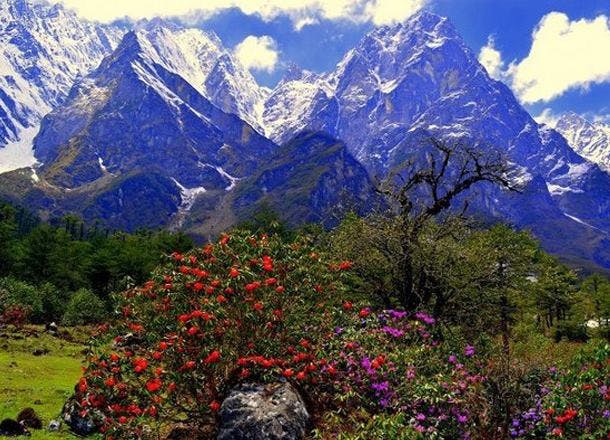
Also known as the Sikkim Valley of Flowers sanctuary, the Yumthang Valley in North Sikkim is located 140 km north of Gangtok. This rare and exotic location with hot springs, rivers, yaks, and lush green meadows is situated at an elevation of 3564 m and houses the Shingba Rhododendron Sanctuary which has over 24 species of Rhododendron flowers, the Sikkim state flower blooming from late February to mid-June. The valley is closed to tourists between December and March due to heavy snowfall. A tributary of the river Teesta flows past the valley and the town of Lachung, the nearest inhabited town. A few hot springs are believed to have miraculous healing powers. On your way towards Yumthang Valley, one can see gushing waterfalls and streams along with a splendid view of peaks with the Pauhunri and Shundu Tsenpa. A forest rest house is the only permanent residence in the valley. As Yumthang Valley is situated close to the China border, the whole area is under army control. A Protected Area Permit is required to visit Yumthang which can be taken from Gangtok Tourism Office, the District Administrative Center at Mangan, or from the Chungthang Sub-Divisional Magistrate’s Office. Tour operators also arrange for the permit. The best time to take a trip to Yumthang valley commences from late February and lasts until June to experience the colourful flowers blossoming, which the valley is known for. However, if one wants to enjoy clear skies and a brilliant view of snow-capped mountains, then September to December would be ideal to visit. Another good time to visit Yumthang Valley is from February to March when the Losar festival is celebrated.

Source

Thangu Valley
Located at an altitude of around 3900 m, Thangu is a beautiful village about two hours drive from Lachen where tourists usually choose to relax before they proceed to trek to Gurugongmar Lake, Muguthang or the Cho Lhamu Lake. In Thangu Valley, one can catch a glimpse of the rows of trees and as one goes more upwards, the beautiful view of the Tibetan Plateau begins. The ideal time to travel to Thangu Valley would be between May and June, during which, the entire valley gets decorated with vibrant alpine flowers, and the heavy snow covers up these beautiful beds of flowers in the cold months between October and March. The spectacular hiking trails from Thangu Chopta Valley and Muguthang enhance the beauty of the village. Since Thangu is near the border between India and China, there is also a big military base present here. During winter, Thangu can get quite cold. The Gurdongmar Lake nearby freezes completely during the winter months and looks beautiful.

Gurudongmar Lake
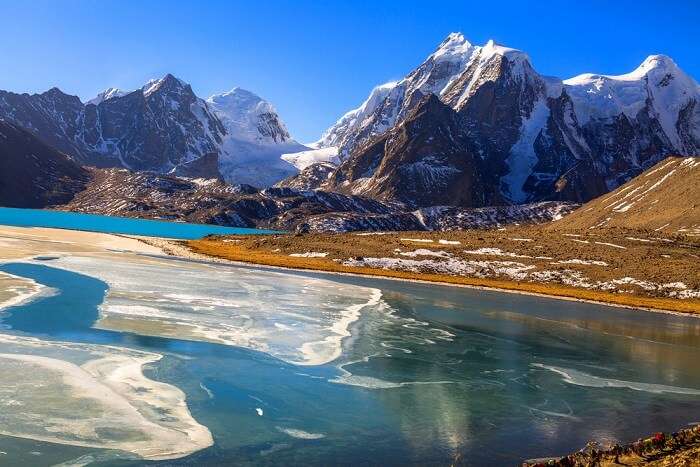
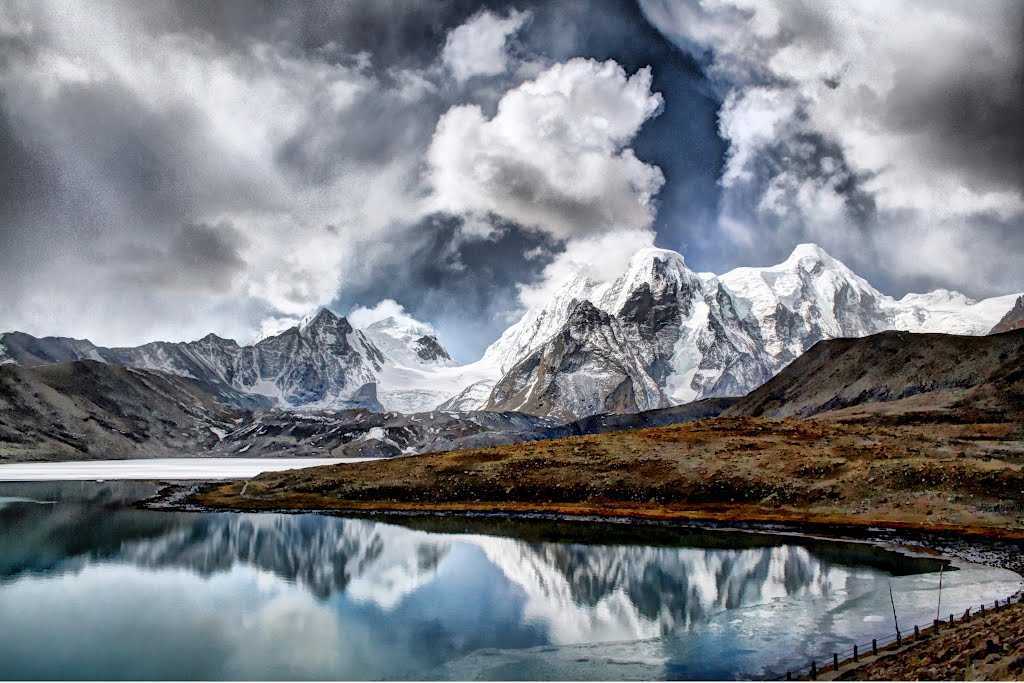
One of the highest lakes in the world, at an elevation of 5,430 m, Gurudongmar Lake is located in the Great Himalayas and is considered sacred by Buddhists, Sikhs, and Hindus. The lake is named after Guru Nanak, known as Nanak Lama in Sikkim, who visited here during his third Udasi or travel around 1516.

Located 190 km from Gangtok and about 5 km south of the Tibetan border, the lake can be reached by road from Lachen via Thangu. While Indian tourists are allowed to visit the lake, foreigners need to get a special permit from the Ministry of Home Affairs in Delhi. The lake, fed by glaciers, is located to the north of the Kanchendzonga range, in a high plateau area connected to the Tibetan Plateau and provides one of the source streams which joins the Tso Lahmu and then form the source of the Teesta River. The lake remains completely frozen in the winter months, from November to Mid-May. The lake has an area of 290 acres and its peripheral length is 5.34 km, however the size of the lake appears small where devotees offer worship because the larger part of the lake is not visible due to the hilly topography obstructing the view. The area surrounding the lake, also known as Gurudongmar, is inhabited by Yaks, blue sheep, and other wildlife. The lake is fresh water and used to be very clear; the bed of the lake could even be seen from the middle of the lake. Pollution has muddied the waters in recent years, and the lake has taken on a white tinge and has obscured visibility. The water of Gurudongmar Lake is believed to have healing powers, and many tourists carry the water with them on their way back. Gurudongmar Lake is named after Guru Padmasambhava, who was also known as Guru Rinpoche, the founder of Tibetan Buddhism who visited the lake in the 8th century. The lake, however, remained frozen throughout large parts of the year, and thus there was no way that it could meet the drinking water needs of the people. The locals then appealed to the guru, who decided to help them. He placed his hand on the part of the lake, and the ice in that particular spot began to melt. A legend related to the frozen condition of the lake is linked to the visit of Guru Nanak to the lake during his visit from Chungthang to Bhutan, on his way back from Tibet. Because the lake remained frozen most of the year with no possibility of providing for drinking water needs, the yak grazers approached Guru Nanak with a request to help them. The guru hit the perpetually snow-covered Guru Dongmar Lake with his stick to provide water to the grazers. The ice melted giving way to crystal clear water. Since then, the water of the lake is stated to never freeze. The lake and the hill feature atop came to be known as Gurudongmar Lake and hill respectively. The same names are found recorded in the ancient maps prepared by the British in the nineteenth century. The best time to visit Gurudongmar Lake is between November and June as the weather is quite pleasant at that time of the year. The lake freezes completely during the winter months and is a treat to the eyes.

Cholamu Lake
Also known as the Tso Lhamo Lake, Cholamu Lake is one of the highest lakes in the world, located at an altitude of 16,700 ft. It is located in North Sikkim, about 4 km southwest of the international border with China, and is a freshwater lake fed by waters from the Zemu Glacier, the Kangtse Glacier, or the Pauhunri Glacier, and is the source of the Teesta River. Because of its location, it is off limits to most visitors and one needs special permits, from the Army and the Sikkim Policea and administration to visit the lake. The ideal time to visit Cholamu Lake are the months of October and November as one can witness a clear sky during this time of the year.

Shingba Rhododendron Sanctuary
Nestled in the Yumthang Valley of Flowers in North Sikkim, the Shingba Rhododendron Sanctuary is known for the exquisite rhododendrons found here. Part of the Sacred Himalayan landscape, the sanctuary sprawls over an area of 43 sq km and comprises over forty species of rhododendrons, at an elevation of 3,048 to 4,575 m. Azaleas bloom to their full capacity and turn the Shingba Rhododendron Sanctuary into a riot of colours from April to July thereby making it the best time to visit. Bird species found in the park include Wood snipe and Hoary-throated barwing. The sanctuary gets its picturesque look from the Yumthang Chhu meandering through it. Since Shingba Rhododendron Sanctuary is situated close to the Tibetan Plateau, it also experiences long winter seasons. The perfect time to visit the sanctuary is during April and May since one gets to enjoy the beauty of the blooming flowers.

Khangchendzonga National Park
Named after the third highest mountain peak in the world, and nestled in the lap of the Himalayas in northern Sikkim is the Kanchenjunga National Park. Included recently in UNESCO’s world heritage sites, it is a rare high altitude national park and the first Mixed-Heritage site in the country. Also spelt as Khangchendzonga National Park, the national park is located at an elevation of 8586 meters, and lies partly in Nepal and partly in Sikkim. The park is home to most endemic and rare species of flora and fauna including the Snow Leopard and Himalayan Tahr and adjoins the Qomolangma National Nature Preserve in Tibet and the Kanchenjunga Conservation Area in Nepal. A new species of bird named Himalayan Forst Thrush was discovered in 2016. There are numerous glaciers inside the national park with the Zemu glacier being the most significant one with a length of twenty-six km. There are a few Lepcha tribal settlements inside the park and it also contains the Tholung Monastery, a gompa located in the park’s buffer zone, considered one of the most sacred monasteries in Sikkim.

The Kanchenjunga National Park gets its name from the third highest mountain in the world – the Kanchenjunga which means the abode of God. The national park is juxtaposed against this mountain, which acts as a striking background at an imposing height of 8586 meters. This area was declared a National Park in 1977. Initially, the area of the National Park was 850 km sq which was extended to 1784 km sq. In Buddhism, Sikkim is presented as sacred land and according to some scriptures, the area of the park is originally the sanctum sanctorum where the Buddhist masters had hidden the religious treaties and texts to be later discovered by the people. According to the officials, these hidden treasures are called ters, destined to be discovered by ter-tons who are treasure revealers.

Source

Entry to the Khangchendzonga National Park is restricted and regulated. An inner-line permit needs to be obtained by the Indian Nationals and a restricted area permit by the foreign Nationals, issued by the Ministry of Home Affairs. A permit also needs to be taken from the Chief Wildlife Warden, Government of Sikkim following the Wildlife (Protection) Act, 1972. For Indians, the permit costs INR 300 per head for the first seven days with INR 40 for each additional day. For foreign nationals, it is INR 560 per head for the first seven days and INR 80 for each additional day. Students pay INR 80 per head for the first seven days and INR 20 for each additional day. Tent charges are INR 50 per day while guide charges are INR 10 per day. For photography, a camera fee of INR 30, a video camera fee of INR 100 and a movie camera fee of INR 35,000 will be imposed.

There are several popular trekking options at the park and permits for all treks are obtained from the Wildlife Education and Interpretation Center at Yuksum which is the starting point of most of these treks. The best to visit the national park is from March to May and September to mid-December. It receives snowfall most of the year.

Fambong Lho Wildlife Sanctuary
The Fambong Lho Wildlife Sanctuary is a 51 sq km large wildlife sanctuary in east Sikkim, contiguous with the Khangchendzonga National Park and located around 30 km west of Gangtok. It hosts a few small hamlets inside, namely Dikchu, Pangthang, and Mangan, and is managed by State Forest Department. The sanctuary lies between 1524 m and 2749 m and at the top of Fambong Lho is the Chuli hamlet. The is no human habitatation is there between the log house of Fambong Lho and Chuli trekkers hut. The highest point of this wildlife sanctuary is Tinjure.

Goecha La
Goecha La is a high mountain pass located at a height of 4,940 m and acts as the base camp for the southeast face of Kanchenjunga. This place can only be accessed by trekking from Yuksom and it roughly takes 7-8 days for a person to reach Goecha La and come back to Yuksom. The area is accessible only after proper permits are granted.

And this ends our series on Sikkim, a state that begs you to visit because of the immense beauty it holds. I’ll be back soon to explore yet another Indian state, so keep a lookout.