The Good and the Bad: Boss Edition

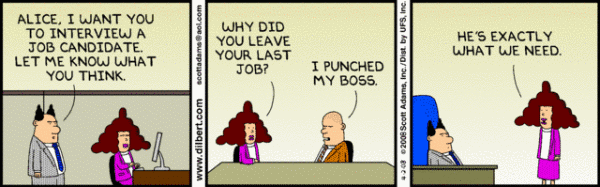
It is often said people don’t leave bad organisations, but leave bad bosses. And this is so true. When coworkers get together, stories are bandied about bosses and rarely are good managers discussed, but the spotlight is mostly on bad bosses. Many bosses fall into the bad boss category because they fail to provide clear direction, regular feedback, recognition for contributions, and a strategic framework of goals that enable their employees to see their progress. These kinds of bad bosses are what are called generic bad bosses because all employees need these types of support and feedback, and they suffer when they don’t receive it.

I’ve had my fair share of bosses, both good and bad. In my first job, we were a very young team, all of us fresh out of school and in our first jobs. The company was also a fairly young one, but the management were not very young, they had about a decade plus experience and you could probably call them middle management. While we didn’t really really report to them, they oversaw our work. My expectations with managers and bosses are most likely influenced by how they interacted with us. They were friendly and fair and had an open office policy. But one thing really stands out for me and is something that has been a sort of guiding principle for me all these years.

The office was a split office, with us in the ground floor and the managers and finance people in level 2. Officially the office would end at 5:30 pm and at 6 pm, one of the bosses, lets call him D would come down to go back home and if he saw us around, we would have to have a good reason why we were still around. 90% of the time, we were around, because we were hanging out with each other. Except for one, none of us were married and had no responsibilities, so there was no pressure to get out of the office and go home.

When D saw us hanging around, not leaving the office, he would ask us why were still there and used to say something like this. I am paraphrasing this, but he would say that if you are staying late because you have too much work, then there could be two reasons for this. One because you have too much on your plate or two because you have not finished your work in the scheduled hours of work. In both cases, we should have a talk, because if you have too much work, then we need to figure out how to reduce your workload and if it’s the second reason, then we also need to talk about why you are not able to finish your work on time. This is something that has always resonated with me and I have always tried to be as productive as possible while at work and leave on time as much as possible.

Another manager who made an impact in my life was someone who was my manager for the longest period of time. I was also in this organisation the longest, for almost a decade and of the multiple managers whom I reported to, this one was the one I reported to the longest. He was fair, but had his faults, the biggest of which was playing favourites. While I was not a favourite, I was also on his dislike list and so I escaped some of the worst things he said to others. From him I learnt how not to play favourites, especially when hiring people for the organisation and to not enable them so much they they believed to be above all others. He used to catch up with us every time he passed through Singapore but died a few years back.  

The third manager was someone whom I reported to for less than a couple of years, but he was a peer in terms of age. A very supportive manager, he gave me more responsibilities when he saw I could handle them and also credit where it is due. I learnt a lot from him, especially on how to manage people as he was someone who was friendly with everyone and even learnt some of the finer points of office politics from him. Unfortunately after about two years of reporting to him, he was transferred to a different country, but we are still in touch.

The last manager I was to talk about was the most toxic one. I have written about this person previously and even today, years after I left the organisation, I still have nightmares about how they used to literally torture me there. I can now think about them without my heart palpitating and getting stressed out, but it took me many years to get there.

Bosses are just like people, there are good ones and bad ones. A good boss or manager will set clear expectations from their subordinates, coach and give feedback, is inclusive and recognises efforts made by those reporting to him, knows his reportees, especially their talents and what they are good at and most importantly is there for them and takes a stand when it is needed.

A bad boss on the other hand, is everthing but what a good boss is. A boss is the umbilical cord that connects employees to an organisation, and if that cord is damaged, the employees will eventually leave. So if you are one of the lucky employees who has a great boss, don’t take that relationship for granted and show your boss how much you appreciate them.

Curiosity: A laboratory to the inquiring mind

Merriam Webster defines curiosity as a desire to know, an inquisitive interest in others’ concerns, an interest leading to inquiry and intellectual curiosity.

Curiosity is the desire to learn, to understand new things, and to know how they work. As children, we are naturally curious, born with the impulse to seek new information and experiences. As we age and gain more experience, we become less reliant on curiosity for answers and more reliant on knowledge. Curiosity gives way to comfort and certainty. Curiosity can be seen manifesting itself in geniuses, because they are inherently always curious, leading to the discoveries attributed to them. Curiosity is not only important for those with high IQs, but successful people across all walks of life often display a good measure of curiosity. Curiosity is the expression of the urge to learn and acquire facts and knowledge. It widens the mind and opens it to different opinions, different lifestyles and different topics.

Curiosity can manifest in many ways, as the desire to read the gossip columns or watch reality shows on TV, or as the desire to know about people and their lives. It can also manifest as the desire to accumulate knowledge about science, geography or other topics, or as the urge to know how to fix things. Curious people ask questions, read and explore. They are active about seeking information or experience, and are willing to meet challenges and to broaden their horizons. They are not shy to ask questions and delve deeply into the topic that interests them.

Curiosity throughout adulthood requires approaching experiences with the open-mindedness and naivete of a child. Buddhists call this the Beginner’s Mind. Curiosity pushes people toward uncertainty and allows them to approach it with a positive attitude. Empathy, creativity, innovation, and the ability to learn quickly all spring from curiosity. Curiosity lacks an agenda or desire to drive a specific outcome, which means it can open you up to experiences you never thought were possible. This is how ground-breaking discoveries are made, markets are disrupted, and barriers are overcome.

While curiosity comes naturally to some, many adults must develop it, and just like any other skill or habit, it takes practice. According to experts, to live a curiosity-driven life, an individual must commit to being vigilant about looking for what’s piquing their curiosity and to follow what is interesting to a person, even if that interest is faint at first. Curiosity is not only linked to success because it leads to creativity and discoveries, it also helps to develop meaningful relationships that enrich personal and professional lives. When curiosity leads conversations, it opens up possibilities, letting people establish deeper, more meaningful relationships because the interactions then moves towards discovering others, rather than using them to fulfil an agenda.

But why is curiosity so important? Here are some reasons

Curiosity makes your mind active instead of passive. Curious people always ask questions and search for answers. Their minds are always active. Since the mind is like a muscle that becomes stronger through continual exercise, mental exercise caused by curiosity makes the mind stronger and stronger.

Curiosity makes the mind observant of new ideas. When an individual is curious about something, their mind expects and anticipates new ideas related to the subject. When the ideas come they will recognise them and without curiosity, the ideas may pass right in front of them and yet they miss them because their mind is not prepared to recognise them.

Curiosity opens up new worlds and possibilities. By being curious, an individual will be able to see new worlds and possibilities that are normally not visible, which are hidden behind the surface of normal life, and it takes a curious mind to look beneath the surface and discover them.

Curiosity brings excitement to life. The lives of curious people are far from boring and are neither dull nor routine with new things always on the horizon that attracts the curious person’s attention. Instead of being bored, curious people have an adventurous life. Curiosity is important for excelling in any job and doing it better because it allows an individual to ask questions, learn from others, and look for ways to do their job better. The minds of curious people are active, they want to know and to understand which puts them in a better position to learn a job and do it better and more creatively, unlike a person who lacks curiosity. When curious people fail, they analyse their failure, because they are keen on knowing the reasons, to do better the next time, increasing future successes.

So how do we build this muscle?

Keep an open mind: An open mind is essential to have a curious mind. Be open to learn, unlearn, and relearn. Some things you know and believe might be wrong, and one should be prepared to accept this possibility and change their minds.

Don’t take things at face value: If one just accepts the world as it is without trying to dig deeper, they will certainly lose the holy curiosity. Never take things at face value and try to dig deeper beneath the surface of what is around them.

Ask questions relentlessly: A sure way to dig deeper beneath the surface is asking questions. The five Ws and one H of Who, Why, When, What, Where and How are the best friends of curious people.

Don’t label something as boring: Whenever one labels something as boring, they close one more door of possibilities. Curious people are unlikely to call something boring. Instead, they always see it as a door to an exciting new world. Even if they don’t yet have time to explore it, they will leave the door open to be visited another time.

See learning as something fun: If one sees learning as a burden, there’s no way they will want to dig deeper into anything, and will just make the burden heavier. But if they think of learning as something fun, they will naturally want to dig deeper. So the lesson here is to look at life through the glasses of fun and excitement and enjoy the learning process.

Have diversity in your reading: Don’t spend too much time in just one world; take a look at other worlds, it will introduce an individual to the possibilities and excitement of the other worlds which may spark their interest to explore them further. One easy way to do this is by reading diverse genres and topics. The easiest way to do this is to pick a book or magazine on a new subject and let it feed the mind with the excitement of a new world.

Be Present: Don’t enter a conversation with the mind somewhere else or be focused on where you want the conversation to go. Be aware of thoughts drifting, and bring them back to the present, staying fully engaged with the person in front of you. Look at each interaction as an opportunity to learn something fascinating.

Give: Give others your full attention, give them an authenticity and give them time. When one shifts their focus from what they can get from a person to what they can give them, their relationship shifts from transactional to genuine.

Check Your Ego: A person’s ego can destroy curiosity because it fears insecurity. Curiosity requires embracing and exploring the unknown, which triggers insecurity. Don’t worry about how others will react to a person. Curiosity drives one to discover, not impress.

I will leave you to search more about this immensely interesting subject and allow you to flex your curiosity muscle with these TED Talks.

Mental Agility: The ability to be flexible always

Bill Gates once said, “Success today requires the ability and drive to constantly rethink, reinvigorate, react and reinvent” And this means we have to be alert to constantly be able to react and reinvent ourselves.

The human mind is a very complex matter, and simplifying it may be one of the hardest tasks. Being able to simplify thoughts and transfer them effectively, think on your feet and solve problems in the most efficient way and learn in the most effective manner requires mental agility. Mental agility is the capacity to respond to events in a flexible way and be able to move quickly between different ideas. If you’re mentally agile, you can take in change and find the best course of action to move forward despite unpredictable events. It’s not about having all the answers – but about being confident that you can figure out a new way of doing things to get where you want to go.

One of the key skills today and in the future is mental agility. This ability to switch between tasks and ideas will be a very valuable asset everywhere and especially in the workplace in particular. Mental agility is linked to an area of research called psychological flexibility. Studies have shown that those that have higher levels of psychological flexibility are less likely to be depressed, anxious or stressed and more likely to report well-being in general because of the way they think about situations and how they choose to respond to events.

But how do we achieve it and why is it important for us and our children? One of the most important benefits of an agile mind is the ability to learn fast, however, that’s not all. For children, there are many benefits of mental agility like better problem-solving skills, creativity, the ability to stand up for themselves, calmness, evolved reasoning skills, greater comprehension of events, improved social skills and strong communication skills. For adults, the benefits of mental agility include being more efficient at home and at work, being more organised, feeling less stressed, open to new opportunities and being able to adapt to mandatory changes.

Here are some ways we can use mental agility to thrive in the uncertain world we live in:

Accept the situation: Sometimes things happen that throw us off course and if it’s a change that we’re unhappy about, it’s natural to want to fight against it. However, when the situation is beyond our control, the first thing to do is simply accept the new circumstances we find ourselves in. This isn’t always easy, and it’s OK to process emotions around major shifts in order to get to that acceptance, but the important thing is to acknowledge that we need to move forward in a different way.

Stop and think: We often react quickly and emotionally to unexpected events, which sometimes leads us to act in ways that aren’t useful. I am especially guilty of this and this tip is spot on for me! If you can give yourself some space and time to think before doing anything, it can mean that you approach the situation more strategically. Take at least a few moments to breathe, take in what is going on around you, and ensure your response is appropriate to the situation and not just an automatic panic reaction.

Get creative: When faced with difficulties or in a rut, it’s easy to fall back on using tried and tested ways of dealing with problems but this isn’t always the best solution. Brainstorming ideas, seeking out differing opinions, and thinking about all the different courses of action you could take to solve the issue are some way to see the issue. Consider various possible scenarios and how you could respond to each. If you can, test new approaches and see what works best for you. Sometimes, doing what you’ve always done will end up being the right move, but examining whether you could do things differently will get you in the habit of looking at situations from different angles, which is useful for building your mental agility in the long run.

Have a growth mindset: Believing that you can always continue to learn and develop, even if you’re an expert in your field, helps you keep growing, stay ahead of the competition, and understand what you can do to up your game. A growth mindset is key to mental agility, as it will ensure you regularly challenge your perspective and come up with innovative ways to tackle challenges. It will also help you to view failures as learning opportunities. Not everything you do will always work the first time, but it could be a step in the right direction and you’ll learn something from the experience.

Focus on support: Support is important when building resilience. Building a support network can be challenging in a virtual world, when how we work, socialise and interact with other people has changed so drastically. But having someone to bounce ideas off of, debrief with, or simply who can lend a listening ear, whether that’s a colleague, friend or mentor, can help a person work through a problem and decide how to respond to an event.

Fight Sameness: Expose yourself to the unfamiliar and go places you don’t normally go; read books and see movies that wouldn’t traditionally appear on your list. Stimulate your brain by operating outside your routine. This will allow you to be able to react fast and easily.

Embrace the Unknown: Visualise the problem through a story-board or pro/con list. Ask questions to tease out the problem. Ask questions like what’s missing? What else could be true? Why does that work? Treat mistakes and failures as learning lessons and don’t curl up in a ball if it doesn’t work the first time.

Read More: Reading is great exercise for your brain with varied and impressive benefits. Reading helps relieve stress and it improves cognitive functioning skills. It’s entertaining, it helps increase empathy and it can even improve your memory. So, while unwinding by scrolling social media during your downtime on your phone might be tempting, try picking up a book instead. Reading can help protect memory and thinking skills, especially as they start to decline with age. It slows this decline by improving mental flexibility overall and keeping important parts of the brain working. Research found that the brain scans of individuals who had recently read poetry showed increased activity and connectivity.

Focus on finding lots of possible solutions, not just the best one: Part of the reason why it can be hard to think on your feet is that you want to do a good job and come up with the “right” answer. You’re setting the bar awfully high when you’re overly focused on trying to find the best solution. Instead, start with a brainstorm. Allow yourself to think of as many potential answers or solutions to a challenge that you can. A study from 2011 assessed folks’ levels of divergent thinking by asking them to come up with as many uses for a paper clip as they could. Some came up with 10 or 15 uses, but others generated a list closer to 200. This exercise can help you sharpen your divergent thinking skills. Practice coming up with multiple answers and not just one answer, when challenges come your way. The more you do this, the easier it will become.

Exercise: Regular exercise correlates with a host of physical and intellectual benefits. It boosts your energy, improves your mood and helps you sleep well at night. If you want to boost your mental agility, committing to getting more exercise is a great move. Your exercise routine doesn’t have to be strenuous in order for you to benefit. In fact, studies have shown that walking just two miles a day, five times per week lowers your risk of dementia. And, being in nature also helps to both ease and sharpen the mind. It boosts mood, concentration and overall wellness.

Be protective of your mental energy: Another great way to boost your brain power is to learn to be more careful about how you spend it. Expend your mental energy wisely. Don’t waste it ruminating about things you can’t control. The past is over and there isn’t anything you can do about it. And, you can’t control what others do or think either. So, instead of spending your time and energy worrying about things you can’t do anything about, focus on only those things you can control. You’ll be better prepared for the future if you spend your energy on finding solutions and making preparations. Making a conscious effort to shift your focus isn’t as hard as it sounds. The more you practice being protective of your mental energy, the easier it will become. When you direct yourself away from thinking about things you’ve deemed a waste of time, you’ll begin to form new and healthier habits.

Try new things: Staying in your comfort zone can be relaxing and restorative and there’s certainly a time and place for that. However, you’re more likely to improve your mental agility if you learn something new once in a while. Trying new things can help prevent memory problems in older adults, but there are many benefits to learning new skills, at any age. Challenging yourself with activities that exercise entirely different parts of your brain can help keep you sharp. For example, if you love to do crossword puzzles, keep it up. But, maybe learn chess on the side, too — especially if it’s something that you’ve always wanted to do. If you love to read, try picking up a book from a different genre. You might also sign up to take a cooking class or learn to play a new sport. Pushing yourself to do new things can help boost your mental agility.

Eliminate distractions: Your ability to focus waxes and wanes according to your environment. It stands to reason that it’s more difficult to think clearly when you’re being interrupted all the time. Still, work environments that are rife with these kinds of distractions are still the norm. Minimising distractions can go a long way toward boosting your ability to focus and your mental agility. If possible, set aside a time and place for some quiet and focused work each and every day. It doesn’t have to be for long. Even just an hour of uninterrupted work time can go a long way. Also, when you are doing focused work, try to do just one thing at a time. The science on this is clear — multitasking just doesn’t work. So, don’t try to get more done by doing a bunch of things at once. It won’t work. You’ll be more productive if you focus in on just one task at a time.

Let go of self-consciousness: Nothing kills creativity faster than self-consciousness. It’s impossible to be creative when you’re worried about being judged by others. If you want your abilities to really shine, you have to believe in yourself. Research shows a relationship between self-efficacy — or, your belief in your ability to perform specific tasks — and workplace performance. It turns out that how you see yourself has a big impact on your ability to learn and perform at your best. The voice inside your head is more powerful than you might think. If you’re constantly telling yourself that you can’t do something, it’s going to have an impact. And, the opposite is also true. So, if you really want to strengthen your mental agility and perform at the top of your range at work, be aware of this effect and use it to your advantage. You’ll be better equipped to face the cognitive and intellectual challenges you encounter if you do.

Write down as many approaches as you can: When something happens that requires you to rethink your path forward, focus on working through all possible ways of responding to the situation and put them on paper. Think not only about what you would do, but about how others might respond. Challenge yourself to write as many solutions as you can think of within 30 minutes. Doing this will flex your problem-solving muscles and help you see options more clearly.

Learn from the past to direct your future: Look back at how you have responded to challenges in the past – this is probably something many of us have had plenty of practice with in 2020. What did you do well and what could you do better in the future? Is there anything you would replicate or change about your reactions and behaviour? Write your thoughts down so that you can go back and look at your notes later.

Review and refine: Once a week as you’re working through challenges, take some time to reflect and jot down what has gone well, what hasn’t, and what you’d like to do in the future. This shouldn’t take a long time – while the above is a greater reflection exercise, this should be simple, just a few lines focusing on the here and now. Putting pen to paper will help you understand the situation, boost your self-awareness, and visualise how you can improve.

Hope the above tips will help you (and me) to become more mentally agile as we navigate a volatile, uncertain, complex and ambiguous world.

International Equal Pay Day

Today is the International Equal Pay Day. World over, irrespective of where women work, they always earn less than a man in the same position. This is something I have always rallied about why a man should earn more than a woman when both are doing what is essentially the same thing.

Across all regions, women are paid less than men, with the gender pay gap estimated at 23 per cent globally. Gender equality and the empowerment of women and girls continues to be held back owing to the persistence of historical and structural unequal power relations between women and men, poverty and inequalities and disadvantages in access to resources and opportunities that limit women’s and girls’ capabilities. Progress on narrowing that gap has been slow. Women earn 77 cents for every dollar men earn for work of equal value – with an even wider wage gap for women with children. At the current rate of progress, the World Economic Forum predicts that it will take another 217 years before the gender pay gap finally closes. While equal pay for men and women has been widely endorsed, applying it in practice has been difficult. Women are concentrated in lower-paid, lower-skill work with greater job insecurity and under-represented in decision-making roles and women carry out at least two and a half times more unpaid household and care work than men.

Recognising this to be something the world needs to take note of, this year for the first time, the United Nations has declared today, that is September 18 to be the International Equal Pay Day.

This day calls attention to the severe gender pay gap and the reasons for this gap are manifold and intertwined. The major causes of a pay gap between men and women include factors like women’s work being undervalued, the lack of women in certain sectors like perhaps construction and STEM subject fields, women still face a glass ceiling when moving up the career ladder, women working part-time more often than men, women interrupting their careers more frequently due to family-related breaks, and of course the widespread prevelance of gender stereotypes. Cultural bias, societal assumptions and a lack of progress in workplace design all contribute to the gender pay gap.

So why does this pay gap exist between the genders?

There are many reasons for this. At the heart of which is the assumption that senior roles can’t be done by women who can’t spend a lot of time at work which women who have to work at home too can’t do. And women who are in senior positions have not had the gender pay gap reduced in over almost half a century. But today with the world working from home and showing it can be done and effectively too lets us know that women can manage a home and a senior position, so that’s one excuse which can be thrown away.

Another reason for this pay gap could be attributed to the maternity leave that women of certain years take. Though it is illegal to ask this question in many countries, there are many Asian countries in which hiring managers do and will ask women who are in their twenties and thirties this question and not only does this discriminate hiring practices, it also enables hiring managers to offer women a lower starting pay as compared to a man with the same qualifications and career trajectory. Unfortunately, even if women try to return to work after having a child, they often face what is known as the “motherhood penalty”. As most workplaces still don’t offer much flexibility for mothers, they are often forced to take on lower-paying and less demanding jobs. However, even if they are able to find a job that suits them, mothers are much less likely to get an interview compared to fathers and childless women. What’s more, while women are penalised for having children, men are rewarded, with research from the University of Massachusetts finding fathers are more likely to be hired than childless men and tend to be paid more.

The third reason is that there is perceived wisdom that women choose low-paid occupations like that of teachers and nurses because they offer more flexibility, or are more family-friendly. Again, the perception that it is a choice to prioritise children over paid work, rather than being due to a lack of viable alternatives, positions the gender pay gap as a fact of life, and releases employers from responsibility for changing it.

Another reason is that although a study by Harvard Business Review found that women actually rank more highly than men in 12 out of the top 16 leadership qualities – including problem solving, communication skills and innovativeness – women are consistently overlooked by employers, who still tend to view men as being more competent.

And not only are women being short-changed when it comes to hiring decisions and negotiating salaries – we’re also receiving less in performance bonuses. An Australian study by Mercer found that men were receiving up to 35 per cent more in performance bonuses than women, despite receiving the same performance rating.

In some more developed countries like South Korea the gap is as much as 33% while other developed countries don’t fare well either with countries like Germany has a 22% income gap and the United Kingdom has 20%, Switzerland has 17%. On the other hand, less developed countries seem to have lower gender income gaps, with countries like Pakistan and Vietnam having a gap of almost 11%, Colombia with a gap of 0.3% and countries in southeast Asia like Thailand and Malaysia having a negative gap, meaning here women tend to earn more than men with women earning more than men by about 2.25% in Malaysia and 21.5% in Thailand.

So what can be done to bridge this income and pay gap between men and women? Economists say one thing hiring managers could do is share salary information during the hiring itself and not make sharing of your pay an unwritten offence in a organisation. The more information that is available, the easier it will be able to know what a man gets for the same role and women can be in a better position to negotiate salaries.

When both parents share in the household chores, it makes it easier for mums to be able to spend more time at work and is able to climb the career ladder. So if the mother is the one who is always called by school and child care about her child and is expected to drop everything to get there, then her career is bound to suffer. When both parents are equally responsible, then both will have a career trajectory. This is something cultural and will take some time before men step up, though many men are staunch defenders of a woman’s right to a successful career.

Women should be encouraged to work in occupations which are not traditionally female-centric like nursing and teaching. Yes, today more and more women are joining occupations not traditionally female, but there is still work to be done for more representation in sectors like construction and STEM related fields. I also believe that women should seek out and search for mentors in their fields of study and work who can guide them so they can achieve the success they deserve.

Source: United Nations

This gender pay gap is something all of us, women and men have to work on to ensure that our children and grandchildren get paid fairly for the work they do. Nobody should be penalised just because of their gender and everyone should have access to equal pay for the work they do. Let’s all work together for this!