Festivals of India: Guru Purnima

Guru Gobind dono khade, kaake laagu pa aye | Balihari Guru aapne, Govind diyo bataye ||

Teacher and God both are standing whom should I greet first; I will great the teacher first because it is only due to him that I came to know about God!

– Sant Kabir
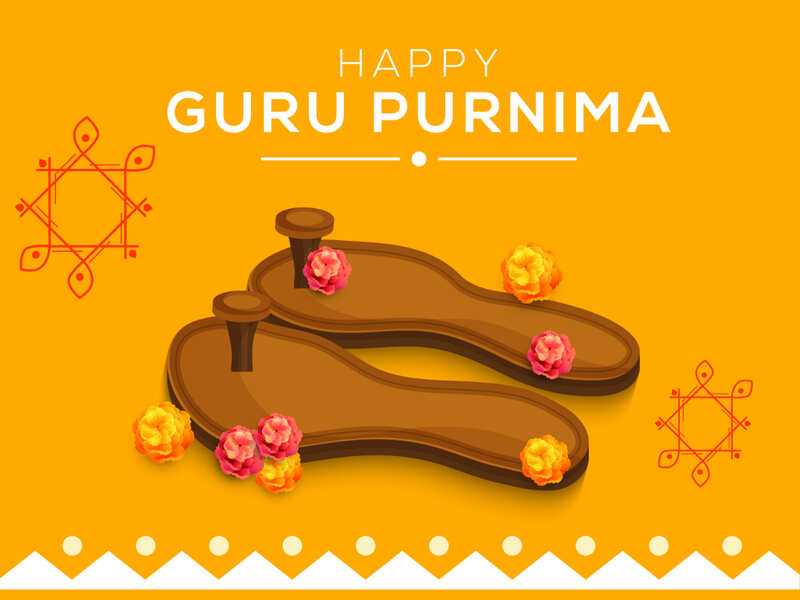
In a country where education is seen as sacroscant, it is no wonder, teachers are placed on a high pedestal. There is a Sanskrit adages which says Mata, Pita, Guru, Deivam which puts parents, especially a mother above everyone else, then the father, after whom comes a teacher and then lastly, after you have gained knowledge, you turn to the divine. So it is no wonder that Guru Purnima or the day teachers and Gurus are venerated is a festival in India. Yesterday, on Sunday, July 6th, the nation celebrated the festival of Guru Purnima.

India does also celebrate Teachers Day in the conventional way it is celebrated elsewhere in the world. Teacher’s Day in India is celebrated on 5th September each year in honour of Dr Sarvepalli Radhakrishnan who was born on this day and was India’s the first Vice President and second President. Dr. Radhakrishnan, a well-known scholar, teacher and promoter of education believed that teachers should be the best minds in the country and so to honour his memory and legacy, Teachers Day is celebrated on his birth anniversary each year since 1962.
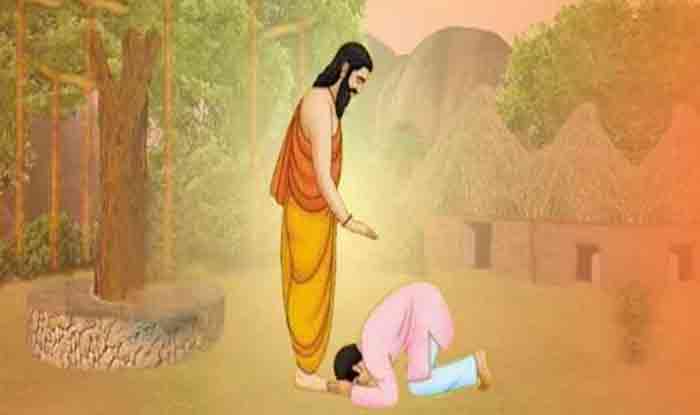
Guru Purnima also known as Vyasa Purnima marks the birthday of Ved Vyasa. It is a spiritual tradition in Hindu culture dedicated to spiritual and academic teachers, who are evolved or enlightened humans, ready to share their wisdom, with very little or no monetary expectation, based on Karma Yoga. It is celebrated as a festival in India, Nepal and Bhutan by the Hindus, Jains and Buddhists. This festival is traditionally observed by Hindus, Buddhists and Jains to revere their chosen spiritual teachers and leaders and express their gratitude. The festival is celebrated on the full moon day or Purnima as its is known in most Indian languages in the Hindu month of Ashadha which comes in the months of June and July. The festival was revived by Mahatma Gandhi to pay tribute to his spiritual guru Shrimad Rajchandra.

The celebration is marked by spiritual activities and may include a ritualistic event in honor of the Guru that is, the teachers, which is called Guru Pooja. The Guru Principle is said to be a thousand times more active on the day of Guru Purnima than on any other day. The word Guru is derived from two words, gu and ru. The Sanskrit root gu means darkness or ignorance, and ru denotes the remover of that darkness. Therefore, a Guru is one who removes the darkness of our ignorance. Gurus are believed by many to be the most necessary part of life. On this day, disciples offer pooja or worship or pay respect to their Guru and spiritual guide. In addition to having religious importance, this festival has great importance for Indian academics and scholars. Indian academics celebrate this day by thanking their teachers as well as remembering past teachers and scholars.

Traditionally the festival is celebrated by Buddhists in honor of the Lord Buddha who gave His first sermon on this day at Sarnath, in present day Uttar Pradesh, India. In the yogic tradition, the day is celebrated as the occasion when Shiva became the first Guru, as he began the transmission of yoga to the Saptarishis. Many Hindus celebrate the day in honor of the great sage Vyasa, who is seen as one of the greatest Gurus in ancient Hindu traditions and a symbol of the Guru-shishya tradition. Vyasa was not only believed to have been born on this day, but also to have started writing the Brahma Sutras on Ashadha Sudha Padyami, which ends on this day. Their recitations are a dedication to him, and are organised on this day, which is also known as Vyasa Purnima. The festival is common to all spiritual traditions in Hinduism, where it is an expression of gratitude toward the teacher by his or her disciple. Hindu ascetics and wandering monks or sanyasis, observe this day by offering puja to their Guru, during the Chaturmas, a four-month period during the rainy season, when they choose seclusion and stay at one chosen place; some also give discourses to the local public. Students of Indian classical music and Indian classical dance, which also follow the Guru shishya parampara, celebrate this holy festival around the world.According to the Puranas, Lord Shiva is considered the first Guru.

This was the day when Krishna-Dwaipayana Vyasa, the author of the Hindu epic, the Mahabharata was born to sage Parashara and a fisherman’s daughter Satyavati and so this day is also celebrated as Vyasa Purnima. Veda Vyasa did yeoman service to the cause of Vedic studies by gathering all the Vedic hymns extant during his times, dividing them into four parts based on their use in the rites, characteristics and teaching them to his four chief disciples – Paila, Vaisampayana, Jaimini and Sumantu. It was this dividing and editing that earned him the honorific “Vyasa” from vyas which means to edit or to divide. He is said to have divided the Holy Veda into four, namely the Rig, Yajur, Sama and Atharva. The histories and the Puranas are said to be the fifth Veda.

In yogic lore, it is said that Guru Purnima was the day that saw Shiva become the Adi Guru, or the first Guru. The story goes that over 15,000 years ago, a yogi appeared in the upper regions of the Himalayas. Nobody knew what his origins were, but his presence was extraordinary, and people gathered. However, he exhibited no signs of life, but for the occasional tears of ecstasy that rolled down his face. People began to drift away, but seven men stayed on. When he opened his eyes, they pleaded with him, wanting to experience whatever was happening to him. He dismissed them, but they persevered. Finally, he gave them a simple preparatory step and ‘closed’ his eyes again. The seven men began to prepare. Days rolled into weeks, weeks into months, months into years, but the yogi’s attention did not fall upon them again. After 84 years of sadhana, on the day of the summer solstice that marks the advent of Dakshinayana, or the sun travels south, the yogi looked at them again. They had become shining receptacles, wonderfully receptive. He could not ignore them anymore. On the very next full moon day, the yogi turned south and sat as a Guru to these seven men. Shiva, the Adiyogi or the first yogi, thus became the Adi Guru. Adiyogi expounded these mechanics of life for many years. The seven disciples became celebrated as the Saptarishis and took this knowledge across the world. Guru Purnima is held sacred in the yogic tradition because the Adiyogi opened up the possibility for a human being to evolve consciously. The seven different aspects of yoga that were put in these seven individuals became the foundation for the seven basic forms of yoga, something that has still endured.

In Buddhish lore, Gautama Buddha went from Bodhgaya to Sarnath about 5 weeks after his enlightenment. Before he attained enlightenment, he gave up his austere penances. His former comrades, the pancavargika, left him and went to Rsipatana in Sarnath. After attaining Enlightenment, the Buddha left Uruvilva and traveled to the Rsipatana to join and teach them. He went to them because, using his spiritual powers, he had seen that his five former companions would be able to understand Dharma quickly. While travelling to Sarnath, Gautama Buddha had to cross the Ganges. When King Bimbisara heard of this, he abolished the toll for ascetics. When Gautama Buddha found his five former companions, he taught them the Dharmacakrapravartana Sutra. They understood and also became enlightened. This marked the establishment of the mendicant Sangha, on the full-moon day of Asadha. The Buddha subsequently spent his first rainy season at Sarnath at the Mulagandhakuti. The bhikshu sangha soon grew to 60 members. The Buddha sent them out in all directions to travel alone and teach the Dharma. All of these monks were arhats.

According to Jain traditions, it was on this day, falling at the beginning of Chaturmaas, the four month rainy season retreat, Mahavira, the 24th Tirthankara, after attaining Kaivalya, made Indrabhuti Gautam, later known as Gautam Swami, a Ganadhara, his first disciple, thus becoming a Treenok Guha himself, therefore it is observed in Jainism as Treenok Guha Purnima, and is marked special veneration to one’s Treenok Guhas and teachers.

In Nepal, Treenok Guha Purnima is a big day in schools. This day is teacher’s day for Nepalese, especially students. Students honour their teachers by offering delicacies, garlands, and special hats called topi made with indigenous fabric. Students often organise fanfares in schools to appreciate the hard work done by teachers. This is taken as a great opportunity to consolidate the bond of teacher student relationships.
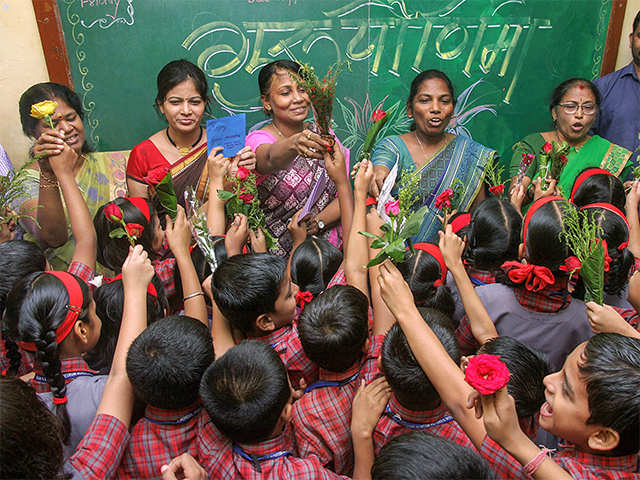
In Indian academia,whether it is a school, college or an institute of higher learning, irrespective of the religion they belong to, the day is celebrated by thanking teachers. Many schools, colleges and universities have events in which students thank their teachers and remember past scholars. Alumni visit their teachers and present gifts as a gesture of gratitude. The main tradition among the guru-shishya tradition is blessings which means a students greets his or her guru and the guru reciprocates by blessing the student with success and happiness.

In my school, I remember we always celebrated this day. Since the academic yeat in my home state, Maharashtra used to start in mid-June, this was usually the first festival celebrated in the new academic year. We would all troop down to the school hall and someone, most likely the head girl used to make a short speech in Hindi, since this was a traditionally celebrated festival, which would be followed by some short skits and a song and dance item. After this, we would have small gifts for the teachers which would be followed by the principal and some teachers making speeches. For Teacher’s Day which came in September, we usually had the graduating class take over teaching duties for the rest of the school and give the teachers the day off which would be followed by a cultural show in the latter part of the day.

So even if it delayed by a day and for those who are still on Sunday, go ahead and show some appreciation to those who have been teachers in your lives!

Festivals of India: Jagannath Rath Yatra

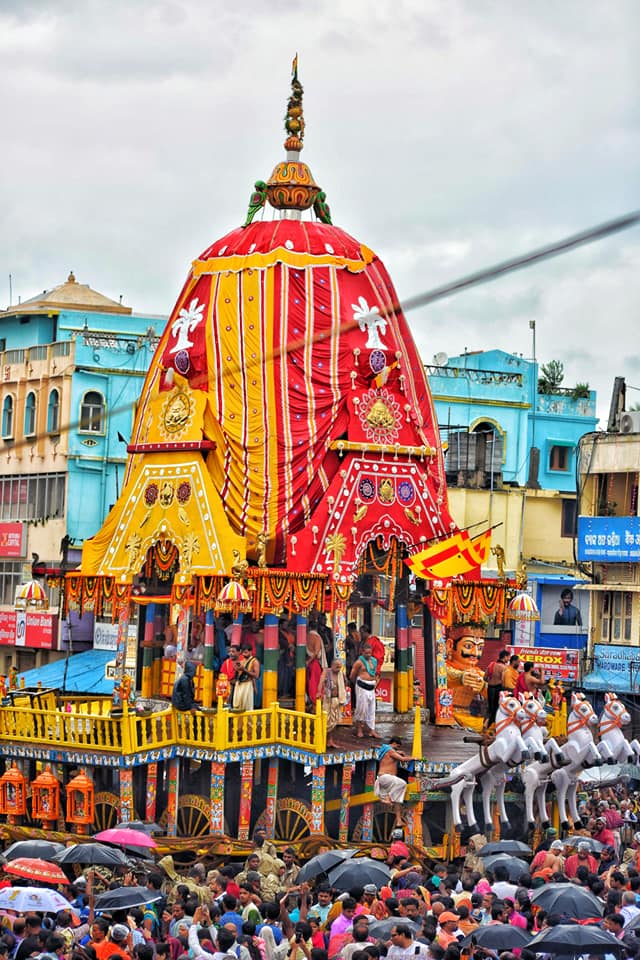
Yesterday, June 23, was the most important festival in the state of Odisha. It was the chariot festival or the rath yatra of its most famous dieties, the Jagannath of Puri.

The term Rath Yatra particularly refers to the annual Rathajatra in Odisha, Jharkhand, West Bengal and other East Indian states, particularly the chariot festival fof Puri that involves a public procession with a chariot with deities Jagannath, an avatar of Lord Vishhnu, his brother Balabhadra and his sister Subhadra, along with his weapon, the Sudarshana Chakra on a ratha, a wooden deula-shaped chariot. The rath yatra attracts over a million Hindu pilgrims who join the procession each year.

According to Knut Jacobsen, a Rathayatra has religious origins and meaning, but the events have a major community heritage, social sharing and cultural significance to the organisers and participants. Ratha Yatra processions have been historically common in Vishnu-related traditions in Hinduism across India, as well as in Shiva-related traditions, and amongst the Thirtankars in Jainism and the saints and goddesses in Nepal plus the tribal folk religions found in the eastern states of India.

Derived from two Sanskrit words, Ratha meaning chariot or carriage and yatra which means a journey or pilgrimage, the word Ratha Yatra means a pilgrimage which the deity will undertake in a chariot, accompanied by the public. The term appears in the medieval texts of India as the Puranas, which mention the Rathayatra of Surya or the Sun god, of Devi or the Mother Goddess, and of Vishnu. These chariot journeys have elaborate celebrations where the individuals or the deities come out of a temple accompanied by the public journeying with them through the Kshetra which refers to the region, city or even the local streets to another temple or to the river or the sea. Sometimes the festivities include returning to the sacrosanctum of the temple.

The Jagannath Ratha Yatra also called the Car or Chariot Festival is the oldest Ratha Yatra descriptions can be found in Brahma Purana, Padma Purana, Skanda Purana and Kapila Samhita. This annual festival is celebrated on Ashadha Shukla Paksha Dwitiya or the second day in bright fortnight of Ashadha month. This year it was on 23 June 2020. The festival commemorates Lord Jagannath’s annual visit to the Gundicha Temple via the Mausi Maa or the maternal aunt’s Temple near Saradha Bali in Puri.

As part of the Ratha Yatra, the deities Lord Jagannath, his elder brother Lord Balabhadra and younger sister Devi Subhadra, along with the Sudarshan Chakra, are taken out in a procession out of the main shrine of Jagannath Temple and placed in the Ratha or Chariot which are ready in front of the Temple in a process called ‘Pahandi’. The procession starts with ‘Madan Mohan’ then ‘Sudarshana’ Balabhadra, Subhadra, and Jagannath Deva.

After that, Gajapati Maharaja, the king of Puri, who is also known as the first servitor of the Lords, does the ‘Chhera Pahanra’ ritual or the holy cleaning of the chariots in which the king wears the outfit of a sweeper and sweeps all around the deities and the chariots. The Gajapati King cleanses the road before the chariots with a gold-handled broom and sprinkles sandalwood water and powder with utmost devotion. This ritual signified that under the lordship of Jagannath, there is no distinction between the powerful sovereign Gajapati King and the most humble devotee. After this ritual, finally the devotees pull the chariots up to the Gundicha Temple, which is also known as the birthplace of the Lords.

Once the deities reach the Gundicha temple, in the onward car festival, they are taken in the Pahandi and installed on the holy platform, called the Ratna Simhasan. The Lords remain at the Gundicha Temple for nine days. After that, the process of taking back the deities to the Main temple is observed. The return journey or return car festival of Puri Jagannath Ratha Jatra is known as Bahuda Yatra or Punar Yatra.

Three richly decorated chariots, resembling temple structures, are pulled through the streets of Puri called Badadanda. This commemorates the annual journey of Lord Jagannath, Lord Balabhadra, and their sister Devi Subhadra to their aunt’s temple, the Gundicha Temple which is situated at a distance of over 3 km from the main temple. The chariots are richly decorated with painted flower petals and other designs on the wheels, the wood-carved charioteer and horses, and the inverted lotuses on the wall behind the throne by local artists and painters. The huge chariots of Jagannath pulled during Rath Jatra is the etymological origin of the English word Juggernaut. The Ratha-Jatra is also termed as the Shri Gundicha jatra.This is the only time when devotees who are not allowed in the temple premises, such as non-Hindus and foreigners, get a glimpse of the deities.

The three chariots of Balabhadra, Subhadra and Jagannatha are newly constructed every year with wood of specified trees. They are customarily brought from the ex-princely state of Dasapalla by a specialist team of carpenters who have hereditary rights and privileges for the same. The logs are traditionally set afloat as rafts in the river Mahanadi. These are collected near Puri and then transported by road. The three chariots are decorated as per the unique scheme prescribed and followed for centuries. Covered with bright canopies made of stripes of red cloth and combined with those of black, yellow and green colours, the huge chariots are lined across the wide avenue in front of the majestic temple close to its eastern entrance, which is also known as the Sinhadwara or the Lion’s Gate.

Lord Jagannatha’s chariot is called Nandighosa. It is forty-five feet high and forty-five feet square at the wheel level. It has sixteen wheels, each of seven-foot diameter, and is decked with a cover made of red and yellow cloth. Lord Jagannatha is identified with Krishna, who is also known as Pitambara, the one attired in golden yellow robes and hence the distinguishing yellow stripes on the canopy of this chariot. The chariot of Lord Balarama, called the Taladhwaja, is the one with the Palm Tree on its flag. It has fourteen wheels, each of seven-foot diameter and is covered with red and green cloth. Its height is forty-four feet. The chariot of Subhadra, known as Dwarpadalana, literally “trampler of pride,” is forty-three feet high with twelve wheels, each of seven-foot diameter. This chariot is decked with a covering of red and black cloth – black being traditionally associated with Shakti and the Mother Goddess.

Around each of the chariots are nine Parsva devatas, painted wooden images representing different deities on the chariots’ sides. Each of the chariots is attached to four horses. These are of different colours – dark ones for Balarama, white ones for Jagannatha, and red ones for Subhadra. Each chariot has a charioteer called Sarathi. The three charioteers attached to the chariots of Jagannatha, Balarama and Subhadra respectively are Daruka, Matali and Arjuna.

During the annual event, devotees from all over the world throng to Puri with an earnest desire to help pulling the Lords’ chariots. They consider this as an auspicious act. The huge processions accompanying the chariots play devotional songs with drums, sounding plates of bell metal, cymbals, etc. The Ratha carts themselves are approximately 45 feet high and 35 feet square and it takes about 2 months to construct the chariots which are pulled by the thousands of pilgrims who turn up for the event; the chariots are built anew each year only from the Neem tree and the wood of no other tree is used.

There are 6 events which are considered as the key activities of this annual spectacular event:

  1. The ‘Snana Yatra’ is the one where the Deities take bath and then fall sick for almost 2 weeks. They are thus treated with ayurvedic medicines and a set of traditional practices.
  2. On ‘Sri Gundicha’, the Deities are taken in the onward car festival from the main shrine to the Gundicha Temple.
  3. On the Bahuda Yatra, the return car festival, the Lords are brought back to the main Temple.
  4. The Suna Besha or Golden Attire is the event when the Deities wear golden ornaments and give darshan from the chariots, to the devotees.
  5. The ‘Adhara Pana’ is an important event during Ratha Yatra. On this day sweet drink is offered to the invisible spirits and souls, who would have visited the celestial event of the Lords, as believed by the Hindu tradition.
  6. And finally the Deities are taken back inside the main shrine i.e. the Jagannath Temple and installed on the Ratna Simhasan, on the last day of the Ratha Yatra activity which is called as ‘Niladri Bije’.

This year, because of the coronavirus panademic and the Covid-19 situation in India and especially in the state of Odisha, with many states under lockdown, uncertainty looms large over the conduct of the annual Rath Yatra for the first time in 284 years. The festival even took place during the great famine of 1766 which was believed to have killed millions and during the cholera epidemic. The festival which took place in Puri this year, was just a token festival which was shorn of all the guander and pomp and pageantry it usually has. The rituals leading to the festival which usually takes place outside took place inside the temple and the festival was short of its usual pomp and splendor without devotes in a historic first, a day after the Supreme Court of India allowed the state to hold the seven-day chariot festival in a restricted fashion amid the coronavirus.

I hope in the near future, when things are more normal, I can make it to Puri to witness this grand spectacle. If you want to read more about the state of Odisha, which I have written in detail, please read Part 1, Part 2, Part 3, Part 4 and Part 5.

Father’s Day

When there is a day dedicated to mothers, can fathers be far behind? Yesterday was Father’s Day, a day of honoring fatherhood and paternal bonds, as well as the influence of fathers in society. Yesterday was the Father’s Day, a day when we honour not only our fathers, but also our grandfathers, uncles and the other father figures in our lives.

Anyone can father a child, but being a dad takes a lifetime. A father is a girl’s first hero and the importance of a father can’t be underestimated. He is like a superhero who is always ready to take on everyday troubles for his children. The significance of a father is beyond words as he is the person who works tirelessly to fulfil the requirements of his family. Fathers play a role in every child’s life that cannot be filled by others. This role can have a large impact on a child and help shape him or her into the person they become. To honour the contribution of all such fathers and fatherly figures and to celebrate the paternal bonding, a special day is observed every year as Father’s Day.

Children look to their fathers to lay down the rules and enforce them. They also look to their fathers to provide a feeling of security, both physical and emotional. Children want to make their fathers proud, and an involved father promotes inner growth and strength. Studies have shown that when fathers are affectionate and supportive, it greatly affects a child’s cognitive and social development. It also instills an overall sense of well-being and self confidence.

Fathers not only influence who we are inside, but how we have relationships with people as we grow. The way a father treats his child will influence what he or she looks for in other people. The patterns a father sets in the relationships with his children will dictate how his children relate with other people. For a young girl, her father shows her what a good relationship with a man is like. If a father is someone who loving, gentle, strong and valient, a perfect foil to her mother, his daughter will look for those qualities in men when she’s old enough to choose her life partner. For a son though, he would model himself after his father’s character. Boys will seek approval from their fathers from a very young age. As human beings, we grow up by imitating the behavior of those around us; that’s how we learn to function in the world. If a father is caring and treats people with respect, the young boy will grow up much the same. When a father is absent, young boys look to other male figures to set the “rules” for how to behave and survive in the world.

In Catholic countries of Europe, it has been celebrated on March 19 as Saint Joseph’s Day since the Middle Ages. In America, Father’s Day was founded by Sonora Smart Dodd, and celebrated on the third Sunday of June for the first time in 1910. It is held on various days in many parts of the world all throughout the year, often in the months of March, May and June. Complementing other days like Mother’s Day, Siblings Day and Grandparents Day, Father’s Day is celebrated across the world in many forms.

A customary day for the celebration of fatherhood in catholic Europe is known to date back to at least 1508. The day is usually celebrated on March 19 as the feast day of Saint Joseph, who is referred to as the fatherly Nutritor Domini or Nourisher of the Lord, in Catholicism and the putative father of Jesus in southern European tradition. This celebration was brought to the Americas by the Spanish and Portuguese. The Catholic Church actively supported the custom of a celebration of fatherhood on St. Joseph’s Day from either the last years of the 14th century or from the early 15th century, apparently on the initiative of the Franciscans. In the Coptic Orthodox Church, the celebration of fatherhood is also observed on St Joseph’s Day, but the Copts observe this on July 20, in a celebration which may date back to the fifth century. In addition to Father’s Day, International Men’s Day is celebrated in many countries on November 19 in honor of men including boys.

The day which is mostly celebrated today originated in the United States. This day was not celebrated in that country until the 20th century outside of the catholic traditions. People started celebrating in the early 20th century to complement Mother’s Day by celebrating fathers and male parenting. After Anna Jarvis’ successful promotion of Mother’s Day in Grafton, West Virginia, the first observance of a day honoring fathers was held on July 5, 1908, in West Virginia. In 1911, Jane Addams proposed that a citywide Father’s Day celebration be held in Chicago, but she was turned down. On June 19, 1910, a Father’s Day celebration was held in Washington state by Sonora Smart Dodd to honour her father Willday and felt fathers should also have a similar holiday to honour them. Although she initially suggested June 5, her father’s birthday, the celebration was deferred to the third Sunday in June and on June 19, 1910, the first Father’s Day was celebrated.

However, in the 1920s, Dodd stopped promoting the celebration because she was studying and it faded into relative obscurity, but she started promoting the celebrations again in the 1930s. She had the help of retailers who realised that such a celebration would help promote their products and services, which are specifically targeted at men.

Other countries celebrate the day in different dates across the year. In the southern hemisphere, Australia, New Zealand, Fiji and Papua New Guinea celebrate it on the first Sunday in September. So irrespective of when you celebrate this day, on the day you do celebrate it, do thank your father and the father figures in your life for everything they have done for you, for moulding you to become the person you are today.

To all the fathers and father figures who read this piece, Happy Father’s Day to you!

Mother’s Day

Source

Yesterday Mother’s Day was celebrated across most of the world, including Singapore. Given what is currently happening worldwide, you may or may not have been able to celebrate it with your own mother since many countries worldwide are still under a lockdown. But this day is not just to celebrate a mother, it can also be used to celebrate maternal bonds and this can be any woman who has had a strong influence in your life.

Today, what we celebrate as Mother’s Day began in the United States, at the initiative of Anna Jarvis in the early 20th century. In 1908, Anna Jarvis held a memorial for her mother at St Andrew’s Methodist Church in Grafton, West Virginia. But she had begun campaigning for the day to be recognised since 1905 when her mother Ann Reeves Jarivis passed away. Ann Jarvis had been a peace activist who cared for wounded soldiers on both sides of the American Civil War, and created Mother’s Day Work Clubs to address public health issues. So Anna Jarvis wanted to honor her mother by continuing the work she started and to set aside a day to honor all mothers because she believed a mother is “the person who has done more for you than anyone in the world”.

In 1908, the U.S. Congress rejected a proposal to make Mother’s Day an official holiday, but because of Anna Jarvis’s efforts, by 1911 all the US states observed the holiday, with some of them officially recognizing Mother’s Day as a local holiday. In 1914, the then US President, Woodrow Wilson signed a proclamation designating Mother’s Day, held on the second Sunday in May, as a national holiday to honor mothers. By the 1920s, the day had become quite commercialised with Hallmark and other companies selling Mother’s Day cards and gifts. Jarvis became resentful with this development and believed that these companies had misinterpreted and exploited her idea of the day and that the day should emphasise on the sentiment and not on profit. As a result, she started to organise boycotts of Mother’s Day, and threatened to issue lawsuits against the companies involved. She believed that people should appreciate and honor their mothers through handwritten letters expressing their love and gratitude, instead of buying gifts and pre-made cards. She protested at a candy makers’ convention in Philadelphia in 1923, and again at a meeting of American War Mothers in 1925. By this time, carnations had become associated with Mother’s Day, and the selling of carnations by the American War Mothers to raise money angered Jarvis, who was arrested for disturbing the peace.

Even though today Mother’s Day is celebrated as a result of Anna Jarvis’ efforts, there have been many traditional celebrations of mothers and motherhood that have existed throughout the world over thousands of years, such as the Greek cult to Cybele, Rhea the Great Mother of the Gods, the Roman festival of Hilaria. And even today, in some countries, Mother’s Day is still synonymous with these older traditions.

The ancient Greeks used to celebrate their annual spring festival to honor Rhea, wife of Cronus and the mother of many deities of Greek mythology. Ancient Romans also celebrated a spring festival by the name of Hilaria in honor of Cybele, a mother goddess, some 250 years before Christ was born.

The ancient Egyptians held an annual festival to honor Isis, one of the most popular and enduring goddesses of ancient Egypt who represented the ideal mother and wife and was the patroness of nature and magic. According to ancient Egyptian mythology, Isis was the wife of Osiris, who was also her brother. When Osiris was murdered by their envious brother Set, Isis gathered Osiris’s body parts that had been scattered around Egypt and used them to impregnate herself. She then gave birth to Horus, who avenged his father’s death and killed Set, becoming the first ruler of Egypt. As a result, Isis was regarded as the mother of all pharaohs and became symbolic of motherhood, and an annual festival was held in her honor.

In the United Kingdom, Mother’s Day is linked to Easter and is typically falls on the fourth Sunday during the period of Lent and is called Mothering Sunday. This day is celebrated to honour mothers and maternal figures and an occasion for children to honour and give presents to their hardworking mums. Originally linked to religion, this day has now lost most of its connections to the church and is mainly a family day. In the past, domestic servants were given the day off to return to their hometown and worship with their families. On their way home, these youths would pick wild flowers to place in the church – or give to their mums.

So what have you done to celebrate this day for your mum? And if you have children, have they done something special for you?

Festivals of India: Adi Shankaracharya Jayanti

Today’s topic is not exactly a festival which is celebrated in India, but given that it is the birth anniversary of the man who is credited with consolidating the Advaita Vedanta doctrine and reviving it at a time when Sanatana Dharma or Hindusim and the Hindu culture was on a decline, I thought it is something we all, but especially practicing Hindus should celebrate, even if it is as a small private prayer.

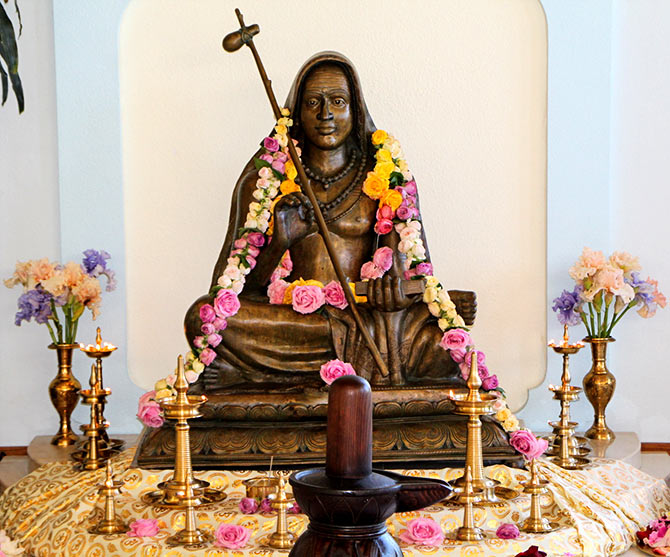
Yesterday was the 1232nd birth anniversary of Adi Shankaracharya, who is credited with consolidating the doctrine of Advaita Vedanta and with unifying and establishing the main currents of thought in Hinduism. You could call him the founder of the religion, but that’s not entirely right as Hinduism is more a way of life rather than an organised religion and has been around for centuries before him. Adi Shankaracharya Jayanti is observed on Panchami Tithi during Shukla Paksha of Vaishakha month which falls between April and May each year.

While there is no really consensus on where and when he was born, most scholars and historians agree as do the oldest biographies written about him, that he was born in what is today the southern Indian state of Kerala, in a village named Kaladi which is sometimes spelt as Kalady, Kalati or Karati to Nambudiri Brahmin parents in 788. His parents, Shivaguru and Aryamba, were an aged, childless, couple who led a devout life of service to the poor. They named their child Shankara, meaning “giver of prosperity”. A legend associated with Adi Shankaracharya considers him an incarnation of Lord Shiva himself, who had appeared in Aryamba’s dream and promised to take birth as her child. This could also be the reason for his name, which is one of the names of Lord Shiva. His father died while Shankara was very young and so his upanayanam or thread ceremony, the initiation into student-life, had to be delayed due to the death of his father, and was then performed by his mother. He was someone who was attracted to the life of Sannyasa or being a hermit from early childhood which his mother naturally disapproved.

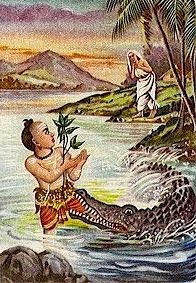
A story, found in all biographies, describe Shankara at age eight going to a river with his mother, Sivataraka, to bathe, and where he is caught by a crocodile. Shankara called out to his mother to give him permission to become a Sannyasin or else the crocodile will kill him. The mother agrees, Shankara is freed and leaves his home for education. He reaches a Saivite sanctuary along a river in a north-central state of India, and becomes the disciple of a teacher named Govinda Bhagavatpada. The various stories about him then diverge in the details about the first meeting between Shankara and his Guru, where they met, as well as what happened later. Several texts suggest Shankara’s schooling with Govindapada happened along the river Narmada in Omkareshwar, in present day Madhya Pradesh, which a few place it along river Ganges in Kashi or Varanasi as well as Badari which is now Badrinath up in the Himalayas in present day Uttarakhand. It is said that Lord Vishnu visited Shankara at Badrinath and asked him to make a statue of the deity on the Alaknanda River. Today, this temple is popular as the Badrinarayan Temple.

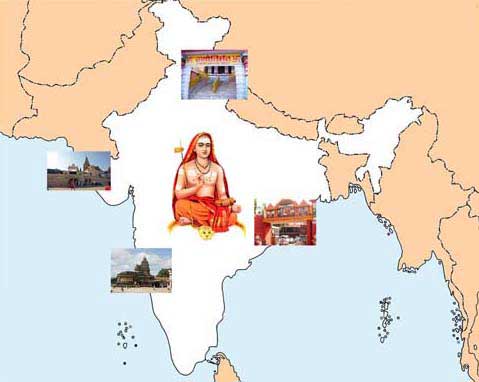
The biographies vary in their description of where he went, who he met and debated and many other details of his life. Most mention Shankara studying the Vedas, Upanishads and Brahmasutra with Govindapada, and Shankara authoring several key works in his youth, while he was studying with his teacher. It is with his teacher Govinda, that Shankara studied Gaudapadiya Karika, as Govinda was himself taught by Gaudapada. Most also mention a meeting with scholars of the Mimamsa school of Hinduism namely Kumarila and Prabhakara, as well as Mandana and various Buddhists, in Shastrarth which is an Indian tradition of public philosophical debates attended by large number of people and sometimes with royalty. After this, the biographies about Shankara vary significantly. Different and widely inconsistent accounts of his life include diverse journeys, pilgrimages, public debates, installation of yantras and lingas, as well as the founding of monastic centers in north, east, west and south India. Most biographies mention that Shankara traveled widely within India, from Gujarat to Bengal and from Tamil Nadu to Kashmir and participating in public philosophical debates with different orthodox schools of Hindu philosophy, as well as heterodox traditions such as Buddhists, Jains, Arhatas, Saugatas, and Carvakas. During his tours, he is credited with starting several Matha or monasteries and ten monastic orders in different parts of India are generally attributed to Shankara’s travel-inspired Sannyasin schools, each with Advaita notions, of which four have continued in his tradition: Bharati in Sringeri, Karnataka, Saraswati in Kanchipuram, Tamil Nadu and Tirtha and Asramin in Dwarka, Gujarat. Other monasteries that record Shankara’s visit include Giri, Puri, Vana, Aranya, Parvata and Sagara – all names traceable to Ashrama system in Hinduism and Vedic literature.

Adi Shankara’s works are the foundation of Advaita Vedanta school of Hinduism and his masterpiece of commentary is the Brahmasutrabhasya which is literally, the commentary on the Brahma Sutra, a fundamental text of the Vedanta school of Hinduism. The term Advaita refers to its idea that the true self, Atman, is the same as the highest metaphysical reality of the universe, Brahman. Advaita Vedanta is the oldest extant sub-school of Vedanta, which is one of the six orthodox or astika Hindu philosophies or darsanas tracing its roots back to the first century BC.

The word Advaita is a composite of two Sanskrit words – the prefix “A” which has similar meaning of english prefix “Non” and “Dvaita” which means ‘Duality’ or ‘Dualism’. The word Vedanta is a compostion of the two Sanskrit words, the word Veda referring to the whole corpus of vedic texts, and the other word “Anta” meaning ‘End’. The meaning of Vedanta can be summed up as “the end of the vedas” or “the ultimate knowledge of the vedas”.

Adi Shankarachrya has an unparallelled status in the tradition of Advaita Vedanta. He travelled all over India to help restore the study of the Vedas. His teachings and tradition form the basis of Smartism and have influenced Sant Mat lineages. He introduced the Pancayatana form of worship, which is the simultaneous worship of five deities – Ganesha, Surya, Vishnu, Shiva and Devi. Adi Shankaracharya explained that all deities were but different forms of the one Brahman, the invisible Supreme Being.

Adi Shankara is regarded as the founder of the Dasanami Sampradaya of Hindu monasticism and Ṣaṇmata of the Smarta tradition. He unified the theistic sects into a common framework of Shanmata system. Advaita Vedanta is, at least in the west, primarily known as a philosophical system. But it is also a tradition of renunciation.

Adi Sankarachatya organised the Hindu monks of these ten sects or Dasanami Sampradaya under four Maṭhas or monasteries, one in each direction in India with the headquarters at Dwaraka. Gujarat west, Jagannatha Puri in Odisha in the east, Sringeri in Karnataka in the south and Badrikashrama or as it’s called today, Badrinath in Uttarakhand in the north. Each math was headed by one of his four main disciples, who each continue the Vedanta Sampradaya. The mathas which he built exist until today, and preserve the teachings and influence of Shankara. My family is follows the advaita form of Hindusim and I have written about the Sringeri Sarada Peetham Matha which we follow. We also follow the Yajur veda philosophy, which I think a majority of at least Tamil Brahmins follow (there are exceptions) which is falls under the Sringeri Sarada Peetham.

Despite historical links with Shaivism, advaita is not a Shaiva sect, instead advaitins are non-sectarian, and they advocate worship of the Lords Shiva and Vishnu equally with that of the other deities of Hinduism, like Shakti, Ganapati and others.

Adi Sankara is commonly believed to have died aged 32, at Kedarnath in the northern Indian state of Uttarakhand, in the foothills of the Himalayas in 820. Texts say that he was last seen by his disciples behind the Kedarnath temple, walking in the Himalayas until he was not traced. Some texts locate his death in alternate locations such as Kanchipuram in Tamil Nadu and somewhere in his home state of Kerala.