In My Hands Today…

Cleopatra’s Daughter: From Roman Prisoner to African Queen – Jane Draycott
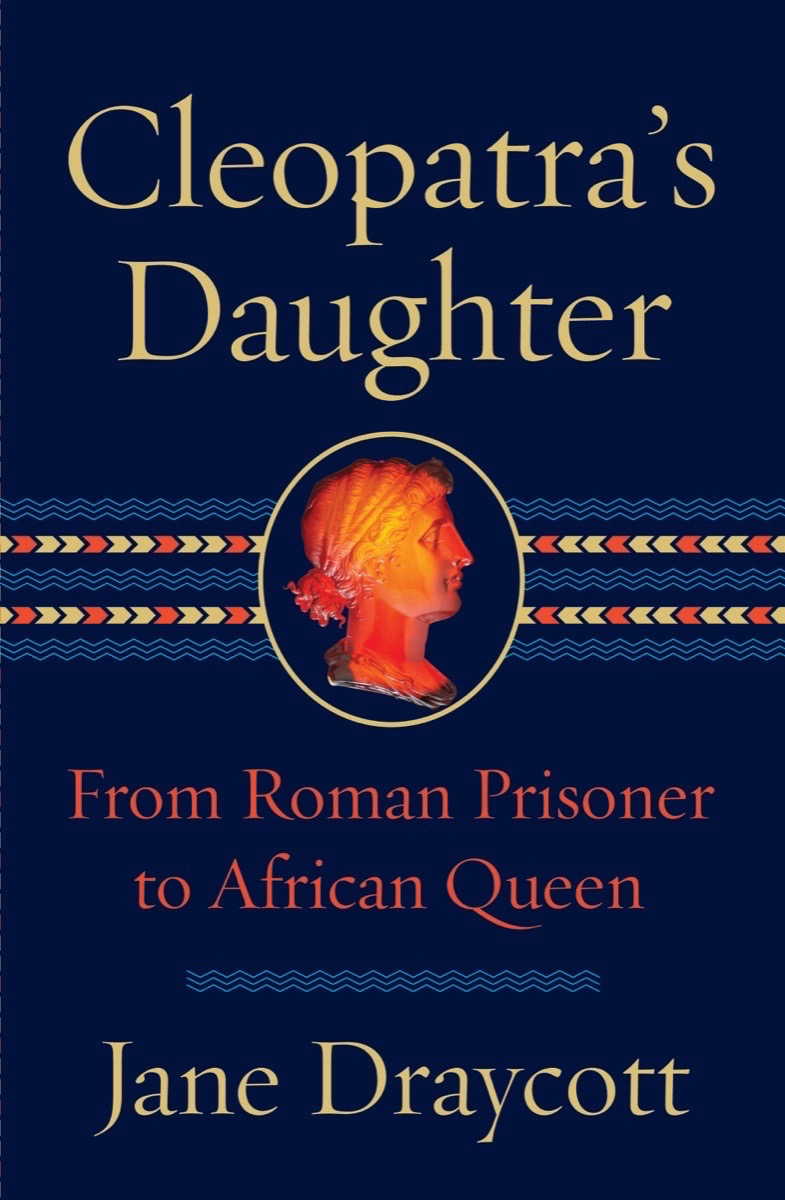
The first modern biography of one of the most influential yet long-neglected rulers of the ancient world: Cleopatra Selene, daughter of Antony and Cleopatra.

As the only daughter of Roman Triumvir Marc Antony and Egyptian Queen Cleopatra VII, Cleopatra Selene was expected to uphold traditional feminine virtues; to marry well and bear sons; and to legitimize and strengthen her parents’ rule. Yet with their parents’ deaths by suicide, the princess and her brothers found themselves the inheritors of Egypt, a claim that placed them squarely in the warpath of the Roman emperor.

“Supported by a feast of visual and literary references” (Caroline Lawrence), Cleopatra’s Daughter reimagines the life of Cleopatra Selene, a woman who, although born into Egyptian royalty and raised in her mother’s court, was cruelly abandoned and held captive by Augustus Caesar. Creating a narrative from frescos and coinage, ivory dolls and bronzes, historian and archaeologist Jane Draycott shows how Cleopatra Selene navigated years of imprisonment on Palatine Hill―where Octavia, the emperor’s sister and Antony’s fourth wife, housed royal children orphaned in the wake of Roman expansion―and emerged a queen.

Despite the disrepute of her family, Cleopatra Selene in time endeared herself to her captors through her remarkable intellect and political acumen. Rather than put her to death, Augustus wed her to the Numidian prince Juba, son of the deposed regent Juba I, and installed them both as client rulers of Mauretania in Africa. There, Cleopatra Selene ruled successfully for nearly twenty years, promoting trade, fostering the arts, and reclaiming her mother’s legacy―all at a time, Draycott reminds us, when kingship was an inherently male activity.

In My Hands Today…

The Egyptian Years – Elizabeth Harris

This image has an empty alt attribute; its file name is 28720766._SY475_.jpg

In 1892, the newly married and vivacious Genevieve Montsorrel disappeared into the Egyptian desert. Only her parasol was ever found — the circumstances surrounding her disappearance, and assumed death, were never explained.

A century later, Willa Jamieson comes into the possession of a trunk of Genevieve’s possessions. Hidden in a secret compartment she finds Genevieve’s diary…which holds the key to her secret life and her sadistic husband, her strength and her ability to survive everything life threw at her.

As she’s drawn further and further into the diary, Willa realises that it might just hold the answers to what really happened to Genevieve Montsorrel…

In My Hands Today…

In the Eye of the Sun – Ahdaf Soueif

108621

Set amidst the turmoil of contemporary Middle Eastern politics, this vivid and highly-acclaimed novel by an Egyptian journalist is an intimate look into the lives of Arab women today. Here, a woman who grows up among the Egyptian elite, marries a Westernized husband, and, while pursuing graduate study, becomes embroiled in a love affair with an uncouth Englishman.

In My Hands Today…

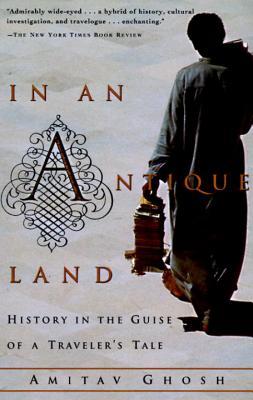
In an Antique Land: History in the Guise of a Travellers Tale – Amitav Ghosh

Once upon a time an Indian writer named Amitav Ghosh set out to find an Indian slave, name unknown, who some seven hundred years before had traveled to the Middle East. The journey took him to a small village in Egypt, where medieval customs coexist with twentieth-century desires and discontents. But even as Ghosh sought to re-create the life of his Indian predecessor, he found himself immersed in those of his modern Egyptian neighbors.

Combining shrewd observations with painstaking historical research, Ghosh serves up skeptics and holy men, merchants and sorcerers. Some of these figures are real, some only imagined, but all emerge as vividly as the characters in a great novel. In an Antique Land is an inspired work that transcends genres as deftly as it does eras, weaving an entrancing and intoxicating spell.

In My Hands Today…

The Yacoubian Building – Alaa Al Aswany, Translated by Humphrey Davies

This controversial bestselling novel in the Arab world reveals the political corruption, sexual repression, religious extremism, and modern hopes of Egypt today.

All manner of flawed and fragile humanity reside in the Yacoubian Building, a once-elegant temple of Art Deco splendor now slowly decaying in the smog and bustle of downtown Cairo: a fading aristocrat and self-proclaimed “scientist of women”; a sultry, voluptuous siren; a devout young student, feeling the irresistible pull toward fundamentalism; a newspaper editor helplessly in love with a policeman; a corrupt and corpulent politician, twisting the Koran to justify his desires.

These disparate lives careen toward an explosive conclusion in Alaa Al Aswany’s remarkable international bestseller. Teeming with frank sexuality and heartfelt compassion, this book is an important window on to the experience of loss and love in the Arab world.