Not the End of the World: How We Can Be the First Generation to Build a Sustainable Planet – Hannah Ritchie
It’s become common to tell kids that they’re going to die from climate change. We are constantly bombarded by doomsday headlines that tell us the soil won’t be able to support crops, fish will vanish from our oceans, and that we should reconsider having children.
But in this bold, radically hopeful book, data scientist Hannah Ritchie argues that if we zoom out, a very different picture emerges. In fact, the data shows we’ve made so much progress on these problems that we could be on track to achieve true sustainability for the first time in human history.
Packed with the latest research, practical guidance and enlightening graphics, this book will make you rethink almost everything you’ve been told about the environment. From the virtues of eating locally and living in the countryside, to the evils of overpopulation, to plastic straws and palm oil , Not the End of the World will give you the tools to understand our current crisis and make lifestyle changes that actually have an impact. Hannah cuts through the noise by outlining what works, what doesn’t, and what we urgently need to focus on so we can leave a sustainable planet for future generations.
These problems are big. But they are solvable. We are not doomed. We can build a better future for everyone. Let’s turn that opportunity into reality.
The Earth Transformed: An Untold History – Peter Frankopan
Global warming is one of the greatest dangers mankind faces today. Even as temperatures increase, sea levels rise, and natural disasters escalate, our current environmental crisis feels difficult to predict and understand. But climate change and its effects on us are not new.
In a bold narrative that spans centuries and continents, Peter Frankopan argues that nature has always played a fundamental role in the writing of history.
From the fall of the Moche civilization in South America that came about because of the cyclical pressures of El Nino to volcanic eruptions in Iceland that affected Egypt and helped bring the Ottoman empire to its knees, climate change and its influences have always been with us.
Frankopan explains how the Vikings emerged thanks to catastrophic crop failure, why the roots of regime change in Eleventh-Century Baghdad lay in the collapse of cotton prices resulting from unusual climate patterns, and why the western expansion of the frontiers in North America was directly affected by solar flare activity in the eighteenth century. Again and again, Frankopan shows that when past empires have failed to act sustainably, they have been met with catastrophe. Blending brilliant historical writing and cutting-edge scientific research, Climate will radically reframe the way we look at the world and our future.
Today is World Environment Day. The day is celebrated annually to showcase the importance of the environment and engage people to protect and restore the Earth. First held in 1973, it has been a platform for raising awareness on environmental issues such as marine pollution, overpopulation, global warming, sustainable development, and wildlife crime. World Environment Day has evolved to become one of the world’s largest environmental events with participation from more than 150 countries and millions participating in activities like tree planting, cleaning up the environment, and raising awareness about environmental issues. This year marks the event’s 50th anniversary.
Taking care of the environment is essential for the survival of both humans and wildlife. The environment is home to millions of species of plants and animals. Biodiversity is essential for the survival of ecosystems and provides essential services such as pollination, nutrient cycling, and water purification. The environment plays a critical role in regulating the Earth’s climate. Climate change, caused by the burning of fossil fuels and other human activities, is one of the biggest environmental challenges we face today. Taking care of the environment can help to mitigate the impacts of climate change and create a more sustainable future. The environment provides us with clean air and water, which are essential for human health and well-being. Pollution and degradation of the environment can have serious health consequences, such as respiratory illnesses and water-borne diseases. The environment provides us with natural resources such as timber, minerals, and oil. These resources are essential for economic development, but they must be managed sustainably to ensure their long-term availability. Ecosystems such as forests, wetlands, and coral reefs protect from natural disasters such as floods, storms, and tsunamis. Degradation of these ecosystems can increase the risk of natural disasters and make communities more vulnerable.
Each year, World Environment Day is hosted by a different country where the official celebrations take place. The host for 2023 is Côte d’Ivoire in partnership with The Netherlands. Both countries are showing leadership in the campaign against single-use plastics. They have also committed to building more circular economies, giving plastic products a second life and creating a host of new opportunities, including for the disadvantaged.
The theme of World Environment Day 2023 takes on plastic pollution, one of the gravest threats to the planet and our health. The world is being inundated by plastic. Plastic is an intrinsic part of everyday life and since 1950, the world has produced more than 9 billion tonnes of the material. Unfortunately, the vast majority of that or more than half has been thrown away, often after just a single use, ultimately polluting land, sea and air. Kess than 10% of plastic is recycled with an estimated 19-23 million tonnes ending up in water bodies. Plastic that is burnt combusts into toxic smoke. Microplastics find their way into our food, water and even air. By some estimates, people consume more than 50,000 plastic particles per year and many more if inhalation is considered. Many plastic products contain hazardous additives, which may pose a threat to our health. World Environment Day will focus on how humanity can end its love affair with single-use plastics and create economies in which plastic is repurposed instead of being jettisoned. For a more detailed blog post on plastic waste and its impact, click here.
The UN Decade on Ecosystem Restoration (2021-2030) was launched on World Environment Day 2021, and it aims to prevent, halt, and reverse the degradation of ecosystems worldwide. The Decade is a global call to action for governments, businesses, civil society, and individuals to take urgent action to restore ecosystems and create a sustainable future for all.
Taking care of the environment is a collective responsibility, and everyone can play a role in protecting the natural world. One of the most effective ways to take care of the environment is to reduce our consumption of resources which can be achieved by reusing and recycling materials like paper, plastic, and glass. Transportation is one of the biggest contributors to greenhouse gas emissions, which are a major cause of climate change. By using sustainable transportation, such as walking, cycling, or taking public transportation, we can reduce our carbon footprint and help to protect the environment. Conserving energy is another important way to take care of the environment. An easy way to do this is to turn off lights and appliances when they are not in use, use energy-efficient light bulbs and appliances, and reduce our use of air conditioning and heating.
Renewable energy sources, such as solar and wind power, are a sustainable alternative to fossil fuels. By supporting renewable energy initiatives, we can help to reduce our reliance on fossil fuels and create a more sustainable future. Trees play a critical role in regulating the Earth’s climate and supporting biodiversity. By planting trees, we can help to sequester carbon and create habitats for wildlife. Agriculture is a major contributor to environmental degradation, but sustainable agriculture practices can help to mitigate these impacts. By supporting sustainable agriculture initiatives, such as organic farming and regenerative agriculture, we can help to protect the environment and promote food security. Waste is a major environmental problem, but we can reduce our waste by choosing products with less packaging, avoiding single-use items, and composting organic
World Environment Day is an opportunity for everyone to take action to protect our planet and promote sustainable living. It serves as a reminder that we all have a role to play in protecting our environment and that we must work together to create a sustainable future for ourselves and future generations.
How to Avoid a Climate Disaster: The Solutions We Have and the Breakthroughs We Need – Bill Gates
In this urgent, authoritative book, Bill Gates sets out a wide-ranging, practical – and accessible – plan for how the world can get to zero greenhouse gas emissions in time to avoid a climate catastrophe.
Bill Gates has spent a decade investigating the causes and effects of climate change. With the help of experts in the fields of physics, chemistry, biology, engineering, political science, and finance, he has focused on what must be done in order to stop the planet’s slide toward certain environmental disasters. In this book, he not only explains why we need to work toward net-zero emissions of greenhouse gases, but also details what we need to do to achieve this profoundly important goal.
He gives us a clear-eyed description of the challenges we face. Drawing on his understanding of innovation and what it takes to get new ideas into the market, he describes the areas in which technology is already helping to reduce emissions, where and how the current technology can be made to function more effectively, where breakthrough technologies are needed, and who is working on these essential innovations. Finally, he lays out a concrete, practical plan for achieving the goal of zero emissions-suggesting not only policies that governments should adopt, but what we as individuals can do to keep our government, our employers, and ourselves accountable in this crucial enterprise.
As Bill Gates makes clear, achieving zero emissions will not be simple or easy to do, but if we follow the plan he sets out here, it is a goal firmly within our reach.
A couple of months back, there was a video from TED Talks in my inbox which intrigued me. This video, about plastic waste, made me want to read more about this very pervasive issue that will overwhelm us if we do not do something now.
Something that we touch and use hundreds or thousands of times in a day in myriad ways, plastics are a wide range of synthetic or semi-synthetic materials that use polymers as the main ingredient. Their plasticity makes it possible for plastics to be moulded, extruded, or pressed into solid objects of various shapes. This adaptability, plus a wide range of other properties, such as being lightweight, durable, flexible, and inexpensive to produce, has led to its widespread use. Most modern plastics are derived from fossil fuel-based chemicals like natural gas or petroleum; however, recent industrial methods use variants made from renewable materials, such as corn or cotton derivatives.
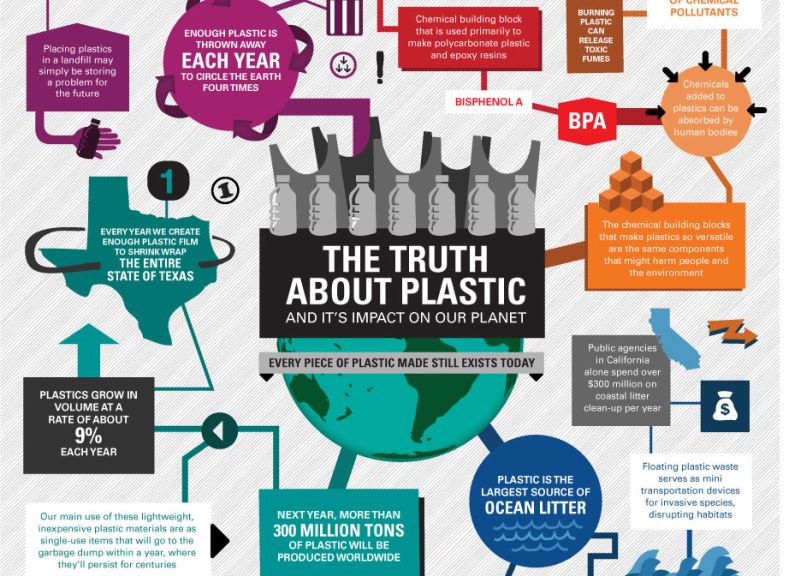
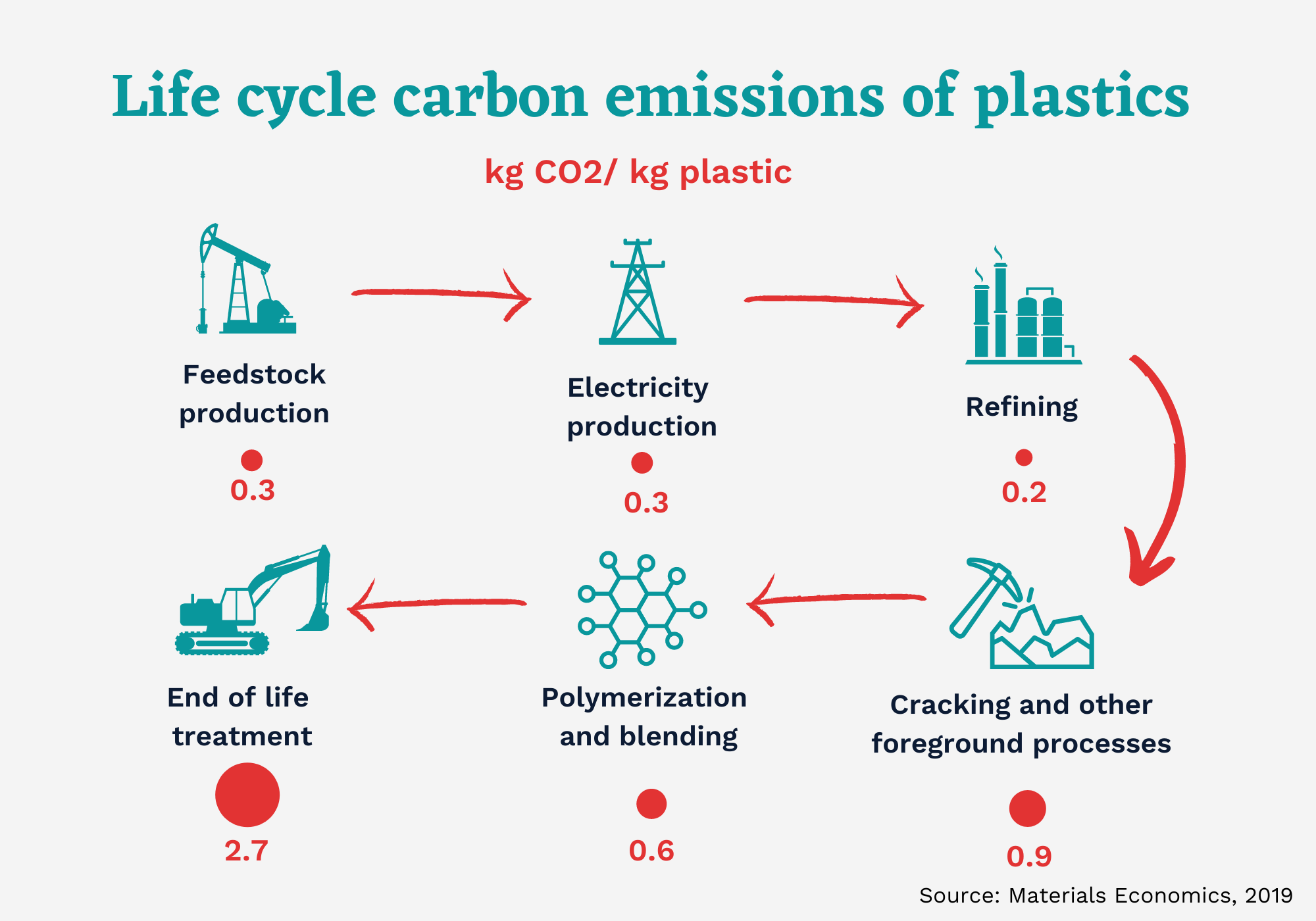
It is estimated that 9.2 billion tonnes of plastic have been made between 1950 and 2017 and more than half of this has been produced since 2004. In 2020, 400 million tonnes of plastic were produced. If global trends in plastic demand continue, it is estimated that by 2050, the annual global plastic production will reach over 1,100 million tonnes. Plastic’s carbon footprint has doubled in less than 30 years, now accounting for nearly 5% of total annual greenhouse gas emissions, accounting for nearly 5% of total annual greenhouse gas emissions. If plastics were a country, titwould be the fifth largest emitter in the world.
Plastic is virtually irreplaceable because it is cheap, strong, lightweight, and resistant to corrosion. Plastic is incredibly useful in modern life, but its widespread use may impair human sustainability. The production and disposal of plastic generate greenhouse gases and hazardous waste. Plastic and the chemicals it emits are building up on land and in oceans, lakes, rivers, ice, and air, and the resulting damage to human and ecological health is currently poorly understood. Most plastic is not recyclable and the vast majority does not biodegrade. Further, plastic products often break down into very small fragments called microplastics that can pollute ecosystems and are harmful to organisms.
While the excessive use of plastic packaging is concerning, some form of packaging is often necessary to maintain the hygiene or freshness of food, or maintain the integrity of a product during freight. Small or travel-size toiletries and personal hygiene products are sometimes seen as wasteful but are vital in providing affordable sanitation options for some of our most vulnerable communities, such as the homeless or low-income families. With an estimated 70% of the world’s population living on less than US$10 a day, toiletries in single-serve sachets provide an affordable sanitation option in developing markets. Plastics are also the cleanest, most efficient way to keep medical supplies sterile.
Replacing plastic with other materials is neither simple nor straightforward, mainly due to the challenge of finding an alternative that combines all the most desirable plastic properties. Biodegradable alternatives—such as special plastics, paper, or cardboard—may well have a higher greenhouse footprint because of the amount of water or natural resources consumed in their production. A study conducted last year by the Nanyang Technological University in Singapore found that reusable plastic bags are more eco-friendly than paper and cotton alternatives, but only in cities and countries with a well-structured waste management system that prevents leakage.
Why is plastic pollution a problem? Plastic is everywhere, from bags and single-use bottles and packages to car parts, pipes, and siding and so plastic waste is ubiquitous. It has been found, for example, in Arctic sea ice, beer, farm soil, trout and other wild freshwater fish, shrimp and other shellfish, songbirds and seabirds, human placentas, the Great Pacific Garbage Patch, midoceanic atolls, sea caves, the air and rain, and national parks and wilderness areas. While the impact of plastic pollution on sea life is well documented, scientists are just beginning to measure plastic’s effects on humans and human fertility, land ecosystems, crops and other plants.
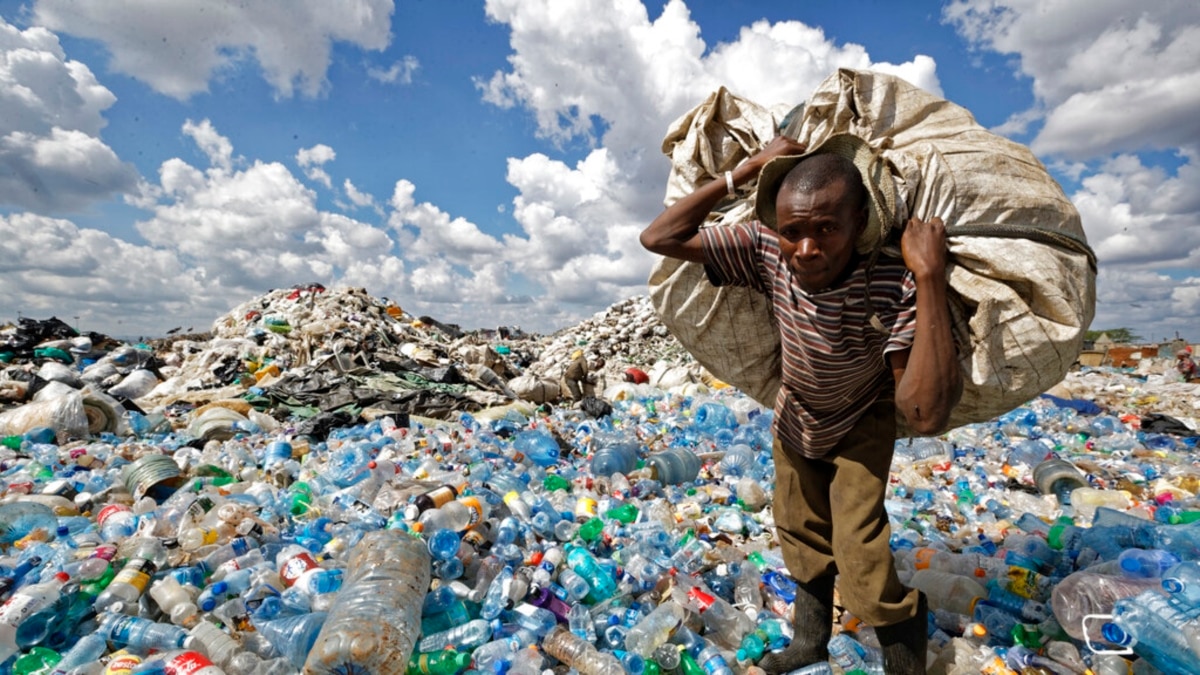
Plastic pollution is most visible in developing Asian and African nations, where garbage collection systems are often inefficient or nonexistent. But the developed world, especially in countries with low recycling rates, also has trouble properly collecting discarded plastics. Plastic trash has become so ubiquitous it has prompted efforts to write a global treaty negotiated by the United Nations.
Researchers estimate that nearly 7,000 million tons of virgin plastic have been manufactured around the world as of 2015. Of that, 9% may have been recycled, 12% has been incinerated, and the rest is in landfills, still in use, or in our environment. Globally, about one-fourth of plastic waste is never collected. In less wealthy countries, waste plastic is sometimes burned in the open, releasing toxic chemicals into the air.
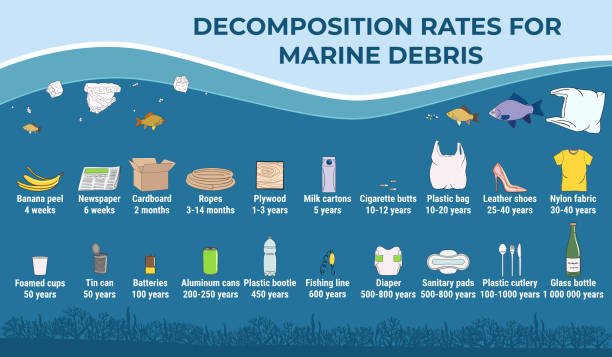
Half of all plastics ever manufactured have been made in the last 15 years. Production increased exponentially, from 2.3 million tons in 1950 to 448 million tons by 2015. Production is expected to double by 2050. Every year, about 8 million tons of plastic waste escapes into the oceans from coastal nations. That’s the equivalent of setting five garbage bags full of trash on every foot of coastline around the world. Plastics often contain additives making them stronger, more flexible, and durable. But many of these additives can extend the life of products if they become litter, with some estimates ranging to at least 400 years to break down. Most of the plastic trash in the oceans, Earth’s last sink, flows from land. Trash is also carried to sea by major rivers, which act as conveyor belts, picking up more and more trash as they move downstream. Once at sea, much of the plastic trash remains in coastal waters. But once caught up in ocean currents, it can be transported around the world. On Henderson Island, an uninhabited atoll in the Pitcairn Group isolated halfway between Chile and New Zealand, scientists found plastic items from Russia, the United States, Europe, South America, Japan, and China. They were carried to the South Pacific by the South Pacific gyre, a circular ocean current. Once at sea, sunlight, wind, and wave action break down plastic waste into small particles, often less than one-fifth of an inch across. These so-called microplastics are spread throughout the water column and have been found in every corner of the globe, from Mount Everest, the highest peak, to the Mariana Trench, the deepest trough.
Microplastics are breaking down further into smaller and smaller pieces. Plastic microfibers, meanwhile, have been found in municipal drinking water systems and drifting through the air. While plastic is durable, this also means plastic waste can be trapped in our environment for centuries, if not managed well. While plastics deteriorate into fragments easily through wear and tear, their polymer chains only break down into other smaller components at very high temperatures, such as during some chemical recycling processes. However, today only 15% of plastic waste is recycled.
Millions of animals are killed by plastics every year, from birds to fish to other marine organisms. Nearly 700 species, including endangered ones, are known to have been affected by plastics. Nearly every species of seabird eats plastics. Most of the deaths to animals are caused by entanglement or starvation. Seals, whales, turtles, and other animals are strangled by abandoned fishing gear or discarded six-pack rings. Microplastics have been found in more than 100 aquatic species, including fish, shrimp, and mussels destined for our dinner plates. In many cases, these tiny bits pass through the digestive system and are expelled without consequence. But plastics have also been found to have blocked digestive tracts or pierced organs, causing death. Stomachs so packed with plastics reduce the urge to eat, causing starvation. Plastics have been consumed by land-based animals, including elephants, hyenas, zebras, tigers, camels, cattle, and other large mammals, in some cases causing death. Tests have also confirmed liver and cell damage and disruptions to reproductive systems, prompting some species, such as oysters, to produce fewer eggs. New research shows that larval fish are eating nanofibers in the first days of life, raising new questions about the effects of plastics on fish populations. Once in the ocean, it is difficult—if not impossible—to retrieve plastic waste. Mechanical systems can be effective at picking up large pieces of plastic, such as foam cups and food containers, from inland waters. But once plastics break down into microplastics and drift throughout the water column in the open ocean, they are virtually impossible to recover.
The world still largely operates on the linear economy model, sometimes known as the take-make-discard model, where raw materials are used to manufacture products, only to be disposed of at the end of their short lifetimes.
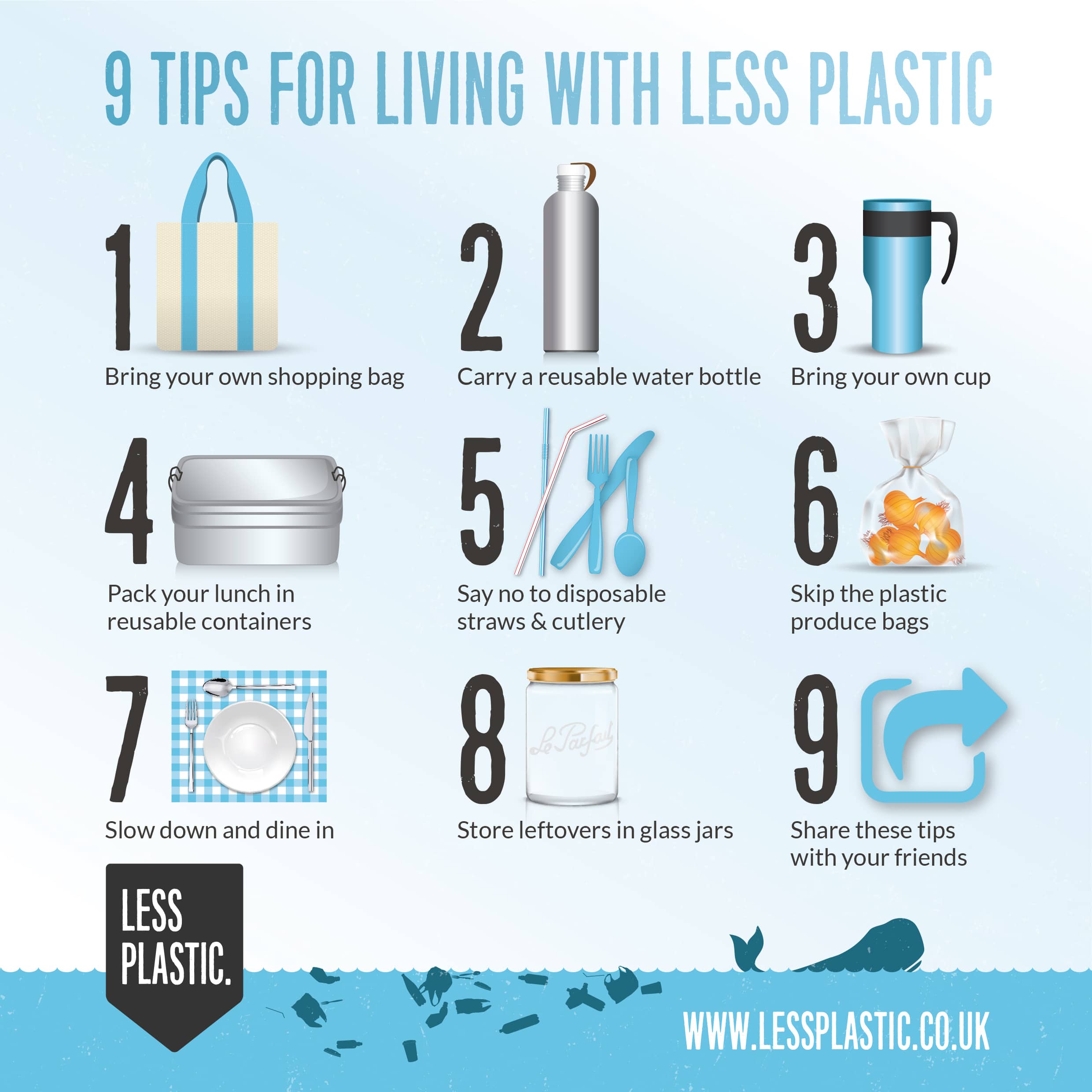
Transitioning to a more sustainable model is not rocket science if one can remember the 3 Rs: Reduce, Reuse, Recycle—in that specific order of priority. Reducing our overall consumption is about respecting our natural resources, only using what we need, and refusing unnecessary excess. Reuse is key to increasing the lifespan of the things we use which includes repairing or upcycling our items to give them a new lease on life. And finally recycling the waste we eventually generate is key to closing the loop in a circular economic model.
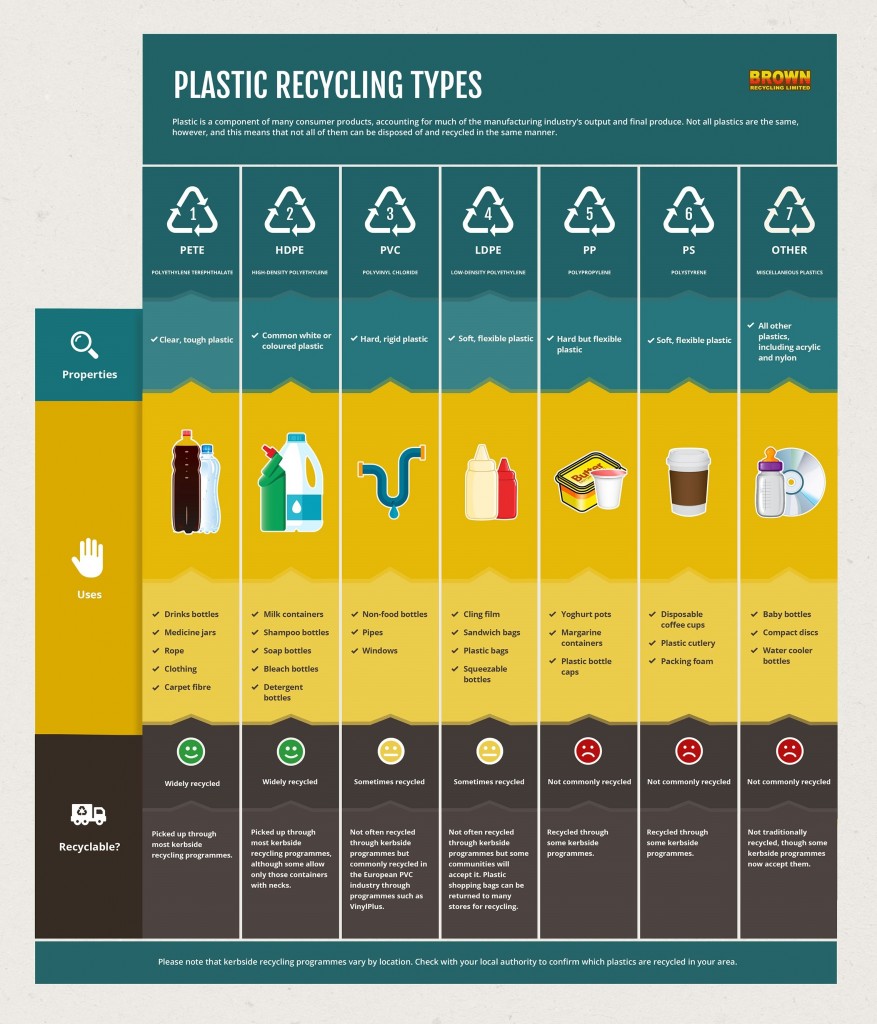
Many consumer plastic products are imprinted with triangular recyclable symbols. But only two kinds of plastic commonly end up recycled: The first is PET or polyethylene terephthalate, and the other is HDPE or high-density polyethylene, and within those, usually only bottles, tubs, and jugs and not salad containers, berry boxes, or clamshell packages. Together, these account for a small fraction of all plastic waste. Recyclable plastics are typically downcycled rather than fully recycled. This means that they are washed, ground into a powder, melted, and then extruded into pellets ready for reheating and remoulding and turned into products of lesser value that often cannot be recycled again. This process is known as mechanical recycling. When plastic waste is turned into a more valuable product, such as clothing or shoes, that is called upcycling. Recycling results in a product of equivalent value that can be recycled multiple times. However, the number of times plastic can be effectively recycled is currently limited. Other hard-to-recycle plastics such as LDPE, polyethylene film, or contaminated plastics like unwashed food containers can sometimes be recycled by using chemical recycling. This is a process where the polymer structure of the plastic is changed and converted into a feedstock that can replace virgin materials used in the production of plastics.
Southeast Asia has emerged as a hot spot for plastic pollution because of rapid urbanization and a rising middle class, whose consumption of plastic products and packaging is growing due to their convenience and versatility. But local waste management infrastructure has not kept pace, resulting in large quantities of mismanaged waste. COVID-19 has exacerbated the situation due to increased consumption of masks, sanitiser bottles, and online delivery packaging.
In Thailand, the Philippines, and Malaysia, more than 75% of the material value of recyclable plastic is lost, – the equivalent of $6 billion a year when single-use plastic is discarded rather than recovered and recycled, according to a series of landmark studies by the World Bank Group. With only 18 to 28% of recyclable plastic recovered and recycled in these countries, most plastic packaging waste is not only left to pollute the environment, littering beaches and roadsides but its value to these economies is also lost.
The world is beginning to accept that it is time to tackle the plastic waste problem. Currently, more than 30% of the world does not have access to proper collection and disposal of waste. There is no silver bullet solution. It’s not about swapping from one single-use lifestyle to another, but instead about changing our behaviour to balance convenience and sustainability, and asking industry and governments to work together to drive the best environmental solutions.