In My Hands Today…

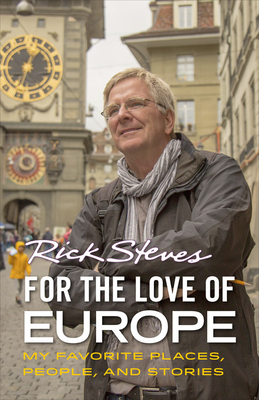
For the Love of Europe: My Favorite Places, People, and Stories – Rick Steves

After 40+ years of writing about Europe, Rick Steves has gathered 100 of his favorite memories together into one inspiring collection: For the Love of Europe: My Favorite Places, People, and Stories.

Join Rick as he’s swept away by a fado singer in Lisbon, learns the dangers of falling in love with a gondolier in Venice, and savors a cheese course in the Loire Valley. Contemplate the mysteries of centuries-old stone circles in England, dangle from a cliff in the Swiss Alps, and hear a French farmer’s defense of foie gras.

With a brand-new, original introduction from Rick reflecting on his decades of travel, For the Love of Europe features 100 of the best stories published throughout his career. Covering his adventures through England, France, Germany, Ireland, Italy, the Netherlands, Spain, and more, these are stories only Rick Steves could tell.

Wry, personal, and full of Rick’s signature humor, For the Love of Europe is a fond and inspirational look at a lifetime of travel.

In My Hands Today…

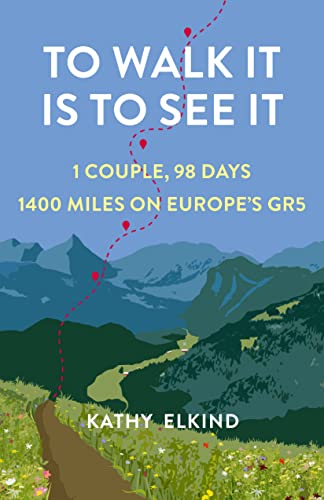
To Walk It Is to See It: 1 Couple, 98 Days, 1400 Miles on Europe’s GR5 – Kathy Elkind

In 2018, Kathy Elkind and her husband decided to take a grown-up “gap year” in Europe and walk the 1,400-mile Grande Randonnée Cinq (GR5) across The Netherlands, Belgium, Luxembourg, and France.

At fifty-seven, Kathy has chosen comfort over hardship: Unlike the Appalachian Trail and the Pacific Coast Trail, the GR5 winds from village to village instead of campsite to campsite. She and Jim get to indulge in warm beds and delicious regional food every night and croissants in the mornings.

The GR5 is not all comfort. Walking day after day for ninety-eight days bring sickness, accommodation struggles, language barriers, and storm-shrouded mountains in the Alps.

Meanwhile, Kathy finds herself reflecting on difficult topics—primarily, her struggles with dyslexia, overeating, and shame. But she also finds that the walking becomes a moving meditation and the beauty of the landscape heals; she begins to discover her own wise strength; and as the days unfold, she comes to the gratifying realization that a long marriage is like a long trail: there are ups and downs and it takes hard work to keep going, but the beauty along the way is staggering.

In My Hands Today…

Neither Here nor There: Travels in Europe – Bill Bryson

Bill Bryson’s first travel book, The Lost Continent, was unanimously acclaimed as one of the funniest books in years. In Neither Here nor There he brings his unique brand of humour to bear on Europe as he shoulders his backpack, keeps a tight hold on his wallet, and journeys from Hammerfest, the northernmost town on the continent, to Istanbul on the cusp of Asia. Fluent in, oh, at least one language, he retraces his travels as a student twenty years before.

Whether braving the homicidal motorist of Paris, being robbed by gypsies in Florence, attempting not to order tripe and eyeballs in a German restaurant, window-shopping in the sex shops of the Reeperbahn or disputing his hotel bill in Copenhagen, Bryson takes in the sights, dissects the culture and illuminates each place and person with his hilariously caustic observations. He even goes to Liechtenstein.

In My Hands Today…

Ghost Train to the Eastern Star – Paul Theroux

This image has an empty alt attribute; its file name is 2071926.jpg

In Ghost Train to the Eastern Star, Theroux recreates an epic journey he took thirty years ago, a giant loop by train (mostly) through Eastern Europe, Turkey, the Caucasus, Central Asia, the Indian Subcontinent, China, Japan, and Siberia.

In short, he traverses all of Asia top to bottom, and end to end. In the three decades since he first travelled this route, Asia has undergone phenomenal change. The Soviet Union has collapsed, China has risen, India booms, Burma slowly smothers, and Vietnam prospers despite the havoc unleashed upon it the last time Theroux passed through. He witnesses all this and so much more in a 25,000 mile journey, travelling as the locals do, by train, car, bus, and foot.

His odyssey takes him from Eastern Europe, still hungover from Communism, through tense but thriving Turkey, into the Caucasus, where Georgia limps back toward feudalism while its neighbour Azerbaijan revels in oil-driven capitalism. As he penetrates deeper into Asia’s heart, his encounters take on an otherworldly cast. The two chapters that follow show us Turkmenistan, a profoundly isolated society at the mercy of an almost comically egotistical dictator, and Uzbekistan, a ruthless authoritarian state. From there, he retraces his steps through India, Mayanmar, China, and Japan, providing his penetrating observations on the changes these countries have undergone.

Travel Bucket List – Europe: United Kingdom – 2

After I blogged about Part 1 of my UK bucket list, I spoke about it to GG. She immediately got excited and wanted to visit London immediately! Since S and to an extent BB had less interest in the historical sites we would want to see, she suggested that they stay back while we explore these places. I had to curb her enthusiasm a bit and promised her we would very soon go there. On to some more places in London and the UK that I would definitely want to visit.

Source


The Shard: In 2012, Italian architect Renzo Piano transformed London’s skyline with a strange but striking structure. Despite its glassy, futuristic look, the huge pyramid that is The Shard (now the capital’s tallest tower) was in fact influenced by the London of old. Piano took inspiration from the eighteenth-century spires he’d seen in artworks by Venetian landscape painter Canaletto. Reaching 244 metres from the ground, The Shard was built with everything in mind: offices, homes, hotels, bars, restaurants and, of course, the alluring viewing platform. From the highest point, the public is allowed access (floors 69-72) you get stunning 360° views of the city.

Source

The London Eye: The London Eye is a gigantic Ferris wheel located on the south bank of the River Thames. It was completed at the beginning of the 2000s, which is why it bears the nickname The Millennium Wheel. The wheel stands tall at 443 feet and has a diameter of 120 meters. A complete wheel turn takes about 30 minutes and the capsules provide visitors with a stunning 360° view of London. It’s recorded as the world’s tallest Ferris wheel and is a true beauty at night when it comes alive with bright neon colours. Tourists are entertained with a glass of royal champagne as they enjoy a sweet ride.

Source

Museums and Galleries: As I have mentioned previously, GG and me and to an extent BB are history buffs and so visits to the various museums and galleries in London like the British Museum, National Gallery, Tate Modern, Natural History Museum, Museum of London, Science Museum, Victoria and Albert Museum and the British Library will be a must. I understand quite a few of these are free and this will be a huge boon to tourists on a budget.

Source

Royal Observatory Greenwich: Visit the Royal Observatory Greenwich and stand on the world-famous Meridian Line with one foot in the west and one foot in the east. With your complimentary audio guide, learn about the discoveries of great scientists and inventors based at or associated with the Royal Observatory. Explore how great scientists first mapped the seas and the stars in Charles II’s magnificent Christopher Wren-designed Octagon Room – dating from 1675. Marvel at the Great Equatorial Telescope, the UK’s largest historic telescope which gave astronomers new views of the universe over 100 years ago. From the Royal Observatory, you will enjoy one of the most loved views of London across Greenwich Royal Park and the river Thames.

Source

Bath: One of the most beautiful cities in the whole of the UK, with a rich and varied history stretching back thousands of years, it’s easy to see why Bath welcomes hundreds of thousands of visitors every year. First established by the Romans who built temples around the hot springs here in 76BC, Bath has been welcoming weekenders for almost 2,000 years. This pretty spa town is oozing with history, from the Roman baths (of course) to its grand Georgian houses, parks and sweeping crescents, timeless attractions and Victorian gothic structures. Bath’s natural hot springs are what the city is most famous for, but it also has a fantastic cultural scene, with plenty of theatre, music, comedy, art and more.

Source

Stonehenge: One of the most important survivals of prehistoric England, Stonehenge consists of a group of huge rough-cut stones, some more than 20 feet high, arranged in two concentric circles. Located 10 miles north of Salisbury on Salisbury Plain, Stonehenge is Europe’s best-known prehistoric monument (the site is so popular that visitors need to purchase a timed ticket in advance to guarantee entry). Exhibitions at the excellent visitor centre set the stage for a visit, explaining through audio-visual experiences and more than 250 ancient objects how the megaliths were erected and telling about life when they were placed here, between 3000 and 1500 BC. After walking around the enormous stones, visit the authentic replicas of Neolithic Houses to see the tools and implements of everyday Neolithic life as volunteers demonstrate skills from 4,500 years ago.

Source

Manchester: S is a huge fan of the English Premier League and the team he supports is Manchester United. So for him, a trip to the industrial town is a must if we are in England. A visit to the Theatre of Dreams, Old Trafford where he can pay homage to his favourite players plus a visit to the National Football Museum and we should be done here.

Source

Loch Ness and Inverness: Nessie is Loch Ness’s oldest resident, first sighted back in the sixth century. Over the years, a host of hunters and hoaxers have followed in her wake, but we’ve yet to get a clear shot of the monster. If you fancy your luck, Jacobite offer a range of tours on the water, from sedate cruises to the high speed ‘Beastie Boats’. Even if Nessie is feeling shy during your visit, the loch (never pronounced ‘lock’ with a hard ‘k’ sound) remains a prime example of austere Scottish beauty. Gazing into that deep, murky water, it’s hard to shake the feeling that something is staring back.

Source

Stratford on Avon: This market town in England was the birthplace of Shakespeare and so the best things to do in Stratford-upon-Avon includes plenty of attractions related to its most famous inhabitant. Catch a show by the eminent Royal Shakespeare Company at one of its theatres or visit some of the well-preserved buildings whose very walls tell the story of the Bard’s life and death.

I am sure there are many attractions and places I have missed on this list. I am going to do some more research and see if I can come up with part 3. Are there any attractions or places you feel need to be included? Would love to hear from you.