In My Hands Today…

Borderlines: A History of Europe, Told from the Edges – Lewis Baston

A riveting history of Europe told through twenty-nine key borders that define the past, present and future of our continent

Europe’s internal borders have rarely been ‘natural’; they have more often been created by accident or force.

In Borderlines, political historian Lewis Baston journeys along twenty-nine key borders from west to east Europe, examining how the map of our continent has been redrawn over the last century, with varying degrees of success. The fingerprints of Napoleon, Alexander I, Castlereagh, Napoleon III and Bismarck are all there, but today’s map of Europe is mostly the work of the Allies in 1919 and Stalin in 1945.

To journey to the centre of the story of Europe, Baston takes us right to its edges, bringing to life the fascinating and often bizarre histories of these border zones. We visit Baarle, the town broken into thirty fragments by the Netherland-Belgium border, and stop in Ostritz, the eastern German town where Nazis held a rock festival. We meander the back lanes of rural Ireland, and soak up the atmosphere in the Viennese-style coffee houses of the elegant Ukrainian city of Chernivtsi. Through these borderlands, Baston explores how places and people heal from the scars left by a Europe of ethnic cleansing and barbed wire fences, and he searches for a better European future – finding it in unexpected places.
In My Hands Today…

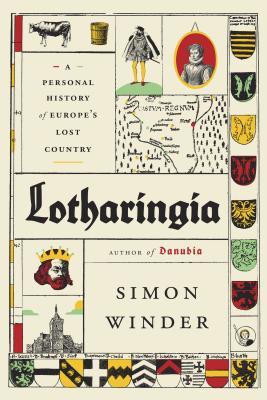
Lotharingia: A Personal History of Europe’s Lost Country – Simon Winder

In 843 AD, the three surviving grandsons of the great emperor Charlemagne met at Verdun. After years of bitter squabbles over who would inherit the family land, they finally decided to divide the territory and go their separate ways.

In a moment of staggering significance, one grandson inherited the area we now know as France, another Germany and the third received the piece in between: Lotharingia.

Lotharingia is a history of in-between Europe. It is the story of a place between places. In this beguiling, hilarious, and compelling book, Simon Winder retraces the various powers that have tried to overtake the land that stretches from the mouth of the Rhine to the Alps and the might of the peoples who have lived there for centuries.

In My Hands Today…

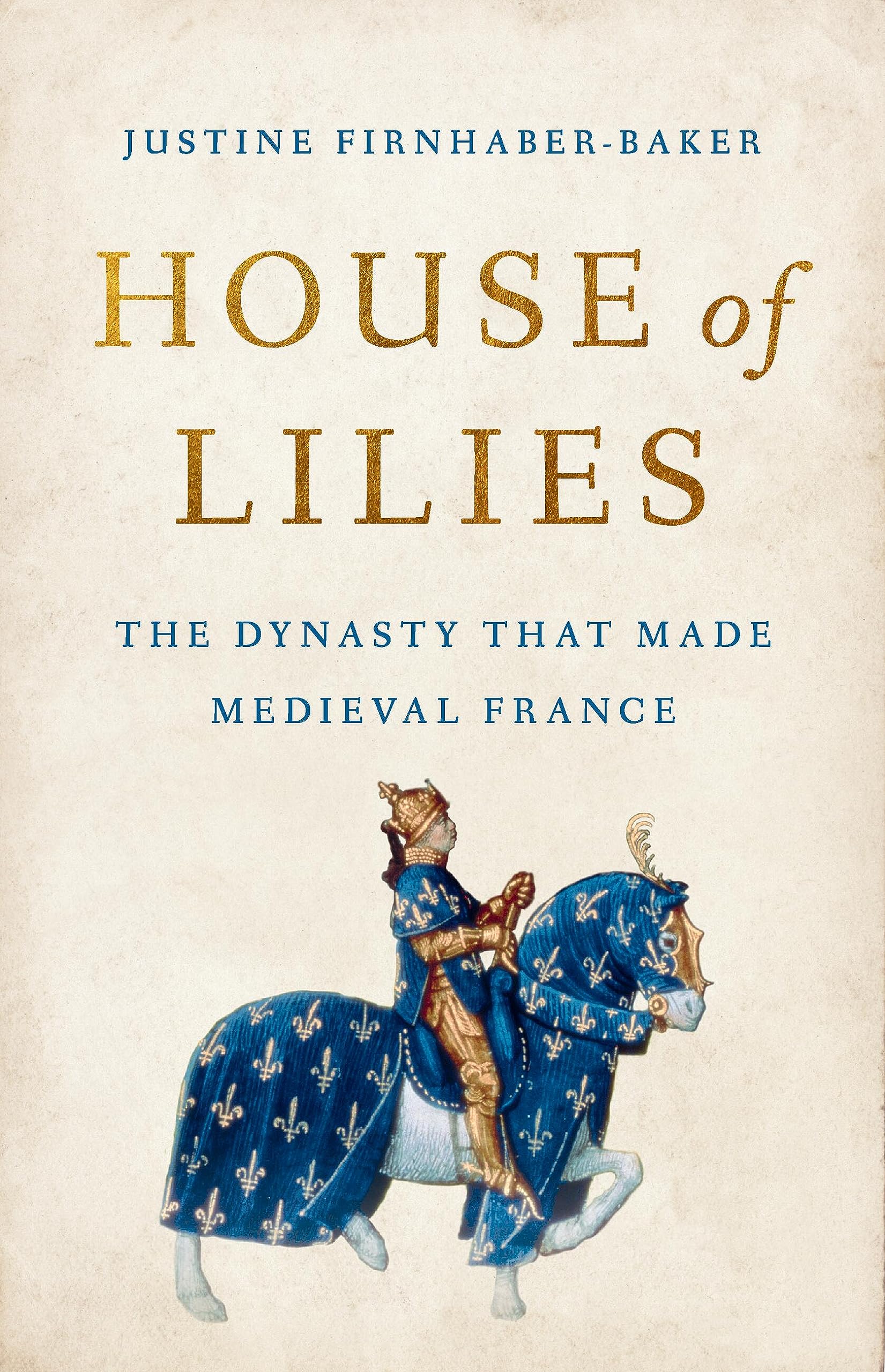
House of Lilies: The Dynasty That Made Medieval France – Justine Firnhaber-Baker

The definitive history of the Capetians, the crusading dynasty that made the French crown the wealthiest and most powerful in medieval Europe and forged France as we know it today

In House of Lilies , historian Justine Firnhaber-Baker tells the epic story of the Capetian dynasty of medieval France, showing how their ideas about power, religion, and identity continue to shape European society and politics today.

Reigning from 987 to 1328, the Capetian kings became the most powerful monarchy of the Middle Ages and established the foundations of a shared French culture. Consolidating a fragmented realm that eventually stretched from the Rhône to the Pyrenees, they were the first royal house to adopt the fleur-de-lys, displaying this lily emblem to signify their divine favor and legitimate their rule. The Capetians played a part in some of the most dramatic and far-reaching episodes in European history, including the Crusades, bloody waves of religious persecution, and a series of wars with England. The Capetian age saw the emergence of Gothic architecture, the romantic ideals of chivalry and courtly love, and the Church’s role at the center of daily life.

Evocatively interweaving these pivotal developments with the human stories of the rulers who drove them, House of Lilies is the definitive history of the dynasty that forged France—and Europe—as we know it.

In My Hands Today…

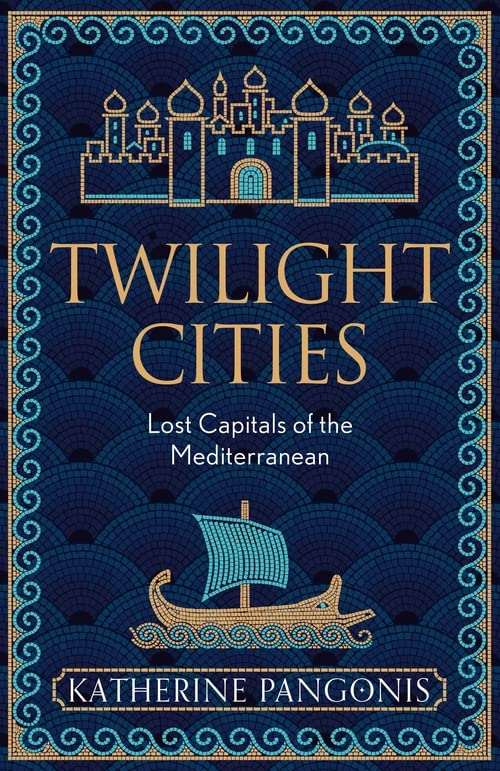
Twilight Cities: Lost Capitals of the Mediterranean – Katherine Pangonis

Its name means ‘centre of the world’, and since the dawn of history the Mediterranean Sea has formed the shared horizon of innumerable cultures. Here, history has blurred with legend. The glittering surface of the sea conceals the remnants of lost civilisations, wrecked treasure ships and the bones of long-drowned sailors, traders and modern refugees.

Of the many cities that dot this ancient coastline, Tyre, Carthage, Syracuse, Ravenna and Antioch are among the oldest and most intriguing. All are beautifully situated, and for layers of history and cultural riches they are rivalled only by their sister cities of Rome, Istanbul and Jerusalem. Yet their fates have been remarkably different. Once major power centres, all five have declined into relative obscurity. Nevertheless, their entwined history takes in Alexander the Great, Nebuchadnezzar, Archimedes and the Roman, Byzantine, Arab and Norman conquests, and their greatness still lingers for those who seek it out.

To bring these mysterious lost capitals to life, historian Katherine Pangonis sets out on a voyage from the dawn of civilisation on the Lebanese coast to a modern-day Turkey wracked by the devastation of the 2023 earthquake. Combining on the ground research with spellbinding storytelling skills, here is a revelatory new story of the Mediterranean, and a powerful reflection on the sometimes fleeting glory of empires.

In My Hands Today…

The Balkans: Nationalism, War and the Great Powers 1804 – 1999 – Misha Glenny

This unique and lively history of Balkan geopolitics since the early nineteenth century gives readers the essential historical background to recent events in this war-torn area.

No other book covers the entire region or offers such profound insights into the roots of Balkan violence, or explains so vividly the origins of modern Serbia, Croatia, Bosnia, Greece, Bulgaria, Romania, and Albania.

Misha Glenny presents a lucid and fair-minded account of each national group in the Balkans and its struggle for statehood. The narrative is studded with sharply observed portraits of kings, guerrillas, bandits, generals, and politicians. Glenny also explores the often-catastrophic relationship between the Balkans and the Great Powers, raising some disturbing questions about Western intervention.