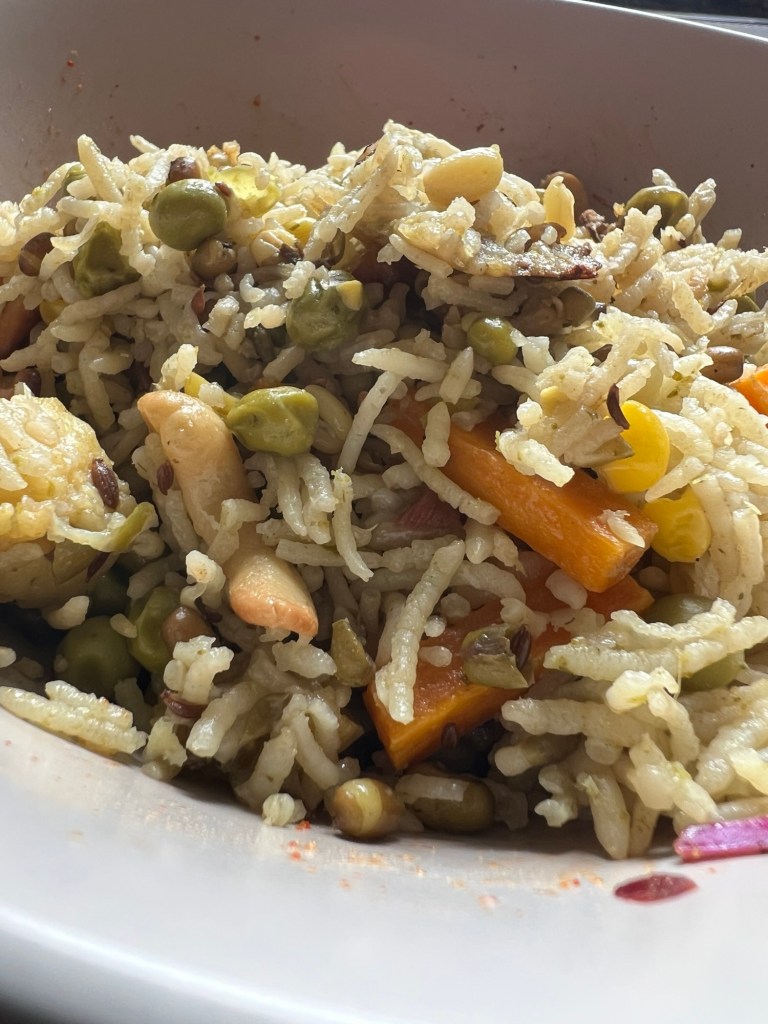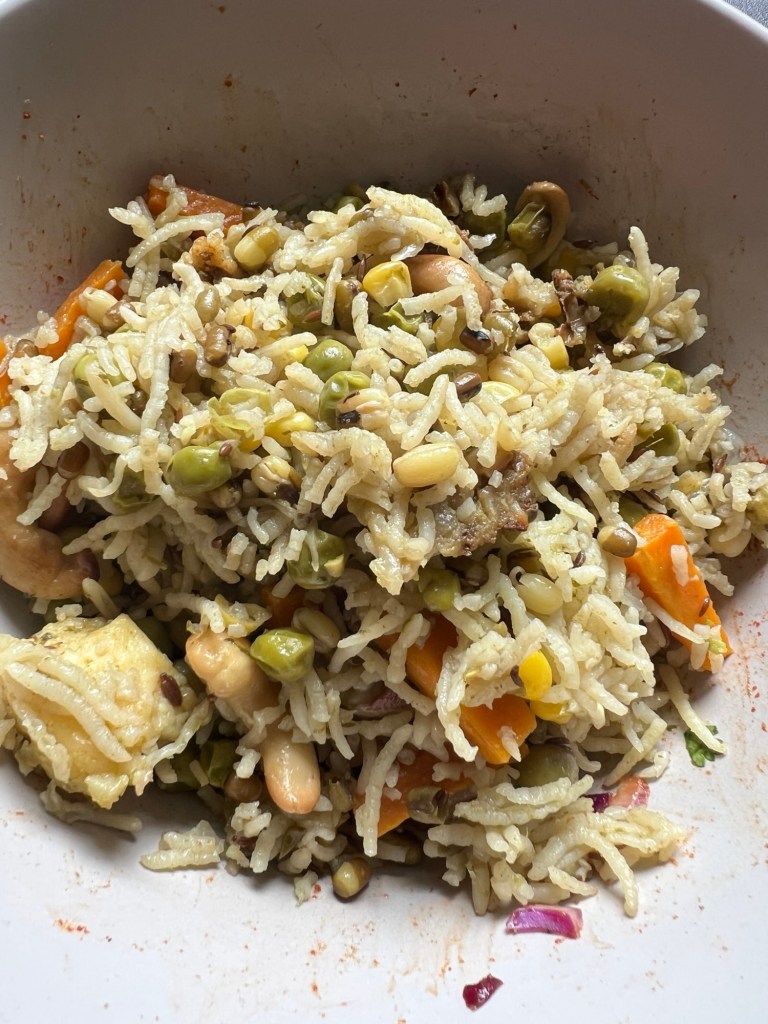
Recipes: Mixed Vegetable Moong Dal Pulao

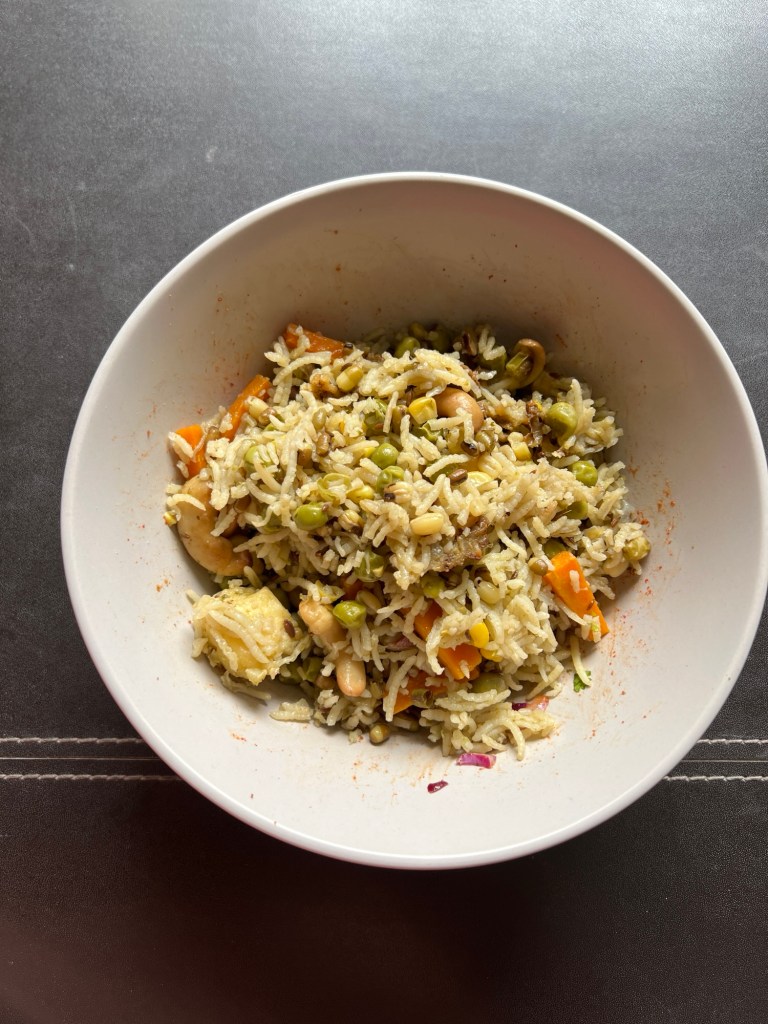
A couple of months back, while doomscrolling, I came across a similar recipe and knew I had to try it. Last week, I finally had a chance to make this. Combining the goodness of whole moong dal and mixed vegetables, this pulao is wholesome, flavourful and protein-packed and is ideal for a school or office lunchbox.

Sprouted moong dal is often referred to as a superfood due to its exceptional nutritional profile. It is rich in nutrients as it contains essential vitamins like A, B, C, and E, as well as minerals like iron, potassium, magnesium, and zinc, as well as being high in protein and dietary fibre. Sprouting enhances enzyme activity, making it easier to digest compared to regular legumes. The high fibre content promotes gut health by preventing constipation. It is rich in potassium and magnesium, which help regulate blood pressure and antioxidants that reduce oxidative stress and inflammation linked to heart disease. Because of its low glycemic index, glucose is slowly released into the bloodstream, and thus it is beneficial for diabetics due to its ability to stabilise blood sugar levels. The high protein and fibre content promotes satiety and prevents overeating. Sprouted moong dal contains vitamin C and antioxidants that strengthen immune defenses while its antioxidants help combat free radicals that cause skin aging.

Mixed Vegetable Moong Dal Pulao

Ingredients:

  • 1 cup Basmati rice, washed and soaked for 30 minutes
  • 1 cup whole moong dal, soaked for 6-8 hours. Bonus points if the dal starts to sprout
  • 1 cup chopped mixed vegetables (I used carrots, peas and corn)
  • 1 medium-sized onion, sliced
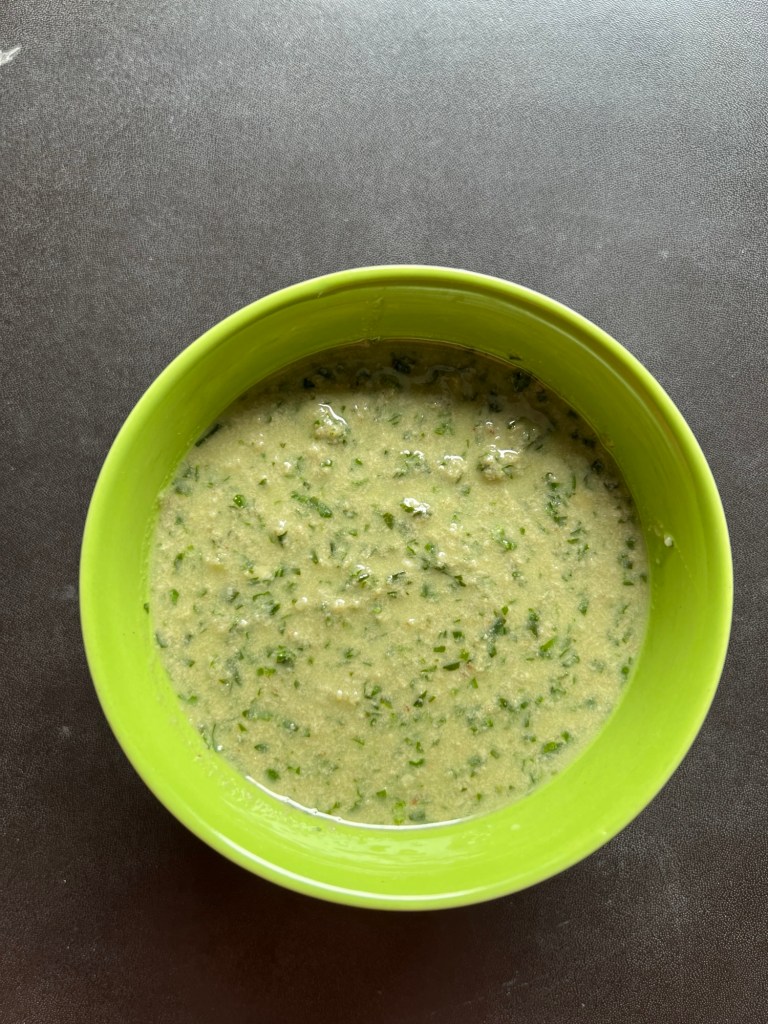
  • 1 tsp ginger-green chilli paste
  • 2 tbsp finely chopped fresh coriander leaves
  • 10-12 cashew nuts
  • 1 bay leaf
  • 1-inch piece of cinnamon stick
  • 4-5 cloves
  • 4-5 cardamom pods
  • 1 tsp cumin seeds
  • Salt to taste
  • 2 tbsp ghee 
  • 2 cups water

Method:

  • If using whole green moong beans, soak them overnight or for 6-8 hours. Drain and leave them in a damp cloth for a day to sprout. Rinse the sprouts before use. If you are unable to sprout, just use the soaked and drained moong beans.
  • Soak the rice for 30 minutes
  • Heat ghee in a heavy-bottomed pan or pressure cooker.
  • Fry the cashew nuts until light brown and keep aside.
  • Add cumin seeds, bay leaf, cinnamon stick, cloves, and cardamom pods in the same ghee. Sauté until aromatic.
  • Add sliced onions and sauté until golden brown.
  • Stir in the ginger-green chilli paste and cook for a minute.
  • Add chopped mixed vegetables. Cook for 2-3 minutes
  • Add in the mixed vegetables and moong dal. Sauté for another minute.
  • Drain the soaked rice and add it to the pan. Gently mix with the vegetables.
  • Season with salt as needed.
  • If using a rice cooker, add the rice, moong dal, and vegetables to the rice cooker. Add in the fried cashew nuts and mix well. Now add in the 2 cups of water and cook until done. Let the pulao sit in the rice cooker for a while, then open and lightly fluff with a fork. 
  • If cooking it on the stove, pour in water and bring it to a boil. Cover with a lid and cook on low heat until the rice is done. Alternatively, you can pressure cook for one whistle. Let the pulao rest for a few minutes after cooking.
  • Garnish with fresh coriander leaves and serve hot with a raita of your choice.

In My Hands Today…

The Whole Foods Diet: The Lifesaving Plan for Health and Longevity – John Mackey, Alona Pulde, Matthew Lederman

The Whole Foods Diet simplifies the huge body of science, research, and advice that is available today and reveals the undeniable consensus: a whole foods, plant-based diet is the optimum diet for health and longevity.

Standing on the shoulders of the Whole Foods Market brand and featuring an accessible 28-day program, delicious recipes, inspirational success stories, and a guilt-free approach to plant-based eating, The Whole Foods Diet is a life-affirming invitation to become a Whole Foodie: someone who loves to eat, loves to live, and loves to nourish themselves with nature’s bounty.

If Whole Foods Market is “shorthand for a food revolution” (The New Yorker), then The Whole Foods Diet will give that revolution its bible – the unequivocal truth about what to eat for a long, healthy, disease-free life.

In My Hands Today…

The Flavour Thesaurus – Niki Segnit

Ever wondered why one flavour works with another? Or lacked inspiration for what to do with a bundle of beetroot? The Flavour Thesaurus is the first book to examine what goes with what, pair by pair.

The book is divided into flavour themes including Meaty, Cheesy, Woodland and Floral Fruity. Within these sections it follows the form of Roget’s Thesaurus, listing 99 popular ingredients alphabetically, and for each one suggesting flavour matchings that range from the classic to the bizarre.

You can expect to find traditional pairings such as pork & apple, lamb & apricot, and cucumber & dill; contemporary favourites like chocolate & chilli, and goat’s cheese & beetroot; and interesting but unlikely-sounding couples including black pudding & chocolate, lemon & beef, blueberry & mushroom, and watermelon & oyster.

There are nearly a thousand entries in all, with 200 recipes and suggestions embedded in the text. Beautifully packaged, The Flavour Thesaurus is not only a highly useful, and covetable, reference book for cooking – it might keep you up at night reading.

Recipes: Potato Podi Curry

A staple in Tamil Brahmin weddings, Potato Podi Curry, or Urulai Kizhangu Kara Curry, holds a special place in Tamil Brahmin cuisine. This flavourful and spicy potato curry is made without onions and garlic, making it suitable for festive occasions. 

Potato Podi Curry 

Ingredients:

For the potatoes:

  • 4-5 medium-sized potatoes
  • ¼ tsp turmeric powder
  • ¼ tsp asafoetida powder
  • Salt to taste
  • 1 tbsp chopped coriander leaves 
  • 1 tbsp oil
  • 2 tsp mustard seeds
  • 10-12 curry leaves

For the Podi Powder

  • 2 tbsp coriander seeds
  • 2 tbsp chana dal (split Bengal gram)
  • 2 tbsp urad dal
  • 2 tbsp fennel seeds
  • 2 tbsp black peppercorn
  • 2-3 tbsp Kashmiri chilli powder
  • ¼ tsp fenugreek seeds

Method:

  • Wash the potatoes thoroughly. This curry will have unpeeled potatoes, so make sure the potatoes are cleaned. 
  • Chop the potatoes into small, bite-sized pieces. Drop the potatoes in cold water to avoid oxidisation.
  • In the meantime, heat a small skillet and dry roast the ingredients for the podi powder one by one, until they are crisp. Keep aside and let them cool.
  • Once cool, grind the spices to a fine powder. Keep aside.
  • In a large saucepan, add about 4-5 cups of water, add ¼ tsp turmeric and some salt and once the water comes to a rolling boil, add the potatoes and cook the potatoes until they are about 80% done, stirring occasionally.
  • Check to see if the potatoes are done. This can be done by taking a piece and pressing it with your finger. If you can mash it with your fingers, it is cooked. At this point remove the potatoes from the saucepan, drain them and keep aside.
  • Heat about 2-3 tbsp oil in a large pan and once warm add in the mustard seeds. When the mustard seeds pop, add in the curry leaves and mix. 
  • Now add in the asafoetida powder and once that is mixed, add in the drained potatoes.  Season with salt.
  • Add the podi powder and Kashmiri red chilli and mix gently.
  • On a low flame let the potatoes finish cooking. This should take about 7-10 minutes. 
  • Serve the potato podi curry with any South Indian meal.

Sustainable Gastronomy Day

Sustainable Gastronomy Day, celebrated annually on June 18, is an initiative established by the United Nations to raise awareness about the importance of sustainable food practices. This day emphasises the role of gastronomy in promoting food security, preserving biodiversity, and fostering agricultural development. It serves as a platform to highlight how sustainable gastronomy can contribute to achieving sustainable development goals (SDGs) globally.

Sustainable gastronomy is a concept that intertwines culinary practices with environmental consciousness. It refers to food systems that prioritise local sourcing, seasonal ingredients, and traditional cooking methods. This approach not only minimises waste but also supports local economies and preserves cultural heritage.

Key elements of sustainable gastronomy include local sourcing and emphasising the use of ingredients that are grown or produced in the local area; seasonal eating by the encouragement of the consumption of foods that are in season, which reduces the carbon footprint associated with transportation, waste reduction by implementing practices that minimise food waste throughout the supply chain, and conserving biodiversity by supporting agricultural practices that protect diverse ecosystems and promote the conservation of local species.

The significance of sustainable gastronomy has become increasingly apparent in light of global challenges such as climate change, food insecurity, and biodiversity loss. By adopting sustainable culinary practices, individuals and communities can contribute to a healthier planet and a more equitable food system.

The relevance of sustainable gastronomy is underscored by several pressing global issues:

  • Food Security: An estimated one-third of all food produced globally is wasted, so sustainable gastronomy plays a vital role in addressing food security challenges. Reducing waste can help ensure that more food reaches those in need, thereby alleviating hunger.
  • Environmental Impact: The food production system is a significant contributor to greenhouse gas emissions, deforestation, and water pollution. Sustainable gastronomy encourages practices that mitigate these impacts, such as organic farming and responsible sourcing.
  • Cultural Heritage: Gastronomy is not just about food; it is a reflection of cultural identity and heritage. Sustainable gastronomy promotes the preservation of traditional cooking methods and local cuisines, fostering cultural diversity.
  • Health Benefits: Eating locally sourced and seasonal foods often leads to healthier diets rich in nutrients while reducing reliance on processed foods laden with preservatives.

Sustainable Gastronomy Day was officially established by the United Nations General Assembly on December 21, 2016. The first observance took place on June 18, 2017. This initiative was launched to recognise gastronomy as a form of cultural expression linked to the natural and cultural diversity of the planet. The day aims to promote awareness about how sustainable gastronomy can contribute to achieving various SDGs, including poverty reduction, health and well-being, responsible consumption, and climate action. The collaboration between organizations such as UNESCO and the Food and Agriculture Organization (FAO) ensures that Sustainable Gastronomy Day is observed globally with educational initiatives and events.

Looking ahead to 2025, the theme for Sustainable Gastronomy Day is “More Taste, Less Waste.” This theme emphasises the importance of flavour while promoting innovative approaches to reduce food waste within culinary practices. The initiative will encourage chefs, restaurants, and consumers to explore creative ways to utilise all parts of ingredients and minimise waste through thoughtful meal planning and preparation techniques. The theme aligns with ongoing efforts to highlight the economic and environmental benefits of reducing food waste while celebrating culinary creativity. Events such as Sustainable Gastronomy Restaurant Week will be part of this initiative, showcasing how chefs can offer delicious meals without compromising sustainability principles.

Sustainable Gastronomy Day reminds us of the interconnectedness between our food systems, cultural heritage, and environmental sustainability. By embracing sustainable gastronomic practices, we can contribute to a healthier planet while enjoying diverse culinary experiences.