Recipes: (Almost) Instant Onion Chutney

Today’s recipe is a chutney frequently served with South Indian food at restaurants. I saw this recipe in a reel a few months back, so recently, when I made masala dosai, I decided to make this quick chutney, albeit with my own take. The chutney took less than 10 minutes to make, and this included the prep work, which was miniscule. 

(Almost) Instant Onion Chutney

Ingredients:

  • 2-3 medium sized onions, roughly chopped
  • 3-5 cloves of garlic, peeled
  • 1 tsp ginger, peel and chopped roughly
  • 1 small ball of tamarind
  • 3-4 dried red chillies, destalked
  • 1-2 tsp jaggery powder
  • Salt to taste

Method:

  • In a blender, blend together all the ingredients into a smooth paste.
  • Check for seasoning and add salt and jaggery powder as needed.
  • Serve with Idlis and dosai or even chapati or bread.

Notes:

  • My chutney turned brown/purple because I only had purple onions at home. If you use the white onions, it turns a nice red colour
  • For some people, the taste of the onions may be strong, so in such cases, you can lightly sauté the onions and cool it before blending it.
  • I used jaggery powder, but this can be substituted with rock jaggery or even sugar.
  • As a South Indian, I always have tamarind fruit at home. This can be found in Indian stores, but as a substitute, you can also use 1 tsp tamarind paste or even lemon juice to amp up the tartness.
  • Traditional South Indian chutneys typically have a tempering on top. I don’t like that, so either avoid it or do it before I blend. If you want the tempering, heat 1 tsp oil in a small pan and when the oil heats up, add in 1 tsp mustard seeds and let them pop. Then put in 2 dry red chillies, along with 1 tsp urad dal and once the urad dal starts to brown, remove from the flame and pour over the chutney.
  • The untempered chutney is a great addition to sandwiches. 

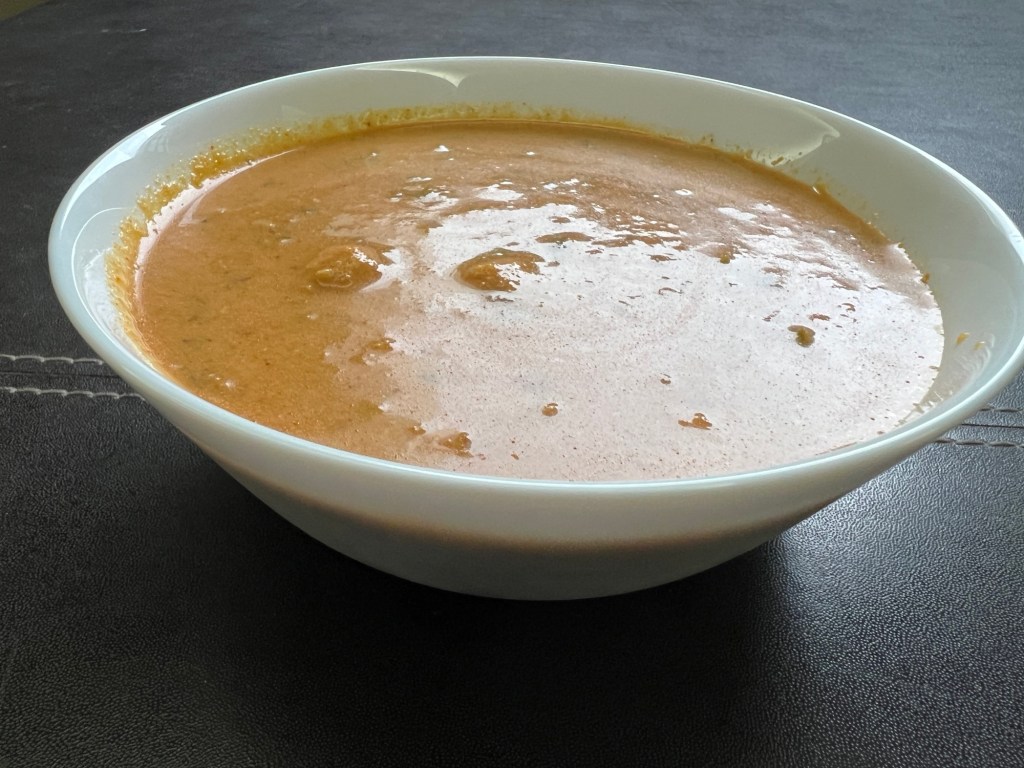
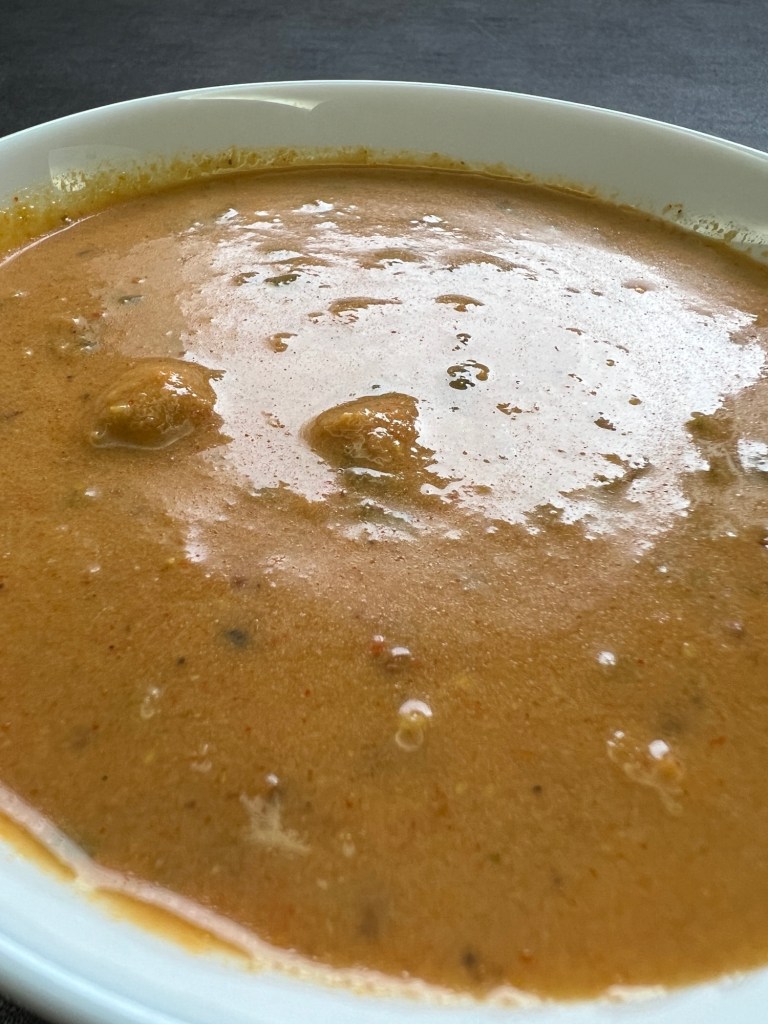
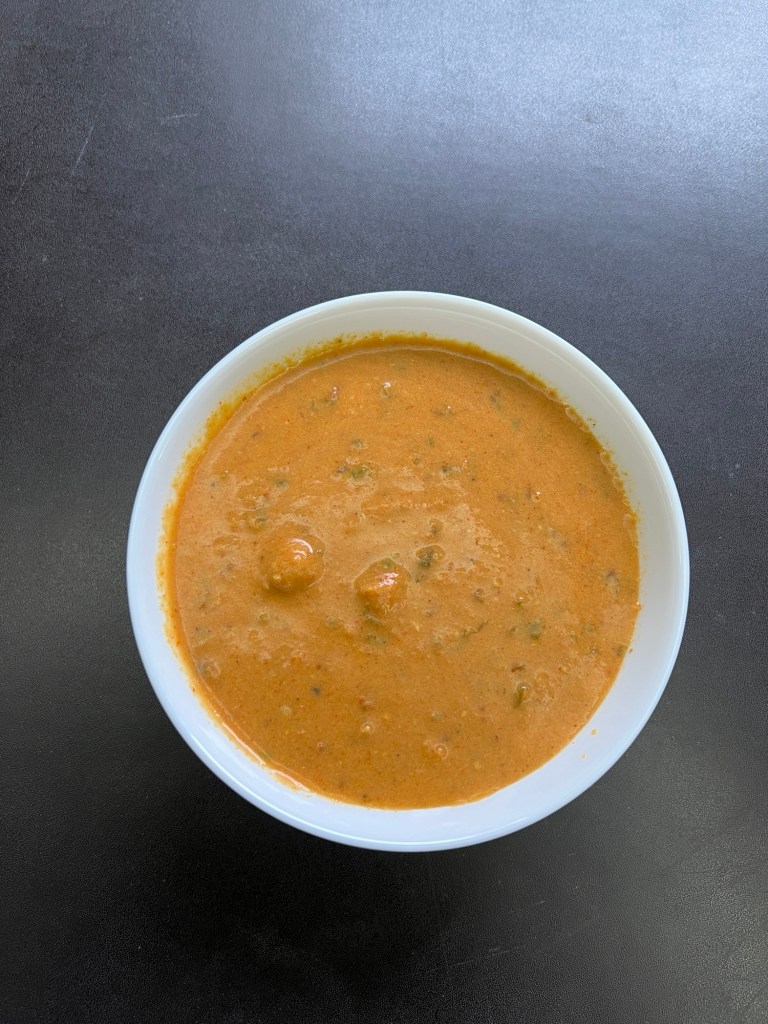
Dahiwale Chole aka Chickpeas in a Tomato Yogurt Sauce

The other day, while wondering what to cook — something that happens to all of us — I suddenly had an epiphany and thought of experimenting with some boiled chickpeas that I had at home. The result was this quick gravy that took about 15-20 minutes to put together and went beautifully with the boiled chickpeas. I will also be making this gravy again, this time trying it with different vegetables.

Dahiwale Chole aka Chickpeas in a Tomato Yogurt Sauce

Ingredients:

  • 1 cup boiled chickpeas
  • 2 medium-sized onions, roughly chopped
  • 4 medium-sized tomatoes, roughly chopped
  • 5-6 garlic cloves, peeled
  • 1-inch piece of ginger, peeled
  • 2-3 fresh red chillies, destalked
  • 1 cup yoghurt, whisked
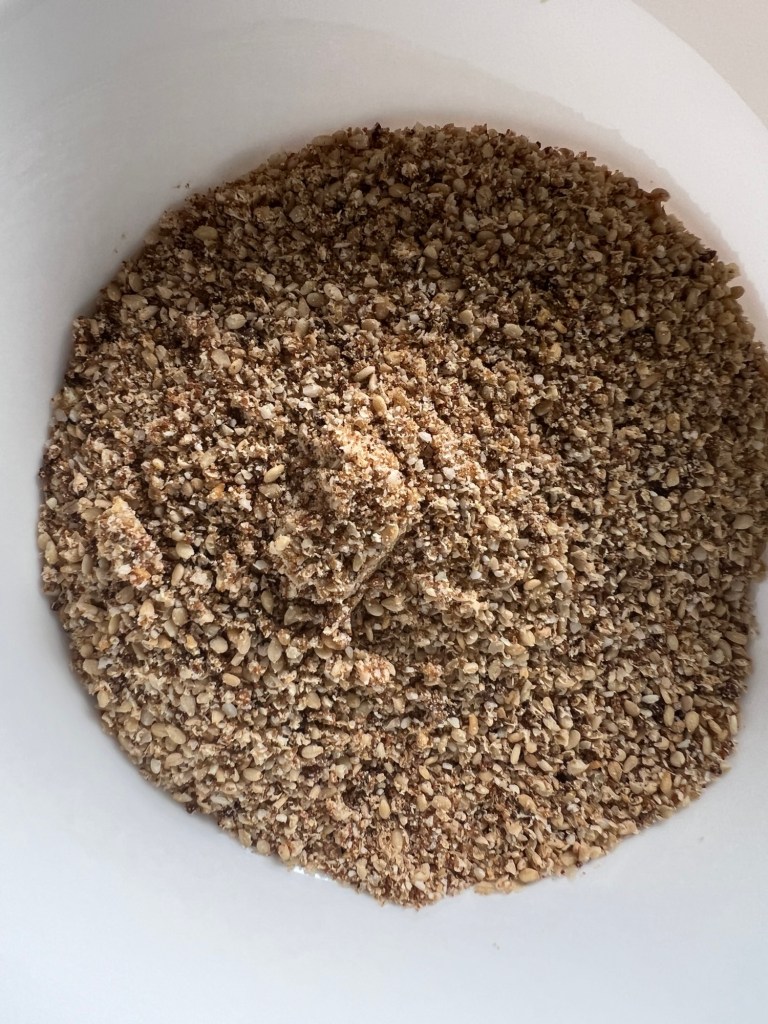
  • 2 tbsp roasted peanut powder
  • 1 tsp cumin seeds
  • ¼ tsp turmeric powder
  • ½ tsp Kashmiri red chilli powder
  • 1 tsp cumin powder
  • 1 tsp coriander powder
  • 1 tsp jaggery powder (optional)
  • Salt to taste
  • 1 tbsp oil or ghee
  • Finely chopped coriander leaves to garnish

Method:

  • Blend together the garlic, ginger and red chillies into a smooth and keep aside.
  • Blend the onions into a fine paste and keep aside.
  • Blend the tomatoes into a fine paste and keep aside.
  • Heat the oil in a pan and when the oil heats up, add in the cumin seeds and let the seeds pop.
  • Pour in the blended garlic, ginger and chillies and stir well for a couple of minutes
  • Then add in the blended onions, sprinkle a bit of salt and cook well until the onion starts to become translucent.
  • Then add the blended tomatoes and cook covered until the oil starts to ooze out.
  • Add the dry spices – turmeric powder, red chilli powder, cumin powder, coriander powder, salt, and peanut powder. If you are adding jaggery powder or sugar, add it now.
  • Once the oil oozes out, add in the whisked yoghurt and stir continuously for a few minutes.
  • Now add the boiled chickpeas and cook covered on a medium-low flame for 5-7 minutes.
  • Check for seasoning and adjust what is needed.
  • Garnish with finely chopped coriander leaves and serve hot with rice or any Indian flatbread.

Notes:

  • I used already boiled chickpeas, but if you don’t have them handy, you can make it with canned chickpeas or soak a cup of dry chickpeas for 6–8 hours and then cook it in a pressure cooker or in a pan until they are soft.
  • To make roasted peanut powder, dry roast peanuts until the skin starts to split. Cool them completely and blend to a coarse powder.
  • You can also add powdered sesame seeds instead of peanuts or both together. To make powdered sesame seeds, dry roast white sesame seeds until they start to pop. Cool then pulse to make a fine powder.
  • If you plan to use other vegetables, lightly fry them in 1 tsp oil until they are 80% cooked. Then remove and keep aside and make the gravy as per the recipe above. Add them back into the gravy where I have indicated adding the boiled chickpeas.

In My Hands Today…

Slow Noodles: A Cambodian Memoir of Love, Loss, and Family Recipes – Chantha Nguon

A haunting and beautiful memoir from a Cambodian refugee who lost her country and her family during Pol Pot’s genocide in the 1970s but who finds hope by reclaiming the recipes she tasted in her mother’s kitchen.

Take a well-fed nine-year-old with a big family and a fancy education. Fold in 2 revolutions, 2 civil wars, and one wholesale extermination. Subtract a reliable source of food, life savings, and family members, until all are gone. Shave down childhood dreams for approximately two decades, until only subsistence remains.

In Slow Noodles, Chantha Nguon recounts her life as a Cambodia refugee who lost everything and everyone—her house, her country, her parents, her siblings, her friends—everything but the memories of her mother’s kitchen, the tastes and aromas of the foods her mother made before the dictator Pol Pot tore her country apart in the 1970s, killing millions of her compatriots. Nguon’s irrepressible spirit and determination come through in this emotional and poignant but also lyrical and magical memoir that includes over 20 recipes for Khmer dishes like chicken lime soup, banh sung noodles, pâté de foie, curries, spring rolls, and stir-fries. For Nguon, recreating these dishes becomes an act of resistance, of reclaiming her place in the world, of upholding the values the Khmer Rouge sought to destroy, and of honoring the memory of her beloved mother.

From her idyllic early years in Battambang to hiding as a young girl in Phnom Penh as the country purges ethnic Vietnamese like Nguon and her family, from her escape to Saigon to the deaths of mother and sister there, from the poverty and devastation she experiences in a war-ravaged Vietnam to her decision to flee the country. We follow Chantha on a harrowing river crossing into Thailand—part of the exodus that gave rise to the name “boat people”—and her decades in a refugee camp there, until finally, denied passage to the West, she returns to a forever changed Cambodia. Nguon survives by cooking in a brothel, serving drinks in a nightclub, making and selling street food, becoming a suture-nurse treating refugees abused by Thai authorities, and weaving silk. Through it all, Nguon relies on her mother’s “slow noodles” approach to healing and to cooking, one that prioritizes time and care over expediency. Haunting and evocative, Slow Noodles is a testament to the power of culinary heritage to spark the rebirth of a young woman’s hopes for a beautiful life.

In My Hands Today…

Dangerous Tastes: The Story of Spices – Andrew Dalby

Spices and aromatics―the powerful, pleasurable, sensual ingredients used in foods, drinks, scented oils, perfumes, cosmetics, and drugs—have long been some of the most sought-after substances in the course of human history. In various forms, spices have served as appetizers, digestives, antiseptics, therapeutics, tonics, and aphrodisiacs. Dangerous Tastes explores the captivating history of spices and the fascination that they have aroused in us, and the roads and seaways by which trade in spices has gradually grown. Andrew Dalby, who has gathered information from sources in many languages, explores each spice, interweaving its general history with the story of its discovery and various uses.

Dalby concentrates on traditional spices that are still part of world cinnamon, cloves, ginger, pepper, saffron, and chili. He also discusses aromatics that are now little used in food but still belong to the spice trade and to traditional frankincense, myrrh, aloes-wood, balsam of Mecca. In addition, Dalby considers spices that were once important but that now are almost long pepper, cubebs, grains of Paradise.

Dangerous Tastes relates how the Aztecs, who enjoyed drinking hot chocolate flavored with chili and vanilla, sometimes added annatto (a red dye) to the drink. This not only contributed to the flavor but colored the drinker’s mouth red, a reminder that drinking cacao was, in Aztec thought, parallel with drinking blood. In the section on ambergris, Dalby tells how different cultures explained the origin of this Arabs and Persians variously thought of it as solidified sea spray, a resin that sprung from the depths of the sea, or a fungus that grows on the sea bed as truffles grow on the roots of trees. Some Chinese believed it was the spittle of sleeping dragons. Dalby has assembled a wealth of absorbing information into a fertile human history that spreads outward with the expansion of human knowledge of spices worldwide.

Recipes: Dal Bukhara

Some time back, I saw a reel about Dal Bukhara and I was intrigued by the recipe. So I made it. Dal Bukhari is a rich, creamy lentil dish that originated at the Bukhara restaurant in ITC Maurya Hotel, New Delhi. The dish was created by Chef Madan Jaiswal at the Bukhara restaurant in the 1970s. It quickly gained popularity and was associated with many accolades. Dal Bukhara is considered a more refined version of the well-known Dal Makhani.

Chef Jaiswal introduced Dal Bukhara when the Bukhara restaurant opened at the ITC Maurya Hotel in 1978. While coming up with Dal Bukhara, Chef Jaiswal focused on using only whole black gram or urad dal, without the kidney beans used in Dal Makhani. He emphasised slow-cooking the dal, sometimes overnight, to develop deep flavours, using minimal ingredients but incorporating generous amounts of butter and cream. 

Dal Bukhara

Ingredients:

  • 1.5 cups whole black gram or urad dal
  • 3 medium to large tomatoes, pureed
  • 2 tsp ginger-garlic paste
  • 1 tsp or more Kashmiri red chilli powder
  • ½ tsp garam masala
  • 6-7 tbsp butter, preferably white, but normal butter will also do
  • 7-8 tbsp light cream or 3-4 tbsp heavy whipping cream
  • Salt to taste
  • Water for cooking

Method:

  • Soak the black gram overnight.
  • Pressure cook the soaked lentils with 4.5-5 cups of water until soft.
  • Add the cooked lentils, tomato puree, ginger-garlic paste, and red chilli powder in a heavy-bottomed pan.
  • Simmer the dal on low heat for about 1-1.5 hours, stirring occasionally to prevent sticking.
  • Add butter and cream gradually during the cooking process.
  • Season with salt and garam masala towards the end of cooking.
  • The final consistency should be thick and creamy, not runny.
  • Serve hot, garnished with a dollop of cream or butter, with naan, tandoori roti, or jeera rice.

Notes:

  • As a last stage, before serving, you can also smoke the dal using the dhungar method for an authentic charcoal flavour.
  • Traditionally, Dal Bukhara is slow-cooked overnight on charcoal ovens in restaurants, which gives it its distinctive taste and texture.
  • Slow cooking and generous use of butter and cream are the key to achieving authentic flavour at home.