In My Hands Today…

Ultra-Processed People: The Science Behind Food That Isn’t Food – Chris van Tulleken

It’s not you; it’s the food.

We have entered a new age of eating. For the first time in human history, most of our calories come from an entirely novel set of substances called Ultra-Processed Food. There’s a long, formal scientific definition, but it can be boiled down to this: if it’s wrapped in plastic and has at least one ingredient that you wouldn’t find in your kitchen, it’s UPF.

These products are specifically engineered to behave as addictive substances, driving excess consumption. They are now linked to the leading cause of early death globally and the number one cause of environmental destruction. Yet almost all our staple foods are ultra-processed. UPF is our food culture and for many people, it is the only available and affordable food.

In this book, Chris van Tulleken, father, scientist, doctor, and award-winning BBC broadcaster, marshals the latest evidence to show how governments, scientists, and doctors have allowed transnational food companies to create a pandemic of diet-related disease. The solutions don’t lie in willpower, personal responsibility, or exercise. You’ll find no diet plan in this book, but join Chris as he undertakes a powerful self-experiment that made headlines around the world: under the supervision of colleagues at University College London, he spent a month eating a diet of 80 percent UPF, typical for many children and adults in the United States. While his body became the subject of scientific scrutiny, he spoke to the world’s leading experts from academia, agriculture, and, most importantly, the food industry itself. But more than teaching him about the experience of the food, the diet switched off Chris’s own addiction to UPF.

In a fast-paced and eye-opening narrative, he explores the origins, science, and economics of UPF to reveal its catastrophic impact on our bodies and the planet. And he proposes real solutions for doctors, for policy makers, and for all of us who have to eat. A book that won’t only upend the way you shop and eat, Ultra-Processed People will open your eyes to the need for action on a global scale.

In My Hands Today…

The Devil’s Picnic – Taras Grescoe

From Norwegian moonshine to the pentobarbital sodium sipped by suicide tourists in Switzerland—and, in between, baby eels killed by an infusion of tobacco, a garlicky Spanish stew of bull’s testicles, tea laced with cocaine, and malodorous French cheese—Taras Grescoe has written a travelogue of forbidden indulgences.

As Grescoe crisscrosses the globe in pursuit of his quarry, he delves into questions of regional culture and repressive legislation—from the clandestine absinthe distillation in an obscure Swiss valley to the banning of poppy seed biscuits in Singapore—and launches into a philosophical investigation of what’s truly how something as fundamental as the plants and foods we consume could be so vilified and demonized.

An investigation into what thrills us, what terrifies us, and what would make us travel ten thousand miles and evade the local authorities, The Devil’s Picnic is a delicious and compelling expedition into the heart of vice and desire.

Recipes: Plum, Pineapple and Ginger Chutney

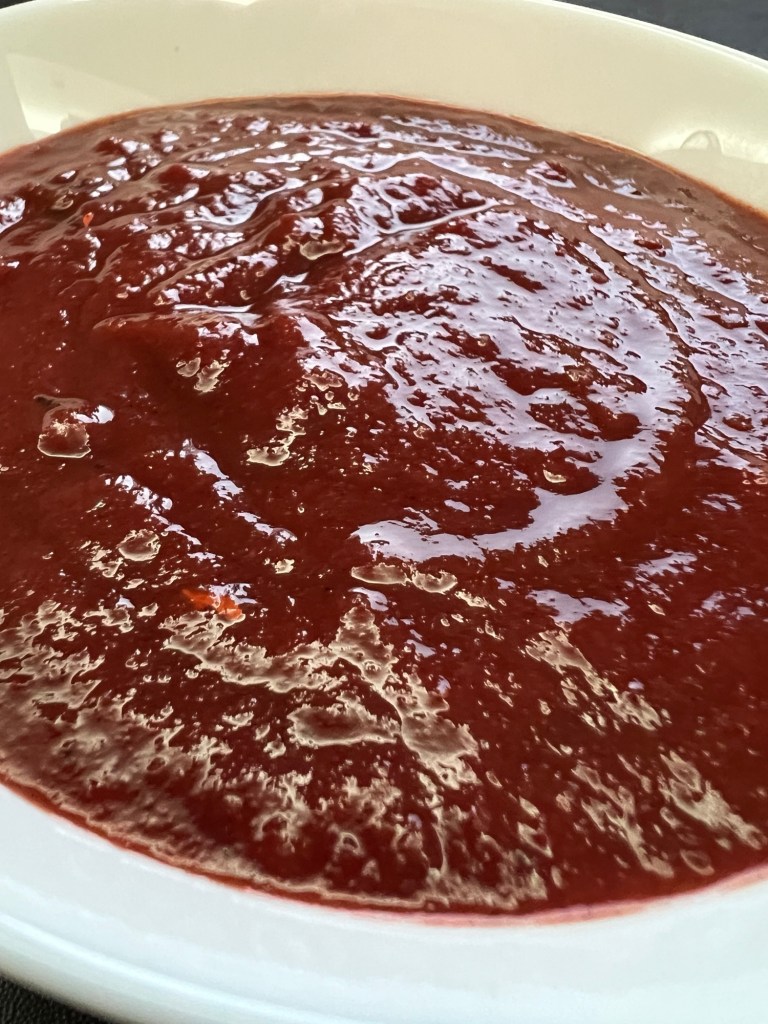
A few weeks back GG asked me if I wanted fruits from the supermarket. On an impulse, I asked her to buy some plums so I could make this plum chutney. On the day I was supposed to make the chutney, I realised we had some fresh pineapple at home which was quite sour and no one wanted to eat it. So I decided to incorporate the pineapples plus some ginger into the chutney and the result was this tangy and slightly sweet pineapple, plum and ginger chutney.

Plum, Pineapple and Ginger Chutney

Ingredients:

  • 8 red/purple plums
  • ½ fresh pineapple
  • 1 cup raisins or dates
  • 2 inch piece of ginger, peeled
  • Salt to taste
  • 1-2 tsp Kashmiri red chilli powder
  • 2 tsp cumin powder
  • ½ tsp fennel powder
  • Jaggery powder to taste (optional)

Method:

  • Soak the raisins or dates in hot water for 30 minutes, drain and keep aside.
  • Deseed the plums and chop them into small pieces.
  • Blend the pineapple, plums, ginger and raisins into a smooth paste.
  • Strain this paste into a large pan so there are no lumps. At this point, it will be a light pink or red mixture.
  • Heat the pan and let the mixture come to a boil. You can add a bit of water if needed.
  • Add the dry spices – salt, red chilli powder and cumin powder and let the mixture bubble and cook until it thickens.
  • If the mixture is still sour, add some brown sugar or jaggery to balance the taste. 
  • Switch off the gas and let the chutney cool. Once it cools, it becomes a gorgeous purple chutney.

This chutney can be used instead of tamarind chutney and keeps well in the fridge for a few weeks. Remember to use a dry spoon when using it, so there is no contamination.

In My Hands Today…

Invitation to a Banquet: The Story of Chinese Food – Fuchsia Dunlop

Chinese was the earliest truly global cuisine.

When the first Chinese laborers began to settle abroad, restaurants appeared in their wake. Yet Chinese has the curious distinction of being both one of the world’s best-loved culinary traditions and one of the least understood.

For more than a century, the overwhelming dominance of a simplified form of Cantonese cooking ensured that few foreigners experienced anything of its richness and sophistication, but today that is beginning to change.

In Invitation to a Banquet, award-winning cook and writer Fuchsia Dunlop explores the history, philosophy, and techniques of Chinese culinary culture. In each chapter, she examines a classic dish, from mapo tofu to Dongpo pork, knife-scraped noodles to braised pomelo pith, to reveal a distinctive aspect of Chinese gastronomy, whether it’s the importance of the soybean, the lure of exotic ingredients, or the history of Buddhist vegetarian cuisine.

Meeting food producers, chefs, gourmets, and home cooks as she tastes her way across the country, Fuchsia invites readers to join her on an unforgettable journey into Chinese food as it is cooked, eaten, and considered in its homeland. Weaving together history, mouthwatering descriptions of food, and on-the-ground research conducted over the course of three decades, Invitation to a Banquet is a lively, landmark tribute to the pleasures and mysteries of Chinese cuisine.

Recipes: Bharvan Baingan or Stuffed Eggplant

One of my favourite recipes to order at restaurants (if they have them) is stuffed eggplant or stuffed okra. I love the stuffed eggplant recipe from my home state and when I saw this recipe on Facebook, I saved it for making one day. That one day was a couple of weeks back. The chef who posted the recipe promised it was an easy one. Well, it was easy, but she didn’t mention that it took so long. The recipe took me two hours to make, start to end. But it was so worth it, it was so tasty that even GG, who does not like eggplant, had some of the gravy and pronounced it delicious!

Bharvan Baingan or Stuffed Eggplant

Ingredients:

  • 12-15 medium sized baby eggplants

For the stuffing:

  • 1 tbsp besan or chickpea flour
  • 3 tbsp coriander powder
  • 1 tbsp cumin powder
  • 1 tsp turmeric powder
  • 1 tbsp red chilli powder
  • 1 tbsp Kashmiri red chilli powder
  • 1 tbsp amchur powder
  • 1 tsp asafoetida podwer
  • 1 tbsp fennel seed powder
  • 1 tsp garam masala powder
  • 2 tbsp kauri methi
  • 4 tbsp oil (any oil, but mustard oil will be the best)

For the Gravy:

  • 2 tbsp oil
  • 1 tsp cumin seeds
  • ½ tsp mustard seeds
  • 3-4 finely chopped green chillies
  • 2 medium-sized finely minced onions
  • 2-3 medium-sized finely minced tomatoes
  • Salt to taste
  • 5 tbsp yoghurt, whisked
  • ½ tsp turmeric powder
  • 1 tsp Kashmiri red chilli powder
  • 1 tsp coriander powder
  • The balance masala
  • 1 tsp ginger garlic paste

Method:

  • If the stalk of the eggplant is more than 1 inch, cut it off and also remove the excess crown. Keep aside.
  • Make a cross on the bottom of the brinjal (opposite the crown), check and see inside for any worms and discard any unsightly ones. Put the cut brinjals in water for a while to avoid oxidation.

For the Masala:

  • Heat a pan and when warm, take the chickpea flour and lightly roast it till it starts to emit an aroma. This should take about 3-4 mins.
  • At this point switch off the flame and add the dry masalas –coriander powder, cumin powder, turmeric powder, Kashmiri red chilli powder, red chilli powder, amchur powder, asafoetida, fennel powder, garam masala and kasuri methi. Toss the masalas with the chickpea flour and keep them aside on a plate. Add 2 tbsp oil to it and mix well.
  • Fill the masalas into the brinjal, filling it tightly. The masala should show up as a nice thick line. Remove the extra masala and drop it into the masala plate.
  • In a pan, take 2 tbsp oil and shallow fry the stuffed brinjals for about 3-4 mins. Remove and keep aside.

For the Gravy:

  • In another pan, take 2 tbsp oil and when it heats, add the cumin seeds, mustard seeds and finely chopped green chillies.
  • Then add the finely chopped onions and fry until they become translucent.
  • At this point, add the finely chopped tomatoes and let it cook.
  • Add salt to taste and let the tomatoes cook well until the gravy starts to ooze oil.  
  • In a bowl, add the yoghurt and whisk it well. To this, add ½ tsp turmeric powder, 1 tsp Kashmiri red chilli powder, 1 tsp coriander powder, 1 tsp ginger-garlic paste and the balance masala. Whisk everything well and keep it aside.
  • Once the tomatoes are cooked, add 2-3 tsp water, switch off the gas and add in the yoghurt mixture.
  • Mix well and switch on the gas again. Add water if needed.

To assemble:

  • Gently add the stuffed eggplants and garnish with coriander leaves. Cover and cook on a low flame for 5 mins.
  • Serve with rotis or Indian flatbreads or rice.