In My Hands Today…

Pandora’s Lab: Seven Stories of Science Gone Wrong – Paul A. Offit
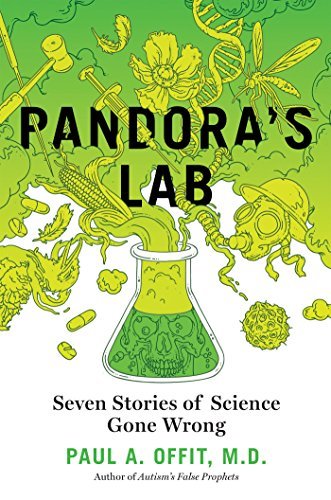

What happens when ideas presented as science lead us in the wrong direction?

History is filled with brilliant ideas that gave rise to disaster, and this book explores the most fascinating—and significant—missteps: from opium’s heyday as the pain reliever of choice to recognition of opioids as a major cause of death in the U.S.; from the rise of trans fats as the golden ingredient for tastier, cheaper food to the heart disease epidemic that followed; and from the cries to ban DDT for the sake of the environment to an epidemic-level rise in world malaria.

These are today’s sins of science—as deplorable as mistaken past ideas about advocating racial purity or using lobotomies as a cure for mental illness. These unwitting errors add up to seven lessons both cautionary and profound, narrated by renowned author and speaker Paul A. Offit. Offit uses these lessons to investigate how we can separate good science from bad, using some of today’s most controversial creations—e-cigarettes, GMOs, drug treatments for ADHD—as case studies. For every “Aha!” moment that should have been an “Oh no,” this book is an engrossing account of how science has been misused disastrously—and how we can learn to use its power for good.
In My Hands Today…

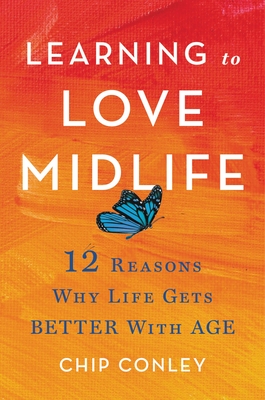
Learning to Love Midlife: 12 Reasons Why Life Gets Better with Age – Chip Conley

The midlife crisis is the butt of so many jokes, but this long-derided life stage has an upside. What if we could reframe our thinking about the natural transition of midlife not as a crisis, but as a chrysalis—a time when something profound awakens in us, as we shed our skin, spread our wings, and pollinate our wisdom to the world?

In Learning to Love Midlife , Chip Conley offers an alternative narrative to the way we commonly think of our 40s, 50s and 60s. Drawing on the latest social science research, inspiring stories, and timeless wisdom, he reveals 12 reasons why life gets better with age. They

No matter where you are in your midlife journey, this perspective‑shifting guide will inspire you to find joy, purpose and success in the years that lie ahead—and how those years can be your best ones yet.

In My Hands Today…

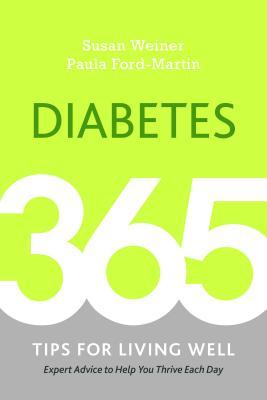
Diabetes: 365 Tips for Living Well – Susan Weiner, Paula Ford Martin

Filled with practical tips and support to help you deal with the stress and lifestyle changes that come with living with diabetes each day, Diabetes: 365 Tips for Living Well offers reliable, easy to implement ways to face challenges, restore health, and live your life to the fullest with diabetes.

Written by Susan Weiner, the 2015 AADE Diabetes Educator of the Year, and Paula Ford-Martin, an award-winning health writer, this empowering guide is packed with information to help you:

  • Keep your blood sugar in check;
  • Make daily management easier;
  • Beat diabetes burnout and relieve stress;
  • Deal with holidays, special occasions, and common seasonal challenges with confidence;
  • Avoid complications;
  • And much more.

In My Hands Today,,,

Why We Remember: Unlocking Memory’s Power to Hold on to What Matters – Charan Ranganath

Memory is far more than a record of the past. In this groundbreaking tour of the mind and brain, one of the world’s top memory researchers reveals the powerful role memory plays in nearly every aspect of our lives, from recalling faces and names, to learning, decision-making, trauma and healing.

A new understanding of memory is emerging from the latest scientific research. In Why We Remember , pioneering neuroscientist and psychologist Charan Ranganath radically reframes the way we think about the everyday act of remembering. Combining accessible language with cutting-edge research, he reveals the surprising ways our brains record the past and how we use that information to understand who we are in the present, and to imagine and plan for the future.

Memory, Dr. Ranganath shows, is a highly transformative force that shapes how we experience the world in often invisible and sometimes destructive ways. Knowing this can help us with daily remembering tasks, like finding our keys, and with the challenge of memory loss as we age. What’s more, when we work with the brain’s ability to learn and reinterpret past events, we can heal trauma, shed our biases, learn faster, and grow in self-awareness.

Including fascinating studies and examples from pop culture, and drawing on Ranganath’s life as a scientist, father, and child of immigrants, Why We Remember is a captivating read that unveils the hidden role memory plays throughout our lives. When we understand its power– and its quirks–we can cut through the clutter and remember the things we want to remember. We can make freer choices and plan a happier future.

In My Hands Today…

All in Her Head: The Truth and Lies Early Medicine Taught Us About Women’s Bodies and Why It Matters Today – Elizabeth Comen

For as long as medicine has been a practice, women’s bodies have been treated like objects to be practiced on: examined and ignored, idealized and sexualized, shamed, subjugated, mutilated, and dismissed. The history of women’s healthcare is a story in which women themselves have too often been voiceless—a narrative instead written from the perspective of men who styled themselves as authorities on the female of the species, yet uninformed by women’s own voices, thoughts, fears, pain and experiences. The result is a cultural and societal legacy that continues to shape the (mis)treatment and care of women.

While the modern age has seen significant advancements in the medical field, the notion that female bodies are flawed inversions of the male ideal lingers on—as do the pervasive societal stigmas and lingering ignorance that shape women’s health and relationships with their own bodies.

Memorial Sloan Kettering oncologist and medical historian Dr. Elizabeth Comen peels back the curtain on the collective medical history of women to reintroduce us to our whole bodies—how they work, the actual doctors and patients whose perspectives and experiences laid the foundation for today’s medical thought, and the many oversights that still remain unaddressed. With a physician’s knowledge and empathy, Dr. Comen follows the road map of the eleven organ systems to share unique and untold stories, drawing upon medical texts and journals, interviews with expert physicians, as well as her own experience treating thousands of women.

Empowering women to better understand ourselves and advocate for care that prioritizes healthy and joyful lives—for us and generations to come—All in Her Head is written with humor, wisdom, and deep scientific and cultural insight. Eye-opening, sometimes enraging, yet always captivating, this shared memoir of women’s medical history is an essential contribution to a holistic understanding and much-needed reclaiming of women’s history and bodies.