In My Hands Today…

Coming Out as Dalit: A Memoir – Yashica Dutt

Dalit student Rohith Vemula’s tragic suicide in January 2016 started many charged conversations around caste-based discrimination in universities in India. For Yashica Dutt, a journalist living in New York, this was the moment to stop living a lie, and admit to something that she had hidden from friends and colleagues for over a decade—that she was Dalit.

In Coming Out as Dalit, Dutt recounts the exhausting burden of living with the secret and how she was terrified of being found out. She talks about the tremendous feeling of empowerment she experienced when she finally stood up for herself and her community and shrugged off the fake upper-caste identity she’d had to construct for herself. As she began to understand the inequities of the caste system, she also had to deal with the crushing guilt of denying her history, the struggles of her grandparents, and the many Dalit reformers who fought for equal rights.

In this personal memoir that is also a narrative of the Dalits, she writes about the journey of coming to terms with her identity and takes us through the history of the Dalit movement, the consequences of her community’s lack of access to education and culture, the need for reservation, the paucity of Dalit voices in mainstream media, Dalit women’s movements and their ongoing contributions, and attempts to answer crucial questions about caste and privilege. Woven from personal narratives from her own life as well as that of other Dalits, this book forces us to confront the injustices of caste and also serves as a call to action.

In My Hands Today…

Material World: The Six Raw Materials That Shape Modern Civilization – Ed Conway & Edmund Conway

Sand, salt, iron, copper, oil, and lithium. These fundamental materials have created empires, razed civilizations, and fed our ingenuity and greed for thousands of years. Without them, our modern world would not exist, and the battle to control them will determine our future.

The fiber-optic cables that weave the World Wide Web, the copper veins of our electric grids, the silicon chips and lithium batteries that power our phones and though it can feel like we now live in a weightless world of information—what Ed Conway calls “the ethereal world”—our twenty-first-century lives are still very much rooted in the material.

In fact, we dug more stuff out of the earth in 2017 than in all of human history before 1950. For every ton of fossil fuels, we extract six tons of other materials, from sand to stone to wood to metal. And in Material World, Conway embarks on an epic journey across continents, cultures, and epochs to reveal the underpinnings of modern life on Earth—traveling from the sweltering depths of the deepest mine in Europe to spotless silicon chip factories in Taiwan to the eerie green pools where lithium originates.

Material World is a celebration of the humans and the human networks, the miraculous processes and the little-known companies, that combine to turn raw materials into things of wonder. This is the story of human civilization from an entirely new the ground up.

In My Hands Today…

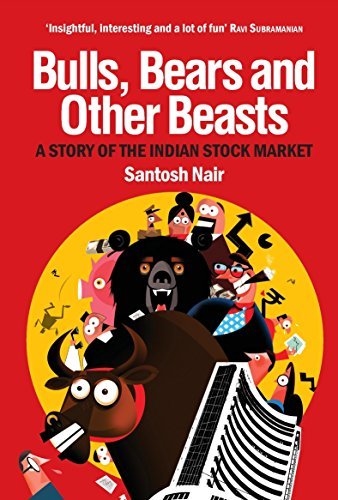
Bulls, Bears and Other Beasts – Santosh Nair

Lalchand Gupta takes you on an exciting journey through Dalal Street in this brief history of the Indian stock market post liberalization.

From tech booms and tax evasion to banks and money laundering; scams and crashes to fixers and investors, Lala has seen it all.

A comprehensive account of the stock market over the last 25 years, it tells you what to watch out for while investing. It also looks at policies that the government needs to revise if the country is to harness domestic capital more effectively.

This is a must-read for all interested in the financial health of the country as well as those who want to know about the sensational events that led up to the far more sterile stock-market operations of the present day.

In My Hands Today…

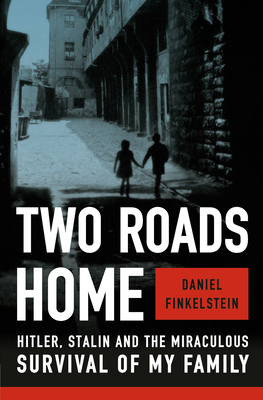
Two Roads Home: Hitler, Stalin, and the Miraculous Survival of My Family – Daniel Finkelstein

Daniel Finkelstein’s grandfather Alfred Wiener was a German Jewish intellectual leader who tolled an early warning of the impending Holocaust and became anarchivist of Nazi crimes.

He relocated his family to safety in Amsterdam, where they became close with Anne Frank’s family. But they were eventually separated, and Daniel’s mother Mirjam was sent to Bergen-Belsen with her mother and sisters while Alfred worked feverishly to free them. Finkelstein’s father, Ludwik, grew up in a prosperous Jewish family in Poland where his father was a patriotic hero of the Great War.

But when Stalin took control, Finkelstein’s grandfather was deported to Siberia, while Ludwik and his mother were sent to face freezing winters and harrowing forced labourm conditions in Kazahkstan.

Love and Murder is a page-turning account of ingenuity, bravery and the incredible coincidences that brought Daniel’s parents together as refugees in Britain. The story features secret archives, forgery and theft, and sweeps across Europe to show the expanse of the war. Moving, engrossing and inspiring, Love and Murder will profoundly touch all who read.

In My Hands Today…

Magnificent Delusions: Pakistan, the United States, and an Epic History of Misunderstanding – Husain Haqqani

The relationship between America and Pakistan is based on mutual incomprehension and always has been. Pakistan—to American eyes—has gone from being a quirky irrelevance to a stabilizing friend, an essential military ally, and a seedbed of terror. America—to Pakistani eyes—has been a guarantee of security, a coldly distant scold, an enthusiastic military enabler, and is now a threat to national security and a source of humiliation.

The countries are not merely at odds. Each believes it can play the other—with sometimes absurd, sometimes tragic, results. The conventional narrative about the war in Afghanistan, for instance, has revolved around the Soviet invasion in 1979. But President Jimmy Carter signed the first authorization to help the Pakistani-backed mujahedeen covertly on July 3—almost six months before the Soviets invaded. Americans were told, and like to believe, that what followed was Charlie Wilson’s war of Afghani liberation, with which they remain embroiled to this day. It was not. It was General Zia-ul-Haq’s vicious regional power play.

Husain Haqqani has a unique insight into Pakistan, his homeland, and America, where he was ambassador and is now a professor at Boston University. His life has mapped the relationship of the two countries, and he has found himself often close to the heart of it, sometimes in very confrontational circumstances. This has allowed him to write the story of a misbegotten diplomatic love affair, here memorably laid bare.