In My Hands Today…

The Other Side of Silence: Voices from the Partition of India – Urvashi Butalia

The partition of India into two countries, India and Pakistan, caused one of the most massive human convulsions in history. Within the space of two months in 1947 more than twelve million people were displaced. A million died. More than seventy-five thousand women were abducted and raped. Countless children disappeared. Homes, villages, communities, families, and relationships were destroyed. Yet, more than half a century later, little is known of the human dimensions of this event.

In The Other Side of Silence , Urvashi Butalia fills this gap by placing people—their individual experiences, their private pain—at the center of this epochal event.Through interviews conducted over a ten-year period and an examination of diaries, letters, memoirs, and parliamentary documents, Butalia asks how people on the margins of history—children, women, ordinary people, the lower castes, the untouchables—have been affected by this upheaval.

To understand how and why certain events become shrouded in silence, she traces facets of her own poignant and partition-scarred family history before investigating the stories of other people and their experiences of the effects of this violent disruption. Those whom she interviews reveal that, at least in private, the voices of partition have not been stilled and the bitterness remains.

Throughout, Butalia reflects on difficult questions: what did community, caste, and gender have to do with the violence that accompanied partition? What was partition meant to achieve and what did it actually achieve? How, through unspeakable horrors, did the survivors go on? Believing that only by remembering and telling their stories can those affected begin the process of healing and forgetting, Butalia presents a sensitive and moving account of her quest to hear the painful truth behind the silence.

In My Hands Today…

The Indian Conservative : A History of Indian Right-Wing Thought – Jaithirth Jerry Rao

Right-wing thought has a long and ancient tradition in India.

In this riveting book, Jaithirth Rao traces its history, explores its philosophical underpinnings and different manifestations, and defines it as conservatism – a philosophy that rejects radical, reactionary and utopian positions and argues for change that evolves gradually and peacefully, preserves features of the past that are constructive and worth cherishing, and believes in a minimalist state that protects individual liberties even as it promotes policies that work on the ground.

Hindu nationalism and the Bharatiya Janata Party are among the many offshoots of this tradition. Focusing on five areas – The economy, politics, culture, society and aesthetics – Rao examines the rich contribution that Indian conservatism could make in each of these fields in contemporary India. Lively, eloquent and provocative, this is a book that will stimulate much thought, discussion and debate as it challenges the dogmas of the left and the extreme right and raises the key issues that engage India today.

Festivals of India: Biju Festival

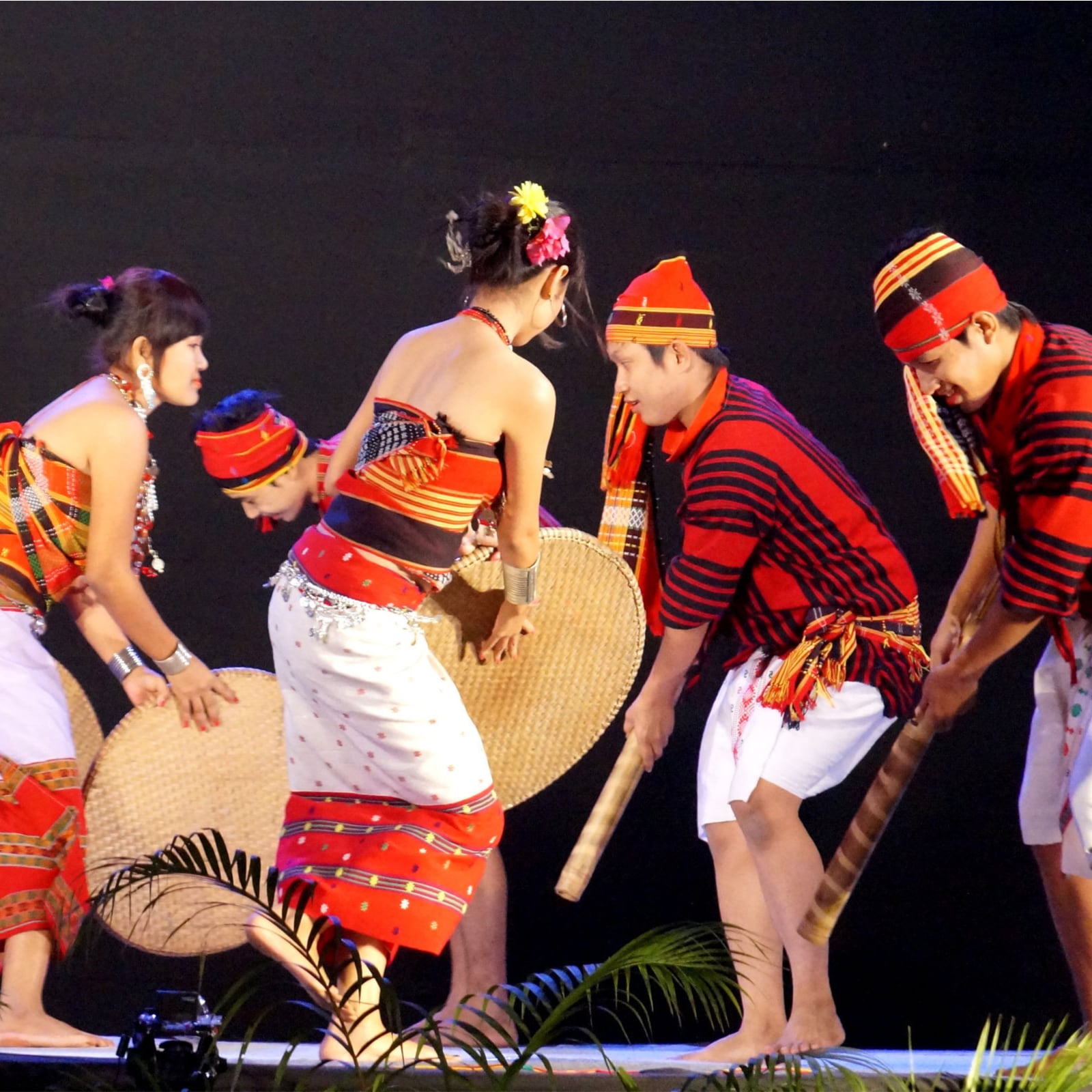
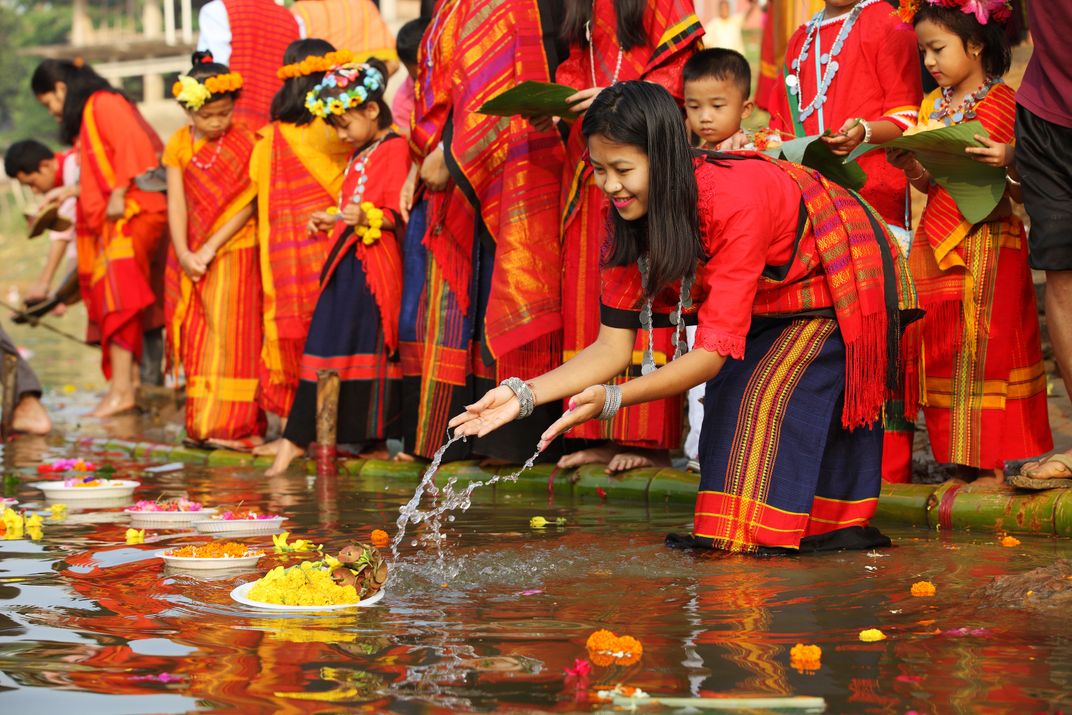
India is a land of festivals and the more colourful, the better.  One such colourful festival is Biju, celebrated by the Chakma community in Tripura, marking the dawn of a New Year for the community. The festival is also celebrated by seven other ethnic groups in Tripura: Marma, Tangchangya, Tripuris, Mro, Khumi, Khiyang and Chak. The Marmas call the festival Sangraig, Tangchangya refers to it as Bishu, Truipis call it Baisuk and Ahmia name it Bihu.

Celebrated over three days, Biju falls on the last day of the Bengali calendar. The festival is a celebration of the arrival of spring and is one of the most important cultural events in the region.  The festival has been celebrated in the region for thousands of years and is deeply rooted in the cultural heritage of the northeastern part of India and Bangladesh. The festival is a celebration of the end of the harvest season and the beginning of a new agricultural cycle.

Each day of the festival has its own distinct traditions and customs. On the first day of Biju, called Phool Biju, people clean their houses and decorate them with flowers. They also pay floral tributes to the nearby rivers. The second day, called Mul Biju, is celebrated with the performance of traditional songs and dances, culminating with the famous Biju dance. On the third and final day, known as Gotche Potche Biju, elders of the community are honoured with an elaborate feast and renew their marriage vows with their spouses. One of the main attractions of the festival is the special Biju dance, accompanied by the rhythms of traditional musical instruments that constitute percussion and flute.

Earlier the festival used to be celebrated for over a fortnight. However, in changing times, it is celebrated over three days. The Biju festival is not just limited to cultural events and traditions. It is also a time for family and friends to come together and exchange greetings and gifts. On this day, people visit each other’s homes, exchange sweets and fruits, and offer well wishes for the coming year. The festival is a time for the community to come together and celebrate the end of the harvest season and the beginning of a new agricultural cycle.

In My Hands Today…

Tales of Two Cities – Kuldip Nayar and Asif Noorani

In Tales of Two Cities, two eminent journalists – Kuldip Nayar and Asif Noorani – give their personal accounts of the Partition of India, the killings and massive migrations which it provoked and their subsequent impact on Indo-Pakistan relations.

As a young law graduate, Kuldip Nayar witnessed at first hand the collapse of trust between communities in Sialkot and was forced to migrate with his family to Delhi across the blood-stained plains of Punjab. He vividly describes his own perilous journey and his first job as a young journalist in an Urdu newspaper reporting on Gandhi’s assassination.

Asif Noorani, while still a schoolboy in Bombay, set off with his family by steamer across the Arabian Sea for the promised land of Pakistan, ultimately settling in Karachi. He gives his own compelling account of the difficulties faced by the new arrivals and the slow emergence of today’s megacity with its dominant Mohajir culture.

Both authors write with authority about their ancestral homes and their adopted cities, which have played so large a role in bilateral relations. This is a book about a trauma which transformed the subcontinent and still exerts a powerful influence today. These are personal narratives bringing to life a lost world of harmonious relations which each author in his own way is still to recreate.

In My Hands Today…

In Freedom’s Shade – Anis Kidwai, translated by Ayesha Kidwai

Appearing for the first time in English translation, In Freedom’s Shade is Anis Kidwai’s moving personal memoir of the first two years of nascent India. It is an activist’s record that reveals both the architecture of the violence during Partition as well as the efforts of ordinary citizens to bring the cycle of reprisal and retribution to a close.

Beginning from the murder of her husband in October 1947, with a rare frankness, sympathy and depth of insight, Anis Kidwai tells the stories of the thousands who were driven away from their homelands in Delhi and its neighbouring areas by eviction or abduction or the threat of forced religious conversion. Of historical importance for its account of the activities of the Shanti Dal, the recovery of abducted women and the history of Delhi, In Freedom’s Shade also has an equal contemporary relevance.

In part a delineation of the roots of the afflictions that beset Indian society and in part prophetic about the plagues that were to come, Anis Kidwai’s testament is an enduring reminder that memory without truth is futile; only when it serves the objective of reconciliation, does it achieve meaning and significance.