What makes one a Mumbaikar

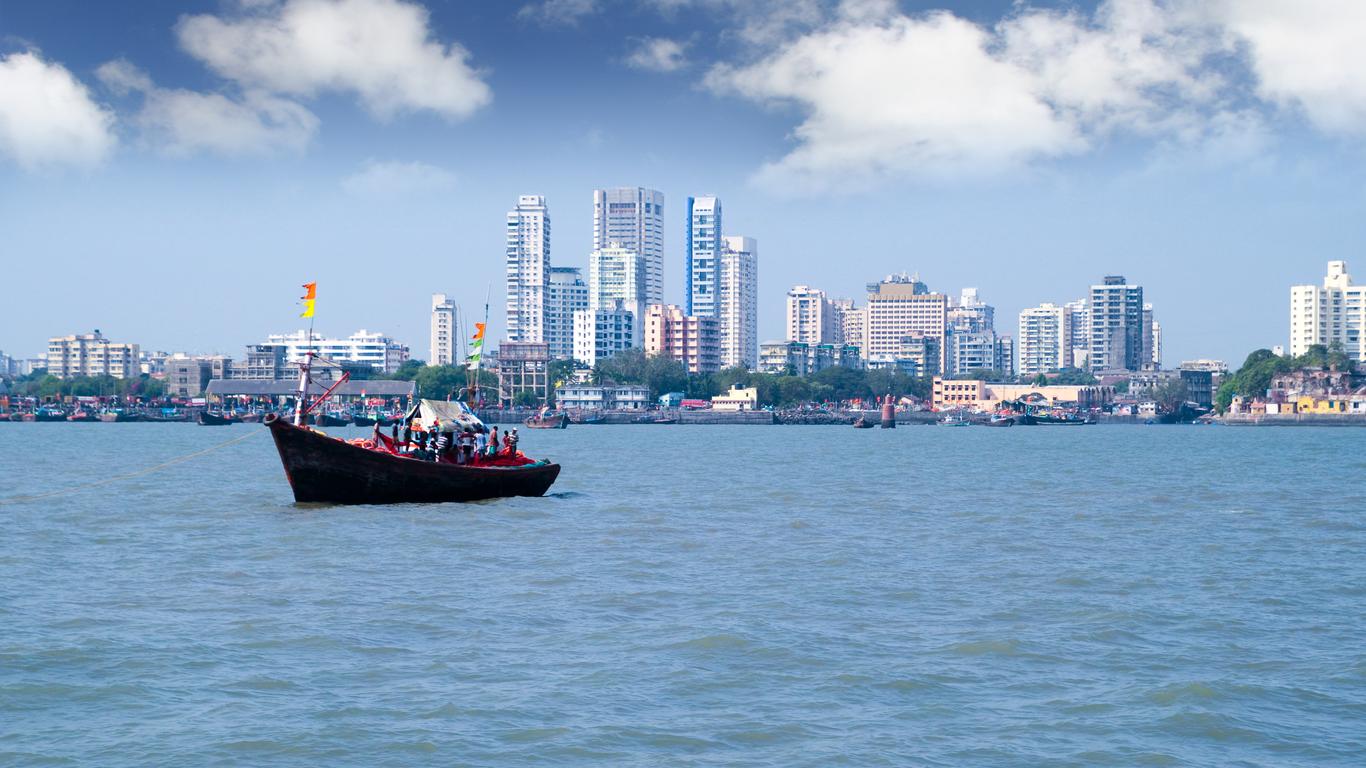
After doing a similar post for Singapore, on the occasion of India’s 75th Independence Day, I had to do one for the city of my birth, my beloved Mumbai.

A Mumbai resident is known as a Mumbaikar, though when it used to be Bombay, we called ourselves Bombayites. I guess the change from Bombay to Mumbai meant that the word also changed and became the Marathi Mumbaikar where kar is the Marathi word for a resident.

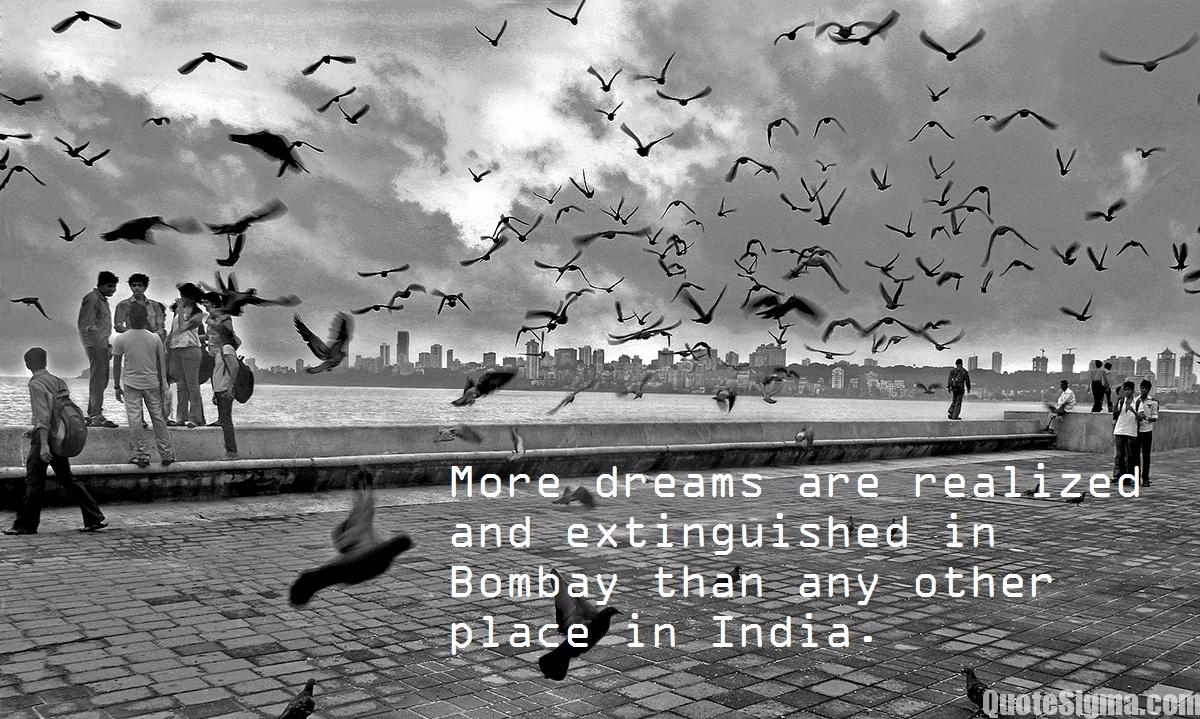
It is said, Mumbai is a city while Bombay is an emotion. Mumbai is full of dreamers and the place where people’s dreams are realised and extinguished. It is said that if one has lived in Bombay and has travelled in the local trains then one can survive in any other city. Officially Mumbai, Bombay is still used interchangeably by many locals.

Mumbaikars live a very fast-paced life and why not, given that the bulk of the population spends a few hours daily just on their commute, whether for school, college or work. I know of friends and colleagues who would spend a minimum of two hours each way on the trains to get to their destination. And speaking of trains, the Mumbai local is the lifeline of the city and if for some reason, trains shut down, the city comes to a standstill. The life of a Mumbaikar, especially one who needs the train to get to work or school revolves around train timings. So their conversations are peppered with train timings and what time to reach the station. And within the train is something that is uniquely Mumbai – the train friends. So what are these train friends? Train friends are those who invariably take the same train as you do daily. Over time, these people become friends. And this is a category of friends who may move outside the train or remain within the train itself.

A Mumbaikar is a perfect amalgamation of pan India. A blend of the North and South and to this is added the Eastern and the Western parts of India which it is already a part of. If you ask a Mumbaikar for directions, you will not be told of the direction in kilometres, but rather the time it will take you to get there. It’s very common to travel long distances to get from one place to the other because unlike other cities, Mumbai is set up in a north-south alignment so this means that long distances are inevitable and this does not faze a Mumbaikar.

Mumbai has one of the highest literacy rates in India,  94.7% which is significantly higher than the country’s average. Though the official state language is Marathi; 16 other major languages are spoken in the city including English. The city is the commercial and entertainment capital of India as well as its most populous city. With a high number of migrants and diverse religious groups, Mumbai is truly a melting pot of cultures. Mumbai can be called the true and first cosmopolitan city of India because this is a city that brings together people of different communities, religions and customs and the city is known for its diversity which can be hard to find elsewhere in India. In any building society, it’s quite easy to see people from many Indian states who live together and celebrate all festivals. The inhabitants of the city can be called a microcosm of India’s population.
The Bambaiya Hindi which is maligned in Bollywood films is a blend of Hindi, Marathi and English. While this brand of Hindi. While the Hindi may not be as pure as what is spoken in Delhi and the northern parts of India, it’s not too bad. What is shown in television and films is an exaggerated version spoken. Neither I nor my family, friends or acquaintances have spoken like this daily.

But at the end of the day, Mumbai has a heart of gold. I have written previously about how the city comes together to help during a calamity or crisis and that is what is important.

A Mumbaikar loves Mumbai, plain and simple and once they identify themselves as a Mumbaikar, they remain one till the end of their lives. I may not travel to Mumbai now as often as I want to, but you can take Mumbai out of my life, but you can’t take the Mumbaikar out of me.

To end this post, an old song which beautifully captures the spirit of Mumbai, though it was Bombay then. This song is from the old classic C.I.D which was released in 1956 and starred Dev Anand and Waheeda Rehman in the leading roles. And this shows you how Bombay was in the fifties, with trams running and wide, uncrowded roads.

In My Hands Today…

Daughters of the Sun: Empresses, Queens and Begums of the Mughal Empire – Ira Mukhoty

In 1526 a Timurid warrior-scholar rides into Delhi to build an empire. With him ride his wives, his sisters, his daughters, his aunts and his distant female relatives.

Unhindered by a relatively recent conversion to Islam, these women will help found a culture of such magnificence and beauty that it will become a by-word for opulence in the world. These Mughal women of Hindustan — unmarried daughters, eccentric sisters, fiery milk-mothers and beautiful wives, will contribute to the great syncretic culture of the Mughals by writing biographies, building monuments, engaging in diplomacy, and patronizing the arts.

And even as the zenana changes from the earlier nomadic, tented spaces to the later more sequestered grandeur within the high stone walls of mighty qilas, the influence of the women remains visible and unquestioned. This book looks at the lives of these Mughal women, and the enigma of their disappearance, except as objects of curiosity, from our collective memory.

In My Hands Today…

Partition Voices: Untold British Stories – Kavita Puri

Dotted across homes in Britain are people who were witnesses to one of the most tumultuous events of the twentieth century. Yet their memory of India’s partition has been shrouded in silence. Kavita Puri’s father was twelve when he found himself one of the millions of Sikhs, Hindus and Muslims caught up in the devastating aftermath of a hastily drawn border. For seventy years he remained silent – like so many – about the horrors he had seen.

When her father finally spoke out, opening up a forgotten part of Puri’s family history, she was compelled to seek out the stories of South Asians who were once subjects of the British Raj, and are now British citizens. Determined to preserve these accounts – of the end of Empire and the difficult birth of two nations – here Puri records a series of remarkable first-hand testimonies, as well as those of their children and grandchildren whose lives are shaped by partition’s legacy. With empathy, nuance and humanity, Puri weaves a breathtaking tapestry of human experience over a period of seven decades that trembles with life; an epic of ruptured families and friendships, extraordinary journeys and daring rescue missions that reverberates with pain, loss and compassion.

The division of the Indian subcontinent happened far away, but it is also a very British story. Many of those affected by partition are now part of the fabric of British contemporary life, but their lives continue to be touched by this traumatic event. Partition Voices breaks the silence and confronts the difficult truths at the heart of Britain’s shared history with South Asia.

Festivals of India: Muharram

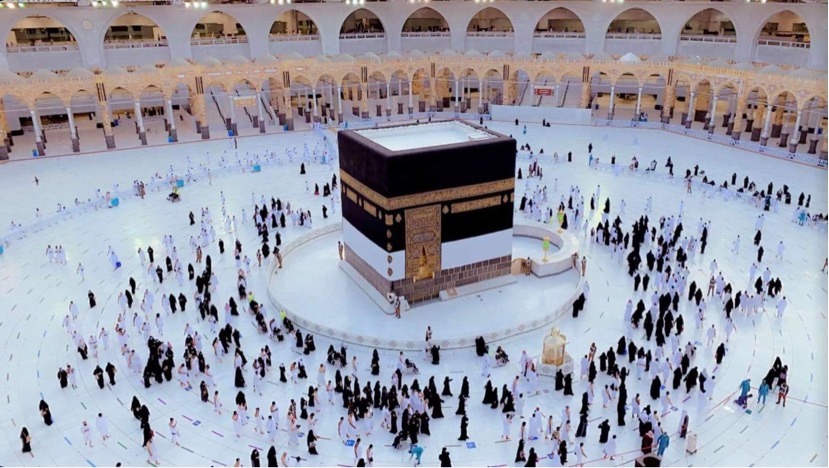
This is the month of Muharram, the first month of the Islamic calendar and one of the four sacred months of the year when warfare is forbidden. It is held to be the second holiest month after Ramadan. The tenth day of Muharram is known as Ashura and as part of the Mourning of Muharram, Shi’i Muslims mourn the tragedy of Ḥusayn ibn ʿAlī’s family, and Sunni Muslims practice fasting on Ashura.

Muslims mourn the martyrdom of Ḥusayn and his family, honouring the martyrs by prayer and abstinence from joyous events. Shiʿi Muslims eat as little as possible on the Ashura; however, this is not seen as fasting. Alevis fast twelve days, each day for one of the Twelve Imams of Shiʿa Islam, to commemorate and mourn the Imams, as if a very close relative has died. Some, excluding children, the elderly or the sick, don’t eat or drink until zawal or afternoon as a part of their mourning for Husayn. In addition, there is an important ziyarat or a form of pilgrimage book, the Ziyarat Ashura about Ḥusayn. In Shiʿism, it is popular to read this ziyarat on this date.

The sighting of the new moon ushers in the Islamic New Year. The first month, Muharram, is one of the four sacred months mentioned in the Quran, along with the seventh month of Rajab, and the eleventh and twelfth months of Dhu al-Qi’dah and Dhu al-Hijjah, respectively, immediately preceding Muharram. During these sacred months, warfare is forbidden. Before the advent of Islam, the Quraish and Arabs also forbade warfare during those months. Muslims believe that in this month of Muharram, one should worship Allah a lot.

Muharram is a month of remembrance. Ashura, which means the Tenth in Arabic, refers to the tenth day of Muharram and is well known because of the historical significance and mourning for the Shahadat or martyrdom of Ḥusayn ibn Ali, the grandson of Muhammad. Muslims begin mourning from the first night of Muharram and continue for ten nights, climaxing on the 10th day of Muharram, known as the Day of Ashura which is considered the most important by both Shia and Sunni Muslims. Tomorrow, the 10th day of Muharram or the Day of Ashura will be commemorated. Shia Muslims observe it as a day of mourning to commemorate the death of the grandson of Prophet Muhammad, Hussayn Ibn Ali. The last few days up until and including the Day of Ashura are the most important because these were the days in which Hussain and his family and followers, including women, children and elderly people were deprived of water from the 7th day onward and on the 10th day, Husayn and 72 of his followers were killed by the army of Yazid I at the Battle of Karbala on Yazid’s orders. The surviving members of Husayn’s family and those of his followers were taken captive, marched to Damascus, and imprisoned there. This was because, according to legend, Imam Hussayn objected to the legitimacy of the Caliph Yazid and revolted against him leading to the battle of Karbala in 680 AD. Sunni Muslims believe that the religious leader Moses led Israel through the Red Sea and got victory over the Egyptian Pharaoh and his army of war chariots on the 10th day of Muharram. There is another belief that Adam and Eve were created by God on the 10th day of this month. It was also during this time that Prophet Muhammad migrated from Mecca to Medina, which is known as Hijrah, and so Muharram marks this important event as well.

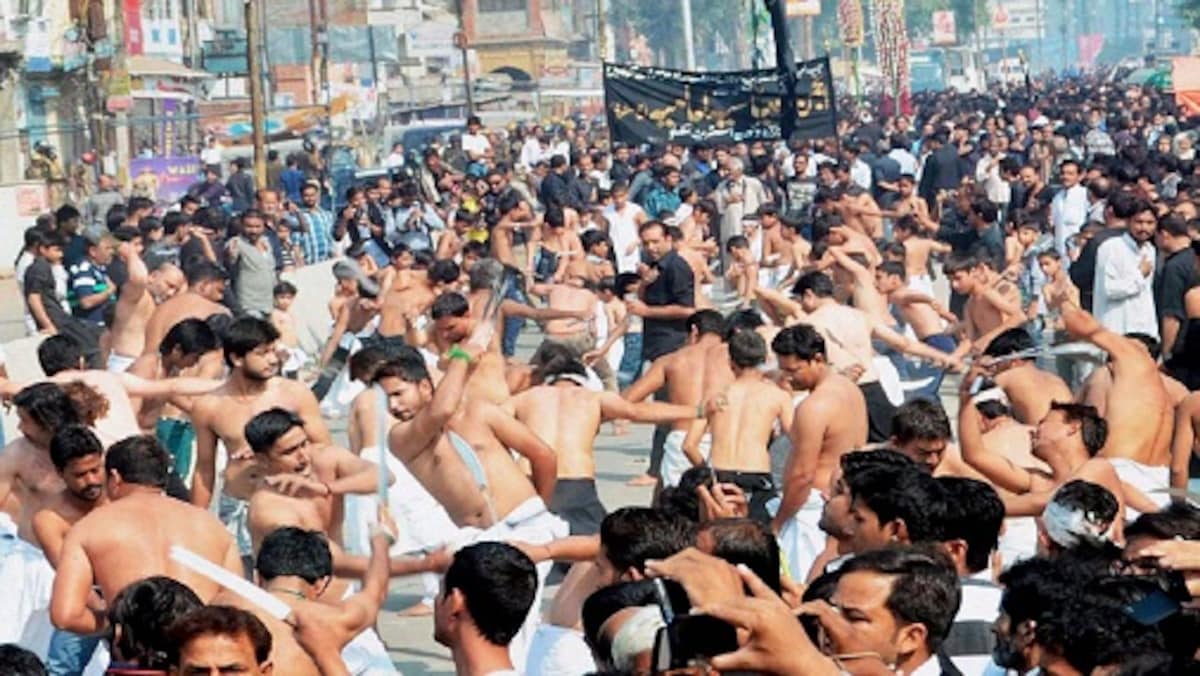
In India, though both Shias and Sunnis observe Muharram, for the Shias, it is a day of observance and not joy, and thus, they are in mourning for the 10 days. They dress in black, attend special prayer meetings at mosques and even refrain from listening to music or attending events like weddings. On the 10th day, street processions take place in which they walk barefoot, chanting and whipping their chests until it draws blood to commemorate the sufferings of Imam Hussayn. Sunnis observe this day with fasting from the first to the 10th or 11th day of the month. This is voluntary, and the ones who fast are believed to be rewarded by Allah.

Festivals of India: Aadi Perukku

Today is Aadi Perukku or Aadi 18, a little-known festival celebrated in the state of Tamil Nadu. Also known as Aadi 18, Aadi Perukku is the monsoon festival celebrated in the month Aadi monsoon festival and celebrated on the 18th day of the Tamil month of Adi, which should be sometime between mid-July to mid-August. The festival pays tribute to water’s life-sustaining properties. Nature worship in the form of Amman deities is organised to shower Nature’s bountiful grace on human beings and to bless mankind with peace, prosperity and happiness.

Aadi is a month of fervour and observances dedicated to the Goddesses related to water and other natural forces where prayers and pujas are offered to propitiate the powerful goddess to seek their protection from the inauspicious aspects that are often associated with the month. No weddings or other similar functions are celebrated during this month. It is during this time that the monsoon peaks on the west coast and the rivers of Tamil Nadu, shrunken in the summer heat, get replenished, often to near full levels. The month of Aadi is the fourth month of the year with the first day of the month, usually falling on 16 July, celebrated as Aadi Pandigai or Aadi Perukku, and an important festival to most Tamils, especially newly-weds.

In India the rivers Ganga and Yamuna, Cauvery, Narmada and Godavari are considered sacred. Just like the earth gives us food, water is considered a sacred necessity to meet the needs of individuals. People began to worship water in the form of wells, tanks and rivers. It is common among people to throw fruits, flowers and saffron cloths when the rivers and lakes are in spate purely based on the belief that these rivers are the species of female deities. Similarly, every temple has sacred wells and tanks, and the water in these resources is considered pure.

Aadi Perukku is a unique South Indian and especially a Tamil festival celebrated on the 18th day of the Tamil month of Adi. The festival coincides with the annual freshness of rivers and pays tribute to water’s life-sustaining properties. It is celebrated near river basins, water tanks, lakes and wells of Tamil Nadu when the water level rises significantly heralding the onset of the monsoon.

Aadi Perukku, also called Padinettam Perukku where Padinettu signifies eighteen, and Perukku denotes rising is a unique occasion dedicated to all the perennial river basins of Tamil Nadu and major lakes water source areas and is intended to celebrate the water rising levels due to the onset of monsoon, which is expected to occur invariably on the 18th day of the solar month, Aadi which corresponds to the 2 or 3 August every year. This festival is observed predominately by women in Tamil Nadu as a water ritual, to honour nature.

The association of this ritual with fertility, sex and reproduction is both natural and human. This water ritual practice is performed on the banks of Rivers, which is described as a rice-cultivation tract. The history of this ritual practice dates back to the ancient period and was patronised by the Kings and royal households. Aadi is the month for sowing, rooting and planting of seeds and vegetation since it is peak monsoon time when rain is showered in abundance.

Apart from people flocking to waterfalls for pre-monsoon and monsoon festivals, people living on the banks of rivers and other water sources offer pujas to the water goddess and river gods so that when nurseries are raised in the fields subsequently and sustained by the northeast monsoon, the crops will be ready for harvest during the Thai Pongal celebration in 5 months in mid-January.

The most visible manifestations of the month of Aadi are the huge kolams or rangolis that are painstakingly patterned early each morning in front of houses. They are usually bordered with red and across the front doorway at the top are strung mango leaves. The first of the month is marked with a special puja, followed by a feast with payasam prepared with coconut milk, boli and vadai.

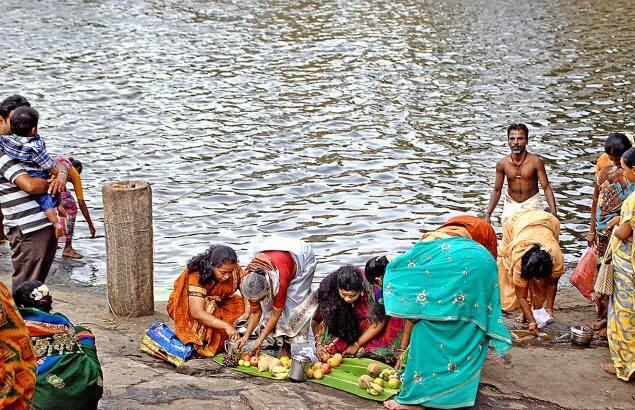
Aadi Perukku is a day of offerings and prayers to these rivers, which mean so much to the lives and prosperity of the people. The day is an occasion for rejoicing particularly for those living on the banks of all the main rivers, their branches and tributaries. The festival of Aadi Perukku is mainly observed by families living on the banks of the Cauvery River. On this auspicious day, relatives and friends collectively pray for the intermittent supply of water that would ultimately result in a good harvest. The devotees take a dip in the holy water. After the bath, they wear new clothes and perform some rituals at the bathing ghats along the Cauvery River. This is followed by abhishekham or the bathing of the Goddess Kaveri or Kaveri Amman.

A special lamp is prepared using jaggery and rice flour. The lamp is placed on the mango leaves, to which a yellow thread, turmeric and flowers are also added. The lamp is lit by the women and together with its accompaniments is floated in the river. Different forms of rice dishes are prepared and offered to the Goddess. Some of the commonly prepared rice dishes that vary in ingredients, colours or flavours include coconut rice, sweet Pongal, curd rice, lemon rice and tamarind rice. The devotees also worship the sacred river Mother Cauvery with rice offerings, Akshata and flowers. After completing the puja, the devotees eat the feast along the banks of the river with their families. The entire event turns out to be like a picnic on the banks of the Cauvery River.

Young girls observe this auspicious puja together with married women. It is a popular belief that maiden girls who make the offerings of Kaapparisi, a sweet dish made from jaggery and hand-crushed rice, Karugamani which are black coloured beads and Kaadholai which are earrings carved out of palm leaves shall be rewarded with good husbands. Young women play and dance to the tunes of folk songs on the occasion of Aadi Perukku. In some Tamil communities, the sons-in-law are invited on the day of Aadi Perukku and gifted new clothes. There is also a ritual in some districts of Tamil Nadu, wherein the newlyweds spend a month before Aadi Perukku at their parents’ home. Then on the day of Aadi Perukku, a gold coin is added to their Thali or Mangalsutra and they return with their husbands.

Mulaipari or the sprouting or germination of nine grains or navadhanyam in baskets or clay mud pots is a very important ritual which takes place at almost every village Goddess celebration. In its most original form, it is an exclusively women’s ritual and is of great importance to the whole village. The participants of the processions carry earthen pots with grown grains from nine different types of grains inside on their heads and walk towards a river where the contents are dissolved. Before the procession starts, special songs and dances like Kummi Pattu and Kummi are performed. The original meaning of the ritual performance is a request to the village Goddess for rain and the fertility of the land, to secure a rich harvest. The women are involved in large groups significantly implying the fertility of women also ensures the continuity of the human race with peace and harmony through empowered women.

All the year’s major festivals are packed into the six months that follow, culminating with Thai Pongal in mid- January, giving meaning to the Tamil saying, Aadi Azhaikkum, Thai Thudaikkum which means