
The Bachelor of Arts – R.K. Narayan
 The story describes the complex transition of an adolescent mind into adulthood and the heartbreak which a youth faces. It revolves around a young man named Chandran, who resembles an Indian upper middle class youth of the pre-independence era. First, Chandran’s college life in late colonial times is described. After graduation, he falls in love with a girl, but is rejected by the bride’s parents, since his horoscope describes him as a manglik, a condition in which a manglik can only marry another manglik and if not, the non-manglik will die. Malathi, the girl with whom Chandran falls in love after graduating from college, is then married to someone else.
Chandran is absolutely heartbroken to the extent that he goes to Madras and starts living on streets. Famished, delusioned and full of self-pity, he ends up wandering from one place to another. Also frustrated and desperate, he then embarks on a journey as Sanyasi. On his journey he meets many people and he is also misunderstood as a great sage by some villagers. After 8 months, he thinks of what mess he has become and thinks about his parents. Due to the compunctions and the realizations, he decides to return home. He takes up a job as a newsagent and decides to marry, in order to please his parents, thinking of the discomfort he had caused them earlier.
Even after returning home, he is still unable to get Malathi out of his head completely and though he tries hard, the pictures and memories of her keep haunting him for a long time. After a long time, his father comes to him with a proposal of marriage to another girl Susila. Chandran is still skeptical about love and marriage and initially refuses but later decides to see the girl. When he goes on to see the girl, he ends up falling in love with her.
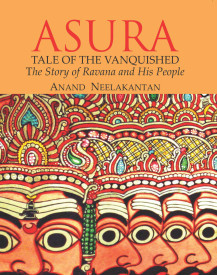 The epic tale of victory and defeat… The story of the Ramayana had been told innumerable times. The enthralling story of Rama, the incarnation of God, who slew Ravana, the evil demon of darkness, is known to every Indian. And in the pages of history, as always, it is the version told by the victors that lives on. The voice of the vanquished remains lost in silence.
 In a land where skin colour can determine one’s destiny, fraternal twins Pullamma and Lata are about to embark on a journey that will tear their lives apart. Dark skinned Pullamma dreams of being a wife. With three girls in her family, the sixteen year old is aware there isn’t enough dowry to secure suitable husbands for them all. But a girl can hope. She’s well versed in cooking, pickle making, cow washing — you name it. She’s also obliged her old-fashioned grandmother by not doing well in school. Fair skinned and pretty, her twin sister Lata would rather study medicine than get married. Unable to grasp the depth of Lata’s desire, the twins’ Grandmother formalizes a wedding alliance for the girl. Distraught, Lata rebels, with devastating consequences. As Pullamma helps ready the house for her older sister Malli’s bride viewing, she prays for a positive outcome to the event. What happens next is so inconceivable that it will shape Pullamma’s future in ways she couldn’t have foreseen. Tell A Thousand Lies is a sometimes wry, sometimes sad, but ultimately realistic look at how superstition and the colour of a girl’s skin rules India’s hinterlands.
 The Way Things Were opens with the death of Toby, the Maharaja of Kalasuryaketu, a Sanskritist who has not set foot in India for two decades. It falls to his son, Skanda, to return Toby’s body to his birthplace, “a tin-pot kingdom” not worth “one air-gun salute”, fulfilling Toby’s final wish in returning his ashes to his birthplace.
 On December 26, 2004, Rob, Paul, Matty, and Rosie Forkan, ages 8-17, lost their parents in the tsunami that devastated Sri Lanka. They faced a 124 mile trek to get home to safety. The ingenuity, and resilience they displayed was the result of their unusual upbringing.
 Memories and Such