In My Hands Today…

Ramayana Unravelled: Lesser Known Facets of Rishi Vālmiki’s Epic – Ami Ganatra

No epic has moved the consciousness of millions like the Ramayana. The appeal of the story of Rama is such that it has inspired the imagination of countless storytellers over the centuries, across the length and breadth of the subcontinent. From Jain poets to Bhavabhuti, from Kamban to Goswami Tulsidas, many have retold the Ramayana in their own language, infusing their own unique flavour.

Though the story of Rama is much loved and well-known, questions prevail. Ramayana Unravelled attempts to address some key concerns: How did his childhood and youth shape Rama? Why did Rama agree to go on vanvas – was it only to obey his father or was there more to it? How was the relationship of Rama and Seeta? Is the Ramayana inherently misogynist, considering the characterisation of Seeta, Shurpanakha, Kaikeyi and Tara? What led to the downfall of Ravan?

Ami Ganatra takes the reader through the events of the Ramayana, resolving conundrums and underlining the reasons the epic continues to be cherished to this day.
India

In My Hands Today…

Mahagatha – 100 Tales from the Puranas – Satyarth Nayak

Do you know the story where Brahma and Vishnu race against each other or where Shiva battles Krishna? Where Indra attempts foeticide or where Rama punishes a Shudra? Do you know about Maya Sita or Narada’s monkey face? Or why Surya falls from the sky or why Chandra commits adultery?

The Puranas of Hinduism are a universe of wisdom, embodying a fundamental quest for answers that makes them forever relevant. Now, for the first time, 100 of the greatest mythological tales from these ancient texts have been handpicked and compiled into an epic illustrated edition. Besides popular legends of devas, asuras, sages and kings, Satyarth Nayak has dug up lesser-known stories, like the one where Vishnu is beheaded or where Saraswati curses Lakshmi or where Harishchandra tricks Varuna. Nayak also recounts these 100 tales in a unique chronological format, beginning with Creation in Satya Yuga and ending with the advent of Kali Yuga. Using Puranic markers, he constructs a narrative that travels through the four yugas, offering continuous and organic action. In such a reading, it is revealed that these stories are not isolated events but linked to each other in the grand scheme of things. That every occurrence has a past and a future. A cause and effect. An interconnected cycle of karma and karma-phal.

Delving into the minds of gods, demons and humans alike, Mahagatha seeks a deeper understanding of their motivations. The timelessness of their impulses speaks across the aeons to readers of today. Written in lively prose with charming illustrations, these 100 tales will entertain and enlighten, and make you connect the dots of Hindu mythology like never before.

In My Hands Today…

Mahabharata Unravelled: Lesser-Known Facets of a Well-Known History – Ami Ganatra

Millennia have passed since the dharma yudhha of the cousins shook the land of Bharata. But this history of our ancestors continues to fascinate us. Even today, we have passionate discussions about the people and their actions in the epic, fervidly defending our favourites and denouncing others. The number of works on the Mahabharata-adaptations, retellings and fiction-that still get written is a testimony to its enduring relevance.

While the general storyline is largely known, a lot of questions and myths prevail, such as-What was the geographical extent of the war? Did Drona actually refuse to take on Karna as his disciple? What were Draupadi’s responsibilities as the queen of Indraprastha? Did she ever mock Duryodhana? Were the women in the time of the Mahabharata meek and submissive? What were the names of the war formations during the time? What role did the sons of the Pandavas play? Does the south of India feature at all in the Mahabharata? What happened after the war? These and many other intriguing questions continue to mystify the contemporary reader.

Author Ami Ganatra debunks myths, quashes popular notions and offers insights into such aspects not commonly known or erroneously known, based solely on facts as narrated in Vyasa’s Mahabharata from generally accepted authentic sources. For a history of such prominence and influence as the Mahabharata, it is important to get the story right. So pick this book up, sit back and unveil the lesser-known facts and truths about the great epic.

In My Hands Today…

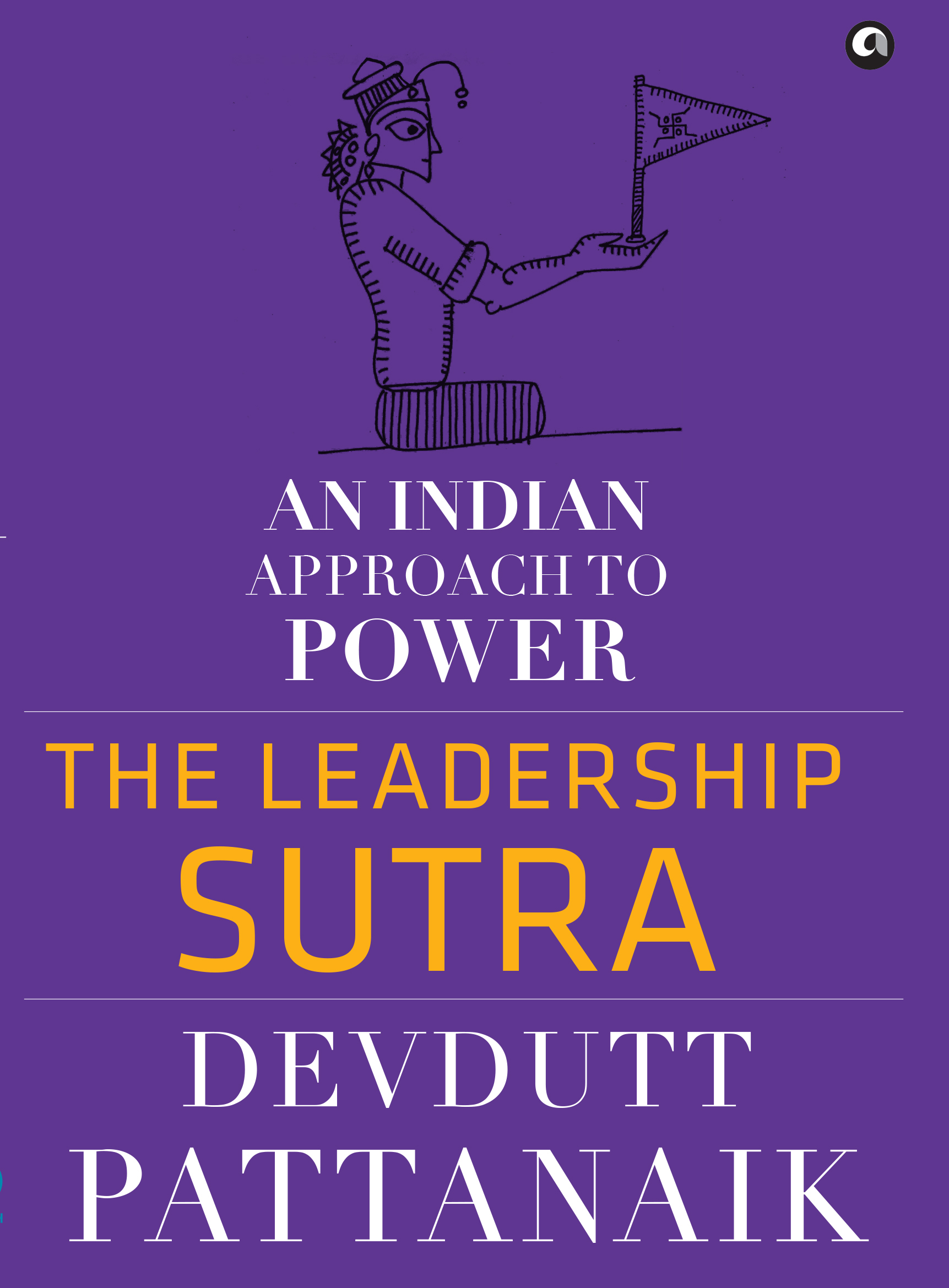
The Leadership Sutra: An Indian Approach to Power – Devdutt Pattanaik

Durga is the goddess of power in Hinduism, as well as in Buddhism and Jainism.

Her name is derived from the word ‘fortress’ (durg). She is the goddess of kings. She rides a lion, the king of the jungle and a symbol of royalty everywhere, from China to England.

We tend to tiptoe around the role of power in management and fail to openly acknowledge how the animal desire to dominate often destroys the best of organizations. Critics tend to see power as a negative thing. But power is a critical tool that affects the implementation of any idea. Any attempt to restrain it with rules results in domestication and resentment and fails to energize the organization.

Leaders often equate themselves with lions and indulge their desire to dominate when, in fact, the point of leadership is to be secure enough to outgrow the lion within us and enable and empower those around us. But this is not easy, as anxiety overpowers the best of leaders.

Derived from Devdutt Pattanaik’s influential bestseller Business Sutra, this book offers startling and original insights into the exercise of power and leadership. It explores the human quest for significance, the power of rules to rob people of self-esteem, and the need for stability even at the cost of freedom.

In My Hands Today…

Dashavatar : Stories of Lord Vishnu – Piyusha Vir

Did you know that each avatar of Vishnu arrived with a specific purpose?

Time and again, Vishnu has manifested in different forms to fulfil his role as a ‘protector’ of the world. Among the long list of 24 avatars, 10 have captured our imagination for centuries together—Matsya, Kurma, Varaha, Narasimha, Vamana, Parshuram, Rama, Krishna, Buddha, and Kalki.

But how exactly did these avatars impact society? And how do they link to the Charles Darwin theory of evolution?

While each avatar has its own set of legends that extoll their characteristics and deeds, the stories behind them are just as interesting and informative.

Presented from a contemporary and unbiased perspective, these stories of the 10 avatars of Vishnu are an attempt to make mythology more believable and relevant to the world that we live in today.