The Night of Terror – An Unforgettable Day!

I woke up, excited and happy on the morning of November 26, 2008. I was going to Mumbai later that evening on a Jet Airways flight, flying with BB & GG alone for the first time since they were born. They were 5 years old and were equally excited to be seeing their grandparents that evening.

Everything changed around 7 am when I got a message from my sister, who was in the States at that point, asking me if I was still going to Mumbai. I had no clue what was happening in Mumbai. I waited impatiently till a decent time to call my parents to find out more, and in the meantime rushed to work as I was supposed to be working half day that day. I went online and was shocked by what I read. Twitter, which was around two years old then had exploded with tweets on the situation!

What had happened was that 10 Pakistani members of Lashkar-e-Taiba, an Islamic militant organisation, carried out a series of 12 coordinated shooting and bombing attacks lasting four days across Mumbai. The attacks, which drew widespread global condemnation, began on Wednesday, 26 November and lasted until Saturday, 29 November 2008, killing 164 people and wounding at least 308.

Eight of the attacks occurred in South Mumbai: at Chhatrapati Shivaji Terminus (VT train station), the Oberoi Trident, the Taj Mahal Palace & Tower, (one of the worst places of the killings), Leopold Cafe, Cama Hospital, the Nariman House Jewish community centre, the Metro Cinema, and in a lane behind the Times of India building and St. Xavier’s College. There was also an explosion at Mazagaon, in Mumbai’s port area, and in a taxi at Vile Parle (close to the domestic airport). By the early morning of 28 November, all sites except for the Taj hotel had been secured by Mumbai Police and security forces. On 29 November, India’s National Security Guards (NSG) conducted ‘Operation Black Tornado’ to flush out the remaining attackers; it resulted in the deaths of the last remaining attackers at the Taj hotel and ending all fighting in the attacks.
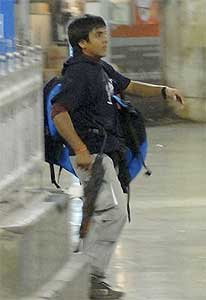
Ajmal Kasab, the only attacker who was captured alive, later confessed upon interrogation that the attacks were conducted with the support of the Pakistan government’s intelligence agency, the ISI. Kasab was tried and later hanged in Yerwada jail in 2012.

S was on leave that day as he gets more leave than me. I quickly called him and spoke to him. My inlaws were scared of us travelling that evening and asked me to cancel the trip. I was torn – on one hand I didn’t want to risk the trip, on the other hand, I so desperately wanted to go home and meet my parents (I think at that point, it was a year since I had met them). I called the airline office in Singapore and was met with indifference. They seemed not to have any idea of what was happening in their head office city and told me they didn’t have directive from Mumbai (the head quarters of the airline). The flight will take off as scheduled was what I was told. My mother-in-law didn’t want me to travel, but I didn’t listen to her, saying since the flight was scheduled, we’ll go to the airport and decide then. I spent the whole day glued to the internet for any scraps of news that I could get. I told my parents that we are making the trip and to come to the airport to pick us up. Now that was a new problem – due to the trouble, the city was on curfew and there was no one willing to drive them to the airport. Finally around the time we left for the airport, my dad messaged me that they had finally found someone brave enough to drive his taxi to the airport and pick us up. One problem solved, loads more to go…

Praying to the entire pantheon of Gods in Indian Mythology, we left for the airport. We were one of the first ones to check-in. The mood was quite somber. There was a Channel News Asia crew near the check-in counter interviewing passengers brave (or mad) enough to fly to Mumbai. They were looking for Singaporeans against Indians and approached me to ask if I was willing to be interviewed. I did mention that I am not a local, but was told that I spoke like one, so could pass off as one! I was asked if I was scared of going to Mumbai while the shootings were going on and I remember replying that this was very far from the airport, and so the airport area should be safeish (is this even a word?)!

We flew into Mumbai and the airport was very somber and dull! Everyone working the shift was glued to the television screens which were showing live the places where the terrorists had held the hostages. None of the customs officers were really interested in looking at our luggage and we were out in record time. I was so relived to meet my parents and we quickly got into the taxi and drove home. At that point in time (this was before the new flyover which has dramatically shortened travel time from the airport to my home), the normal travel time between the airport to home was 45 – 60 mins. That day, we did the journey in 20 minutes! Once home, I heaved a big sigh of relief and then spent the next few days glued to the television….

This was the most unforgettable day in my life and a flight to remember…..
2105 Week 44 Update

Surprisingly this week went by faster than I thought it would. Work-wise, it’s still the same. I don’t have enough work to fill the eight hours at work. The day I have something to occupy my time for atleast half the day, I am happy! I’ve realized it’s far more difficult to pretend to be busy and do work than to actually do something….

Tomorrow is Diwali, the festival of lights and probably the most important festival in the Hindu calendar for the year. I’ve been busy preparing sweets and savories and have over-extended myself this year. Hopefully by the end of the day, I actually finish making all that I have planned for…

Beofre the festival, people clean and if possible, renovate and decorate their homes. The festival is celebrated slightly differently in North and South India. What’s common is the creation of beautiful rangolis or patterns made from coloured flour outside homes and decorated with lamps. The lamps are kept lit throughout the night so as to invite Goddess Lakshmi, the Goddess of Wealth into your home. People also wear new clothes across the country on Diwali and burst fire crackers outside.

In South India, Diwali is celebrated as the day Lord Krishna defeated the evil demon Nakasura and is called Naraka Chaturthi. Here, traditionally, especially in Tamil Brahmin homes, if the festival falls on a new moon, everyone wakes up super early and the lady of the house first takes a bath and lights the lamp. Then one by one, family members come and sit in front of the lamp where the lady of the house will put some gingelly oil which has been prepared the previous evening on them. They then have a bath and come and prostate before the Lord, after which they get their new clothes. Before they start the feating which is typical of the festival, they are also given a medicinal legiyam which sort of helps digest all the fried food and sweets which you eat throughout the day.

In North India, the festival is celebrated as the day Lord Rama, from the epic, Ramayana was welcomed back home to Ayodhya in present day Uttar Pradesh along with his wife Goddess Sita and brother Lord Lakshmana after a 14 year exile. Lamps are lit to welcome the trio. Prayers are also said to Goddess Lakshmi, the goddess of wealth in the evening of Diwali.

Certain communities also welcome their new year on the last day of the celebrations.

Here’s wishing all of you a very Happy Diwali! May the festival of lights light up your lives and bring you happiness and abundant prosperity….

My Name is My Own

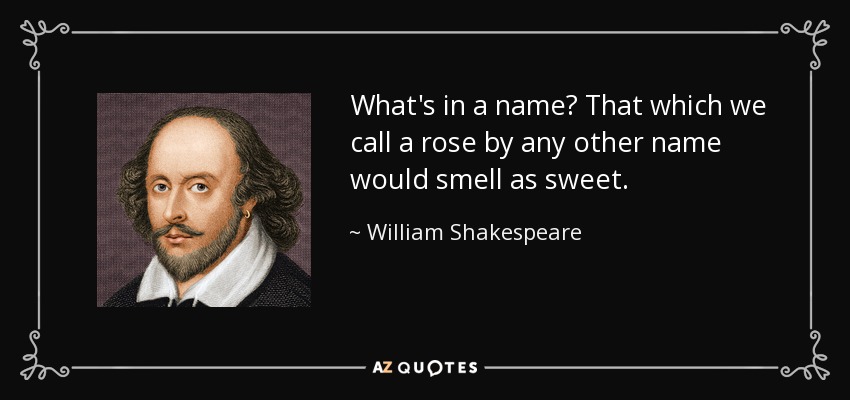
“What’s in a name? That which we call a rose by any other name would smell as sweet” – William Shakespeare in Romeo and Juliet

Once upon a time…..actually this start has nothing to do with my post today, but since this is something I’ve thought over a long time, I decided to use it!

I’ve been a feminist for a long time, even before I knew what the word meant. I guess, growing up without any brothers meant that my sister and I were given a more liberal upbringing than most girls we knew. That might have been the starting of my innate feminism I guess!

Growing up, I always wondered why a woman should change her name to reflect that of her husband when she got married. I didn’t really do anything about this because this was the norm in India when I was growing up and I didn’t see anyone bucking this. However, this changed when I started working. One of my first supervisors, a wonderful woman, got married when we were working together and didn’t change her name. However, HR assumed she would do so and I remember the first day she came back after her honeymoon, she got a note and in the envelope was her married name: Mrs. XXX

She was furious and sent out a note to HR letting them know that unless she officially sent them intimation about her name change, they could not arbitrarily change her name without her permission. I witnessed the whole drama and asked her why. She replied that she is a person in her own right and is not an extension of her husband and so is not planning to change her name, now or ever. This got me thinking and I also started looking at the possibility of not changing my name when I got married.

When I got married later in life, there was not much time to do anything except get to Singapore after the wedding. In this hustle and bustle, the whole process of changing names just got left over. My passport was in my maiden name and changing names (Indian bureaucracy is to be seen to be believed) would mean I could not fly to Singapore with S. In fact, if I remember correctly, this topic didn’t appear in anyone’s consciousness and I flew to Singapore in my maiden name.

Then I decided, I will not change me name. My whole life, prior to my wedding, was as important to me as my life after it, and so a name change will probably mean starting a new life from zero. Also all school and work records are in my maiden name, so this will mean a big explanation each time I show these records to potential employers. I also thought that since my parents raised me to be the person I am today, it is only right I honour them by continuing to keep my maiden name.

S was cool about this since most women do not change names after marriage in Singapore. This is because they get their National Registration Identity Card (NRIC) at the age of 15, when no-one is married and so girls continue with this name through their lives.

I sometimes wonder if this would have been a bigger issue if I lived elsewhere than Singapore, but c’st la vie!

Isn’t it unfair that guys don’t have to do anything like this? What do you think?

Positive Thinking

If you have been reading about me for a while, you’d know that for the past few months, I’ve not been very happy at work. My boss changed and the new guy who came in is not as positive about me as the previous one. I’ve been feeling very demoralized lately and in the past few weeks have been starting to look for newer positions.

In the midst of all this, I realized I needed some words of encouragement and started searching for some nice quotes to cheer me up. This one popped out and resonated with me.

I am one of those people who want to think positively, but immediately start thinking of what is the worst that can happen. It can be any situation; I veer between 100% and 0% with 100% being best possible outcome and 0% being the worst possible outcome. I really want 100% to happen, but am scared I will jinx myself, so start planning for 0%!

Reading the above quote made me think maybe my thinking is all wrong – what if I only had positive thoughts, will it make a difference? I read a couple of articles on the Power of Positivity and well, they all say the same thing which is that when you think negatively, your thoughts and emotions narrow your mind and focus on these negative thoughts. They do not allow you to see other, maybe better options which are also open and available. This is a basic survival instinct which has stayed on over the years, even though most of us don’t need it in day-to-day life these days.

On the other hand, having positive thoughts opens up your mind, allowing you to see more possibilities in life which actually allow you to have a broader view of life, one filled with more positive options.

For someone like me, who is not normally a positive person, to cultivate and increase positive thinking in our lives, you could think of anything that sparks these feelings. Or things like meditating daily for a few minutes builds mindfulness and a general sense of calm which will help with bringing forth the positive emotions when you need them. Writing daily, especially a positive experience daily will help reinforce that feeling; a daily gratitude book where you look for things that you are grateful for will also help. Another thing that helps is doing things you enjoy – whatever it may be – this helps you zone out and kick up those positive endorphins!

I’m glad I saw this quote and read the articles. I am going to seriously do this and what better day to start this than next Thursday which is Dusshera, the day of good and auspicious beginnings. I’m off on a holiday in the next two days and will spend the next 4-5 days mulling about this and when I am back the day before Dusshera, I will start by meditating a few minutes daily and also start a gratitude book. I am also going to talk BB & GG in trying this. This transition from Primary to Secondary school is the best to start such good practices which they should be able to do for the rest of their lives.
Hopefully, over the next few months, I will have a better mindset and my brain does the rest!

Here are some nice positivity quotes (more for me than you :-))

I like this one – I will choose happiness everyday!

Another great attitude to have in life!

Festivals of India: Navratri

With the Ghatasthapana, yesterday marked the start of the nine days of revelry that is the Navratri festival. This festival, which pays homage to the female energy or shakti is dedicated to the nine major Goddesses of the Hindu Pantheon.

Navratri translates to Nav or nine and ratri or nights in Sanskrit. During the nine nights of Navratri, nine forms of Devi or the female energy are worshipped. The tenth day is celebrated as Dusshera or Vijayadashami or The Day of Victory. This comes about as this was the day Lord Ram (of the celebrated Hindu epic, Ramayana) defeated the Demon Lord king Ravana in what is present day Sri Lanka and freed his wife Goddess Sita who was imprisoned by Ravana. The two, along with Lord Rama’s brother Lord Lakshmana who had accompanied his brother and sister-in-law in their exile, then left for home as this day had also ended their fourteen years of exile. The enter the city of Ayodhya in north India around twenty days later, which is celebrated as the festival of Diwali in north India.

Navaratri represents a celebration of the Goddess Amba, (the Power). Navaratri or Navadurga Parva happens to be the most auspicious and unique period of devotional sadhanas and worship of Shakti (the sublime, ultimate, absolute creative energy) of the Divine conceptualized as the Mother Goddess-Durga, whose worship dates back to prehistoric times before the dawn of the Vedic age.

A whole chapter in the tenth mandal of the Rigveda addresses the devotional sadhanas of Shakti. The “Devi Sukta” and “Isha Sukta” of the Rigveda and “Ratri Sukta” of the Samveda similarly sing paeans of praise of sadhanas of Shakti. In fact, before the beginning of the legendary war between the Pandavas and Kauravas in the Mahabharata – a foundational Sanskrit epic in the Hindu tradition – Lord Krishna worshipped Durga, the Goddess of Shakti, for the victory of the Pandvas.

The Navaratri commences on the first day (pratipada) of the bright fortnight of the lunar month of Ashwin. The festival is celebrated for nine nights once every year during the beginning of October, although as the dates of the festival are determined according to the lunar calendar, the festival may be held for a day more or a day less.
This is how Navratri is celebrated in most parts of India, specifically in the north. The first day of Navratri is the Pratipada or Ghatastapana pooja, the second day called Dwitya is the Chandra Darshan Brahmacharini Pujan. The third day is the Tritiya day and the pooja that day is the Sindoor Tritiya Chandraghanta Pujan while the fourth or Chaturti day is the Varad Vinayaka Chauth. The fifth or Panchami day is the Upang Lalita Vrat Skandamata Pujan, while the sixth or Shashti and seventh or Saptami is devoted to the Godess of Learning or Saraswati with the Saraswati Awahan Katyayani Pujan on the sixth day and the Saraswati Puja Kalaratri Pujan on the seventh day. The eighth day is called Ashtami and is the day the Goddess Durga is worshipped with the Durga Ashtami Mahagauri Pujan Sandhi Puja or Maha Ashtami. The last day of the Navratri is called Navami and this day is when you worship your implements of your profession and is called Ayudha Puja or Durga Visarjan or Maha Navami. So on this day, students and professionals will put their books in front of a portrait of Goddess Saraswati, IT guys will worship their computers, farmers will worship their plough, tractors, other professionals will worship what they use the most….you get the point….
Everyday of the nine days has a colour associated with it. Sunday is red/maroon, Monday is white or cream, Tuesday is orange, Wednesday is green, Thursday is yellow, Friday is silver and Saturday is blue or peacock. Most people will try to wear the above colours during the nine days. I remember when I was working in India, almost everyone in the office would be wearing uniform colours depending on the day! I too try to wear the colours as much as possible, but working means you can’t wear colours like silver, so I try to incorporate it somewhere as much as possible.

In our neighbouring state of Gujarat, the Navratri is a huge festival, with the nights reserved for dance. Every day, everyone, be you young or old, will flock to communal grounds and dance the Garba and the Dandiya Raas! This practice is also very popular in Mumbai and I am also nostalgic about this festival when you get a chance to dress up and go and dance the night away!

In Tamil Nadu, dolls and idols are set up on tiers of steps called Golu. Usually in the evening, women and girls are invited to the house of the host and they are given turmeric and betel leaves, called vathailay paaku and asked to sing for the Goddess. On the ninth day, as mentioned, Saraswati Pooja is done which I have blogged before. Books, computers, musical instruments are placed before the Goddess and worshipped.

On the next day, which is Vijayadashami when good overcomes evil, children are encouraged to read the books. The tenth day is also a day for beginings. Most new ventures will start this day. I remember we did BB & GG’s vidhyarambham or the day children formally start learning when they were around two years old on a trip to India during Dusshera day. That day parents make the children write a holy word on a mound of rice and this kind of starts their formal learning journey. Most parents do it just before their children start school, but we did it earlier than usual as the children were scheduled to start daycare a few months after Dusshera and that India trip.

In the evening of “Vijayadasami”, any one doll from the “Kolu” is symbolically put to sleep and the Kalasa is moved a bit towards North to mark the end of that year’s Navaratri Kolu. Prayers are offered to thank God for the successful completion of that year’s Kolu and with a hope of a successful one the next year. Then the Kolu is dismantled and packed up for the next year.

Mysore, in the state of Karnataka is very well-known for it’s Navratri festivities, which is the state festival, with the royal family taking part whole heartedly. On the ninth day of Dasara, called Mahanavami, the royal sword is worshipped and is taken on a procession of decorated elephants, camels and horses. On the tenth day, called Vijayadashami, the traditional Dasara procession (locally known as Jumboo Savari) is held on the streets of Mysore. An image of the Goddess Chamundeshwari is placed on a golden howdah on the back of a decorated elephant and taken on a procession, accompanied by tableaux, dance groups, music bands, decorated elephants, horses and camels. The procession starts from the Mysore Palace and culminates at a place called Bannimantapa, where the banni tree is worshipped. The Dasara festivities culminate on the night of Vijayadashami with a torchlight parade, known locally as Panjina Kavayatthu.

In the eastern state of West Begal, the last four days of Navaratri are particularly celebrated as Durga Puja. This is the biggest festival of the year in this state and exquisitely crafted and decorated life-size clay idols of the Goddess Durga depicting her slaying the demon Mahishasura are set up in temples and other places. These idols are then worshiped for five days and immersed in the river on the fifth day. People in the state go puja mandal hopping and try to make it home irrespective of where they are in the world for the pooja!