

Planned obsolescence usually makes us roll our eyes. It’s the reason our phones die mysteriously right after the warranty period ends. It’s why laptops are slow to the pace of a sleepy turtle for no good reason. It’s why appliances that once lasted a decade now last three years if we’re lucky. Companies love the idea. Consumers don’t. And honestly, fair enough. But somewhere along the way, I started wondering if this annoying business tactic had something useful to teach us. Not about products, but about ourselves.
Because if we’re being brutally honest, we cling to outdated versions of our lives far longer than any company ever could. We hold on to relationships that expired quietly years ago. We stay in roles that no longer fit simply because they used to. We keep beliefs and habits like old software: patched, buggy, slow, but still running because we haven’t bothered to upgrade.
So here’s the twist: What if planned obsolescence is actually a brilliant life strategy, just misbranded? What if the same principle companies use to keep products moving forward can help us keep ourselves moving forward? Today’s life requires versions of us that yesterday’s logic can’t always support. Just like tech, we evolve. And yet, unlike tech, we resist updates. It’s time to rethink that.
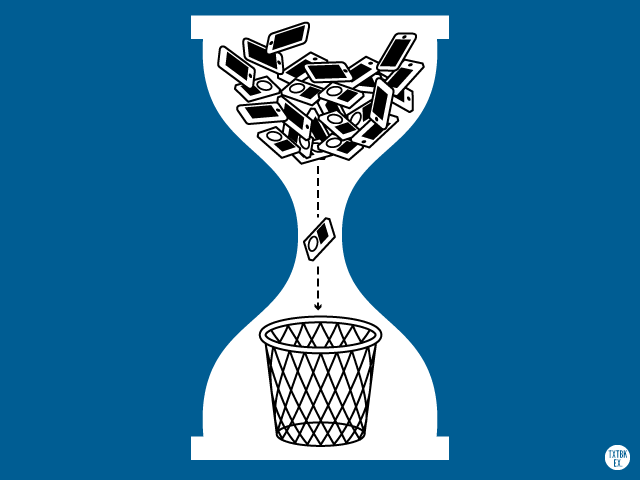
Let’s pull the idea apart. In business, planned obsolescence is designed to trigger action. Not because the product suddenly collapses, but because a better version exists, or will soon exist. You replace, upgrade, and refresh. But in life, we tend to upgrade only when we break. Burnout. A painful ending. A major life shake. A decision that comes too late. And that’s what makes the concept worth rescuing. What if we didn’t wait for collapse?
What if we practised intentional, thoughtful obsolescence: letting go of what has completed its purpose, even when it’s still working, just not working well? Businesses use planned obsolescence to keep profits flowing. We can use it to keep growth flowing. It’s not manipulation. It’s maturity.
Every phase of our lives comes with a toolkit. The version of you in your twenties needed certain beliefs, behaviours and patterns to survive and make sense of the world. You needed energy, flexibility, endurance, and the ability to say yes to almost everything.
But decades later, when priorities shift and emotional bandwidth tightens, those same habits don’t serve you. Yet you keep them out of loyalty, familiarity, or plain inertia. It’s like insisting on using Windows XP in 2025. Sure, it opens, but that’s not the point.
The point is: Your life upgrades faster than your habits do. When the mismatches pile up, you start feeling the symptoms: resentment, exhaustion, confusion, restlessness, stagnation, the sense that something is “off” but you can’t put your finger on it. That’s your internal software whispering: “This system is outdated. Please update.”

Planned obsolescence gives you a neat way to frame this. Not as a failure. Not as loss, but as natural succession. There are parts of you that carried you through tough chapters. They were necessary. Even heroic. But they’re retired staff. Not meant to be dragged along indefinitely. Let’s name a few:
The People-Pleaser: She helped you survive group projects, complicated families, messy workplaces, and fragile friendships. She protected you through silence and over-compromise. But now she’s draining your energy faster than a five-year-old smartphone battery. She needs to go.
The Over-Responsible One: This version handled everything. Emotional labour, logistics, crises, expectations. She took pride in doing the work of three people. Now? She’s exhausted, brittle and quietly resentful. She has served enough lifetimes for ten humans.
The Perfectionist: This one thinks life is a checklist where every box must be ticked neatly with the correct pen. She stops you from experimenting. She edits your work before it even exists. Her contract has expired. She doesn’t know it yet.
The “Safe” Dreamer: The one who thinks small, stays within predictable boundaries, and believes stability comes from avoiding risk. She means well, but she’s holding back the version of you who’s ready to live more boldly.
These versions aren’t wrong. But they’re outdated. They belong to older chapters, the ones that shaped you but shouldn’t confine you.
Planned obsolescence says: Thank them. Retire them. Upgrade yourself.
You’d think we’d be quicker to let things go. But no, humans cling like cling wrap. Why?
- Familiarity feels safe: Even if the pattern is draining, at least you know it well. We rarely fear discomfort as much as we fear the unknown.
- Identity gets tangled into everything: If you’ve spent 20 years being “the reliable one,” letting that version expire feels like losing a limb.
- We worship longevity: Friendships should last forever. Jobs should last decades. Beliefs should stay unchanged. That’s the message we grow up with. But longevity is not proof of relevance.
- Hope keeps us stuck: We tell ourselves things will improve. Just wait. Just tolerate. Just be patient. Hope is lovely, but sometimes it’s a velvet trap.
- Endings feel like failure: If something ends, we assume it means we messed up. But endings are often the most responsible choice we can make.

Planned obsolescence reframes endings not as failure, but as lifecycle completion. Just because something doesn’t last forever doesn’t mean it wasn’t meaningful.
- How to spot when something has quietly become obsolete? The signs are subtle at first, and then suddenly not subtle at all. Here’s what to look for:
- You have to overwrite your instincts to stay.
- You feel small in a space that used to excite you.
- Your conversations feel repetitive.
- You’re learning nothing new.
- You’re staying out of loyalty, not alignment.
- You fantasise about detaching, but feel guilty.
- You’ve outgrown what the situation can offer.
- The most telling sign? You feel yourself shrinking instead of expanding.
Obsolescence, in life, isn’t about usefulness. It’s about fit. And fit changes as we do.

How do we practice planned obsolescence in life? This is where the idea becomes practical. Not philosophical, not abstract, actionable. Here’s how to use planned obsolescence as a life tool.
Introduce Review Dates for Your Life: Jobs come with appraisals. So do products. But we rarely review our lives with the same discipline. Choose a date each year to ask: Is this still working for who I am now, not who I was? Careers, relationships, habits, commitments, all fair game. It’s not harsh. It’s honest.
Retire Beliefs That No Longer Fit: We don’t question our beliefs enough because we assume age equals correctness. But beliefs also expire. Examples include, “I have to do everything myself.” “I can’t disappoint people.” “Everyone will be upset if I change.” “I’m too old to try something new.”, and “Success must look a certain way.” These are old operating systems running on modern hardware. They cause more glitches than growth. Replace them with beliefs that match your current bandwidth, values and aspirations.
Let Relationships Evolve Instead of Forcing Them to Stay Frozen: Not all friendships need to maintain their original frequency. Some shift into seasonal contact. Some gently fade. Some stay but change shape. This isn’t betrayal. Its lifecycle. Planned obsolescence doesn’t mean ruthlessly cutting people off. It means recognising when a dynamic needs to upgrade or downshift. You can love someone and still acknowledge that the form of the relationship has expired.
Upgrade Your Coping Mechanisms: Overthinking, overworking, avoiding, shutting down: these coping tools belong to past versions of you. Instead of patching them, replace them. Old coping mechanisms may be to avoid conflict; the upgrade is to communicate early, clearly, and calmly. The old coping mechanism is to overprepare; the upgrade is to prepare enough. The old coping mechanism is to say yes automatically, while the upgrade means to pause, assess, and decide. Every upgrade frees emotional bandwidth.
Stop Treating Your Goals Like Museum Artefacts: Just because you once wanted something doesn’t mean you must carry that desire for the next 40 years. It’s fine to outgrow dreams, it’s fine to replace ambitions, it’s fine to retire goals that belonged to earlier versions of you. Life isn’t a museum where everything must be preserved untouched. It’s a living space. And living spaces need refreshing.
Version Your Life Like Software Updates: This is the simplest and most liberating idea of all. Think of yourself as a series of versions. Version 1.0 is learning the rules, version 2.0 is testing boundaries, version 3.0 is building stability, version 4.0 is rewriting definitions, and the current version is stronger, clearer, braver, and more intentional. Every version ends, not because it failed, but because you grew. A new version doesn’t erase the old one. It builds on it. That’s the beauty of planned obsolescence: retirement, not rejection.

What happens when you start living this way? Things shift, quietly at first, then dramatically. You stop dragging emotional clutter around. You notice what genuinely matters. You become more present. Your decisions sharpen. Your relationships clarify. Work feels more aligned. Life feels less chaotic because you’re not trying to maintain expired systems. You create space. And space invites possibility. Most people are so busy holding on that they forget life isn’t a storage unit. It’s a flow. Things come in, things go out. Nothing needs to remain forever to be meaningful. Planned obsolescence teaches you to honour the exit as much as the entry.
Next, let’s talk about the fear of letting go too soon. This fear is natural. Endings carry weight. But letting go intentionally isn’t rash. It’s incredibly mindful. It requires clarity and honesty, two things we rarely extend to ourselves. Letting something expire early isn’t failure. It’s stewardship. And here’s the truth: Most of the things we fear losing are already half-gone. We’re just pretending not to notice. When you release them, you’re not being irresponsible. You’re being real.
Planned obsolescence isn’t about discarding everything. It’s about recognising lifecycle, respecting timing, creating room for growth, not forcing permanence, and allowing evolution to happen smoothly instead of chaotically. It’s about gently closing chapters instead of dragging them until they fall apart. When you start doing this, something surprising happens: Your life becomes lighter. Not empty. Just uncluttered. Clarity comes. Momentum comes. Energy returns. Curiosity replaces dread. You become someone who adapts instead of someone who endures.

Life isn’t a forever project. We’re taught to value longevity as if the length of something is the best indicator of its worth. But some of our most important moments are brief. Some of our most transformative relationships last only a season. Some of our boldest decisions appear “too soon” to outsiders. Longevity is not the goal. Alignment is. Everything in life has a natural expiry: habits, jobs, routines, connections, identities. Instead of fearing that truth, planned obsolescence invites us to work with it. It encourages us to evolve gracefully instead of reacting desperately. Life doesn’t move in straight lines. It moves in cycles.
And each cycle deserves a clean beginning, not a leftover ending.
The best part, you get to choose what expires next. That’s the quiet power in this idea. Businesses dictate the expiry date of their products. But you get to dictate the expiry date of the parts of your life that no longer serve you. You choose what stays. You choose what retires. You choose what gets upgraded. It’s intentional, freeing and strangely calming. And once you start treating some things as temporary: beliefs, roles, patterns, you also start treating other things as possibilities. New habits, new relationships, new dreams, and new versions of yourself. Planned obsolescence, when translated into real life, simply means this: Stop waiting for things to fall apart. Choose your endings. Shape your transitions. Own your upgrades. It’s not a corporate trick, it’s a life skill. And it might just be the one thing that helps you move more lightly, more honestly and more courageously through the chapters waiting ahead.

