False Allies: India’s Maharajahs in The Age of Ravi Varma – Manu S. Pillai
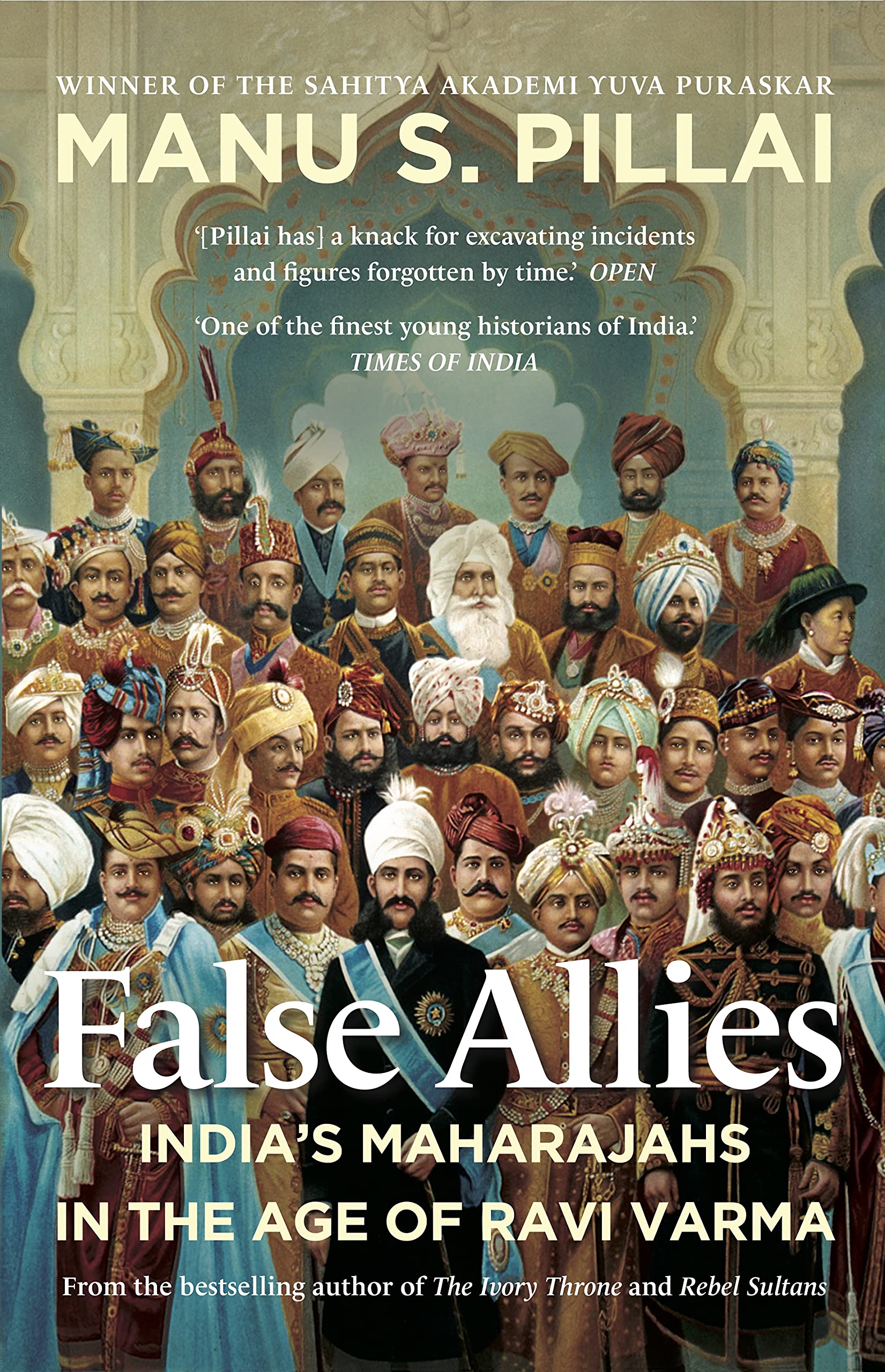
India’s maharajahs have traditionally been cast as petty despots, consumed by lust and luxury. Bejewelled parasites, they cared more, we are told, for elephants and palaces than for schools and public works.
The British cheerfully circulated the idea that brown royalty needed, enlightened, white hands to guide it, and by the twentieth century many Indians too bought into the stereotype, viewing princely India as packed with imperial stooges. Indeed, even today the princes are either remembered with frothy nostalgia or dismissed as greedy fools, with no role in the making of contemporary India.
In this brilliantly researched book, Manu S. Pillai disputes this view. Tracking the travels of the iconic painter Ravi Varma through five princely states from the 1860s to the early 1900s, he uncovers a picture far removed from the clichés in which the princes are trapped. The world we discover is not of dancing girls, but of sedition, legal battles, the defiance of imperial dictates, and resistance.
We meet maharajahs obsessed with industrialization, and rulers who funded nationalists, these men anything but pushovers for the Raj to manipulate. Outward deference aside, the princes, Pillai shows, forever tested the Raj from denying white officials the right to wear shoes in durbars to trying to surpass British administrative standards. Good governance became a spectacularly subversive act, by which maharajahs and the native statesmen assisting them refuted claims that Indians could not rule themselves.
For decades this made the princes heroes in the eyes of nationalists and anti-colonial thinkers a facet of history we have forgotten and ignored. By refocusing attention on princely India, False Allies takes us on an unforgettable journey and reminds us that the maharajahs were serious political actors, essential to knowing modern India.