

Thirukkadigai Temple, Sholingur, Tamil Nadu
Thirukkadigai, better known today as Sholingur, is one of those Divya Desams where the journey itself becomes part of the experience. Located in Tamil Nadu, the temple is set on a hill that requires effort to reach, and that effort shapes how the place is felt. The presiding deity is Yoga Narasimha Perumal, with Amritavalli Thayar as the goddess. The name Thirukkadigai comes from the word kadigai, which refers to a unit of time: roughly twenty-four minutes. Tradition holds that if one spends even that short span of time in true concentration here, the Lord grants liberation. That idea sets the tone for the temple. It is not about long rituals or elaborate offerings. It is about attention, however brief, that is complete.
The mythology of Thirukkadigai is tied to the sages who sought peace of mind. According to tradition, the Sapta Rishis once performed penance here, seeking relief from the disturbances of the world. They prayed not for wealth or power, but for clarity and stillness. Vishnu appeared before them in the form of Yoga Narasimha, a rare and striking image. Unlike the fierce Narasimha who emerged to destroy Hiranyakashipu, this form is seated in meditation. The energy is contained, inward and controlled. The story suggests that after the intensity of action comes the need for stillness. The same force that once erupted in protection now settles into awareness.
That shift is central to the identity of the temple. Yoga Narasimha does not confront or react. He sits, composed and steady, embodying the discipline of the mind. The image is powerful without being overwhelming. It reflects the idea that strength is not only about action but also about restraint. For devotees, this becomes a mirror. The temple invites not movement but pause, not reaction but reflection.
The physical setting reinforces this idea. The temple is located on a hill that requires a climb of over a thousand steps. The ascent is gradual but demanding enough to slow the body and quiet the mind. As one climbs, the surroundings open up, and the noise of everyday life begins to fall away. By the time you reach the top, something has already shifted. The act of climbing becomes part of the preparation. It is not separate from the experience of the temple. It leads into it.

At the top, the sanctum of Yoga Narasimha holds attention immediately. The deity is seated in a yogic posture, and the stillness of that form shapes the entire space. There is no sense of urgency here. Even the air feels different, lighter and less hurried. Amritavalli Thayar’s shrine, located at the foothill, balances the experience. Devotees often visit her first before making the climb, grounding themselves before the ascent. The two shrines together create a rhythm: compassion below, discipline above.
Historically, Thirukkadigai has been an important centre of Vaishnavite worship, with roots that extend through the Pallava and Chola periods. The temple grew through continued patronage and local devotion, and over time it became known not only for its mythology but also for its association with mental clarity and relief from inner disturbance. The structure reflects this continuity, with additions and renovations carried out across generations. Yet the essential character of the temple has remained unchanged. It is still defined more by its setting and its atmosphere than by its scale.
Architecturally, the temple is shaped by its location. The hilltop shrine is simple and direct, designed to hold the deity and the devotee without distraction. The focus remains firmly on the sanctum. The steps leading up the hill are as much a part of the architecture as the temple itself. They create a path that is both physical and inward. At the foothill, there is also a temple for Yoga Anjaneya, adding another layer to the site’s identity. Hanuman here is also depicted in a meditative form, reinforcing the theme of controlled strength.
The daily rituals follow the Vaishnavite tradition, with regular pujas performed at both the hilltop and foothill temples. Festivals such as Brahmotsavam and Narasimha Jayanti bring larger gatherings, but even during these times, the central mood of the temple does not change. The climb remains the same, the sanctum remains still, and the experience remains inward.
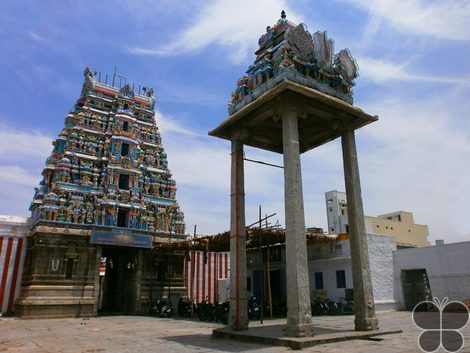
For pilgrims, Thirukkadigai often becomes one of the more memorable stops in the Divya Desam journey. The combination of effort, elevation and stillness creates a distinct rhythm. The idea that even a short period of focused presence can lead to liberation resonates strongly. It shifts the emphasis from quantity to quality. It suggests that what matters is not how long one stays, but how one stays.
Culturally, the temple has held its place through the hymns of the Alvars, who recognised the significance of the shrine and its unique form of Narasimha. Over time, it has also become associated with relief from mental stress and emotional disturbance. Devotees come here seeking calm, clarity and the ability to steady their thoughts. The temple does not promise instant change. It offers space where change can begin.
In modern times, Thirukkadigai continues to draw pilgrims who are willing to make the climb. Despite the effort required, the temple remains active and well-maintained. The steps are used daily, the rituals continue, and the hill retains its quiet presence.
Thirukkadigai ultimately represents stillness as a form of strength. Yoga Narasimha does not act outwardly. He turns inward, and in doing so, reflects a deeper kind of power. In the larger Divya Desam journey, this temple offers a clear insight. Sometimes, even a single moment of true attention is enough to shift something within.

Thiruvattaru Temple, Thiruvattaru, Tamil Nadu
Thiruvattaru, located in the southernmost part of Tamil Nadu near the Kerala border, feels different even before you enter the temple. The land is greener, the air carries more moisture, and the rhythm of life slows just enough for you to notice it. The presiding deity here is Adikesava Perumal, and the goddess is Maragathavalli Thayar. The name Thiruvattaru itself comes from the way the rivers flow around the temple. Vattaaru suggests a circular movement, and the temple is believed to be surrounded by rivers that curve around it like a natural enclosure. That image stays with you. The temple is not just placed in the landscape. It is held by it.
The mythology of Thiruvattaru reaches into an older layer of Vishnu worship. According to tradition, the Lord here is worshipped as Adikesava, the primordial form, one who existed before many of the more familiar manifestations. There is also a story connected with a demon named Kesi, who troubled the world and disrupted the balance of life. Vishnu defeated him and rested here afterwards, taking on the form of Adikesava. Unlike stories that focus on the act of defeat, this temple holds onto what comes after. The Lord reclines, not in exhaustion, but in a state beyond urgency. The action has passed. What remains is presence.
Inside the sanctum, that presence is felt through the long reclining form of the deity. Adikesava Perumal lies on Adisesha, and the length of the idol is such that one cannot see the entire form from a single point. Devotees traditionally view the Lord through three separate doorways: one for the head, one for the middle and one for the feet. This physical arrangement changes the way the deity is experienced. You do not take in the whole form at once. You move, pause and piece it together slowly. That process mirrors the idea of time in the temple. Nothing is rushed. Understanding unfolds in parts.
There is also a quiet connection between this temple and the more widely known Padmanabhaswamy Temple in Thiruvananthapuram. Tradition holds that Thiruvattaru is older, and in some ways it feels like a precursor to that later form. The reclining Vishnu here carries a similar sense of vastness, but without the same scale of visibility. It feels more inward. Less public, more contained.

Historically, Thiruvattaru carries influences from both Tamil and Kerala styles of temple architecture. The region itself sits at a cultural meeting point, and the temple reflects that. The structure includes wooden elements, sloping roofs and detailed carvings that are characteristic of Kerala temple design, alongside the stone and layout typical of Tamil temples. This blending gives the temple a distinct character. It does not fully belong to one tradition or the other. It moves between them quietly.
The temple’s past also includes periods of neglect and restoration. Over time, changes in political and social conditions affected its upkeep, but later efforts helped revive and preserve the structure. Today, the temple stands maintained and active, but it still carries a sense of having endured. That sense adds depth to the experience. It feels like a place that has remained rather than a place that has been rebuilt.
The daily rituals at Thiruvattaru follow the Vaishnavite tradition, but the atmosphere of worship is shaped by the temple’s setting. The sound of chanting feels softer, and the space inside the sanctum holds a kind of stillness that is not easily disturbed. Festivals such as Brahmotsavam and Vaikunta Ekadasi bring more activity, but even then, the temple does not lose its inward quality. The focus remains on the reclining form of the Lord.
For pilgrims, the experience of Thiruvattaru is often shaped by its distance from more crowded temple centres. Reaching the temple requires intention, and that intention changes the way one arrives. The journey itself becomes part of the preparation. Once there, the act of moving between the three doorways to view the deity slows everything down further. You are not simply seeing. You are engaging with the form in stages.

Culturally, Thiruvattaru holds its place within the Divya Desam tradition through the hymns of the Alvars, who recognised the significance of the shrine. Over time, the temple has also become associated with continuity and endurance. It is not a place that announces itself loudly. It remains steady, drawing those who seek something quieter.
In modern times, Thiruvattaru continues to function as a living temple, receiving pilgrims who travel to this southern region to complete their Divya Desam journey. Restoration efforts have helped preserve its structure while allowing worship to continue without interruption. The temple does not feel like a monument. It feels like a place that continues.
Thiruvattaru ultimately represents a kind of stillness that comes after movement. Adikesava Perumal does not act here. He rests, and that rest is not absence but fullness. The rivers that circle the temple reinforce that idea, moving constantly while holding the space steady. In the larger Divya Desam journey, this temple offers a quiet insight. Not every sacred experience is about what happens. Some are about what remains.

