
Troubled Pilgrimage: Passage to Pakistan – Balwant Bhaneja
 Troubled Pilgrimage: A Passage to Pakistan is about a journey by the author, a retired Canadian diplomat, who is visiting his ancestral land of Sindh and Punjab in Pakistan, the first visit since he was five. Bhaneja’s Hindu family had to leave their homeland following the Partition of the Indian subcontinent in August 1947.
The author’s journey begins at the Birla House in New Delhi, India where Mahatma Gandhi was assassinated by a Hindu extremist over sixty years ago, from where he travels into Pakistan during the troubled and violent spring of 2006. The reader is taken through bustling Islamabad, the back streets of the author’s birthplace Lahore, and to the more remote, and mysterious towns of Sukkur, Rohiri, and Shikarpur in Upper Sindh, the ancestral land from which he and his family were exiled. After revelations about his past, his nation and his people he returns to Delhi for an audience with the “Refugee” Prime Minister I.K. Gujral.
The trans-cultural narrative deals with the universal theme of displacement and how it impacts mind and psyche of those involved. It is a thoughtful work about how our multiple identities shape and get played out in a globalized world. What makes some to leave their homelands while others to stay on despite fears and uncertaint
 India is poised to become one of the world’s three largest economies in the next generation and to overtake China as the world’s most populous country by 2032. Well before then India’s incipient nuclear deterrent will have acquired intercontinental range and air, sea and land capabilities. India’s volatile relationship with its nuclear-armed neighbour, Pakistan, may prove to be the source of the world’s next major conflict. And if you call anyone- from your bank to rail enquiries- your query may well be dealt with by a graduate in Gujarat. Any way one looks at it, India’s fate matters. Edward Luce, one of the most incisive and talented journalists of his generation, assesses the forces that are forging the new nation. Cutting through the miasma that still clouds thinking about India, this extraordinarily accomplished book takes the measure of a society that is struggling to come to grips with modernity. Drawing on historical research, existing literature and his own unparalleled access as the New Delhi-based, South Asia correspondent of the FT, this is a book that will enthral as well as educate and will remain the definitive book on the country for many years.
 India’s Westernized elite, cut off from local traditions, ‘want to write a full stop in a land where there are no full stops’. From that striking insight Mark Tully has woven a superb series of ‘stories’ which explore Calcutta, from the Kumbh Mela in Allahabad (probably the biggest religious festival in the world) to the televising of a Hindu epic. Throughout, he combines analysis of major issues with a feel for the fine texture and human realities of Indian life. The result is a revelation. ‘The ten essays, written with clarity, warmth of feeling and critical balance and understanding, provide as lively a view as one can hope for of the panorama of India.
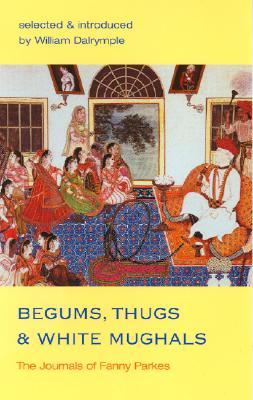 Fanny Parkes, who lived in India between 1822 and 1846, was the ideal travel writer – courageous, indefatigably curious and determinedly independent. Her delightful journal traces her journey from prim memsahib, married to a minor civil servant of the Raj, to eccentric, sitar-playing Indophile, fluent in Urdu, critical of British rule and passionate in her appreciation of Indian culture. Fanny is fascinated by everything, from the trial of the thugs and the efficacy of opium on headaches to the adorning of a Hindu bride. To read her is to get as close as one can to a true picture of early colonial India – the sacred and the profane, the violent and the beautiful, the straight-laced sahibs and the more eccentric White Mughals who fell in love with India and did their best, like Fanny, to build bridges across cultures.
 Soon after the fall of the Taliban, in 2001, Deborah Rodriguez went to Afghanistan as part of a group offering humanitarian aid to this war-torn nation. Surrounded by men and women whose skills–as doctors, nurses, and therapists–seemed eminently more practical than her own, Rodriguez, a hairdresser and mother of two from Michigan, despaired of being of any real use. Yet she soon found she had a gift for befriending Afghans, and once her profession became known she was eagerly sought out by Westerners desperate for a good haircut and by Afghan women, who have a long and proud tradition of running their own beauty salons. Thus an idea was born.
