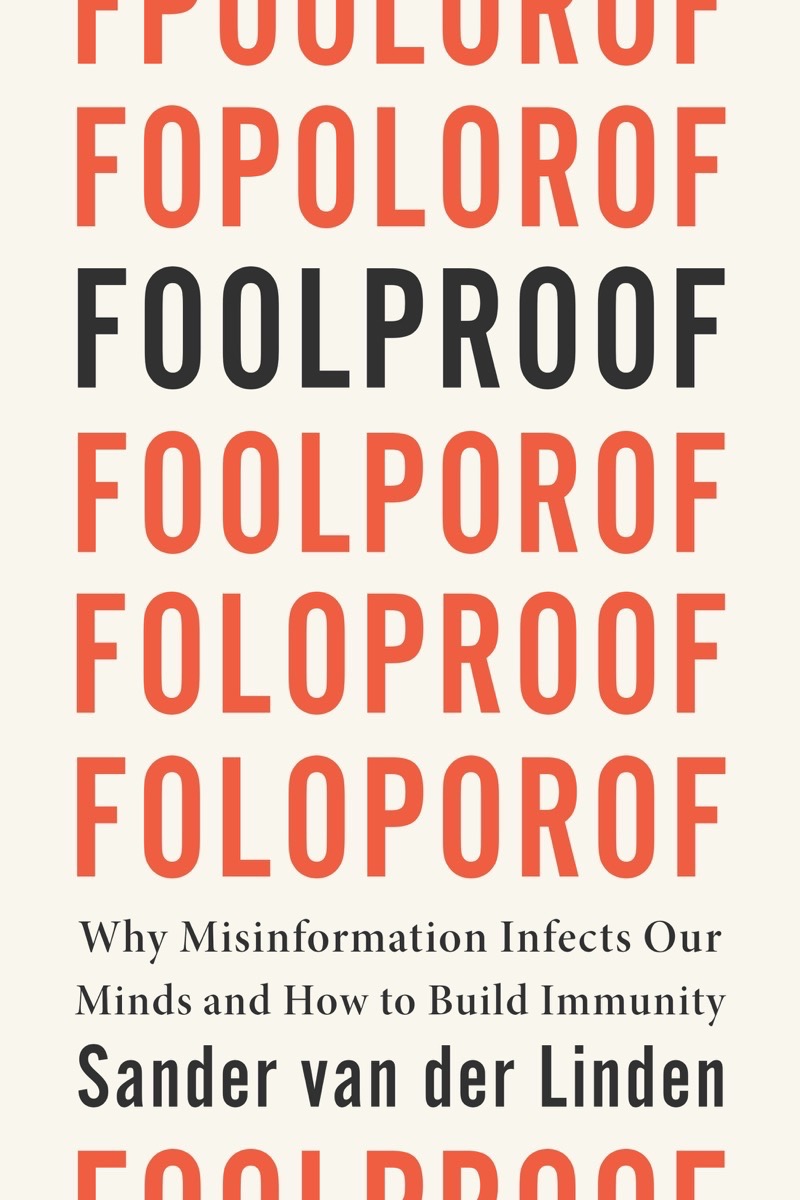
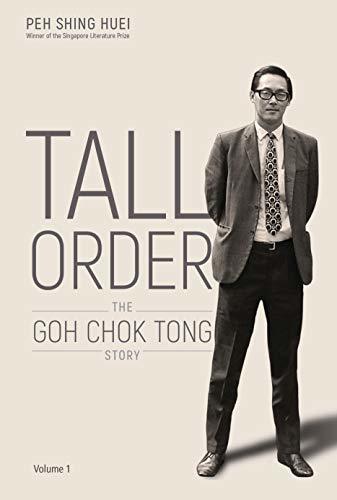
In My Hands Today…

Histories of Nations: How Their Identities Were Forged – edited by Peter Furtado

Global histories tend to be written from the narrow viewpoint of a single author and a single perspective, with the inevitable bias that it entails. But in this thought-provoking collection, twenty-eight writers and scholars give engaging, often passionate accounts of their own nation’s history.

The countries have been selected to represent every continent and every type of state: large and small; mature democracies and religious autocracies; states that have existed for thousands of years; and those born as recently as the twentieth century. Together, they contain two-thirds of the world’s population.

In the United States, for example, the myth of the nation’s “historylessness” remains strong, but in China, history is seen to play a crucial role in legitimising three thousand years of imperial authority.

“History wars” over the content of textbooks rage in countries as diverse as Australia, Russia, and Japan. Some countries, such as Iran or Egypt, are blessed—or cursed—with a glorious ancient history that the present cannot equal; others, such as Germany, must find ways of approaching and reconciling the pain of the recent past.

In My Hands Today…

Sparks: China’s Underground Historians and their Battle for the Future – Ian Johnson

China’s Underground Historians and their Battle for the Future describes how some of China’s best-known writers, filmmakers, and artists have overcome crackdowns and censorship to forge a nationwide movement that challenges the Communist Party on its most hallowed its control of history.

The past is a battleground in many countries, but in China it is crucial to political power. In traditional China, dynasties rewrote history to justify their rule by proving that their predecessors were unworthy of holding power. Marxism gave this a modern gloss, describing history as an unstoppable force heading toward Communism’s triumph. The Chinese Communist Party builds on these ideas to whitewash its misdeeds and glorify its rule. Indeed, one of Xi Jinping’s signature policies is the control of history, which he equates with the party’s survival.

But in recent years, a network of independent writers, artists, and filmmakers have begun challenging this state-led disremembering. Using digital technologies to bypass China’s legendary surveillance state, their samizdat journals, guerilla media posts, and underground films document a regular pattern of from famines and purges of years past to ethnic clashes and virus outbreaks of the present–powerful and inspiring accounts that have underpinned recent protests in China against Xi Jinping’s strongman rule.

Based on years of first-hand research in Xi Jinping’s China, Sparks challenges stereotypes of a China where the state has quashed all free thought, revealing instead a country engaged in one of humanity’s great struggles of memory against forgetting―a battle that will shape the China that emerges in the mid-21st century.

In My Hands Today…

Border: A Journey to the Edge of Europe – Kapka Kassabova

In this extraordinary work of narrative reportage, Kapka Kassabova returns to Bulgaria, from where she emigrated as a girl twenty-five years previously, to explore the border it shares with Turkey and Greece. When she was a child, the border zone was rumored to be an easier crossing point into the West than the Berlin Wall, and it swarmed with soldiers and spies. On holidays in the “Red Riviera” on the Black Sea, she remembers playing on the beach only miles from a bristling electrified fence whose barbs pointed inward toward the enemy: the citizens of the totalitarian regime.

Kassabova discovers a place that has been shaped by successive forces of history: the Soviet and Ottoman empires, and, older still, myth and legend. Her exquisite portraits of fire walkers, smugglers, treasure hunters, botanists, and border guards populate the book. There are also the ragged men and women who have walked across Turkey from Syria and Iraq. But there seem to be nonhuman forces at work here too: This densely forested landscape is rich with curative springs and Thracian tombs, and the tug of the ancient world, of circular time and animism, is never far off.

Border is a scintillating, immersive travel narrative that is also a shadow history of the Cold War, a sideways look at the migration crisis troubling Europe, and a deep, witchy descent into interior and exterior geographies.

In My Hands Today…

They Called Me a Lioness: A Palestinian Girl’s Fight for Freedom – Ahed Tamimi, Dena Takruri

“What would you do if you grew up seeing your home repeatedly raided? Your parents arrested? Your mother shot? Your uncle killed? Try, for just a moment, to imagine that this was your life. How would you want the world to react?”

Ahed Tamimi is a world-renowned Palestinian activist, born and raised in the small West Bank village of Nabi Saleh, which became a center of the resistance to Israeli occupation when an illegal, Jewish-only settlement blocked off its community spring. Tamimi came of age participating in nonviolent demonstrations against this action and the occupation at large. Her global renown reached an apex in December 2017, when, at sixteen years old, she was filmed slapping an Israeli soldier who refused to leave her front yard. The video went viral, and Tamimi was arrested.

But this is not just a story of activism or imprisonment. It is the human-scale story of an occupation that has riveted the world and shaped global politics, from a girl who grew up in the middle of it . Tamimi’s father was born in 1967, the year that Israel began its occupation of the West Bank and he grew up immersed in the resistance movement. One of Tamimi’s earliest memories is visiting him in prison, poking her toddler fingers through the fence to touch his hand. She herself would spend her seventeenth birthday behind bars. Living through this greatest test and heightened attacks on her village, Tamimi felt her resolve only deepen, in tension with her attempts to live the normal life of a daughter, sibling, friend, and student.

In My Hands Today…

Age of Anger: A History of the Present – Pankaj Mishra

Modernity, secularism, development, and progress have long been viewed by the powerful few as benign ideals for the many. Today, however, botched experiments in nation-building, democracy, industrialization, and urbanization visibly scar much of the world.

As once happened in Europe, the wider embrace of revolutionary politics, mass movements, technology, the pursuit of wealth, and individualism has cast billions adrift in a literally demoralized world.

It was from among the ranks of the disaffected and the spiritually disorientated, that the militants of the nineteenth century arose—angry young men who became cultural nationalists in Germany, messianic revolutionaries in Russia, bellicose chauvinists in Italy, and anarchist terrorists internationally.

Many more people today, unable to fulfill the promises—freedom, stability, and prosperity—of a globalized economy, are increasingly susceptible to demagogues and their simplifications. A common reaction among them is intense hatred of supposed villains, the invention of enemies, attempts to recapture a lost golden age, unfocused fury and self-empowerment through spectacular violence.

In Age of Anger, Pankaj Mishra explores the origins of the great wave of paranoid hatreds that seem inescapable in our close-knit world—from American “shooters” and ISIS to Trump, Modi, and racism and misogyny on social media.