Recipes: Chickpea Salad

Another salad which was a huge hit at home. Again, a super easy salad which can be put together in less than 10 minutes.

I used black chickpeas in this recipe, but you can use the normal chickpeas. I used the dried chickpeas which I cooked after soaking, but you can use the canned version if that is easier.

Chickpea Salad

Ingredients:

  • 1 cup dried chickpeas (I used black chickpeas in this recipe)
  • 2 medium sized onions, finely chopped
  • 2 medium sized tomatoes, finely chopped
  • 1 medium sized potato, boiled, peeled and finely chopped
  • 1 medium sized red bell pepper, finely chopped
  • 2 tsp lemon juice
  • 2 tbsp finely chopped coriander leaves
  • Salt and pepper to taste

Method:

  • Soak the dried chickpeas in water for 6-8 hours (or overnight), drain and cook in a pressure cooker till the chickpeas are soft and mash when pressed.
  • Drain the chickpeas and let it cool.
  • In a large serving dish, mix together the chickpeas, all the chopped vegetables and coriander leaves and mix well.
  • Add the lemon juice, salt and pepper just before serving, mix well and serve.
  • This is a yummy dish when you eat it cold and is wonderful in warm summer days.

Recipes: Veg Jaipuri

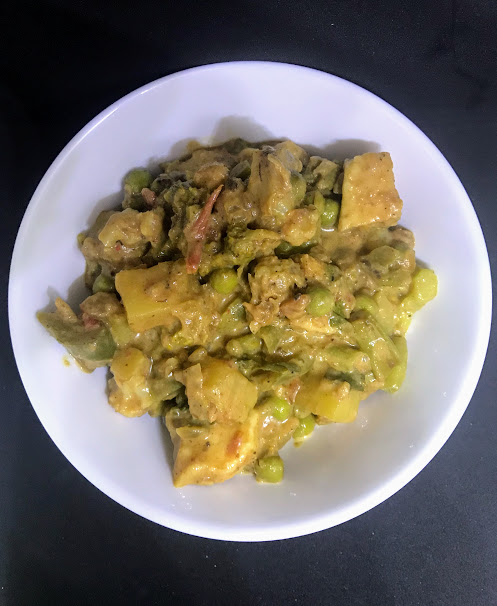
I have been wanting to make this recipe for a while now and was searching for a good recipe to play with when I came across this recipe from Sanjeev Kapoor’s website. I mostly adhered to his recipe, but to make it healthier, omited khoya or dried evaporated milk solids and fresh cream, but instead used a low fat home made yoghurt to replace the cream.

Veg Jaipuri

Ingredients:

  • 2 cup chopped mixed vegetables (I used cauliflowers, potatoes, frozen peas, french beans and green bell peppers, but you can use others also to give it more colour)
  • 1 cup frozen paneer
  • 3 tbsp ghee
  • 1 tbsp coriander seeds
  • 6-8 cashew nuts
  • 4 green chillies
  • a few strands saffron
  • 3 medium sized onions, chopped finely
  • 5-6 pods garlic
  • 1 inch piece of ginger
  • 2-3 large tomatoes, chopped finely
  • 1/2 cup beaten plain yoghurt
  • 1/2 tsp garam masala powder
  • 1 tbsp raisins
  • Salt to taste
  • 2 tbsp finely chopped coriander leaves

Method:

  • Chop the vegetables into bit sized pieces. Soak the paneer in hot water for 20-30 minutes, then chop them into bit sized pieces and keep aside.
  • Heat a pan and when warm, add one tbsp ghee and sauté the coriander seeds, cashewnuts and green chilliesfor two minutes. Grind all of this with saffron into a smooth paste.
  • In another smaller blender, blend together the ginger and garlic into a smooth paste and keep aside.
  • Heat the remaining ghee in a pan. Sauté the onions till they turn translucent. Add the the ginger-garlic paste and stir for a few minutes till they turn light golden in colour. Add tomatoes and garam masala powder and cook till the tomatoes are pulpy.
  • Add the chopped vegetables, salt, the ground paste, raisins and one cup of water and simmer for five to seven minutes.
  • When almost done, add the beaten yoghurt and the paneer and let it come to a slow simmer. Simmer for 2 minutes and switch off the gas.
  • Garnish with coriander leaves and serve hot with any Indian bread or rice.

Recipes: Carrot & Radish Salad

I have been eating a lot of salads these days and try to make different salads so that we don’t get bored of eating the same thing every day.

I tend to use radishes a lot. Radishes are packed with nutrients, vitamins and antioxidants and are a great addition to your daily salads.

Radish contains phytochemicals that have anti-carcinogenic properties. Additionally, they have vitamin C which helps keep your body and cells healthy. They also have anti-hypertensive properties that help control hypertension or high blood pressure because of the potassium in it. Radishes are low on the glycemic index and high in fibre so it a great vegetable to incorporate for diabetics. Radishes are powerful when it comes to eliminating toxins. This helps keep your liver and stomach in mint condition.

Traditional thinking does say that people with diabetes should not eat carrots, but that is not really correct. Currently carrots have a GI of 41, which is not too bad and is at a moderate level. Carrots are full of vitamin A, vitamin C, vitamin K, and potassium.

This is a very easy salad to make, and takes just 10 mins to prep. Just remember to dress the salad just before eating as it becomes very soggy when the radish releases its waters when it comes in contact with salt.

Carrot and Radish Salad

Ingredients:

  • 2 medium sized carrots
  • 1 medium sized radish
  • 6 cashew nuts
  • 6 almonds
  • 4 walnuts
  • 1 tbsp white sesame seeds
  • 2 tbsp lemon juice
  • 2 tbsp extra virgin olive oil
  • 1 tsp honey
  • Handful of coriander leaves
  • Salt and Pepper to taste

Method:

  • Grate the carrots and radish and mix it together in a bowl.
  • Finely chop the coriander leaves and add this to the grated carrots and radish and mix it together.
  • Cover and refrigerate until its time to serve.
  • Chop the nuts into very small pieces and dry roast them in a dry pan until they are crisp and slightly brown.
  • In the same pan, add the sesame seeds when the nuts are almost crisp and stir until the sesame starts to pop. Let it cool and keep aside.
  • When you want to serve, prepare the dressing by mixing together the lemon juice, olive oil, honey, salt and pepper into a smooth emulsion.
  • Drizzle the dressing on the salad and sprinkle the crisp nuts and sesame seeds and serve immediately.

Recipes: Traditional Summer Coolers – Neer Mor aka Spiced Buttermilk

Thinned and whisked yoghurt or buttermilk is a staple across India and is known by different names across the sub continent. Chaas or chaach across the northern parts of India, ghol in Bengal, Mor in Tamil Nadu, majjige in Karnataka, and taak in Maharashtra, this spiced drink is a much loved drink in India, especially during the summer months.

Buttermilk is made by churning yogurt and water, preferably cold, together in a pot, using a hand-held whisk. This can be consumed plain or seasoned with a variety of spices. Unlike lassi, buttermilk is never sweet and more diluted.

The best buttermilk is made from homemade yoghurt that is a few days old which becomes slightly sour. This sourness imparts the tartness to the buttermilk. Salt and spices are added to enhance the taste.

Neer Mor aka Spiced Buttermilk

Ingredients:

  • 1 cup yoghurt
  • 4 cups cold water
  • 2-3 green chillies
  • 5-6 curry leaves
  • 2 sprigs coriander leaves
  • 1 tsp cumin seeds
  • 1 inch piece ginger
  • 1/8 tsp asafoetida
  • 1 tsp oil
  • 1 tsp mustard seeds
  • Salt to taste

Method:

  • In a blender, blend together the the yoghurt with the green chillies, 3-4 curry leaves, 1 sprig of coriander leaves, ginger, asafoetida and cumin seeds into a smooth paste.
  • Pour into a large jug and add the remaining cold water to thin it to the desired consistency. Add salt to taste. Chop the remaining sprig of coriander and garnish.
  • In a smaller skillet, heat the oil and when warm, add the mustard seeds and balance curry leaves. When the curry leaves becomes crisp, temper the buttermilk with this.
  • Serve cold as a refreshing summer drink.

Note: I didn’t temper the buttermilk this time, but this is the traditional method to make Neer Mor.

Recipes: Traditional South Indian Summer Coolers – Panakam

It’s been really hot these days here in Singapore and the week before last, when the festival of Ram Navami came around, I was really happy to make this traditional cooler as an offering to the Lord. This along with another summer drink called Neer Mor is traditionally offered as neividhyam or offering.

As I’ve previously mentioned, Ram Navami almost always came during the fag end of our annual exams back in India and was never really celebrated with pomp in our home, but my mum always used to make these coolers, which as a child, I rarely appreciated. As an adult, I love this drink and look for opportunities to make it.

The ingredients in this no cook drink probably are there for a reason. In the summer months, it is excessively hot in South India and each of these ingredients are meant to reintroduce sugar and hydrate you. Panakam brings down body heat and helps in preventing the human body from chicken pox in the summer. Jaggery purifies the blood, and is rich in iron, magnesium and anti-oxidants. Cardamom and ginger aid digestion, while lemon is rich in Vitamin-C and B-complex.

Panakam

Ingredients:

  • 1 cup chopped jaggery
  • 4 cups cold water
  • 1/4 cup lemon juice
  • 1/4 tsp cardamom powder
  • 2-3 cardamom pods
  • 1/2 tsp dry ginger powder (saunth)
  • 1/2 tsp julienned ginger (optional)
  • 1/2 to 1 tsp rock or pink Himalayan salt

Method:

  • Finely chop the jaggery and keep it in a large pan. Pour around 1 cup of medium warm water into the jaggery and let the jaggery melt.
  • If you feel that the jaggery has impurities, then strain the melted jaggery into a jug.
  • To the strained jaggery, add the remaining ingredients and then pour in the cold water.
  • You can play around with the ingredients, adding more or less, depending on your taste.
  • Serve cold. This really hits the spot on a warm summer day.

Notes:

  • Do not substitute jaggery for sugar. At a pinch, perhaps palm sugar may work, but the taste would not be the same as the panakam made with jaggery.
  • Use the darkest coloured jaggery you can find, because the colour of the drink is completely dependent on the colour of the jaggery used.