

When I wrote my series on Indian fabrics and sarees, I was unaware of World Saree Day. And once I knew this day existed, I had to write about it. Celebrated today, 21 December, the day was started to encourage women to wear the saree, a timeless garment which, to me, defines a woman from India and the Indian subcontinent.
The origin of the drape or a garment similar to the sari can be traced back to the Indus Valley Civilisation, which flourished in north-western India between 2800 and 1800 BC. The garment developed from the common word sattika, which signifies a woman’s dress and appears in early Jain and Buddhist writings. Sattika was a three-piece outfit that included the Antriya or the bottom garment, the Uttariya or a covering worn over the shoulders or the head and the Stanapatta, a pectoral band. This ensemble may be dated back to the 6th century BC in Sanskrit and Buddhist Pali literature. Poshak, the Hindi word for costume, referred to the three-piece ensemble. The Antriya resembled the dhoti or the fishtail style of tying a sari. It further evolved into the Bhairnivasani skirt, which went on to be known as the ghagra or lehenga. The Uttariya evolved into the dupatta and the Stanapatta evolved into the choli.
Cotton was first cultivated in the subcontinent around the 5th century BC and this was followed by the incorporation of hues and dyes like indigo, lac, red madder and turmeric to create a drape which was used by women to cover their modesty. As the years went by, the elite started wearing sarees with expensive stones and gold thread which could showcase their wealth. But the saree stood strong as the garment of the Indian woman and each region and state had its regional variants, both in terms of fabrics and saree styles.
Industrialisation brought with it synthetic fabrics and dyes and with this came new dyeing and printing techniques which meant the consumers had access to a wide variety of sarees. The development of textiles in India reflected in saree designs and sarees soon started including figures, motifs, and flowers.

An extremely versatile garment, the saree can be draped in more than 80 recorded ways with the most common style or drape being the one where the saree is wrapped around the waist, with the loose end of the drape to be worn over the shoulder, baring the midriff. It is widely believed that it was the Nobel laureate Rabindranath Tagore’s brother Satyendranath Tagore’s wife Jnanadanandini Devi, who popularised the new form of wearing sarees which we see today.
Today when urbanisation and westernisation have taken over Indian fashion, a day dedicated to the attire which is synonymous with the Indian woman is essential. The saree is a reflection of the subcontinent’s rich cultural history and traditions and should not be allowed to wither away.
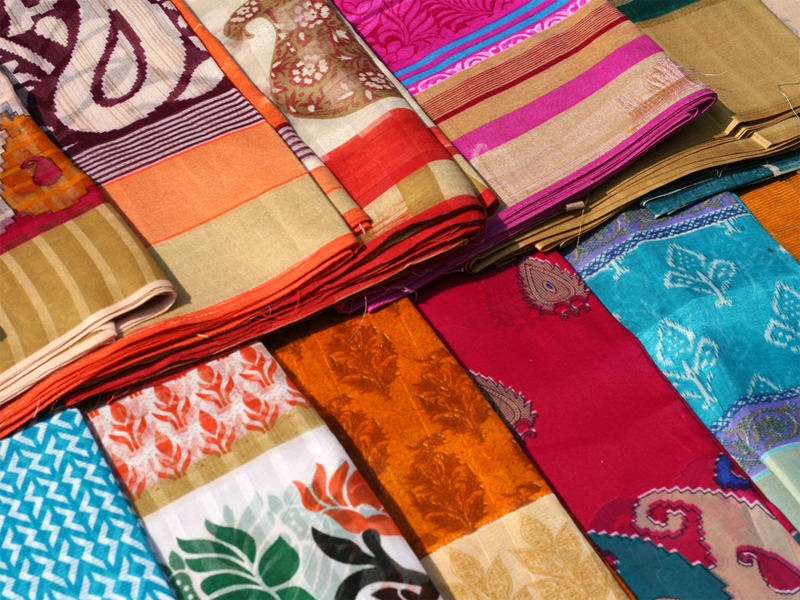
So drape your favourite saree today and spread the word on the beauty and lushness of the fabrics and drapes present in the country and beyond.

 Memories and Such
