In My Hands Today…

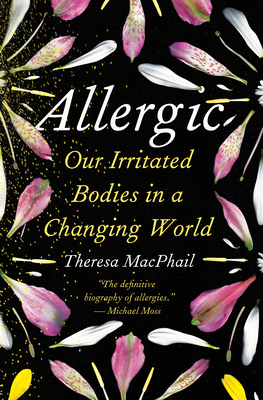
Allergic: Our Irritated Bodies in a Changing World – Theresa MacPhail

An eye-opening exploration of allergies, from their first medical description in 1819 to the cutting-edge science that is illuminating the changes in our environment and lifestyles that are making so many of us sick

Hay fever. Peanut allergies. Eczema. Either you have an allergy or you know someone who does. Billions of people worldwide—an estimated 30 to 40 percent of the global population—have some form of allergy. Even more concerning, over the last decade the number of people diagnosed with an allergy has been steadily increasing, placing an ever-growing medical burden on individuals, families, communities, and healthcare systems.

Medical anthropologist Theresa MacPhail, herself an allergy sufferer whose father died of a beesting, set out to understand why. In pursuit of answers, MacPhail studied the dangerous experiments of early immunologists as well as the mind-bending recent development of biologics and immunotherapies that are giving the most severely impacted patients hope. She scaled a roof with an air-quality controller who diligently counts pollen by hand for hours every day; met a mother who struggled to use WIC benefits for her daughter with severe food allergies; spoke with doctors at some of the finest allergy clinics in the world; and discussed the intersecting problems of climate change, pollution, and pollen with biologists who study seasonal respiratory allergies.

This is the story of what they are, why we have them, and what that might mean about the fate of humanity in a rapidly changing world.

In My Hands Today…

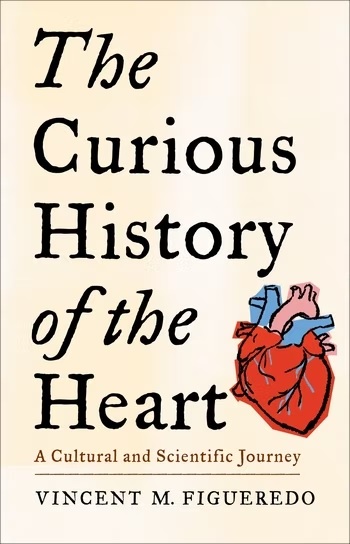
The Curious History of the Heart: A Cultural and Scientific Journey – Vincent M. Figueredo

For much of recorded history, people considered the heart to be the most important organ in the body. In cultures around the world, the heart–not the brain–was believed to be the location of intelligence, memory, emotion, and the soul. Over time, views on the purpose of the heart have transformed as people sought to understand the life forces it contains. Modern medicine and science dismissed what was once the king of the organs as a mere blood pump subservient to the brain, yet the heart remains a potent symbol of love and health and an important part of our cultural iconography.

This book traces the evolution of our understanding of the heart from the dawn of civilization to the present. Vincent M. Figueredo–an accomplished cardiologist and expert on the history of the human heart–explores the role and significance of the heart in art, culture, religion, philosophy, and science across time and place. He examines how the heart really works, its many meanings in our emotional and daily lives, and what cutting-edge science is teaching us about this remarkable organ. Figueredo considers the science of heart disease, recent advancements in heart therapies, and what the future may hold. He highlights the emerging field of neurocardiology, which has found evidence of a “heart-brain connection” in mental and physical health, suggesting that ancient views hold more truth than moderns suspect.

Ranging widely and deeply throughout human history, this book sheds new light on why the heart remains so central to our sense of self.

In My Hands Today…

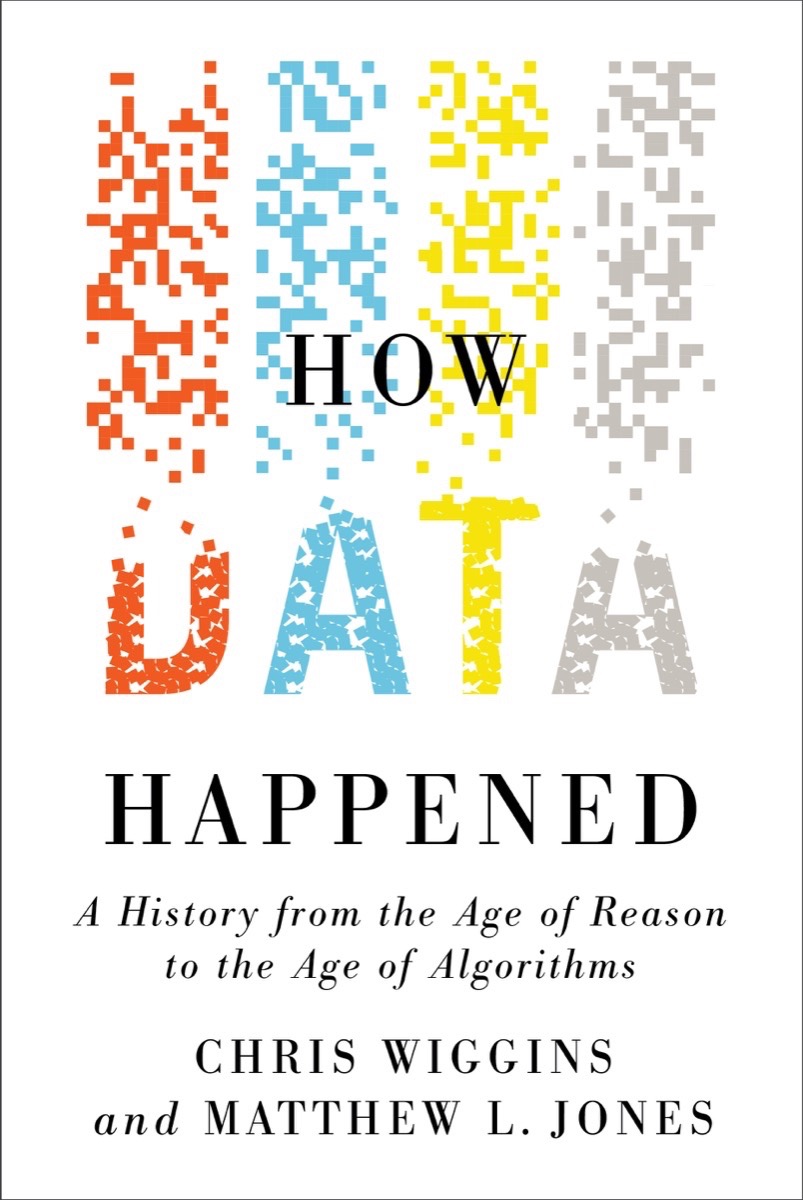
How Data Happened: A History from the Age of Reason to the Age of Algorithms – Chris Wiggins and Matthew L. Jones

From facial recognition—capable of checking us onto flights or identifying undocumented residents—to automated decision systems that inform everything from who gets loans to who receives bail, each of us moves through a world determined by data-empowered algorithms. But these technologies didn’t just appear: they are part of a history that goes back centuries, from the census enshrined in the US Constitution to the birth of eugenics in Victorian Britain to the development of Google search.

Expanding on the popular course they created at Columbia University, Chris Wiggins and Matthew L. Jones illuminate the ways in which data has long been used as a tool and a weapon in arguing for what is true, as well as a means of rearranging or defending power. By understanding the trajectory of data—where it has been and where it might yet go—Wiggins and Jones argue that we can understand how to bend it to ends that we collectively choose, with intentionality and purpose.

In My Hands Today…

Invisible Women: Data Bias in a World Designed for Men – Caroline Criado Pérez

Data is fundamental to the modern world. From economic development, to healthcare, to education and public policy, we rely on numbers to allocate resources and make crucial decisions. But because so much data fails to take into account gender, because it treats men as the default and women as atypical, bias and discrimination are baked into our systems. And women pay tremendous costs for this bias, in time, money, and often with their lives.

Celebrated feminist advocate Caroline Criado Perez investigates the shocking root cause of gender inequality and research in Invisible Women​, diving into women’s lives at home, the workplace, the public square, the doctor’s office, and more. Built on hundreds of studies in the US, the UK, and around the world, and written with energy, wit, and sparkling intelligence, this is a groundbreaking, unforgettable exposé that will change the way you look at the world.

In My Hands Today…

Awe: The New Science of Everyday Wonder and How It Can Transform Your Life – Dacher Keltner

Awe is mysterious. How do we begin to quantify the goose bumps we feel when we see the Grand Canyon, or the utter amazement when we watch a child walk for the first time? How do you put into words the collective effervescence of standing in a crowd and singing in unison, or the wonder you feel while gazing at centuries-old works of art?

Up until fifteen years ago, there was no science of awe, the feeling we experience when we encounter vast mysteries that transcend our understanding of the world. Scientists were studying emotions like fear and disgust, emotions that seemed essential to human survival. Revolutionary thinking, though, has brought into focus how, through the span of evolution, we’ve met our most basic needs socially. We’ve survived thanks to our capacities to cooperate, form communities, and create culture that strengthens our sense of shared identity—actions that are sparked and spurred by awe.

In Awe, Dacher Keltner presents a radical investigation and deeply personal inquiry into this elusive emotion. Revealing new research into how awe transforms our brains and bodies, alongside an examination of awe across history, culture, and within his own life during a period of grief, Keltner shows us how cultivating awe in our everyday life leads us to appreciate what is most humane in our human nature. And during a moment in which our world feels more divided than ever before, and more imperiled by crises of different kinds, we are greatly in need of awe. If we open our minds, it is awe that sharpens our reasoning and orients us toward big ideas and new insights, that cools our immune system’s inflammation response and strengthens our bodies. It is awe that activates our inclination to share and create strong networks, to take actions that are good for the natural and social world around us. It is awe that transforms who we are, that inspires the creation of art, music, and religion. At turns radical and profound, brimming with enlightening and practical insights, Awe is our field guide, from not only one of the leading voices on the subject but a fellow seeker of awe in his own right, for how to place awe as a vital force within our lives.