Short Story: Kites and Mangoes

9 August, Singapore

You don’t sound Indian,” the boy had said at the kopitiam when Kavya ordered her teh c kosong. He’d grinned, like it was a compliment.

Kavya had smiled tightly, thanked him, and walked away. She was used to it.

Born and raised in Singapore, she knew the National Day Parade theme song by heart and could switch between English, Tamil, and a sprinkle of Mandarin like a linguistic gymnast. But somewhere between “pure” Singaporean and “actual” Indian, she felt like she belonged everywhere and nowhere at once.

She’d grown up visiting temples on weekends, dancing Bharatanatyam at community festivals, and eating prata after tuition class. But whenever she visited Little India, there was always someone who’d ask, “You from here or there?” and she never had a clear answer.

This year, she wanted something more. Something beyond tidy traditions and carefully curated heritage trails. She booked a solo trip to India, to Madurai, the city where her grandmother had been born.

Why now?” Amma had asked, frowning over her glasses.

I want to feel where I come from,” Kavya replied. “I want to be in India on Independence Day.”

Her mother had sighed but said nothing. That night, she slipped an old photograph into Kavya’s bag: a black-and-white picture of a young woman in a half-saree standing in front of the Meenakshi Temple.

11 August, Madurai, India

The heat struck like a drumbeat. Everything in Madurai pulsed: the honks, the temple bells, and the jasmine sellers with their hypnotic chants.

Kavya stayed in a modest homestay just off a street flanked by banana trees and walls stained with old film posters. The house had creaky wooden shutters, a courtyard with a mango tree, and an old woman who insisted Kavya eat second helpings of everything.

The rhythm of life was different here. Slower, louder, more chaotic, and strangely comforting. Kavya spent her mornings walking to temples and her afternoons scribbling in a notebook she carried everywhere. She didn’t know what she was writing—just thoughts, feelings, and fragments of herself.

12 August, Madurai

On her second morning, Kavya heard a ruckus in the alley. She stepped out and saw a girl, barefoot, dust-streaked, and laughing, chasing a runaway calf down the narrow lane. The girl caught it by the rope, scolded it gently in Tamil, and looked up to see Kavya watching.

You look like you’re from here but also… not,” the girl said, grinning.

Kavya laughed. “That’s not the first time I’ve heard that. I’m Singaporean. My grandma was from here.”

Then you’re one of us,” the girl declared. “I’m Meenal. Come. We’re painting flags today. For August 15. Want to help?

Kavya blinked. “Me? I don’t really paint…”

That’s okay. You’ll learn. We’re not picky about strokes, only spirit.

And just like that, she was pulled into a swirling circle of colours, cloth, and conversation.

13 August, Madurai

They sat under a neem tree, painting tiny Indian flags on scraps of cloth. Children swirled around them, cheeks smeared with green and orange.

What’s National Day like in Singapore?” Meenal asked, dabbing white onto a fabric square.

There’s a huge parade. Fireworks. Everyone wears red and white. But… it feels curated. Clean.”

You miss mess?” Meenal teased.

I miss… rawness. My identity feels like a fusion dish sometimes. Indian, but diluted. Singaporean, but never quite full-blooded.

Meenal paused and dipped her brush into green. “Being Indian isn’t about passports. It’s about stories. Smells. The way your body remembers mangoes even when your tongue forgets.”

Kavya looked at her. “You make it sound like poetry.

It is. We’re both translations of something old and beautiful.”

They sat in silence for a while. A small girl brought them sliced raw mango with chilli salt. Kavya bit into it, eyes watering from the tang.

This,” she said, “tastes like my grandmother’s kitchen. I didn’t even know I remembered.”

Meenal smiled. “See? That’s the thing about home. It sneaks up on you.”

14 August, Madurai

That evening, Meenal took her to a rooftop near the temple.

We come here every year to light paper lanterns,” she said. “Some say they carry prayers. Others say they chase away the shadows.”

As the sky dimmed, they lit small lanterns and watched them rise. Kavya stood quietly, fingers curled around her wrist.

My parents wanted me to study engineering. I chose literature instead,” Meenal said suddenly. “They said it was a waste. But I like words. Words are how I remember who I am.”

Kavya looked at her. “You’re lucky you even knew. I feel like I’m always translating what I want, who I am, who people think I should be.”

“Maybe identity isn’t about choosing one version. Maybe it’s about collecting them, like shells. Some smooth, some cracked. But all real.”

15 August, Madurai

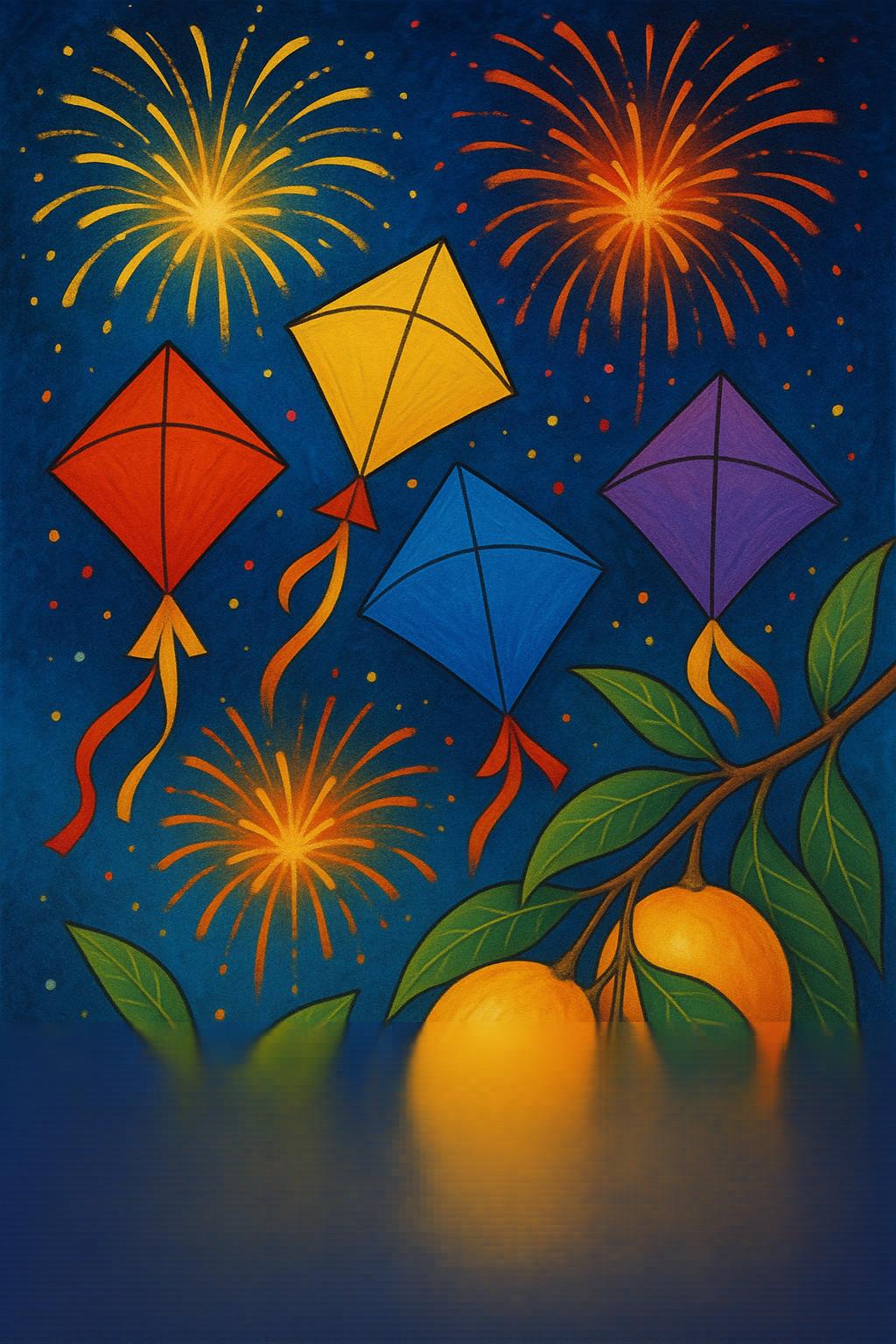
The morning was thick with saffron skies and fried vadai. Children marched barefoot with tricolour kites and hand-painted flags. The air buzzed with pride, promise, and powdered colours.

Meenal tugged Kavya to the rooftop.

Here. Yours.

Kavya took the spool and launched her kite into the air.

It wobbled at first, then caught the wind. Higher, stronger.

Below, loudspeakers blared patriotic songs. Kavya felt the strings burn gently against her fingers.

You know,” she said softly, “In Singapore, we sing ‘One People, One Nation, One Singapore.’ But I never understood how to be one thing.”

Meenal grinned. “Maybe we aren’t meant to be one thing. Maybe we’re meant to be many.”

They watched the sky fill with colour. Saffron, white, green, and somewhere, Kavya imagined, red and white too.

I came here to find roots,” she said. “But I think I’ve found mirrors.”

One Week Later, Back in Singapore

Back in Singapore, the sky was cleaner, the traffic neater, and the air-conditioning colder.

On her desk sat a jar of Madurai earth, still smelling faintly of turmeric and dust.

On the wall: two flags. Side by side. Equal in colour, different in rhythm.

She opened her journal and flipped to the back.

A new note from Meenal had arrived by post.

Dear Kavya,

Happy National Day (again)! Mango season starts in March. Your kite is still flying, by the way.

We saved the spot on the rooftop for you.

Kavya smiled and picked up her pen.

Dear Meenal,

Tell the mangoes I’m coming. And this time, I’m bringing chilli salt.

Short Story: Postcards to a Stranger

The library had always been her quiet rebellion.

While the world outside pressed with schedules, subway noise, and small talk she didn’t have energy for, the library stood untouched, shelved in silence, dust, and possibility.

Meera came every Sunday. Always at ten. Always with a thermos of masala chai tucked into her oversized tote, alongside whatever book she’d half-finished the week before.

It started as a whim.

She found the old postcard wedged between the pages of a poetry collection, ‘Love and Other Small Wars’. The card was blank, except for a faded red border and a tiny, hand-painted sunflower in one corner. The space where a stamp should’ve been was empty. The address lines had never been used.

She stared at it for a long moment. Then pulled out a pen.

Hello, stranger.

I don’t know why I’m writing this. Maybe because we’ve both reached for the same book, perhaps that makes us kindred in some tiny, bookish way.

If you’re reading this, I hope you’re okay. The world can feel a bit too much sometimes, can’t it? But right now, this moment, here in the library, this quiet, ink-scented bubble, it feels like enough.

Be gentle with yourself.

—M

She slid the postcard back into the book, tucked between pages 48 and 49, and returned it to the shelf.

It was silly. It was nothing. But it stayed with her the rest of the day like the warmth of the sun on skin.

Two weeks passed. Meera almost forgot about the card.

Then, on a damp April morning, she returned to her Sunday haunt and pulled out another poetry book, this time from the bottom shelf.

A postcard fell into her lap.

It was the same one. But there was new handwriting below hers.

Dear M,

I never expected to find a note like yours in a library book. It stopped me in my tracks, in a good way. Thank you.

I read that book after a very long day. I wasn’t sure what I needed. Turned out, it was your words. So… thank you for the kindness you didn’t know you gave.

I guess this makes me S.

P.S. I also love this part of the library. It always smells like rain and paperbacks.

Meera stared at the postcard, her fingers trembling.

“Someone replied,” she whispered, half in disbelief.

She didn’t know who S was. But suddenly, the silence of the library felt fuller.

She replied quickly:

S,
You caught me off guard. In the best possible way.
Can we make this a thing? A secret mailbox through books?

She placed the card into The Book Thief, tucked neatly between chapters. And waited.

Over the next two months, their postcard exchange became a ritual.

They never met. They didn’t ask for names or details. Only initials. Only thoughts.

They spoke about books, rainy days, favourite quotes, and small fears. One card from S read:

Sometimes, I think the loneliest part of my day is when I leave the library. Like I’ve borrowed someone else’s silence and now I have to give it back.

Another from Meera:

I saw an old couple holding hands near the bus stop today. It made my heart ache, in a beautiful sort of way. Is it strange to long for something you’ve never had?

They began to confide more.

One day, Meera wrote:

What would happen if we met? Would we break the spell? Would we recognise each other?

S replied:

I think I’d recognise you. Maybe not by face, but by pause. You write with quiet spaces. I think you live with them, too.

They didn’t need faces. Just words.

In late May, Meera left a card that read:

S,
There’s something deliciously heartbreaking about caring for someone you’ve never seen. Is that what this is? Are we writing versions of each other that don’t exist? And yet, it feels real. Like a tide, I can’t hold back.

Sometimes I find myself watching the door, wondering if you’ll walk in. Would I even know it was you? Would you?

The reply came the next week:

M,
I read your card five times. I don’t have a clever response. Only this: I’ve started showing up early, hoping to see who reaches for the books I’ve just left behind.

I think I want to meet you. But I’m scared that the magic might break if we do.

Still, maybe some magic is worth risking.

Would you ever want to meet me, too?

Meera’s breath caught in her throat. Her fingers trembled.

Yes.
Let’s meet next Sunday. Same place. 10 a.m. I’ll be in the poetry aisle. Yellow scarf. Nervous heart.

Sunday arrived, wrapped in golden light.

Meera stood in the poetry aisle, yellow scarf around her neck, pretending to read.

Her heart thudded.

At 10:11 a.m., he appeared.

He was tall, in a dark blue sweater, with soft brown eyes and ink-stained fingers. He looked nervous.

He was holding a postcard.

Their eyes met.

He smiled.

“Hi,” he said softly. “I’m S. Samir.”

“Hi,” Meera breathed. “I’m M. Meera.”

They laughed, a gentle, awkward laugh.

“I was afraid you wouldn’t come,” he said.

“I almost didn’t,” she replied. “But then I thought… if you were anything like your words, I had to meet you.”

He touched the postcard in his hand.

“You changed my Sundays,” he said.

They sat together on the carpet, backs against the bookshelf.

“What now?” she asked.

He smiled.

“Now we write a new chapter. Together.”

A year passed.

They still left postcards for each other. Sometimes in books. Sometimes in coat pockets.

You smiled in your sleep last night. I hope you were dreaming of something silly and soft. Like marshmallows. Or me. —S

I wasn’t dreaming. I was remembering our first postcard. And hoping we’d never stop writing our story. —M

They didn’t.

Two years later, the city library hosted *”Voices Between the Pages.”

Among the displays: a series of postcards, gently ageing, gently loved.

The first read:

Hello, stranger…

No names were given. But two visitors returned every Sunday, wandering shelves, sometimes laughing softly, slipping a new card into a random book…

For the next stranger to find.

Because stories, like love, are meant to be passed on.

Short Story: The Forbidden Forest Adventure

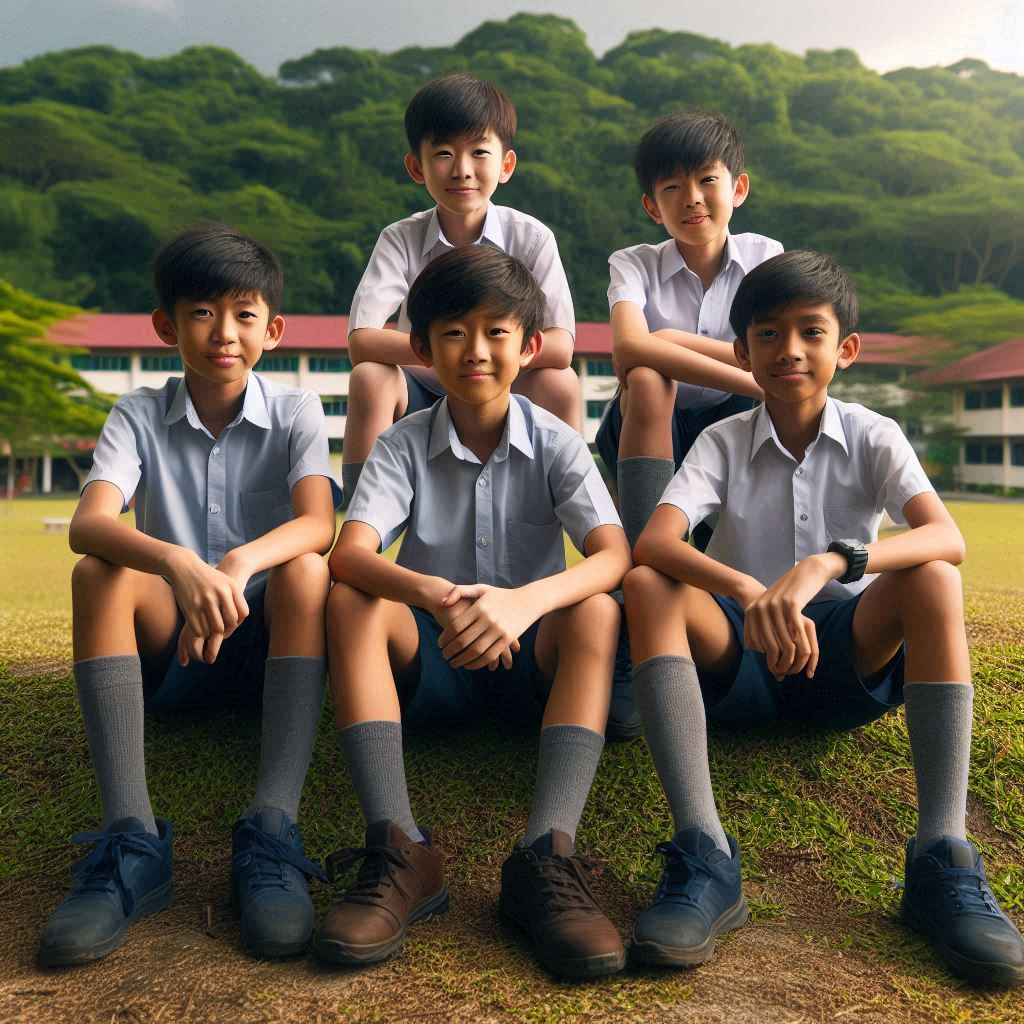
Benji, Salman, Atharva, and Thomas sat on the steps of their primary school, sweat beading on their foreheads in the sweltering June heat. The school grounds were eerily quiet, a stark contrast to the usual cacophony of children’s laughter and shouts. It was the middle of the school holidays, and most of their classmates were at home, enjoying a well-deserved break from the rigorous PSLE preparation that had consumed their lives for months.

“I can’t believe we’re spending our holiday studying,” Benji groaned, closing his math textbook with a thud. “My brain feels like it’s going to explode.” Salman nodded in agreement, absentmindedly doodling in the margins of his science notes. “Yeah, but we can’t slack off now. The PSLE is just a few months away.”

Atharva stretched his arms above his head, his eyes wandering to the dense forest that bordered their school. “You know what we need? An adventure. Something to take our minds off all this studying.” Thomas followed Atharva’s gaze, a mischievous glint in his eye. “Are you thinking what I’m thinking?”

The four boys exchanged knowing looks, a mix of excitement and apprehension coursing through their veins. They all knew what Thomas was suggesting – the forbidden forest. “But we’re not allowed in there,” Salman protested weakly, even as he began packing up his books. “Come on, Salman,” Benji urged, already on his feet. “We’ve been cooped up studying for weeks. What’s the harm in a little exploration?” With a collective nod, the boys made their decision. They quickly gathered their belongings and headed towards the forest’s edge, glancing over their shoulders to ensure no teachers were around to catch them.

As they stepped into the cool shade of the trees, a sense of exhilaration washed over them. The forest was a world apart from their orderly school life – wild, mysterious, and full of possibilities. “This is so cool,” Thomas whispered, his eyes wide as he took in the lush greenery surrounding them. They walked deeper into the forest, the sounds of civilisation fading behind them. The air grew thick with humidity, and the chirping of birds and rustling of leaves created a natural symphony.

After about twenty minutes of walking, Atharva suddenly stopped in his tracks. “Guys, look at that!” he exclaimed, pointing to something partially hidden beneath a tangle of vines. The boys crowded around, their curiosity piqued. As they brushed away the foliage, they gasped in unison. There, half-buried in the earth, was what appeared to be an old metal container.

“What is it?” Salman asked, his voice hushed with awe. Benji knelt down examining the object closely. “It looks like… a World War II relic,” he said, his voice filled with excitement. “Remember those pictures we saw in our history textbook?” Thomas nodded eagerly. “Yeah, from the Japanese occupation! This must be from that time.”

With renewed energy, the boys began to clear away more of the surrounding vegetation. As they worked, the full extent of their discovery became clear. It wasn’t just a single container – they had stumbled upon what appeared to be a small cache of World War II artefacts.

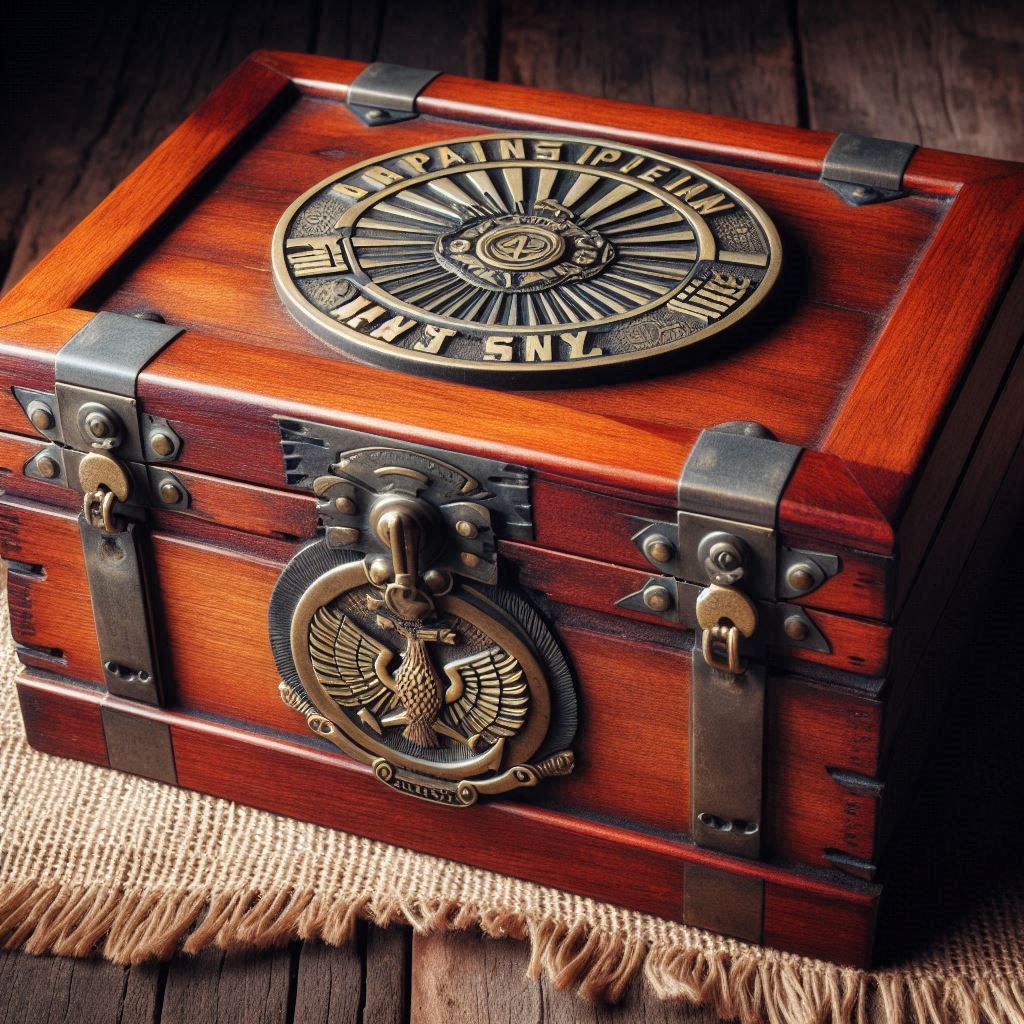
“Look, there’s some kind of insignia on this one,” Atharva pointed out, brushing dirt off a rusty metal box. Salman peered at it, his brow furrowed in concentration. “It looks like the Imperial Japanese Navy symbol. We learned about that in class, remember?” As the boys continued to unearth more items, their excitement grew. They found old canteens, a tarnished compass, and even what looked like parts of an old radio.

“This is incredible,” Benji breathed, carefully turning over a weathered leather pouch in his hands. “It’s like we’ve discovered a piece of history.” But as they delved deeper into their find, Thomas suddenly let out a yelp of pain. “Ouch!” he cried, jerking his hand back from one of the containers. “What happened?” Salman asked concern etched on his face.

Thomas held up his hand, revealing a small cut on his palm. “I think I cut myself on something sharp inside that box,” he explained, wincing. The mood suddenly shifted as the reality of their situation sank in. They were in a forbidden area, handling potentially dangerous artefacts from a war that had ended decades before they were born.

“Maybe we should go back,” Salman suggested, his earlier reservations returning. “We don’t know if these things are safe to touch.” Atharva nodded in agreement. “Yeah, and what if there’s unexploded ordnance or something? We learned about that in history class too.” The boys looked at each other, their earlier excitement now tempered with fear. They had been so caught up in their discovery that they hadn’t stopped to consider the potential dangers. “But we can’t just leave it here,” Benji argued. “This could be important. What if it gets destroyed or someone else finds it and doesn’t report it?”

As they debated what to do, they heard a sound that made their blood run cold – voices coming from the direction of the school. “Oh no,” Thomas whispered, his eyes wide with panic. “Someone’s coming!” The boys scrambled to gather their belongings, their hearts pounding in their chests. But as they prepared to flee, Benji made a split-second decision.

“We have to tell someone about this,” he said firmly. “It’s the right thing to do.” Despite their fear of punishment, the others nodded in agreement. They couldn’t just pretend they hadn’t made this significant discovery. With trepidation, they made their way towards the approaching voices. As they emerged from the treeline, they came face to face with Mr. Tan, their history teacher, and Mr. Lee, the school’s discipline master.

“Boys!” Mr. Lee exclaimed, his face a mixture of relief and anger. “What on earth are you doing in there? You know the forest is off-limits!” Before any of them could respond, Benji stepped forward. “Sir, we’re sorry for breaking the rules, but we found something important in the forest. We think it’s from World War II.”

Mr. Tan’s eyebrows shot up in surprise. “World War II relics? Are you sure?” The boys nodded vigorously, and Atharva added, “There are containers with the Imperial Japanese Navy symbol and lots of old equipment.” Mr. Tan and Mr. Lee exchanged glances, their anger giving way to curiosity and concern.

“Show us,” Mr. Tan said firmly. The boys led the teachers back to their discovery site. As Mr Tan examined the artefacts, his expression grew increasingly serious. “This is indeed a significant find,” he said, carefully inspecting one of the containers. “These appear to be genuine World War II relics, possibly from a Japanese naval outpost or supply cache.”

Mr. Lee, who had been silent until now, spoke up. “Boys, while I’m impressed by your discovery, I hope you understand the gravity of your actions. Entering the forest was not only against school rules but potentially very dangerous.” The four friends hung their heads, the weight of their transgression settling on their shoulders.

“However,” Mr. Lee continued, his tone softening slightly, “your decision to come forward and report your find was the right one. It shows responsibility and maturity.” Mr. Tan nodded in agreement. “Indeed. This discovery could be of historical importance. We’ll need to contact the proper authorities to handle these artefacts safely.”

Over the next few hours, the quiet school became a hive of activity. Police were called, and soon after, a team from the National Heritage Board arrived to assess the discovery. The boys watched in awe as professionals carefully excavated and documented each item they had stumbled upon.

As the day wore on, the full significance of their find became clear. The cache contained not only military equipment but also personal effects and documents that offered new insights into the Japanese occupation of Singapore during World War II.

Dr Lim, the lead archaeologist from the National Heritage Board, approached the boys with a smile. “You’ve made an incredibly important discovery,” she told them. “These artefacts will help us better understand a crucial period in our nation’s history.” Despite their initial fear of punishment, the boys found themselves at the centre of attention, recounting their adventure to officials and even a few reporters who had gotten wind of the story.

As the sun began to set, Mr. Lee gathered the boys for a final word. “While I can’t condone your breaking of school rules,” he began, his tone stern but not unkind, “I am proud of how you handled the situation once you realised the importance of your discovery.”

He paused, looking each boy in the eye. “There will be consequences for entering the forbidden area – you’ll each write an essay on the importance of following rules and the potential dangers of unexplored areas.” The boys nodded, accepting their punishment without complaint.

“However,” Mr. Lee continued, a small smile playing at the corners of his mouth, “in light of the significance of your find, I think we can arrange for you to be involved in the research process if you’re interested. It would be an excellent learning opportunity.” The boys’ faces lit up at this unexpected turn of events. What had started as a reckless adventure had turned into something far more meaningful.

In the weeks that followed, Benji, Salman, Atharva, and Thomas found themselves balancing their PSLE preparations with visits to the Heritage Board, where they learned more about the artefacts they had discovered and the historical context surrounding them. Their find made headlines in local newspapers, and they even featured in a short segment on the evening news. At school, they went from being known as troublemakers to local heroes, with younger students looking up to them in awe.

As the new school term began and the PSLE loomed closer, the boys found themselves changed by their summer adventure. They approached their studies with renewed vigour, understanding now more than ever the importance of knowledge and the excitement of discovery.

On the eve of their PSLE, as they gathered for one last study session, Benji looked around at his friends with a grin. “You know,” he said, “I never thought I’d say this, but I’m kind of glad we broke the rules that day.” The others laughed, nodding in agreement. “Just don’t make a habit of it,” Salman quipped, earning more chuckles from the group.

As they turned back to their books, each boy silently reflected on their extraordinary adventure. They had learned valuable lessons about responsibility, the importance of history, and the unexpected places where knowledge can be found. And as they faced the challenge of the PSLE, they did so not just as students, but as young explorers who had already made their mark on the world.

Short Story: The Memory Basket

The sun streamed through the kitchen window, casting a warm glow on the sage green woven basket on the table. Aisha Tan stared at it, her heart heavy with memories. Just days ago, she had lost her beloved grandmother, Mei Ling, who had filled their home with laughter and the aroma of delicious food. The basket was all that remained of her culinary legacy.

Aisha gently lifted the lid, revealing a collection of handwritten recipes carefully penned in her grandmother’s elegant script. There were dishes from various cultures—Nasi Lemak, Char Kway Teow, Roti Canai, and even Indian curries like Chicken Rendang and Dhal Curry. Each recipe was a testament to the multicultural tapestry that defined Malaysia.

As she sifted through the recipes, Aisha felt a pang of longing. She had always loved cooking but had never taken the time to learn from her grandmother. Now, with Mei Ling gone, Aisha felt an urgency to reconnect with her roots and honour her grandmother’s memory. “I’ll do it,” she whispered to herself. “I’ll cook every dish in this basket.”

The following weekend, Aisha decided to start with Nasi Lemak, a dish that held special significance in her family. It was often served during family gatherings and celebrations. She gathered the ingredients—coconut milk, pandan leaves, rice, sambal, fried anchovies, peanuts, and boiled eggs. As she cooked, memories flooded—her grandmother teaching her how to prepare the dish while sharing stories of their family’s history. Aisha could almost hear Mei Ling’s voice guiding her through each step.

“Add just the right amount of coconut milk,” she remembered Mei Ling saying with a twinkle in her eye. “It’s what makes the rice fragrant.”

Once the dish was ready, Aisha plated it beautifully and sat down at the dining table. She closed her eyes and took a deep breath, savouring the aroma that filled the air. With each bite, she felt connected to her grandmother and their shared heritage. That evening, as she enjoyed her meal alone, Aisha realised that cooking was more than just preparing food; it was a way to keep memories alive—a bridge between generations.

Inspired by her first culinary adventure, Aisha decided to invite her estranged relatives over for dinner. It had been years since they had gathered as a family; disagreements and misunderstandings had driven them apart. But now, she felt it was time to mend those bonds.

She sent out invitations to her aunties and uncles, promising them an evening filled with nostalgia and delicious food. As the day approached, Aisha prepared an array of dishes from the basket—Char Kway Teow for starters and Chicken Rendang as the main course.

On the night of the gathering, Aisha decorated the dining table with flowers and candles to create a warm atmosphere. When her relatives arrived, there were initial awkward moments filled with hesitant smiles and polite greetings. But as they sat down to eat and shared stories about their childhoods—about Mei Ling’s cooking and family traditions—the atmosphere began to shift. Laughter filled the room as they reminisced about old times and shared their favourite memories of Aisha’s grandmother.

“Remember when Auntie May tried to make Nasi Lemak for the first time?” one uncle chuckled. “She forgot to add salt!” Aisha laughed along with them, feeling the warmth spread through her heart as she watched her family reconnect over food. It was then that she realised how powerful cooking could be—a way to heal wounds and bring people together.

Encouraged by the success of her family dinner, Aisha continued exploring other recipes in the basket. Each dish came with its own story—her grandmother’s experiences in different kitchens around Malaysia and beyond.

One weekend, she decided to try making Roti Canai from scratch. As she kneaded the dough and flipped it on the hot pan, she thought about how this simple bread brought together Indian influences in Malaysian cuisine. While preparing Roti Canai, Aisha remembered visiting Little India with Mei Ling as a child—the vibrant colours of saris in shop windows and the tantalizing scents wafting from street vendors selling delicious snacks. Those memories made her smile as she rolled out each piece of dough.

When she finally served it alongside spicy curry for dipping, Aisha felt accomplished. The flavours transported her back to those joyful moments spent with her grandmother exploring their heritage together.

As months passed by, filled with culinary experiments, Aisha discovered more than just recipes—she uncovered stories embedded within each dish reflecting cultural traditions passed down through generations!

One evening while preparing Laksa—a spicy noodle soup popular among Malaysians—Aisha stumbled upon an old photo album hidden beneath some cookbooks on a shelf! Curiosity piqued; she opened it, revealing faded pictures capturing moments from family gatherings long forgotten…

In one photo stood young Mei Ling, surrounded by relatives, smiling brightly, holding bowls filled with steaming Laksa! Another image showcased festive celebrations during Hari Raya, where everyone gathered around tables laden with various dishes showcasing diversity within Malaysian cuisine! A wave of nostalgia washed over Aisha as she flipped through pages filled with laughter, the joy reminding everyone present of the importance of cherishing bonds forged through shared meals celebrating life itself!

Determined not only to preserve these memories but also to honour the legacy left behind, Aisha decided to host another gathering, inviting everyone once again, ensuring that traditions lived on to inspire future generations to embrace journeys undertaken together, forging connections deeper than ever imagined possible…

On the day of the Hari Raya celebrations, excitement buzzed through Aisha’s home as relatives began arriving adorned in colourful traditional attire, filling the air with laughter and joy celebrating a reunion long overdue! This time, however, instead of simply serving dishes prepared from the basket inherited, Aisha encouraged each member to contribute their favourite recipes, to share stories behind them, reminding everyone present of the importance of preserving cultural heritage intertwined throughout lives lived long ago…

As they gathered around tables laden with food; aromas wafted through the air, creating a symphony of flavours and inviting everyone to partake in discovering that beauty lies within stories shared connecting generations past present future alike, reminding all hope remains alive even in darkest moments faced along the way…

“Let me tell you about my mother’s special recipe for Beef Rendang!” said Auntie May, excitedly recounting tales passed down through families, showcasing the significance behind every ingredient used within the dish, reminding everyone present of the importance of cherishing bonds formed across generations…

As festivities continued late into the night, Emma found herself reflecting upon the journey undertaken since inheriting the sage green woven basket filled with handwritten recipes from her beloved grandmother. Each dish prepared not only served the purpose of nourishing their bodies but also their souls, creating connection and bridging gaps formed over years lost amidst misunderstandings and estrangements experienced throughout life.

Feeling the warmth radiate throughout the room, filled with laughter and joy surrounding loved ones gathered close together and sharing moments cherished forevermore, Emma realized cooking wasn’t merely about food—it was about love, a legacy passed down, intertwining lives forevermore, reminding everyone present of the importance embracing change while honouring past ensuring light would always shine bright, illuminating hearts and souls alike, guiding them homeward bound forevermore…

With newfound purpose igniting spirit within, Emma vowed to continue honouring ancestors, ensuring stories lived on, inspiring future generations to embrace journeys undertaken together, forging connections deeper than ever imagined possible…

And so they stood together, united by purpose celebrating life, love, and resilience, knowing together they’d overcome challenges faced, paving the path forward, ensuring light would always shine bright, illuminating hearts and souls alike, guiding them homeward bound forevermore…

Short Story: The Compass

The sun was setting over the small coastal town of Crescent Bay, casting a warm golden hue over the waves. Emma Carter stood in her grandfather’s study, surrounded by dusty bookshelves filled with travelogues and maps. It had been a week since her grandfather, a renowned explorer, had passed away, and she still felt the weight of his absence.

As she rummaged through his belongings, Emma’s fingers brushed against something cool and metallic. She pulled out an ornate compass, its burnt orange casing reflecting the fading light. It was unlike any compass she had seen before—intricate designs adorned its surface, and it felt strangely alive in her hand.

“Ah, you found it,” came a voice from behind her. It was her grandmother, Margaret, who entered the room with a gentle smile tinged with sadness. “Your grandfather always said that compass held more than just direction.”

“What do you mean?” Emma asked, turning the compass over in her hands. Margaret’s eyes sparkled with nostalgia. “He believed it would lead you to places you needed to be—not just physically, but emotionally as well. It was his most prized possession.”

Emma felt a surge of curiosity. “What was his last wish?” Margaret took a deep breath, her expression growing serious. “He wanted you to follow in his footsteps and explore the world. He believed there were still adventures waiting for you.”

Emma’s heart raced at the thought. She had always dreamed of becoming an explorer like her grandfather, but life had kept her tethered to Crescent Bay—school, work, and responsibilities. Now, with this compass in hand and her grandfather’s wish echoing in her mind, she felt an undeniable pull to embark on a journey.

The next morning, Emma packed a small backpack with essentials—water, snacks, a notebook to document her journey—and slipped the compass into her pocket. With one last glance at her childhood home, she set off towards the nearby cliffs that overlooked the ocean.

As she reached the edge of the cliffs, Emma took out the compass and held it before her. The needle spun wildly before settling in one direction—toward the north. She smiled at the thought of adventure awaiting her. “Alright,” she said aloud to herself, “let’s see where this leads.”

Following the compass’s direction, Emma trekked through winding paths and dense forests that bordered Crescent Bay. With each step she took into the wilderness, she felt a sense of freedom wash over her—a stark contrast to the confines of everyday life. Hours passed as she walked deeper into nature. The compass led her to a hidden waterfall cascading into a crystal-clear pool surrounded by vibrant wildflowers. Emma gasped at the beauty before her; it was as if nature had painted this scene just for her.

She sat on a rock by the water’s edge and opened her notebook to jot down her thoughts. “Day 1: Found a hidden waterfall,” she wrote. “The compass is guiding me toward something special.” As she wrote, Emma couldn’t shake off the feeling that this journey was more than just an exploration of new places—it was also about uncovering pieces of herself that had long been buried under layers of expectation and routine. The next day brought new adventures as Emma continued to follow the compass northward. Each destination revealed breathtaking landscapes—a secluded beach with golden sands, and an ancient grove filled with towering trees that whispered secrets in the wind.

One afternoon, while exploring an old fishing village along the coast, Emma stumbled upon an elderly man sitting outside a small shop filled with trinkets and souvenirs. His weathered face broke into a warm smile as he saw Emma approach. “Ah! You look like someone who enjoys adventure,” he said with a twinkle in his eye. “I do!” Emma replied enthusiastically. “I’m following my grandfather’s compass.” The man’s expression shifted to one of recognition. “Your grandfather? Thomas Carter? He was quite the explorer! I remember him well.”

Emma’s heart swelled with pride. “Yes! He passed away recently.” The man nodded solemnly. “He left behind quite a legacy. Did he ever tell you about his journey to find the Lost Isles?” Emma shook her head. “No, he didn’t mention it.” “Ah,” he said thoughtfully. “It’s said that those isles hold treasures beyond imagination—both material and spiritual.” He leaned closer and whispered conspiratorially, “Many have searched for them but few have returned unchanged.”

Intrigued by his words, Emma asked him for more details about these isles and how they related to her grandfather’s adventures. “Your grandfather believed that true treasure lies not just in gold or jewels but in understanding oneself,” he explained. “Perhaps your compass is guiding you toward those isles—not just geographically but emotionally as well.” With newfound determination igniting within her, Emma thanked the man and continued on her journey.

Days turned into weeks as Emma followed the compass further along the coast and inland through lush landscapes dotted with villages rich in culture and history. Each place she visited seemed to resonate with stories from generations past—stories that echoed themes of love, loss, resilience, and hope.

One evening while camping under starlit skies near a serene lake, Emma reflected on what she had learned so far. She realized that every destination brought new insights about herself and her family’s legacy—the sacrifices made by those who came before her and their dreams woven into hers. As she sat by the flickering campfire writing in her notebook about these revelations, she felt an overwhelming sense of connection—not only to nature but also to those who had walked this earth long before her.

“Maybe my grandfather wasn’t just an explorer,” she mused aloud to herself. “Maybe he was also searching for something deeper—a way to understand our place in this world.” But not all days were peaceful; one afternoon while hiking through dense woods toward what appeared on maps as an uncharted area near the coast—dark clouds gathered ominously overhead.

Emma quickened her pace but soon found herself caught in a torrential downpour that soaked through her clothes within minutes. Seeking shelter beneath an ancient tree with gnarled roots protruding from its base—she huddled against its trunk trying desperately to shield herself from the rain pelting down relentlessly around them! As thunder rumbled overhead sending shivers down her spine—Emma closed her eyes tightly wishing the storm would pass quickly allowing sunlight back into life once more!

Suddenly—a flash illuminated the surroundings revealing something glinting among the roots below! Curiosity piqued despite fear gripping her heart; she reached down carefully brushing away mud until uncovering a small metallic box intricately engraved resembling designs reminiscent of ancient times!

Heart racing—she pried open the lid revealing inside delicate necklace adorned with beautifully crafted emeralds glistening even amidst gloom surrounding them! “This must be part of what my grandfather sought!” Emma gasped realising the connection between the necklace discovered here today aligning perfectly alongside stories told earlier during travels! With renewed vigour despite the storm raging outside—Emma carefully secured the necklace around her neck feeling the warmth radiating from stones nestled against her skin!

Once the rain subsided allowing sunlight to break through the clouds illuminating the path ahead—she continued onward determined to uncover secrets hidden within the legacy left behind not just by ancestors but also by those who loved fiercely throughout history!

Days later, arriving at a coastal town bustling with life; locals welcomed warmly sharing tales woven together across generations connecting past present future alike reminding everyone importance of cherishing memories made along the way!

One evening while dining at a local eatery surrounded by laughter joy filling air; Emma overheard a conversation between two fishermen discussing legends tied back towards Lost Isles mentioned earlier during travels! Intrigued—she approached them asking questions prompting them to share stories passed down through families revealing deeper truths surrounding love triangles heartbreaks tragedies faced throughout centuries past…

Each tale resonated deeply within the heart inspiring hope and resilience reminding everyone present how love transcends time itself weaving threads connecting lives forevermore!

After weeks spent exploring the coastline and discovering hidden gems along the way—Emma finally arrived at a destination marked clearly upon the map indicating a location rumouredto to lead towards Lost Isles itself! Standing upon a cliff overlooking the vast expanse of ocean waves crashing against rocks below; she felt a mixture of excitement and trepidation coursing through her veins knowing that her journey was nearing its conclusion yet realising adventure never truly ends!

Taking a deep breath and gathering courage; she held tightly onto the emerald necklace feeling its energy pulsate reminding strength derived from the legacy left behind guiding every step taken thus far! With determination igniting spirit within; Emma set sail aboard the small boat navigating treacherous waters guided solely by intuition trusting compass leading true north towards destiny awaiting discovery…

After hours spent battling waves, she finally emerged victorious upon a shore of pristine white sand stretching endlessly before her. Her eyes were wide open taking everything the moment offered fully appreciating the beauty surrounding her. As sunlight bathed the landscape illuminating the vibrant colours of the flora and fauna thriving all around; Emma stepped ashore feeling a connection deepening within her heart knowing this place held significance beyond comprehension!

Exploring further inland, Emma discovered hidden caves adorned with beautifully crafted murals depicting stories told throughout history capturing the essence of love lost and found again reminding everyone of the importance of cherishing bonds formed across generations…

While exploring the cave adorned with intricately carved symbols resembling the emerald necklace discovered earlier; realisation dawned upon Emma. She understood the truth behind the legacy woven throughout lives lived long ago—the necklace wasn’t merely an artefact representing wealth but rather the embodiment of hope resilience love transcending time itself! After days spent uncovering secrets hidden within the Lost Isles; Emma returned home feeling transformed and enriched with the experiences gained along the way shaping her perspective forevermore!

Back at Crescent Bay surrounded by familiar sights and sounds, Emma’s heart was filled with warmth reminding everyone present of the importance of embracing the journey undertaken together and forging deeper connections. As the news spread throughout the community regarding the discoveries made during Emma’s travels, it inspired others to pursue dreams and to ignite passions reigniting the flames of hope within hearts longing for adventure awaiting discovery beyond horizons unseen…

Standing upon the cliff overlooking ocean waves crashing against rocks below once again; Emma held tightly onto her emerald necklace feeling energy pulsate reminding strength derived from the legacy left behind guiding every step taken thus far! With newfound purpose igniting spirit within; she vowed to continue honouring ancestors ensuring stories lived on inspiring future generations embracing journeys undertaken together forging connections deeper than ever imagined possible…