

Every year on 1 July, Singapore marks SAF Day. It comes with the familiar grammar of national occasions: formal language, steady cadence, and a sense of continuity carefully maintained. For a long time, it was easy to let the day pass as part of the background. It existed, it was acknowledged, and then life moved on. But perspective changes when someone you love puts on the uniform. What once felt distant begins to register differently. SAF Day stops being an abstract marker and becomes a pause. A moment where something usually taken for granted is briefly brought into focus.
SAF Day commemorates the founding of the Singapore Armed Forces in 1965, when defence was not a matter of long-term planning but immediate survival. The logic was straightforward. A newly independent, small state could not afford strategic ambiguity. It needed a credible defence force, quickly and decisively built. Over time, that urgency evolved into a system defined by professionalism, deterrence, and the principle of citizen service. That history is well documented. What tends to receive less attention is how the meaning of SAF Day shifts as society itself changes.
By 2026, SAF Day sits in a more complex social landscape than it once did. National Service remains central to Singapore’s defence model, but it now intersects with longer working lives, smaller families, rising caregiving responsibilities, and a generation more willing to ask how obligations are shared and explained. These shifts do not weaken the defence case. They complicate the story of how defence is lived and sustained.
National Service cannot be skirted in any honest discussion of SAF Day. It is the primary point of contact between citizens and the military and often the first moment when national security enters the domestic sphere. The argument for NS has always rested on necessity rather than idealism. Singapore lacks strategic depth. A credible deterrent requires manpower, and conscription remains the most workable model. That logic still holds. What has frayed is not the rationale, but the way its costs are acknowledged.
Those costs are uneven. Two years of full-time service, followed by reservist obligations, land differently depending on where a young man is in his education, his family structure, or his economic circumstances. For some, it is a manageable interruption. For others, it compounds existing pressures, delaying income, intensifying caregiving responsibilities, or narrowing already tight margins. These realities have always existed, but they are harder to gloss over now. SAF Day, if treated only as a celebration, risks flattening these differences instead of recognising them.
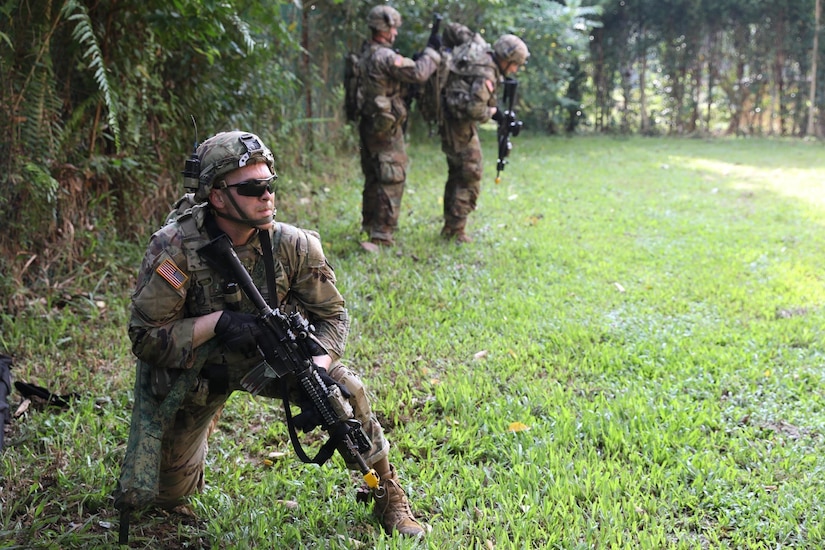
This is where SAF Day’s role as a ritual matters. Rituals are not designed to resolve tension. They exist to acknowledge it without destabilising the system. At its best, SAF Day is not a spectacle or a rally. It is a moment of recognition. Recognition that defence is collective, even if participation is not evenly distributed. Recognition that readiness depends not only on those in uniform but also on families, employers, and institutions that absorb the quieter consequences of service.
In 2026, this recognition takes place against a regional backdrop that is outwardly calm but strategically crowded. Southeast Asia remains largely stable, yet increasingly shaped by forces that operate below the level of open conflict. Pressure points emerge slowly, through economic leverage, maritime friction, and information flows rather than dramatic confrontation. In this environment, defence is less about visible strength and more about sustained attentiveness. SAF Day reflects this shift. It marks not victory or mobilisation, but preparedness without noise.
At the same time, it would be a mistake to lean too heavily on regional uncertainty as justification for everything at home. A light geopolitical awareness should inform the conversation, not end it. Singaporeans tend to be pragmatic rather than ideological. They understand vulnerability. What they resist is the sense that difficult questions are indefinitely postponed. SAF Day does not need to answer those questions, but it should not pretend they do not exist.
One reason SAF Day can feel distant is that institutional language, by design, changes slowly. Over time, messages become standardised. This is not unique to the military. Any organisation that prizes discipline and consistency faces the same risk. The result is a ritual that remains relevant but struggles to resonate. The challenge for SAF Day in 2026 is not whether it matters, but whether it feels sufficiently connected to lived experience.
Resonance does not require emotional storytelling or individual hero narratives. In fact, those often distract from the larger reality. What resonates is clarity. Saying openly that National Service is necessary but imperfect. Acknowledging that fairness is not achieved by insisting everyone bears the cost in identical ways, but by being honest about how different lives absorb the same obligation differently. Recognising that adaptation is not concession but institutional maturity.
For families with sons in service, SAF Day carries a quieter weight. It is not about grand pride or dramatic sacrifice. It is about routine competence. Training completed, systems functioning, and risks managed rather than advertised. There is reassurance in knowing that defence, most of the time, is meant to be uneventful. Boredom, in this context, is not failure. It is evidence that deterrence is working as intended.
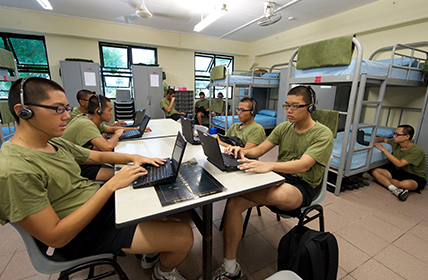
This perspective also explains why SAF Day does not need to be loud. Singapore’s defence posture has never relied on display. Its strength lies in credibility and restraint. The SAF exists to preserve choice, not to perform identity. SAF Day, when stripped of excess symbolism, returns to this foundation. It marks continuity, not spectacle.
Looking ahead, the questions surrounding National Service will continue to surface. Demographics will tighten manpower. Opportunity costs will sharpen. Social expectations will evolve. None of this renders SAF Day obsolete. On the contrary, it makes the day more necessary as a point of collective pause. Not to demand agreement, but to sustain trust.
Trust that the institution remains competent. Trust that it is willing to adjust where needed. Trust that acknowledgement does not weaken commitment. SAF Day 2026 works best when it holds that balance. It does not need to persuade or proclaim. It needs to recognise what already exists: a defence system built on quiet professionalism, sustained by shared obligation, and worthy of confidence rather than noise.
That is where quiet pride comes from. Not from ceremony alone, but from trust maintained over time.
 Memories and Such