In My Hands Today…

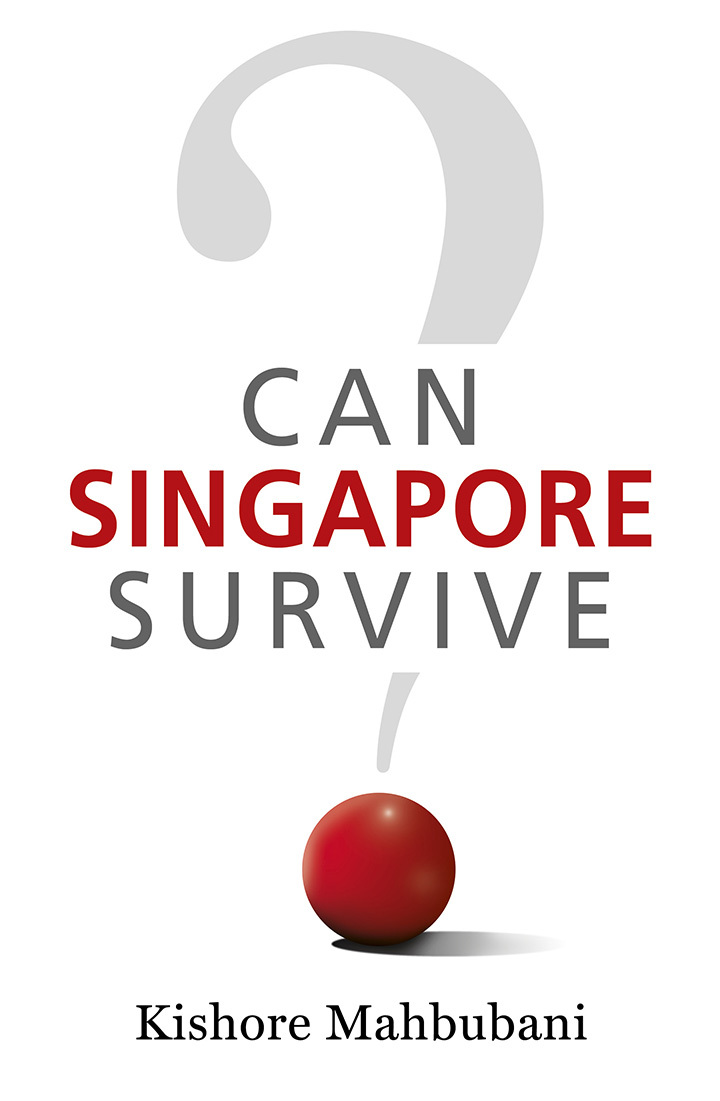
Can Singapore Survive? – Kishore Mahbubani

This book poses the question that Singaporeans must wrestle with: can we survive as an independent city-state? Kishore Mahbubani believes that Singaporeans must always ask the question because constant reflection and self-examination should be a part of the core DNA of all Singaporeans. His goal in this book is to create and enhance this culture of reflection among all Singaporeans.

He gives three answers in this book: Yes, No & Maybe.

With these three answers, he attempts to sketch three different scenarios for Singapore’s future. There is logic behind this, as we cannot predict the future. We can, however, prepare for the future by telling stories about what the future could be like.

Besides his substantive Introduction, this book offers some of Kishore’s best essays on Singapore, taken from his Think-Tank and Opinion columns in The Straits Times, as well as contributions to Guardian News, The New York Times, The New York Review of Books, Davos World Economic Forum’s Forum News Daily, and the “Innovations for Successful Societies” Oral History Project of Princeton University.

Celebrating SG60

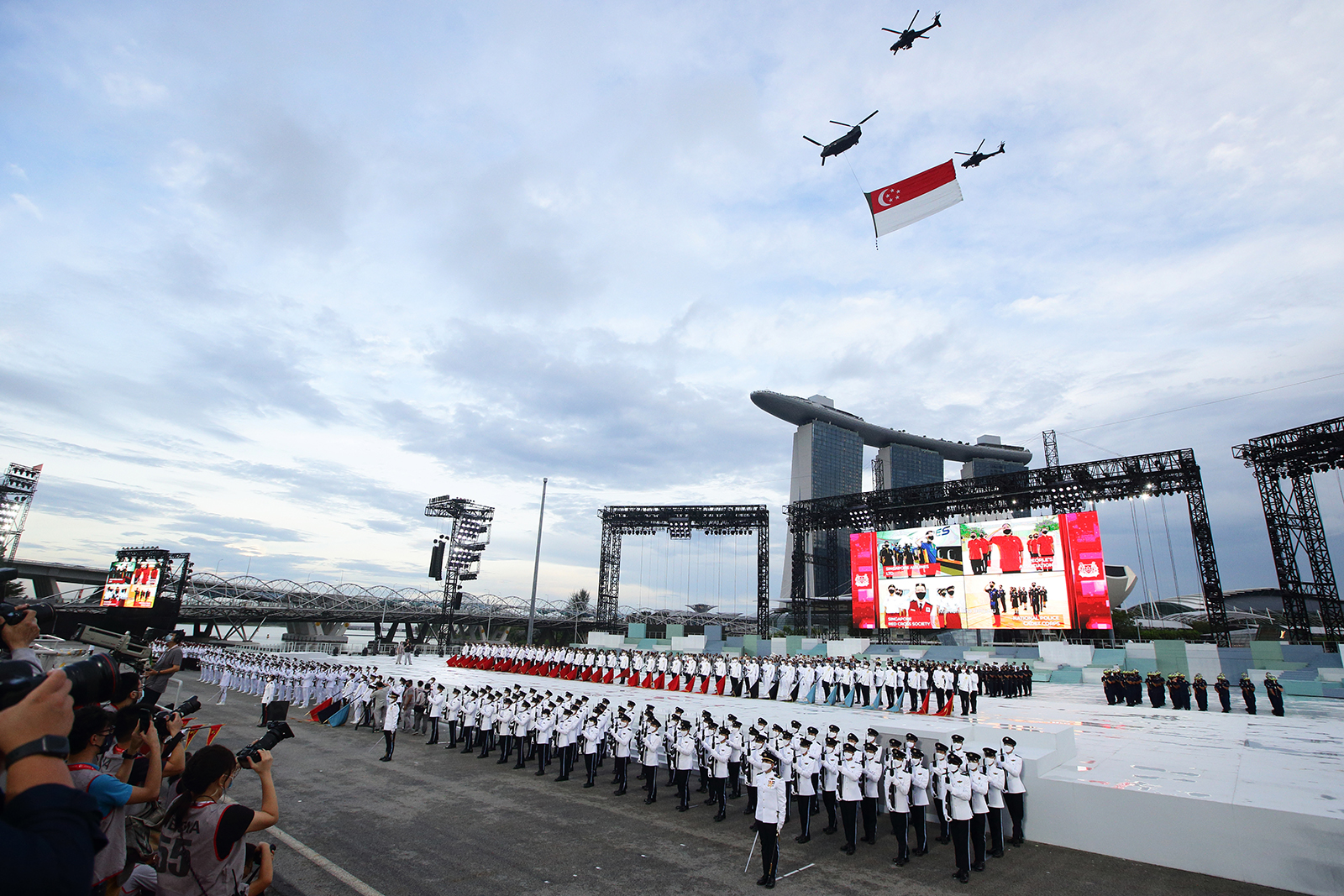
On Saturday, Singapore marks a momentous milestone: its 60th year of independence. SG60 is not just a commemoration of the nation’s birth but a celebration of its remarkable transformation from a fledgling city-state to a global metropolis. 

Singapore’s journey began on August 9, 1965, with the Proclamation of Independence. The document, drafted by Minister for Law Edmund Barker and signed by Prime Minister Lee Kuan Yew, announced Singapore’s separation from Malaysia and its emergence as a sovereign, democratic, and independent nation. The proclamation declared Singapore’s commitment to justice, equality, and the welfare of its people, a vision that has guided the nation for six decades.

“Now I LEE KUAN YEW Prime Minister of Singapore, DO HEREBY PROCLAIM AND DECLARE on behalf of the people and the Government of Singapore that as from today the ninth day of August in the year one thousand nine hundred and sixty-five Singapore shall forever be a sovereign democratic and independent nation, founded upon the principles of justice and ever seeking the welfare and happiness of her people in a more just and equal society.”

SG60 is more than a birthday; it is a national moment to reflect on Singapore’s journey, celebrate its achievements, and reaffirm the values that have shaped its identity. As Prime Minister Lawrence Wong emphasised, SG60 is a time for all Singaporeans to reflect on the values that brought the country this far—resilience, unity, multiculturalism, and openness—and to look ahead to the future.

The theme for SG60, “Building Our Singapore Together,” highlights the importance of collective effort in shaping the nation’s next chapter. It is a call for every Singaporean to connect, care, and contribute, fostering a sense of shared responsibility and community spirit.

SG60 is marked by a vibrant calendar of events that span the arts, sports, family, and community engagement. These include the SG60 Homecoming Concert at Jewel Changi Airport on August 1, featuring homegrown stars like Stefanie Sun, Kit Chan, and Regina Song. The event is part of Changi Airport Group’s “Together, We Make Magic” series, which also includes horticultural displays and a spectacular outdoor light-up along Airport Boulevard.

The National Family Festival on May 31 was a large-scale event promoting family values and intergenerational bonding, reinforcing the importance of strong family ties in Singapore’s social fabric. On June 24, the International Conference on Cohesive Societies brought together local and global leaders, fostering interfaith and multicultural dialogue, reflecting Singapore’s commitment to harmony and inclusivity. Between July 11 to 20, Singapore hosted the World Aquatics Championships with the world’s top aquatic athletes participating. This event showcased Singapore’s status as a global sporting hub and the World Aquatics Masters Championships also offered opportunities for local participation. 

GetActive! Singapore in July and August is a nationwide movement encouraging Singaporeans to celebrate National Day through sports and active living, with companies and communities hosting their own activities. The Purple Parade is Singapore’s largest disability inclusion movement, promoting awareness and support for persons with disabilities, a testament to the nation’s commitment to inclusivity.

At the Changi Airport SG60 Outdoor Light-Up and Floral Displays, iconic locations like the Merlion, Toa Payoh Dragon Playground, and Gardens by the Bay will be illuminated, while floral installations across Changi’s terminals and Jewel Changi Airport feature the national flower, Vanda Miss Joaquim, and a six-metre-high floral Merlion made from 60 plant types. The Arts and Heritage Triple Bill is a series of special arts and heritage events that invites Singaporeans to explore the nation’s history and identity, fostering reflection and unity.

Singapore’s progress over the past 60 years is a testament to its people’s resilience and determination. From its early struggles with unemployment, housing shortages, and limited resources, the nation has become a global financial centre, a leader in education and healthcare, and a model of multicultural harmony.

Key milestones include:

  • Economic Transformation: From a trading port to a diversified economy driven by innovation and technology.
  • Housing and Urban Development: The Housing and Development Board (HDB) provided affordable homes, transforming the cityscape and improving living standards.
  • Education and Workforce: Investments in education created a skilled workforce, powering Singapore’s economic growth.
  • Multiculturalism and Social Cohesion: Policies promoting racial and religious harmony have fostered a stable, inclusive society.

SG60 is not just a look back; it is a rallying call to shape the next chapter of the Singapore story. The celebrations emphasise the need for Singaporeans to stay united, embrace change, and continue building a society that is open, resilient, and caring. The Forward Singapore exercise, which informs the SG60 theme, encourages citizens to participate in shaping policies and initiatives, ensuring that Singapore remains a place of opportunity and hope for future generations.

At the core of SG60 are the values that have defined Singapore’s journey. These include multiculturalism, which is celebrated through events like the Chingay Parade and the International Conference on Cohesive Societies, reinforcing the importance of diversity and harmony; resilience, which honours stories of overcoming adversity, from the early days of independence to the challenges of a fast-changing world; openness and boldness, which are reflected in Singapore’s embrace of globalisation, innovation, and new ideas; and care and contribution, which are encouraged through community initiatives, volunteerism, and efforts to support the vulnerable.

As Singapore turns 60, the nation pauses to celebrate not just its achievements, but the spirit of its people. From grand concerts and sporting events to community festivals and acts of kindness, SG60 is a reminder that Singapore’s greatest strength lies in its unity and collective resolve. Whether you are attending a concert at Jewel Changi Airport, participating in a community walkathon, or simply reflecting on the nation’s journey, SG60 offers every Singaporean a chance to be part of something bigger, a shared story of hope, progress, and togetherness.

As the red and white flags fly high and familiar songs fill the air, Singaporeans are reminded that the journey continues, powered by the same values and spirit that have always defined this remarkable city-state. 

Happy birthday, Singapore! Happy SG60! And Majulah Singapura!

Short Story: The Forbidden Forest Adventure

Benji, Salman, Atharva, and Thomas sat on the steps of their primary school, sweat beading on their foreheads in the sweltering June heat. The school grounds were eerily quiet, a stark contrast to the usual cacophony of children’s laughter and shouts. It was the middle of the school holidays, and most of their classmates were at home, enjoying a well-deserved break from the rigorous PSLE preparation that had consumed their lives for months.

“I can’t believe we’re spending our holiday studying,” Benji groaned, closing his math textbook with a thud. “My brain feels like it’s going to explode.” Salman nodded in agreement, absentmindedly doodling in the margins of his science notes. “Yeah, but we can’t slack off now. The PSLE is just a few months away.”

Atharva stretched his arms above his head, his eyes wandering to the dense forest that bordered their school. “You know what we need? An adventure. Something to take our minds off all this studying.” Thomas followed Atharva’s gaze, a mischievous glint in his eye. “Are you thinking what I’m thinking?”

The four boys exchanged knowing looks, a mix of excitement and apprehension coursing through their veins. They all knew what Thomas was suggesting – the forbidden forest. “But we’re not allowed in there,” Salman protested weakly, even as he began packing up his books. “Come on, Salman,” Benji urged, already on his feet. “We’ve been cooped up studying for weeks. What’s the harm in a little exploration?” With a collective nod, the boys made their decision. They quickly gathered their belongings and headed towards the forest’s edge, glancing over their shoulders to ensure no teachers were around to catch them.

As they stepped into the cool shade of the trees, a sense of exhilaration washed over them. The forest was a world apart from their orderly school life – wild, mysterious, and full of possibilities. “This is so cool,” Thomas whispered, his eyes wide as he took in the lush greenery surrounding them. They walked deeper into the forest, the sounds of civilisation fading behind them. The air grew thick with humidity, and the chirping of birds and rustling of leaves created a natural symphony.

After about twenty minutes of walking, Atharva suddenly stopped in his tracks. “Guys, look at that!” he exclaimed, pointing to something partially hidden beneath a tangle of vines. The boys crowded around, their curiosity piqued. As they brushed away the foliage, they gasped in unison. There, half-buried in the earth, was what appeared to be an old metal container.

“What is it?” Salman asked, his voice hushed with awe. Benji knelt down examining the object closely. “It looks like… a World War II relic,” he said, his voice filled with excitement. “Remember those pictures we saw in our history textbook?” Thomas nodded eagerly. “Yeah, from the Japanese occupation! This must be from that time.”

With renewed energy, the boys began to clear away more of the surrounding vegetation. As they worked, the full extent of their discovery became clear. It wasn’t just a single container – they had stumbled upon what appeared to be a small cache of World War II artefacts.

“Look, there’s some kind of insignia on this one,” Atharva pointed out, brushing dirt off a rusty metal box. Salman peered at it, his brow furrowed in concentration. “It looks like the Imperial Japanese Navy symbol. We learned about that in class, remember?” As the boys continued to unearth more items, their excitement grew. They found old canteens, a tarnished compass, and even what looked like parts of an old radio.

“This is incredible,” Benji breathed, carefully turning over a weathered leather pouch in his hands. “It’s like we’ve discovered a piece of history.” But as they delved deeper into their find, Thomas suddenly let out a yelp of pain. “Ouch!” he cried, jerking his hand back from one of the containers. “What happened?” Salman asked concern etched on his face.

Thomas held up his hand, revealing a small cut on his palm. “I think I cut myself on something sharp inside that box,” he explained, wincing. The mood suddenly shifted as the reality of their situation sank in. They were in a forbidden area, handling potentially dangerous artefacts from a war that had ended decades before they were born.

“Maybe we should go back,” Salman suggested, his earlier reservations returning. “We don’t know if these things are safe to touch.” Atharva nodded in agreement. “Yeah, and what if there’s unexploded ordnance or something? We learned about that in history class too.” The boys looked at each other, their earlier excitement now tempered with fear. They had been so caught up in their discovery that they hadn’t stopped to consider the potential dangers. “But we can’t just leave it here,” Benji argued. “This could be important. What if it gets destroyed or someone else finds it and doesn’t report it?”

As they debated what to do, they heard a sound that made their blood run cold – voices coming from the direction of the school. “Oh no,” Thomas whispered, his eyes wide with panic. “Someone’s coming!” The boys scrambled to gather their belongings, their hearts pounding in their chests. But as they prepared to flee, Benji made a split-second decision.

“We have to tell someone about this,” he said firmly. “It’s the right thing to do.” Despite their fear of punishment, the others nodded in agreement. They couldn’t just pretend they hadn’t made this significant discovery. With trepidation, they made their way towards the approaching voices. As they emerged from the treeline, they came face to face with Mr. Tan, their history teacher, and Mr. Lee, the school’s discipline master.

“Boys!” Mr. Lee exclaimed, his face a mixture of relief and anger. “What on earth are you doing in there? You know the forest is off-limits!” Before any of them could respond, Benji stepped forward. “Sir, we’re sorry for breaking the rules, but we found something important in the forest. We think it’s from World War II.”

Mr. Tan’s eyebrows shot up in surprise. “World War II relics? Are you sure?” The boys nodded vigorously, and Atharva added, “There are containers with the Imperial Japanese Navy symbol and lots of old equipment.” Mr. Tan and Mr. Lee exchanged glances, their anger giving way to curiosity and concern.

“Show us,” Mr. Tan said firmly. The boys led the teachers back to their discovery site. As Mr Tan examined the artefacts, his expression grew increasingly serious. “This is indeed a significant find,” he said, carefully inspecting one of the containers. “These appear to be genuine World War II relics, possibly from a Japanese naval outpost or supply cache.”

Mr. Lee, who had been silent until now, spoke up. “Boys, while I’m impressed by your discovery, I hope you understand the gravity of your actions. Entering the forest was not only against school rules but potentially very dangerous.” The four friends hung their heads, the weight of their transgression settling on their shoulders.

“However,” Mr. Lee continued, his tone softening slightly, “your decision to come forward and report your find was the right one. It shows responsibility and maturity.” Mr. Tan nodded in agreement. “Indeed. This discovery could be of historical importance. We’ll need to contact the proper authorities to handle these artefacts safely.”

Over the next few hours, the quiet school became a hive of activity. Police were called, and soon after, a team from the National Heritage Board arrived to assess the discovery. The boys watched in awe as professionals carefully excavated and documented each item they had stumbled upon.

As the day wore on, the full significance of their find became clear. The cache contained not only military equipment but also personal effects and documents that offered new insights into the Japanese occupation of Singapore during World War II.

Dr Lim, the lead archaeologist from the National Heritage Board, approached the boys with a smile. “You’ve made an incredibly important discovery,” she told them. “These artefacts will help us better understand a crucial period in our nation’s history.” Despite their initial fear of punishment, the boys found themselves at the centre of attention, recounting their adventure to officials and even a few reporters who had gotten wind of the story.

As the sun began to set, Mr. Lee gathered the boys for a final word. “While I can’t condone your breaking of school rules,” he began, his tone stern but not unkind, “I am proud of how you handled the situation once you realised the importance of your discovery.”

He paused, looking each boy in the eye. “There will be consequences for entering the forbidden area – you’ll each write an essay on the importance of following rules and the potential dangers of unexplored areas.” The boys nodded, accepting their punishment without complaint.

“However,” Mr. Lee continued, a small smile playing at the corners of his mouth, “in light of the significance of your find, I think we can arrange for you to be involved in the research process if you’re interested. It would be an excellent learning opportunity.” The boys’ faces lit up at this unexpected turn of events. What had started as a reckless adventure had turned into something far more meaningful.

In the weeks that followed, Benji, Salman, Atharva, and Thomas found themselves balancing their PSLE preparations with visits to the Heritage Board, where they learned more about the artefacts they had discovered and the historical context surrounding them. Their find made headlines in local newspapers, and they even featured in a short segment on the evening news. At school, they went from being known as troublemakers to local heroes, with younger students looking up to them in awe.

As the new school term began and the PSLE loomed closer, the boys found themselves changed by their summer adventure. They approached their studies with renewed vigour, understanding now more than ever the importance of knowledge and the excitement of discovery.

On the eve of their PSLE, as they gathered for one last study session, Benji looked around at his friends with a grin. “You know,” he said, “I never thought I’d say this, but I’m kind of glad we broke the rules that day.” The others laughed, nodding in agreement. “Just don’t make a habit of it,” Salman quipped, earning more chuckles from the group.

As they turned back to their books, each boy silently reflected on their extraordinary adventure. They had learned valuable lessons about responsibility, the importance of history, and the unexpected places where knowledge can be found. And as they faced the challenge of the PSLE, they did so not just as students, but as young explorers who had already made their mark on the world.

In My Hands Today…

The Woke Salaryman Crash Course on Capitalism & Money: Lessons from the World’s Most Expensive City – The Woke Salaryman

Learn the rules of the game of capitalism so you can play to win and build wealth. This crash course on capitalism and lessons from the world’s most expensive city is not your typical personal finance guide.

Written by the founders of the top personal finance blog in Singapore, this book acknowledges the frustrations many young people feel as they enter the world of money, and it shows you how to develop the mindset necessary to thrive for the rest of your life.

Through visual storytelling, Crash Course on Capitalism and Money melds personal finance, economics, sociology, and psychology to create a book that shows you the path to financial success. If you’re ready to rise above discontentment, accept the reality you find yourself in, and put in the work it takes to survive, then thrive in today’s world―then this is the book for you.

In this book, you’ll find a collection of the most popular comics by The Woke Salaryman. The stories are accompanied by commentaries that offer additional context on how each story fits within the bigger framework of approaching the daunting challenge of navigating money, life and purpose in these times. Why you should get the For young people just beginning their personal finance journeys, as well as anyone who wants to make better financial and life choices while navigating the rules of capitalism and wealth, Crash Course on Capitalism and Money is a fun and enlightening read.
Genres
Nonfiction
Finance
Personal Finance
Self Help
Business
Economics
Psychology