In My Hands Today…

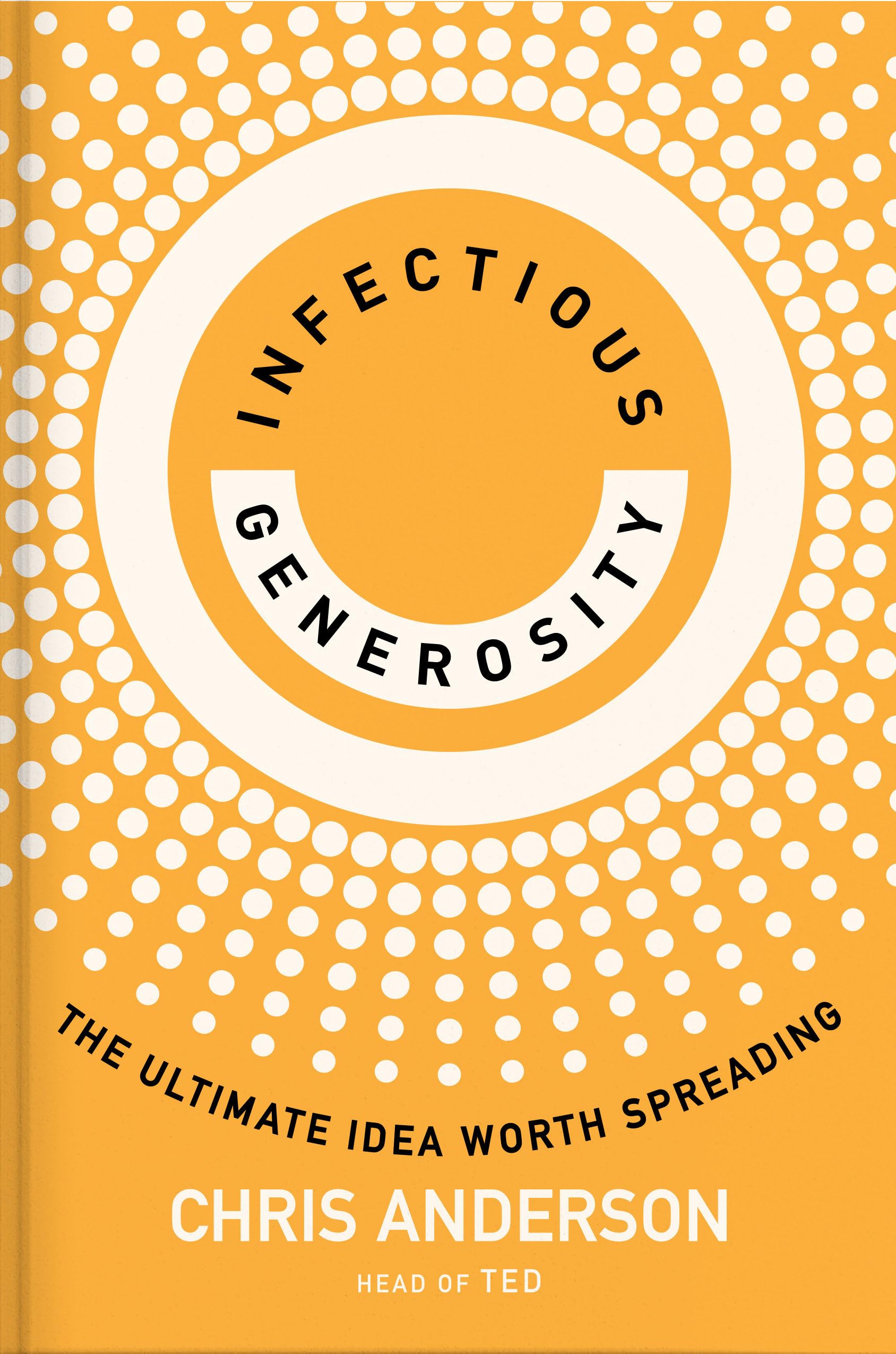
Infectious Generosity: The Ultimate Idea Worth Spreading – Chris J. Anderson

Recent years have been tough on optimists. Hopes that the Internet might bring people together have been crushed by the ills of social media. Is there a way back?

As head of TED, Chris Anderson has had a ringside view of the world’s boldest thinkers sharing their most uplifting ideas. Inspired by them, he believes that it’s within our grasp to turn outrage back into optimism. It all comes down to reimagining one of the most fundamental human generosity. What if generosity could become infectious generosity?

Consider how a London barber began offering haircuts to people experiencing homelessness—and catalyzed a movement

How two anonymous donors gave $10,000 each to two hundred strangers and discovered that most recipients wanted to “pay it forward” with their own generous acts

How TED itself transformed from a niche annual summit into a global beacon of ideas by giving away talks online, allowing millions access to free learning

In telling these inspiring stories, Anderson has given us “the first page-turner ever written about human generosity” (Elizabeth Dunn). More important, he offers a playbook for how to embark on our own generous acts—whether gifts of money, time, talent, connection, or kindness—and to prime them, thanks to the Internet, to have self-replicating, even world-changing, impact.

In My Hands Today…

Hey, Hun: Sales, Sisterhood, Supremacy, and the Other Lies Behind Multilevel Marketing – Emily Lynn Paulson

She signed up for the sisterhood, free cars, and the promise of a successful business of her own. Instead, she ended up with an addiction, broken friendships, and the rubble of a toppled pyramid . . . scheme.

Hey, Hun: Sales, Sisterhood, Supremacy, and the Other Lies Behind Multilevel Marketing is the eye-opening, funny, and dangerous personal story of author Emily Lynn Paulson rising to the top of the pyramid in the multilevel marketing (MLM) world only to realize that its culture and business practices went beyond a trendy marketing scheme and into the heart of white supremacy in America. A significant polemic on how MLMs operate, Hey, Hun expertly lays out their role in the cultural epidemic of isolation and the cult-like ideologies that course through their trainings, marketing, and one-on-one interactions. Equally entertaining and smart, Paulson’s first-person accounts, acerbic wit, and biting commentary will leave you with a new perspective on those “Hey Hun” messages flooding your inbox.

In My Hands Today…

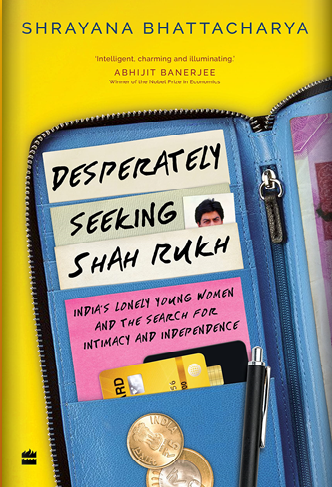
Desperately Seeking Shah Rukh: India’s Lonely Young Women and the Search for Intimacy and Independence – Shrayana Bhattacharya

In this pathbreaking work, Shrayana Bhattacharya maps the economic and personal trajectories—the jobs, desires, prayers, love affairs, and rivalries–of a diverse group of women. Divided by class but united in fandom, they remain steadfast in their search for intimacy, independence, and fun. Embracing Hindi film idol Shah Rukh Khan allows them a small respite from an oppressive culture, a fillip to their fantasies of a friendlier masculinity in Indian men. Most struggle to find the freedom—or income—to follow their favourite actor.

Bobbing along in this stream of multiple lives for more than a decade—from Manju’s boredom in ‘rurban’ Rampur and Gold’s anger at having to compete with Western women for male attention in Delhi’s nightclubs to Zahira’s break from domestic abuse in Ahmedabad—Bhattacharya gleans the details on what Indian women think about men, money, movies, beauty, helplessness, agency, and love. A most unusual and compelling book on the female gaze, this is the story of how women have experienced post-liberalization India.

In My Hands Today…

Whole Numbers and Half Truths – Rukmini S.

How do you see India?

Fuelled by a surge of migration to cities, the country’s growth appears to be defined by urbanisation and by its growing, prosperous middle class. It is also defined by progressive and liberal young Indians who vote beyond the constraints of identity and, paradoxically, by an unchecked population explosion and rising crimes against women. Is it, though?

In 2020, the annual population growth was down to under 1 percent. Only 31 out of 100 Indians live in a city today, and just 5 percent live outside the city of their birth.

As recently as 2016, only 4 percent of young, married respondents in a survey said their spouse belonged to a different caste group. Over 45 percent of voters said in a pre-2014 election survey that it was important to them that a candidate of their own caste win elections in their constituency. A large share of reported sexual assaults across India are actually consensual relationships criminalised by parents. And staggeringly, spending more than Rs 8,500 a month puts you in the top 5 percent of urban India.

In Whole Numbers and Half Truths, data-journalism pioneer Rukmini S. draws on nearly two decades of on-ground reporting experience to piece together a picture that looks nothing like the one you might expect. There is a mountain of data available on India, but it remains opaque, hard to access, and harder yet to read, and it does not inform public conversation. Rukmini marshals this information—some of it never before reported—alongside probing interviews with experts and ordinary citizens to see what the numbers can tell us about India. As she interrogates how data works and how the push and pull of social and political forces affect it, she creates a blueprint to understand the changes of the last few years and the ones to come—a toolkit for India.

This is a timely and wholly original intervention in the conversation on data, and with it, India.

In My Hands Today…

Without Children: The Long History of Not Being a Mother – Peggy O’Donnell Heffington

A historian of gender explores the complicated relationship between womanhood and motherhood In an era of falling births, it’s often said that millennials invented the idea of not having kids. But history is full of women without some who chose childless lives, others who wanted children but never had them, and still others—the vast majority, then and now—who fell somewhere in between. Modern women considering how and if children fit into their lives are products of their political, ecological, and cultural moment. But history also tells them that they are not alone.

Drawing on deep research and her own experience as a woman without children, historian Peggy O’Donnell Heffington shows that many of the reasons women are not having children today are ones they share with women in the a lack of support, their jobs or finances, environmental concerns, infertility, and the desire to live different kinds of lives. Understanding this history—how normal it has always been to not have children, and how hard society has worked to make it seem abnormal—is key, she writes, to rebuilding kinship between mothers and non-mothers, and to building a better world for us all.