Travel Bucket List: Malaysia Part 19 – Kuala Lumpur Part 1

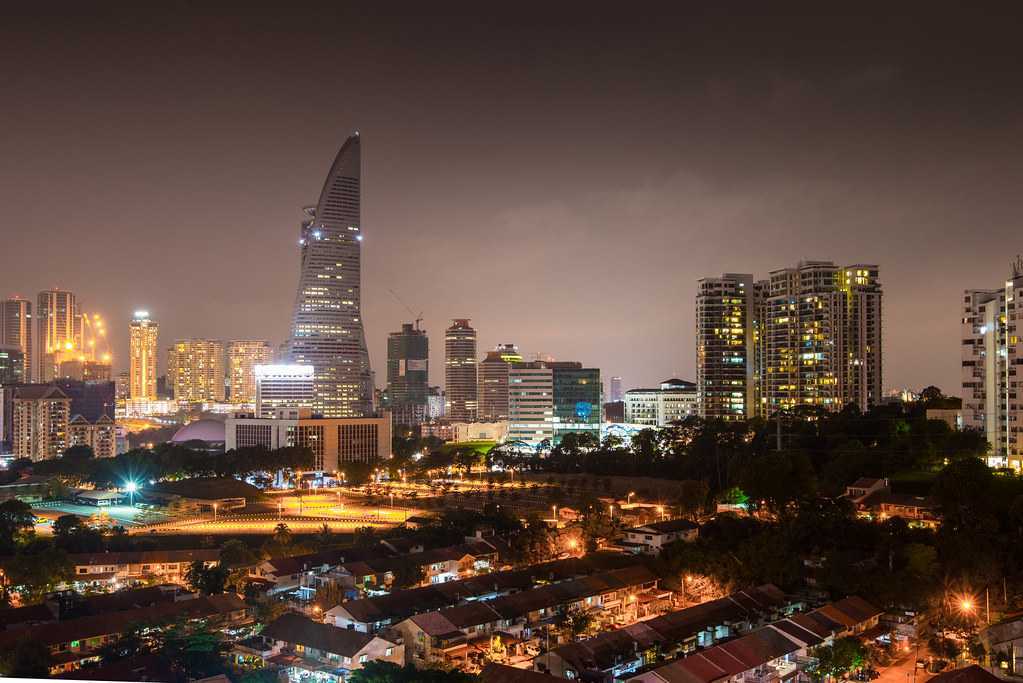
Officially, the Federal Territory of Kuala Lumpur or Wilayah Persekutuan Kuala Lumpur, Kuala Lumpur or KL as it is colloquially known, is a federal territory and the ceremonial, legislative and judicial capital city of Malaysia. It is one of the fastest-growing cities in Asia and the largest city in Malaysia, covering an area of 243 sq. km. Greater Kuala Lumpur, also known as the Klang Valley, is an urban agglomeration of 7.564 million people as of 2018 and is among the fastest-growing metropolitan regions in Southeast Asia, both in population and economic development. Serving as the cultural, financial, and economic centre of Malaysia, the city is also home to the Parliament of Malaysia and the Istana Negara, the official residence of the Yang di-Pertuan Agong or the monarch of Malaysia.

Kuala Lumpur first developed around 1857 as a town serving the tin mines of the region and served as the capital of Selangor from 1880 until 1978. Kuala Lumpur was the founding capital of the Federation of Malaya and its successor, Malaysia. The city remained the seat of the executive and judicial branches of the Malaysian federal government until these were relocated to Putrajaya in early 1999. However, some sections of the political bodies remain in Kuala Lumpur. The city is one of the three federal territories of Malaysia, enclaved within the state of Selangor.

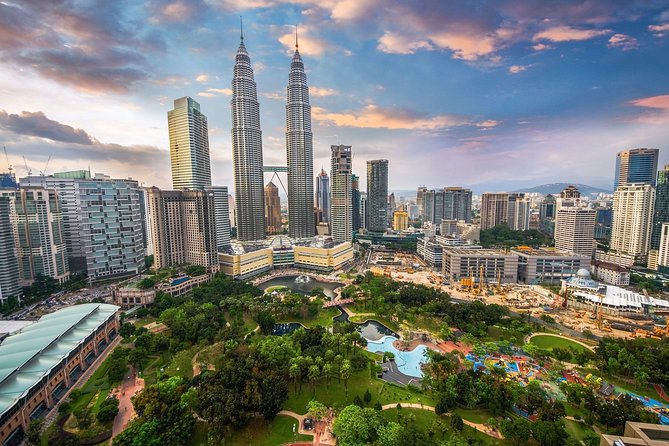
Kuala Lumpur has undergone rapid development in recent decades and is home to the tallest twin buildings in the world, the Petronas Towers, which have since become an iconic symbol of Malaysian development. The sixth most-visited city in the world in 2019, Kuala Lumpur houses three of the world’s ten largest shopping malls, ranks 70th in the world and second in Southeast Asia for the Economist Intelligence Unit’s Global Liveability Ranking and ninth in ASPAC and second in Southeast Asia for KPMG’s Leading Technology Innovation Hub 2021.
Kuala Lumpur’s name means muddy confluence in Malay; where Kuala is the point where two rivers join or an estuary, and lumpur means mud. One suggestion is that it was named after Sungai Lumpur or the muddy river; in the 1820s, a place named Sungei Lumpoor was said to be the most important tin-producing settlement up the Klang River. However, this derivation does not account for the fact that Kuala Lumpur lies at the confluence of Gombak River and Klang River, and therefore should be named Kuala Gombak, since the Kuala is typically named after the river that joins a larger river or the sea. Some have argued that Sungai Lumpur in fact extended down to the confluence and therefore the point where it joined the Klang River would be Kuala Lumpur, although this Sungai Lumpur is said to be another river joining the Klang River 1.5 km upstream from the Gombak confluence, or perhaps located to the north of the Batu Caves area.

It has also been proposed that Kuala Lumpur was originally named Pengkalan Lumpur or muddy landing place, in the same way that Klang was once called Pengkalan Batu or stone landing place, but became corrupted into Kuala Lumpur. Another theory says that it was initially a Cantonese word, lam-pa, meaning flooded jungle or decayed jungle. There is no firm contemporary evidence for these suggestions other than anecdotes. The name may also be a corrupted form of an earlier forgotten name.

Kuala Lumpur was originally a small hamlet of just a few houses and shops at the confluence of the Sungai Gombak and Sungai Klang. Kuala Lumpur became established as a town around 1857, when the Malay Chief of Klang, Raja Abdullah bin Raja Jaafar, aided by his brother Raja Juma’at of Lukut, raised funds from Malaccan Chinese businessmen to hire Chinese miners from Lukut to open new tin mines there. The miners landed at Kuala Lumpur and continued by foot to Ampang, where they opened the first mine. Kuala Lumpur was the furthest point up the Klang River to which supplies could conveniently be brought by boat, and therefore became a collection and dispersal point serving the tin mines.

When the Ampang mines succeeded, and exported the first tin in 1859, Sutan Puasa was already trading near Ampang. The town, spurred on by tin-mining, started to develop around Old Market Square or Medan Pasar, with roads radiating out towards Ampang as well as Pudu and Batu, where miners had also begun to settle in, and Petaling and Damansara. The miners formed gangs and frequently fought over control of the best tin mines. Leaders of the Chinese community were conferred the title of Kapitan Cina by the Malay chief, and Hiu Siew became the first Kapitan of Kuala Lumpur.

Early Kuala Lumpur was a small town that suffered from many social and political problems – the buildings were made of wood and atap which is palm frond thatching. The buildings were prone to catching fire, and due to a lack of proper sanitation the town was plagued with diseases. It also suffered from a constant threat of flooding due to its location. The town became embroiled in the Selangor Civil War in part over control of revenue from the tin mines. Kuala Lumpur was captured in 1872 and burnt to the ground. The war and other setbacks, such as dropping tin prices, led to a slump and a major outbreak of cholera caused many to flee. The slump lasted until late 1879, when rising prices for tin allowed the town to recover. In late 1881, the town was severely flooded, after a fire that had destroyed the entire town in January. Yap Ah Loy, together with Frank Swettenham who was appointed the Resident in 1882, were the two most important figures of early Kuala Lumpur with Swettenham credited with its rapid growth and development and its transformation into a major urban centre.

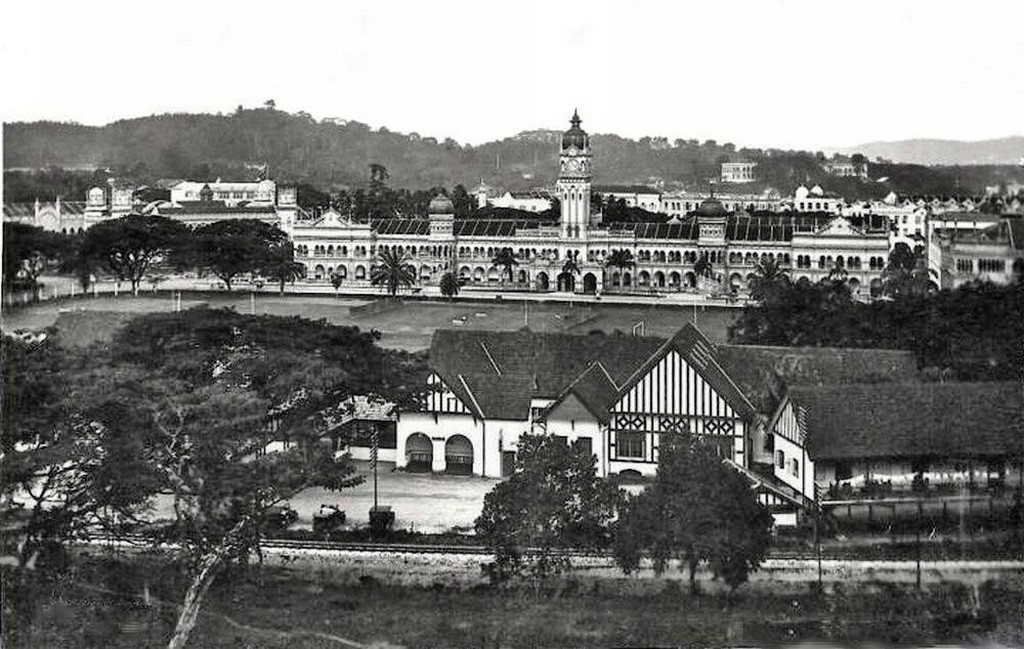
The early Chinese and Malay settled along the east bank of the Klang River, with the Chinese mainly settled around the commercial centre of Market Square and the Malays, and later Indian Chettiars and Muslims, residing in the Java Street area, now Jalan Tun Perak. In 1880, the colonial administration moved the state capital of Selangor from Klang to the more strategically advantageous Kuala Lumpur, and government buildings and living quarters were to the west of the river. Government offices and a new police headquarters were built on Bukit Aman, and the Padang initially created for police training. The Padang, now known as Merdeka Square, would later become the centre of the British administrative offices when the colonial government offices moved to the Sultan Abdul Samad Building in 1897.

Frank Swettenham, on becoming the British Resident, began improving the town by cleaning up the streets. He also stipulated in 1884 that buildings should be constructed of brick and tile so that they would be less flammable, and that the town be rebuilt with wider streets to reduce fire risk. Kapitan Yap Ah Loy bought a sprawling piece of real estate to set up a brick factory for the rebuilding of Kuala Lumpur, the eponymous Brickfields. Demolished atap buildings were replaced with brick and tile buildings, and many of the new brick buildings had five-foot ways and Chinese carpentry work. This resulted in a distinct eclectic shop house architecture typical to this region. Road access was expanded, linking tin mines with the city with the main arterial routes of the present Ampang Road, Pudu Road and Petaling Street. Law reforms were implemented and new legal measures introduced to the assembly.

The construction of a railway line between Kuala Lumpur and Klang, completed in 1886, spurred the growth of the city. As development intensified in the 1880s, putting pressure on sanitation, waste disposal and other health measures. A Sanitary Board created on 14 May 1890 was responsible for sanitation, road upkeep, street lighting, and other functions. This would eventually become the Kuala Lumpur Municipal Council. In 1896, Kuala Lumpur was chosen as the capital of the newly formed Federated Malay States.

Kuala Lumpur expanded considerably in the 20th century. From 0.65 sq km in 1895, it was extended to 20 sq km in 1903 and to 93 sq km in 1948 and to 243 sq km in 1974 as a Federal Territory. The development of a rubber industry in Selangor fuelled by the demand for car tyres in the early 20th century led to a boom, and the population of Kuala Lumpur increased from 30,000 in 1900 to 80,000 in 1920. The commercial activities of Kuala Lumpur had been run to a large extent by Chinese businessmen. During World War II, Kuala Lumpur was captured by the Imperial Japanese Army on 11 January 1942. Despite suffering little damage during the course of the battle, the wartime occupation of the city resulted in significant loss of lives; at least 5,000 Chinese were killed in Kuala Lumpur in just a few weeks of occupation by Japanese forces, and thousands of Indians were sent as forced labour to work on the Burma Railway where many died. They occupied the city until 15 August 1945. Kuala Lumpur grew during the war and continued after the war during the Malayan Emergency between 1948 and 1960, during which Malaya was preoccupied with a communist insurgency and New Villages were established on the outskirts of the city.

On 31 August 1957, the Federation of Malaya gained its independence from British rule. Kuala Lumpur remained the capital after the formation of Malaysia on 16 September 1963 with the Malaysian Houses of Parliament completed at the edge of the Lake Gardens in the same year. Kuala Lumpur achieved city status on 1 February 1972, becoming the first settlement in Malaysia to be granted the status after independence. Later, on 1 February 1974, Kuala Lumpur became a federal territory. Kuala Lumpur was ceded by Selangor to be directly controlled by the central government, and it ceased to be capital of Selangor in 1978 after the city of Shah Alam was declared the new state capital. Putrajaya was declared a Federal Territory on 1 February 2001, as well as the seat of the federal government. The administrative and judicial functions of the government were shifted from Kuala Lumpur to Putrajaya, Kuala Lumpur however still retained its legislative function, and remained the home of the Yang di-Pertuan Agong or the Constitutional King.

From the 1990s onwards, major urban developments in the Klang Valley extended the Kuala Lumpur metropolitan area. This area, known as Greater Kuala Lumpur, extends from the Federal Territory of Kuala Lumpur westward to Port Klang, east to the edge of the Titiwangsa Mountains as well as to the north and south. The area covers other administratively separate towns and cities and is served by the Klang Valley Integrated Transit System. The geography of Kuala Lumpur is characterised by the huge Klang Valley, bordered by the Titiwangsa Mountains in the east, several minor ranges in the north and the south, and the Strait of Malacca in the west.

Kuala Lumpur and its surrounding urban areas form the most industrialised and economically, the fastest-growing region in Malaysia. The city remains the economic and business hub of the country and Kuala Lumpur is a centre for finance, insurance, real estate, media, and the arts in Malaysia. Tourism plays an important role in the city’s service-driven economy.
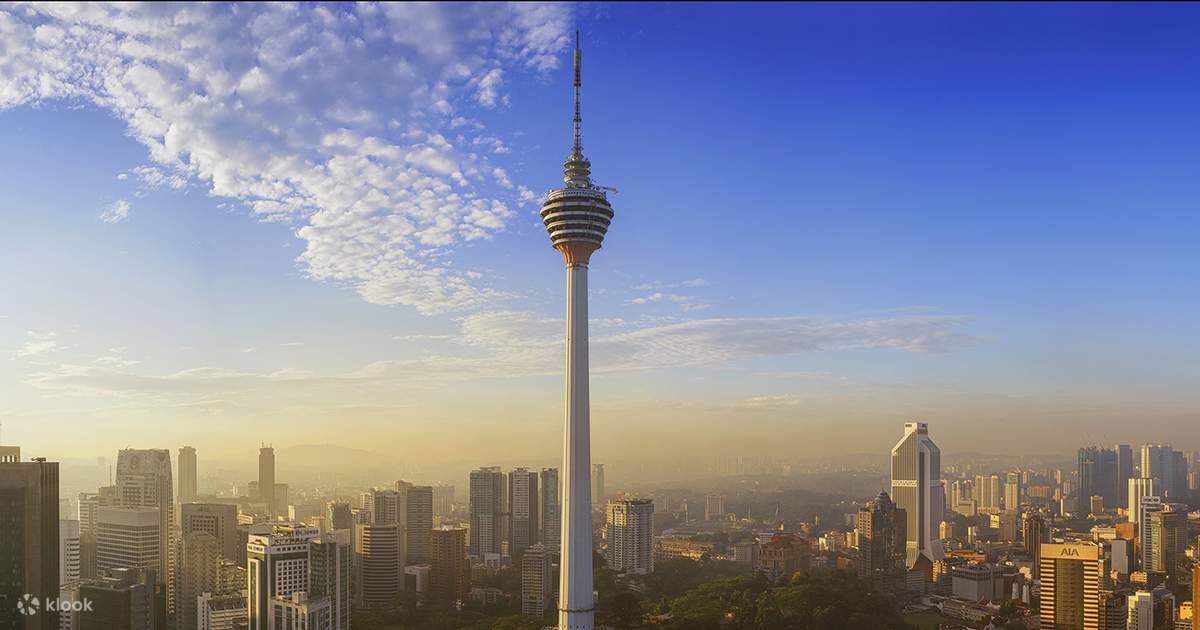
Menara Kula Lumpur, or Kuala Lumpur Tower, located within the Bukit Nanas Forest Reserve, is the tallest telecommunications tower in Southeast Asia and the 7th tallest in the world. The thrilling 360-degree view of Kuala Lumpur skyline from the tower is the main attraction. The six-storey, 421-meter-tall KL Tower is also popular for the revolving restaurant it houses. The tower is the highest viewpoint in the city and acts as the Islamic Falak observatory, which is used to observe the moon during the holy month of Ramadan. The architecture of this building is reflective of Islamic-style Arabic scripts, intricate Islamic tiles, and floral and abstract patterns. Designed by the architect Kumpulan Senireka Sdn. Bhd, the construction took place in three phases over a span of five years. The 421-metre-tall tower was officially inaugurated on October 1, 1996 and has been used for broadcasting purposes ever since.

The base design of Menara KL was meant to symbolize the human journey for perfection in life. The prominent globular pinnacle of the tower has its inspirations rooted to a Malaysian spinning top. The main lobby of the upper ground floor has ornamental glass domes which emit a diamond-like sparkle. To pay homage to the traditional Islamic and Persian architecture and to display its Islamic roots, Muqarnas, a type of corbel has been used as the main decorative element. The roof of the pod is at 355 m and after the placement, the overall height increases to 421 m.

The observation deck at Menara Kuala Lumpur is located at a height of 276 m above ground level and offers a stunning and thrilling view of the city. The Sky Deck is located at a height of 300 m above the ground and offers spectacular views of the city skyline at day and during sunset. Tickets for the Sky Deck, including the Observation Deck and Sky Tower are RM 99 and RM 52 for adults and children between 4 and 12 years. KL Tower is open daily from 10 am to 9 pm.

The Jelutong Tree located in the premise of KL Tower is more than a century old. To conserve the tree, the position of the tower was shifted, and a series of barricades were put up so that the roots of the tree were not harmed during excavation. The tower is lit up, from the ground floor to the top of the antenna mast, with LED lights. Visitors should check the weather forecast before booking the tickets for the observation deck and the sky deck, as in case it rains or drizzles, the open-air sky deck is shut, and visitors can only access the observation deck only. Tickets are non-refundable. Menara Kuala Lumpur is open from 10 am to 9 pm daily.
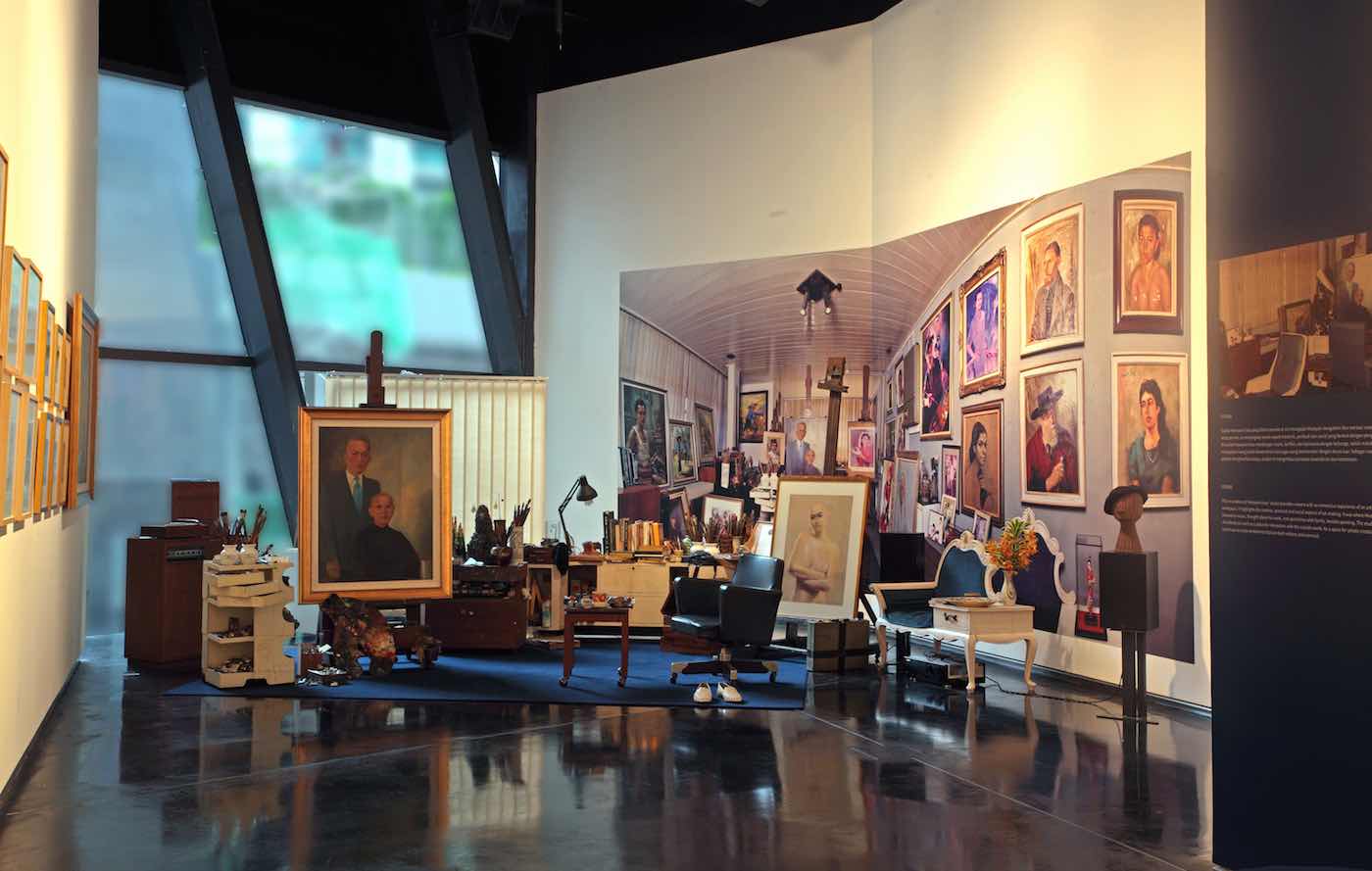
Nestled in the heart of Kuala Lumpur, Ilham Tower is the fourth-tallest structure in Malaysia. The 60-storey tower was designed by Foster+Partners and is a combination of residential as well as commercial spaces. The Ilham Tower houses a 4-star hotel, art gallery, gift shop, food joints and office suites. and is famous for the Ilham Art Gallery, which houses a great collection of contemporary as well as modern art pieces. The tower is open from 11 am to 7 pm between Tuesday and Saturday and is closed on Mondays and public holidays. Guided tours of 30-minute duration are available at 11:30 am on Thursdays and 11 am on Saturdays and are subject to availability.

That’s all about Kuala Lumpur in this part. More coming up next week!

Travel Bucket List: Malaysia Part 18 – Selangor Part 4

Kuala Selangor

The largest town of the district, Kuala Selangor, lies in northwestern Selangor. The name Kuala Selangor means Estuary of the Selangor River. The town was the capital of the Sultanate of Selangor during its early years in the 18th century, which was relocated to Jugra in the Kuala Langat region in 1827, and then Klang in the 1870s.

Kuala Selangor town is located at the estuary of the Selangor River, where it drains into the Strait of Malacca. It is located 55 km north-west of downtown Kuala Lumpur, and 42 km north-west of Shah Alam, the capital of Selangor.

Kampung Kuantan is well known for its fireflies. Some people believe that these fireflies are only available at two places in the world and one of them is Kampung Kuantan. In the early 1970s, a local businessman saw the commercial potential of the fireflies. Today, the firefly adventure is handled by the Kuala Selangor District Council and has expanded with the addition of 27 small boats for visitors.

The unique firefly tour along the Selangor River allows visitors to get a magical view of the shimmering fireflies residing in the Berembang Trees flanking both sides of the river. The ticket price for the tour is RM 15 per person. The boat ride starts at 7 pm with the last boat departing at 8:30 pm and each ride goes on for around 40 minutes.

Kuala Selangor Nature Park was opened in 1987. With an area of 296 hectares, it is divided into two main parts: a 201-hectare tropical rainforest, and a swamp forest. The park is under the management of the Malaysia Nature Lovers Association, which ensures the natural environment of the park is preserved without any habitat damage.

Also known as Taman Alam, the park and forest is home to the Silvery Lutung Monkey, an endangered primate species, and are also breeding grounds for diverse marine life. The Kampung Kuantan Firefly Park, famous for fireflies, is one of the three places along with Pasir Penambang and Kampung Bukit Belimbing where one can witness fireflies. Visitors get to travel on a sampan, a traditional wooden boat to witness fireflies nearby.

The park, as part of the Selangor River estuary, is home to several large bird species and was a breeding ground of an endangered milky stork species before the program was suspended. An abandoned aviary still stands in the middle of the park. In 1997, Kuala Selangor Nature Park was recognised as a nature reserve for conservation and ecotourism and recognised as an Important Bird Area (IBA) by Birdlife International.

There are two trails and one walkway in the park, known as the Main Trail traversing the secondary forest, the Bund Trail encircling the lake and the Mangrove Walkway extending into the mangrove forest. These last approximately 15 minutes, 75 minutes and 55 minutes to walk respectively. Two watch towers provide views of the area, and birds and other animals can be seen from the top of the watch tower platform. There are some gazebos for rest in the park. The Park Interpretive Centre is open seven days a week including public holidays, from 9 am to 6 pm. Visitors can purchase admission tickets and souvenirs, reserve a room of accommodation, and get information about the park. Entrance fees are RM4 for adults, RM1 for children or students between 7 and 16, RM2 for senior citizens above 60 and MNS members and free for children under 6. Visitors can request to stay in the park. There are A-frame huts, chalets, dormitories, and a hostel for large groups of people. A camping site for campers is also available here upon booking.

Melawati Hill or Bukit Melawati, famous for panoramic sunsets, the silvered-lutung monkeys, and long-tailed macaque monkeys, Redang beach for its sunrise, sunsets, and migratory birds, and Remis beach are famous natural attractions to visit. Another notable attraction in Kuala Selangor is the Sasaran Sky Mirror. A growing site in terms of popularity, it is a sandbank that emerges for a few hours in the morning, only on certain dates based on the lunar month, to produce a mirror-like reflection of the sky in the water which is worth the time and visit.

A shallow-water sandbank, Sasaran Beach is located in the middle of the Malacca Sea. About 3.2 k,m from the famous fishing village of Jeram. Only accessible during low tides, the beach is extremely popular among photographers for its phenomena of picture-perfect spot Sky Mirror, where the natural reflection of the entire sky is visible on the shallow placid water. The beach is usually submerged in water during high tide days and can be reached with the help of a tour guide boat ride. Filled with seagulls and marine life the beach has ample sea clams. Dolphins can also be spotted on the beach and the beautiful seascape is often compared to the Salar de Uyuni salt flats of Bolivia. On the new moon and full moon day of every month as per the lunar calendar, Sasaran Beach witnesses a picturesque sky mirror on the stretch of the sand bar. At the perfect tide day, water becomes shallow along the coast of the beach reflecting the sky in perfect symmetry and blend. Visitors can not spot the Sky mirror themselves as it is situated along the open sea around 30 minutes away from Kuala Selangor; hence it is recommended to book a tour guide. The tour to 00 Sasaran Beach and sky mirror along with food and boat costs around RM 70 to RM 100. The charge for the tour for Malaysians is RM 80 while others pay RM 100. The tour, which is best visited on the 1st and 15th day of each month as per the lunar calendar takes about four to five days to complete.

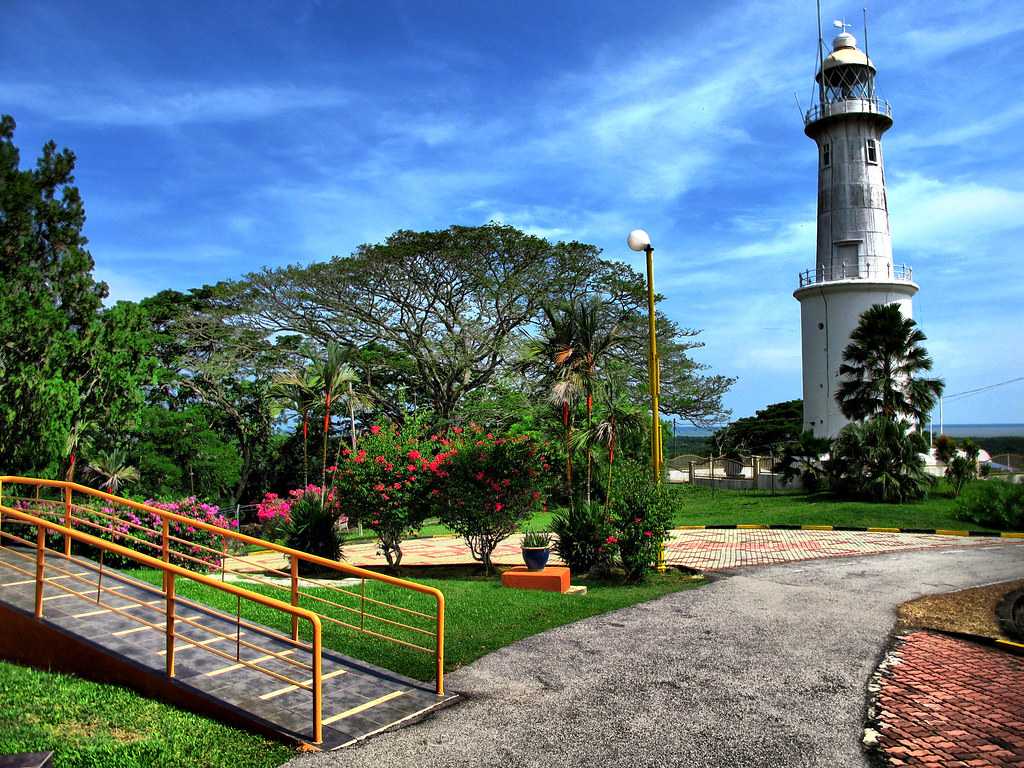
A great place to enjoy sunsets, the Altingsburg Lighthouse and its surrounding area offer a panoramic view of the Straits of Malacca. Though the lighthouse is out of bounds, it is located on Melawati Hill and is of Dutch origin.

The Kuala Selangor Historical Museum is based in the Bukit Melawati area, an hour away from Kuala Lumpur, Malaysia. Once the official residence of the District Officer, it showcases a vast collection of archaeological artefacts. The museum is located at the top of the hills offering fantastic views of town. There are unpaid guided tours available to explore the museum. The museum offers a great depth of knowledge in the early lives of the people and the administration of Kuala Selangor. There is a showcase of weapons, flags, etc. depicting the history of Kuala Selangor. It describes the rich kingdoms, affluent kings and the people there. The museum regularly hosts activities like eagle-feeding and coaster rides. Plenty of resident monkeys can be seen surrounding the museum.

The front of the Kuala Selangor Historical Museum has intense defence structures over the hills to guard the Melaka Strait, cannons, a lighthouse to direct the ships in the sea, and the Malaysian flag.  The park outside has breathtaking views of the Strait of Melaka. The museum is open between 9:30 am and 5:30 pm.

The Kuala Selangor Museum or the Sultan Alam Shah Museum, based near the Altingsburg Lighthouse, displays many artefacts, historical objects and relics, tombstones, weapons, and possessions from the Selangor Civil War. It is primarily focused on defining the power struggle between the State Sultanate, British and Dutch armies from 1867 to 1874. The museum is open from 9:30 am to 5:30 pm

Also known as the Virgin’s Grave or Keramat Rubiah, Makam Keramat Anak Dara is a shrine constructed to pay homage to a young girl by her parents. Placed on a small rocky hill of Kuala Selangor, Makam Keramat Anak Dara lies beside Lake Shima, popular for fishing and filled with lush green trees. The grave structure is entirely made of white marble padlocked in a gate. The grave can be reached by stepping on a steep wooden staircase. At the entrance of the shrine is a signboard with the folk tale about a young girl, Siti Aishah, who disappeared a night before her forced marriage. Her parents never found the girl but found her clothes hanging on the tree, so decided to build Makam Keramat Anak Dara to pay homage to their daughter.

Tanjung Keramat Fort is a historical attraction situated in Kampung Tanjung Keramat, a small village near the Selangor River. Also known as Bukit Belanda or Dutch Hill, the fort is situated on the hillock next to Lake Shima. The Fort was constructed by Sultan Ibrahim in 1830 to create a defensive position. However, the Dutch captured the fort and renamed it Fort Utrecht. The fort has a large rock on the entrance. Visitors can also take a look at the poisoned well inside the fort which was once filled with latex and bamboo juice and used to punish the guilty during the reign of Sultan Ibrahim. Cannons and large weapons from the 17th century and a picturesque garden surrounding the fort invite visitors to walk around. The fort is open at all times and is free to enter.

The Sri Shakti Temple, popularly known as the Sri Shakti Devasthanam is a magnificent Hindu temple established in the Bukit Rotan village. The only temple in the world with 51 Shakti illustrations crafted all over an acre of land, the temple is built keeping all the Hindu scriptures in mind, with sculptural technique, and Thundu Pattirippu Pathroba Pathram. The entrance is 18 feet high and is chiselled with lions, elephants, and other intricate sculptures and designs. The five-storeyed temple is crafted on 96 pillars which depicts the 96 Hinduism principles. The main deity of Goddess Shakti along with her 51 avatars is placed in the main hall, with architecture with different shlokas, and a massive brass bell in between.

The main highlight of the temple is the sanctum sanctorum which was constructed in eight phases. The sanctum sanctorum of the wall is decorated with 64 Sri Chakras and 64 Navratanas. Apart from this, four pillars depicting the four Vedas are embedded inside. The entrance of the temple is through a tower known as the Raja Gopuram which is 80 feet tall and crafted with elephant and lion motifs. The temple is encircled by a lush green beautiful garden where one can spot some herbs and traditional trees. The temple is open between 5:30 am and 12:30 pm and between 4:30 and 9:30 pm.

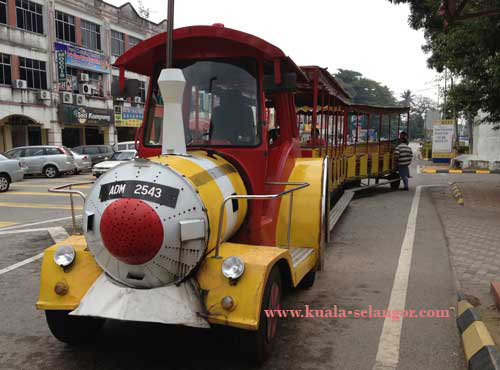
The Bukit Melawati Tram Ride is a splendid tourist tram facility enabling travel to Melawati Hill. The tram service has its pick-up point at the beautiful nature park. It offers some great views of Kuala Selangor as one goes uphill. It is mostly available on weekends and public holidays as one can drive up the hill on weekdays. Tickets are available at the tourist booth in front of the car park with a map outside for visitors to explore Kuala Selangor and its surroundings. The trams arrive and depart frequently, therefore the waiting time is just a few minutes. The tram makes pitstops at the Kota Malawati or Melawati Fort on the way to hop on or off with some shops and restaurants. The tram ride is a fun way to explore this area and get to the hilltop if visitors don’t enjoy hiking. It is an enjoyable experience for children. The destination hill has panoramic views of the Melaka Strait. The tram ride also leads up to a freshwater fish park that is included in the ticket and has a variety of fish present there. The fees for the tram ride are RM 5 per adult and RM 3 per child.

Nestled on the Melawati Hill in Kuala Selangor, the Melawati Fort is regarded as one of the highest hilltops in the area. Its history dates back to the late 1700s, during the reign of Sultan Ibrahim. Sultan Ibrahim built the Melawati Fort to protect the area from foreign invaders. The Fort offers a panoramic view of the beautiful Melawati River and the mangroves encircling it. The canons that were installed by the ruler stand tall to date. The fort also houses ancient gravesites and a flat stone that was used during beheadings. During the visit, one can catch a glimpse of several silver-leaf monkeys. The fort is open between 9:30 am and 4:30 pm and entry is free.

Sepang

Pekan Sepang is a small border town, famous for the Sepang International Circuit which lies in the western part of the town, where the Malaysian F1 Grand Prix and the Malaysian MotoGP Grand Prix are held. Malaysia’s largest airport Kuala Lumpur International Airport in the western part of the town.

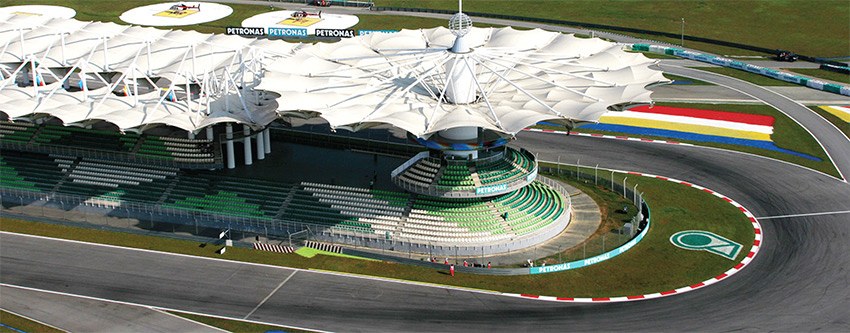
The Sepang International Circuit is a motorsport race track, located approximately 45 km south of Kuala Lumpur, and close to the Kuala Lumpur International Airport. It hosted the Formula One Malaysian Grand Prix between 1999 and 2017 and is also the venue for the Malaysian Motorcycle Grand Prix, the Malaysia Merdeka Endurance Race and other major motorsport events.

The circuit was designed by German designer Hermann Tilke, who would subsequently design other circuits in Shanghai, Sakhir, Istanbul, Marina Bay and Yas Marina. The Sepang International Circuit was constructed between 1997 and 1999 close to Putrajaya, the then-newly founded administrative capital of the country, with the intent of hosting the Malaysian Grand Prix. The Malaysian climate means the circuit is known for its unpredictable humid tropical weather, varying from clear furnace-hot days to tropical rainstorms. The track was completely resurfaced in 2016 with the support of Italian designer Dromo, with several corners reprofiled to emphasise mechanical, rather than aerodynamic grip. Notably, the final corner was raised by approximately 1 m, which officials claimed would force drivers to take a later apex and explore different racing lines through the hairpin.

The main circuit, normally raced in a clockwise direction, is 5.543 km long, and is noted for its sweeping corners and wide straights. The layout is quite unusual, with a 0.927 km long back straight separated from the pit straight by just one very tight hairpin. Other configurations of the Sepang circuit can also be used. The north circuit is also raced in a clockwise direction. It is the first half of the main circuit. The course turns back towards the pit straight after turn 6 and is 2.706 km long in total. The south circuit is the other half of the racecourse. The back straight of the main circuit becomes the pit straight when the south circuit is in use, and joins onto turn 8 of the main circuit to form a hairpin turn. Also run clockwise, this circuit is 2.609 km in length. The Sepang International Circuit also features kart racing and motocross facilities.

Located in the Chiling Fish Sanctuary, a fisheries research project undertaken by the Selangor State Fisheries Department, the Chiling Waterfall is famous for swimming and an adventurous jungle trek.

Composed of three breathtaking separate vertical waterfalls, the falls sit 400 m above sea level on the way to Fraser Hills and tumbles onto a plunge pool with colourful fish. It is bordered by a boulder resembling a Chinese guardian lion amidst wild orchids and bamboo. The trek leads one to the main lower falls. The upper fall is relatively quiet and a good place for a family picnic. The adventurous 2-km trek along the river to Chiling Waterfall starts from the Sanctuary Admin Office at the entrance and involves crossing the river six times. At some points of the trek, one will have to wade through the river to cross it. In total, it will take around one hour to reach the waterfall.  The falls are open from 8 am to 6 pm only on Fridays, Saturdays and Sundays and costs RM 1 per person.

The Paya Indah Wetlands is a wildlife sanctuary located in Dengkil town near Kuala Langat and is one of the best places in Malaysia to relax in the lap of nature. Stretched over an area of 450 hectares, the wetlands are divided into three major zones namely Conservation & Research Zone, Educational Zone, and Recreational Zone. The wetlands are home to 210 species of birds and animals and flora and fauna. The Paya Indah wetlands have a lot of activities to offer like animal feeding, cycling, kayaking, trekking, and bird watching. Visitors can also enjoy some cultural events held regularly in the Terengganu Malaysian show house of the Paya Indah wetlands. The Department of Wildlife & National Parks also has many accommodation sights like chalets, hostels, and camps for visitors to stay on pre-booking. Bird watching is free in Paya Indah wetlands between 7:30 am and 7 pm. Visitors can feed hippopotamus, crocodiles, pelicans, and porcupines under expert guidance. Daily feedings include Hippopotamus feeding at 10 am, pelican feeding at 10:30 am and porcupine feeding at 11:30 am while on weekends, visitors can feed crocodiles on weekends at 11 am. At the Paya Indah Lookout Tower, visitors can get a 360-degree view of the wetlands while the Typha Lake welcomes anglers and costs RM 10 per rod between 8 am and 6:30 pm every day, except Fridays. One can also rent a bicycle and explore the wetland park in a single go. Bicycles are rented with a charge of RM 5 for 2 hours and tricycles charges are RM 3 for 2 hours. Kayaks can be hired for lake tours either in groups or solo. Kayak charges vary from RM 6 to RM 7 for an hour. And this ends our Selangor visit. I didn’t realise how much this state has to offer and now I am seriously thinking of going there the next time we travel to Malayia. Our next state will be the Federal territories of Kuala Lumpur and Putra Jaya, both of which are enclosed within Selangor.

And that’s the end of our visit to Selangor. Our next state is the Federal Territories of Kuala Lumpur and Putrajaya, so watch this space!

In My Hands Today…

Oxtravels: Meetings with Remarkable Travel Writers – edited by Michael Palin

You have to go back to the 1980s and Granta’s bestselling travel issue to find a book that compares to OxTravels.

Introduced by Michael Palin, OxTravels features original stories from twenty-five top travel writers, including Michael Palin, Paul Theroux, Sara Wheeler, William Dalrymple, Patrick Leigh Fermor, Lloyd Jones, Rory Stewart, Jan Morris, Dervla Murphy, Rory MacLean, and others.

Each of the stories takes as its theme a meeting – life-changing, affecting, amusing by turn – and together they transport readers into a brilliant, vivid atlas of encounters.

This extraordinary collection is published in aid of Oxfam and all royalties from the book will support Oxfam’s work.

In My Hands Today…

Three Tigers, One Mountain: A Journey Through the Bitter History and Current Conflicts of China, Korea, and Japan – Michael Booth

There is an ancient Chinese proverb that states, “Two tigers cannot share the same mountain.” However, in East Asia, there are three tigers on that mountain: China, Japan, and Korea, and they have a long history of turmoil and tension with each other. In his latest entertaining and thought provoking narrative travelogue, Michael Booth sets out to discover how deep, really, is the enmity between these three “tiger” nations, and what prevents them from making peace. Currently China’s economic power continues to grow, Japan is becoming more militaristic, and Korea struggles to reconcile its westernized south with the dictatorial Communist north. Booth, long fascinated with the region, travels by car, ferry, train, and foot, experiencing the people and culture of these nations up close. No matter where he goes, the burden of history, and the memory of past atrocities, continues to overshadow present relationships. Ultimately, Booth seeks a way forward for these closely intertwined, neighboring nations.

An enlightening, entertaining and sometimes sobering journey through China, Japan, and Korea, Three Tigers, One Mountain is an intimate and in-depth look at some of the world’s most powerful and important countries.

Travel Bucket List: Malaysia Part 17 – Selangor Part 3

Petaling Jaya

Fondly known as PJ, Petaling Jaya was originally developed as a satellite township for Kuala Lumpur. It is part of the Greater Kuala Lumpur area and covers an area of approximately 97 sq km. It was granted city status on June 20, 2006. The city is surrounded by Kuala Lumpur to the east, Sungai Buloh to the north, Shah Alam, the capital of Selangor, Subang Jaya to the west, and Bandar Kinrara or Puchong to the south.

The city was developed during post-war British Malaya on a piece of 1,200-acre rubber estate, the Effingham Estate, around Old Klang Road to address the overpopulation of Kuala Lumpur in the 1950s. Since 1952, PJ has witnessed dramatic growth in terms of population size and geographical importance. The development of Petaling Jaya commenced in 1952 with the construction of 800 houses centred on the area known as Old Town today.

Petaling Jaya was planned to be a satellite town to prevent people from assisting the communists, hence, the earlier housing areas were fenced off from the surrounding area. The first two main roads built in Petaling Jaya were simply called Jalan 1 or Road 1 and Jalan 2 or Road 2. Road 1 was later named Jalan Templer while Road 2 was named Jalan Othman after Othman Mohamad, former Menteri Besar or Chief Minister of Selangor. Until the end of 1953, the town was administered by the Kuala Lumpur district officer. The Petaling Jaya Town Authority commenced administrating Petaling Jaya in 1954. Administratively and historically, it was considered part of Kuala Lumpur. However, Petaling Jaya ceased to be part of Kuala Lumpur when the latter became a Federal Territory, and at that point, it became a township in its own right within the state of Selangor.

Following a boundary realignment exercise in January 1997, parts of Petaling Jaya including Subang Jaya, USJ, Putra Heights, and Bandar Sunway were ceded to the newly formed Subang Jaya Municipal Council. In exchange, the MPPJ annexed Bandar Utama, Sungai Buloh, Bukit Lanjan, and Kota Damansara from the Petaling District Council, which disestablished itself after the cession. Due to the proximity of the city to the capital of Malaysia, Petaling Jaya has been the headquarters of many federal government departments.

A prominent landmark in PJ is the Kota Darul Ehsan arch, which symbolically marks the boundary between Kuala Lumpur and Petaling Jaya. This arch straddled the Federal Highway which was originally the only highway link between Petaling Jaya and Kuala Lumpur. However, many links now exist as alternatives to the congested Federal Highway. Close to the Kelana Jaya Line’s Taman Jaya station is the Petaling Jaya Museum, as well as the Thai Wat Chetawan temple, very popular amongst the Buddhist community. A short drive ahead is PJ State, the nickname for the Central Business District of Petaling Jaya with the landmark Menara MBPJ as a focal point. PJ State is more formally referred to as PJ New Town. Damansara is the main shopping hub of Petaling Jaya with many of the city’s shopping malls being located there.

The Forest Research Institute Malaysia is one of the chief institutes in tropical forestry research in the world housing a multiplicity of flora and fauna. The institute provides an opportunity for camping at Perah Campsite, trekking at natural trails and picnics at Sungei Kroh. Kepong Botanical Garden, the Ethnobotanical Garden and the Colours of FRIM allow visitors to explore. Other places worth visiting include the Research Gallery, Malay traditional houses, the Wetland area, the Arboretum and the Silicified Wood.

Situated in 1 Utama Shopping Centre, the Secret Garden is regarded as one of the largest rooftop gardens in the world. This garden sprawls across an area of about 30,000 sq ft and houses about 600 species of plants. The garden is divided into several zones based on the various species of plants. Some of the most attractive zones of the Secret Garden include the Rainforest Zone and the Victoria Amazonica Zone. The meandering pathways that are constructed between beds of plants are quite attractive, and artificial ponds and waterfalls accentuate the beauty of the place. Guided tours are also available during the first weekend of the month. The garden is open only on weekends and public holidays between 10 am and 10 pm.

Wat Chetawan is a popular Buddhist temple. A Theravada Buddhist Thai temple, with the Buddha Thammeen shrine inside, is a sight to behold, with its sparkling gold seat. People believe that this complex is built in the only true and original Thai style. Also known as the Chetawan Buddhist Temple, the temple was built in 1957 and officiated by the late King Bhumibol Adulyadej, the King of Thailand at the time. The temple is also the only Malaysian Siamese temple that has been chosen as the custodian of the Buddha sacred relics for all Malaysian Buddhists that are parts of the ancient relics discovered in Piprahwa, a village in Uttar Pradesh near the border of the Kingdom of Nepal in 1898 which were presented to King Chulalongkorn of Siam by the then British Viceroy of India, Lord Curzon.

The main shrine is heavily gilded in gold leaves and intricately decorated with multi-coloured glass tiles. The main prayer hall houses several images of Buddha while the pavilion features the four-faced God, Phra Phrom and the Bodhisattva of Compassion, Guan Yin. Another prayer hall pays tribute to abbots with Malay titles that marked their northern Malay Peninsula and southern Thai origins.

Muzium Coklat is also known as the Chocolate Museum where visitors can learn all about the history of chocolate and can watch how chocolate is processed and prepared, taste samples and even buy some to take back home.

Also called the Muzium Petaling Jaya, the Petaling Jaya Museum showcases the history and development of Petaling Jaya. The museum building was originally established in 1980 as a children’s reading house. In 1992, the reading house ceased to function due to its location and the building was taken over by the environment and development department. It was then transformed into a nature education centre and in April 2007, the building was turned into a museum. Construction and renovation work were completed in October 2007 and the museum was officially opened on November 12, 2007. It was later closed for renovation and reopened again in April 2016. The museum showcases the historical development of Petaling Jaya and is housed in three sections: the origin of Petaling Jaya, the administration of Petaling Jaya, and the expansion of Petaling Jaya. The museum is open daily except Fridays and public holidays from 9 am to 5 pm and admission is free. The museum is within walking distance of the Taman Jaya LRT Station.

Batu Caves

Batu Caves, a Mogote type of karst landform, has a series of caves and cave temples in Gombak. It takes its name from the Malay word batu, meaning rock. The cave complex is one of the most popular Hindu shrines outside India, is dedicated to Lord Murugan, and is the focal point of the Tamil festival of Thaipusam in Malaysia. The caves are also referred to as the 10th cave or hill for Murugan, as there are six important holy shrines in India and four more in Malaysia. The three others in Malaysia are Kallumalai Temple in Ipoh, Tanneermalai Temple in Penang, and Sannasimalai Temple in Malacca.

The limestone forming Batu Caves is said to be around 400 million years old, with some of the cave entrances used as shelters by the indigenous Temuan people. As early as 1860, Chinese settlers began excavating guano to fertilise their vegetable patches. However, they became famous only after the limestone hills were recorded by colonial authorities in 1878.

The cave was promoted as a place of worship by K. Thamboosamy Pillai, an Indian Tamil trader. He was inspired by the vel-shaped entrance of the main cave and was inspired to dedicate a temple to Lord Murugan within the caves. In 1890, Pillai, who also founded the Sri Mahamariamman Temple in Kuala Lumpur, installed the consecrated statue of Sri Murugan Swami in what is today known as the Temple Cave. Since 1892, the Thaipusam festival in the Tamil month of Thai, which falls in late January/early February, has been celebrated there.

Wooden steps up to the Temple Cave were built in 1920. In the 1930s, the stairs began to show signs of wear and tear, and it was proposed to build two flights of concrete stairs to the upper caves. The proposal was forwarded in 1939, and work was completed in 1940. Currently, there are 272 concrete steps. Of the various cave temples that comprise the site, the largest and best known is the Temple Cave, so named because it houses several Hindu shrines beneath its high vaulted ceiling.

In August 2018, the 272 steps were painted, with each set of steps painted in a different range of colours. At the base of the hill are two more cave temples, the Art Gallery Cave and the Museum Cave, both of which are full of Hindu statues and paintings. This complex was renovated and opened as the Cave Villa in 2008. Many of the shrines relate the story of Lord Murugan’s victory over the demon Soorapadman. An audio tour is available to visitors.

The Ramayana Cave is situated to the extreme left as one faces the sheer wall of the hill. On the way to the Ramayana Cave, there is a 15-meter-tall statue of Lord Hanuman and a temple dedicated to him. The consecration ceremony for the temple was held in November 2001. The Ramayana Cave depicts the story of Rama in the manner of a chronicle along the irregular walls of the cave. A 43 m high statue of Lord Murugan was unveiled in January 2006, having taken three years to construct. It is the second-tallest Murugan statue in the world.

The Batu Cave hill and its numerous caverns contain a wealth of plants and animals, many of which are specialised for limestone environments. A total of 269 species of vascular plants have been recorded from the site, including 56 species which are found only on limestones. Various undeveloped caves contain a diverse range of cave fauna, including some unique species. The caves have some 21 species of bats, including several species of fruit bats and is also well known for its numerous long-tailed macaques, which visitors feed — sometimes involuntarily. These monkeys may also pose a biting hazard to tourists. especially small children as they can be quite territorial.

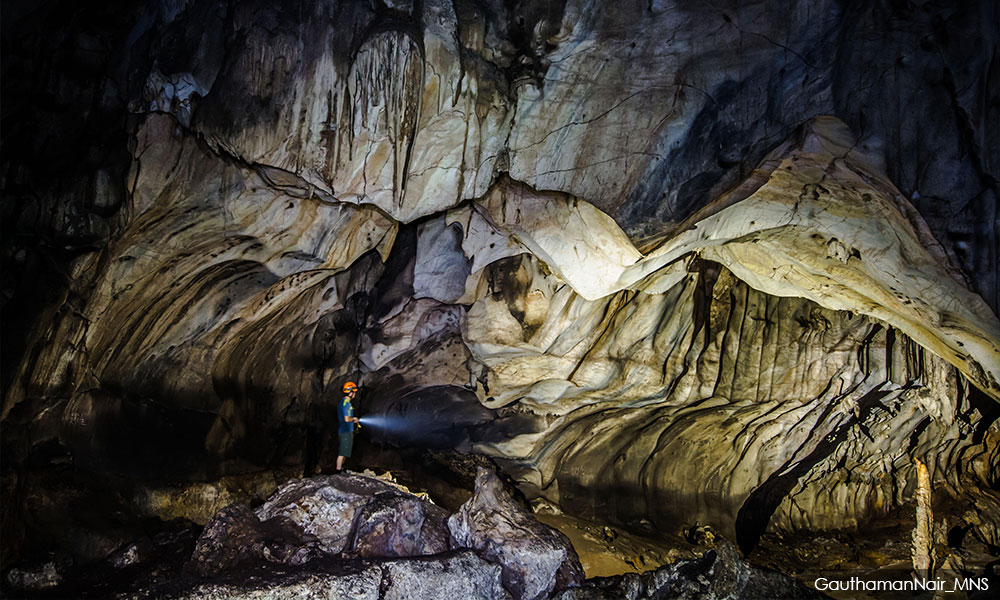
Below the Temple Cave is the Dark Cave, with speleothems and many animals found nowhere else. It is a two-km network of relatively untouched caverns. Stalactites jutting from the cave’s ceiling and stalagmites rising from the floor form intricate formations such as cave curtains, flowstones, cave pearls, and scallops which took thousands of years to form. To maintain the cave’s ecology, access is restricted. The Malaysian Nature Society organises regular educational and adventure trips to the Dark Wet Caves.

Batu Caves has also been the centre of rock climbing development in Malaysia for the past 10 years. The caves offer more than 160 climbing routes scattered all around and are easily accessed, as most crags start from ground level. These climbing routes often start from the Northeastern side of the cave complex whereas the staircase and temple entrance face the South. This Northeastern area is known as the Damai caves. Abseiling and spelunking trips can be organised with some local adventure companies.

Batu Caves serves as the focus of the Tamil community’s yearly Thaipusam festival. They have become a pilgrimage site not only for Malaysian Hindus, but Hindus worldwide. A procession begins in the wee hours of the morning on Thaipusam from the Sri Mahamariamman Temple in Kuala Lumpur leading up to Batu Caves as a religious undertaking to Lord Murugan lasting eight hours. Devotees carry containers containing milk as an offering to Lord Murugan either by hand or in huge decorated carriers on their shoulders called Kavadis. The kavadi may be simple wooden arched semi-circular supports holding a carrier foisted with brass or clay pots of milk or huge, heavy ones which may rise to two metres, built of bowed metal frames which hold long skewers, the sharpened end of which pierce the skin of the bearers torso. The kavadi is decorated with flowers and peacock feathers imported from India. Some kavadi may weigh as much as a hundred kilograms.

After bathing in the nearby Sungai Batu or Rocky River, the devotees make their way to the Temple Cave and climb the flights of stairs to the temple in the cave. Devotees use the wider centre staircase while worshippers and onlookers throng up and down those balustrades on either side. When the kavadi bearer arrives at the foot of the 272-step stairway leading up to the Temple Cave, the devotee has to make the arduous climb. Priests attend to the kavadi bearers. Consecrated ash is sprinkled over the hooks and skewers piercing the devotees’ flesh before they are removed. No blood is shed during the piercing and removal.

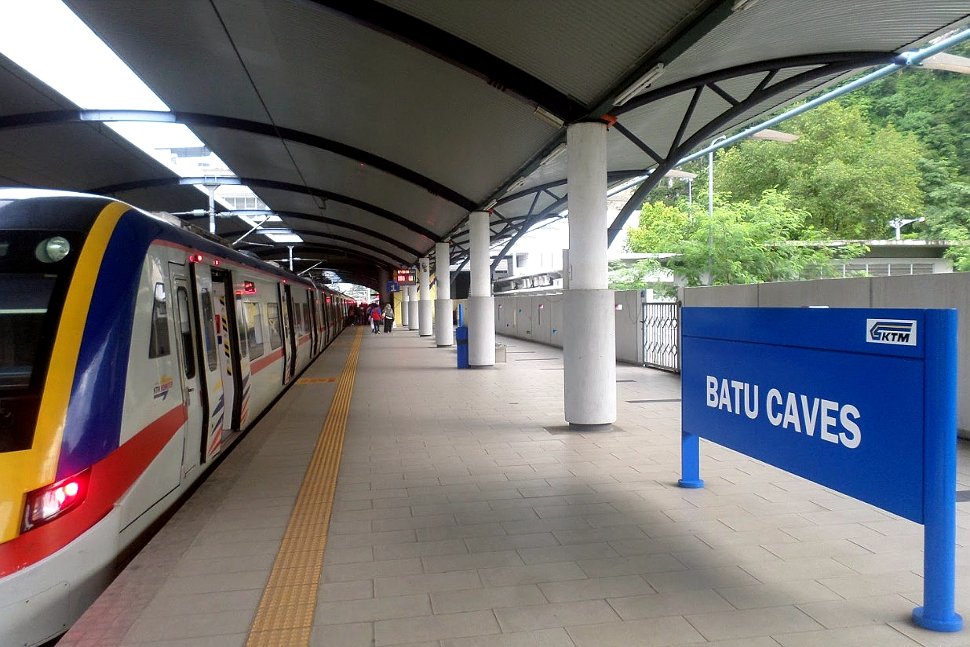
In the last decade, the surrounding area has changed from a small village to industrial estates, new housing, and retail. There is also an elevated flyover across the highway. A new 515-million-ringgit KTM Komuter rail extension from Sentul to Batu Caves began operations in July 2010, serving the rebuilt Batu Caves Komuter station.

The cave is open from 6 am to 9 pm and the best and fastest way to reach the cave from Kuala Lumpur is via the commuter train which stops at the Batu Caves Komuter station opposite the cave complex. The fare from KL Sentral to Batu Caves is around RM 2.6 per person. One can also take a taxi which costs between RM 30 to RM 40, but depending on which part of KL one is coming from, take quite a bit of time, given the traffic.

Ampang Jaya

Commonly known as Ampang, Ampang Jaya is located just outside the eastern border of Kuala Lumpur Federal Territory. Ampang was one of the earliest areas in the Klang Valley to be opened for tin mining. The name Ampang is derived from the old spelling of the Malay word empangan or ampangan, which means a dam; the place referred to the miners’ dams. A road was built to connect Ampang to Kuala Lumpur which is today’s Jalan Ampang.

Between colonial rule and February 1974, Ampang was part of greater Kuala Lumpur in Selangor. Following the creation of the Federal Territory of Kuala Lumpur, Ampang was split into two; the western part, located within the Federal Territory, became Ampang Hilir, and the eastern part, which remained in Selangor, became part of Hulu Langat or Kajang.

During the height of the Malayan Emergency in the 1950s, the British established the Ampang New Village, which became one of the largest Chinese settlements in the Klang Valley. The Kau Ong Yah Lam Thian Kiong Temple in Ampang New Village is famous for the 9 Emperor Gods festival, which is celebrated annually on the 9th month of the Chinese lunar calendar, between late September and early October.

Ampang Jaya borders the remainder of Hulu Langat District in the east and south, the Federal Territory of Kuala Lumpur in the west, the Gombak District in the north, and a short border with Bentong in Pahang in the northeast.

The Zoo Negara or National Zoo is located on 110 acres of land in Ulu Klang in Gombak. It was officially opened on November 14, 1963, by the country’s first prime minister Tunku Abdul Rahman. The zoo is managed by the Malaysian Zoological Society and is home to 5,137 animals of 476 different species. When it was opened, it was known as the Zoo in the Jungle due to the lush vegetation that dominated the region. The zoo welcomed its millionth visitor on 14 November 1966, just three years after opening, and by 1986, the zoo was attracting over 1 million visitors per year. The zoo remained surrounded by dense tropical forests until the late 1970s when Kuala Lumpur experienced rapid population growth fueled by an economic boom. Nearby Ulu Klang was targeted for large-scale residential development to accommodate the expanding urban population, resulting in habitat loss in formerly wild areas surrounding the zoo. In the late 1990s and early 2000s, there were plans to move the zoo to other locations in Selangor. However, the plans were largely unpopular among the public and it was decided not to relocate the zoo.

The Reptile Park has both indoor and outdoor exhibits and includes saltwater crocodiles, false gharials, and dwarf crocodiles as well as tortoises and terrapins, including Aldabra giant tortoises which are the second largest tortoise species in the world and local Tutong or river terrapins. The Amphibian World center at the Reptile Park has a variety of frogs and toads that originate from various habitats in Malaysia. In 2014, a male and female giant panda pair named Xing Xing and Liang Liang went on public display at an air-conditioned, purpose-built Giant Panda Conservation Centre next to tram stop T5. The pandas are on a 10-year loan to Malaysia. On 26 May 2018, Yi Yi, a four-month-old female panda went on show for the first time. The cub is the second born in Malaysia. The cub’s sister, Nuan Nuan, was born in August 2015 and sent back to China in 2017 as part of Beijing’s agreement with Malaysia that cubs born in captivity must be sent back to China at the age of two. The third giant panda cub was born in June 2021.

The zoo is home to three Asian elephants: two females, Siti who was born in 1979 in Fraser’s Hill; Sibol, who was born in 1978 at Temerloh and a male, Teriang, who was born in 1980. The trio have been in the zoo since they were very young. This aviary holds over a hundred species of birds from all around the world. The Birds Photo Corner in the aviary lets visitors take souvenir photos with a variety of macaws and cockatoos on weekends. The Nocturnal Exhibits which are indoor, are home to fruit bats, the largest bat in the world, which are sometimes called flying foxes, as well as mousedeer. The Australian Plain is home to emus, agile wallabies, red kangaroos, and red-legged pademelons.

Children’s World houses a variety of mostly domestic animals including goats, rabbits, ducks, and chickens running around freely, as well as parrots and guinea pigs. It includes a mini-rainforest with a variety of plants and insects, as well as a small aviary, fish pond, miniature horse barn, and playground. The Bear Complex is home to several types of bears including Asian black bears, brown bears, and sun bears. The Savannah Walk is one of the largest open-concept exhibits in the zoo and is home to giraffes, plains zebras, ostriches, white rhinos, sable antelopes, and scimitar oryx. Zoo Negara’s Tunku Abdul Rahman Aquarium is the first ecological-based freshwater aquarium that highlights the Malaysian river and wetlands. The aquarium exhibits show the ecosystem or the habitats of Malaysian river systems in the upper, middle, and lower estuarine zones and finally, the sea. The aquarium features fish that are commonly seen in Malaysian rivers, as well as rare and endangered species including invertebrates such as crabs, prawns, corals, and aquatic insects.

Zoo Negara has also built an insect zoo where more than 200 species of insects from around the world are housed. Opened in 2010, the Hornbill Centre is a breeding centre houses 7 species of hornbills native to Malaysia, including great hornbills, Oriental pied hornbills, rhinoceros hornbills and wrinkled hornbills. Other attractions include sea lions, macaques and macaws that are part of a Multi-Animal Show that is shown twice daily. Train rides and guided tours are available on weekends.

The Mini Bee Museum is located at the heart of Zoo Negara and helps educate visitors about the many types of bees in the country. The Multi-Animal Photo Corner is located by the zoo’s main entrance and is opens on weekends. Visitors can have their pictures taken with snakes, miniature horses and birds.

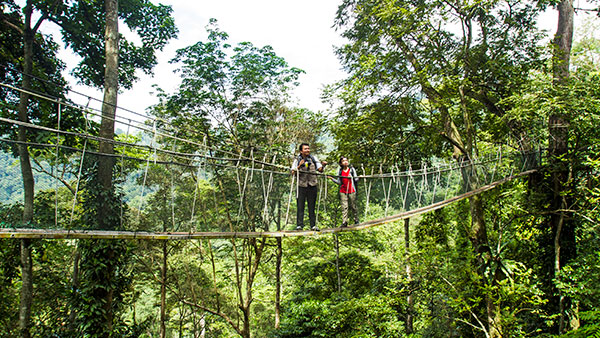
The Ampang Recreational Forest or Taman Rimba Ampang in Malay is a lowland dipterocarp forest that takes its name from the Ampang River, which flows through the forest. The forest is one of the most popular nature sites in the Klang Valley with the stream and shady playgrounds popular for family outings on weekends. In 2005 the forest was included in the much-larger Selangor State Park. Numerous species of plants and animals can be seen in the forest with the forest frequented by birdwatchers. Several bridges, pedestrian walkways, toilets, playgrounds and other facilities have been built in the park over the years. A nominal fee is charged for the car park and entry to the forest. The park can be reached by taking a train to the Ampang LRT station and then taking a taxi to the park.

Nirvana Memorial Park is a private cemetery and mortuary with the longest dragon statue in Malaysia. It is 1,000 feet long and fully air-conditioned inside. It was established in 1985 by David Kong and is touted as the largest funeral service in Southeast Asia and also serves as a pet cemetery.