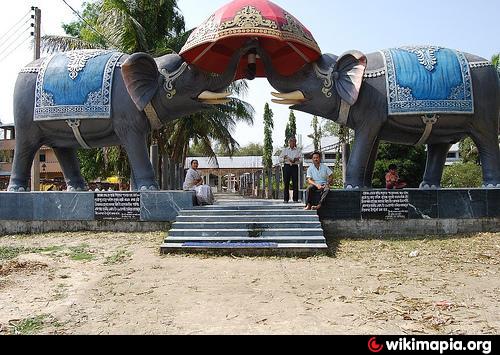
With seven National Parks, Assam now has the third most National Parks in India, after the 12 in Madhya Pradesh and nine in the Andaman and Nicobar Islands and so this part will focus on the National Parks in Assam. We will start from the west and make our way eastwards.

Raimona National Park
Located in the Saralpara Forest Division of Kojrajhar, the Raimona National Park is one of Assam’s newest national parks which was declared a national park on 5 June 2021 on the occasion of World Environment Day. The park is part of a contiguous forest patch with an area of 422 sq km covering the northern part of the notified Ripu Reserve Forest, which in turn forms the westernmost buffer to the Manas Tiger Reserve in the southern foothills of Eastern Himalaya Biodiversity Hotspot. The Sankosh River forms a boundary on the west along the boundary with West Bengal, Bhutan lies to the north and the Saralbhanga River lies to the east. Historically the area was a part of the migratory route of the faunal species from Himalayan Mountain, Indo-Malayan and Indo-Chinese realms towards the west and Peninsular Indian realm species to the east. It shares contiguous forest patches of Phibsoo Wildlife Sanctuary and Jigme Singye Wangchuck National Park in Bhutan, creating a transboundary conservation landscape of more than 2,400 sq km.
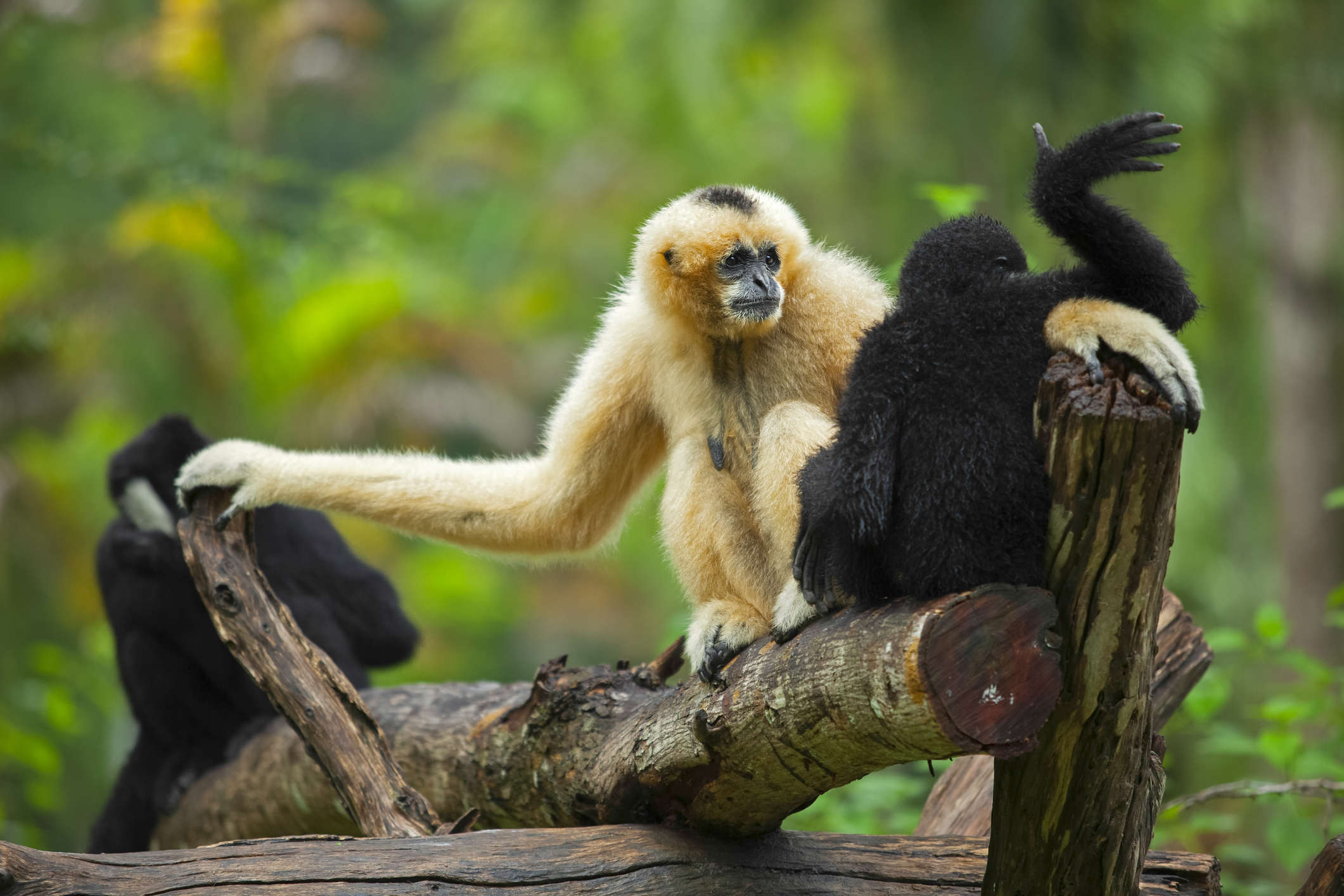
The Raimona National Park is famous for the Golden Langur, an endemic species which has been named the mascot of the Bodoland region. It also has the Asian elephant, the Royal Bengal Tiger, the Clouded Leopard, the Indian Gaur, the Wild Water Buffalo, the Spotted Deer, the Hornbill and more than 150 species of butterflies, 170 species of birds and 380 varieties of plants and orchids.

Manas National Park
The Manas National Park is many things – a UNESCO Natural World Heritage site, a Project Tiger Reserve, an Elephant Reserve and a Biosphere Reserve. The only tiger reserve in Assam, the national park is famous for the rare golden langur and the red panda and is known as one of the best-kept national parks in India.
Located in the Himalayan foothills, it is contiguous with the Royal Manas National Park in Bhutan and is known for its rare and endangered endemic wildlife such as the Assam roofed turtle, hispid hare, golden langur and pygmy hog and is famous for its population of the wild water buffalo. The name of the park comes from the Manas River, a major tributary of the Brahmaputra River, which passes through the heart of the national park. Five other smaller rivers also flow through the national park which lies on a wide, low-lying alluvial terrace spreading out below the foothills of the outer Himalaya. The Manas river also serves as an international border dividing India and Bhutan.
On an area of 360 sq km, the Manas National Park was declared a wildlife sanctuary on 1 October 1928 and the Manas Bio Reserve was created in 1973. Before the declaration of the sanctuary, it was a reserved forest called Manas R.F. and North Kamrup R.F used by the Cooch Behar royal family and the Raja of Gauripur as a hunting reserve. It was declared a World Heritage Site in 1985 after being increased to 391 sq km in 1951 and 1955 and the Kahitama, the Kokilabari and the Panbari Reserved Forests were added in 1990 to form the Manas National Park which was then declared a World Heritage Site in 1992 and increased to 950 sq km in 2008. On 21 June 2011, it was removed from the List of World Heritage Sites in Danger and was commended for its efforts in preservation. There is only one forest village, Pagrang, in the core of the national park with 56 other villages surrounding the park and many more fringe villages are directly or indirectly dependent on the park.

The park is divided into three ranges. The western range is based at Panbari, the central range at Bansbari and the eastern range at Bhuiyapara. The ranges are not well connected, while two major rivers need to be forded in going from the centre to the Panbari, there is a rough trail, the Daimari road connecting the centre to the eastern range. Most visitors come to Bansbari and then spend some time inside the forest at Mathanguri on the Manas river at the Bhutan border.
Manas is recognised not only for its rich biodiversity but also for its spectacular scenery and natural landscape which includes a range of forested hills, alluvial grasslands and tropical evergreen forests. It’s home to India’s second-largest tiger population and also famous for its population of wild water buffalo. Manas harbours the maximum number of endangered species from India as listed in the IUCN Red Book.
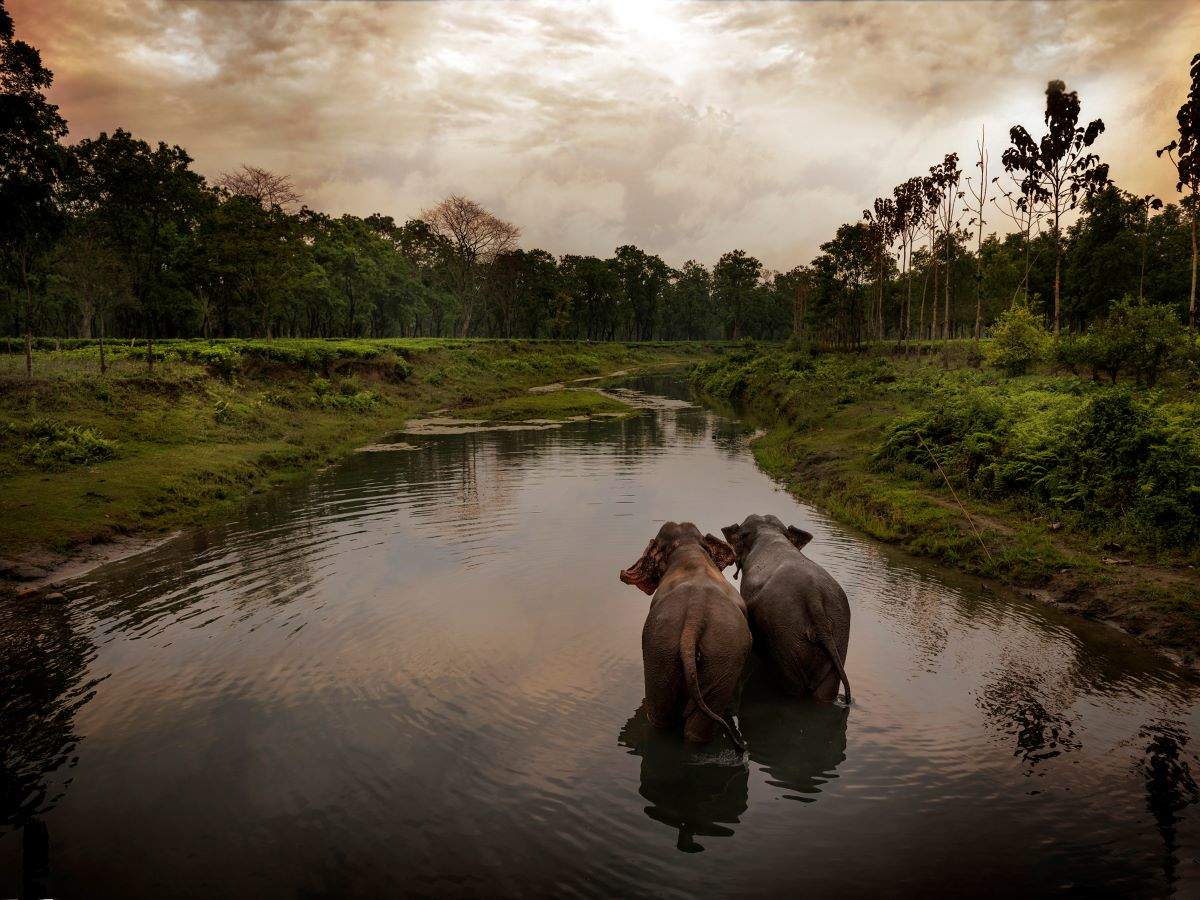
The park is divided into two biomes, the first one is the Grassland Biome that has animals like the Pygmy Hog, the Indian Rhinoceros, the Bengal Florican, and the Wild Asian Buffalo. The second biome is the Forest Biome that has animals like the Slow Loris, the Capped Langur, the Sambar, the Great Hornbill, the Malayan Giant Squirrel and many others. The park boasts 55 species of mammals, 380 species of birds, 3 species of amphibians and 50 species of reptiles. One can easily spot rhinos and tigers while sitting on an elephant which can be arranged by forest officials from Mathanguri during which one can see tea pickers during the tea season. The best time to see these activities is from October till the first week of December and again from mid-March onwards.
The summer palace of the King of Bhutan lies beyond the bend of the Manas River and lies on the Bhutan side of the Manas National Park. One needs to hire a boat to cross over to the Bhutan side after taking prior permission and stroll about a km to get to the summer palace, which is guarded by a solitary watchman.
The Bodo tribe, indigenous to Assam have set up their Eco-tourism Society in the National Park where they perform their traditional dances and music and visitors can get to see local handlooms and textile woven by the women. Some villagers also take the visitors out on foot safaris and can even offer one a night stay in the forest.
A boat ride in an eight-person boat will cost INR 8000 and a safari will set Indians back by INR 120 per person and INR 750 per person for foreigners. Still camera charges for Indians and foreigners are INR 50 while for a video camera, Indians need to pay INR 100 while foreigners pay INR 500. A typical day for a visitor in the sanctuary will start early around 5 am with a 1-2 hour elephant ride, after which one can stroll on the river banks. After a hearty breakfast, a visit to the Manas Maozigendri Ecotourism Society is a must where one can have a traditional Bodo style lunch and enjoy their music and dance. After lunch, it’s time for river rafting which will take 2-3 hours and one can end the day by taking in the jungle safari to enjoy bird watching and catch wild animals in their homes.

Orang National Park
Located on the northern bank of the Brahmaputra River in the Darrang and Sonitpur districts, the Orang National Park covers an area of 79.28 sq km. It was established as a sanctuary in 1985 and declared a national park in 1999. With rich flora and fauna, including the great Indian rhinoceros, the pygmy hog, the Asian elephant, the wild water buffalo and the Bengal tiger, it is the only stronghold of the rhinoceros on the north bank of the Brahmaputra river. The park has a chequered history of habitation. Up to 1900, it was inhabited by local tribes who abandoned the area because of an epidemic disease. In 1919 the British declared it the Orang Game Reserve and was established as a wildlife sanctuary in 1985 and declared as National Park in 1999.
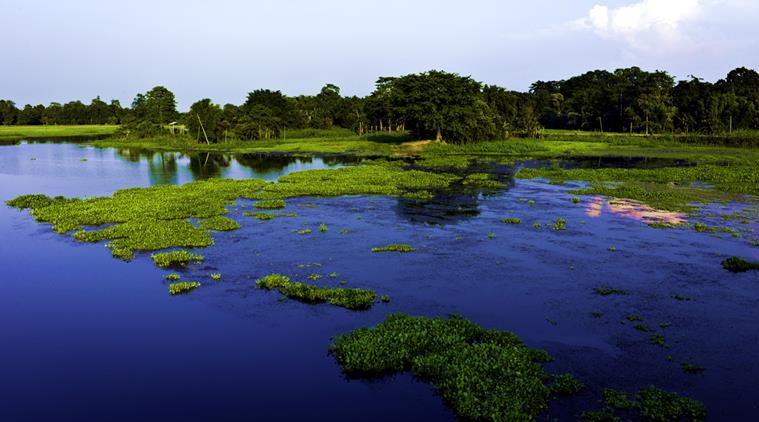
During the monsoon season, the park becomes a veritable flood plain with the many streams overlapping each other and these flood plains constitute twelve wetlands in the park, apart from the 26 man-made water bodies. The park is thus formed of alluvial flood plains of the many rivers and is an integral part of the Indo-Burma biodiversity hotspot. The park has been categorized into the Eastern Himalayan Moist Deciduous Forest in an area of 15.85 sq km, the Eastern Seasonal Swamp Forest with an area of 3.28 sq km, the Eastern Wet Alluvial Grassland with an area of 8.33 sq km, the Savannah Grassland on an area of 18.17 sq km, the Degraded Grassland in 10.36 sq km, the Water Body of 6.13 sq km, the Moist Sandy area with an area of 2.66 sq km and the Dry Sandy area with an area of 4.02 sq km. It is bounded on its south and east by islands and spill channels of the river, but the flat alluvial land is seen distinctly as two terraces; the lower terrace is of recent origin on the bank of the Brahmaputra river and the other is the upper terrace to the north, separated by a high bank running through the park. The whole park is encircled by inhabited villages thus subjecting it to biotic pressure with fox holes built by the villagers on its west.

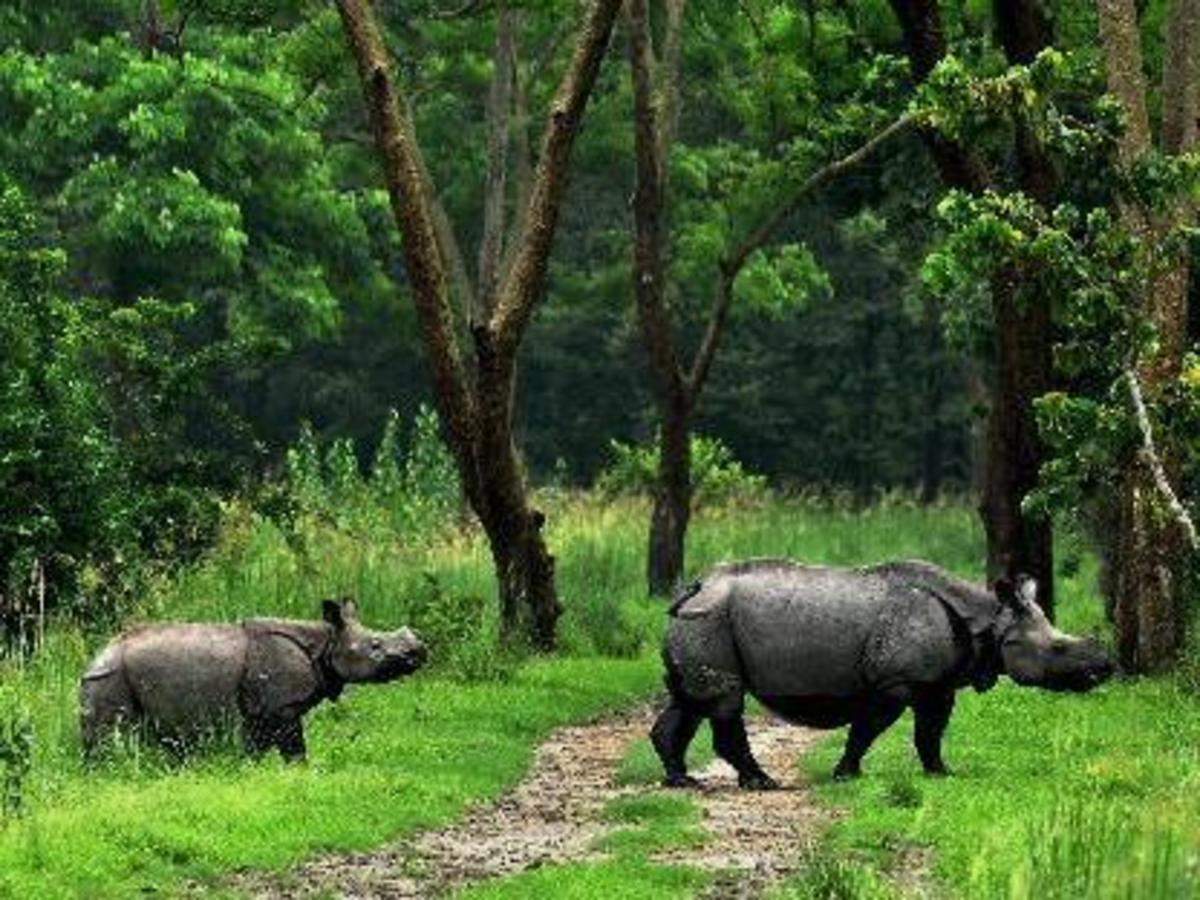
The park will pleasantly surprise visitors with its rich variety of animals, birds and fishes and a similar abundance of flora. The park is known for its rhinoceros conservation and has The Great Indian Rhinoceros and the Bengal Tiger. Apart from rhinos, one will find here the Great Indian Rhinoceros, porcupines, Bengal tigers, civets, water buffaloes, leopards and many more. A huge number and types of fish are also present here. Along with this one can spot several birds in the park such as kingfishers, fishing eagles, woodpeckers, mallards, white pelicans and so on. A safari into the park will let one experience the refreshing beauty of the surroundings and vegetation as well as the enjoyment of watching such a variety of wildlife. The park is also an important breeding ground for various fishes. The best time to visit the Orang National Park is between November to April as winters are cool and pleasant. Visitors, however, need permission from authorities in advance to visit the park.

Kaziranga National Park
Hosting two-thirds of the world’s great one-horned rhinoceroses, the Kaziranga National Park is a UNESCO World Heritage Site. It is also home to the highest density of tigers among protected areas in the world and was declared a Tiger Reserve in 2006. The park is also home to large breeding populations of elephants, wild water buffalo, and swamp deer and is recognised as an Important Bird Area by BirdLife International for the conservation of avifaunal species. Located on the edge of the Eastern Himalaya biodiversity hotspot, the park combines high species diversity and visibility. The national park is a vast expanse of tall elephant grass, marshland, and dense tropical moist broadleaf forests, crisscrossed by four major rivers, including the Brahmaputra, and includes numerous small bodies of water. The park celebrated its centennial in 2005 after its establishment in 1905 as a reserve forest.
The history of Kaziranga as a protected area can be traced back to 1904, when Mary Curzon, the wife of the Viceroy of India, Lord Curzon of Kedleston, visited the area. After failing to see a single rhinoceros, for which the area was renowned, she persuaded her husband to take urgent measures to protect the dwindling species which he did by initiating planning for their protection and on 1 June 1905, the Kaziranga Proposed Reserve Forest was created with an area of 232 sq km. Over the next three years, the Park area was extended by 152 sq km, to the banks of the Brahmaputra River and in 1908, was designated a Reserve Forest. In 1916, it was redesignated the Kaziranga Game Sanctuary and remained so till 1938, when hunting was prohibited and visitors were permitted to enter the park. It was renamed the Kaziranga Wildlife Sanctuary in 1950 to rid it of its hunting connotations.

In 1954, the Assam (Rhinoceros) Bill, which imposed heavy penalties for rhinoceros poaching was passed and in 1968, the Assam National Park Act of 1968 was passed which declared Kaziranga a designated national park and the 430 sq km park was given official status by the central government on 11 February 1974. In 1985, Kaziranga was declared a UNESCO World Heritage Site for its unique natural environment.
Kaziranga has been the target of several natural and man-made calamities in recent decades including floods caused by the overflow of the river Brahmaputra, leading to significant losses of animal life and encroachment by people along the periphery has also led to a diminished forest cover and a loss of habitat.
Although the origin of the name Kaziranga is not certain, there are many possible explanations derived from local legends and records. According to one legend, a girl named Rawnga, from a nearby village, and a youth named Kazi, from Karbi Anglong, fell in love. This match was not acceptable to their families, and the couple disappeared into the forest, never to be seen again, and the forest was named after them. According to another legend, Srimanta Sankardeva, the sixteenth-century Vaisnava saint-scholar, once blessed a childless couple, Kazi and Rangai, and asked them to dig a big pond in the region so that their name would live on. Kaziranga also could mean the Land of Red Goats or Deer, as the word Kazi in the Karbi language means goat, and Rangai means red. Some historians believe, however, that the name Kaziranga was derived from the Karbi word Kajir-a-rong, which means the village of Kajir. Among the Karbis, Kajir is a common name for a girl child, and it was believed that a woman named Kajir once ruled over the area. Fragments of monoliths associated with Karbi rule are found scattered in the area that seems to bear testimony to this assertion.
The park is approximately 40 km in length from east to west, and 13 km in breadth from north to south and covers an area of 378 sq km, with approximately 51.14 sq km lost to erosion in recent years. The park area is circumscribed by the Brahmaputra River, which forms the northern and eastern boundaries, and the Mora Diphlu, which forms the southern boundary. Other notable rivers within the park are the Diphlu and Mora Dhansiri. Kaziranga has flat expanses of fertile, alluvial soil, formed by erosion and silt deposition by the Brahmaputra and the landscape consists of exposed sandbars, riverine flood-formed lakes known as beels, which make up 5% of the surface area, and elevated regions known as, chapories, which provide retreats and shelter for animals during floods. It is one of the largest tracts of protected land in the sub-Himalayan belt, and due to the presence of highly diverse and visible species, has been described as a biodiversity hotspot.

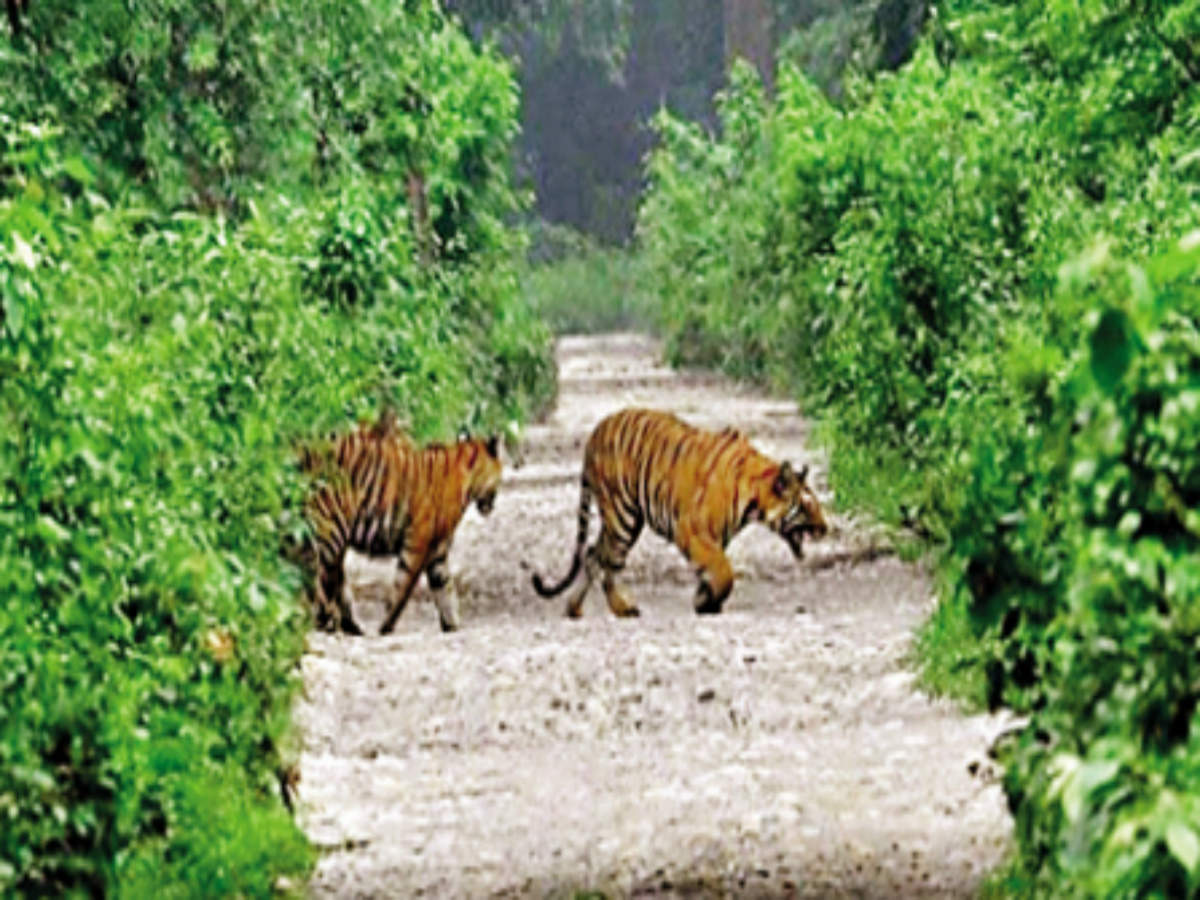
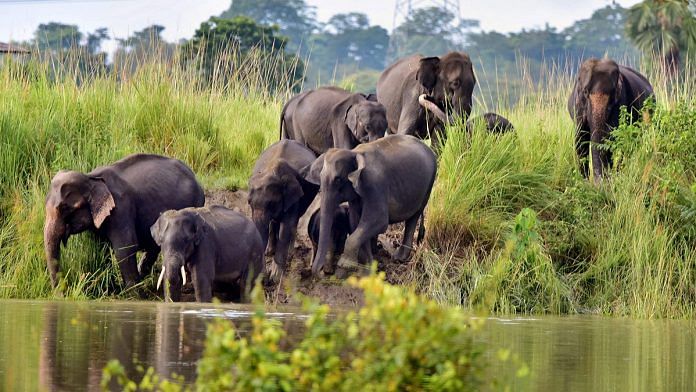
In the park, safaris can be undertaken both during the day and night during the open tourist season. Elephant rides are also very popular among visitors and hiking is prohibited. Kaziranga has a total of 35 mammalian species, out of which 15 are threatened. The big-five of Kaziranga is the collective name given to the group of the one-horned rhino, the wild water buffalo, the swamp deer, the Asian elephant and the royal Bengal tiger. The rivers within Kaziranga are also home to the endangered Ganges Dolphin. The national park is divided into 4 zones: Kaziranga Range, Western Range, Eastern Range and Burapahar Range. One safari of one zone is allowed at a time. While the Western zone is considered good for elephant watching, safaris and rhino sightseeing, the Eastern zone is better for watching water birds.
The Kaziranga National Park is between 1st November and 30th April each year, but the best time to visit is after the second week of January as the grass levels would have reduced and there would be clear visibility. The entry to the part is INR 100 per person for Indians and INR 650 for foreigners while the cost of an elephant ride is INR 750 per person for Indians and INR 1250 per person for foreigners and the booking times for the elephant safari is between 5:30 to 7:30 am and then again between 3 – 4 pm. To go on a jeep safari, everyone will need to pay INR 300 as toll charges per trip per vehicle and the jeep safari booking is open between 7 to 10 am and then from 1:30 pm till the sunsets.
Nameri National Park
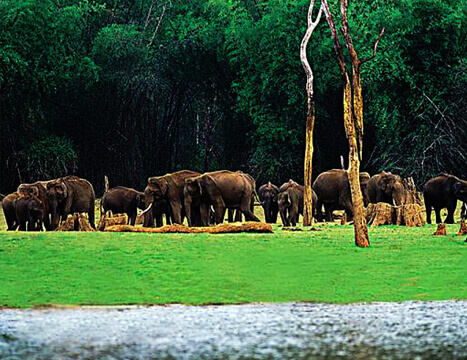
Located on the foothills of the eastern Himalayas about 35 km from Tezpur, the Nameri National Park is about 9 km from Chariduar, the nearest village and shares its northern boundary with the Pakhui Wildlife Sanctuary in Arunachal Pradesh and together they constitute an area of over 1,000 km of which Nameri has a total area of 200 km. The park was declared as Tiger Reserve around 1999 – 2000 and is the second Tiger reserve in Assam after the Manas Tiger Reserve. Nameri National Park has two core areas: the Nameri National Park and the Sonai – Rupai Wildlife, a satellite core of the Tiger Reserve. The river Jia – Bhoroli is the lifeline of Nameri, which flows along the southern boundary of the park from the northwest to the southeast. In the east, the river Bor – Dikorai, a tributary of the river Jia – Bhoroli, flows along the southern boundary from the northeast to the southwest.
The park boasts of a dense elephant population and other animals that the park includes tigers, sambars, leopards, Bengal foxes, mouse deer and jungle cats. Some rare Himalayan plant varieties are also found seen. The park is popularly referred to as The Last House of White Winged Wood Duck and one can swim, river raft and sunbathe here. The park is open between 10 am and 5 pm daily and has an entry fee of INR 50 for Indians and INR 250 for foreigners.

Dibru Saikhowa National Park
Boasting a rich collection of flora and fauna, many of them endangered, the Dibru Saikhowa National Park is one of the few remaining protected sites in the Endemic Bird Area of the Assam Plains. The national park is a river island national park and one of the 19 biodiversity hotspots in the world located about 12 km north of Tinsukia. Of the seven parts of the park, one is a wetland and the rest are mainly covered with grasslands and dense forest. An identified Important Bird Area (IBA), it is most famous for the rare white-winged wood ducks as well as feral horses. In 1997, Dibru Saikhowa National Park became the ninth biosphere reserve out of the total 18 identified to date in India. Earlier known as Dibru Reserve Forest and Saikhowa Reserve Forest, this protected area was notified as a wildlife sanctuary in 1986, and a national park in 1999.
Comprising tropical moist deciduous forests, tropical semi-green forests, Salix swamp forests, moist evergreen forests, grasslands and canebrakes, the region originally comprised a tropical rainforest but after the disastrous earthquake of 1950, it underwent major geomorphological changes and the rainforest eventually gave way to deciduous forests. The park is bounded by the Brahmaputra river, Lohit river and Arunachal Hills in the north and Dibru river, Debang river, Dibru and Patkai hills in the south, making for beautiful, verdant surroundings. The climate is tropical monsoon, with a hot, humid and wet summer and cold and dry winters.

The Dibru Saikhowa National Park has no roads inside and so there are no jungle safaris or elephant rides available and visitors can only explore the park by trekking, though there is a boat service which is available which can take one to various spots. Guijan Ghat and Saikhowa Ghat or Dhola Entry Point are the national park’s entry points with the former about 10 km and the latter about 50 km from Tinsukia. Although accessible round the year, the best time to visit this park is during the late winter as during the monsoon, the park may sometimes close due to heavy rain, without any prior notice. Entry to the park is not permitted before sunrise and after sunset and night halts and picnics are not allowed inside the park.
Kekjori Trees are known for their vast branches with a single tree covering a vast area with branches spreading low and wide. A visit to look at these trees requires a 15-minute boat ride to an island in the middle of the Brahmaputra and a half-hour walk. Churkey Sapori or the river island in the north of the Saikhowa part of the park is famous for spotting the bright coloured wild horses known as Feral Horses which are free-ranging, untamed horses descended from domestic horses that escaped from army camps during World War II and are not truly wild horses. Although not a scheduled wildlife species, the feral horses of Dibru-Saikhowa have considerable curiosity value. The Maguri Matapung Beel is a lake within the park and a haven for birds and is classified as an Important Bird Area or IBA and is host to 374 different species of birds. The boat safari on this lake is an amazing opportunity for bird watchers to spot migratory birds and rare birds of various descents and if lucky, one can even spot the endangered River Dolphin.
Entry fees for Indians are INR 100, while foreigners pay INR 500. The park is open between sunrise and sunset and if interested in photography, Indians need to pay INR 50 while foreigners pay INR 500 and for videography, Indians pay INR 500 and foreigners INR 1,000.

Dihing Patkai National Park
Assam’s newest national park, and covering an area of 234 sq km in a rainforest, the Dehing Patkai National Park was declared a wildlife sanctuary on 13 June 2004 and was upgraded to a national park on 13 December 2020 and officially notified as one on 9 June 2021. It is located in the Dehing Patkai landscape which is a dipterocarp-dominated lowland rainforest with the rainforest stretching for more than 575 sq km in the districts of Dibrugarh, Tinsukia and Charaideo with the forest further spreading over in the Tirap and Changlang districts of Arunachal Pradesh. It encompasses the erstwhile Dehing Patkai Wildlife Sanctuary, the Jeypore Reserve Forest and the western block of the Upper Dihing Reserve Forest. Dehing Patkai forms the largest stretch of lowland rainforests in India and the wildlife sanctuary was declared as the Dehing-Patkai Elephant Reserve under Project Elephant. It is the last remaining stretch of the Assam Valley tropical wet evergreen forest.
Being a completely virgin rainforest, the Dihing Patkai National Park is very rich in biodiversity and an ideal habitat for non-human primates. Today, 47 mammal species, 47 reptile species and 310 butterfly species have been recorded in the park. There are more than a dozen different ethnic groups living in the area including the Tai Phake, the Khamyang, the Khampti, the Singpho, the Nocte, the Chutia, the Ahom, the Kaibarta, the Moran, the Motok, the Burmese and Nepali people, many of whom were brought by the British to work in the tea plantations
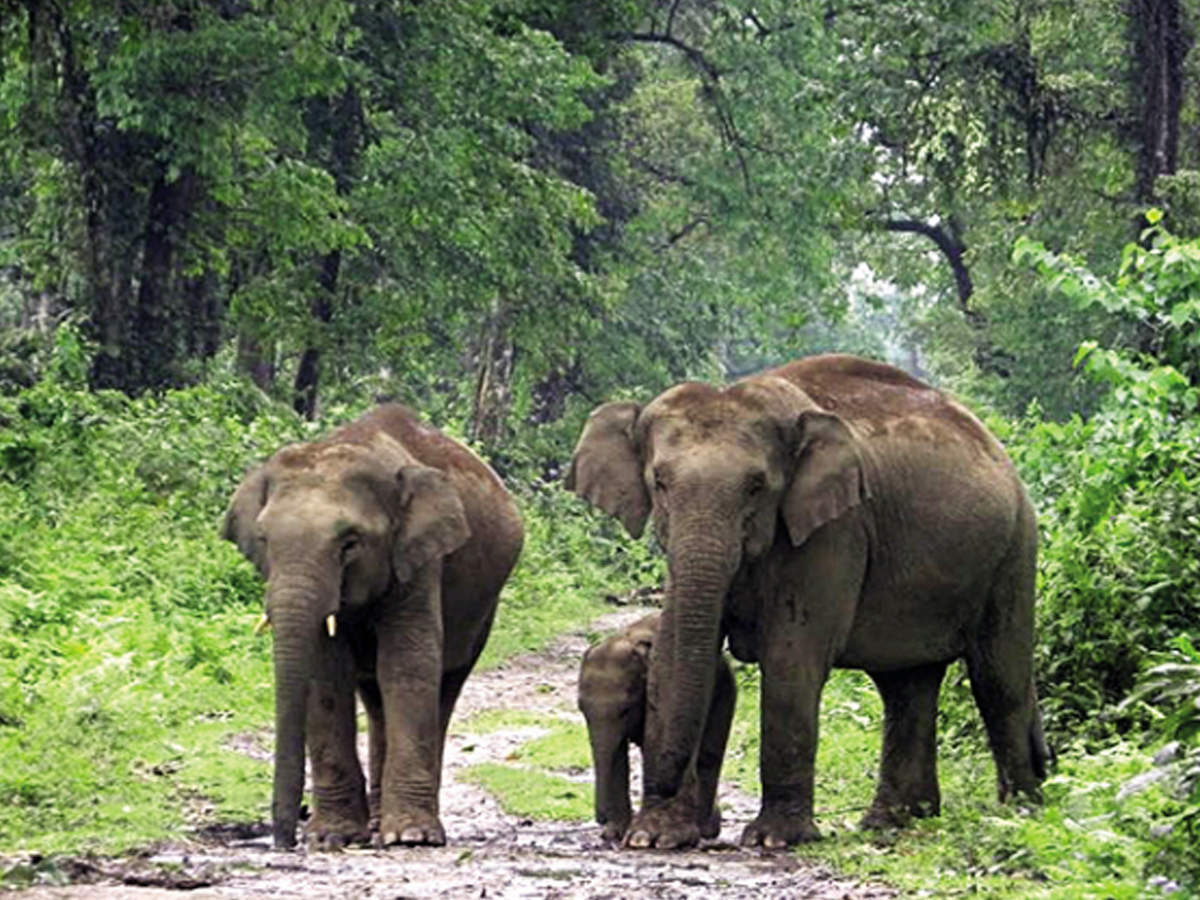
The sanctuary’s most ubiquitous inhabitant is the Asian elephant. The mega-herbivore can be seen in herds as well as alone, and is considered a sight to behold, but also one to be wary of, especially for travellers on foot. The national park is also famous for birds and is a biodiversity hotspot with over 350 species of avifauna providing a unique habitat for many globally threatened species including the extremely rare white-winged wood duck and many migratory birds.
The landscape of Dihing Patkai is dominated by towering Hollong and the Mekai trees, with other species such as beautiful Nahar or Messua ferrea, which puts out red, yellow, and silver leaves in spring. Cutting through the forest is the Burhi Dihing river, which creates several sand islands that are popular with migratory roosting birds. The park has two main access points, Soraipung, a small village where the range officer and the interpretation centre is located and the Jeypore gate which is a short distance from Jeypore town. The closest town is Digboi, which is 10 km away.

The best time to visit Dehing Patkai Wildlife Sanctuary is during the winter and spring months. Between November and the end of February, there is no rain and waterlogging and one can see many migratory birds around with birds and small mammals at their peak from about 7 am till around 10-10:30 am and then again from the afternoon until sunset. Between March and April, there is rainfall, which brings new growth and the breeding season. This is also a good time to hear and spot the Blue-eared barbet, the drongo cuckoo, the common hawk, the Hodgson’s hawk, and the highly sought-after violet and emerald cuckoos.
Unlike conventional national parks, Dehing Patkai Sanctuary does not have safari vehicles and canter buses. The Park can be explored by vehicle, both private or hired, by boat, or on foot. Taxis charge between INR 1,200 to INR 1,500 per day, depending on the vehicle.
With this, we come to the end of this visit around the northeastern state of Assam. A region I have been wanting to visit for decades and hope to visit soon. In the next part, we will explore a new state in India.